
2 layers38.1 × 50.8 mm
LoRa 1W Breakout
alegoldstein/NUSTARS
Payload PCB for Northwestern University's 2025-2026 IREC rocket
55 parts

 alegoldstein/NUSTARS
Payload PCB for Northwestern University's 2025-2026 IREC rocket
Battery Sensor is an open-source printed circuit board by alegoldstein, from the alegoldstein/NUSTARS repository on GitHub. It is a 2-layer board of 20.3 × 27.8 mm with 8 parts on 9 nets, routed with 62 tracks and 38 vias.
It is built around the INA226AIDGSR. Its parts include 4 resistors, 2 connectors, 1 capacitor and 1 IC. It belongs with the power and sensors and measurement boards of this library.
Payload PCB for Northwestern University's 2025-2026 IREC rocket
Objective: Integrate electronics to gather and transfer flight data in a compact payload.
Steps Taken:
Outcome: Compact payload with reliable electronics for data acquisition during and after launch.
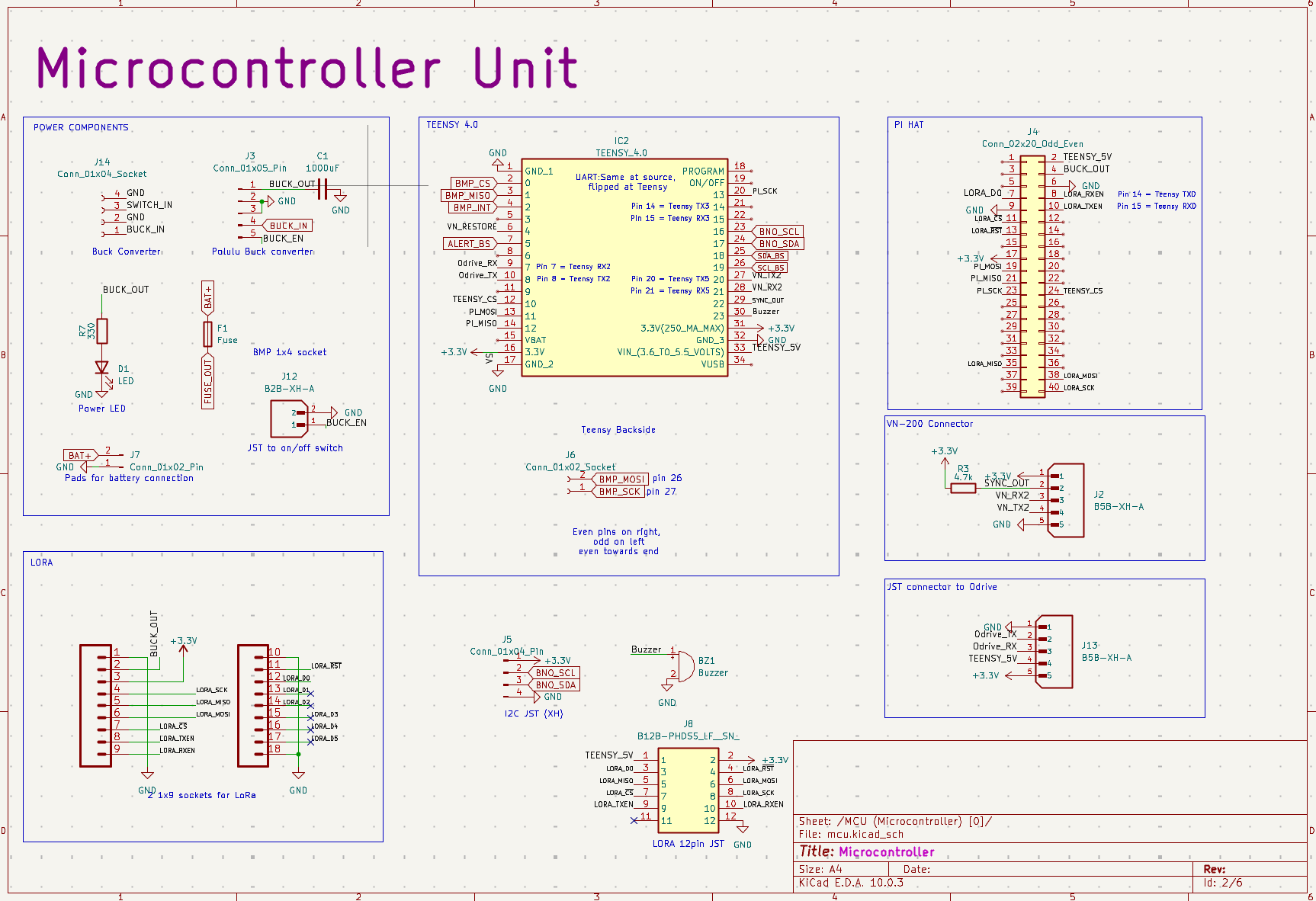
PCB Schematic
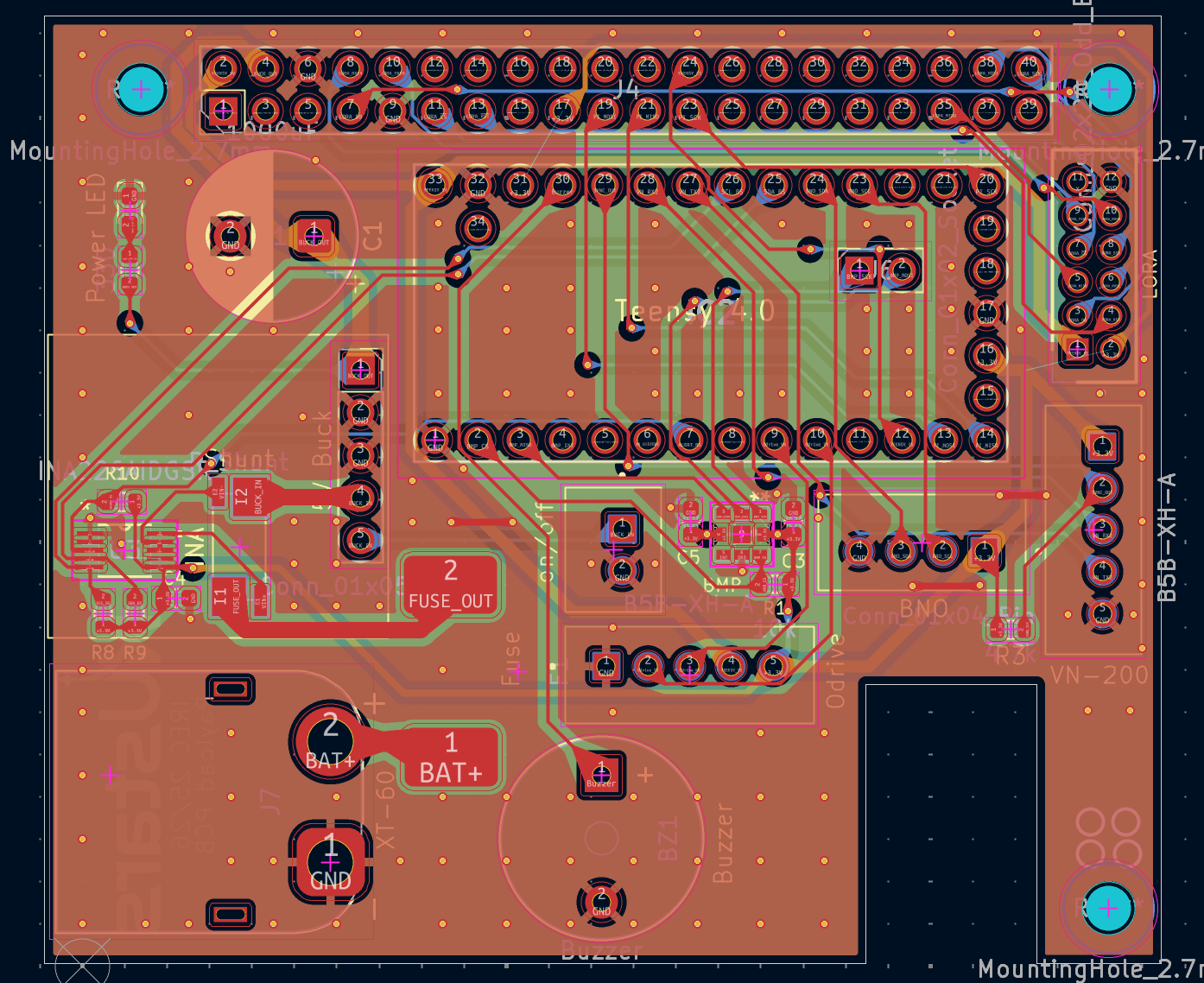
PCB Routing
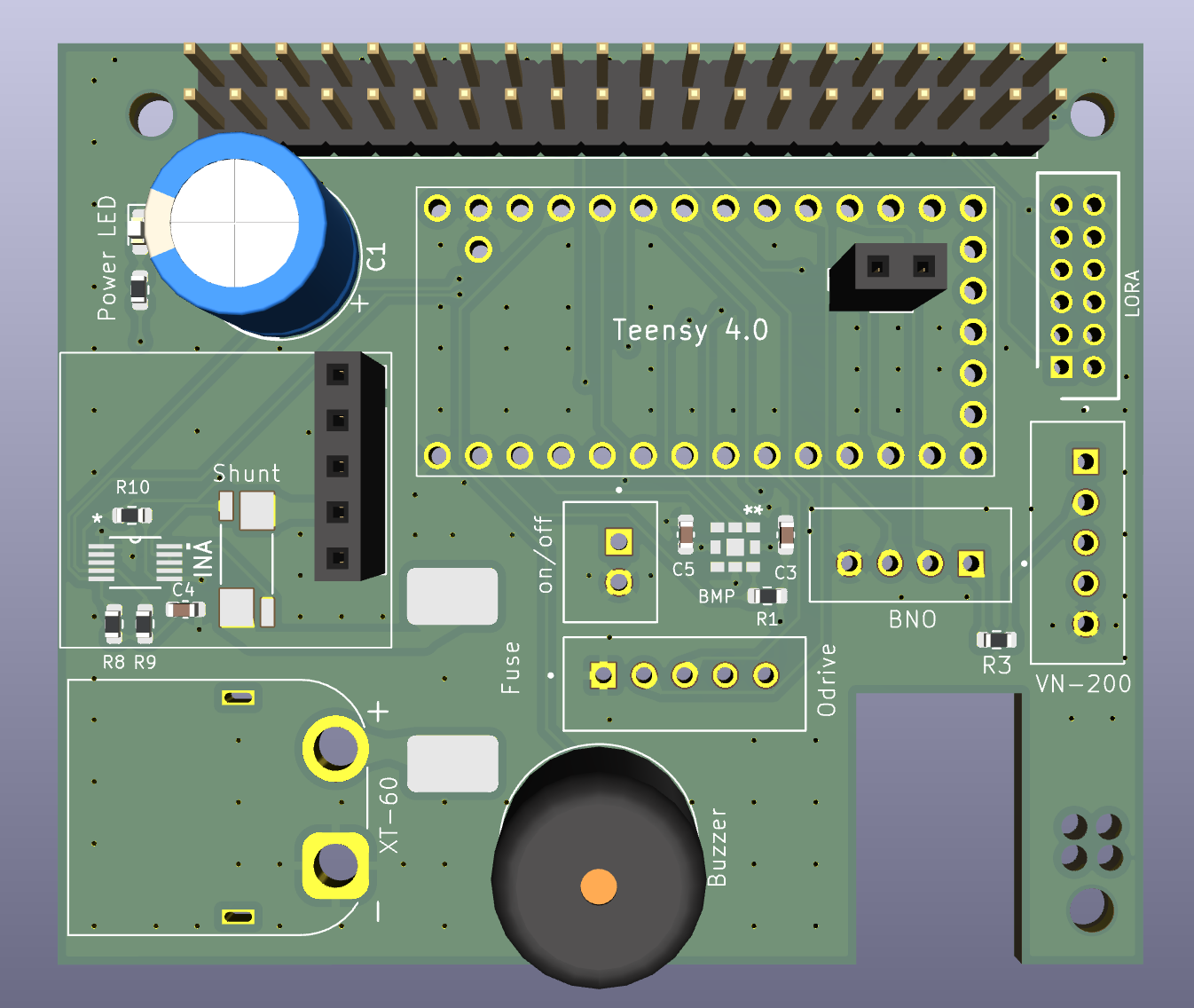
PCB Rendering
Final PCB was made to be a hat for the Raspberry Pi to be as compact as possible Raspberry Pi handled video collection and Teensy 4.1 on the PCB collected data from altimeter and monitored battery life
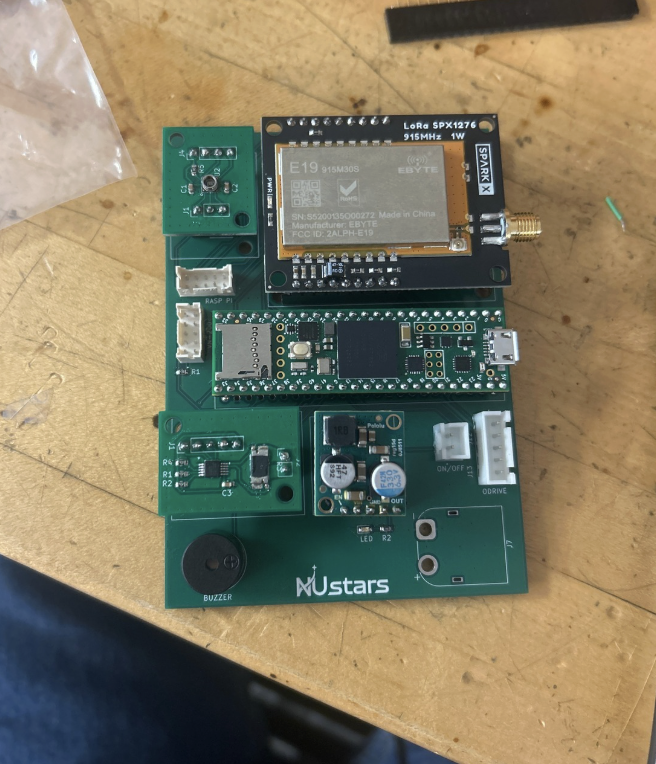
Initial PCB made to have each system work modularly for ease of debugging
| Qty | Value | Footprint | References |
|---|---|---|---|
| 3 | 4.7k | Resistor_SMD:R_0603_1608Metric | R1, R2, R4 |
| 1 | 0.1uF | Capacitor_SMD:C_0603_1608Metric | C3 |
| 1 | Conn_01x02 | Connector_PinHeader_2.54mm:PinHeader_1x02_P2.54mm_Vertical | J2 |
| 1 | Conn_01x05_Pin | Connector_PinHeader_2.54mm:PinHeader_1x05_P2.54mm_Vertical | J1 |
| 1 | INA226AIDGSR | NUSTARS_Payload_FootprintLib:INI226_Standard | U1 |
| 1 | R_Shunt | Resistor_SMD:R_Shunt_Vishay_WSK2512_6332Metric_T2.21mm | R3 |
alegoldstein/NUSTARS
Payload PCB for Northwestern University's 2025-2026 IREC rocket

alegoldstein/NUSTARS
Payload PCB for Northwestern University's 2025-2026 IREC rocket

alegoldstein/NUSTARS
Payload PCB for Northwestern University's 2025-2026 IREC rocket

alegoldstein/NUSTARS
Payload PCB for Northwestern University's 2025-2026 IREC rocket

alegoldstein/NUSTARS
Payload PCB for Northwestern University's 2025-2026 IREC rocket

rjwalters/kicad-tools
Standalone Python tools for parsing and manipulating KiCad schematic and PCB files

zhbi98/PowerWatch
【USB功率计】PowerWatch 自制的 USB 电源功率计,用于测量具备 USB 接口的设备输出电能参数,支持测量电压(V),电流(A),功率(W),电能(Ah, Wh)

oro-os/link
The Oro OS CI/CD pipeline including PCBs, CAD files, firmware and server infrastructure


ICDT-Inatel-Cubesat-Design-Team/TET-Module
A reliable 1U CubeSat TT&C subsystem featuring an STM32L4 MCU, LoRa radio for long-range communication, CAN Bus, and TMR SPI Flash for critical space applications.


ramalamadingdong/pcb-agent
Design a PCB end to end with an agent: CSV source of truth, idempotent build passes, containerized KiCad+Freerouting, and checks that run on the fab output.

RodrigoCAndrade/LIONv3-R
The LIONv3-R is an IoT and Direct-to-Satellite board powered by the ESP32-C6, combining local Wi-Fi, Zigbee, and Thread networks with high-density LR-FHSS connectivity for scalable global tracking and telemetry.
It measures 20.3 × 27.8 mm and has 2 copper layers, 1.6 mm thick.
8 parts, built around the INA226AIDGSR. The full list of its parts is on this page, with links to each part's symbol and footprint where PCBKit's library has them.
From the alegoldstein/NUSTARS repository on GitHub, at the commit this page was made from: the board is PCB/Payload/Battery_Sensor/Battery_Sensor.kicad_pcb and its schematic PCB/Payload/Battery_Sensor/Battery_Sensor.kicad_sch. PCBKit opens the board in the browser, with nothing to install.
Its repository states no licence, so its author keeps all rights: ask alegoldstein before reusing the design.