
2 layers128 × 103.8 mm

a small compact 3x5+3 split ortho keyboard
3W6 is an open-source printed circuit board by weteor, from the weteor/3W6 repository on GitHub. It is a 2-layer board of 243.2 × 106 mm with 113 parts on 121 nets, routed with 1,164 tracks and 151 vias.
It is built around the ATMEGA32U4-AU and PCA9555PW. Its parts include 41 diodes, 37 switches, 9 capacitors, 9 resistors and 3 connectors. It belongs with the keyboards and input boards and the AVR (ATmega, ATtiny) boards of this library.


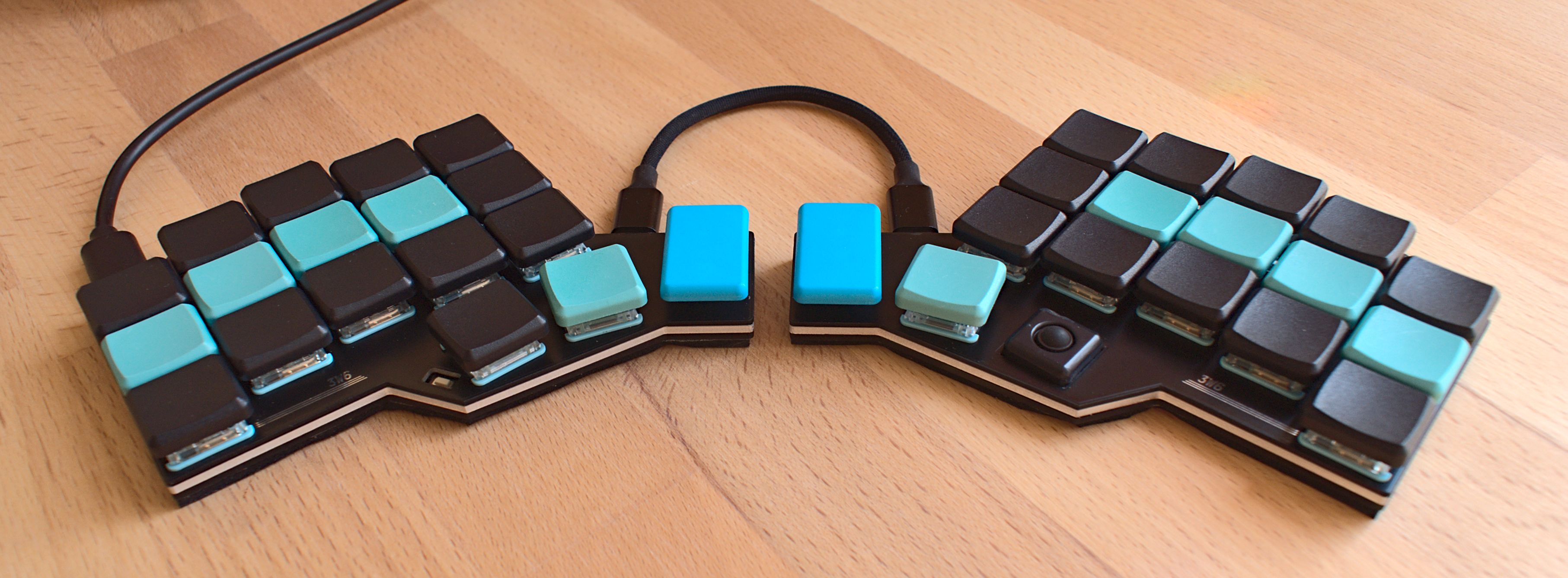
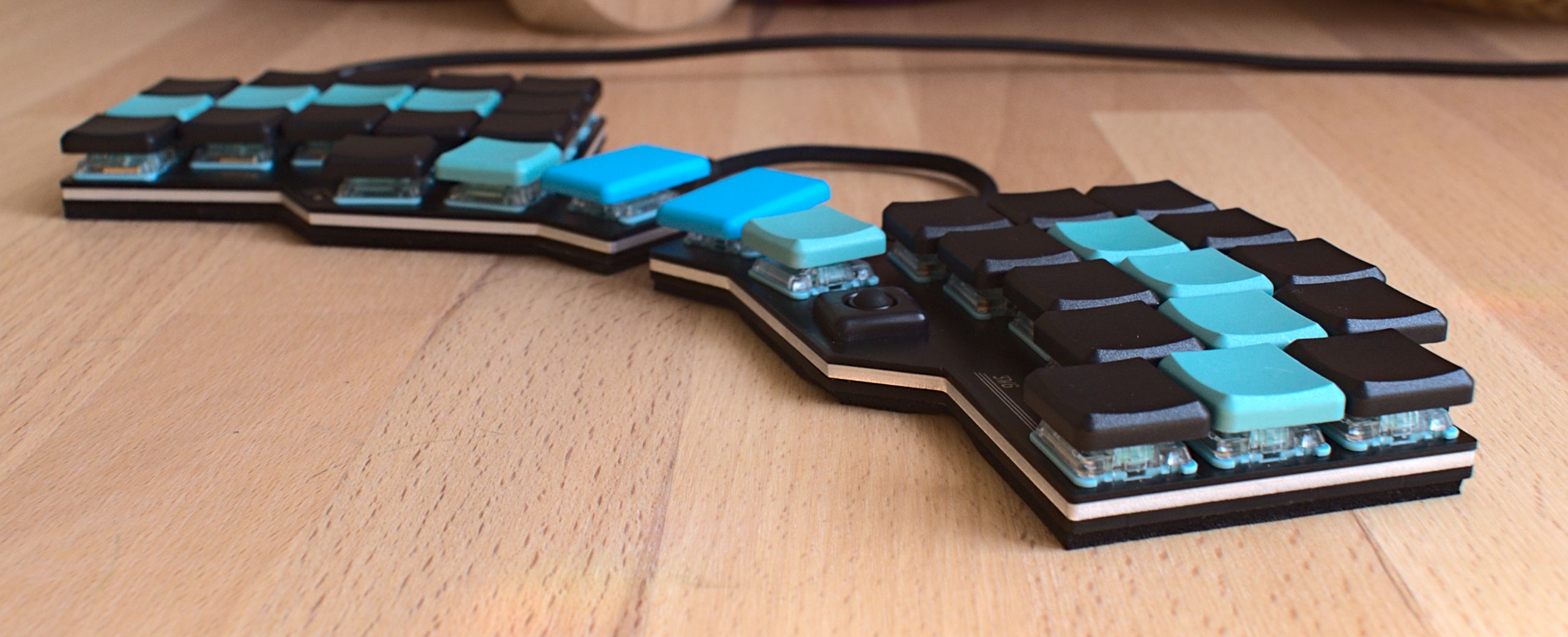
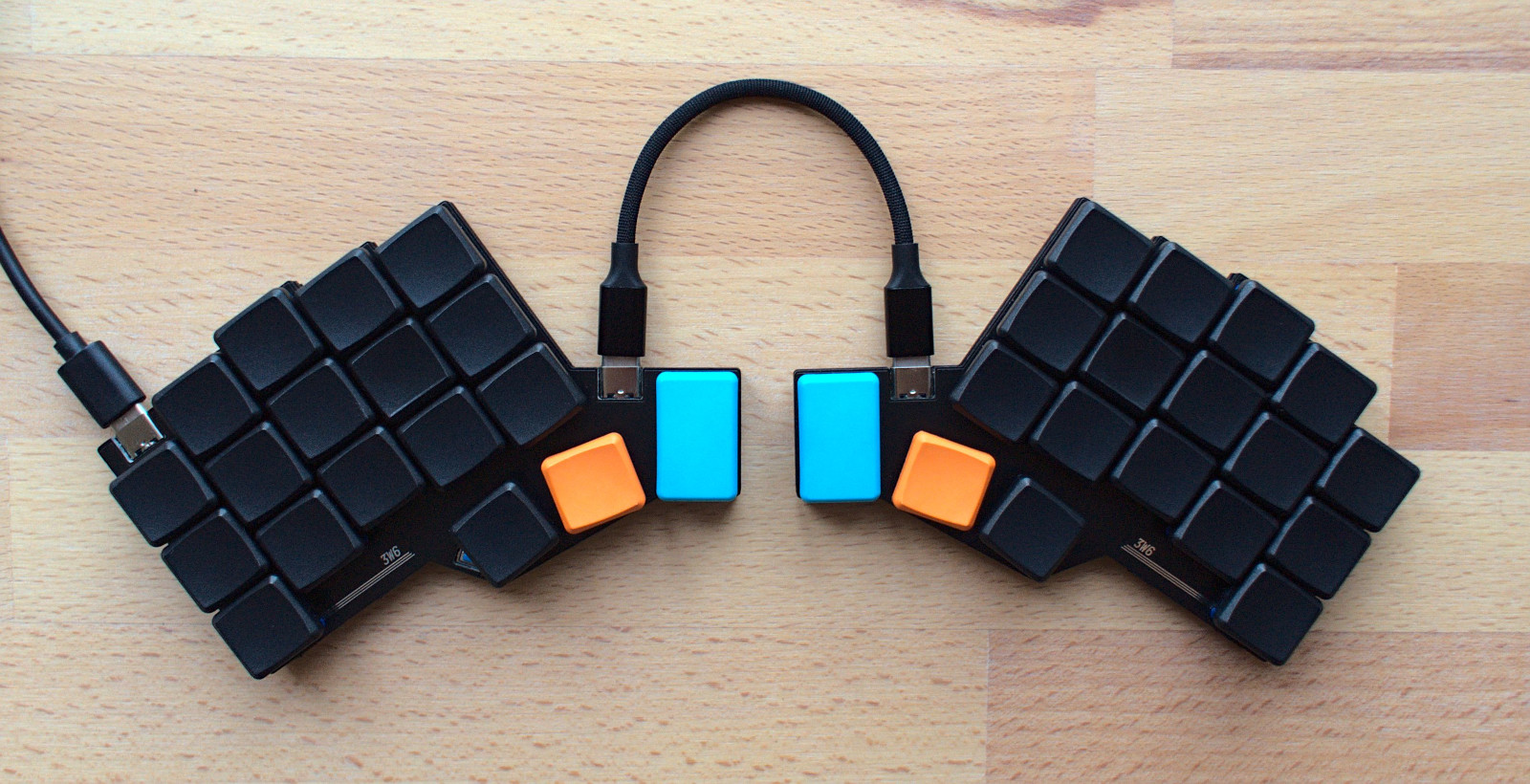
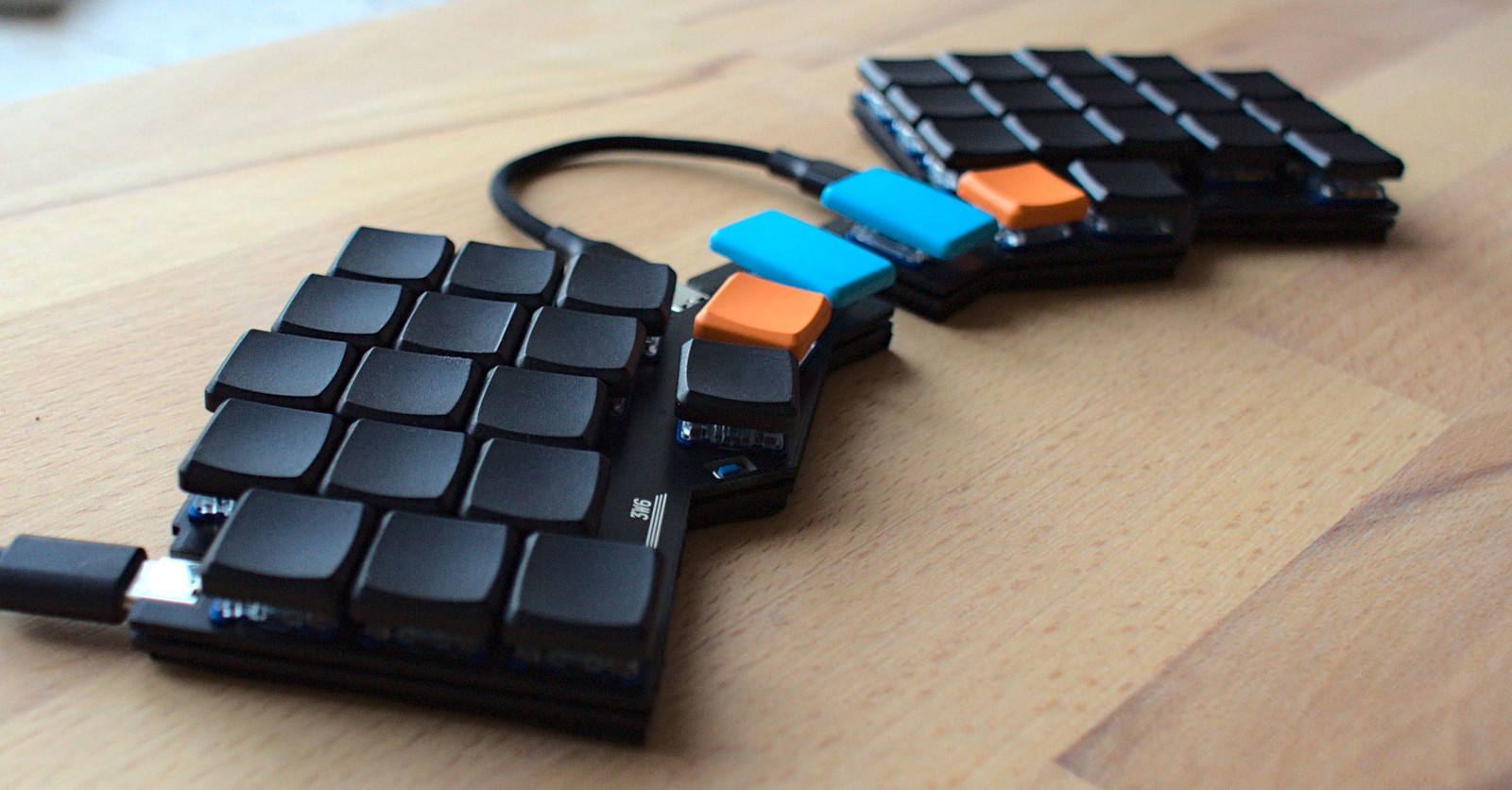
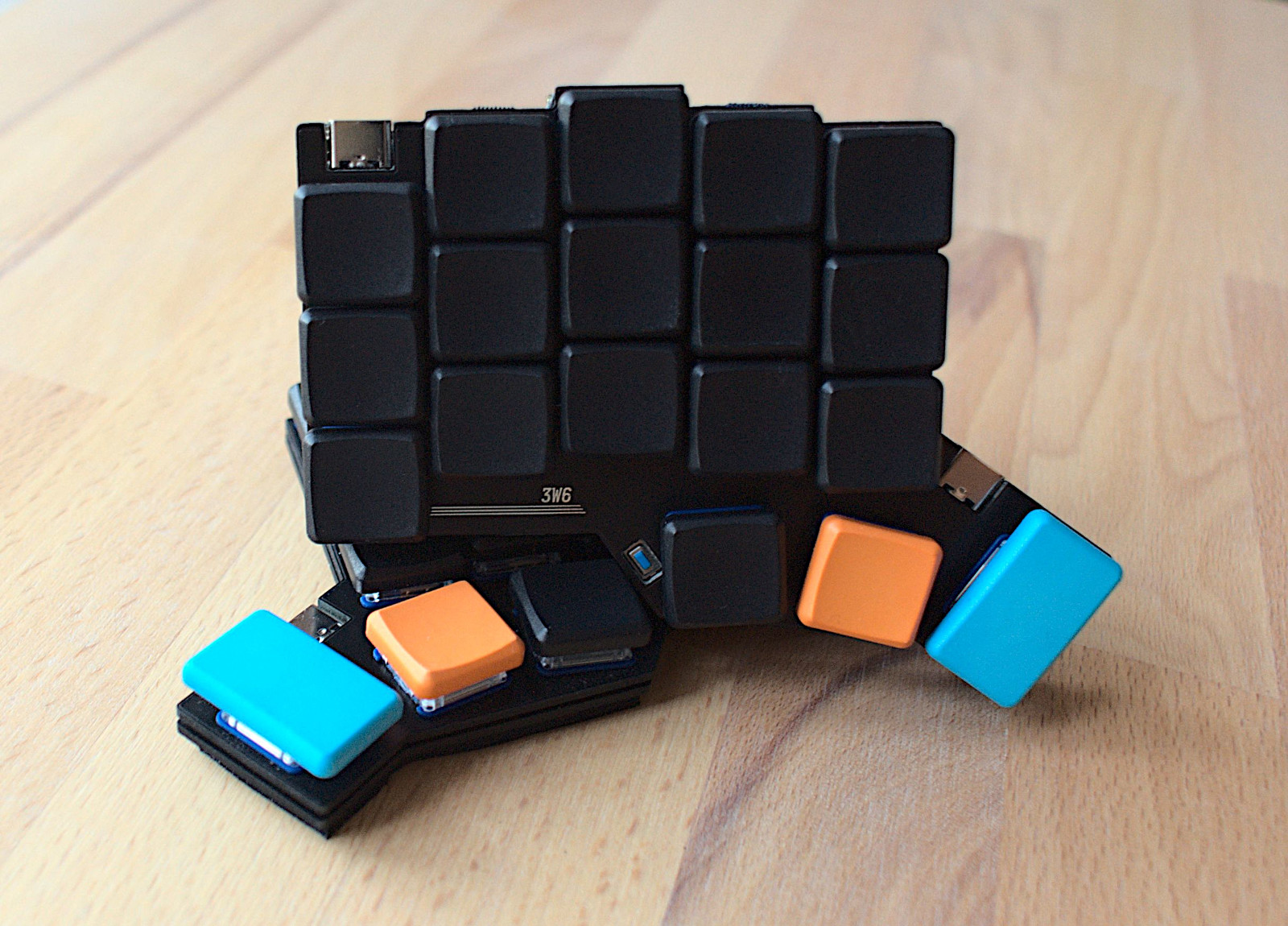
The 3w6 is a low profile, split ortholinear keyboard with 36 keys.
I needed a keyboard for work and wasn't really satisfied with the available alternatives (namely Corne, Kyria and Ferris), mostly because they were rather large and didn't had the spacing I would like.
It's designed to be a no frills, cheap and small keyboard to be taken everywhere.
So no hotswap, no multiple switchtypes, no encoders, no LEDs.
BUT with onboard controllers (so no extra ProMicros, Elite-C), production files including SMT assembly files, and sturdy through hole mounted USB-C connectors.
changes:
changes:
You may also compare the layout with other layouts of other layouts at https://jhelvy.shinyapps.io/splitkbcompare/ .
Or you can print this file to test if you like the layout. Or mount it to some cardboard and test it with your favourite switches.
If you want to build one yourself, grab the Gerber files here and give it a go.
And if 3d printing is your thing, files for plate and midlayer can be found here (made by the great bomtarnes, thanks a lot!)
you may find instructions here:
This keyboard uses QMK firmware. You can find everything you need to build a firmware for this board in the QMK Repository.
Here are some instructions on how to set up your QMK environment and a few notes specifically for the 3w6.
Everything in this repository is free to use however you might see fit. If you want to support me and my projects, please consider linking back to this repository if you build/change/use anything.
If you would like to send me a tip, you could do it here (Please don't feel like you have to).
| Qty | Value | Footprint | References |
|---|---|---|---|
| 41 | D | Weteor:D_SOD-123 | D2, D10, D11, D12, D13, D14, D15, D16, D17, D18, D19, D20, D21, D22, D23, D24 +25 |
| 33 | SW_Push | Weteor:Kailh_Choc_1u | SW2, SW10, SW11, SW12, SW13, SW14, SW15, SW16, SW18, SW19, SW20, SW21, SW22, SW23, SW24, SW25 +17 |
| 5 | 0.1uF | Weteor:C_0402_HandSolder | C3, C4, C5, C6, C7 |
| 3 | 10k | Weteor:R_0402_HandSolder | R5, R8, R9 |
| 2 | 22R | Weteor:R_0402_HandSolder | R6, R7 |
| 2 | 22pF | Weteor:C_0402_HandSolder | C1, C2 |
| 2 | 4.7k | Weteor:R_0402_HandSolder | R3, R4 |
| 2 | 5.1k | Weteor:R_0402_HandSolder | R1, R2 |
| 2 | SW_Push | Weteor:Kailh_Choc_1.5u | SW33, SW37 |
| 1 | 16MHZ | Crystal:Crystal_SMD_3225-4Pin_3.2x2.5mm | Y1 |
| 1 | 1uF | Weteor:C_0402_HandSolder | C9 |
| 1 | 4.7uF | Weteor:C_0402_HandSolder | C8 |
| 1 | 500mA | Fuse:Fuse_1206_3216Metric | F1 |
| 1 | ATmega32U4-AU | Weteor:AtMega32U4-Combie | U1 |
| 1 | PCA9555PW | Package_SO:TSSOP-24_4.4x7.8mm_P0.65mm | U2 |
| 1 | SW_Push | Weteor:Micro_Push_Button_3x6x2.5mm | SW1 |
| 1 | Trackball_Choc_Combi | Weteor:trackball_choc_combi | SW17 |
| 1 | USB_C I2C_L | Weteor:USB-C-12-Pin-MidMount | J2 |
| 1 | USB_C I2C_R | Weteor:USB-C-12-Pin-MidMount | J3 |
| 1 | USB_C Main | Weteor:USB-C-12-Pin-MidMount | J1 |
The 103 most common of 113 parts.
It measures 243.2 × 106 mm and has 2 copper layers, 1.6 mm thick.
113 parts, built around the ATMEGA32U4-AU and PCA9555PW. The full list of its parts is on this page, with links to each part's symbol and footprint where PCBKit's library has them.
From the weteor/3W6 repository on GitHub, at the commit this page was made from: the board is pcb/3w6/3W6.kicad_pcb. PCBKit opens the board in the browser, with nothing to install.
Its repository states no licence, so its author keeps all rights: ask weteor before reusing the design.


RickP/MC5000_DevKit
An hardware puzzle that teaches the basics of programming.


jdotw/OpInst-Bass-1
Three-voice analog synth with a digital control surface using CEM3340, AS3320 and similar discrete analog components.