
2 layers335 × 169.4 mm
TRANSMITTER PANEL
vul-os/zana
Zana — open-hardware for the physical world: robot mowers, security & cleaning bots, sensor nodes and cameras that plug into any control plane. Build them yourself. FreeCAD + KiCad.
336 partsMIT

 vul-os/zana
Zana — open-hardware for the physical world: robot mowers, security & cleaning bots, sensor nodes and cameras that plug into any control plane. Build them yourself. FreeCAD + KiCad.
EMF SENSOR PANEL is an open-source printed circuit board by vul-os, from the vul-os/zana repository on GitHub, published under the MIT licence. It is a 2-layer board of 245 × 163 mm with 360 parts on 264 nets, routed with 2,304 tracks and 48 vias.
It is built around the LM358. Its parts include 192 resistors, 48 capacitors, 48 diodes, 24 ICs and 24 connectors. It belongs with the sensors and measurement and robots and motor control boards of this library.

Open hardware for the physical world — the devices your hub commands.
What's here · The mower · Charging link · Electronics · Build it · Checks
FreeCAD · KiCad · 3D-printable · MIT · runs on Aql
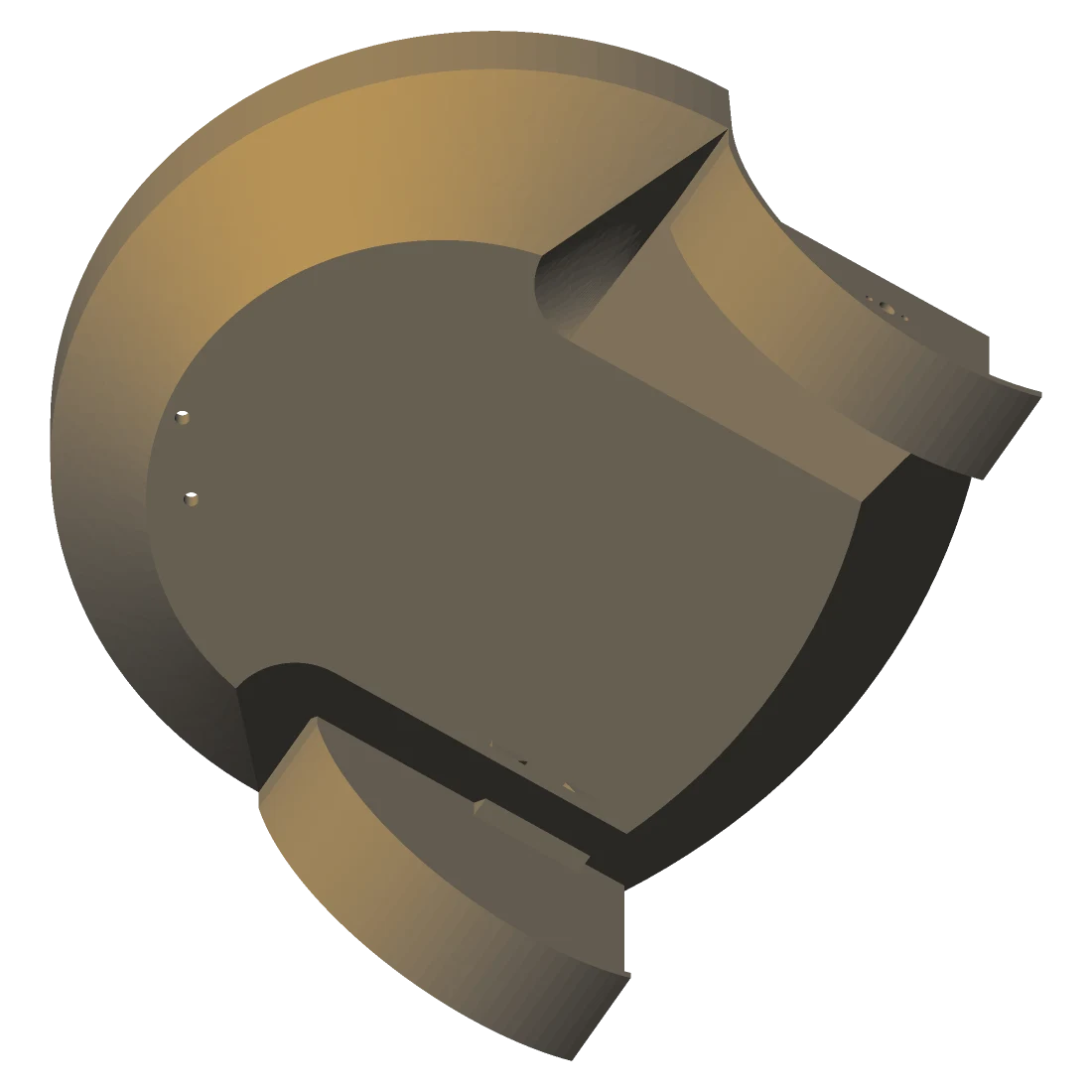
Every render in this README is drawn from a mesh tracked in this repo by
site/gen_renders.py, and the dimensions
are its real bounding box, measured at render time.
Zana (Swahili — "tools / gear") is an open-hardware line for the physical world: reference designs for the machines a smart home or business actually runs on — robot mowers, sensor nodes, security and cleaning bots, cameras.
Zana is the body to Aql's brain: every device is meant to drop straight into Aql, the open-source command center. But the designs are open and vendor-neutral, so they work with any compatible control plane. You are not buying into anyone's cloud by printing a wheel.
[!IMPORTANT] Status: prototype-stage reference designs. The first device — an autonomous mower — is here as CAD and PCB work recovered from active prototyping, plus one executable engineering study. There is no firmware in this repo, no bill of materials, and no assembly guide. It is not yet a finished, documented, buy-the-parts build. What is here is the geometry, the boards, and the reasoning behind the charging link.
| Area | Contents | State |
|---|---|---|
| Chassis & body | FreeCAD bodies across four iterations (mowbot*.FCStd), wheels, casting moulds, motor supports | design files |
| Drivetrain | Shafts, couplers (including an aluminium variant), GT2 pulley, castor fitting | design files |
| Electronics | KiCad projects — TRANSMITTER (thru-hole + SMD), MAINBOARD, EMF_SENSOR, RAIN, and the shared IMRANS_LIBRARY symbols | design files |
| Wireless power | mower/coil-study/ — an inductance and efficiency model for the charging link, in Python | runs; covered by tests |
| Simulator | mower/simulator/ — C++ (raylib + Bullet, native and WASM) and PyBullet sources for driving over grass | source only — not built, not tested, and it needs a mesh that isn't checked in |
| Fabrication rigs | The coil winder, PCB mill and UV exposure box built to make the electronics | design files |
| Firmware | — | not here |
An autonomous robot mower with an inductive charging dock — so there is no connector to corrode in wet grass. Four chassis iterations are tracked, and the older ones are kept deliberately: on a hardware project the design history is the documentation.
| Part | Size (mm) | Notes | |
|---|---|---|---|
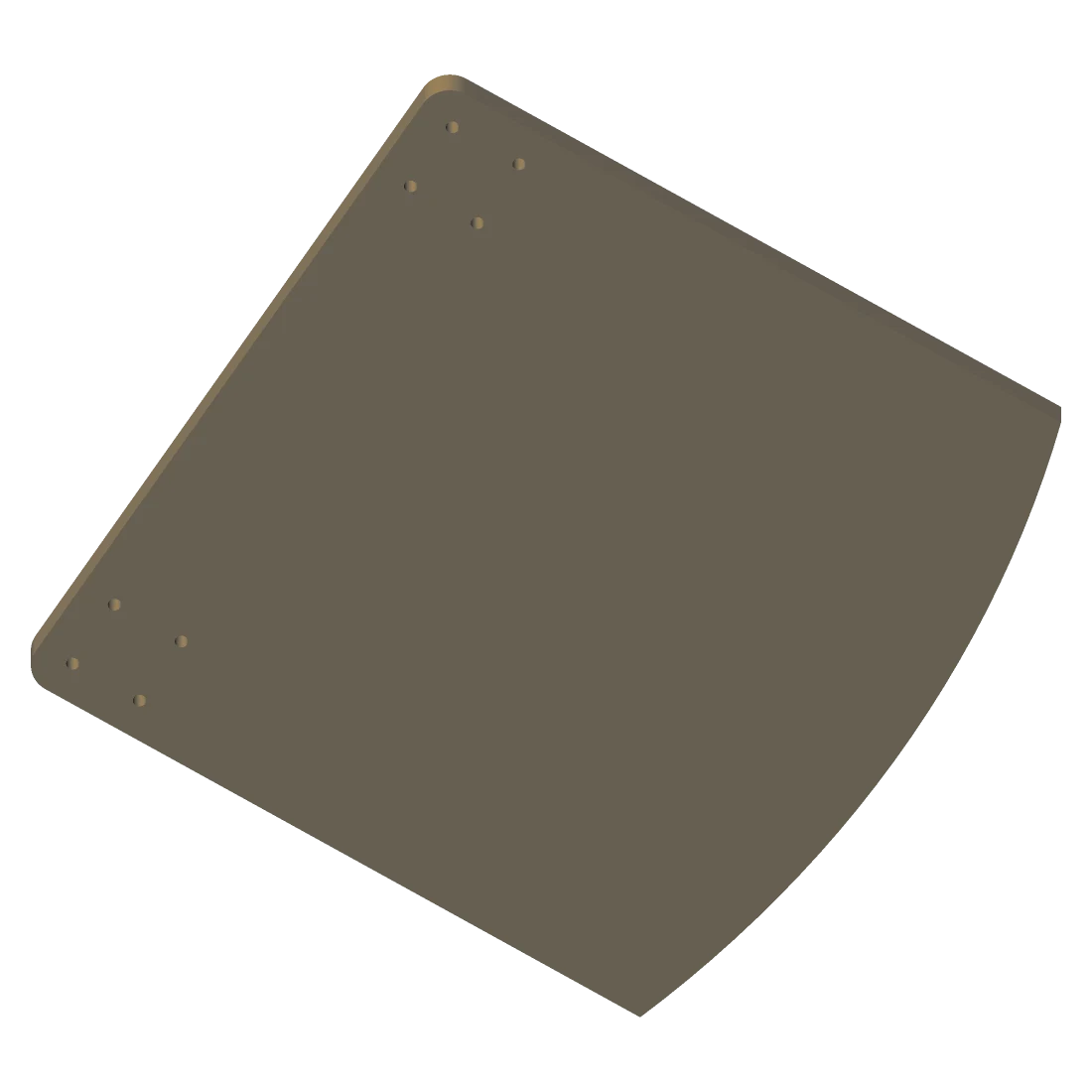 | Chassis body | 380 × 380 × 41 | Iteration 4 — the shell the drivetrain and boards mount into |
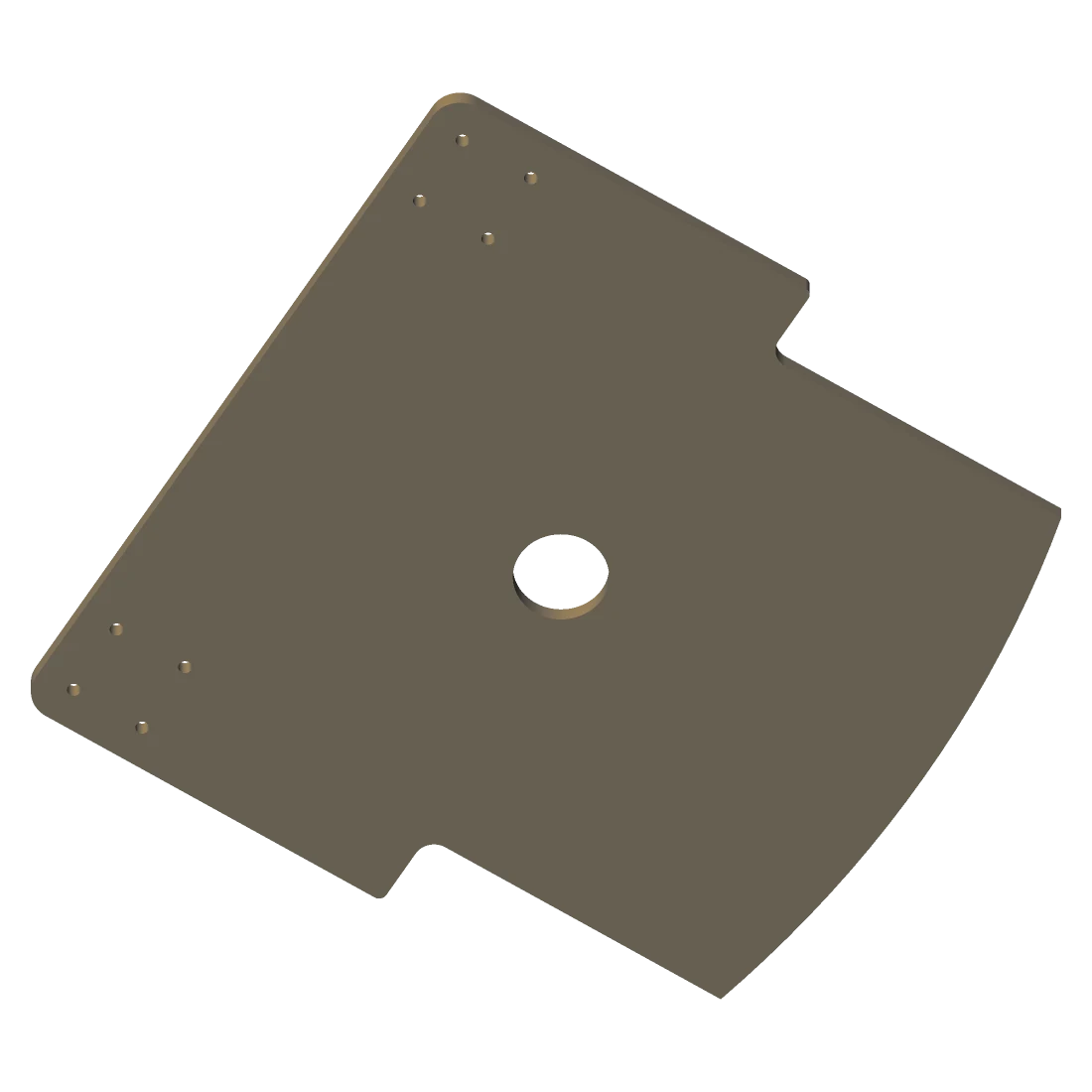 | Base plate | 380 × 380 × 10 | Deck the motors, castor and coil receiver bolt onto |
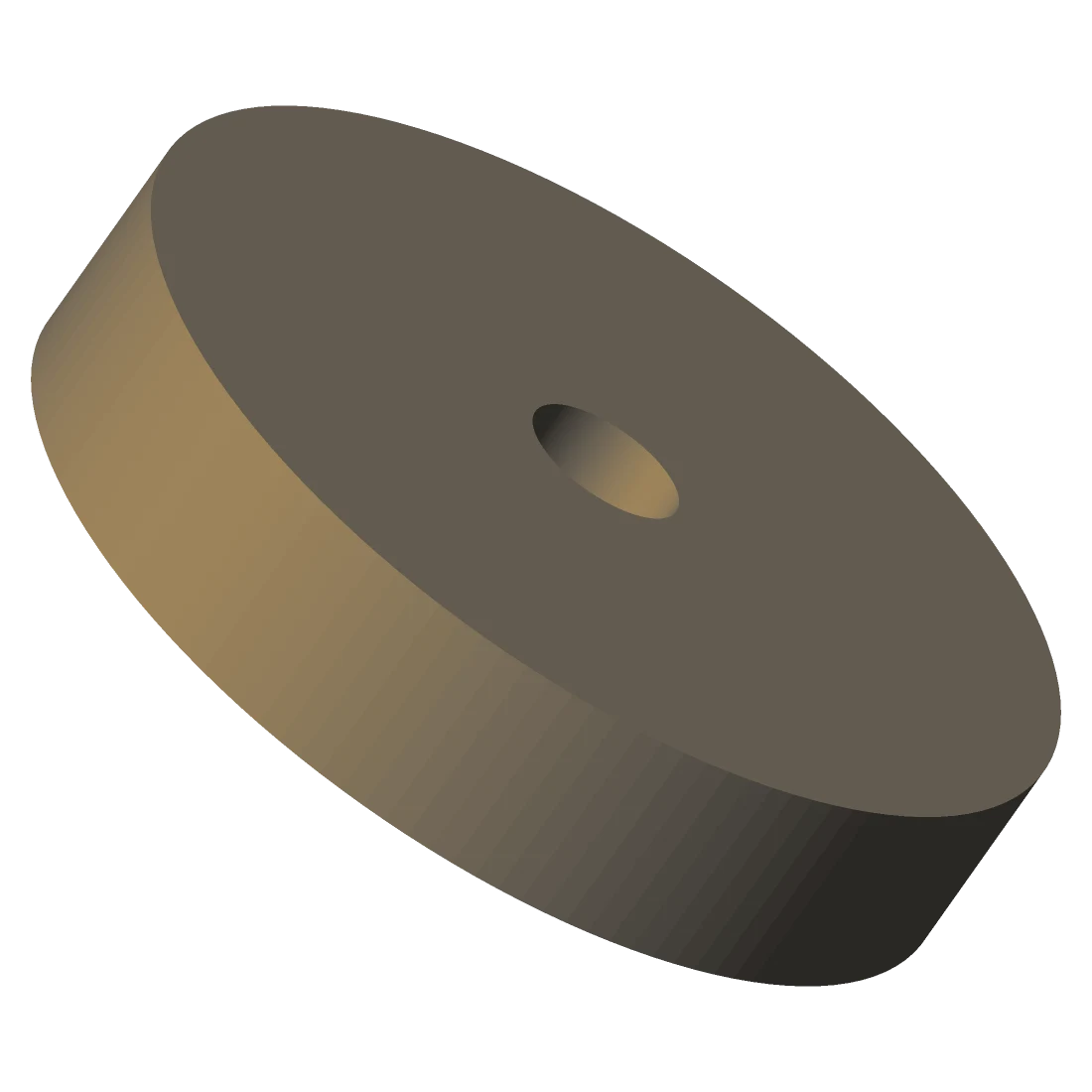 | Drive wheel | 190 × 40 × 189.9 | Printed hub and tread, cast in its own printed mould |
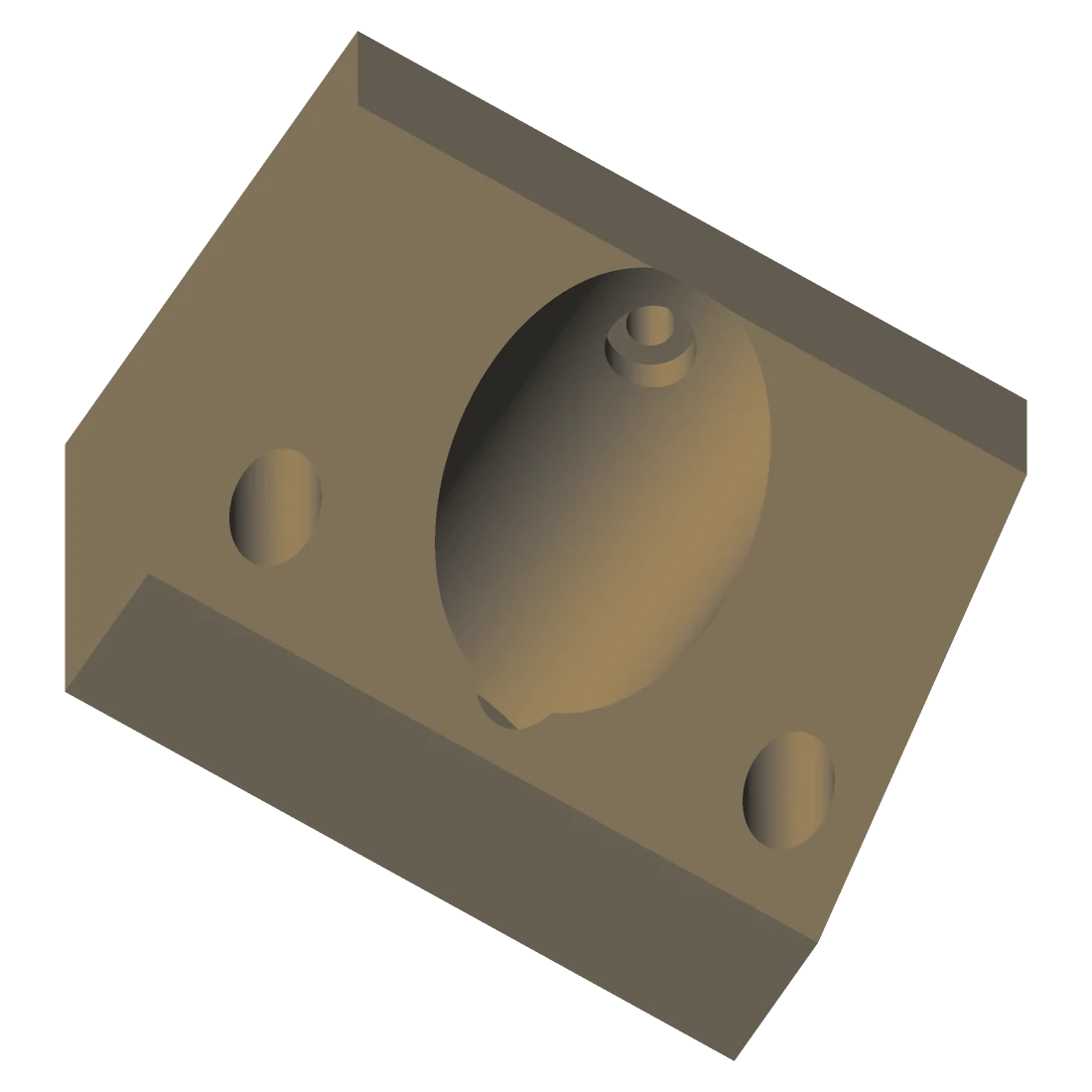 | Motor support | 60 × 42 × 40 | Bracket for the main drive gearmotor |
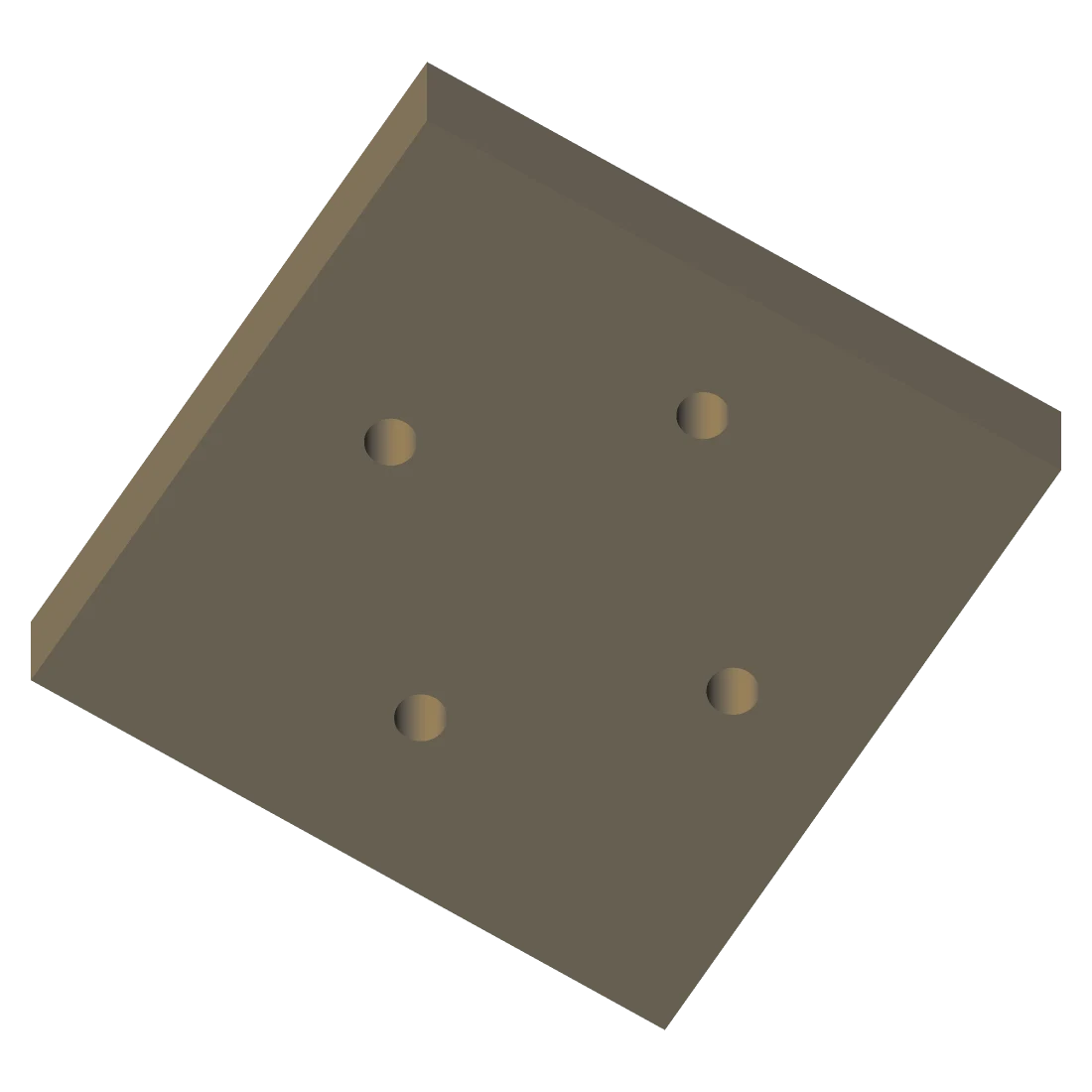 | Castor fitting | 90 × 90 × 15 | The front swivel mount |
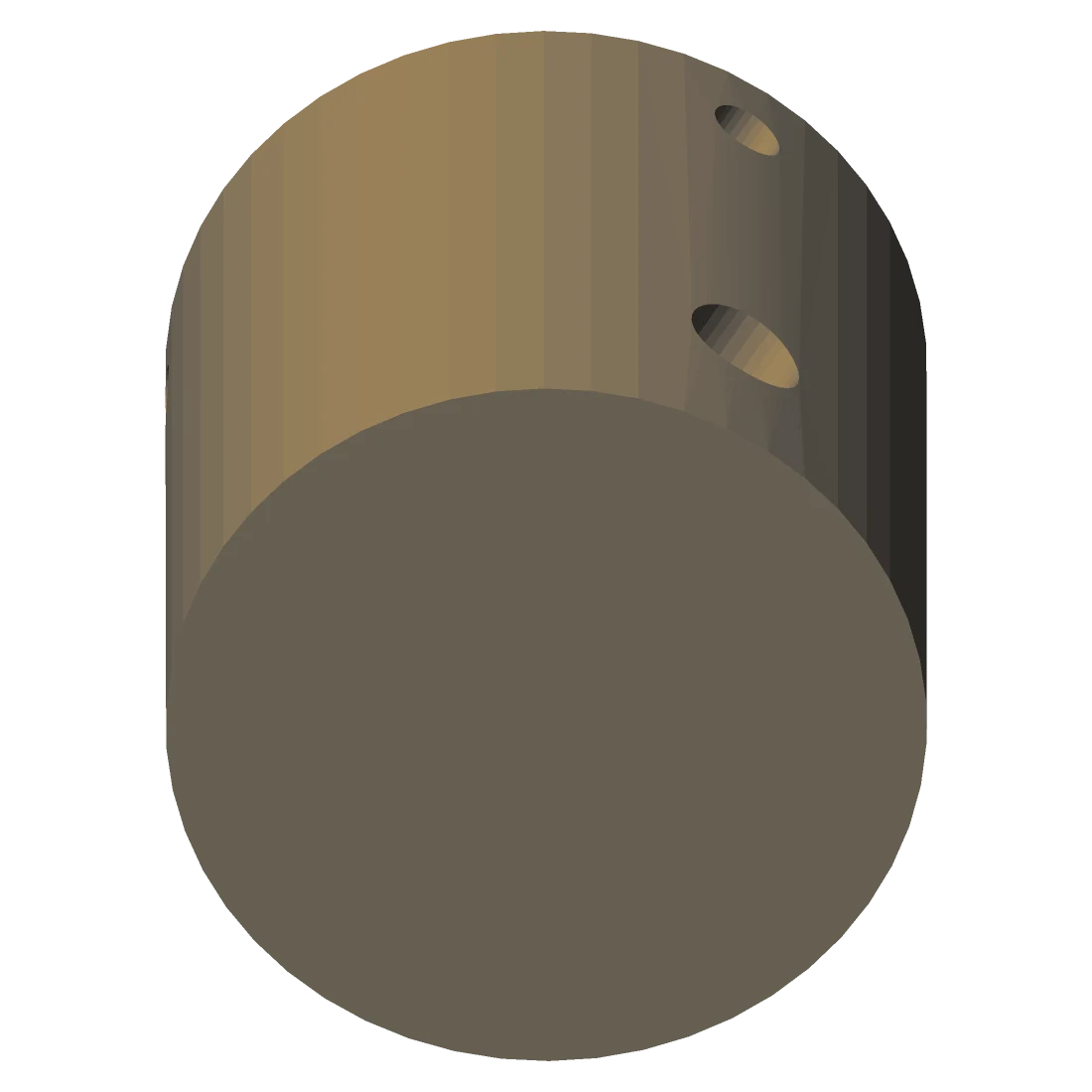 | Shaft coupler | 30 × 30 × 30 | Printed, with an aluminium variant for the load path |
Full parts breakdown: mower/README.md.
Formats. .FCStd is the FreeCAD source — edit those. .3mf/.stl are for
slicing, .step for any other CAD package, .dxf/.svg are 2D profiles, and
.kicad_* are the boards. FreeCAD and KiCad auto-backups are gitignored.
mower/coil-study/ models the inductive link from first principles — elliptic
integrals for Maxwell mutual inductance between coaxial loops, AC resistance
with skin and proximity effects, and the k·Q efficiency solve — for a 200 mm
coil at 40 kHz across a 40 mm air gap.
| Option 1 | Option 2 — chosen | Option 3 | |
|---|---|---|---|
| Configuration | Single layer, 8 T | 2 layers × 8 T | 2 layers × 29 T |
| Outer diameter | 223.8 mm | 223.8 mm | 295.2 mm |
| Inductance | 30.78 µH | 118.46 µH | 1288.56 µH |
| Wire length | 5.33 m | 10.65 m | 45.12 m |
| Efficiency @ 40 mm | 85.7 % | 91.5 % | 96.4 % |
| Resonant capacitor | 514.4 nF | 133.6 nF | 12.3 nF |
Option 2 wins because it is the same 223.8 mm across as the simple coil and only 1.5 mm thick, but buys 5.9 points of efficiency for one extra winding operation.
Those numbers are not decoration. tests/test_coil_physics.py parses the
comparison table out of DESIGN_SUMMARY.md and re-derives every cell from
physics.py, then checks the model's own invariants — reciprocity, monotonicity,
efficiency bounds. The write-up and the model cannot drift apart without CI
going red.
Five KiCad projects under mower/PCB/:
TRANSMITTER — the dock side of the inductive link, in thru-hole and SMD revisions.MAINBOARD — the mower's own board.EMF_SENSOR — boundary-wire pickup, with a panelised DIP version for milling.RAIN — an interdigitated comb electrode. Rain bridges the fingers, conductivity rises, the mower goes home.IMRANS_LIBRARY — the shared symbol library the projects draw from.These boards were not ordered from a fab. The repo also carries the coil winder, the PCB mill and the UV exposure box built to produce them — the part of a hardware project nobody photographs and everybody needs.
You will want FreeCAD for the mechanical design, KiCad for the boards, and a 3D printer for the printable parts.
.FCStd files in mower/ — those are the editable sources.mower/PCB/. EMF_SENSOR_DIP ships a panelised board and a script for milling it yourself..3mf/.stl meshes. The wheel is cast in its own printed mould rather than printed solid.Most of this repo is CAD and PCB binaries that no CI can meaningfully verify.
What is checkable is checked, and
.github/workflows/ci.yml runs it on every push:
pip install -r requirements-dev.txt
python3 -m pytest -q
Three gates, each asserting its own coverage count so it cannot pass by doing nothing:
tests/test_coil_physics.py — re-derives every number in the coil write-up from the model, and checks reciprocity, monotonicity and efficiency bounds.tests/test_repo_integrity.py — every path named in a README exists; no tracked file is an empty husk; every shell script parses; every Python file compiles; no home directory leaked into a checked-in export.tests/test_site.py — site/ fetches nothing off-box, every local path resolves after the copy, the type is vendored, and the landing cannot quote a dimension its mesh does not have.site/ is a self-contained mini-site — no build step, no third-party requests —
collected into vulos.org at /products/zana. Its part renders are generated:
python3 site/gen_renders.py # → site/assets/renders/*.webp + parts.jsonThat script reads the tracked meshes, projects them orthographically and
z-buffers them into transparent renders, then measures each part's real bounding
box into parts.json. test_site.py fails if the page ever states a dimension
that disagrees with it, so the captions cannot rot.
Zana devices work with any compatible control plane, and run best on Aql.
The mark in brand/ is the source of truth. Every icon this repo
ships — favicon, PWA and app icons, the mark in the README and on the site — is
rendered from brand/logo.svg rather than redrawn, so there is one approved
drawing and no second copy to drift.
Copy it outward, never edit a derived copy, and never edit brand/ to match
something downstream.
MIT — © VulOS. Zana is a VulOS project; source and issues at github.com/vul-os/zana.

vulos — open by design
| Qty | Value | Footprint | References |
|---|---|---|---|
| 72 | 1K | IMRANS_LIBRARY:R_Axial_DIN0207_L6.3mm_D2.5mm_P10.16mm_Horizontal_2 | R5, R5, R5, R5, R5, R5, R5, R5, R5, R5, R5, R5, R5, R5, R5, R5 +56 |
| 48 | 10k | IMRANS_LIBRARY:R_Axial_DIN0207_L6.3mm_D2.5mm_P10.16mm_Horizontal_2 | R1, R1, R1, R1, R1, R1, R1, R1, R1, R1, R1, R1, R1, R1, R1, R1 +32 |
| 24 | 100K | IMRANS_LIBRARY:R_Axial_DIN0207_L6.3mm_D2.5mm_P10.16mm_Horizontal_2 | R6, R6, R6, R6, R6, R6, R6, R6, R6, R6, R6, R6, R6, R6, R6, R6 +8 |
| 24 | 100nF | IMRANS_LIBRARY:C_Disc_D3.0mm_W1.6mm_P2.50mm | C1, C1, C1, C1, C1, C1, C1, C1, C1, C1, C1, C1, C1, C1, C1, C1 +8 |
| 24 | 100nF (104) | IMRANS_LIBRARY:C_Disc_D3.0mm_W1.6mm_P2.50mm | C3, C3, C3, C3, C3, C3, C3, C3, C3, C3, C3, C3, C3, C3, C3, C3 +8 |
| 24 | 1M | IMRANS_LIBRARY:R_Axial_DIN0207_L6.3mm_D2.5mm_P10.16mm_Horizontal_2 | R4, R4, R4, R4, R4, R4, R4, R4, R4, R4, R4, R4, R4, R4, R4, R4 +8 |
| 24 | 1N4007 | IMRANS_LIBRARY:R_Axial_DIN0207_L6.3mm_D2.5mm_P10.16mm_Horizontal_2 | D1, D1, D1, D1, D1, D1, D1, D1, D1, D1, D1, D1, D1, D1, D1, D1 +8 |
| 24 | 220 | IMRANS_LIBRARY:R_Axial_DIN0207_L6.3mm_D2.5mm_P10.16mm_Horizontal_2 | R3, R3, R3, R3, R3, R3, R3, R3, R3, R3, R3, R3, R3, R3, R3, R3 +8 |
| 24 | Conn_01x03_Pin | IMRANS_LIBRARY:PinHeader_1x03_P2.54mm_Vertical | J1, J1, J1, J1, J1, J1, J1, J1, J1, J1, J1, J1, J1, J1, J1, J1 +8 |
| 24 | D | IMRANS_LIBRARY:R_Axial_DIN0207_L6.3mm_D2.5mm_P10.16mm_Horizontal_2 | D2, D2, D2, D2, D2, D2, D2, D2, D2, D2, D2, D2, D2, D2, D2, D2 +8 |
| 24 | L | Inductor_THT:L_Radial_D10.0mm_P5.00mm_Fastron_07M | L1, L1, L1, L1, L1, L1, L1, L1, L1, L1, L1, L1, L1, L1, L1, L1 +8 |
| 24 | LM358 | Package_DIP:DIP-8_W7.62mm_Socket_LongPads | U1, U1, U1, U1, U1, U1, U1, U1, U1, U1, U1, U1, U1, U1, U1, U1 +8 |
vul-os/zana
Zana — open-hardware for the physical world: robot mowers, security & cleaning bots, sensor nodes and cameras that plug into any control plane. Build them yourself. FreeCAD + KiCad.

vul-os/zana
Zana — open-hardware for the physical world: robot mowers, security & cleaning bots, sensor nodes and cameras that plug into any control plane. Build them yourself. FreeCAD + KiCad.

vul-os/zana
Zana — open-hardware for the physical world: robot mowers, security & cleaning bots, sensor nodes and cameras that plug into any control plane. Build them yourself. FreeCAD + KiCad.

vul-os/zana
Zana — open-hardware for the physical world: robot mowers, security & cleaning bots, sensor nodes and cameras that plug into any control plane. Build them yourself. FreeCAD + KiCad.

vul-os/zana
Zana — open-hardware for the physical world: robot mowers, security & cleaning bots, sensor nodes and cameras that plug into any control plane. Build them yourself. FreeCAD + KiCad.

vul-os/zana
Zana — open-hardware for the physical world: robot mowers, security & cleaning bots, sensor nodes and cameras that plug into any control plane. Build them yourself. FreeCAD + KiCad.

peterheinrich/InternetOverSpaghetti
Transmitting IP packages over a pair of spaghetti thus demonstrating how media independent IP really is.

zmaker/arduino_cookbook
gli sketch del nuovo progetto Arduino Cookbook e dei video di YouTube

profdc9/RFBitBanger
A QRP digital transceiver created from readily available parts for off-the-grid maintenance


tvlad1234/pillScopePlus
Oscilloscope based around the STM32F401 Black Pill and a color LCD screen


starlightk7/OpenSFC
OSHW Reproduction Parts related to the Super Famicom / Super Nintendo game console

It measures 245 × 163 mm and has 2 copper layers, 1.6 mm thick.
360 parts, built around the LM358. The full list of its parts is on this page, with links to each part's symbol and footprint where PCBKit's library has them.
From the vul-os/zana repository on GitHub, at the commit this page was made from: the board is mower/PCB/EMF_SENSOR_DIP/EMF_SENSOR_PANEL.kicad_pcb and its schematic mower/PCB/EMF_SENSOR/EMF_SENSOR.kicad_sch. PCBKit opens the board in the browser, with nothing to install.
Its repository publishes it under the MIT licence: you may reuse it on that licence's terms (keep the author's notice, and for a copyleft licence share your changes alike).