Skip to the content
PCBKitNew board
2 layers150 × 100 mmRegister, the printed circuit board in 3D

The project is made in Kicad. If you want to learn more about it visit howcpuworks.com.

Size
150 × 100 mm
Copper layers
2
Thickness
1.6 mm
Parts
206
Nets
147
Pads
556
Tracks, vias
2,092, 30
Routed
Yes
KiCad
KiCad 5 (file 20171130)
Created
25 Oct 2023
Updated
25 Oct 2023

Overview

Register is an open-source printed circuit board by tensorway, from the tensorway/2000transistors repository on GitHub. It is a 2-layer board of 150 × 100 mm with 206 parts on 147 nets, routed with 2,092 tracks and 30 vias.

Its parts include 121 transistors, 66 resistors, 11 diodes and 6 connectors.

README

README.md

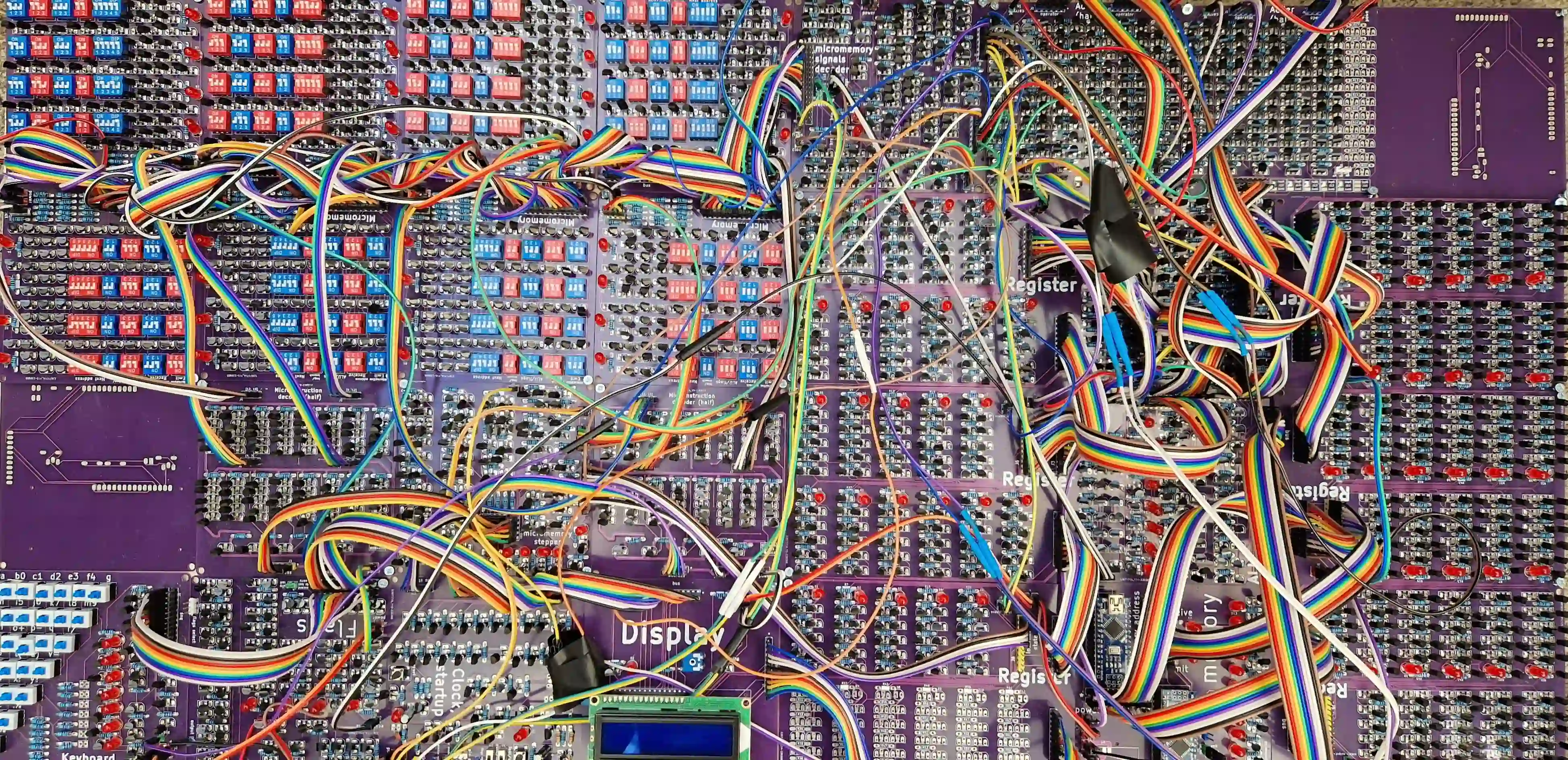
2000 MOSFET processor

The project is made in Kicad. If you want to learn more about it visit howcpuworks.com.

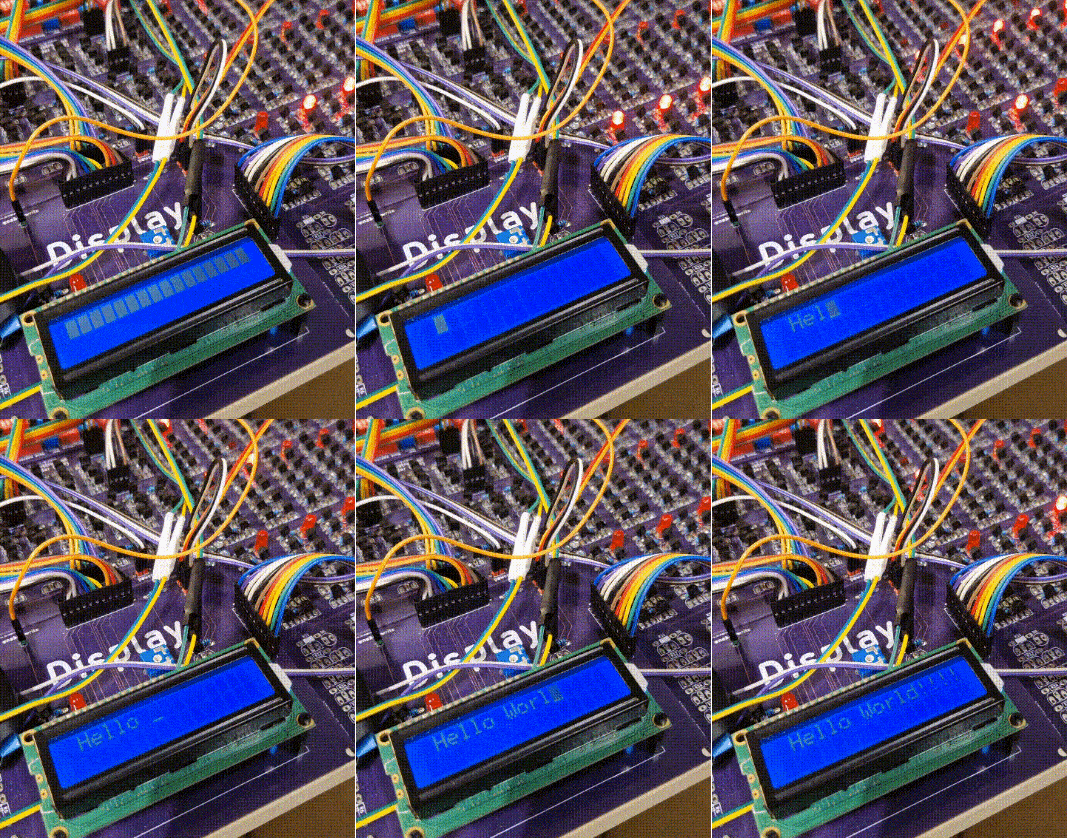
Full cpu Hello world

Conventions

  • all transistors on a board point into the same direction (or 2 perpendicular ones if needed)
  • all leds point into the same direction
  • 1k resistors are labeled with white rectangle, 1M with empty one (only violation is in the Clock board and two voltage divider resistors in LCD board)
  • "*" means high significance bits
  • "+" means positive 5V

Tips

  • you dont need to use extra usb for the power, powering through arduino is enough
  • Adder is made out of 2 smaller 6 bit adders, this means that you do not have to solder one bit (6+6=12 != 11)
  • instruction register needs only 5bits which means you do not have to solder upper 6 bits (all registers are the same board to lower costs)
  • when soldering
    • first put resistors
    • than transistors from the top left (top right if left handed)
    • leds and pin headers last

Important

  • to lower costs all registers have the same board, but TMP and IR registers do not have input and output connected to the bus, this means you have to connect it on other registers
  • You need to find the voltage that works for your LCD contrast and put those resistors

Components

  • 2N7000 MOSFETs
  • BC547 (BJT) only 4 for the astable
  • 1000 ohm registers for leds
  • 1M ohm for logic

Bugs

While I could fix the bugs I do not want to check is everything working again because I would need to solder things again. This is why I list them, so you can either fix them yourselves before or after soldering (I did after). Some bugs are just layout bugs, which means you need to be aware of them but not necessarily fix them.

Micromemory:

  • shuffled by row led, select and switches - layout bug
  • 0th line not connected to rest

Micromemory stepper:

  • shuffeled LED state order - layout bug
  • add delay from clock to it (for example RC)

Keyboard

  • same signals for simetrical (with respect to keyboard diagonal) switches
    • effectively half the number of switches
  • 1 bit not connected

Flags

  • second to last carry and last carry labels mixed - layout bug
  • flags selector selects 0 always

Clock

  • manual clock does not have a debouncer

ALU

  • add OR between ALU decoded ops and give Adder the output

Parts

206
QtyValueFootprintReferences
1212N7000processor2:2n7000_tightQ1, Q10, Q11, Q100, Q101, Q102, Q103, Q104, Q105, Q106, Q107, Q108, Q109, Q110, Q111, Q112 +105
55Rprocessor2:resistor_tightR2, R10, R11, R12, R14, R15, R16, R17, R18, R20, R21, R22, R23, R24, R26, R27 +39
11LEDprocessor2:led_5mm_tightD1, D2, D3, D4, D5, D6, D7, D8, D9, D10, D11
11Rprocessor2:resistor_led_tightR1, R7, R13, R19, R25, R31, R37, R43, R49, R55, R61
3Conn_01x02_Maleprocessor2:2pin_tightJ1, J2, J5
3Conn_01x11_Maleprocessor2:11pin_tightJ3, J4, J6
2,

Questions

How big is the Register PCB?

It measures 150 × 100 mm and has 2 copper layers, 1.6 mm thick.

What parts does the Register use?

206 parts. The full list of its parts is on this page, with links to each part's symbol and footprint where PCBKit's library has them.

Where can I download the Register KiCad files?

From the tensorway/2000transistors repository on GitHub, at the commit this page was made from: the board is src/register.kicad_pcb. PCBKit opens the board in the browser, with nothing to install.

Can I use the Register design in my own project?

Its repository states no licence, so its author keeps all rights: ask tensorway before reusing the design.

More from tensorway/2000transistors

12
  • 2 layers100 × 100 mmAdder, the printed circuit board in 3D

    Adder

    tensorway/2000transistors

    The project is made in Kicad. If you want to learn more about it visit howcpuworks.com.

    208 parts
  • 2 layers100 × 100 mmAdd select board, the printed circuit board in 3D

    Add select board

    tensorway/2000transistors

    The project is made in Kicad. If you want to learn more about it visit howcpuworks.com.
    203 parts
  • 2 layers100 × 100 mmPc step board, the printed circuit board in 3D

    Pc step board

    tensorway/2000transistors

    The project is made in Kicad. If you want to learn more about it visit howcpuworks.com.
    185 parts
  • 2 layers100 × 100 mmUmem distribution, the printed circuit board in 3D

    Umem distribution

    tensorway/2000transistors

    The project is made in Kicad. If you want to learn more about it visit howcpuworks.com.

    168 parts
  • 2 layers100 × 100 mmFlags board, the printed circuit board in 3D

    Flags board

    tensorway/2000transistors

    The project is made in Kicad. If you want to learn more about it visit howcpuworks.com.

    158 parts
  • 2 layers100 × 100 mmAlu, the printed circuit board in 3D

    Alu

    tensorway/2000transistors

    The project is made in Kicad. If you want to learn more about it visit howcpuworks.com.

    157 parts
  • 2 layers100 × 100 mm4 lines umemory, the printed circuit board in 3D

    4 lines umemory

    tensorway/2000transistors

    The project is made in Kicad. If you want to learn more about it visit howcpuworks.com.

    117 parts
  • 2 layers100 × 100 mm5decoder32 half, the printed circuit board in 3D

    5decoder32 half

    tensorway/2000transistors

    The project is made in Kicad. If you want to learn more about it visit howcpuworks.com.

    114 parts
  • 2 layers100 × 100 mmClock board, the printed circuit board in 3D

    Clock board

    tensorway/2000transistors

    The project is made in Kicad. If you want to learn more about it visit howcpuworks.com.

    109 parts
  • 2 layers100 × 100 mmKeyboard, the printed circuit board in 3D

    Keyboard

    tensorway/2000transistors

    The project is made in Kicad. If you want to learn more about it visit howcpuworks.com.

    103 parts
  • 2 layers100 × 100 mmMemory board, the printed circuit board in 3D

    Memory board

    tensorway/2000transistors

    The project is made in Kicad. If you want to learn more about it visit howcpuworks.com.

    53 parts
  • 2 layers100 × 100 mmLcd board, the printed circuit board in 3D

    Lcd board

    tensorway/2000transistors

    The project is made in Kicad. If you want to learn more about it visit howcpuworks.com.

    14 parts

Similar boards

  • 2 layers347 × 156.3 mmEnvKB HS, the printed circuit board in 3D

    EnvKB HS

    Envious-Data/Env-KB

    A custom mechanical keyboard inspired by the CFTKB Mysterium utilizing the Raspberry Pi Pico

    206 parts256GPL-3.0
  • 2 layers213 × 65.1 mmSizif512, the printed circuit board in 3D

    Sizif512

    UzixLS/zx-sizif-512

    ZX Spectrum CPLD-based clone for rubber case

    206 parts195MIT
  • 2 layers129.5 × 127.6 mmZMRETestFixture, the printed circuit board in 3D

    ZMRETestFixture

    rusefi/hw_microRusEfi

    microRusEfi board for rusEfi ECU

    206 parts98
  • 2 layers70.5 × 128.3 mmBare VCA II, the printed circuit board in 3D

    Bare VCA II

    Blinken-Lights/ASCII

    ASCII Modular hardware and software repo

    206 parts50MIT
  • 2 layers345.7 × 134.1 mmOpenclack tkl, the printed circuit board in 3D

    Openclack tkl

    jtryon/openclack

    OpenClack

    206 parts14
  • 2 layers268.5 × 110.3 mmCornel, the printed circuit board in 3D

    Cornel

    hibiyasleep/cornelike

    yet another Corne clone, but with 5 rows.

    206 parts9
  • 2 layers109.2 × 78.7 mmPOC temp control, the printed circuit board in 3D

    POC temp control

    Squantor/DiySolderingStation

    Do it yourself soldering station

    206 parts7MIT
  • 2 layers119.9 × 108 mmLx deciim, the printed circuit board in 3D

    Lx deciim

    lucblender/lx-deciim

    lx-deciim is a dual-channel bitcrusher Eurorack module based on the Daisy Seed. Unlike traditional bitcrushers, it lets you selectively disable bits and replace them with CV-controlled triggers.

    206 parts5