2 layers298.5 × 139 mm
BareDevRev2
ManoShu/BareDev
ABNT2-based 70% keyboard, with a sandwich case and display stand
358 parts1MIT

 ManoShu/BareDev1
ABNT2-based 70% keyboard, with a sandwich case and display stand
Keyboard is an open-source printed circuit board by ManoShu, from the ManoShu/BareDev repository on GitHub, published under the MIT licence. It is a 2-layer board of 298.5 × 139 mm with 261 parts on 201 nets, routed with 1,169 tracks and 52 vias.
It is built around the ATMEGA32U4-AU, USBLC6-2SC6 and AO3401A. Its parts include 86 resistors, 7 capacitors, 2 ICs, 1 diode and 1 transistor. It belongs with the keyboards and input boards and the AVR (ATmega, ATtiny) boards of this library.


An open-source, QMK-compatible, ABNT2-based 70% keyboard, focusing in a smaller footprint while retaining all the functions found on a TKL (Del and arrow keys doubling as the navigational cluster)
Layout:
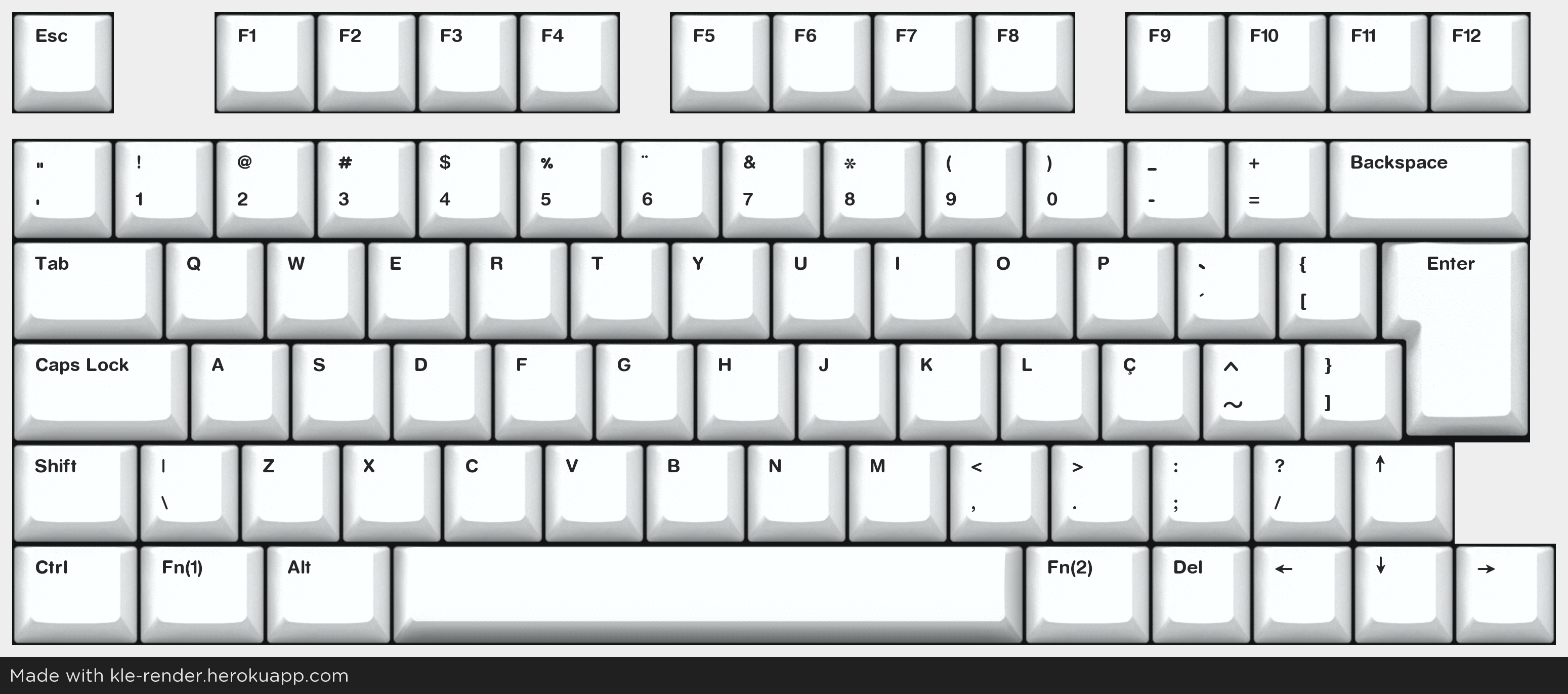
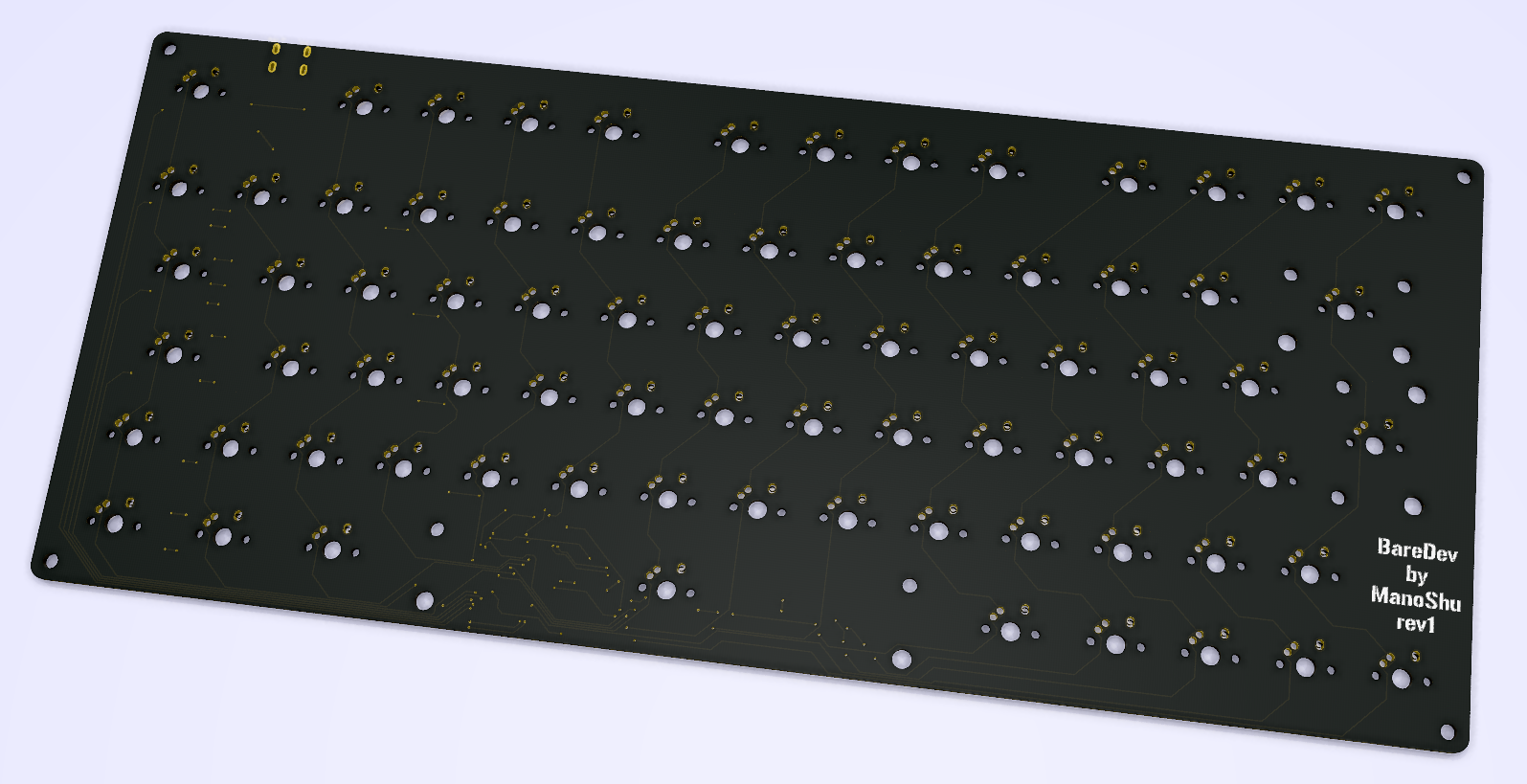
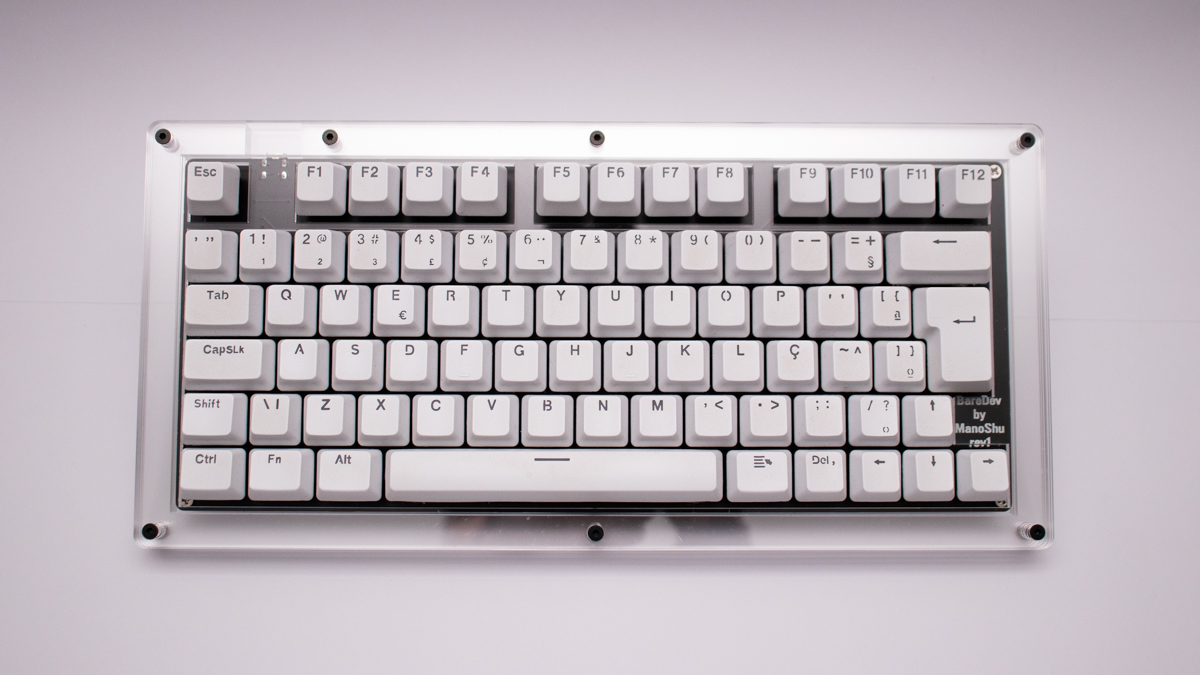
Note: this photo is of an early prototype of the case. The uploaded files has been updated to require less total area and WILL look slighty different than shown (the overall dimensions remain the same).
The case and gerber files are under production. The had been used and confirmed to work, however use them at your own risk.
The rev1 has been integrated in the main QMK repository, being able to use the online configurator to generate the firmware while also having the files on the qmk directory here in case of you don't want to update your fork (HOWEVER the files have been confirmed working on QMK 0.2.2 [check yours with qmk --version], previous versions might not have support for some of the tags in the info.json file)
A via keymap is available allowing to use VIA to change keybindings without the need to setup QMK.
It is not integrated with the official repository yet, but the .json file required to change bindings is available on the via directory.
A VIAL-compatible keymap is also available. It is on the official repository, but in case you don't want to update, just drop the keyboard folder to your vial-qmk directory and it should also work right off the bat.
| Qty | Value | Footprint | References |
|---|---|---|---|
| 77 | 2K | My:R_0805_2012Metric_NoSilk | R10, R11, R12, R13, R14, R15, R16, R17, R19, R20, R21, R22, R23, R24, R25, R26 +61 |
| 77 | D | My:D_SOD-123_NoSilk | D_0, D_1, D_2, D_10, D_11, D_12, D_13, D_14, D_15, D_16, D_17, D_18, D_19, D_20, D_21, D_22 +61 |
| 67 | KEYSW | MX_Only:MXOnly-1U | K_0, K_1, K_2, K_10, K_11, K_12, K_13, K_14, K_15, K_16, K_17, K_18, K_19, K_20, K_21, K_22 +51 |
| 5 | KEYSW | MX_Only:MXOnly-1.25U | K_54, K_68, K_69, K_70, K_72 |
| 4 | MountingHole | MountingHole:MountingHole_3.2mm_M3 | H1, H2, H3, H4 |
| 3 | 0.1uF | My:C_0805_2012Metric_NoSilk | C4, C5, C6 |
| 3 | 10k | My:R_0805_2012Metric_NoSilk | R1, R4, R85 |
| 2 | 22 | My:R_0805_2012Metric_NoSilk | R2, R3 |
| 2 | 22pF | My:C_0805_2012Metric_NoSilk | C1, C2 |
| 2 | 5k1 | My:R_0805_2012Metric_NoSilk | R82, R83 |
| 2 | LOGO | LOGO | G***, G*** |
| 1 | 100 | My:R_0805_2012Metric_NoSilk | R18 |
| 1 | 10uF | My:C_0805_2012Metric_NoSilk | C7 |
| 1 | 16MHz | Crystal:Crystal_SMD_3225-4Pin_3.2x2.5mm | Y1 |
| 1 | 1uF | My:C_0805_2012Metric_NoSilk | C3 |
| 1 | 470 | My:R_0805_2012Metric_NoSilk | R86 |
| 1 | 500mA | Fuse:Fuse_1206_3216Metric | F1 |
| 1 | AO3401A | Package_TO_SOT_SMD:SOT-23 | Q1 |
| 1 | ATmega32U4-AU | Package_QFP:TQFP-44_10x10mm_P0.8mm | U1 |
| 1 | HRO-TYPE-C-31-M-12 | Type-C:HRO-TYPE-C-31-M-12-Assembly | USB1 |
| 1 | KEYSW | MX_Only:MXOnly-1.5U | K_27 |
| 1 | KEYSW | My:MXOnly-ISO_NorthFacing | K_40 |
| 1 | KEYSW | MX_Only:MXOnly-6.25U-ReversedStabilizers | K_71 |
| 1 | KEYSW | MX_Only:MXOnly-2U-ReversedStabilizers | K_26 |
| 1 | KEYSW | MX_Only:MXOnly-1.75U | K_41 |
| 1 | LED | LED_SMD:LED_0603_1608Metric_Pad1.05x0.95mm_HandSolder | D1 |
| 1 | SW_Push | Button_Switch_SMD:SW_SPST_SKQG_WithStem | SW1 |
| 1 | USBLC6-2SC6 | Package_TO_SOT_SMD:SOT-23-6 | U2 |
ManoShu/BareDev
ABNT2-based 70% keyboard, with a sandwich case and display stand

ManoShu/BareDev
ABNT2-based 70% keyboard, with a sandwich case and display stand


sadekbaroudi/euclid36
At the time of creation, using Kicad 5.1.9 - This may not work with future versions

eightbitraptor/65_keyboard_untitled
My as yet unnamed 65% keyboard design


sini6a/phnx
PHNX is an ergonomic keyboard featuring 54 MX compatible switches. It is inspired by the Miryoku layout and includes one additional row at the top along with macro keys on both sides.

palexander23/HurdyGurdy-PCB
This repository contains PCB design files, that will go towards the eventual creation of an electronic Hurdy Gurdy.


It measures 298.5 × 139 mm and has 2 copper layers, 1.6 mm thick.
261 parts, built around the ATMEGA32U4-AU, USBLC6-2SC6 and AO3401A. The full list of its parts is on this page, with links to each part's symbol and footprint where PCBKit's library has them.
From the ManoShu/BareDev repository on GitHub, at the commit this page was made from: the board is kicad/rev2a/keyboard.kicad_pcb and its schematic kicad/rev1/keyboard.kicad_sch. PCBKit opens the board in the browser, with nothing to install.
Its repository publishes it under the MIT licence: you may reuse it on that licence's terms (keep the author's notice, and for a copyleft licence share your changes alike).