2 layers41 × 56.3 mm

 kajusK/Picoballoon2020
Probe for Observatory and Planetarium Brno Picoballoon Challenge 2020
Baloon is an open-source printed circuit board by kajusK, from the kajusK/Picoballoon2020 repository on GitHub, published under the GPL-3.0 licence. It is a 2-layer board of 22.3 × 49.9 mm with 66 parts on 43 nets, routed with 855 tracks and 127 vias.
It is built around the MCP1640-I/MC, SI7020-A20-GM and MCP101-270DI/TO, with the RFM95W-868S2, BAT20J and SRN2510F-4R7M among its other parts. Its parts include 23 resistors, 19 capacitors, 8 ICs, 6 connectors and 3 diodes. It belongs with the sensors and measurement boards and the STM32 boards of this library.


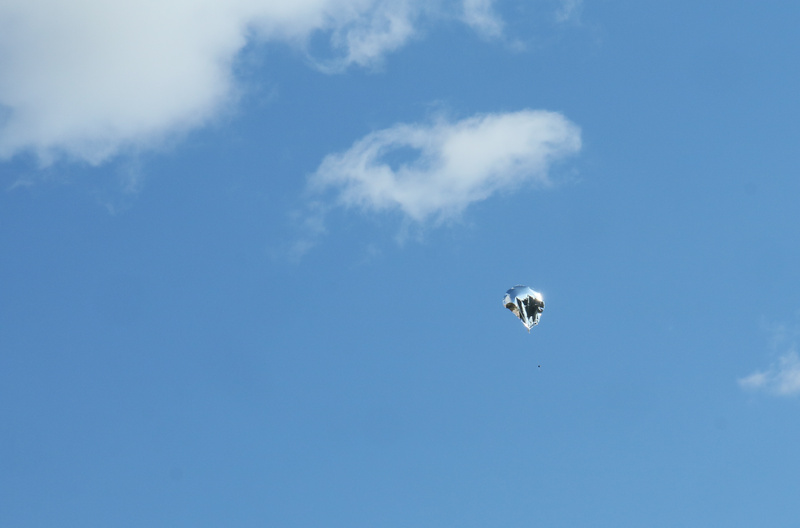
This probe was designed Picoballoon Challenge organised by Brno Observatory and Planetarium. A goal of this competition is to make a probe under 20 grams that would be launched on ballon to altitudes around 5-15 km. Only requirement except weight is sending altitude of the probe.
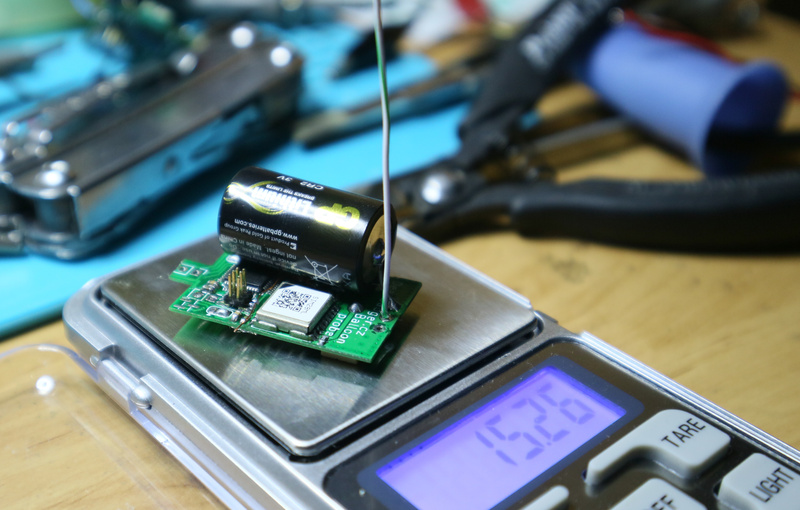
A detailed description is available at deadbadger.cz, tracking site is at bal.deadbadger.cz.
The probe contains
As the commonly used LMIC library is quite bulky and far from perfect, I wrote my own LoRaWan library inspired by TinyLoRa.
The main loop does about this:
The board was designed for 0.6 mm thick two sided PCB to reduce weight as much as possible. Using thicker boards (usually 1.6 mm) changes the antenna trace impedance, but it should not be that significant.
The solar supercap charger can be snapped off if the probe is powered by battery
Data received by TTN are sent over HTTP integration to custom endpoint written in PHP, it verifies the auth header and stores data in sqlite database.
User frontend is written in PHP, it shows all received packets in table and generates flight path on a map.
| Qty | Value | Footprint | References |
|---|---|---|---|
| 11 | 100n | Capacitor_SMD:C_0603_1608Metric | C1, C2, C4, C7, C8, C9, C11, C13, C14, C16, C20 |
| 6 | 10k | Resistor_SMD:R_0603_1608Metric | R1, R2, R3, R4, R5, R15 |
| 5 | 10u | Capacitor_SMD:C_0603_1608Metric | C10, C15, C17, C19, C21 |
| 4 | 1M | Resistor_SMD:R_0603_1608Metric | R6, R7, R8, R12 |
| 3 | 100k | Resistor_SMD:R_0603_1608Metric | R13, R16, R17 |
| 3 | 680k | Resistor_SMD:R_0603_1608Metric | R18, R19, R23 |
| 2 | 1u | Capacitor_SMD:C_0603_1608Metric | C6, C12 |
| 2 | BAT20J | Diode_SMD:D_SOD-323 | D1, D2 |
| 2 | MCP1640 | Package_TO_SOT_SMD:SOT-23-6 | U6, U8 |
| 2 | SRN2510F-4R7M | Inductor_SMD:L_Abracon_ASPI-3012S | L2, L3 |
| 1 | 0 | Resistor_SMD:R_0603_1608Metric | R21 |
| 1 | 100 | Resistor_SMD:R_0603_1608Metric | R22 |
| 1 | 360k | Resistor_SMD:R_0603_1608Metric | R10 |
| 1 | 390k | Resistor_SMD:R_0603_1608Metric | R20 |
| 1 | 3F3/3V | OptoDevice:R_LDR_5.2x5.2mm_P3.5mm_Horizontal | C18 |
| 1 | 3V | Diode_SMD:D_SOD-323 | D3 |
| 1 | 510k | Resistor_SMD:R_0603_1608Metric | R9 |
| 1 | 56 | Resistor_SMD:R_0603_1608Metric | R11 |
| 1 | ANT | Connector_Wire:SolderWirePad_1x01_Drill1mm | J4 |
| 1 | ANT | Connector_Wire:SolderWirePad_1x03_P3.175mm_Drill0.8mm | J5 |
| 1 | BAT | Connector_PinHeader_2.54mm:PinHeader_1x02_P2.54mm_Vertical | J6 |
| 1 | BC847 | Package_TO_SOT_SMD:SOT-23 | Q1 |
| 1 | BC857 | Package_TO_SOT_SMD:SOT-23 | Q2 |
| 1 | DEBUG | Connector_PinSocket_1.00mm:PinSocket_1x03_P1.00mm_Vertical_SMD_Pin1Left | J2 |
| 1 | DMP2035 | Package_TO_SOT_SMD:SOT-23 | Q3 |
| 1 | DNP | Resistor_SMD:R_0603_1608Metric | R14 |
| 1 | EN | Jumper:SolderJumper-2_P1.3mm_Open_RoundedPad1.0x1.5mm | JP2 |
| 1 | MAX-8C/SIM28ML | RF_GPS:ublox_MAX | U5 |
| 1 | MCP101-270D | Package_TO_SOT_SMD:SOT-23 | U7 |
| 1 | MS5607-02BA | Package_LGA:LGA-8_3x5mm_P1.25mm | U3 |
| 1 | RFM95W-868S2 | RF_Module:HOPERF_RFM9XW_SMD | U4 |
| 1 | SOLAR | Connector_PinHeader_2.54mm:PinHeader_1x02_P2.54mm_Vertical | J1 |
| 1 | STM32F030C8Tx | Package_QFP:LQFP-48_7x7mm_P0.5mm | U1 |
| 1 | SWO | Connector_PinHeader_1.27mm:PinHeader_2x03_P1.27mm_Vertical_SMD | J3 |
| 1 | Si7020-A20 | Package_DFN_QFN:DFN-6-1EP_3x3mm_P1mm_EP1.5x2.4mm | U2 |
| 1 | backup | Jumper:SolderJumper-3_P1.3mm_Open_RoundedPad1.0x1.5mm | JP1 |

kajusK/Picoballoon2021
Brno Observatory Picoballoon Competition probe for 2021

RoboticsBrno/RB0009-Beam-Hop
Beambot module that hops the motor when the capacitor is charged enough.

kitspace/component_tester
A keychain version of the Mikrontroller.net AVR component tester

XasWorks/dragon-home
A rework of our old SmartHome project, this time done cleanly and neatly~

pluggee/piweather
raspberry pi based system for weather monitoring and automation

Hackuarium/esp-12e
PWM on all the pins ! HSPI (screen or other): 12 13 14 15 PWM: R12 G15 B13 ADC: TOUT I2C: SCL14 SDA2

Hackuarium/esp-32wroom
Start by installing the ESP32 board in Arduino IDE https://randomnerdtutorials.com/installing-the-esp32-board-in-arduino-ide-mac-and-linux-instructions/ (Mac/Linux)…
It measures 22.3 × 49.9 mm and has 2 copper layers, 1.6 mm thick.
66 parts, built around the MCP1640-I/MC, SI7020-A20-GM, MCP101-270DI/TO and RFM95W-868S2. The full list of its parts is on this page, with links to each part's symbol and footprint where PCBKit's library has them.
From the kajusK/Picoballoon2020 repository on GitHub, at the commit this page was made from: the board is hw/baloon.kicad_pcb. PCBKit opens the board in the browser, with nothing to install.
Its repository publishes it under the GPL-3.0 licence: you may reuse it on that licence's terms (keep the author's notice, and for a copyleft licence share your changes alike).