2 layers100 × 52 mm
Device
jayis1/hacker-devices
Full-cycle hardware designs for security research devices — each device is a subfolder with its own README, schematics, PCB layout, and software stack
5 parts2

 fossasia/pslab-mini-hardware1.2k
PSLab Mini Hardware https://pslab.io
Pslab mini is an open-source printed circuit board by fossasia, from the fossasia/pslab-mini-hardware repository on GitHub, published under the Apache-2.0 licence. It is a 4-layer board of 85 × 56 mm with 182 parts on 142 nets, routed with 1,102 tracks and 203 vias.
It is built around the ESP32-C3, STM32H563RIT6 and MT2496, with the AMS1117-3.3, IP5189T-QW and SP0503BAHTG among its other parts. Its parts include 59 capacitors, 52 resistors, 10 ICs, 7 diodes and 6 connectors. It belongs with the sensors and measurement boards and the ESP32, STM32 and RISC-V boards of this library.


This repository contains the PSLab-Mini hardware design files. PSLab-Mini is a scaled-down version of the PSLab board, aiming to provide instruments for doing signal measurements. It consists of an Oscilloscope, a Logic analyzer, and a Multimeter.
It also integrates an ESP chip in conjunction with the main MCU(STM32), for enabling wireless connectivity via the board.
| Front Side | Back Side |
|---|---|
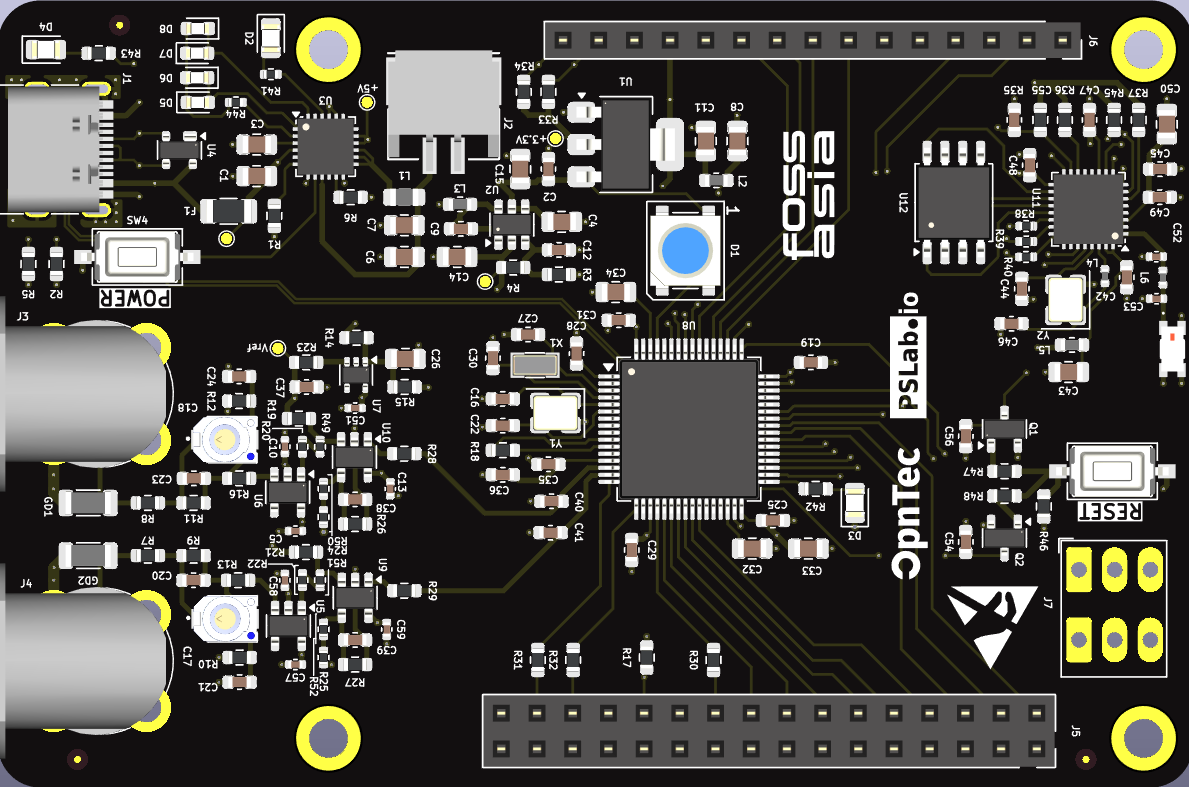 | 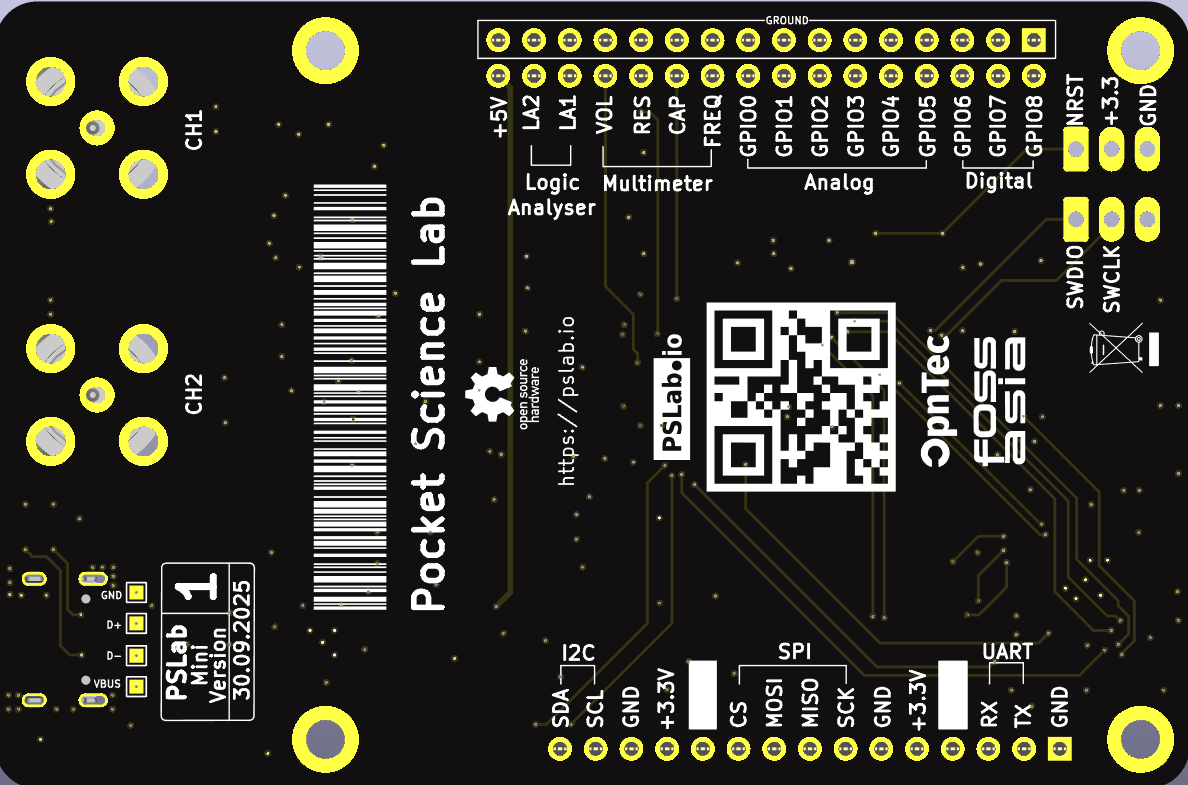 |
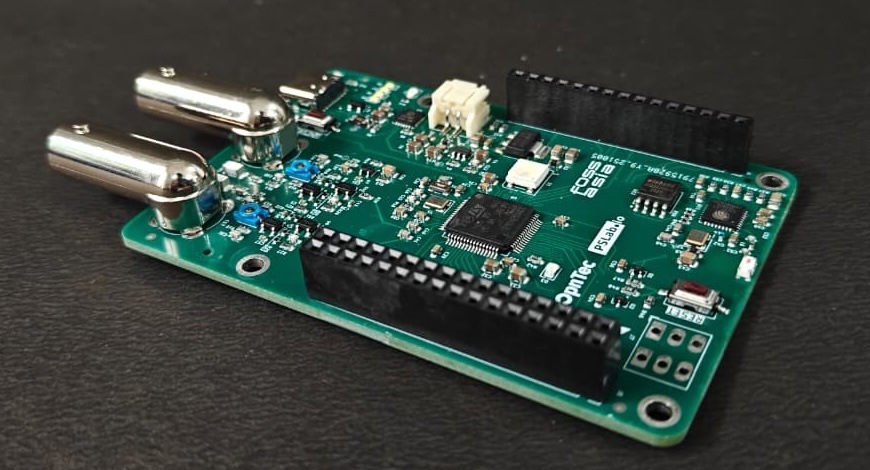 | 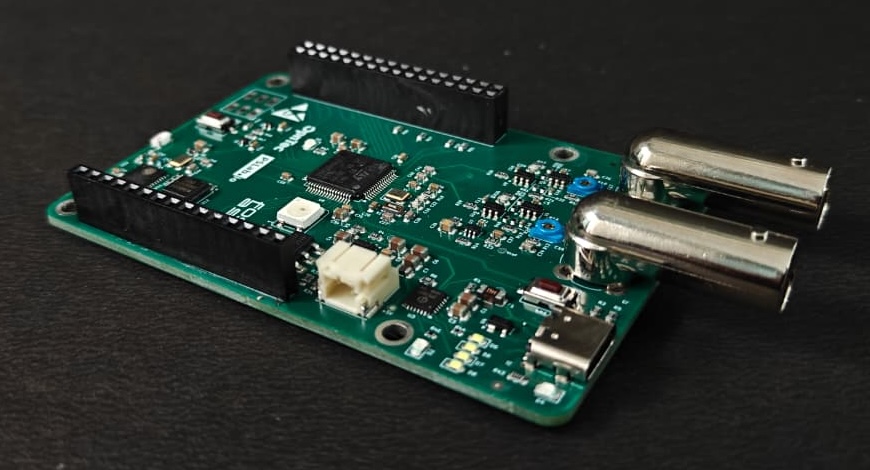 |
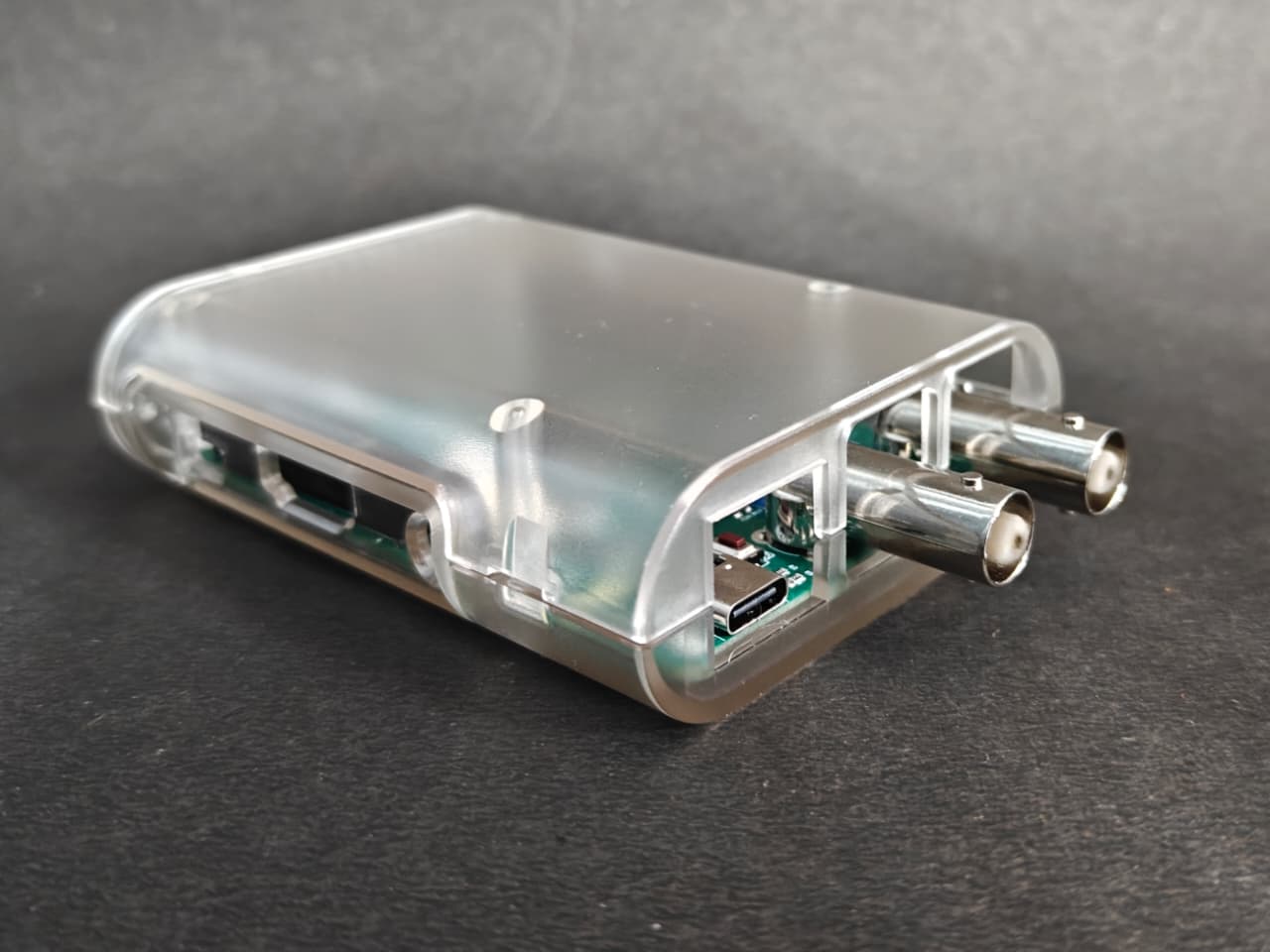
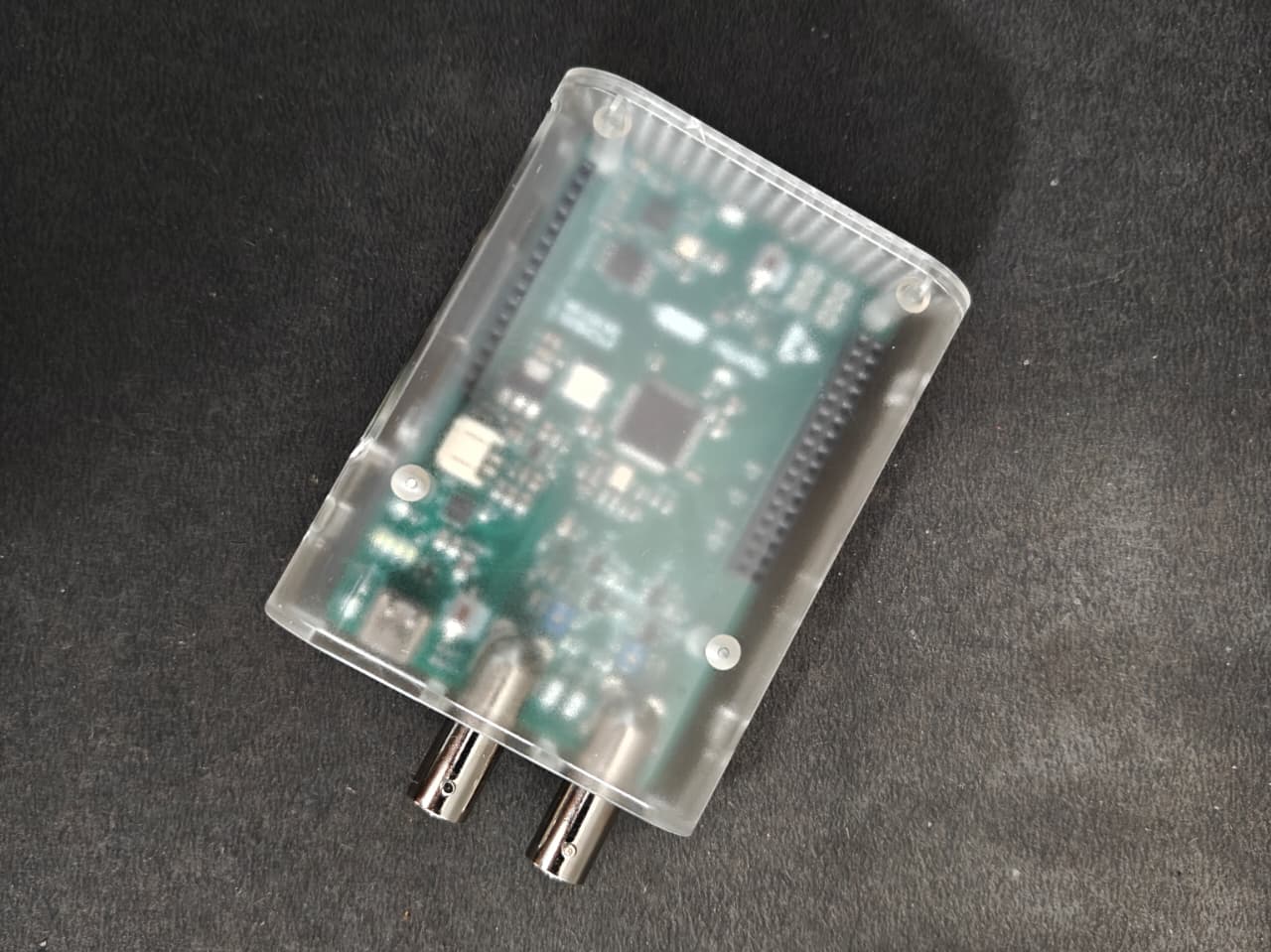
The PSLab Mini is designed to use Raspberry Pi 3/4 Cases, which are already widely available, without any modification.
All the ports remain accessible in the casing (USB, BNC Connectors, and battery connector).
 |  |
Oscilloscope
Logic Analyser
Multimeter
| Pin Name | Pin (on Microcontroller) | Type |
|---|---|---|
| GPIO 0 | PA5 | Analog Pin |
| GPIO 1 | PA6 | Analog Pin |
| GPIO 2 | PA7 | Analog Pin |
| GPIO 3 | PC4 | Analog Pin |
| GPIO 4 | PC5 | Analog Pin |
| GPIO 5 | PB0 | Analog Pin |
| GPIO 6 | PC8 | Digital Pin |
| GPIO 7 | PC9 | Digital Pin |
| GPIO 8 | PA8 | Digital Pin |
| Pin Name | Pin (on Microcontroller) | Type |
|---|---|---|
| LA1 | PA3 | Logic Analyser Channel-1 |
| LA2 | PA2 | Logic Analyser Channel-2 |
| FQY | PA4 | Frequency Measurement |
| VOL | PC0 | Voltage Measurement |
| RES | PC1 | Resistance Measurement |
| CAP | PC3 | Capacitance Measurement |
| Connector Number | Pin (on Microcontroller) | Type |
|---|---|---|
| CH1 | PA0 | Oscilloscope Channel-1 |
| CH2 | PA1 | Oscilloscope Channel-2 |
| UART_1 | Connected to ESP32 |
| SPI_2 | Connected to ESP32 |
| UART_6 | Connected to External header pins |
| SPI_3 | Connected to External header pins |
| I2C_1 | Connected to External header pins |
| SPI_1 | Connected to External NOR flash |
| UART_1 | Connected to STM32 |
| SPI_2 | Connected to STM32 |
The reset button on the board resets both the STM32 and the ESP32 simultaneously.
In addition, the STM32 can reset ESP32 through an output pin:
PB5 (STM32) → CHIP_EN (ESP32)
| Qty | Value | Footprint | References |
|---|---|---|---|
| 14 | 10k | Resistor_SMD:R_0603_1608Metric | R14, R15, R18, R19, R21, R26, R27, R35, R36, R37, R45, R46, R47, R48 |
| 12 | 100nF | Capacitor_SMD:C_0603_1608Metric | C19, C25, C28, C29, C31, C35, C37, C45, C47, C54, C55, C56 |
| 8 | 3k | Resistor_SMD:R_0402_1005Metric | R20, R22, R24, R25, R49, R50, R51, R52 |
| 7 | 100nF | Capacitor_SMD:C_0402_1005Metric | C5, C10, C13, C51, C57, C58, C59 |
| 7 | 22uF | Capacitor_SMD:C_0805_2012Metric | C1, C4, C6, C7, C11, C14, C15 |
| 7 | 5k1 | Resistor_SMD:R_0603_1608Metric | R2, R5, R17, R33, R34, R42, R43 |
| 5 | 1uF | Capacitor_SMD:C_0603_1608Metric | C2, C36, C42, C48, C49 |
| 4 | 10pF | Capacitor_SMD:C_0603_1608Metric | C27, C30, C44, C46 |
| 4 | 10uF | Capacitor_SMD:C_0805_2012Metric | C8, C26, C43, C50 |
| 4 | MountingHole_Pad | pslab-mini:MountingHole_2.75mm_Pad | MH1, MH2, MH3, MH4 |
| 4 | OPA356AIDBVR | Package_TO_SOT_SMD:SOT-23-5 | U5, U6, U9, U10 |
| 3 | 0 | Resistor_SMD:R_0402_1005Metric | R38, R39, R40 |
| 3 | 2.2uF | Capacitor_SMD:C_0805_2012Metric | C3, C32, C34 |
| 3 | 200 | Resistor_SMD:R_0603_1608Metric | R30, R31, R32 |
| 3 | 3.3uH | Inductor_SMD:L_0603_1608Metric | L2, L3, L5 |
| 2 | 1.2pF | Capacitor_SMD:C_0603_1608Metric | C38, C39 |
| 2 | 10R | Resistor_SMD:R_0603_1608Metric | R7, R8 |
| 2 | 16pF | Capacitor_SMD:C_0603_1608Metric | C20, C23 |
| 2 | 180k | Resistor_SMD:R_0603_1608Metric | R10, R12 |
| 2 | 200 | Resistor_SMD:R_0402_1005Metric | R41, R44 |
| 2 | 22pF | Capacitor_SMD:C_0603_1608Metric | C40, C41 |
| 2 | 2k | Resistor_SMD:R_0603_1608Metric | R13, R16 |
| 2 | 2pF~6pF | pslab-mini:STC3MA06-T1 | C17, C18 |
| 2 | 47R | Resistor_SMD:R_0603_1608Metric | R28, R29 |
| 2 | 5.6pF | Capacitor_SMD:C_0603_1608Metric | C16, C22 |
| 2 | 820k | Resistor_SMD:R_0603_1608Metric | R9, R11 |
| 2 | 90pF | Capacitor_SMD:C_0603_1608Metric | C21, C24 |
| 2 | Conn_Coaxial | pslab-mini:BNC_connector_dosinconn DOSIN-801-0050 | J3, J4 |
| 2 | GREEN | LED_SMD:LED_0805_2012Metric | D2, D3 |
| 2 | MMBT3904 | pslab-mini:SOT-416 | Q1, Q2 |
| 2 | SMD3216-090N | pslab-mini:SMD3216-090N | GD1, GD2 |
| 2 | TBD | Capacitor_SMD:C_0402_1005Metric | C52, C53 |
| 1 | +3V3 | pslab-mini:Test_Point_0.8mm | TP1 |
| 1 | +5V | pslab-mini:Test_Point_0.8mm | TP5 |
| 1 | -2V | pslab-mini:Test_Point_0.8mm | TP6 |
| 1 | 100% | LED_SMD:LED_0603_1608Metric | D8 |
| 1 | 100k | Resistor_SMD:R_0603_1608Metric | R3 |
| 1 | 12pF | Capacitor_SMD:C_0603_1608Metric | C12 |
| 1 | 1A | Fuse:Fuse_1206_3216Metric | F1 |
| 1 | 200k | Resistor_SMD:R_0603_1608Metric | R6 |
| 1 | 22nF | Capacitor_SMD:C_0603_1608Metric | C9 |
| 1 | 2450AT18D0100001E | pslab-mini:2450AT18D0100001E | ANT1 |
| 1 | 24nH | Inductor_SMD:L_0402_1005Metric | L4 |
| 1 | 25% | LED_SMD:LED_0603_1608Metric | D5 |
| 1 | 32kHz768 | Crystal:Crystal_SMD_3215-2Pin_3.2x1.5mm | X1 |
| 1 | 4.7uF | Capacitor_SMD:C_0805_2012Metric | C33 |
| 1 | 4.7uH | Inductor_SMD:L_0805_2012Metric | L1 |
| 1 | 40MHz | Crystal:Crystal_SMD_3225-4Pin_3.2x2.5mm | Y2 |
| 1 | 42.2k | Resistor_SMD:R_0603_1608Metric | R4 |
| 1 | 4R7 | Resistor_SMD:R_0603_1608Metric | R23 |
| 1 | 50% | LED_SMD:LED_0603_1608Metric | D6 |
| 1 | 51k | Resistor_SMD:R_0603_1608Metric | R1 |
| 1 | 75% | LED_SMD:LED_0603_1608Metric | D7 |
| 1 | AMS1117-3.3 | Package_TO_SOT_SMD:SOT-223-3_TabPin2 | U1 |
| 1 | BAT | pslab-mini:2.0mm_connector_edge | J2 |
| 1 | BL | Fiducial:Fiducial_0.5mm_Mask1.5mm | FID3 |
| 1 | BLUE | LED_SMD:LED_0805_2012Metric | D4 |
| 1 | Barcode | pslab-mini:Barcode | Z10 |
| 1 | Conn_01x15_Socket | Connector_PinSocket_2.54mm:PinSocket_1x15_P2.54mm_Vertical | J6 |
| 1 | Conn_02x03_Top_Bottom | pslab-mini:pslab-mini_2x03_P2.54mm | J7 |
| 1 | Conn_02x16_Odd_Even | Connector_PinSocket_2.54mm:PinSocket_2x16_P2.54mm_Vertical | J5 |
| 1 | Crystal_25MHz | Crystal:Crystal_SMD_3225-4Pin_3.2x2.5mm | Y1 |
| 1 | ESD_logo | Symbol:ESD-Logo_6.6x6mm_SilkScreen | Z6 |
| 1 | ESP32-C3 | Package_DFN_QFN:QFN-32-1EP_5x5mm_P0.5mm_EP3.7x3.7mm | U11 |
| 1 | Fossasia logo back | pslab-mini:logo_fossasia | Z2 |
| 1 | Fossasia logo front | pslab-mini:logo_fossasia | Z8 |
| 1 | GND | TestPoint:TestPoint_Pad_1.0x1.0mm | TP9 |
| 1 | IP5189T | Package_DFN_QFN:QFN-24-1EP_4x4mm_P0.5mm_EP2.6x2.6mm | U3 |
| 1 | MT2496 | Package_TO_SOT_SMD:SOT-23-6 | U2 |
| 1 | OpenHardware | pslab-mini:logo_open_source_hardware | Z4 |
| 1 | OpnTec logo back | pslab-mini:logo_opntec | Z3 |
| 1 | OpnTec logo front | pslab-mini:logo_opntec | Z9 |
| 1 | PSLab logo back | pslab-mini:logo_pslab.io | Z1 |
| 1 | PSLab logo front | pslab-mini:logo_pslab.io | Z7 |
| 1 | Power | Button_Switch_SMD:SW_Tactile_SPST_NO_Straight_CK_PTS636Sx25SMTRLFS | SW4 |
| 1 | QR Code | pslab-mini:Website_QR | Z11 |
| 1 | Reset | Button_Switch_SMD:SW_Tactile_SPST_NO_Straight_CK_PTS636Sx25SMTRLFS | SW1 |
| 1 | SP0503BAHT | Package_TO_SOT_SMD:SOT-143 | U4 |
| 1 | STM32H563RIT6 | Package_QFP:LQFP-64_10x10mm_P0.5mm | U8 |
| 1 | TBD | Inductor_SMD:L_0402_1005Metric | L6 |
The 170 most common of 182 parts.
jayis1/hacker-devices
Full-cycle hardware designs for security research devices — each device is a subfolder with its own README, schematics, PCB layout, and software stack


sigmondkukla/lmp91000
This repository contains the C++ firmware for the custom potentiostat platform (featuring an LMP91000 analog front end, EFR32BG24 MCU, and an LSM6DSV IMU) alongside a Python-based real-time wireless BLE debugging client.


fossasia/pslab-hardware
PSLab Hardware Design and Schematics https://pslab.io

kwartzlab/Environmental-Sensor
The source for the environmental sensors used at Kwartzlab
It measures 85 × 56 mm and has 4 copper layers, 1.6 mm thick.
182 parts, built around the ESP32-C3, STM32H563RIT6, MT2496 and AMS1117-3.3. The full list of its parts is on this page, with links to each part's symbol and footprint where PCBKit's library has them.
From the fossasia/pslab-mini-hardware repository on GitHub, at the commit this page was made from: the board is schematic/pslab-mini.kicad_pcb and its schematic schematic/pslab-mini.kicad_sch. PCBKit opens the board in the browser, with nothing to install.
Its repository publishes it under the Apache-2.0 licence: you may reuse it on that licence's terms (keep the author's notice, and for a copyleft licence share your changes alike).