4 layers50 × 50 mm
MCU Board 0.1
thejamesrhodes/Hyades-Flight-Computer
Full Hardware and Electronics design, Bare-metal GNC flight software for an actively attitude-controlled high-power rocket
80 parts1Apache-2.0

 ChladpavPy/Horizon
Custom Rocket Flight Controller
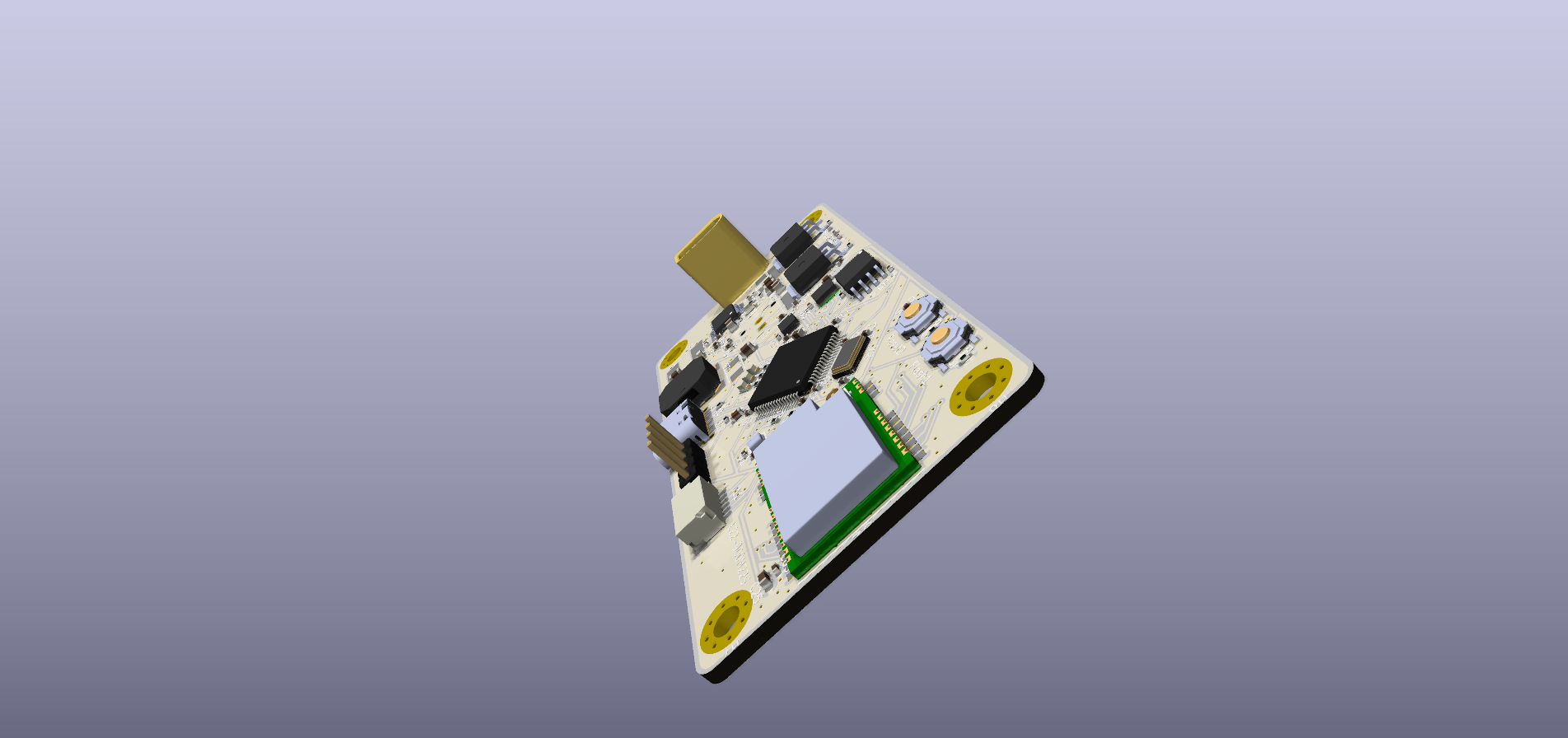
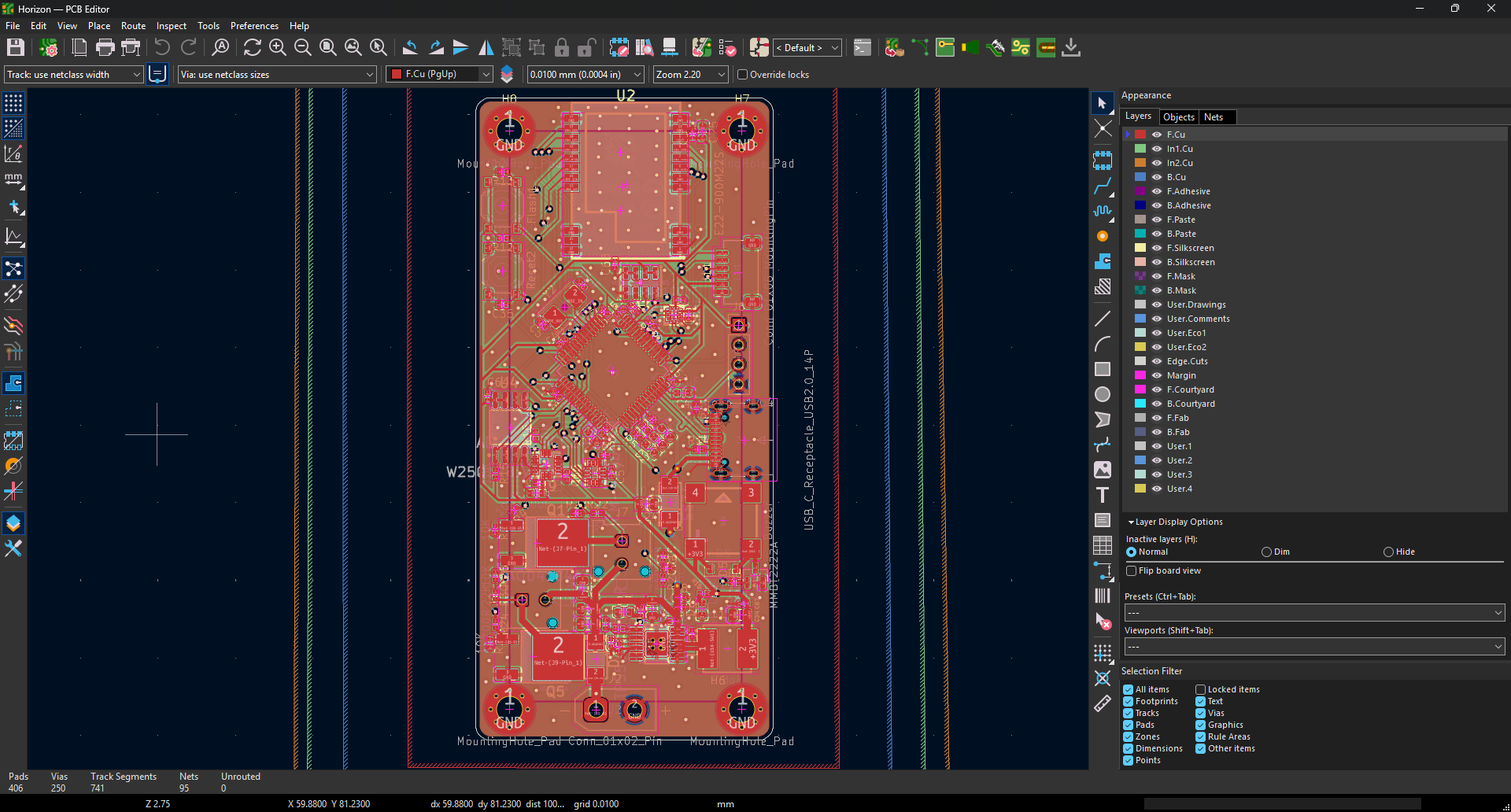
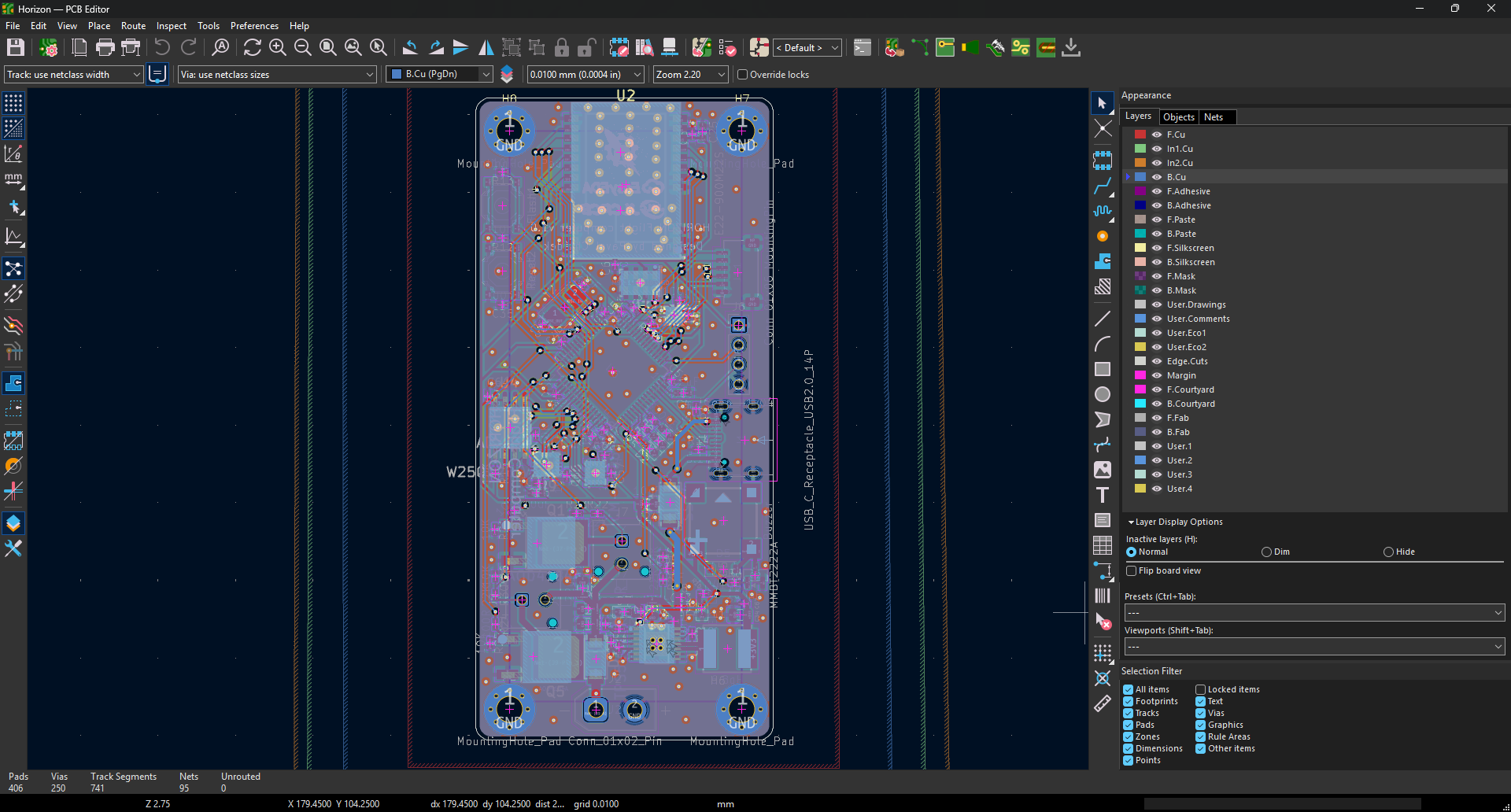
Horizon is an open-source printed circuit board by ChladpavPy, from the ChladpavPy/Horizon repository on GitHub. It is a 4-layer board of 38.4 × 82.8 mm with 99 parts on 94 nets, routed with 753 tracks and 268 vias.
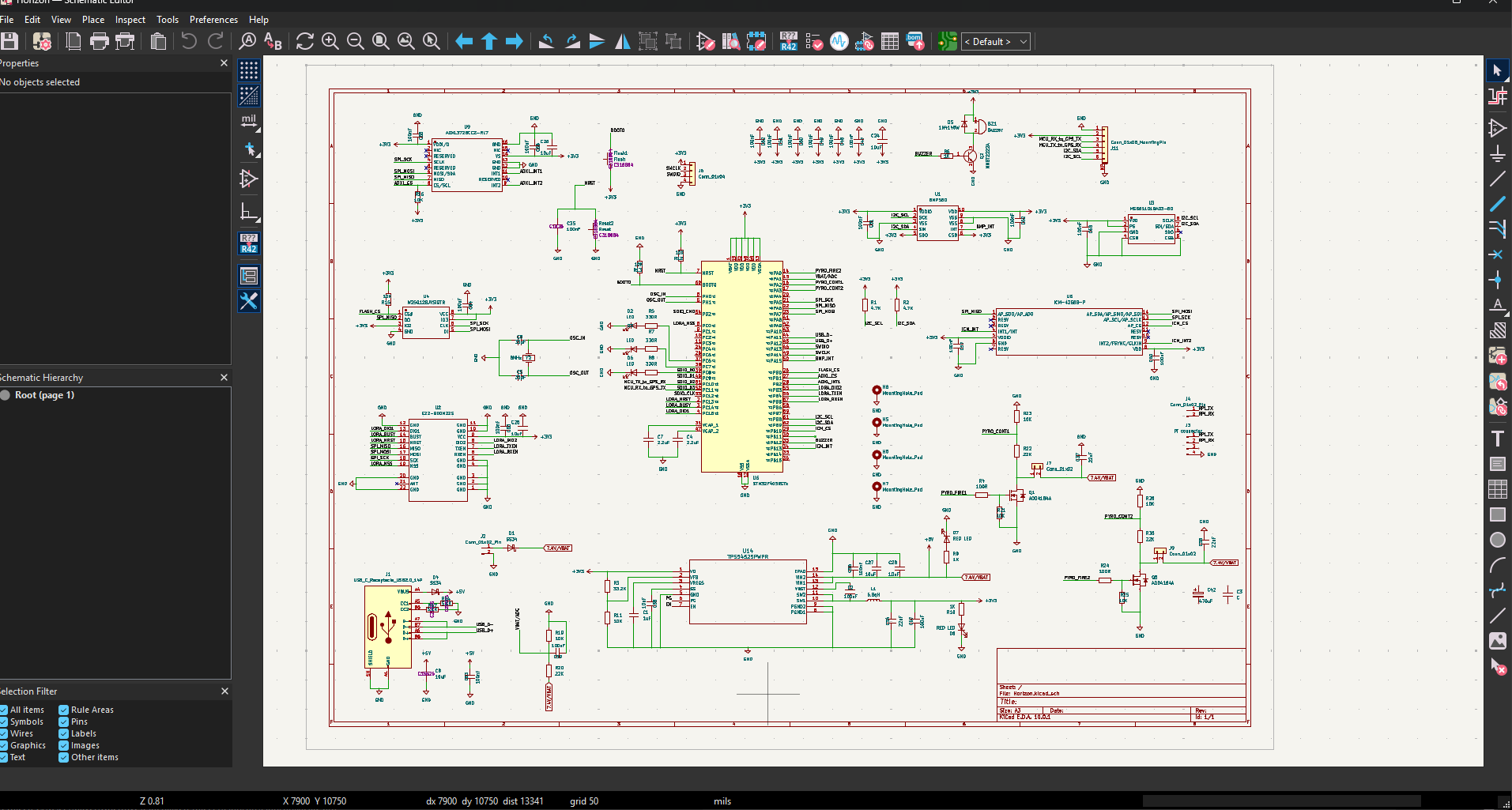
It is built around the E22-900M22S, BMP580 and MS561101BA03-50, with the TPS54525PWPR, W25Q128JVSIQ TR and ADXL372BCCZ-RL7 among its other parts. Its parts include 36 capacitors, 26 resistors, 8 ICs, 8 diodes and 6 connectors. It belongs with the STM32 boards of this library.


Custom Rocket Flight Controller
So first I want to explain, why I started this project. I have always wanted to build my own rocket, but for a long time it was just impossible and senseless. It is generally prohibited to fly with your own custom rockets, there was nowhere to safely test them, and it could be very dangerous. But then I noticed the ČVUT rocketry challenge, where it is actually possible to do it safely and legally.
I also thought about getting some friends or classmates to join this project, which is very likely to happen. We would probably work on the mechanical rocket body together, but I realized that a rocket without a computer is basically just a firework. So it was my idea to design and build my own custom flight computer for this rocket. I also designed the avionics bay to house the electronics.
I am still not exactly sure what the real specifications for this competition will be, because they will probably be published next year in February. But that is actually a big advantage. It means I will have plenty of time to test the flight computer thoroughly and gather a solid team to build the rest of the project. I already did all the hardware and computer work, so we are prepared to fly it.
You might notice that parts like the rocket engine, the main body tube, and the deployable parachute are not included in the bom. The parachute will be deployed by the pyro channels that I designed on the board, but these mechanical parts are missing from the BOM because they will very likely be funded and specified by the ČVUT competition with the proper dimensions. For the avionics bay, it does not really matter what the final dimensions are. Because it is just plastic, I can easily redesign it for different tube dimensions and 3D print it again.
Microcontroller: STM32F405RGT6 (64-pin, 32-bit ARM Cortex-M4)
Stackup: 4-Layer PCB for internal routing and better EMI shielding during flight
Sensors: ICM-42688-P 6-axis IMU, ADXL372 high-g (200g) accelerometer for launch and impact detection, and dual barometers (BMP580 & MS5611) for precise altitude tracking
Telemetry: LoRa E22-900M22S module for long-range real-time data transmission
Power: 2S LiPo main input with high-efficiency TPS54525 step-down regulator
Data Logging: Onboard W25Q128 128Mbit SPI Flash memory for high-speed flight data recording
Recovery System: Dedicated pyro channels designed for reliable parachute deployment
Positioning: Interface for high-precision external GPS (GEPRC GEP-M1025-DQ)
And more other...
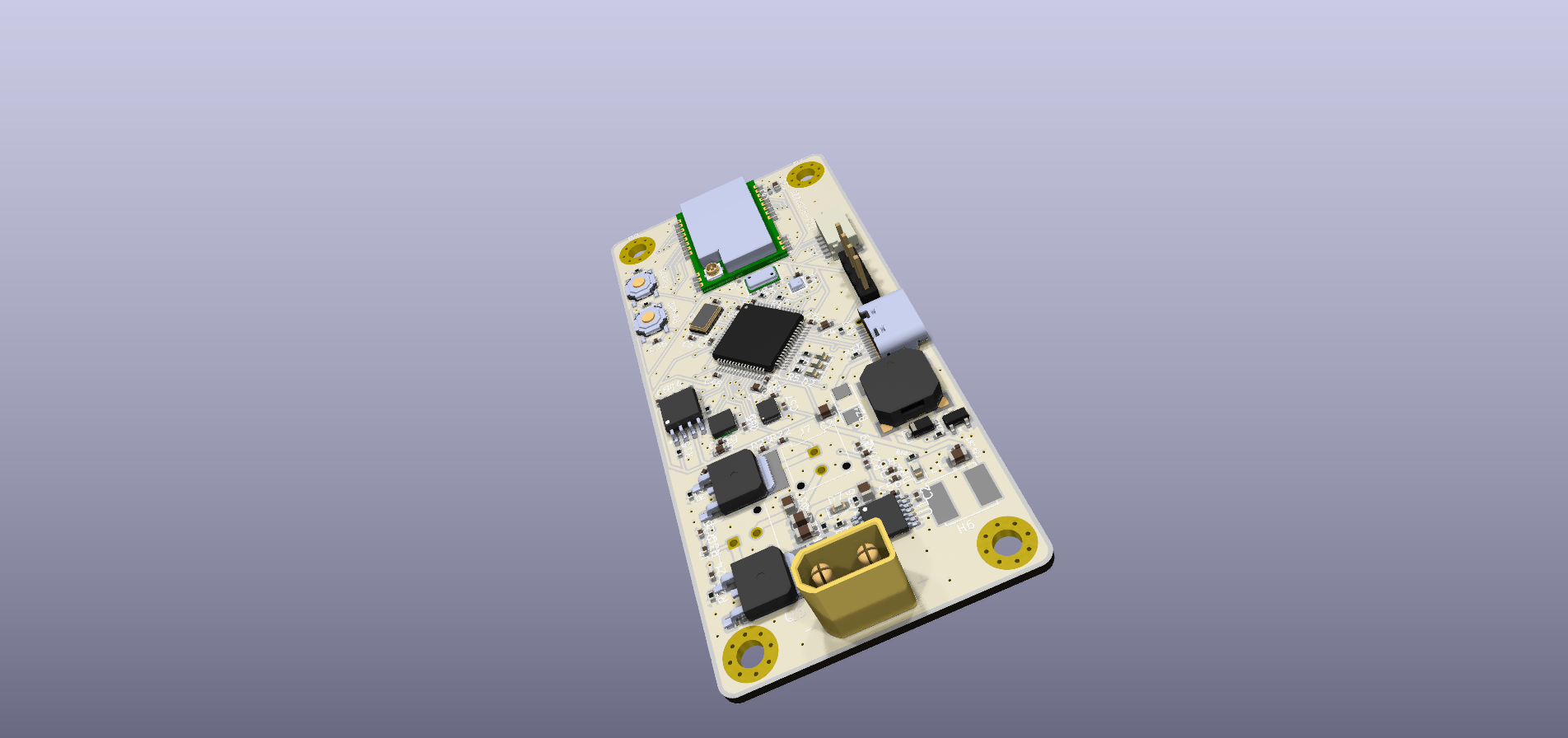
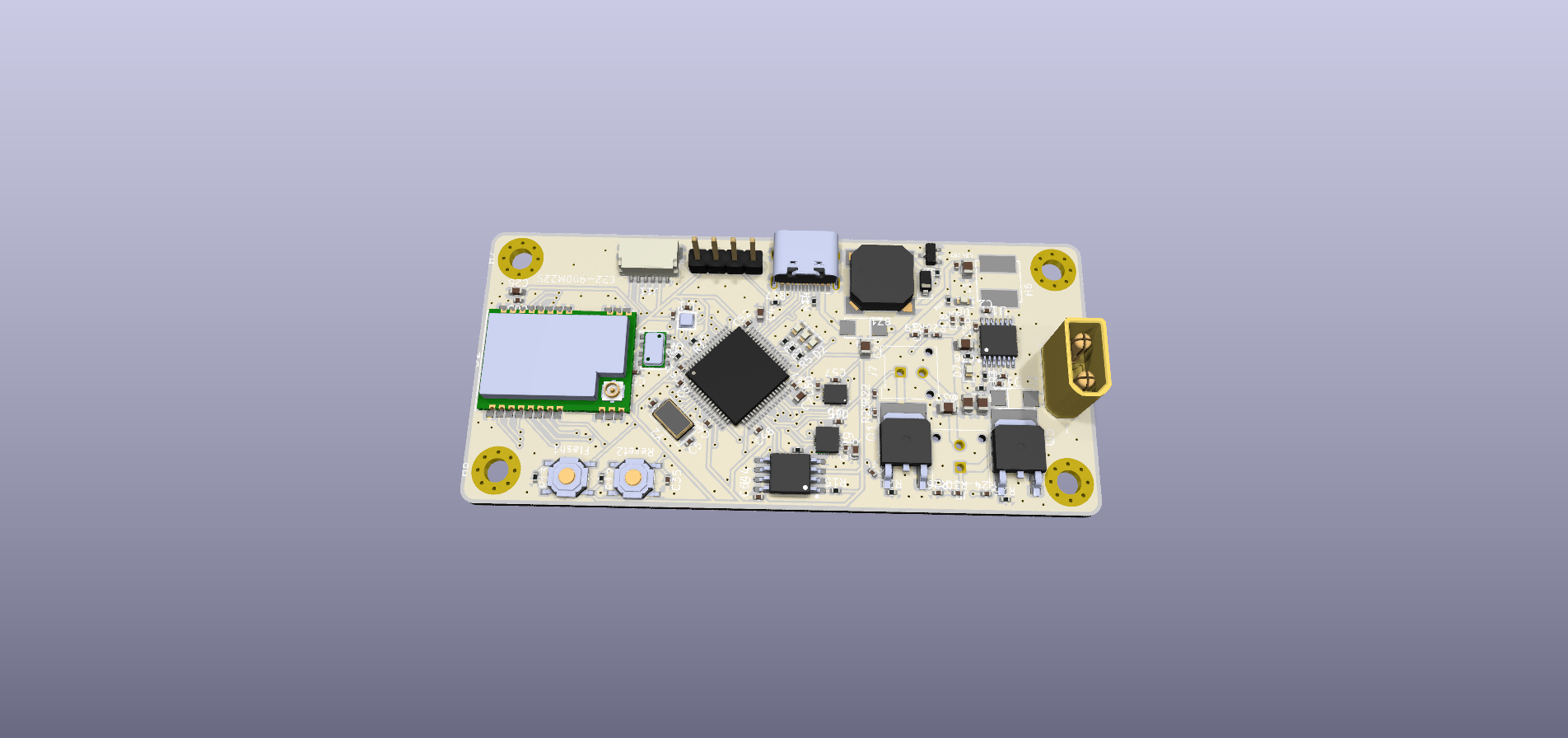
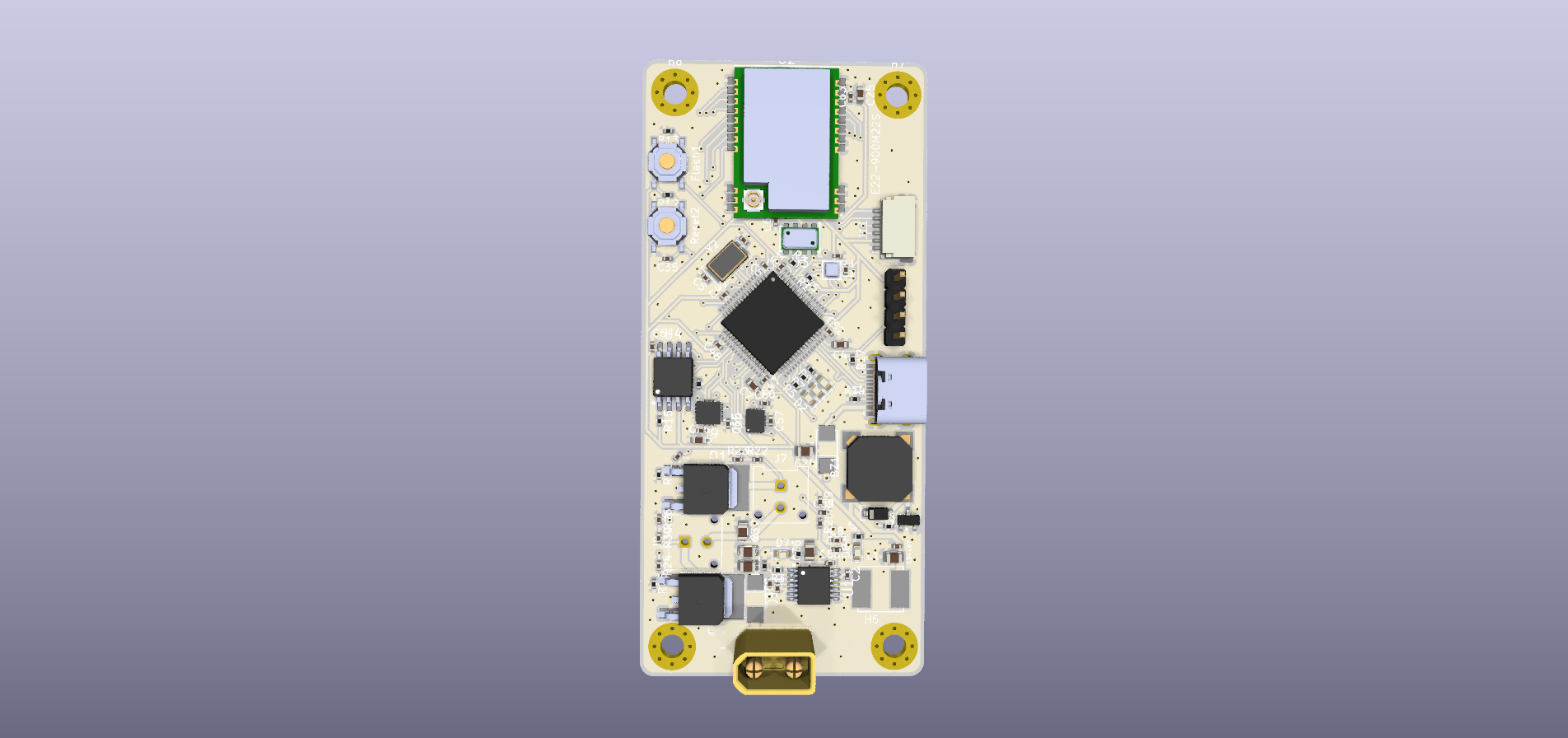
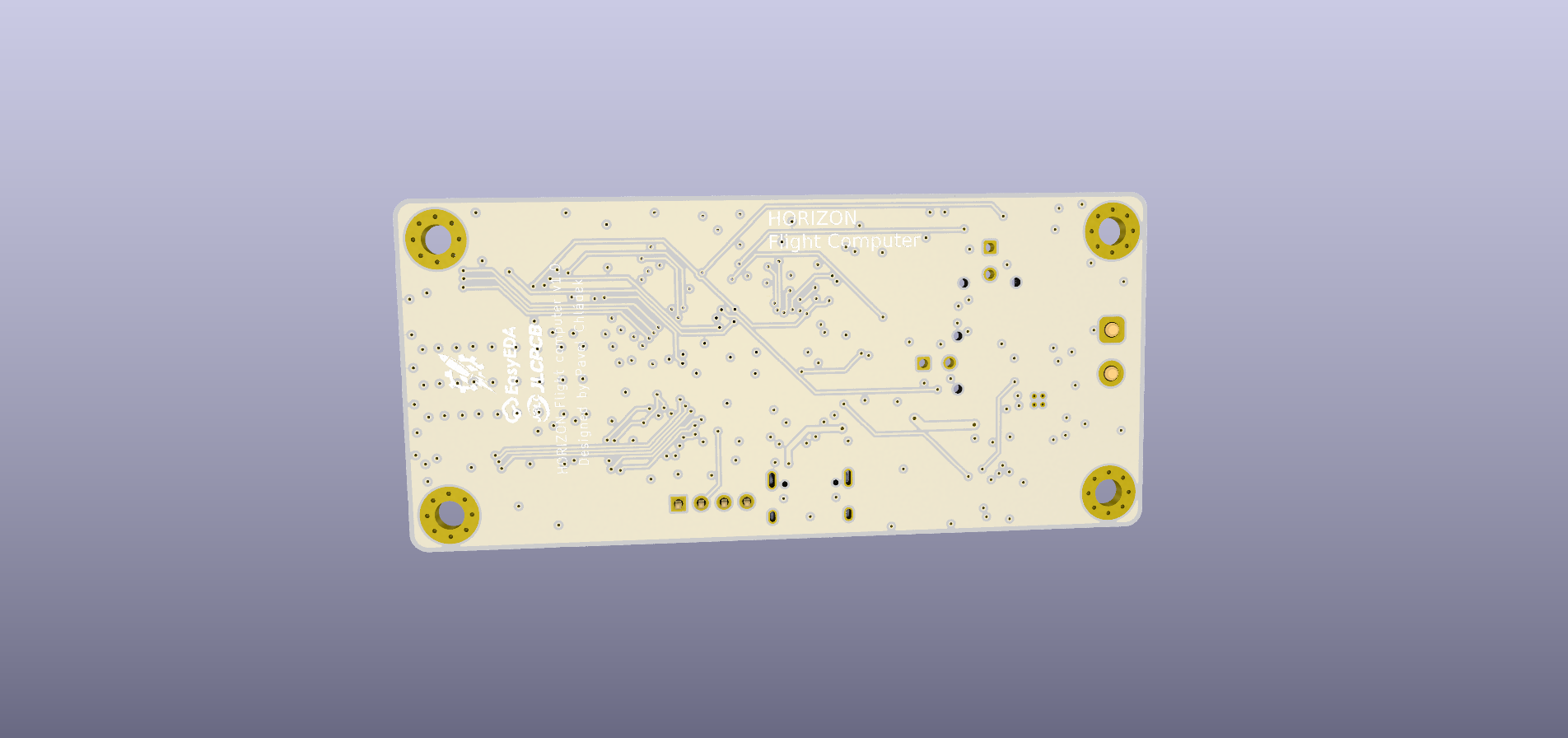
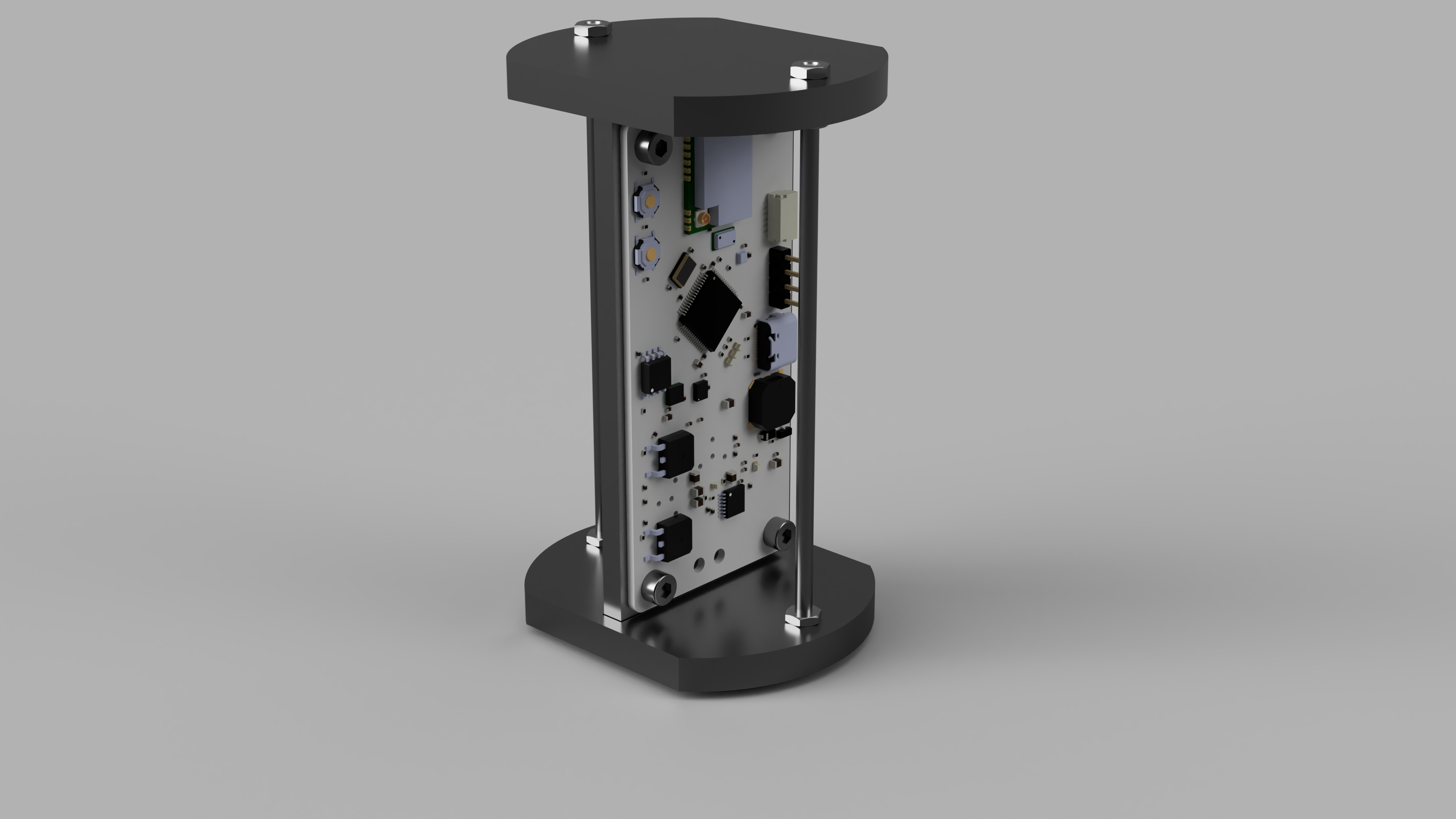
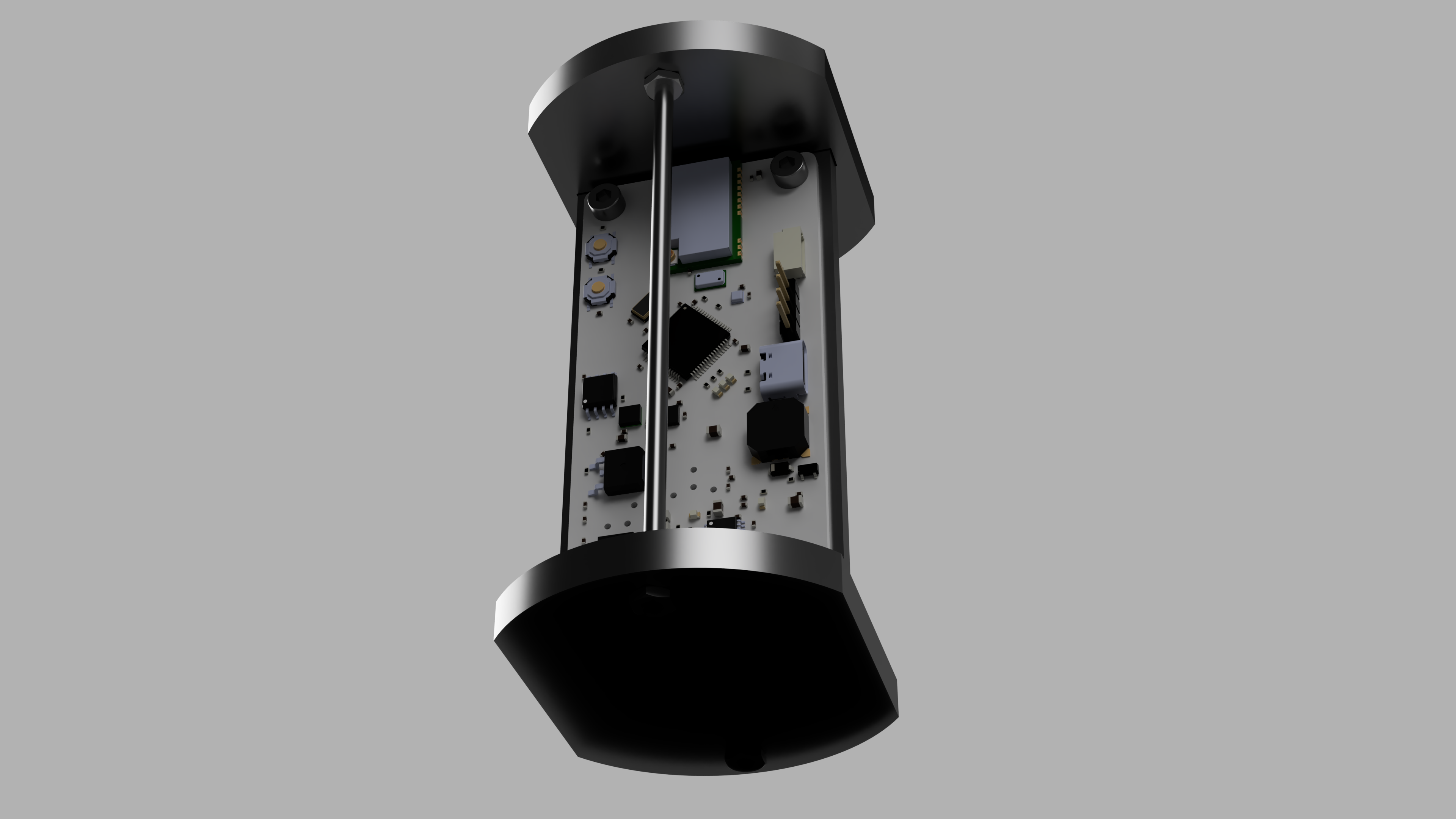
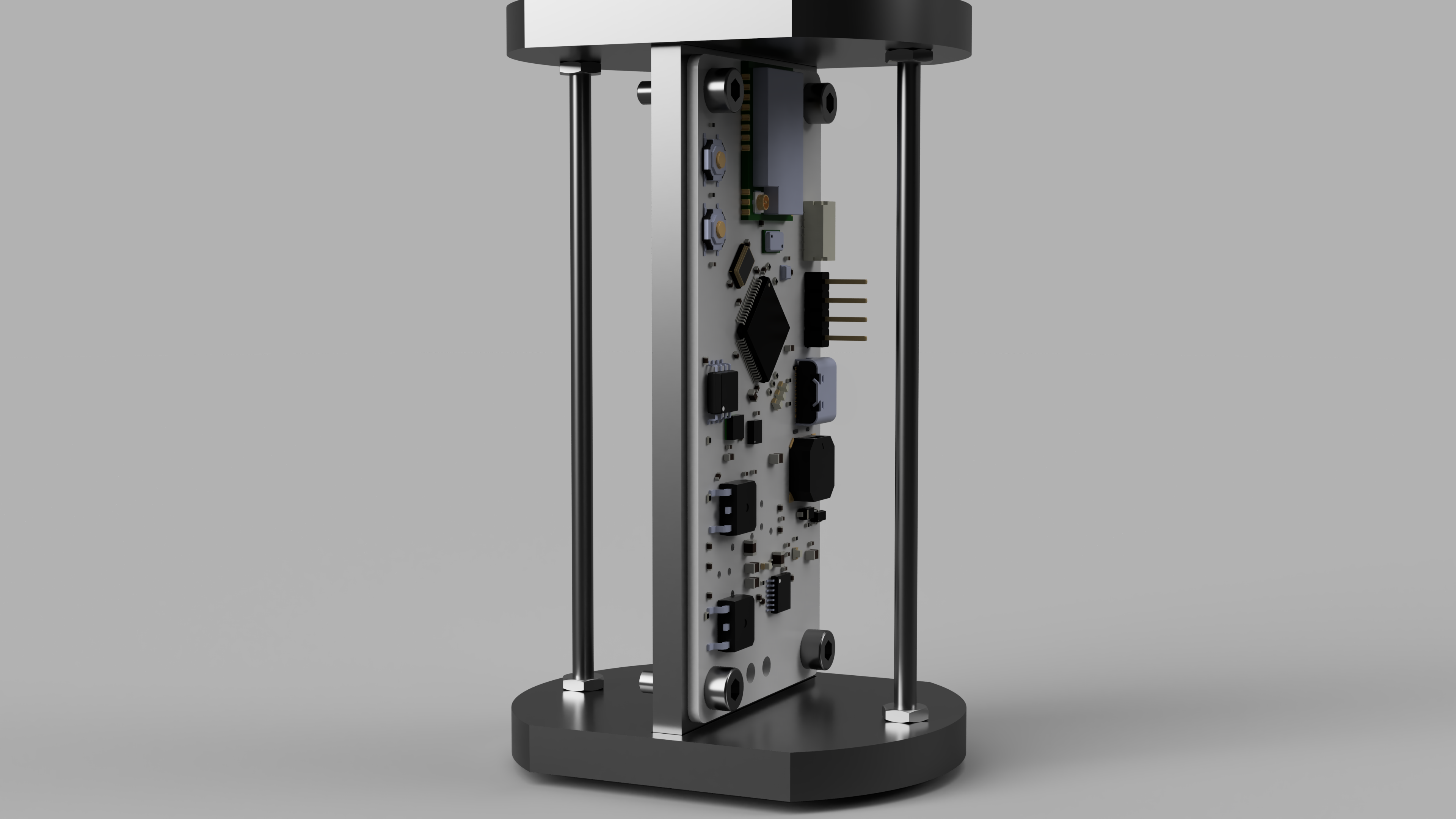
| Component | Qty | Purpose / Description | Price (USD) | Link / Distributor |
|---|---|---|---|---|
| Custom PCB Manufacture | 2 | The actual circuit board to solder everything on. Ordered via JLCPCB standard 4-layer service. | 209.53$ | JLCPCB |
| 2S battery | 1 | Power source / The whole pcb and pyros will get power from this. | 12.77$ | Allegro |
| HOTA D6S Charger | 1 | Dual-channel AC/DC LiPo charger for safe battery maintenance. Critical for preventing thermal runaway during 2S LiPo charging for the autonomous flight computer drone system. Specifically chosen for its ability to accurately measure internal cell resistance to verify battery health for high current pyro deployments, and its adjustable lab power supply mode for safely bringing up and testing the custom TPS step down converters without the risk of frying the new board. Note: This is the cheapest available local AC option currently on sale. Shipping is $0 as it will be picked up personally. | $69.00 | HobbyDrone.cz |
| GEPRC GEP-M1025-DQ GPS | 1 | High-precision positioning data (u-blox M10) with integrated QMC5883L compass and backup DPS310 barometer. | $19.80 | Banggood |
Note: Due to the high complexity and cost of standard PCBA services for LGA-type sensors, these components are ordered separately and will be manually reflow soldered using a stencil and hot plate.
| Component | Qty | Purpose / Description | Price (USD) | LCSC Part # |
|---|---|---|---|---|
| ADXL372BCCZ-RL7 | 2 | High-g accelerometer (200g) for impact detection. | 35.41$ | C579465 |
| BMP580 | 5 | Precision barometric pressure sensor. | 5.96$ | C22391138 |
| TPS54525PWPR | 5 | High-efficiency buck regulator. | 5.24$ | C140350 |
| Total LCSC Cost | - | Including shipping | 50.46$ | - |
| Qty | Value | Footprint | References |
|---|---|---|---|
| 21 | 100nF | Capacitor_SMD:C_0402_1005Metric | C2, C35, C47, C48, C49, C50, C51, C52, C53, C56, C57, C59, C60, C61, C62, C63 +5 |
| 7 | 10K | Resistor_SMD:R_0402_1005Metric | R11, R12, R13, R15, R16, R21, R25 |
| 5 | LED | LED_SMD:LED_0603_1608Metric | D2, D3, D6, D7, D8 |
| 4 | MountingHole_Pad | MountingHole:MountingHole_3.2mm_M3_Pad_Via | H5, H6, H7, H8 |
| 3 | 10K | Capacitor_SMD:C_0402_1005Metric | R19, R23, R26 |
| 3 | 10uF | Capacitor_SMD:C_0805_2012Metric | C24, C27, C28 |
| 3 | 10uF | Capacitor_SMD:C_0603_1608Metric | C8, C25, C26 |
| 3 | 1K | Resistor_SMD:R_0402_1005Metric | R6, R9, R10 |
| 3 | 22K | Capacitor_SMD:C_0402_1005Metric | R20, R22, R30 |
| 3 | 22uF | Capacitor_SMD:C_0805_2012Metric | C34, C36, C37 |
| 3 | 330R | Resistor_SMD:R_0402_1005Metric | R5, R7, R8 |
| 2 | 100R | Capacitor_SMD:C_0402_1005Metric | R4, R24 |
| 2 | 2.2uF | Capacitor_SMD:C_0603_1608Metric | C4, C7 |
| 2 | 33pF | Capacitor_SMD:C_0402_1005Metric | C5, C6 |
| 2 | 4.7K | Resistor_SMD:R_0402_1005Metric | R1, R2 |
| 2 | 5.1K | Resistor_SMD:R_0402_1005Metric | R14, R17 |
| 2 | AOD4184A | Rocket:TO-252-2_L6.6-W6.1-P4.57-LS9.9-TL-CW | Q1, Q5 |
| 2 | Conn_01x02 | Connector_Molex:Molex_Micro-Fit_3.0_43045-0212_2x01_P3.00mm_Vertical | J7, J9 |
| 2 | SS34 | Rocket:SMA_L4.3-W2.6-LS5.2-RD | D1, D4 |
| 1 | 10nF | Capacitor_SMD:C_0402_1005Metric | C58 |
| 1 | 1N4148W | Diode_SMD:D_SOD-123 | D5 |
| 1 | 1uF | Capacitor_SMD:C_0402_1005Metric | C1 |
| 1 | 33.2K | Resistor_SMD:R_0402_1005Metric | R3 |
| 1 | 6.8qH | Rocket:IND-SMD_L6.0-W6.0_SWPA6045S | L1 |
| 1 | 8MHz | Crystal:Crystal_SMD_5032-2Pin_5.0x3.2mm | Y2 |
| 1 | ADXL372BCCZ-RL7 | Rocket:LGA-16_L3.3-W3.0-P0.50-TL | U9 |
| 1 | BMP580 | Rocket:LGA-10_L2.0-W2.0-P0.50-TL_BMP580 | U1 |
| 1 | Buzzer | Rocket:BUZ-SMD_4P-L8.5-W8.5-P8.50-TL | BZ1 |
| 1 | Conn_01x02_Pin | Connector_AMASS:AMASS_XT30UPB-M_1x02_P5.0mm_Vertical | J2 |
| 1 | Conn_01x04 | Connector_PinHeader_2.54mm:PinHeader_1x04_P2.54mm_Vertical | J6 |
| 1 | Conn_01x06_MountingPin | Connector_JST:JST_SH_SM06B-SRSS-TB_1x06-1MP_P1.00mm_Horizontal | J11 |
| 1 | E22-900M22S | Rocket:WIRELM-SMD_E22-900M22S | U2 |
| 1 | Flash | Button_Switch_SMD:SW_Push_1P1T_XKB_TS-1187A | Flash1 |
| 1 | ICM-42688-P | Rocket:LGA-14_L3.0-W2.5-P0.50-TL | U5 |
| 1 | LOGO | LOGOS:JLC | G*** |
| 1 | LOGO | LOGOS:MADRocketry | G*** |
| 1 | LOGO | LOGOS:EasyEDANEGATIVE | G*** |
| 1 | MMBT2222A | Package_TO_SOT_SMD:SOT-23 | Q2 |
| 1 | MS561101BA03-50 | Rocket:SENSORS-SMD_MS5611-01BA03 | U3 |
| 1 | Reset | Button_Switch_SMD:SW_Push_1P1T_XKB_TS-1187A | Reset2 |
| 1 | STM32F405RGTx | Package_QFP:LQFP-64_10x10mm_P0.5mm | U6 |
| 1 | TPS54525PWPR | Rocket:TSSOP-14_L5.0-W4.4-P0.65-LS6.4-BL-EP | U14 |
| 1 | USB_C_Receptacle_USB2.0_14P | Connector_USB:USB_C_Receptacle_HCTL_HC-TYPE-C-16P-01A | J1 |
| 1 | W25Q128JVSIQTR | Rocket:SOIC-8_L5.3-W5.3-P1.27-LS8.0-BL | U4 |
It measures 38.4 × 82.8 mm and has 4 copper layers, 1.6 mm thick.
99 parts, built around the E22-900M22S, BMP580, MS561101BA03-50 and TPS54525PWPR. The full list of its parts is on this page, with links to each part's symbol and footprint where PCBKit's library has them.
From the ChladpavPy/Horizon repository on GitHub, at the commit this page was made from: the board is Kicad_Source/Horizon.kicad_pcb and its schematic Kicad_Source/Horizon.kicad_sch. PCBKit opens the board in the browser, with nothing to install.
Its repository states no licence, so its author keeps all rights: ask ChladpavPy before reusing the design.
thejamesrhodes/Hyades-Flight-Computer
Full Hardware and Electronics design, Bare-metal GNC flight software for an actively attitude-controlled high-power rocket

codinga593/IRIS
A next generation model rocket focused on a precise propulsive landing on a tower.

codinga593/Forte
A Mid powered Rocket with data logging and live telemetry (F32-T)


ollielarkins/pmd-tracker
Wearable rugby performance tracker: nRF52840 + Zephyr firmware, React Native companion app

almondsun/DynamicSystemsAndControl
Dynamic Systems and Control coursework: Buck converter modeling, reports, KiCad PCB and STM32 firmware

Heckus/QUT-OpenFCU
The primary objective is to create an alternative to the difficult-to-source off-the-shelf Pixhawk 6. This work builds upon a edited pixracer version produced by KAI (Wesley) in 2022.

lmiez/yecnodF405
Open source flight controller based on the STM32F405 MCU that runs betaflight.