
2 layers132.3 × 94.9 mm

 aryan-madan/Meraki655
65% WKL Keyboard
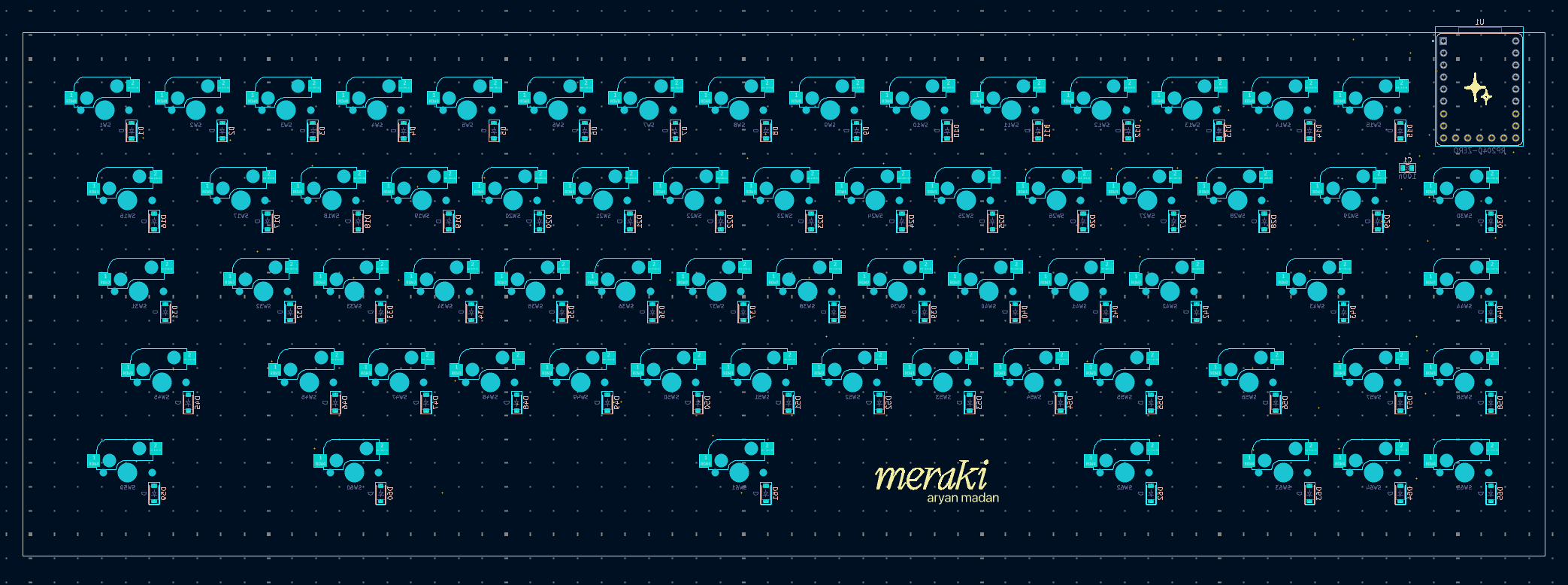
Keyboard65 is an open-source printed circuit board by aryan-madan, from the aryan-madan/Meraki65 repository on GitHub, published under the AGPL-3.0 licence. It is a 2-layer board of 320 × 110 mm with 133 parts on 88 nets, routed with 931 tracks and 72 vias.
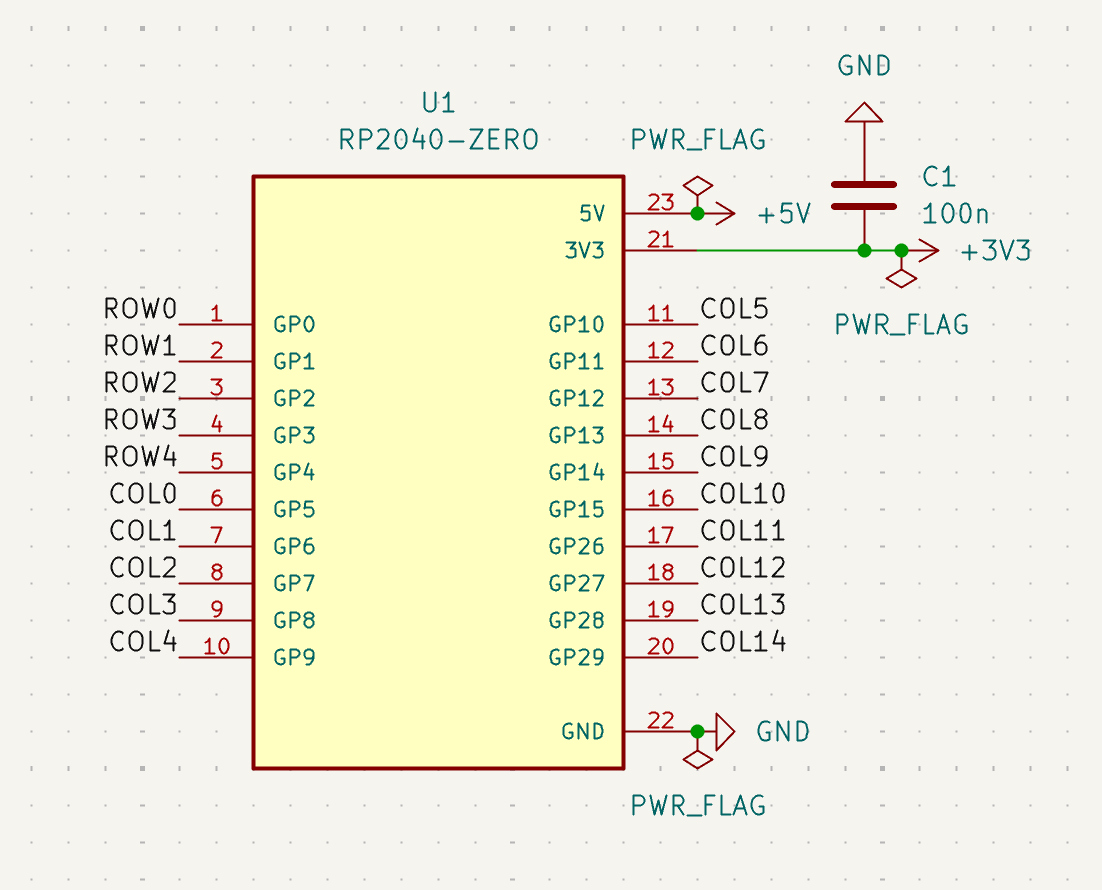
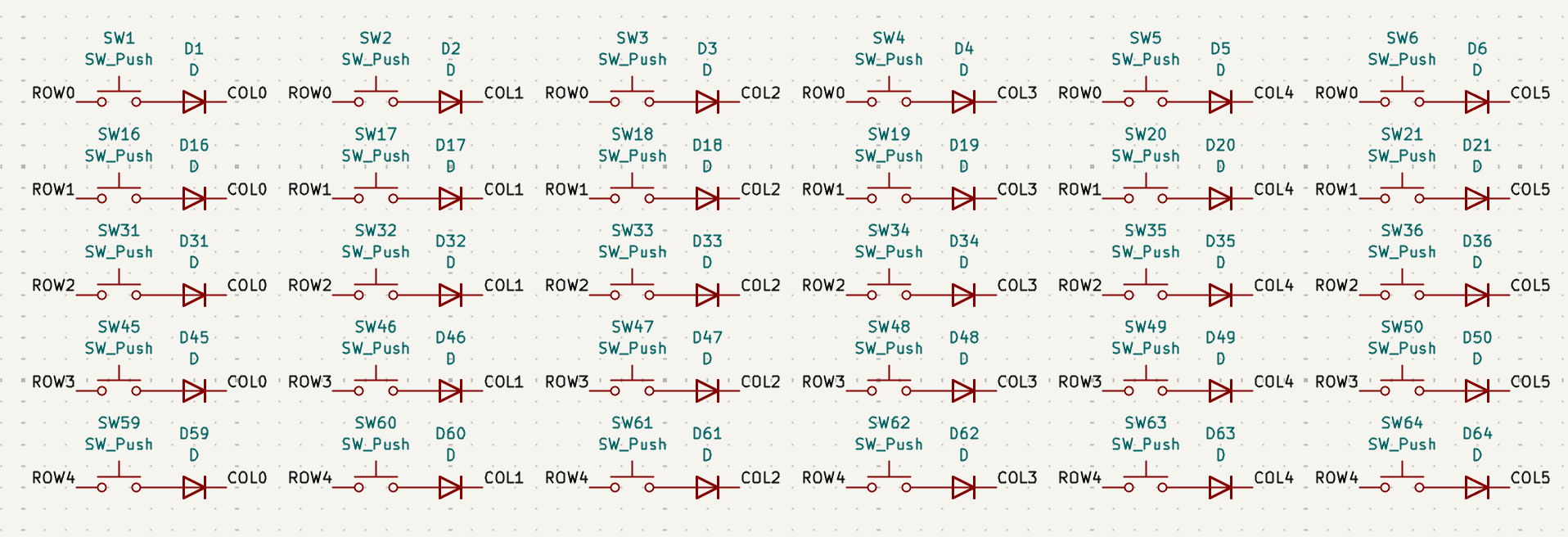
It is built around the RP2040-ZERO. Its parts include 65 diodes, 65 switches, 1 capacitor and 1 IC. It belongs with the RP2040 boards of this library.
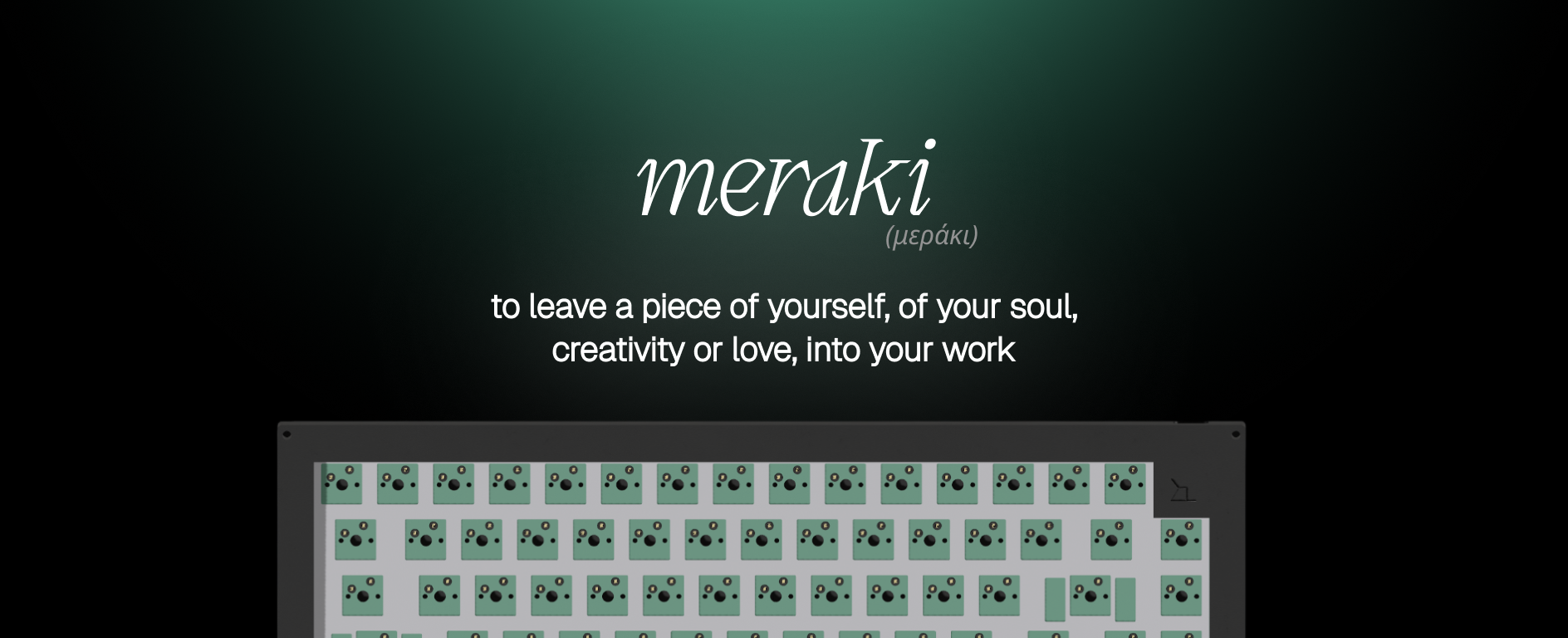
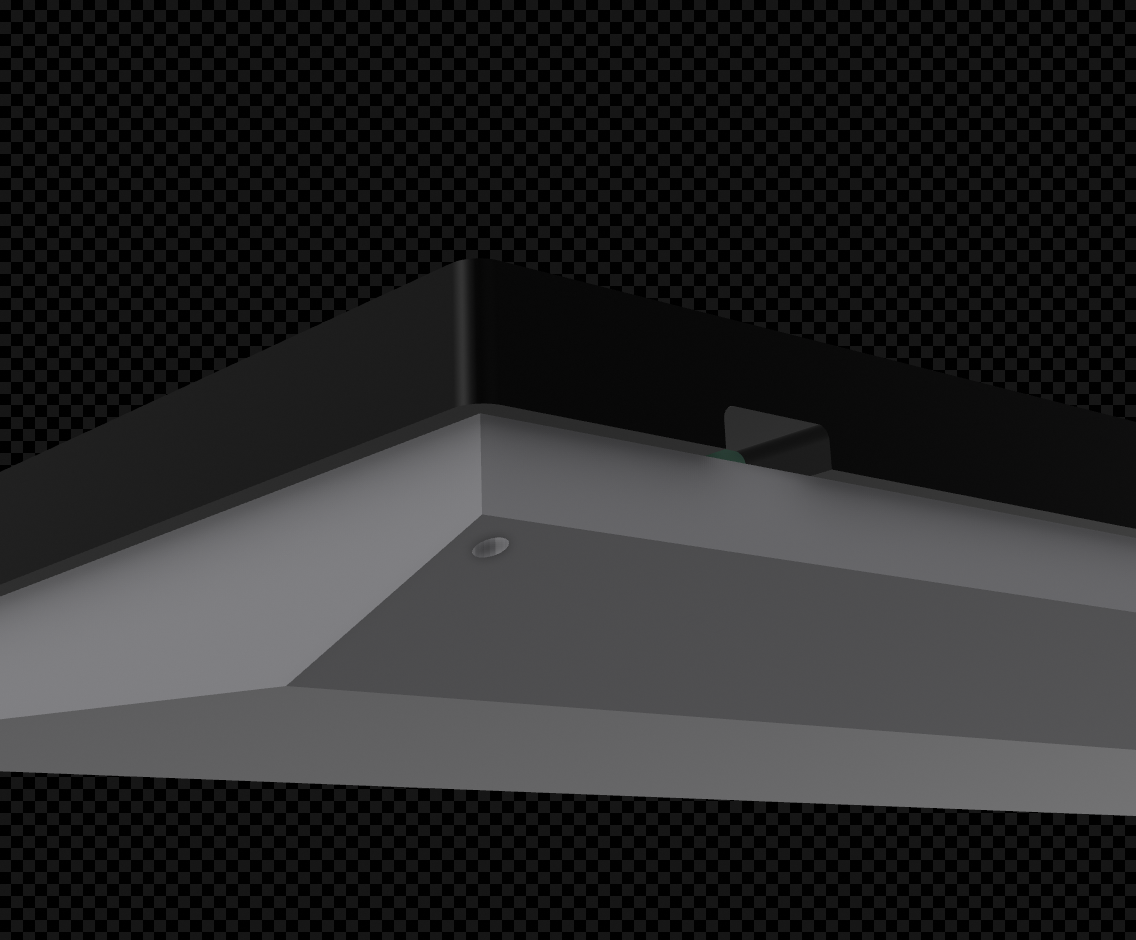
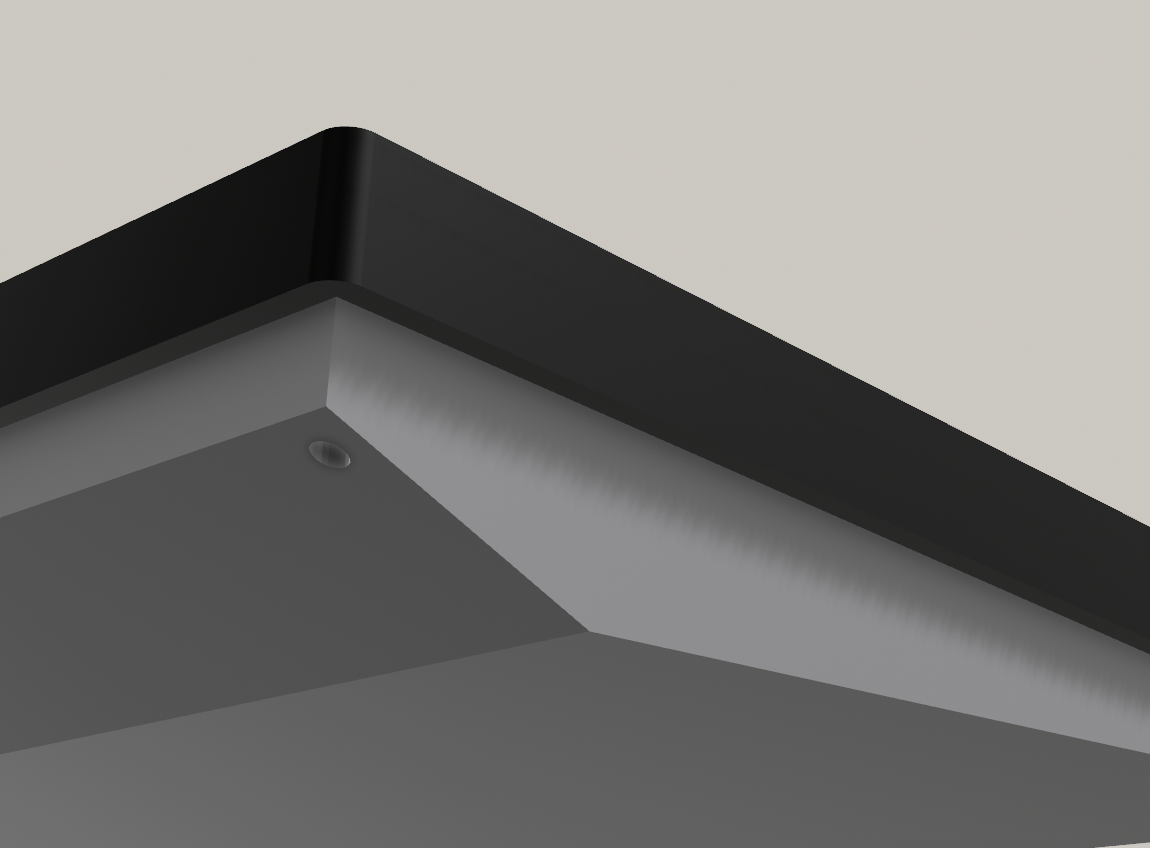
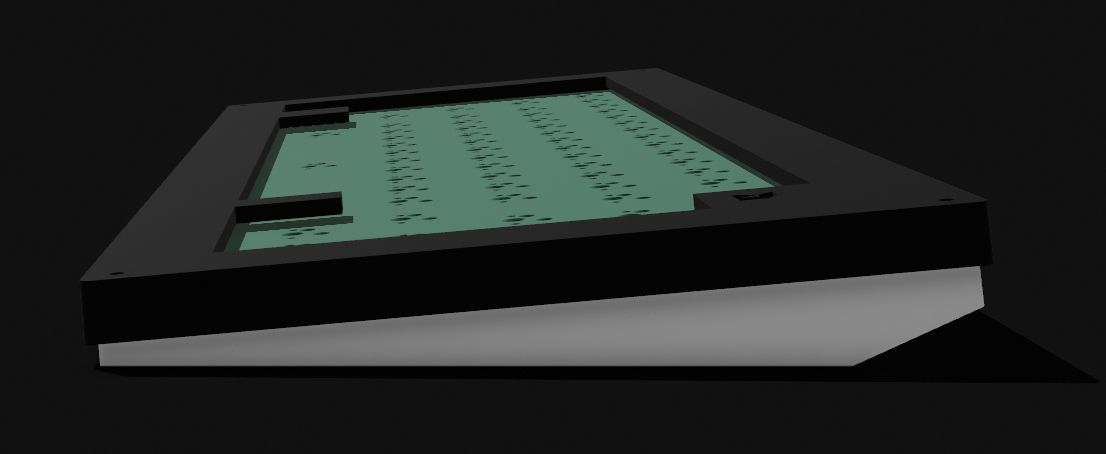
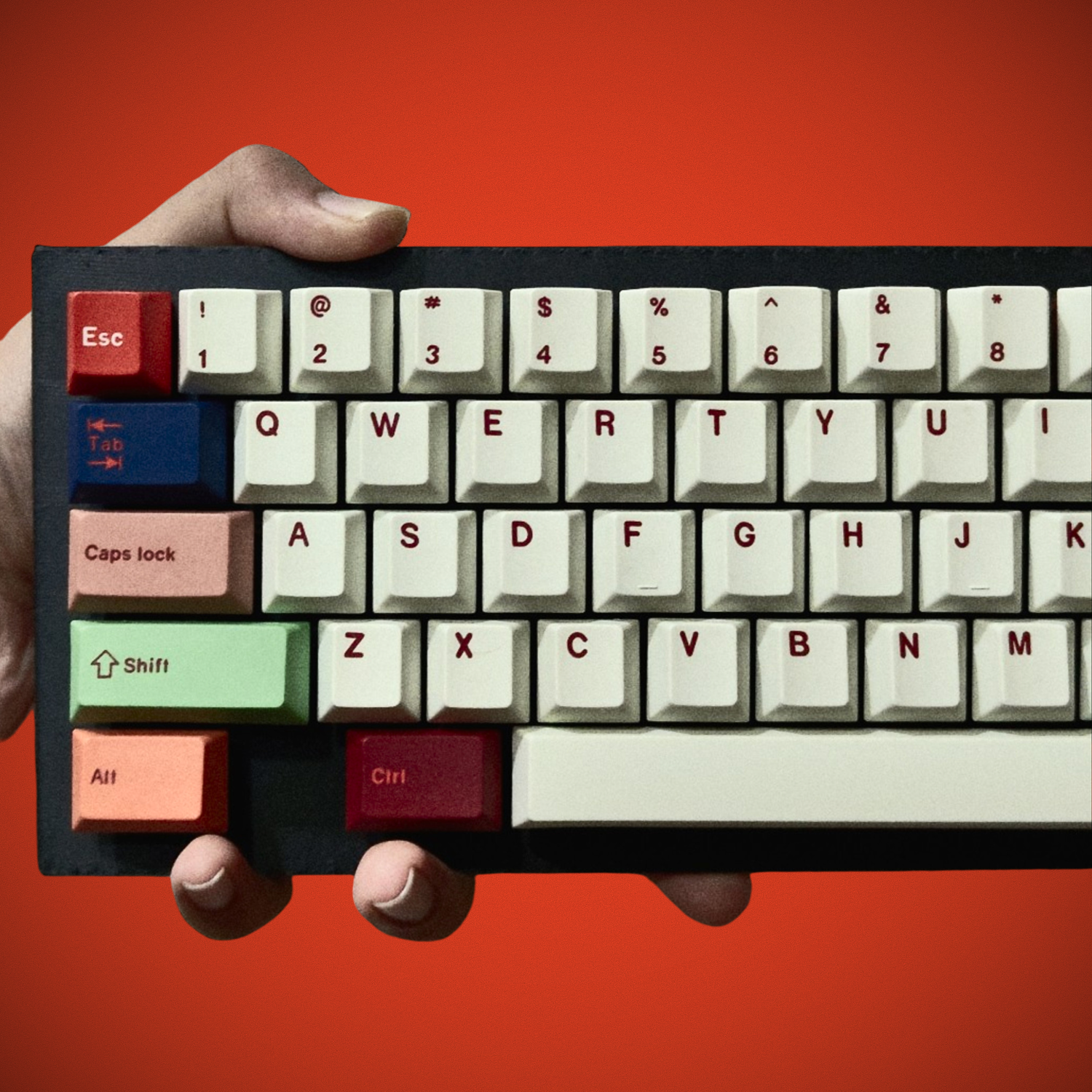
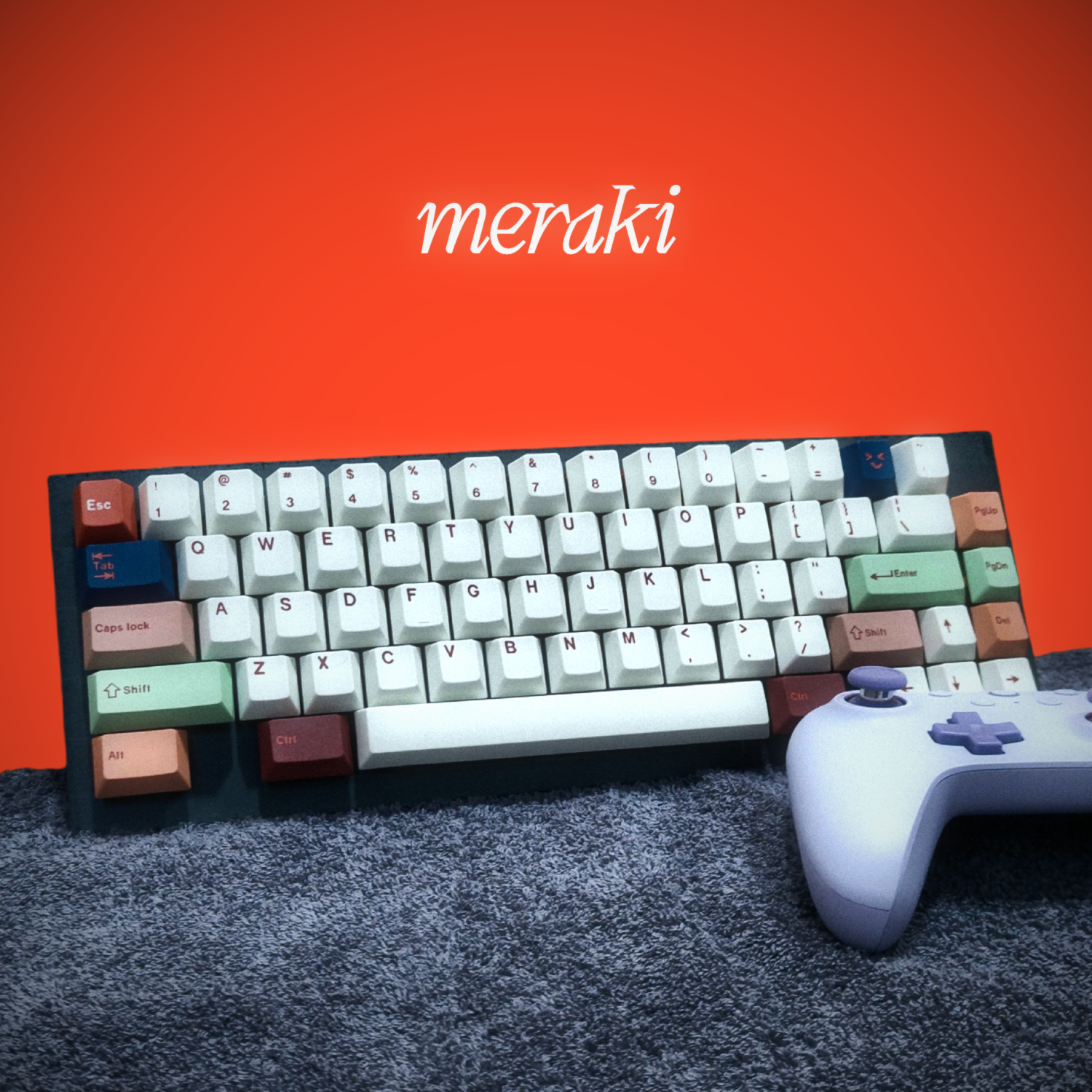
Meraki, is a greek word that means 'to do something with soul, creativity, or love; leaving a piece of yourself in what you do'.
The keyboard has a 65% WKL Layout. WKL stands for win-key-less, where the Windows key is removed from the keyboard, to give it a more symmetrical shape. WKL's are rarely seen in 65% form, which inspired me to make this board. I also opted for a blocker at the top right to fit the MCU.
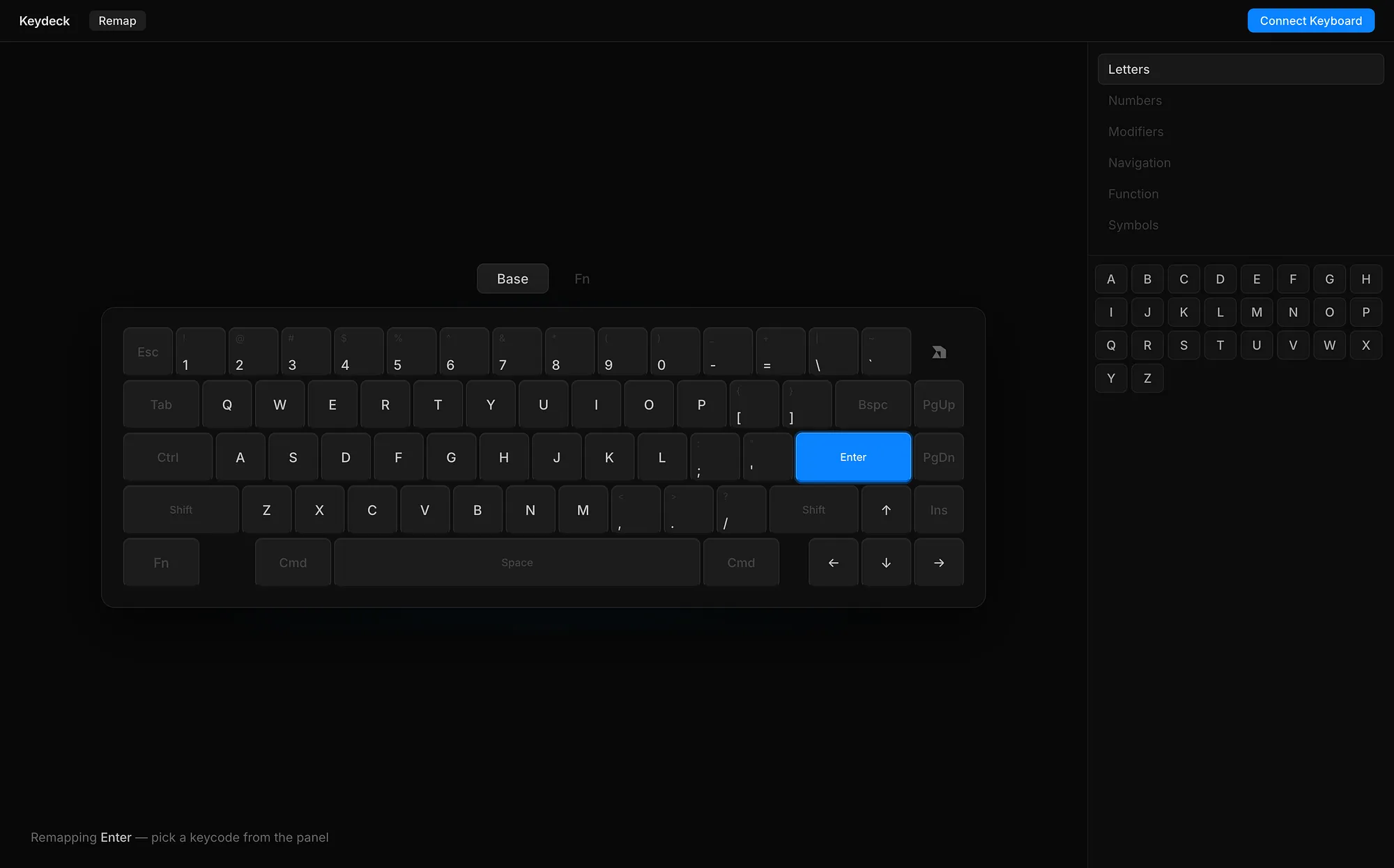
The Meraki65 uses qmk for its firmware. I also created a web-based software to re-map keys, called Keydeck.
Total Cost: 9,792 (~$106.38 USD)
https://app.shapr3d.com/v/_-Txvu9VtqTR88f_0C18B
To be 3d printed by the Printing Legion.
| Piece | Brand | Quantity | Cost (INR) | Cost (USD) | Link |
|---|---|---|---|---|---|
| Plate Mount Stabilizers | Durock | 1 set | 380 | ~$4.13 | Link |
| Y2 Switches | Keygeek | 70 | 2240 | ~$24.35 | Link |
| Gummy-O-Ring Mount | NeoMacro | 1 | 650 | ~$7.00 | Link |
| M2 x 12mm Screws | Generic | 2 | — | — | - |
| M2 x 10mm Screws | Generic | 2 | — | — | - |
| Total | 3522 | ~$38.22 |
| Part | Brand | Quantity | Cost (INR) | Cost (USD) | Link |
|---|---|---|---|---|---|
| Printing | JLCPCB | 5(min) | 3403 | ~$37.00 | Link |
| RP 2040 Zero | Robu | 1 | 235 | ~$2.55 | Link |
| Hotswap Sockets | Kailh | 100(min) | 532 | ~$5.78 | Link |
| Diodes | — | 100(min) | 100 | ~$1.09 | Link |
| Total | 4270 | ~$46.42 |
| Part | Brand | Quantity | Cost (INR) | Cost (USD) |
|---|---|---|---|---|
| Keycaps | Clones | 1 set | 2000 | ~$21.74 |
| Total | 2000 | ~$21.74 |
| Qty | Value | Footprint | References |
|---|---|---|---|
| 65 | D | Diode_SMD:D_SOD-123 | D1, D2, D10, D11, D12, D13, D14, D15, D16, D17, D18, D19, D20, D21, D22, D23 +49 |
| 65 | SW_Push | MX_Hotswap:MX-Hotswap-1U | SW1, SW2, SW10, SW11, SW12, SW13, SW14, SW15, SW16, SW17, SW18, SW19, SW20, SW21, SW22, SW23 +49 |
| 1 | 100n | Capacitor_SMD:C_0805_2012Metric | C1 |
| 1 | LOGO | LOGO | G*** |
| 1 | RP2040-ZERO | RP2040-ZERO:MODULE_RP2040-ZERO | U1 |


beekeeb/zerosprey42
Zerosprey42 Keyboard is a wired, beginner friendly, choc hotswap, MonoBlockSplit (Unibody), column-staggered, DIY mechanical keyboard.


ravinrabbid/DonCon2040
RP2040 based firmware and hardware for DIY Taiko no Tatsujin Drum Controllers
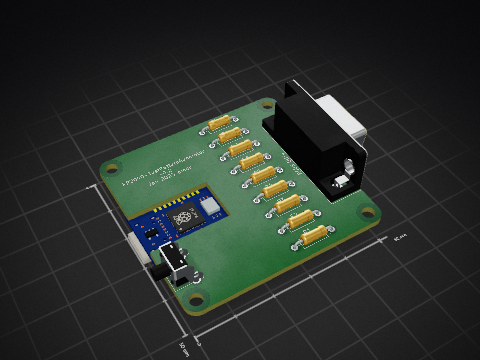
nmur/RP2040-TestPatternGenerator
A simple test pattern generator running on the RP2040 microcontroller

ChrisChrisLoLo/bunchiez40
A pocket keyboard that makes use of mouse switches to achieve a miniscule size

It measures 320 × 110 mm and has 2 copper layers, 1.6 mm thick.
133 parts, built around the RP2040-ZERO. The full list of its parts is on this page, with links to each part's symbol and footprint where PCBKit's library has them.
From the aryan-madan/Meraki65 repository on GitHub, at the commit this page was made from: the board is PCB/Keyboard65.kicad_pcb and its schematic PCB/Keyboard65.kicad_sch. PCBKit opens the board in the browser, with nothing to install.
Its repository publishes it under the AGPL-3.0 licence: you may reuse it on that licence's terms (keep the author's notice, and for a copyleft licence share your changes alike).