4 layers94 × 140 mm

 Global-Health-Engineering/plastic-scanner3
Especially for small-scale recycling facilities and projects with limited financial resources, commercial plastic scanners are extremly expensive.
RoundScanner is an open-source printed circuit board by Global-Health-Engineering, from the Global-Health-Engineering/plastic-scanner repository on GitHub, published under the GPL-3.0 licence. It is a 4-layer board of 20.6 × 42.5 mm with 79 parts on 47 nets, routed with 422 tracks and 80 vias.
It is built around the AS7341-DLGT, NAU7802SGI and MTSM1346SMF1-100, with the MTSM2601SMF1-100, BSS138DW-7-F-ES and EAHC2835WD6 among its other parts. Its parts include 26 resistors, 24 capacitors, 10 diodes, 9 ICs and 2 connectors.


The goal of this project is to build a minimum viable product of the open-source PlasticScanner project and assess its suitability for the Global Health Engineering Lab. The design builds on the existing expertise of the project and incorporates the newest hardware version, Development Board 2.3. The overall objective of the project is to evaluate the scanner’s adaptability to the use case in Malawi and identify opportunities for improvement. This scanner is fully functional and can be reproduced for testing and development purposes. However, it is not recommended for any commercial application. Further development is still required.
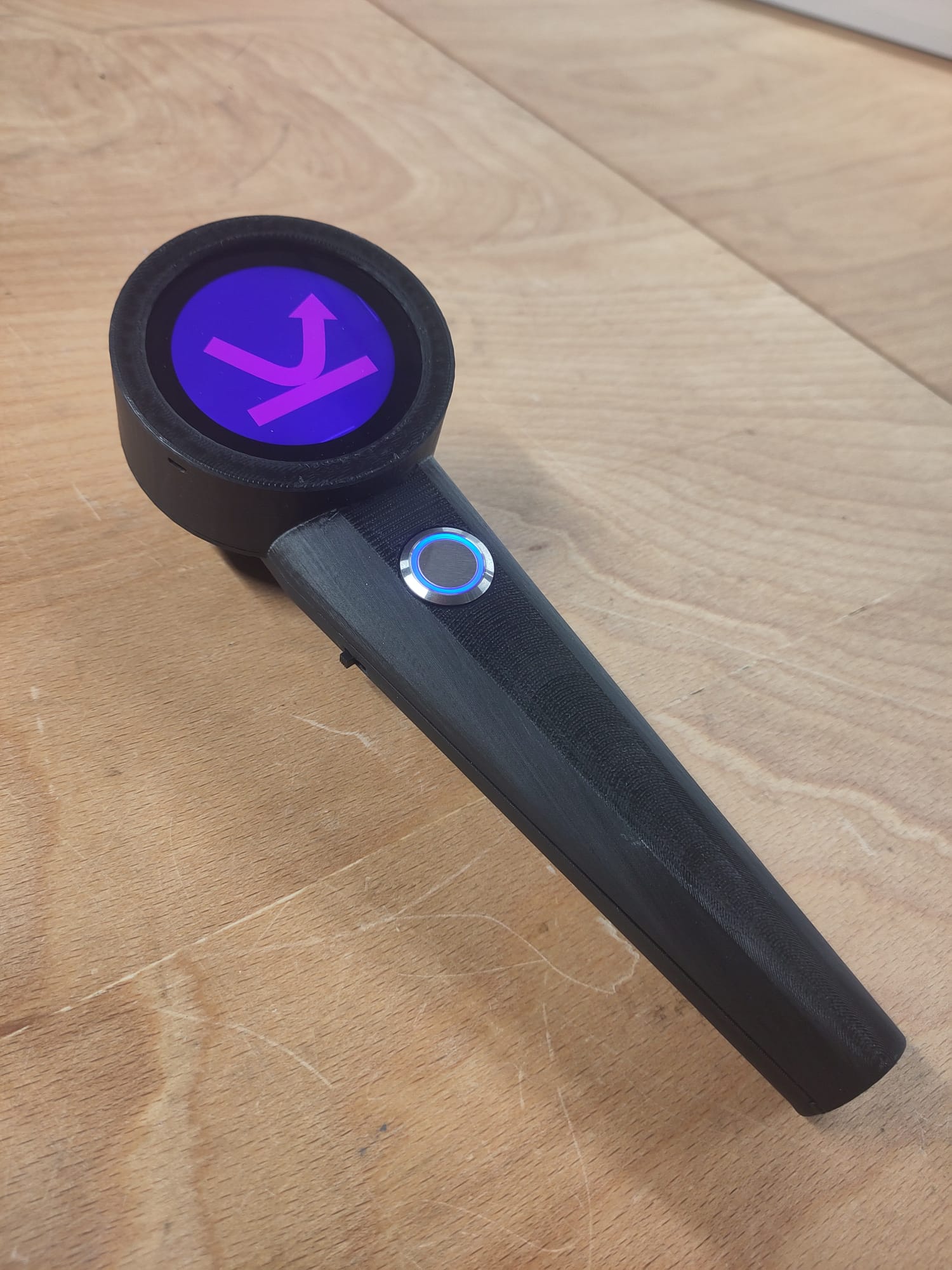
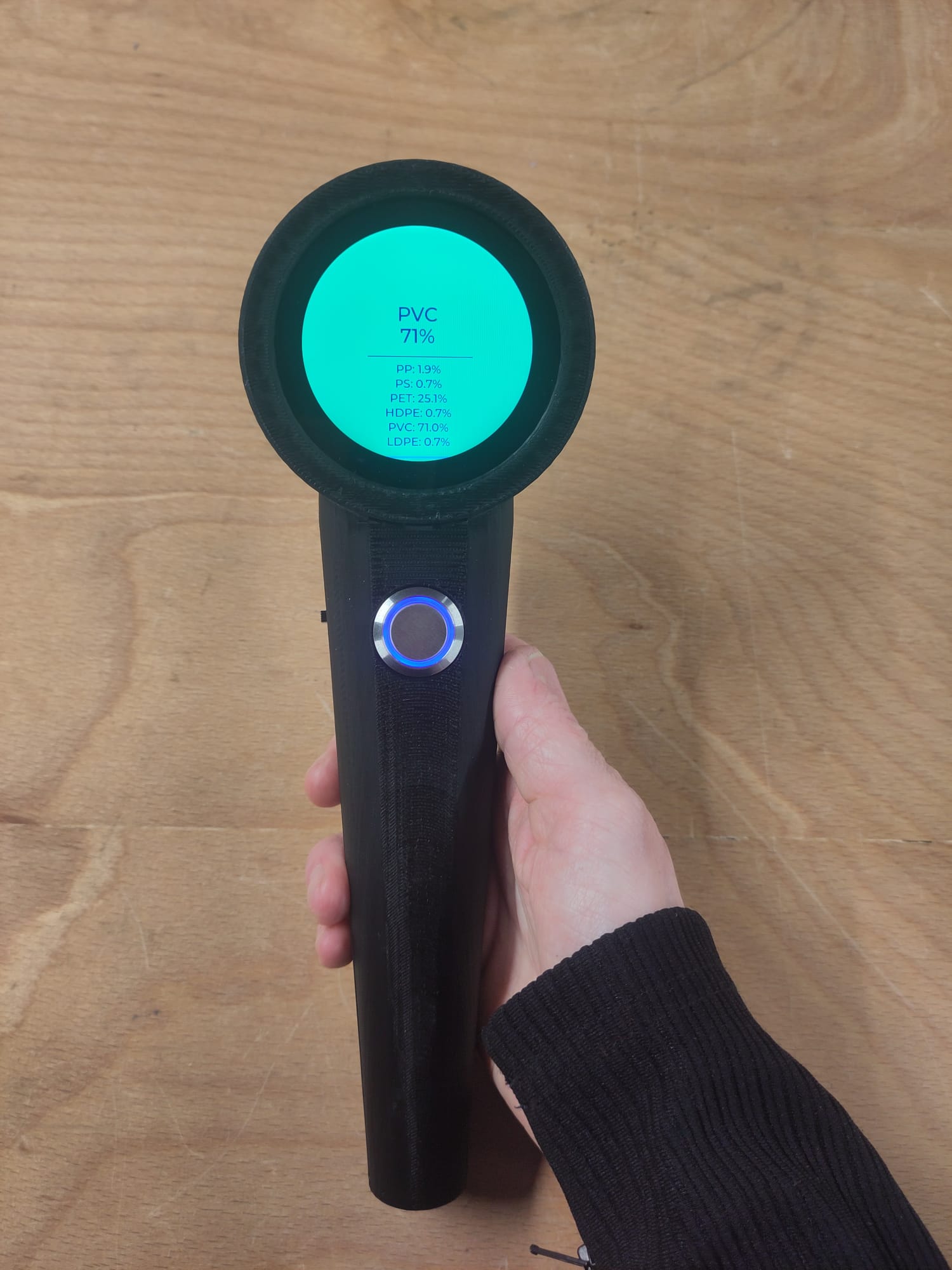
Plastic is a widely used material, inexpensive to manufacture, and therefore a common choice for single-use products. However, due to its extensive use, global plastic pollution and its subsequent degradation in landfills into micro- and nanoplastics are threatening ecosystems (Walker & Fequet, 2023). Estimates indicate that plastic consumption will increase from 464 Mt/y in 2020 to over 700 Mt/y by 2050 (Dokl et al., 2024). Plastic recycling is established, but it first requires thorough separation of plastic components. Industrial plastic scanners employ various spectroscopic methods, with Near-Infrared (NIR) spectroscopy being the primary technology (Werner et al., 2023). Light is emitted, and the reflected relative light intensity from the material is measured to identify its composition.
Especially for small-scale recycling facilities and projects with limited financial resources, commercial plastic scanners are extremly expensive. Sorting is therefore done manually, which is often labor-intensive and inaccurate. An example is WASTE Adviser (WASTE Adviser Website, 2025), an NGO in Malawi that is establishing plastic beneficiation pathways for PET and HDPE. For the quality of the upcycled product, it is essential that the plastic is sorted with high accuracy. Otherwise, the recycled product suffers from embrittlement.
The PlasticScanner is an open source project which developed a low-cost plastic identification method. Utilizing inexpensive infrared LEDs and a machine learning model to identify the following six types of plastic:

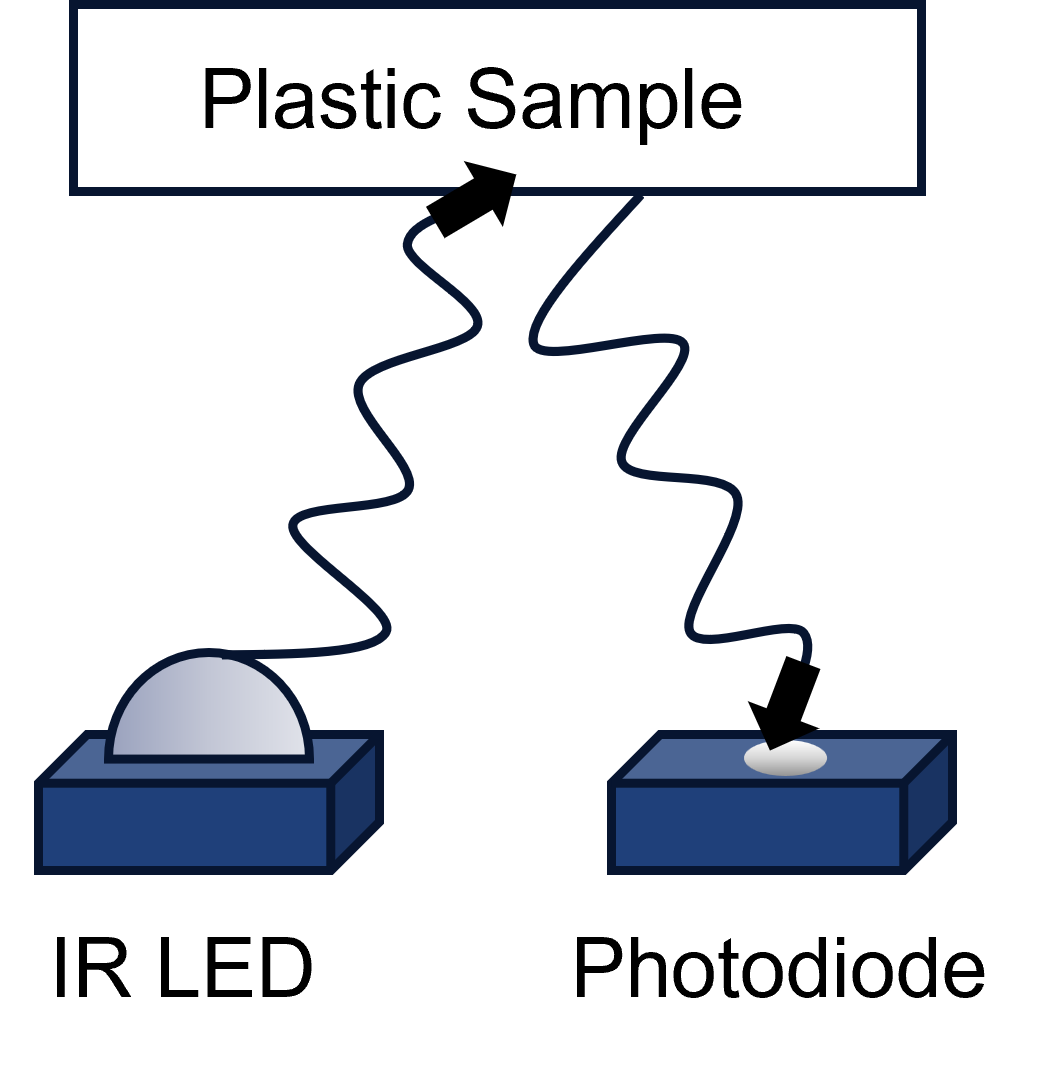
The PlasticScanner allows the identification of six different plastic types using an approach called discrete near-infrared (NIR) spectroscopy. The IR LEDs on the Scanner module emit light one by one for a short period of time. Each time, the reflectance of the emitted light is measured by a photodiode.
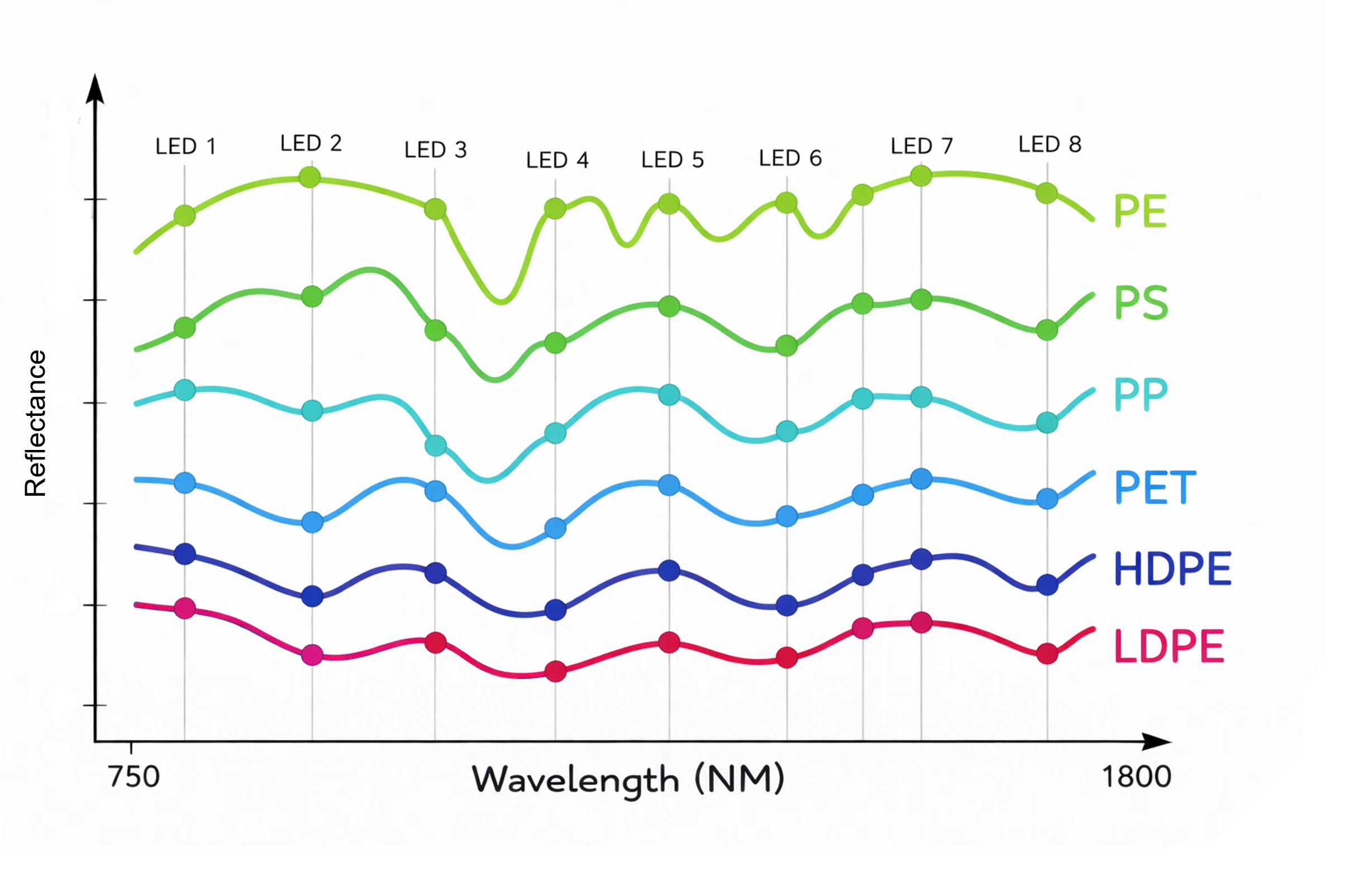
This results in a spectral analysis of the measured reflectance. Plastic identification is performed by comparing each measurement with the distinct reflectance spectra of the six plastic types (see illustration, for visualization only, not to scale). Since the device only provides eight readings at specific wavelengths and the actual reflectance spectra of plastics can be very similar, a machine learning model is applied. The model helps identify plastics more reliably without requiring a full spectral sweep. Additional information, such as color, can further improve the model, as dark plastics are particularly challenging to identify with this method.
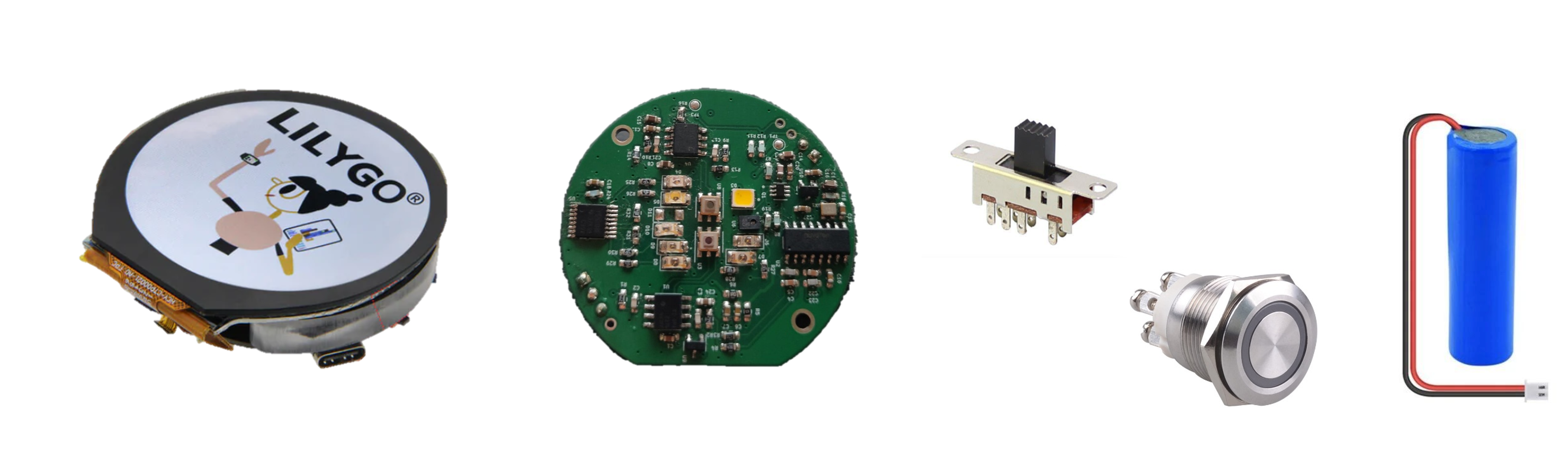
Components:
There is still a lot to improve! The most important point is that the current machine learning model still uses the old dataset, which relied on different IR LED ranges. To finalize this device, the model would need to be retrained with data for the wavelengths actually used (see Firmware). Due to this, testing has not yet been performed. Establishing the accuracy of the device and testing it for the intended use case is of high importance. The color sensor is included on the PCB but has not yet been implemented in the firmware. For future designs, the supplier of the IR LEDs should be changed, as especially high-wavelength LEDs are difficult to source and often have long delivery times. Switching to through-hole LEDs would increase the number of available suppliers and simplify sourcing.
PlasticScanner Website: https://plasticscanner.com/
PlasticScanner Github: Plastic-Scanner Project
PCB: Lawrence R Kincheloe III, handheld scanner
CAD: Markus Glavind, handheld scanner
Walker, T. R., & Fequet, L. (2023). Current trends of unsustainable plastic production and micro(nano)plastic pollution. TrAC Trends in Analytical Chemistry, 160, 116984. https://doi.org/10.1016/j.trac.2023.116984
Dokl, M., Copot, A., Krajnc, D., Fan, Y. V., Vujanović, A., Aviso, K. B., Tan, R. R., Kravanja, Z., & Čuček, L. (2024). Global projections of plastic use, end-of-life fate and potential changes in consumption, reduction, recycling and replacement with bioplastics to 2050. Sustainable Production and Consumption, 51, 498–518. https://doi.org/10.1016/j.spc.2024.09.025
Werner, T., Taha, I., & Aschenbrenner, D. (2023). An overview of polymer identification techniques in recycling plants with focus on current and future challenges. Procedia CIRP, 120, 1381–1386. https://doi.org/10.1016/j.procir.2023.09.180
WASTE Adviser Website. (2025, Oktober 7). https://www.wasteadvisersmw.org/eu-building-better
| Qty | Value | Footprint | References |
|---|---|---|---|
| 9 | 0.1uF | Capacitor_SMD:C_0603_1608Metric_Pad1.08x0.95mm_HandSolder | C1, C7, C10, C11, C13, C16, C18, C20, C27 |
| 8 | 43 | Resistor_SMD:R_0603_1608Metric_Pad0.98x0.95mm_HandSolder | R25, R26, R27, R28, R29, R30, R31, R32 |
| 5 | 10k | Resistor_SMD:R_0603_1608Metric_Pad0.98x0.95mm_HandSolder | R7, R8, R11, R12, R19 |
| 4 | 240k | Resistor_SMD:R_0603_1608Metric_Pad0.98x0.95mm_HandSolder | R1, R2, R9, R10 |
| 4 | 301 | Resistor_SMD:R_0603_1608Metric_Pad0.98x0.95mm_HandSolder | R3, R4, R13, R14 |
| 4 | 51pF | Capacitor_SMD:C_0603_1608Metric_Pad1.08x0.95mm_HandSolder | C2, C3, C12, C21 |
| 3 | 10uF | Capacitor_SMD:C_0603_1608Metric_Pad1.08x0.95mm_HandSolder | C14, C15, C19 |
| 3 | 1k | Resistor_SMD:R_0603_1608Metric_Pad0.98x0.95mm_HandSolder | R16, R18, R24 |
| 3 | 1uF | Capacitor_SMD:C_0603_1608Metric_Pad1.08x0.95mm_HandSolder | C6, C8, C24 |
| 2 | 100pF | Capacitor_SMD:C_0603_1608Metric_Pad1.08x0.95mm_HandSolder | C5, C23 |
| 2 | 47nF | Capacitor_SMD:C_0603_1608Metric_Pad1.08x0.95mm_HandSolder | C4, C22 |
| 2 | OPA2376xxD | OPA2376AID:SOIC127P599X175-8N | U1, U4 |
| 1 | 1 | Resistor_SMD:R_0603_1608Metric_Pad0.98x0.95mm_HandSolder | R6 |
| 1 | 1050nm | LED_SMD:LED_1206_3216Metric_Pad1.42x1.75mm_HandSolder | D6 |
| 1 | 1300nm | LED_SMD:LED_1206_3216Metric_Pad1.42x1.75mm_HandSolder | D7 |
| 1 | 1460nm | LED_SMD:LED_1206_3216Metric_Pad1.42x1.75mm_HandSolder | D8 |
| 1 | 1550nm | LED_SMD:LED_1206_3216Metric_Pad1.42x1.75mm_HandSolder | D9 |
| 1 | 1650nm | LED_SMD:LED_1206_3216Metric_Pad1.42x1.75mm_HandSolder | D10 |
| 1 | 1720nm | LED_SMD:LED_1206_3216Metric_Pad1.42x1.75mm_HandSolder | D11 |
| 1 | 22uF | Capacitor_SMD:C_0603_1608Metric_Pad1.08x0.95mm_HandSolder | C17 |
| 1 | 4.9152 MHz | Oscillator:Oscillator_SMD_ECS_2520MV-xxx-xx-4Pin_2.5x2.0mm | X1 |
| 1 | 855nm | LED_SMD:LED_1206_3216Metric_Pad1.42x1.75mm_HandSolder | D4 |
| 1 | 940nm | LED_SMD:LED_1206_3216Metric_Pad1.42x1.75mm_HandSolder | D5 |
| 1 | AP2127N-1.8 | Package_TO_SOT_SMD:SOT-23 | U10 |
| 1 | AP2127N-2.5 | Package_TO_SOT_SMD:SOT-23 | U9 |
| 1 | AS7341-DLGT | AS7341-DLGT:PSON80P310X200X110-8N | U6 |
| 1 | BSS138DW-7-F | BSS138DW-7-F-A:Diodes_Inc._-_BSS138DW-7-F-A | Q1 |
| 1 | Conn_01x09 | round_module:round_notch | J2 |
| 1 | EAHC2835WD6 | Everlight-EAHC2835WD6:Everlight-EAHC2835WD6-MFG | D3 |
| 1 | G*** | PlasticScannerLibrary:kibuzzard-6398DD41 | kibuzzard-6398DD41 |
| 1 | G*** | PlasticScannerLibrary:kibuzzard-6346913B | kibuzzard-6346913B |
| 1 | MTSM1346SMF1-100 | MTSM2601SMF1-100:MTSM1346SMF1-100 | U8 |
| 1 | MTSM2601SMF1-100 | MTSM2601SMF1-100:MTSM2601SMF1-100 | U3 |
| 1 | NAU7802SGI | Nuvoton-NAU7802SGI:Nuvoton-NAU7802SGI | U2 |
| 1 | NP | Resistor_SMD:R_0603_1608Metric_Pad0.98x0.95mm_HandSolder | R5 |
| 1 | OSHW-Logo_11.4x12mm_SilkScreen | Symbol:OSHW-Logo_11.4x12mm_SilkScreen | LOGO1 |
| 1 | POWER LED | LED_SMD:LED_0805_2012Metric_Pad1.15x1.40mm_HandSolder | D2 |
| 1 | PlasticScannerLogo | PlasticScannerLibrary:PlasticScannerLogo | LOGO2 |
| 1 | SM04B-SRSS-TB | Connector_JST:JST_SH_SM04B-SRSS-TB_1x04-1MP_P1.00mm_Horizontal | J3 |
| 1 | TLC59208FIPWR | TLC59208FIPWR:SOP65P640X120-16N | U5 |
| 1 | Test_1.8V | TestPoint:TestPoint_Pad_D1.5mm | TP1 |
| 1 | Test_3.3V | TestPoint:TestPoint_Pad_D1.5mm | TP3 |


Jan-IngenHousz-Institute/miniPar
Repository firmware for the ambit PAR meter version

juniper-garden/twig_temp_humidity_sensor
Hardware files for the temperature and humidity sensor

Mouse-GYM/auto-trainer-hardware
Repository for hardware, firmware, and software related to the Mouse-GYM modules

HandHeldLegend/GC-Ultimate
The 3D shell, buttons, and other associated models are licensed under a Creative Commons Attribution 4.0 International License .

It measures 20.6 × 42.5 mm and has 4 copper layers, 4.69 mm thick.
79 parts, built around the AS7341-DLGT, NAU7802SGI, MTSM1346SMF1-100 and MTSM2601SMF1-100. The full list of its parts is on this page, with links to each part's symbol and footprint where PCBKit's library has them.
From the Global-Health-Engineering/plastic-scanner repository on GitHub, at the commit this page was made from: the board is Hardware/Scanning PCB/RoundScanner_Ki_CAD_files/RoundScanner.kicad_pcb and its schematic Hardware/Scanning PCB/RoundScanner_Ki_CAD_files/RoundScanner.kicad_sch. PCBKit opens the board in the browser, with nothing to install.
Its repository publishes it under the GPL-3.0 licence: you may reuse it on that licence's terms (keep the author's notice, and for a copyleft licence share your changes alike).