2 layers52.3 × 40.6 mm
Zamonaryboard
zamonary1/zamonarypad
Low-latency capacitive touch osu keyboard, esp32-s2 based
26 parts1

 AYUSH-pro-grammer/esp32-devboard1
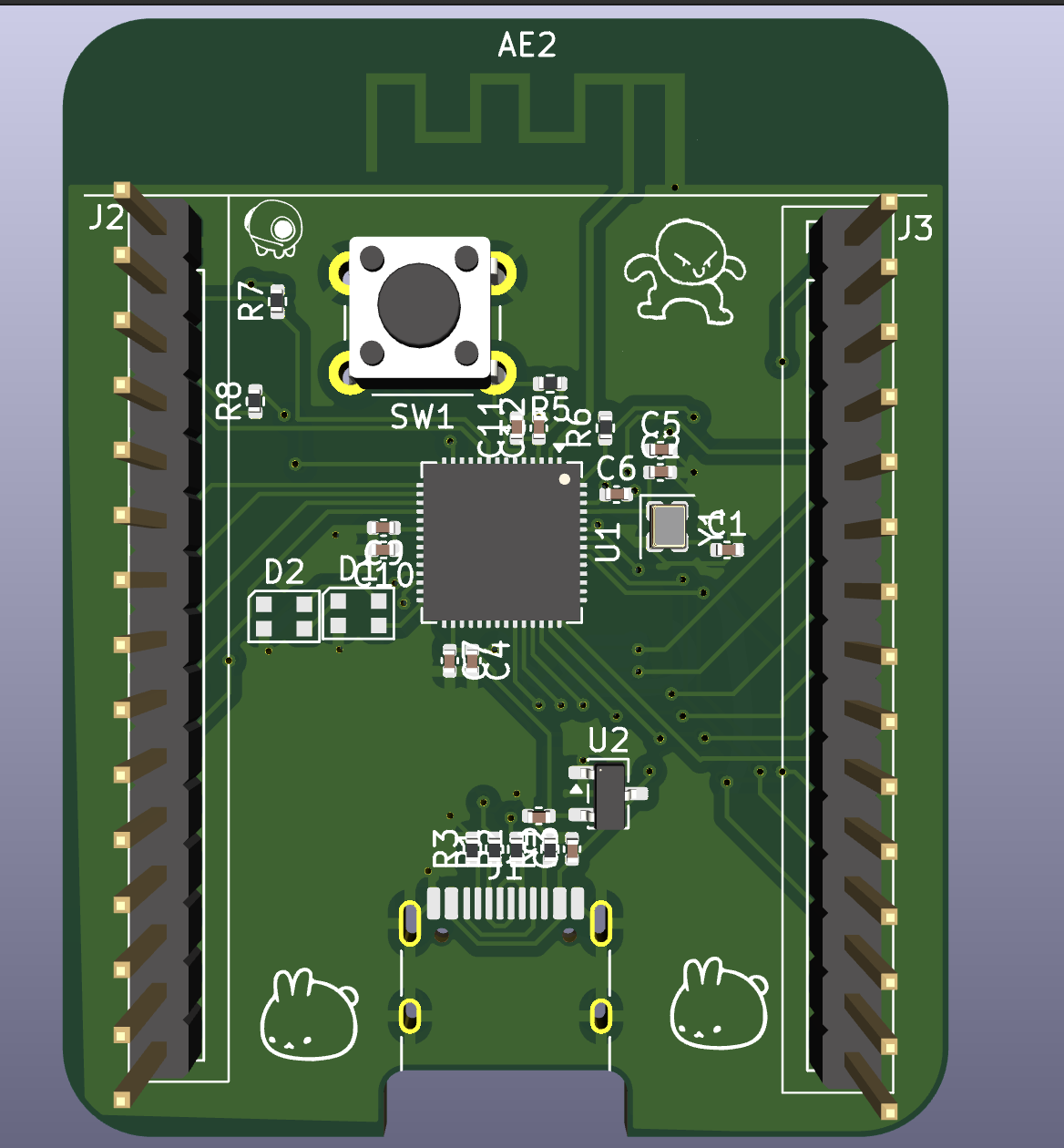
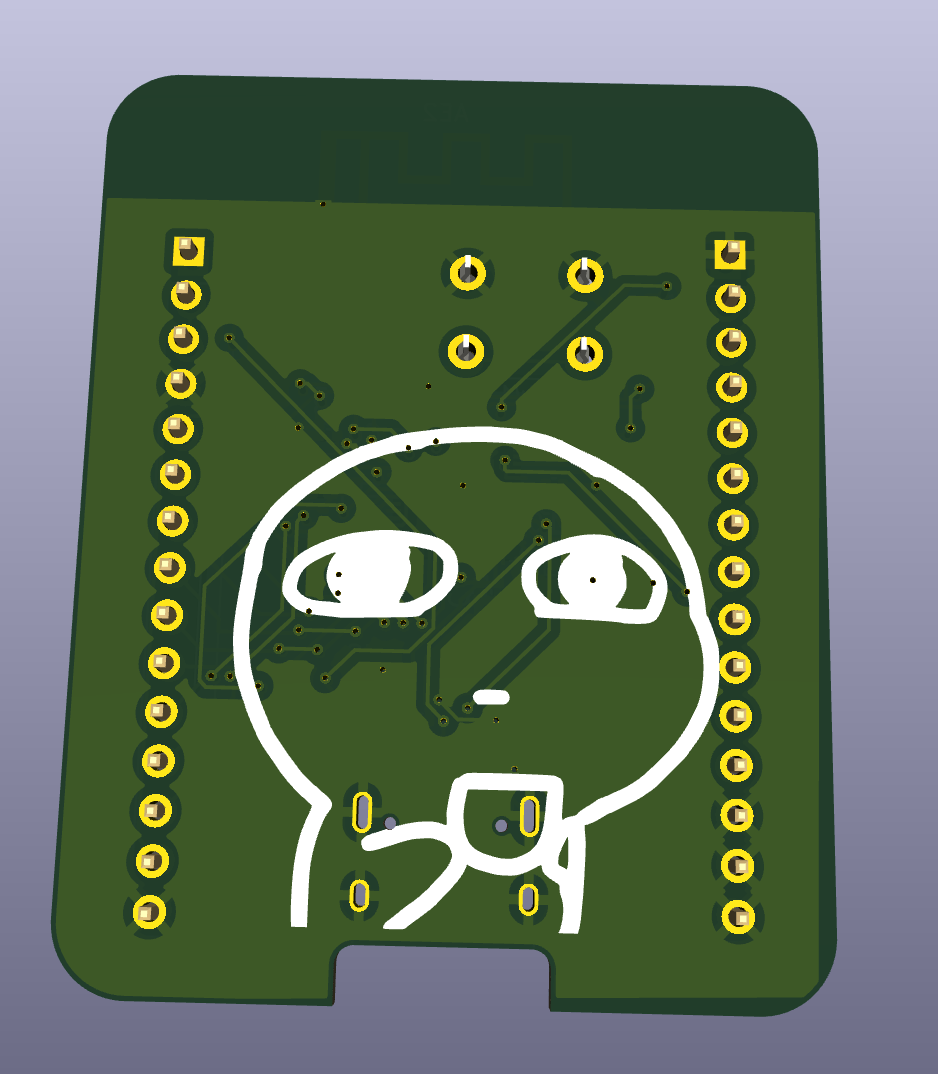
Development board built using Espressif ESP32-S2FH4 with USB-C, two WS2812B LEDs, 3.3V LDO and GPIO headers, which have 15 pins on both sides.
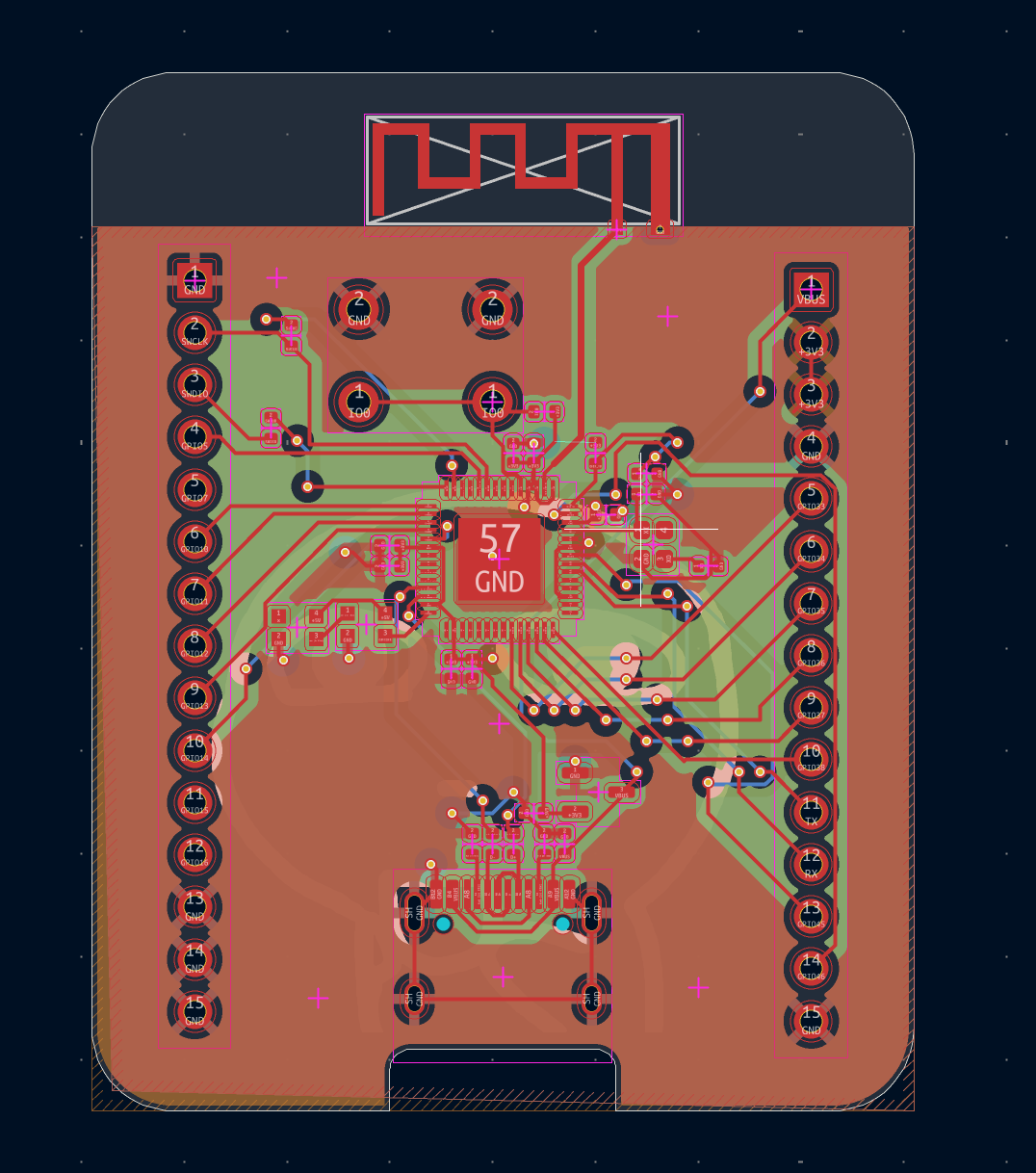
Esp32-devboard is an open-source printed circuit board by AYUSH-pro-grammer, from the AYUSH-pro-grammer/esp32-devboard repository on GitHub. It is a 4-layer board of 40 × 50.5 mm with 35 parts on 63 nets, routed with 315 tracks and 48 vias.
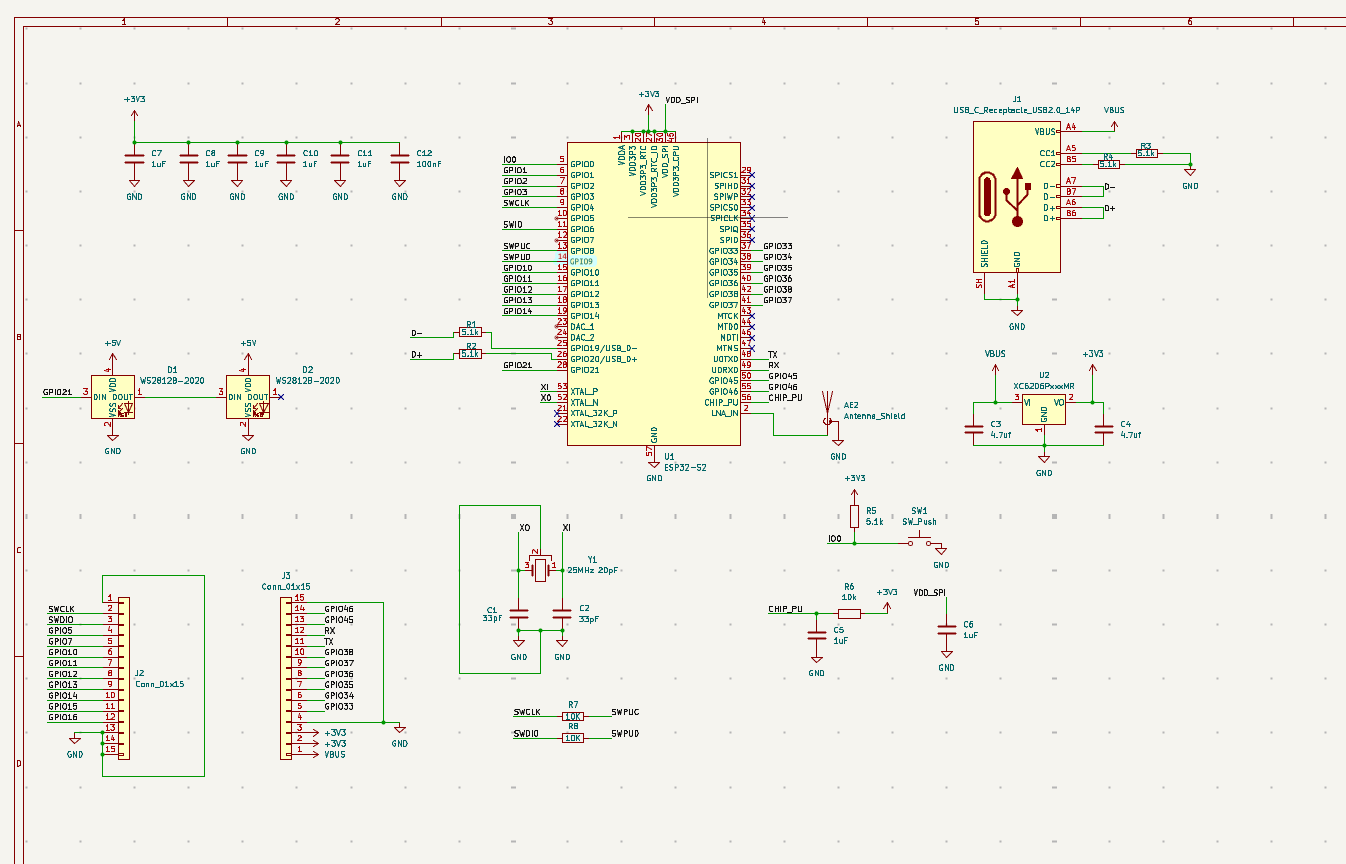
It is built around the ESP32-S2 and WS2812B-2020. Its parts include 12 capacitors, 8 resistors, 3 connectors, 2 ICs and 2 diodes. It belongs with the microcontroller boards boards and the ESP32 boards of this library.


Development board built using Espressif ESP32-S2FH4 with USB-C, two WS2812B LEDs, 3.3V LDO and GPIO headers, which have 15 pins on both sides.
I created this board because I want to get experience in designing a PCB and build my own ESP32 board. I was interested in building the schematic, routing the PCB and putting everything together.
The board receives 5V from USB-C port and uses 3.3V LDO to power the ESP32-S2 module. The ESP32-S2 is the core part of the board and can be programmed through USB-C. GPIO pins are routed to two 1x15 headers to use them with jumper wires and breadboard. WS2812B LEDs and a button were used to add some functionality to the board.
Simply solder all the components by hand! I will utilize a hot plate to ease the process of soldering, specifically the small 0402 components.
| Qty | Component | Selected Part | Supplier | Link | MOQ | Unit Price (USD) | Order Cost (USD) |
|---|---|---|---|---|---|---|---|
| 1 | 25 MHz Crystal, 20 pF | SJK 7F25000E20UCG | SJK | C252274 | 5 | $0.1139 | $0.57 |
| 2 | 33 pF Capacitor | FOJAN FCC0402N330J500AT | FOJAN | C5137486 | 100 | $0.0030 | $0.30 |
| 1 | 100 nF Capacitor | Samsung Electro-Mechanics CL05B104KO5NNNC | Samsung Electro-Mechanics | C1525 | 100 | $0.0046 | $0.46 |
| 7 | 1 µF Capacitor | Samsung Electro-Mechanics CL05A105KA5NQNC | Samsung Electro-Mechanics | C52923 | 50 | $0.0100 | $0.50 |
| 2 | 4.7 µF Capacitor | Samsung Electro-Mechanics CL05A475MP5NRNC | Samsung Electro-Mechanics | C23733 | 50 | $0.0167 | $0.84 |
| 2 | WS2812B-2020 LED | XINGLIGHT XL-2020RGBC-2812B | XINGLIGHT | C5349955 | 5 | $0.1112 | $0.56 |
| 1 | 1 A / 12 V Resettable Fuse | R+O SMD0805-100-12 | R+O | C46640991 | 10 | $0.0435 | $0.44 |
| 1 | USB-C Receptacle | SHOU HAN TYPE-C16PIN | SHOU HAN | C393939 | 10 | $0.0592 | $0.59 |
| 5 | 5.1 kΩ Resistor | UNI-ROYAL 0402WGF5101TCE | UNI-ROYAL | C25905 | 100 | $0.0023 | $0.23 |
| 3 | 10 kΩ Resistor | UNI-ROYAL 0402WGF1002TCE | UNI-ROYAL | C25744 | 100 | $0.0034 | $0.34 |
| 1 | Tactile Push Button | XUNPU TS-1088-AR02016 | XUNPU | C720477 | 10 | $0.0516 | $0.52 |
| 1 | ESP32-S2FH4 | ESPRESSIF ESP32-S2FH4 | ESPRESSIF | C2840995 | 1 | $2.4574 | $2.46 |
| 1 | 3.3 V LDO | TOREX XC6206P332MR-G | TOREX | C5446 | 5 | $0.1437 | $0.72 |
| 1 | PCB Manufacturing | JLCPCB PCB Fabrication | JLCPCB | JLCPCB | 1 | $8.00 | $8.00 |
BOM Total: $8.53 USD
PCB Manufacturing: $8.00 USD
Total Project Cost: $16.53 USD
| Designator | Part |
|---|---|
| C1, C2 | 33 pF |
| C3, C4, C5, C6, C7, C8, C9 | 1 µF |
| C10 | 100 nF |
| C39, C40 | 4.7 µF |
| D1, D2 | WS2812B-2020 |
| F1 | Resettable Fuse |
| J1 | USB-C Receptacle |
| R1, R2, R3, R4, R5 | 5.1 kΩ |
| R6, R7, R8 | 10 kΩ |
| SW1 | Tactile Push Button |
| U1 | ESP32-S2FH4 |
| U2 | XC6206P332MR-G |
| Y1 | 25 MHz Crystal |
| Qty | Value | Footprint | References |
|---|---|---|---|
| 7 | 1uF | Capacitor_SMD:C_0402_1005Metric | C5, C6, C7, C8, C9, C10, C11 |
| 5 | 5.1k | Resistor_SMD:R_0402_1005Metric | R1, R2, R3, R4, R5 |
| 5 | LOGO | LOGO | G***, G***, G***, G***, G*** |
| 2 | 10K | Resistor_SMD:R_0402_1005Metric | R7, R8 |
| 2 | 33pF | Capacitor_SMD:C_0402_1005Metric | C1, C2 |
| 2 | 4.7uf | Capacitor_SMD:C_0402_1005Metric | C3, C4 |
| 2 | Conn_01x15 | Connector_PinHeader_2.54mm:PinHeader_1x15_P2.54mm_Vertical | J2, J3 |
| 2 | WS2812B-2020 | LED_SMD:LED_WS2812B-2020_PLCC4_2.0x2.0mm | D1, D2 |
| 1 | 100nF | Capacitor_SMD:C_0402_1005Metric | C12 |
| 1 | 10k | Resistor_SMD:R_0402_1005Metric | R6 |
| 1 | 25MHz 20pF | Crystal:Crystal_SMD_2016-4Pin_2.0x1.6mm | Y1 |
| 1 | Antenna_Shield | RF_Antenna:Texas_SWRA117D_2.4GHz_Left | AE2 |
| 1 | ESP32-S2 | Package_DFN_QFN:QFN-56-1EP_7x7mm_P0.4mm_EP4x4mm | U1 |
| 1 | SW_Push | Button_Switch_THT:SW_PUSH_6mm | SW1 |
| 1 | USB_C_Receptacle_USB2.0_14P | Connector_USB:USB_C_Receptacle_HRO_TYPE-C-31-M-12 | J1 |
| 1 | XC6206PxxxMR | Package_TO_SOT_SMD:SOT-23-3 | U2 |
zamonary1/zamonarypad
Low-latency capacitive touch osu keyboard, esp32-s2 based

cyao1234/e32
This is a single board esp32-s2 development board. with two neopixels and an on-board antenna.


probe-rs/hive
A Raspberry PI shield for testing probe-rs against many chips & probes.
It measures 40 × 50.5 mm and has 4 copper layers, 1.6 mm thick.
35 parts, built around the ESP32-S2 and WS2812B-2020. The full list of its parts is on this page, with links to each part's symbol and footprint where PCBKit's library has them.
From the AYUSH-pro-grammer/esp32-devboard repository on GitHub, at the commit this page was made from: the board is kicad/esp32-devboard.kicad_pcb and its schematic kicad/esp32-devboard.kicad_sch. PCBKit opens the board in the browser, with nothing to install.
Its repository states no licence, so its author keeps all rights: ask AYUSH-pro-grammer before reusing the design.