2 layers276 × 87.1 mm

 zzeneg/molekula98
Framework for building ergo keyboards
MolekulaTWS is an open-source printed circuit board by zzeneg, from the zzeneg/molekula repository on GitHub, published under the MIT licence. It is a 2-layer board of 266 × 89.6 mm with 86 parts on 79 nets, routed with 811 tracks and 79 vias.
It is built around the 1N4148W and FPC05012-09200. Its parts include 39 switches, 36 diodes, 7 connectors and 1 IC. It belongs with the keyboards and input boards and the nRF52 and nRF5x boards of this library.


This project aims to provide components for building modular ergo keyboards by separating one main PCB into central and side parts. Side is a dumb PCB, with key matrix only (up to 25 keys), and accepts all switch types (MX/ChocV1/ChocV2/GLP). Central is a keyboard brain, which contains any MCU (wired/wireless/integrated) and additional hardware - encoders/touchpads/trackballs/displays/etc, while keeping its size under 100x100mm. PCBs are interconnected with 12-pin FFC cables, and can be replaced/updated independently.
Such modular approach allows for quick, cheap and easy experimenting with different hardware, prototyping, and reusing of side PCBs.
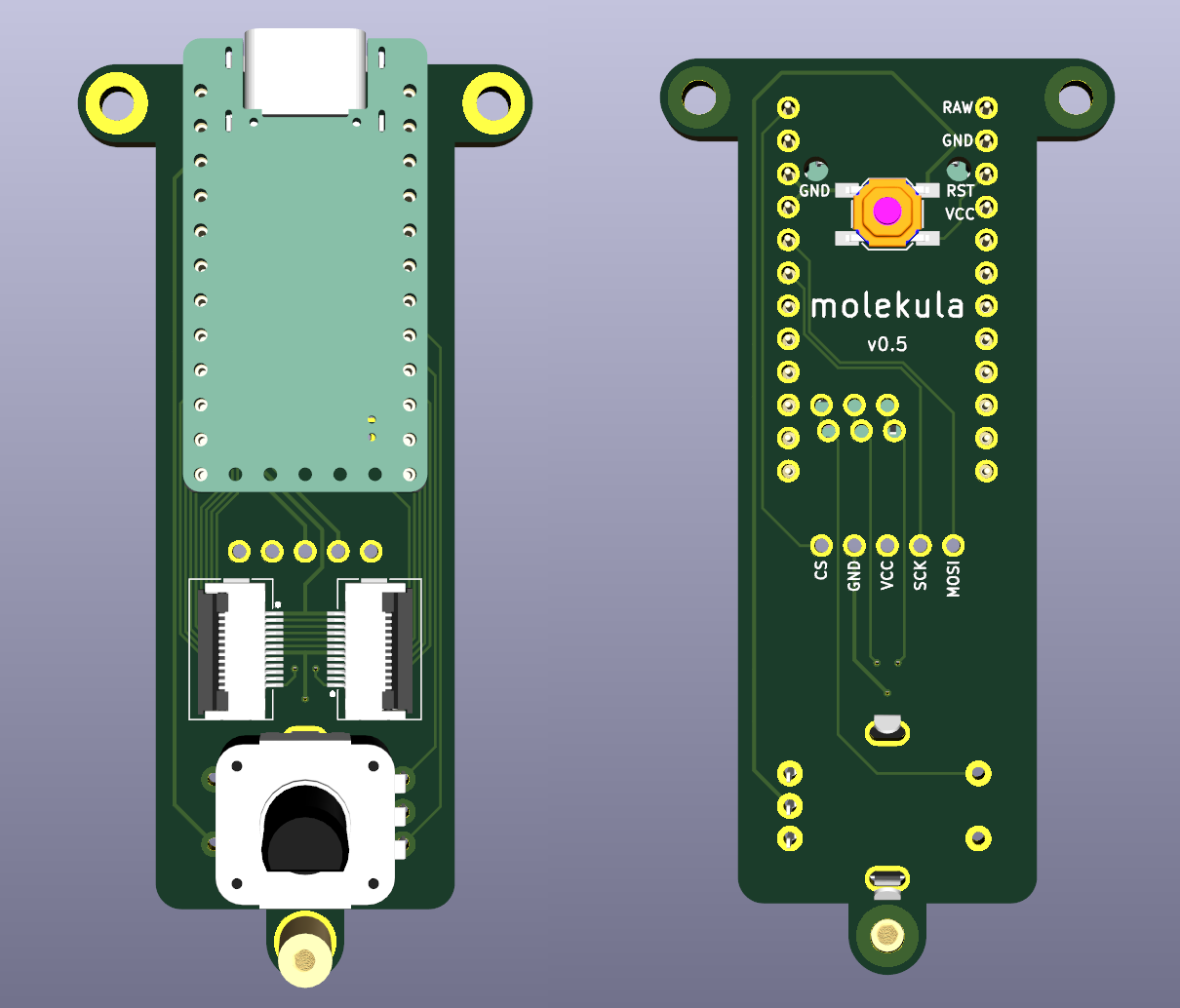
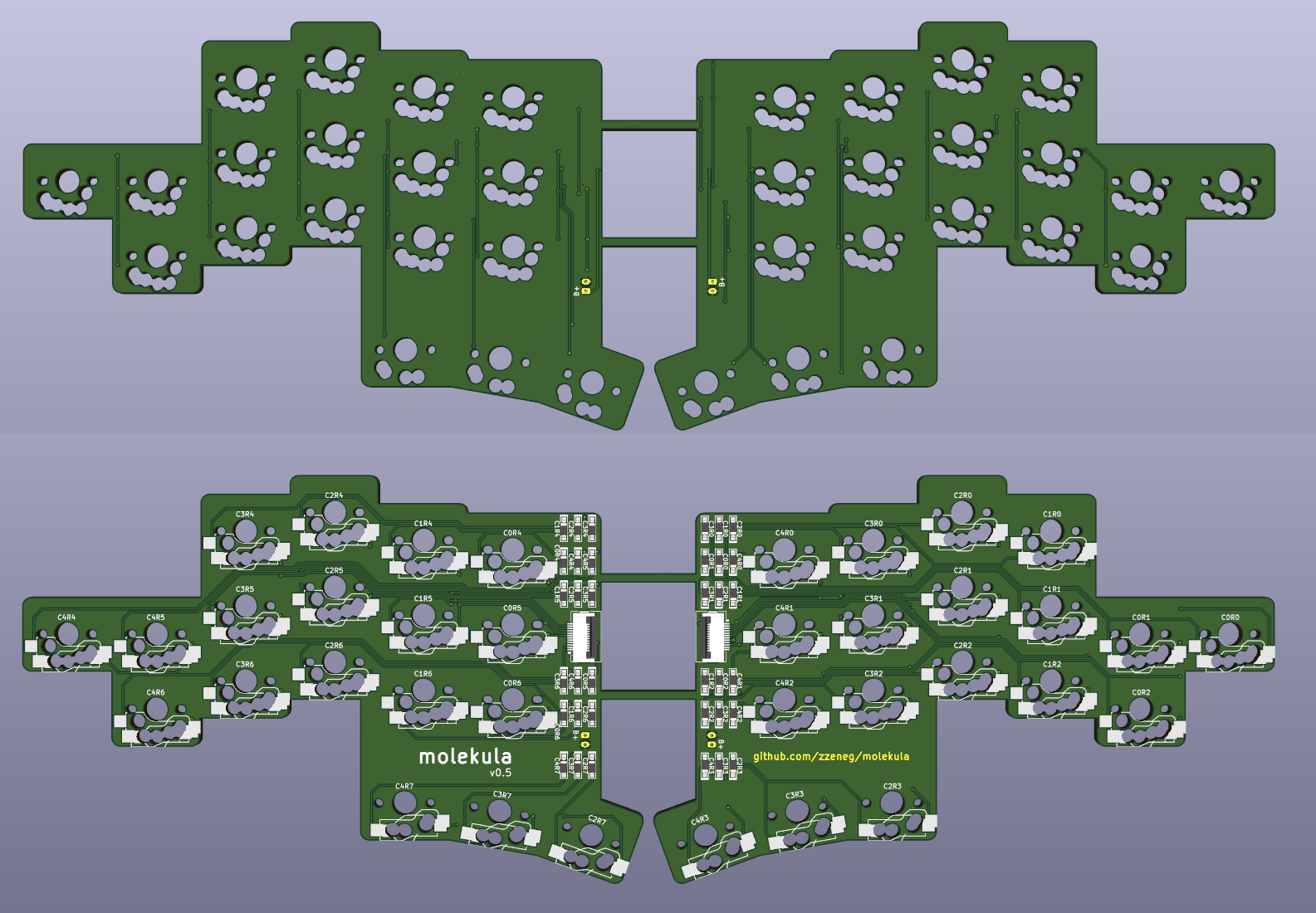
Reference design using molekula PCBs.
Features:
Unibody that can be disassembled into two parts for traveling
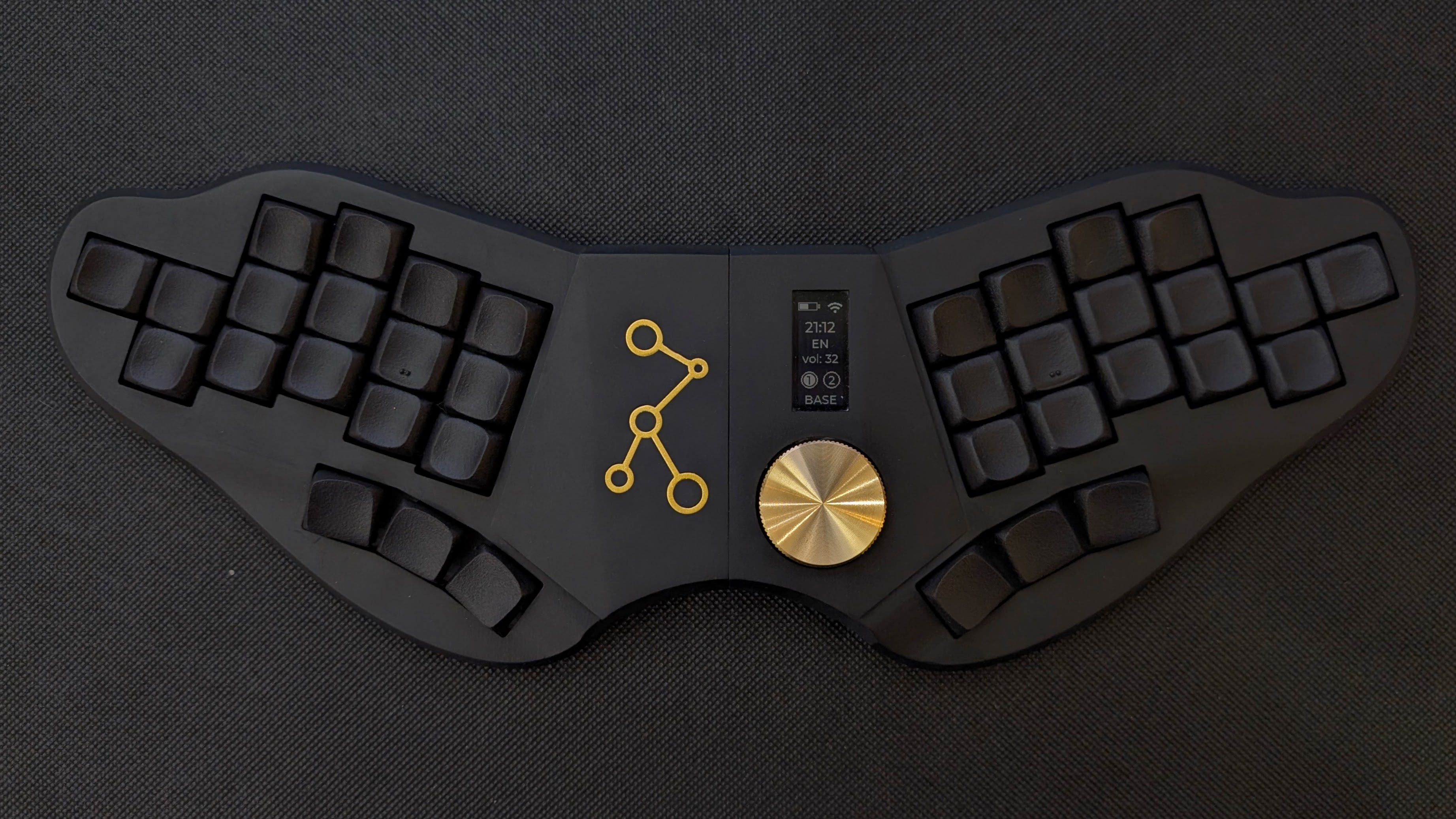
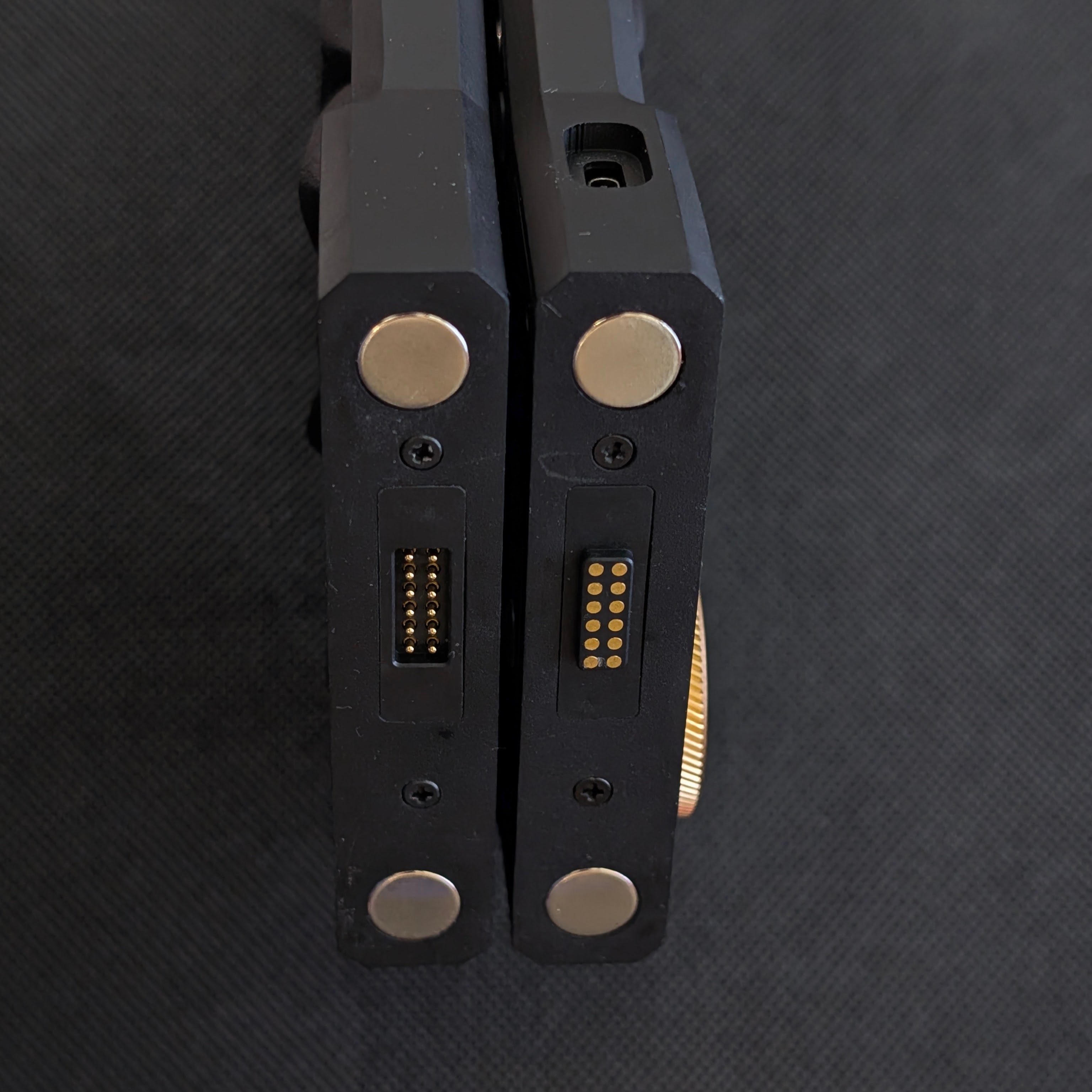
Unibody assembled from multiple parts, to allow easy modifications and experiments.
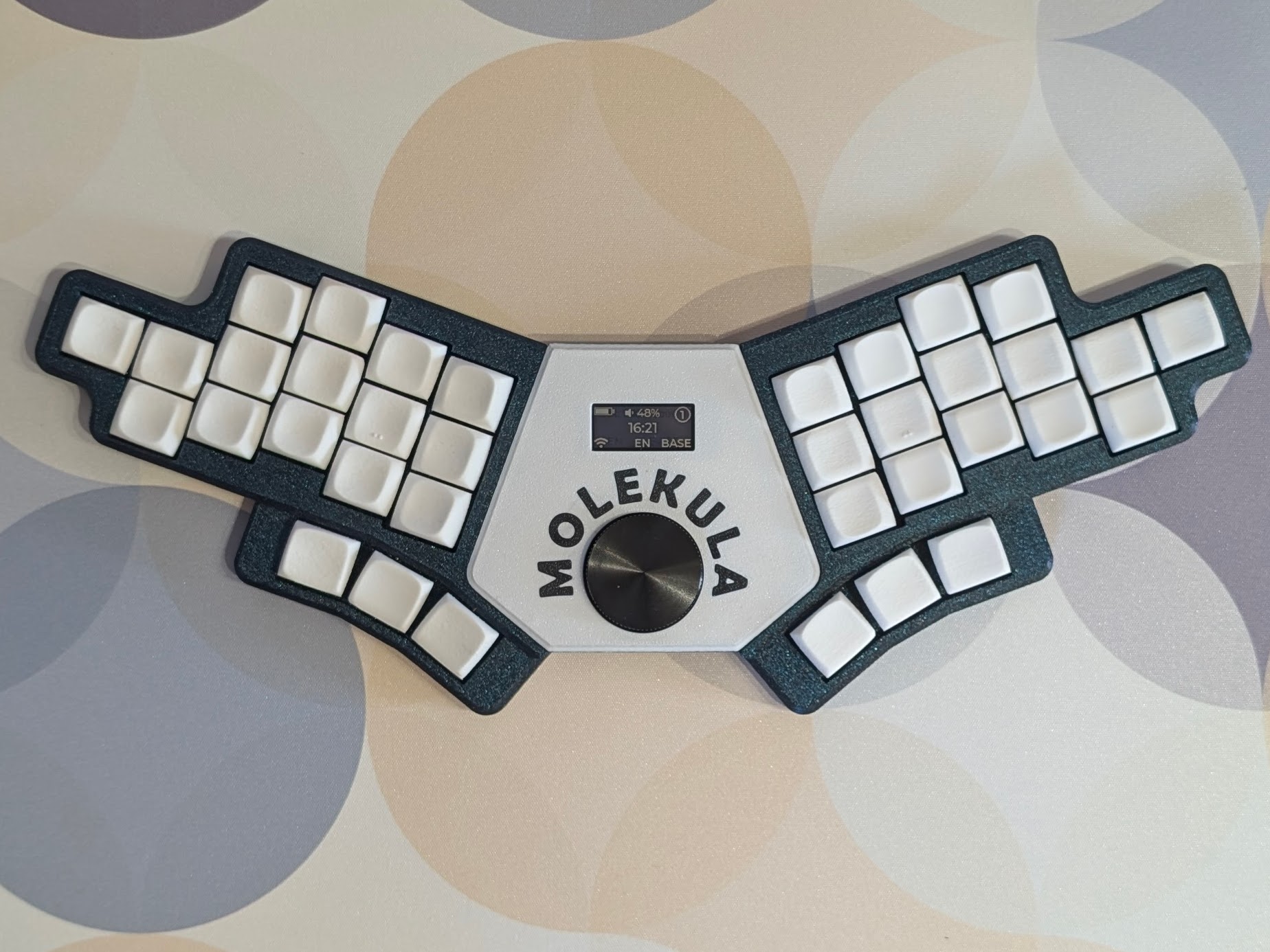
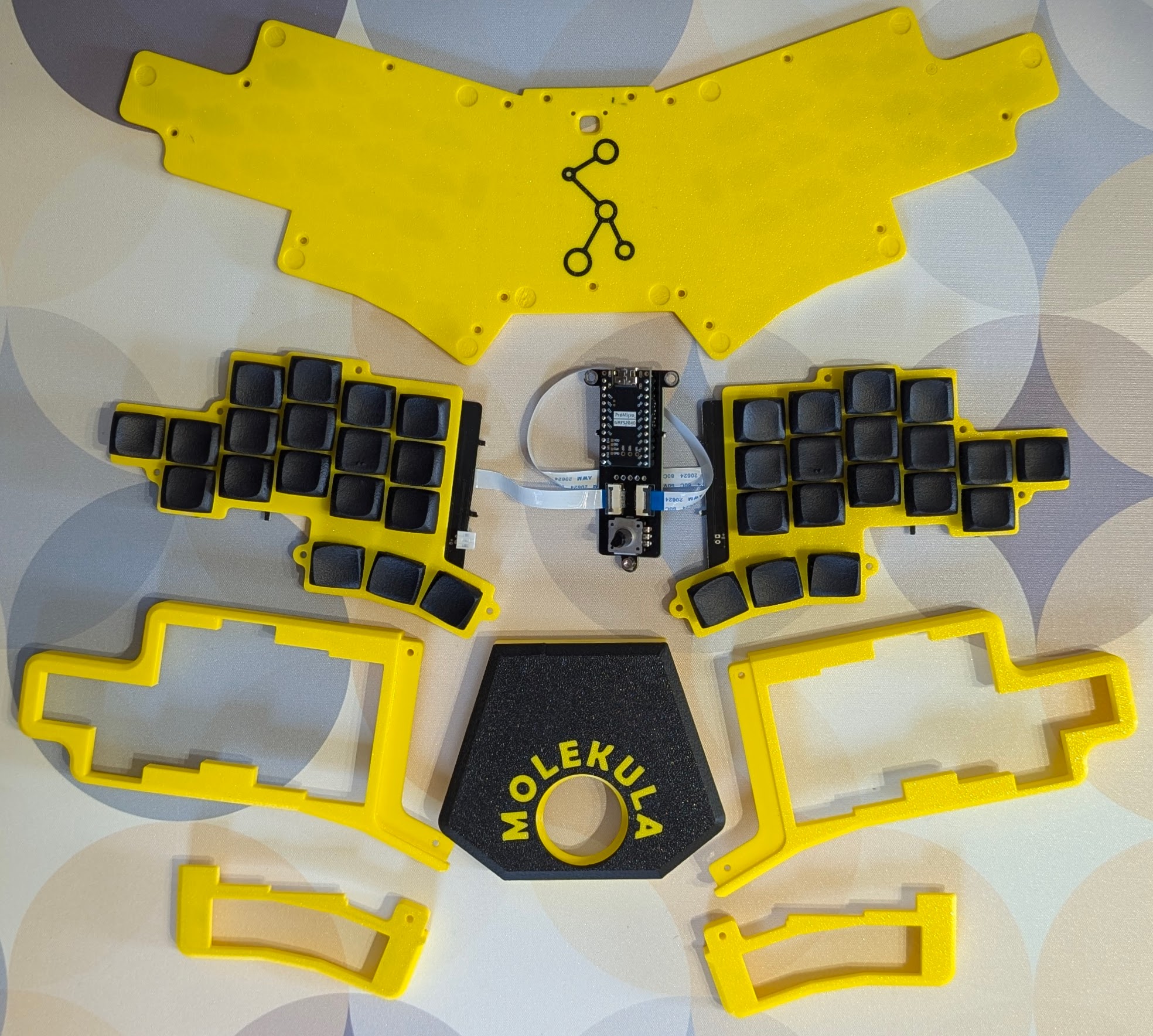
Keycaps designed for minY spacing (19mmx16mm):
If you like my work and want to support my future designs, please consider sponsorship.
Molekula2 keyboard was sponsored by PCBWay. I can highly recommend their PCBA and 3D printing services - "Imaging Black" resin looks fantastic.

| Qty | Value | Footprint | References |
|---|---|---|---|
| 36 | C81598 | zzkeeb:Diode_1N4148-SOD123 | D1, D2, D10, D11, D12, D13, D14, D15, D16, D17, D18, D19, D20, D21, D22, D23 +20 |
| 36 | Switch | zzkeeb:Switch_MXKSChoc-hotswap-choc-spacing | SW1, SW2, SW10, SW11, SW12, SW13, SW14, SW15, SW16, SW17, SW18, SW19, SW20, SW21, SW22, SW23 +20 |
| 3 | C479750 | zzkeeb:Connector_FFC-12pin-0.5mm-horizontal | J2, J4, J5 |
| 3 | Conn_01x02_Socket | zzkeeb:Connector_JST-1x02-2.00mm | J5, J7, J12 |
| 3 | MountingHole | zzkeeb:Hole_M2-solder-nut-2.5 | H1, H2, H3 |
| 1 | Conn_01x02_Pin | Connector_PinHeader_2.54mm:PinHeader_1x02_P2.54mm_Vertical | J3 |
| 1 | MCU_xiao-ble | zzkeeb:MCU_xiao-ble-tht | U1 |
| 1 | RotaryEncoder_Switch | zzkeeb:RotaryEncoder_EC11 | SW38 |
| 1 | SW_Push | zzkeeb:Button_SW_SPST_SKQG_WithoutStem | SW37 |
| 1 | SW_SPDT | zzkeeb:Switch_SPDT-PCM12 | SW34 |


ProccyBoi/kiku
kiku is an open-source portable audio player built around an STM32H523 microcontroller. The project combines Bluetooth audio, local microSD playback, FM radio, a colour display, headphone and speaker outputs, battery…

fossasia/pslab-hardware
PSLab Hardware Design and Schematics https://pslab.io

pierrechevalier83/ferris
A low profile split keyboard designed to satisfy one single use case elegantly


MickiusMousius/Rolio46Keyboard
A split wireless keyboard based on the Corne and Sofle


sadekbaroudi/bgkeeb
This is a reversible 100mm x 100mm pcb with support for mx or choc switches (no hotswap), per key led, rotary encoders, and exposes the SDA/SCL/GND/VCC lines in the form of the pimoroni trackball pins (meaning you can…
It measures 266 × 89.6 mm and has 2 copper layers, 1.6 mm thick.
86 parts, built around the 1N4148W and FPC05012-09200. The full list of its parts is on this page, with links to each part's symbol and footprint where PCBKit's library has them.
From the zzeneg/molekula repository on GitHub, at the commit this page was made from: the board is keyboards/MolekulaTWS/pcb.kicad_pcb and its schematic keyboards/Molekula2/pcb.kicad_sch. PCBKit opens the board in the browser, with nothing to install.
Its repository publishes it under the MIT licence: you may reuse it on that licence's terms (keep the author's notice, and for a copyleft licence share your changes alike).