

2 layers65 × 88 mm

 Visaging/ESP32-Gimbal4
A high-performance, open-source 3-axis smartphone gimbal built from scratch using a custom PCB and the SimpleFOC library. It features real-time stabilization, native USB-C programming, and custom motion modes.
ESP32-Gimbal is an open-source printed circuit board by Visaging, from the Visaging/ESP32-Gimbal repository on GitHub, published under the MIT licence. It is a 2-layer board of 32.3 × 87.6 mm with 60 parts on 99 nets, routed with 549 tracks and 53 vias.
It is built around the ESP32-S3-WROOM-1-N8, DRV8313PWP and CN3303, with the AO3400A and SS34 among its other parts. Its parts include 22 capacitors, 14 connectors, 13 resistors, 6 ICs and 2 inductors. It belongs with the ESP32 boards of this library.


Because apparently holding a phone parallel to the ground requires too much caloric burn for the modern human, I spent some time engineering a robot to do it for me. This is a custom 3-axis gimbal powered by an ESP32-S3, designed to compensate for your lack of wrist stability and general unwillingness to hold a steady shot.
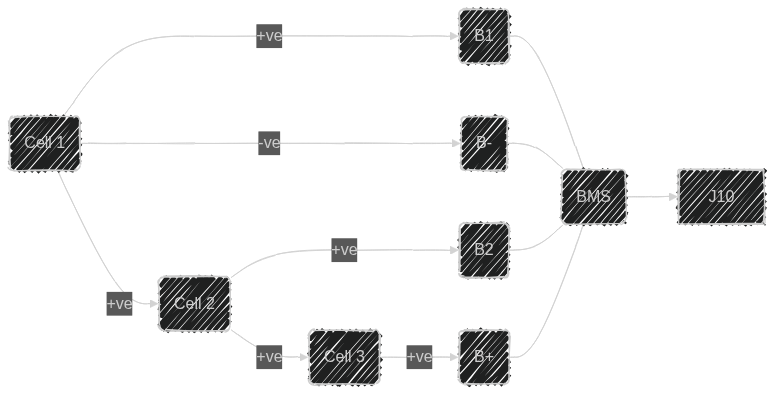
BOM can be found in the root older as a .csv, and is also viewable here: Custom Gimble BOM
Things I might add if I ever get bored of it working perfectly
License: MIT
Feel free to steal this code, modify it, or sell it. However, if your phone falls out and breaks because you set the PID values wrong, I legally never met you.
| Qty | Value | Footprint | References |
|---|---|---|---|
| 8 | 10uF | Capacitor_SMD:C_0805_2012Metric | C1, C5, C9, C11, C13, C14, C15, C16 |
| 6 | 100nF | Capacitor_SMD:C_0805_2012Metric | C17, C18, C19, C20, C21, C22 |
| 5 | 0.1uF | Capacitor_SMD:C_0805_2012Metric | C3, C6, C8, C10, C12 |
| 5 | 10kR | Resistor_SMD:R_0805_2012Metric | R5, R8, R10, R11, R12 |
| 3 | DRV8313PWP | DRV8313PWP:SOP65P640X120-29N | U4, U5, U6 |
| 3 | MOTOR | Connector_Wire:SolderWire-0.1sqmm_1x03_P3.6mm_D0.4mm_OD1mm | J11, J12, J13 |
| 2 | 22uF | Capacitor_SMD:C_0805_2012Metric | C4, C7 |
| 2 | 5.1kR | Resistor_SMD:R_0805_2012Metric_Pad1.20x1.40mm_HandSolder | R1, R2 |
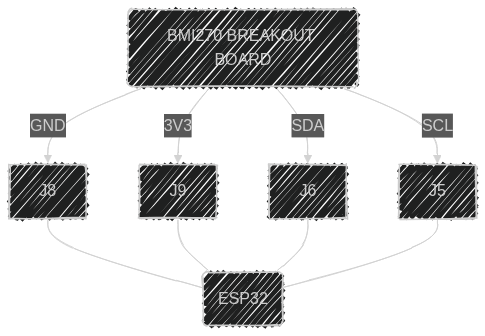
| 1 | +3V3 IMU | Connector_Wire:SolderWire-0.1sqmm_1x01_D0.4mm_OD1mm | J9 |
| 1 | 0.1R | Resistor_SMD:R_1206_3216Metric | R4 |
| 1 | 100kR | Resistor_SMD:R_0805_2012Metric | R13 |
| 1 | 105kR | Resistor_SMD:R_0805_2012Metric | R6 |
| 1 | 10uH | Inductor_SMD:L_Bourns-SRN6028 | L1 |
| 1 | 1MR | Resistor_SMD:R_0805_2012Metric | R7 |
| 1 | 1kR | Resistor_SMD:R_0805_2012Metric | R3 |
| 1 | 1uF | Capacitor_SMD:C_0805_2012Metric | C2 |
| 1 | 3.3uH | Inductor_SMD:L_1210_3225Metric | L2 |
| 1 | 3kR | Resistor_SMD:R_0805_2012Metric | R9 |
| 1 | AO3400A | Package_TO_SOT_SMD:SOT-23 | Q1 |
| 1 | BATTERY | Connector_Wire:SolderWire-0.1sqmm_1x02_P3.6mm_D0.4mm_OD1mm | J10 |
| 1 | BOOT | Connector_Wire:SolderWire-0.1sqmm_1x02_P3.6mm_D0.4mm_OD1mm | J4 |
| 1 | CN3303 | Package_SO:SOIC-8_3.9x4.9mm_P1.27mm | U1 |
| 1 | ESP32-S3-WROOM-1 | RF_Module:ESP32-S3-WROOM-1 | U2 |
| 1 | GND IMU | Connector_Wire:SolderWire-0.1sqmm_1x01_D0.4mm_OD1mm | J8 |
| 1 | LED | Connector_Wire:SolderWire-0.1sqmm_1x02_P3.6mm_D0.4mm_OD1mm | J3 |
| 1 | LOGO | LOGO | G*** |
| 1 | MODE | Connector_Wire:SolderWire-0.1sqmm_1x02_P3.6mm_D0.4mm_OD1mm | J2 |
| 1 | POWER | Connector_Wire:SolderWire-0.1sqmm_1x02_P3.6mm_D0.4mm_OD1mm | J14 |
| 1 | RESET | Connector_Wire:SolderWire-0.1sqmm_1x02_P3.6mm_D0.4mm_OD1mm | J7 |
| 1 | SS34 | Diode_SMD:D_SMA | D1 |
| 1 | TPS563200 | Package_TO_SOT_SMD:SOT-23-6 | U3 |
| 1 | U5-CLOCK | Connector_Wire:SolderWire-0.1sqmm_1x01_D0.4mm_OD1mm | J5 |
| 1 | U5-DATA | Connector_Wire:SolderWire-0.1sqmm_1x01_D0.4mm_OD1mm | J6 |
| 1 | USB_C_Receptacle_USB2.0_14P | Connector_USB:USB_C_Receptacle_HRO_TYPE-C-31-M-12 | J1 |

PA-33/gopro-control-station
Two-axis motorised GoPro mount with physical buttons, BLE camera control, and a built-in HTTPS web UI for live HDMI preview and gallery access. ESP32-S3 / SimpleFOC.

maximus64/opendiag-hardware
OpenDIAG - Open Source OBD2 Interface (Hardware)


JohnanLuca02/BYTE_Electronics
Repository for everything concerning the electronics (PCB, Electrical schemes, BOM, ...) of the robot dog project of the AiTeam called BYTE.

Matyas604/Security-Alarm-Panel
Home Assistant Smart Home Alarm Control Panel with fingerprint reader, NFC/RFID card reader, motion radar, and touchscreen TFT display. It can control your smart home, not just your home security system.


It measures 32.3 × 87.6 mm and has 2 copper layers, 1.6 mm thick.
60 parts, built around the ESP32-S3-WROOM-1-N8, DRV8313PWP, CN3303 and AO3400A. The full list of its parts is on this page, with links to each part's symbol and footprint where PCBKit's library has them.
From the Visaging/ESP32-Gimbal repository on GitHub, at the commit this page was made from: the board is PCB/PCB.kicad_pcb and its schematic PCB/Driver Motor.kicad_sch. PCBKit opens the board in the browser, with nothing to install.
Its repository publishes it under the MIT licence: you may reuse it on that licence's terms (keep the author's notice, and for a copyleft licence share your changes alike).