
4 layers99 × 53.3 mm
PSLab
fossasia/pslab-hardware
PSLab Hardware Design and Schematics https://pslab.io
199 parts1.7kApache-2.0

 sebastian-stumpf/narfbloq10
Wireless macropad running zmk
Narfbloq is an open-source printed circuit board by sebastian-stumpf, from the sebastian-stumpf/narfbloq repository on GitHub. It is a 2-layer board of 75 × 52 mm with 24 parts on 32 nets, routed with 104 tracks and 11 vias.
It is built around the 1N4148W. Its parts include 10 diodes, 10 switches and 1 IC. It belongs with the keyboards and input boards and the nRF52 and nRF5x boards of this library.
A wireless version of the narfpad.
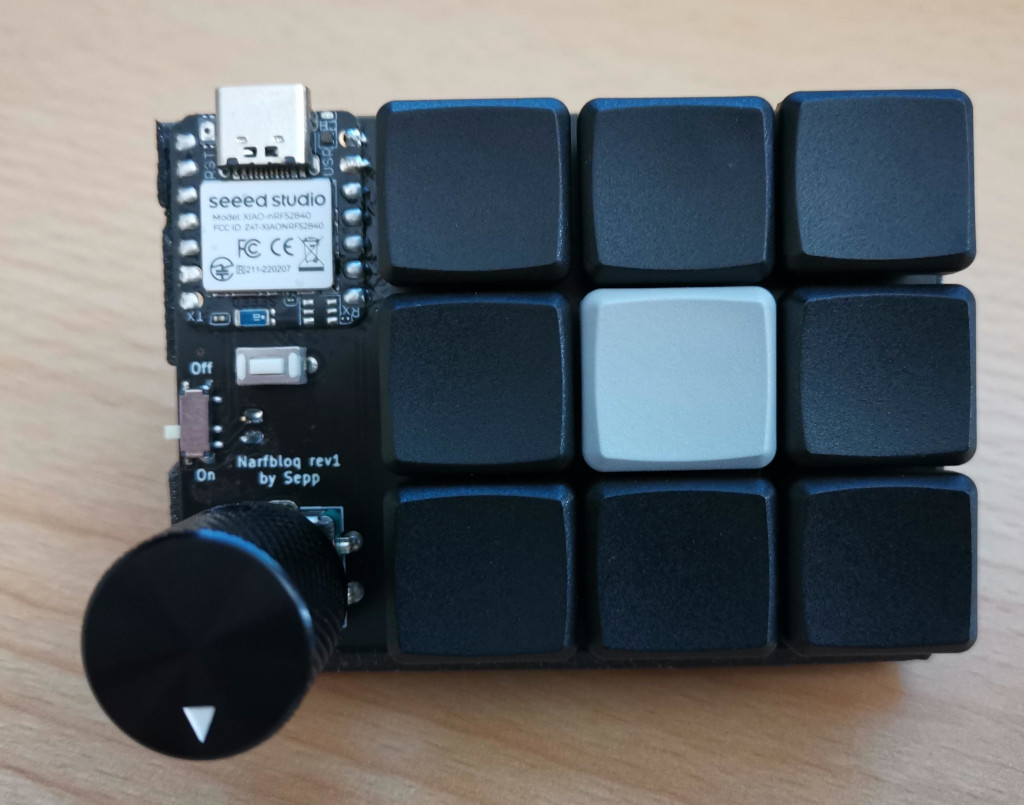
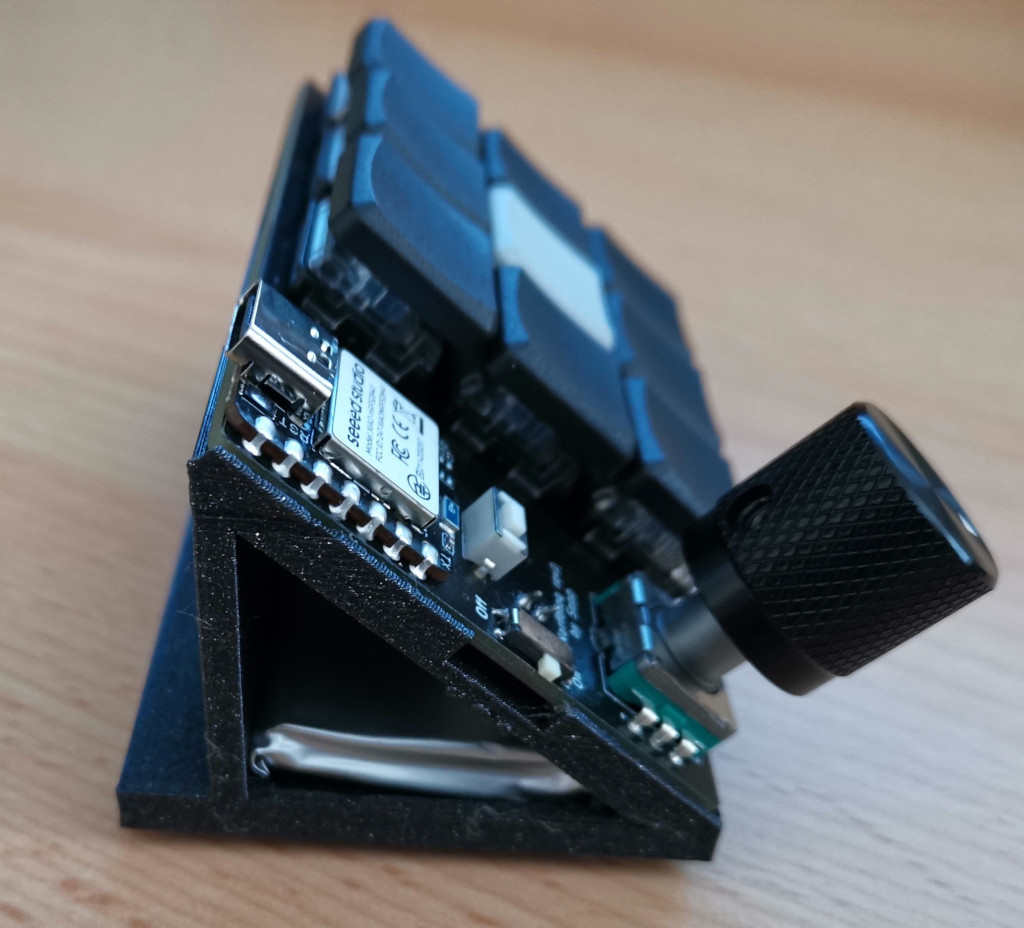
Firmware available here:
| Qty | Value | Footprint | References |
|---|---|---|---|
| 10 | 1N4148W | sepp:D_SOD-123 | D1, D2, D3, D4, D5, D6, D7, D8, D9, D10 |
| 9 | choc_SW_HS | sepp:SW_choc_HS_1u | SW1, SW2, SW3, SW4, SW5, SW6, SW8, SW9, SW10 |
| 1 | Battery_Cell | Connector_JST:JST_PH_S2B-PH-K_1x02_P2.00mm_Horizontal | BT1 |
| 1 | RotaryEncoder_Switch | sepp:RotaryEncoder_EC11 | SW7 |
| 1 | SW_Push | sepp:ResetSW | RESET1 |
| 1 | SW_SPDT | sepp:switch-MSK-12C02-smd | PWR1 |
| 1 | xiao-ble | sepp:xiao-ble-tht | U1 |
fossasia/pslab-hardware
PSLab Hardware Design and Schematics https://pslab.io

pierrechevalier83/ferris
A low profile split keyboard designed to satisfy one single use case elegantly


MickiusMousius/Rolio46Keyboard
A split wireless keyboard based on the Corne and Sofle


sadekbaroudi/bgkeeb
This is a reversible 100mm x 100mm pcb with support for mx or choc switches (no hotswap), per key led, rotary encoders, and exposes the SDA/SCL/GND/VCC lines in the form of the pimoroni trackball pins (meaning you can…

It measures 75 × 52 mm and has 2 copper layers, 1.6 mm thick.
24 parts, built around the 1N4148W. The full list of its parts is on this page, with links to each part's symbol and footprint where PCBKit's library has them.
From the sebastian-stumpf/narfbloq repository on GitHub, at the commit this page was made from: the board is pcb/narfbloq.kicad_pcb and its schematic pcb/narfbloq.kicad_sch. PCBKit opens the board in the browser, with nothing to install.
Its repository states no licence, so its author keeps all rights: ask sebastian-stumpf before reusing the design.