2 layers149.9 × 99.5 mm

 rh1tech/frank66
RP2350 Based Hardware Emulation Platform
Hecate is an open-source printed circuit board by rh1tech, from the rh1tech/frank repository on GitHub, published under the GPL-3.0 licence. It is a 2-layer board of 53 × 29 mm with 58 parts on 69 nets, routed with 361 tracks and 51 vias.
It is built around the RP2040, W25Q128JVSIQ and AMS1117-3.3, with the TXS0104ERGYR and USB4215-03-A among its other parts. Its parts include 26 capacitors, 14 resistors, 5 ICs, 4 connectors and 2 switches. It belongs with the retro computing and games boards and the RP2040 boards of this library.


FRANK is a hardware emulation platform built around the Raspberry Pi RP2350 (Pico 2 modules and RP2350A QFN). RP2040 / Pico still works in FRANK's socket, but in practice only a handful of firmware (mainly the older ZX Spectrum cores) still targets RP2040. Everything modern (IBM PC, NES, SNES, Genesis, the DOOM / id Tech 1 ports, FRANK OS, and so on) is RP2350-only.
It started as a fork of the Murmulator project by Alex Ekb. Over time it picked up extra video outputs, audio paths, USB and WiFi support, and several form factors.
The name comes from "Frankenstein". The board is stitched together from parts of different projects, so the name stuck.
This repository now ships only the boards under hardware/ that are actively maintained. The accessories/ and archive/ directories are gone. Older revisions, retired boards, and accessory adapters such as HDMI2VGA and USB2PS2 live in rh1tech/frank-archive.
Experimental and work-in-progress designs live in rh1tech/frank-lab.
Ten maintained boards and one published prototype, each with its own KiCad project, gerbers, BOM and assembly drawings, plus two add-on modules (TurboSound and Hecate) and three retro-CPU boards.
| Board | Render | PCB size | Compute | Best for |
|---|---|---|---|---|
| FRANK Next | 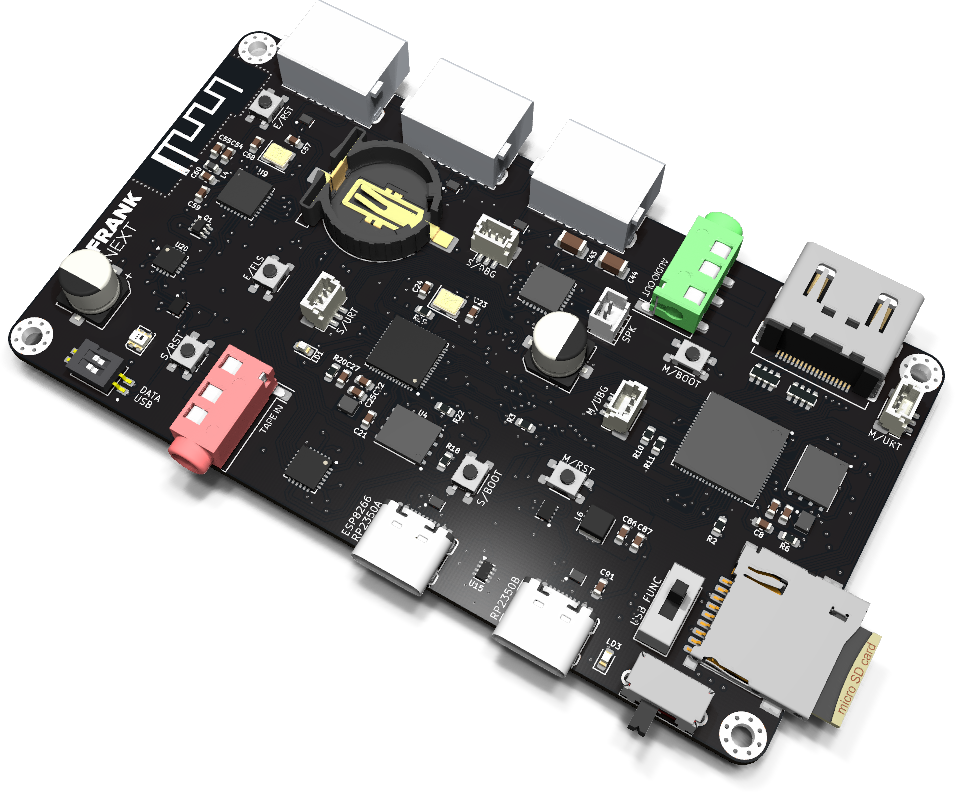 | 99.0 × 53.98 mm | RP2350B + RP2350A, both on-board | Flagship. Two RP2350 dies, on-board ESP8266EX WiFi, CH343P console, three USB-A host ports. |
| MegaFRANK | 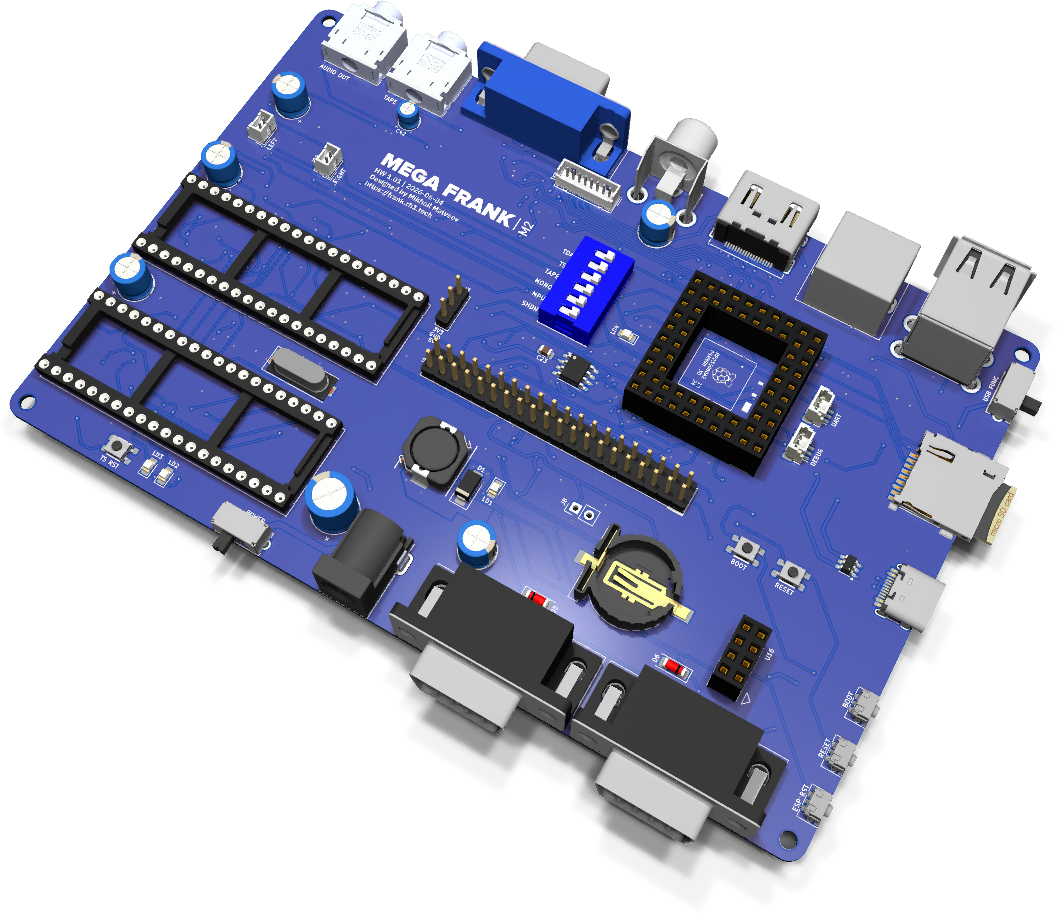 | 149.9 × 99.5 mm | Pimoroni PGA2350 (RP2350B module) | Maximal board — every output plus on-board dual-AY TurboSound, DS3231 RTC and dual power input. |
| FRANK PGA | 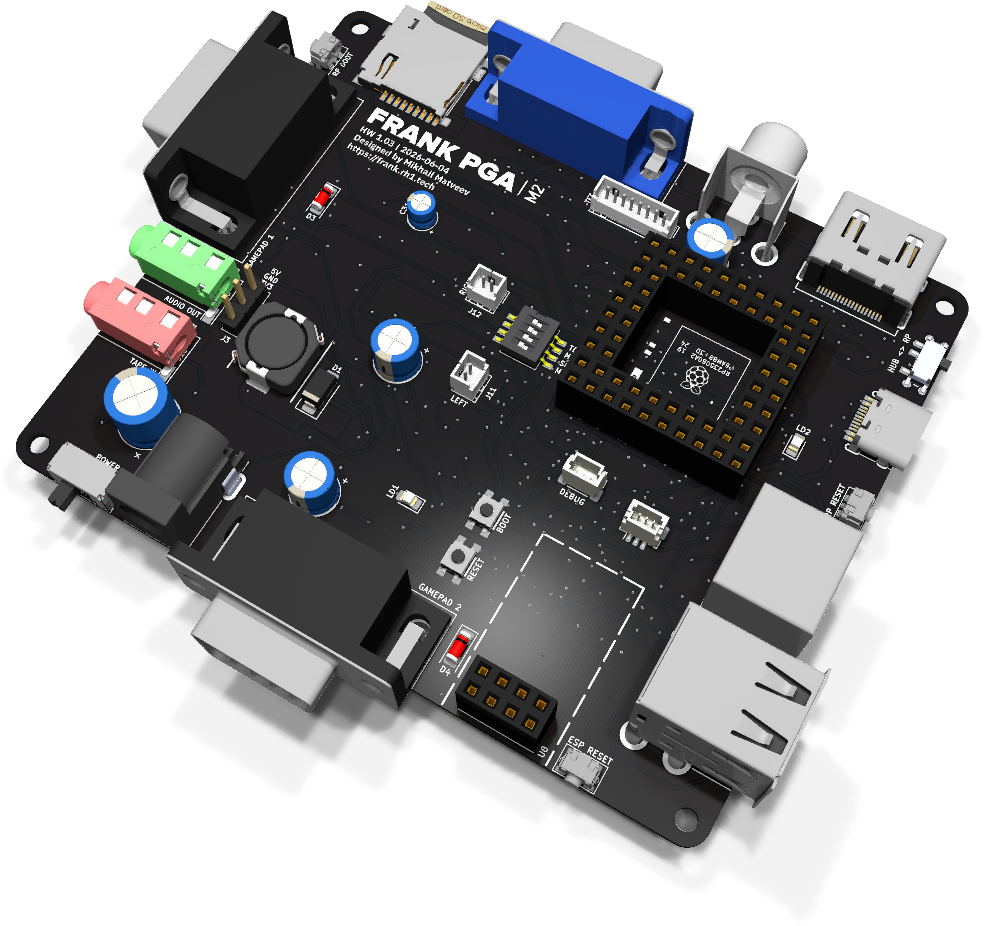 | 99.5 × 83.1 mm | Pimoroni PGA2350 (RP2350A module) | Every output on one PCB, native USB host with multiplexer, ESD-protected. |
| FRANK | 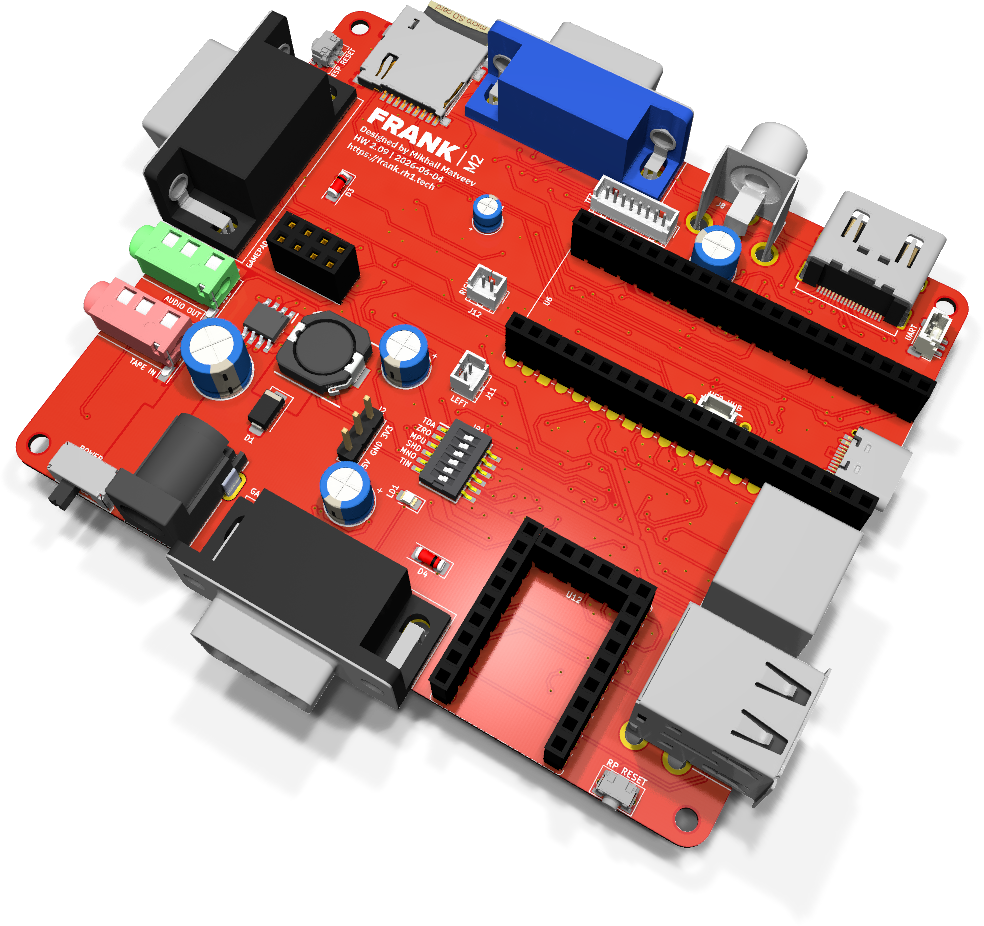 | 99.5 × 83.1 mm | Raspberry Pi Pico / Pico 2 (socket) + RP2040-Zero | Socketed alternative. Easiest to solder, swap Pico modules at will, USB-to-PS/2 helper on board. |
| Old Skool FRANK | 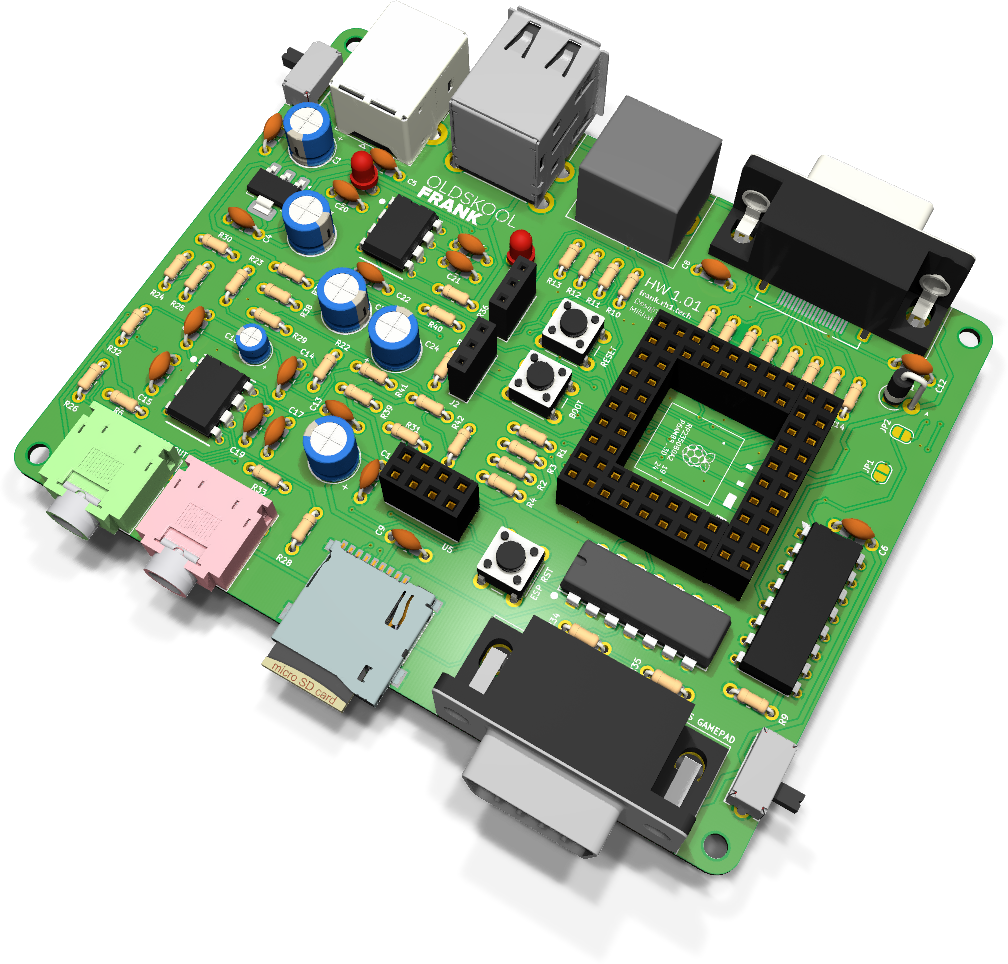 | 100.0 × 79.0 mm | Pimoroni PGA2350 (RP2350B module) | The retro-connector board: HDMI and VGA, hardware PS/2, DB9 gamepad. Only 2-layer design, easiest to hand-assemble. |
| MiniFRANK | 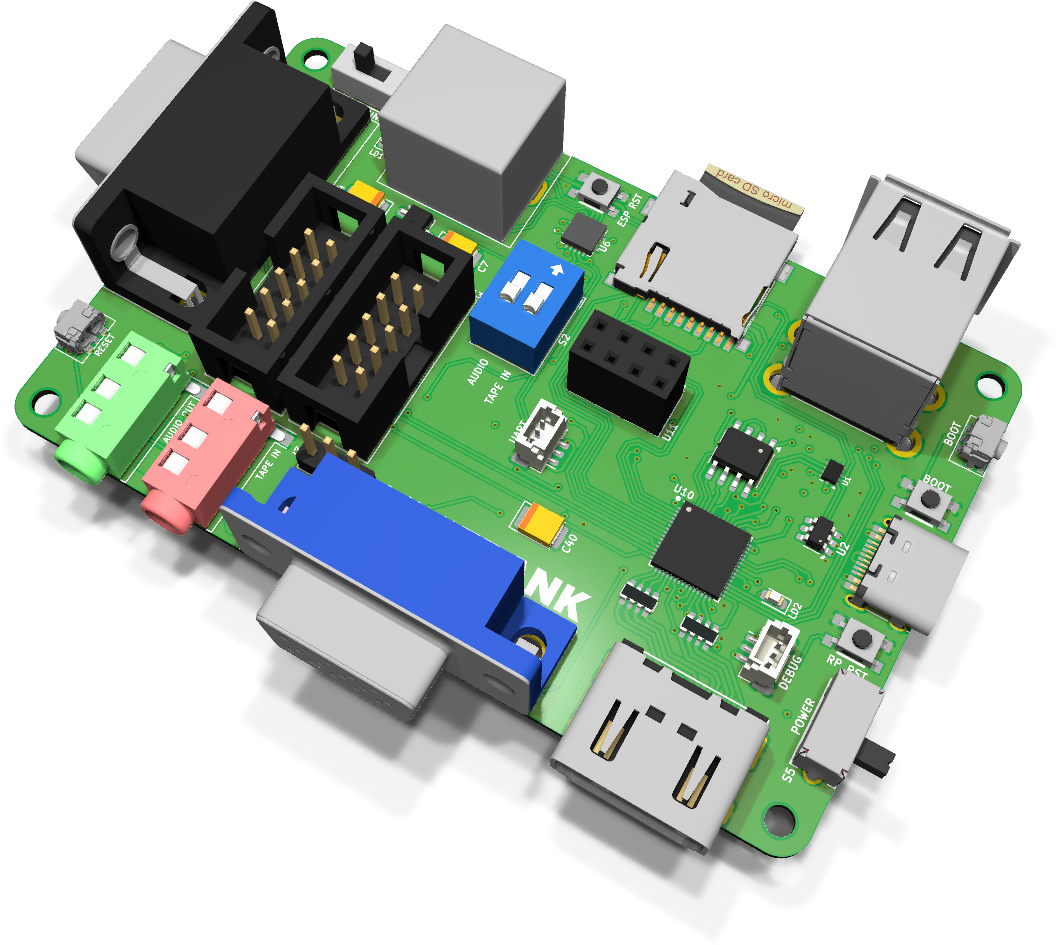 | 85.6 × 53.98 mm | RP2350A QFN, on-board | Compact full-feature board with WiFi, VGA, HDMI and one gamepad port. |
| FRANK Core 2U | 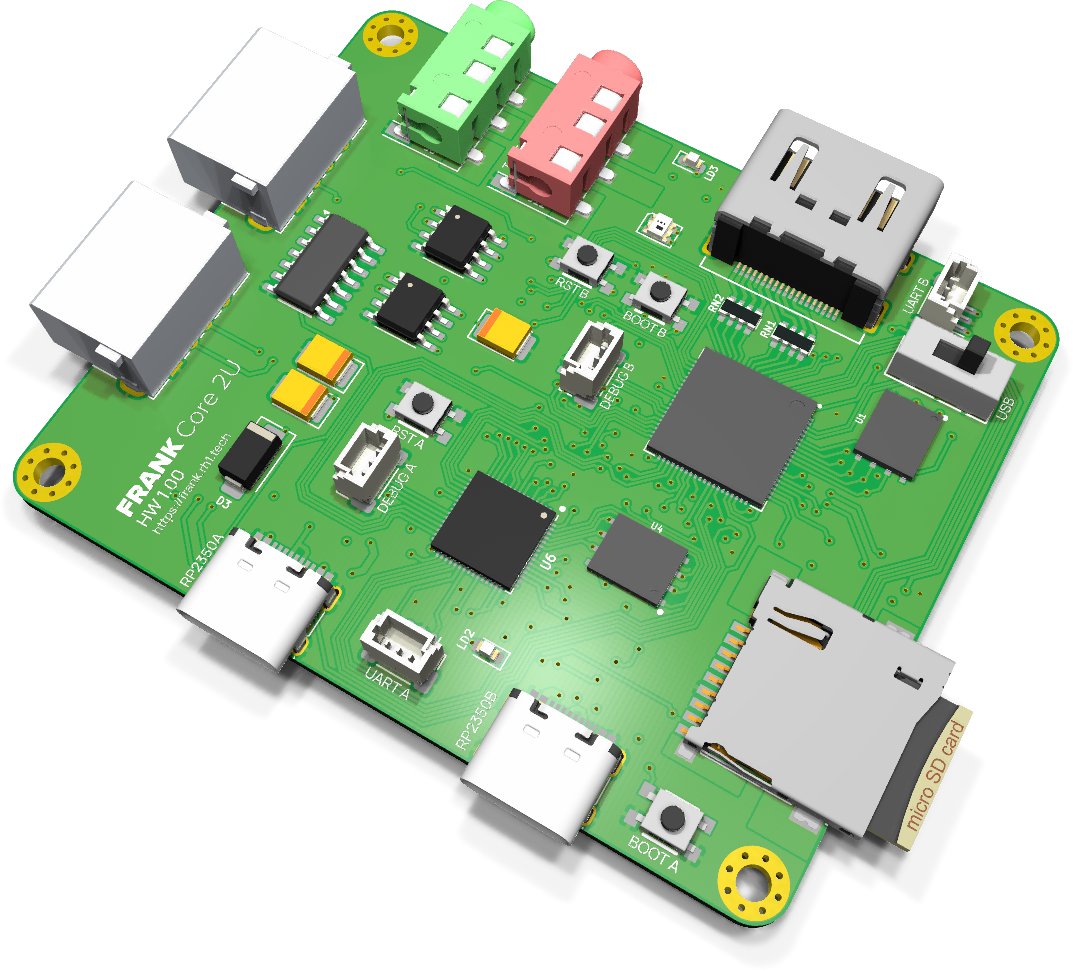 | 67.0 × 55.0 mm | RP2350B + RP2350A, both on-board | Smallest usable dual-die board. Video, sound, storage and USB only — no WiFi, no RTC. |
| FRANK Core 2 Proto | 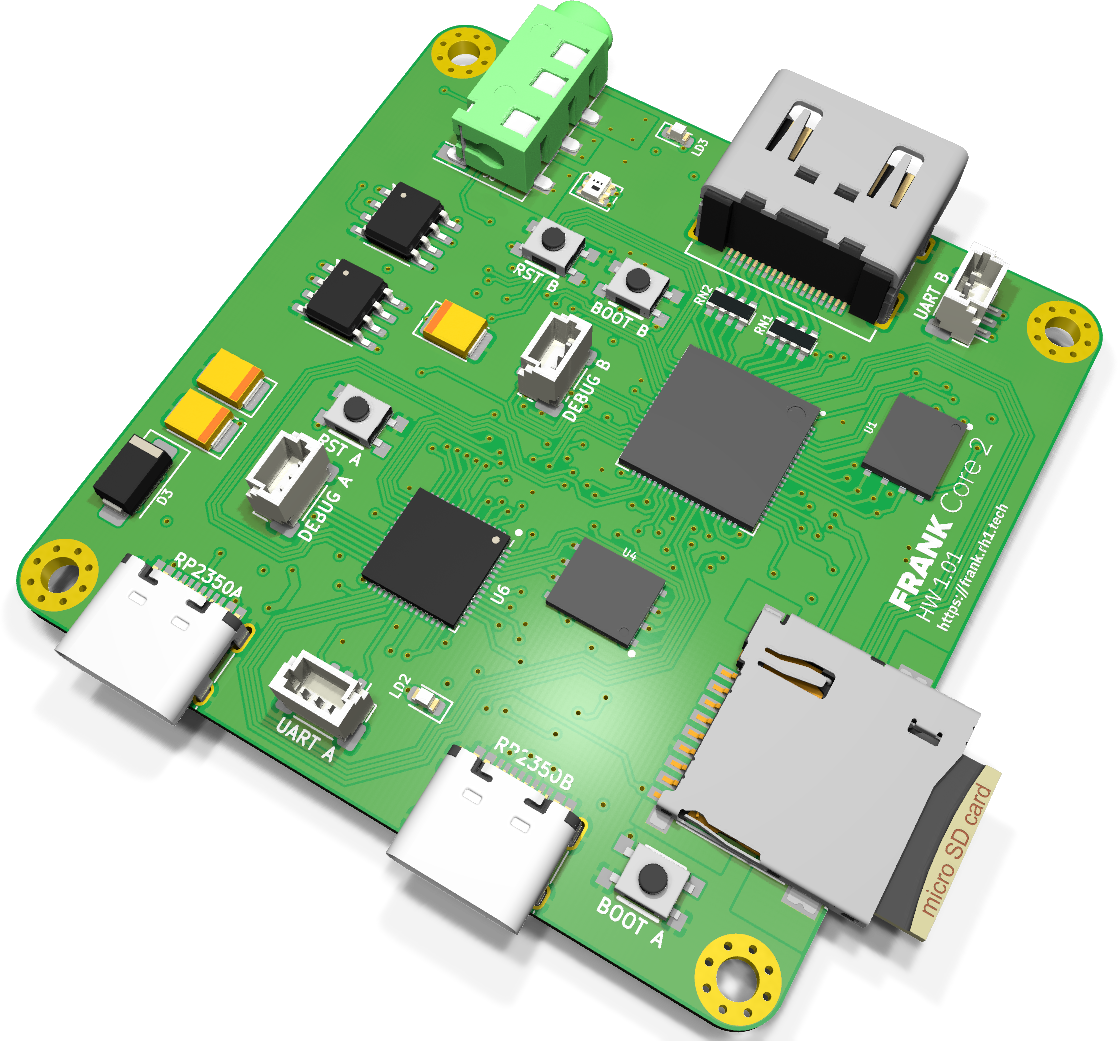 | 55.0 × 55.0 mm | RP2350B + RP2350A, both on-board | Prototype. Core 2U without the USB host side — the dual-die topology at its smallest. |
| MicroFRANK | 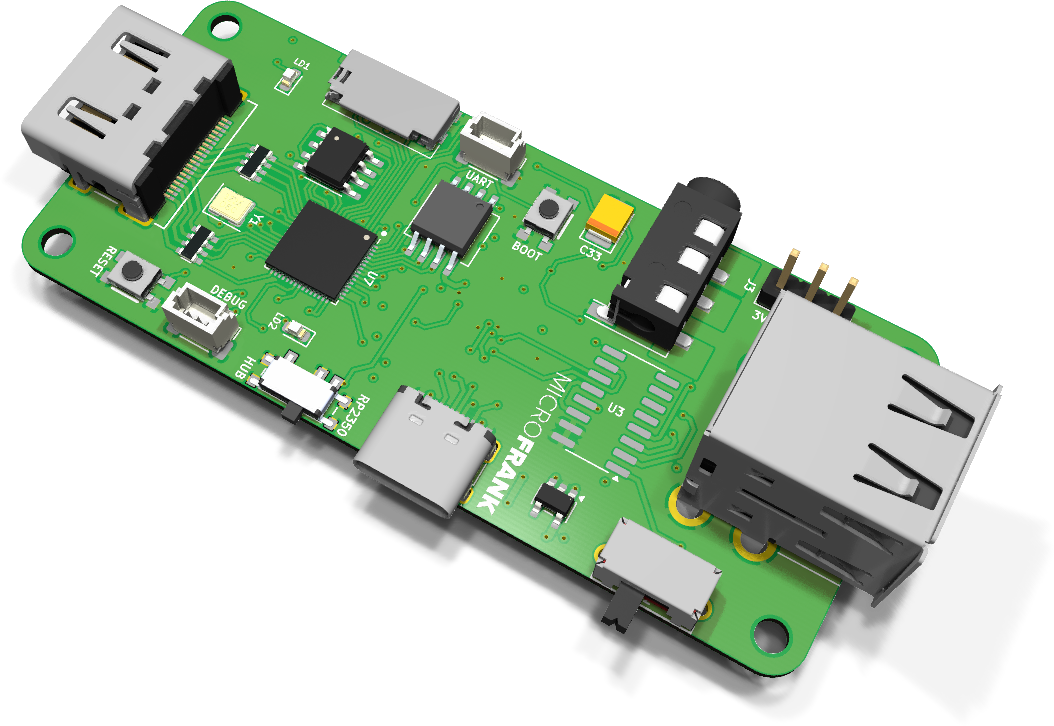 | 32 × 74 mm | RP2350A QFN, on-board | Smallest single-die board. HDMI only, no hardware PS/2 or DB9 gamepad. Keyboards, mice and gamepads connect over the stacked USB host. |
| ZeroFRANK | 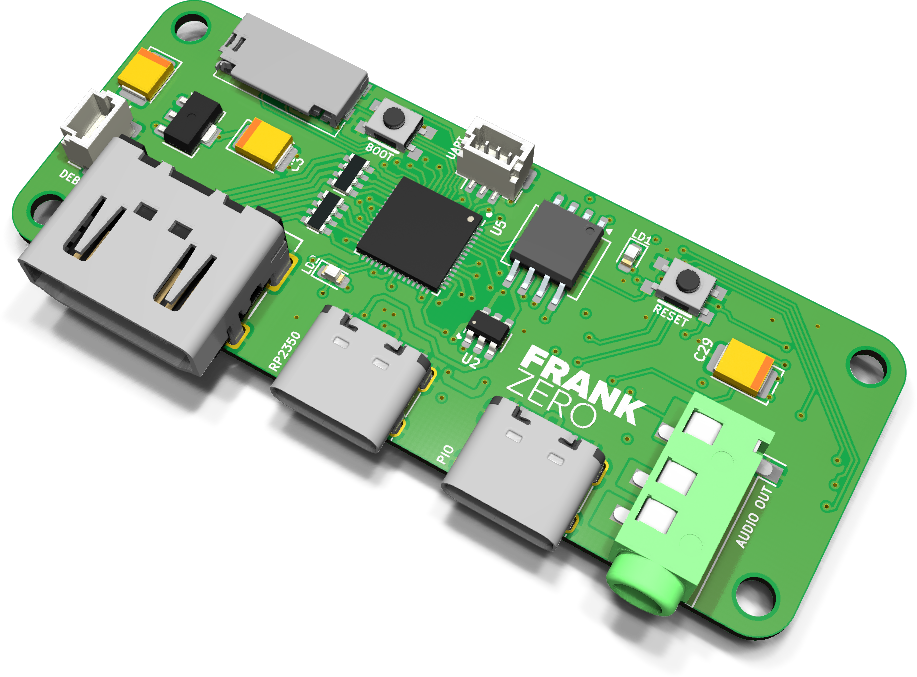 | 65 × 25 mm | RP2350A QFN, on-board | Smallest RP2350A board. HDMI only, USB host for input, on-board flash + PSRAM + I²S audio. |
| Nyx | 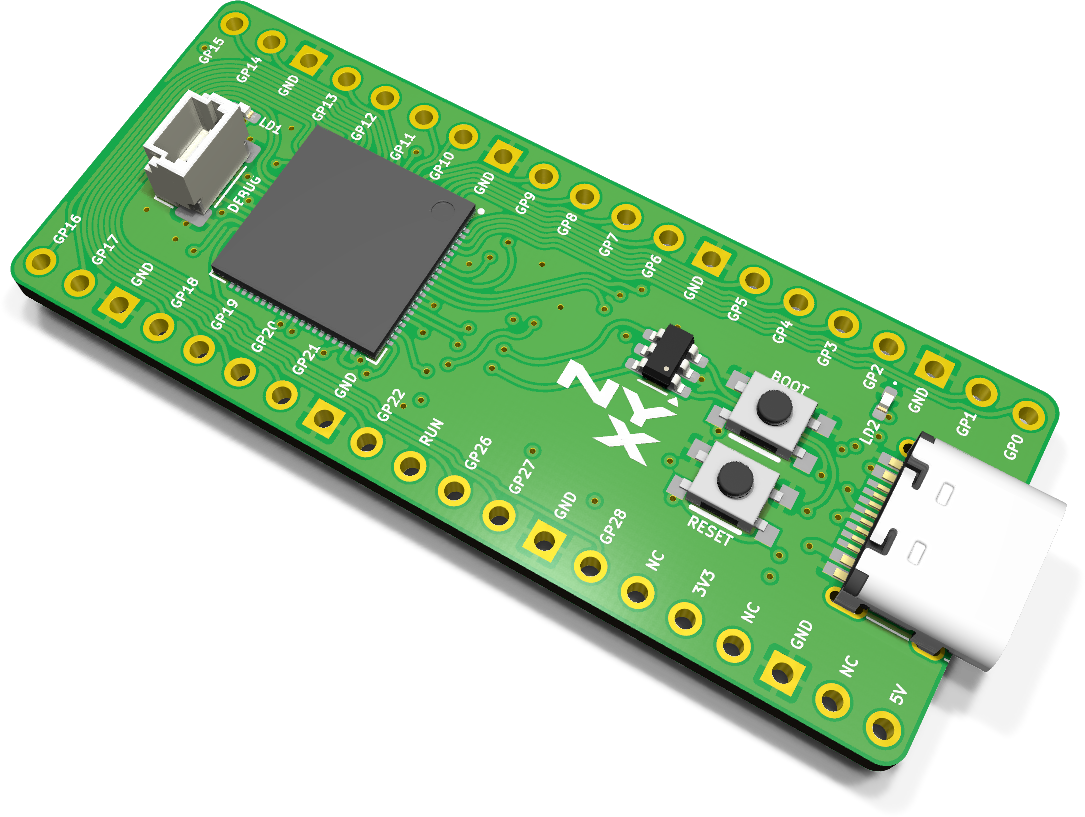 | 51 × 21 mm | RP2350B QFN, on-board | Open-source Pico 2 clone with built-in PSRAM. Drop-in replacement for Pico Plus 2 in the FRANK socket. |
The full-size and compact boards use the M2 GPIO layout, so any firmware build for M2 runs on them (subject to the feature differences below). FRANK Next, Core 2U and Core 2 Proto are the exception: they carry two RP2350 dies and firmware must be built for that split, or the slave simply sits idle. Nyx is a compute module — it plugs into the FRANK socket and provides the RP2350B, flash and PSRAM; the FRANK motherboard provides all the I/O.
| Feature | MegaFRANK | FRANK PGA | FRANK | Old Skool |
|---|---|---|---|---|
| Compute | Pimoroni PGA2350 | Pimoroni PGA2350 | Pico / Pico 2 (socket) | Pimoroni PGA2350 |
| Copper layers | 4 | 4 | 4 | 2 |
| On-board flash | via module | via module | via module | via module |
| On-board PSRAM | via module | via module | via module | via module |
| HDMI output | Yes | Yes | Yes | Yes |
| VGA output | Yes | Yes | Yes | Yes |
| Composite (RCA) | Yes | Yes | Yes | — |
| TFT display header | Yes | Yes | Yes | — |
| Hardware PS/2 port | Yes | Yes | Yes | Yes |
| USB-emulated PS/2 (RP2040-Zero) | — | — | Yes | — |
| Gamepad ports (DB9) | 2 | 2 | 2 | 1 |
| Stacked USB Type-A host | Yes | Yes | Yes | Yes |
| USB hub | MW7211A | MW7211A | MW7211A | MW7211A |
| USB host multiplexer | 74HC4052D | 74HC4052D | — | 74HC4052 |
| USBLC6 ESD protection | Yes | Yes | — | — |
| WiFi | ESP-01S socket | ESP-01S socket | ESP-01S socket | ESP-01S socket |
| Real-time clock | DS3231 | — | — | — |
| Tape input (3.5mm) | Yes | Yes | Yes | Yes |
| Audio DAC | TDA1387 | TDA1387 | TDA1387 | TDA1545A + LM358 |
| PAM8403 speaker amp | Yes | Yes | Yes | — |
| Power input | DC barrel jack (×2) | DC barrel jack | DC barrel jack | USB-C / USB-B |
| Voltage regulator | MP1584 buck + AMS1117 LDO | MP1584 buck + AMS1117 LDO | MP1584 buck + AMS1117 LDO | AMS1117 LDO |
| Mounting holes | 4 × 2.7 mm | 4 × 2.7 mm | 4 × 2.7 mm | 4 × 2.7 mm |
On-board TurboSound (dual YM2149), a DS3231 real-time clock and a DS2401 silicon serial number are unique to MegaFRANK. Old Skool FRANK is the only 2-layer board in the repo, which makes it the friendliest to hand-assembly and rework.
| Feature | FRANK Next | MiniFRANK | Core 2U | Core 2 Proto | MicroFRANK | ZeroFRANK |
|---|---|---|---|---|---|---|
| Compute | RP2350B + RP2350A | RP2350A QFN | RP2350B + RP2350A | RP2350B + RP2350A | RP2350A QFN | RP2350A QFN |
| On-board flash | 2 × W25Q128 | W25Q128 | 2 × W25Q128 | 2 × W25Q128 | W25Q128 | W25Q128 |
| On-board PSRAM | 2 × 8 MB | 8 MB | 2 × 8 MB | 2 × 8 MB | 8 MB | 8 MB |
| HDMI output | Yes | Yes | Yes | Yes | Yes | Yes |
| VGA output | — | Yes | — | — | — | — |
| Hardware PS/2 port | — | Yes | — | — | — | — |
| Gamepad ports (DB9) | — | 1 | — | — | — | — |
| USB Type-A host ports | 3 | 2 (stacked) | 2 | — | 2 (stacked) | — (USB-C PIO host) |
| USB hub | CH334F | MW7211A | MW7211A | — | MW7211A | — |
| USB host multiplexer | TS3USB221 × 2 | TS3USB221 | TS3USB221 | — | TS3USB221 | — |
| USB serial bridge | CH343P | — | — | — | — | — |
| WiFi | ESP8266EX on-board | ESP-01S socket | — | — | — | — |
| Real-time clock | DS3231MZ | — | — | — | — | — |
| Tape input (3.5mm) | Yes | Yes | Yes | — | — | — |
| Audio DAC | TLV320DAC3100 | TDA1387 | TDA1387T + LM358 | TDA1387T + LM358 | TDA1387 | TDA1387 |
| Power input | USB-C | USB-C | USB-C | USB-C × 2 | USB-C | USB-C |
| Voltage regulator | SY8089 buck | AMS1117 LDO | AMS1117 LDO | AMS1117 LDO | ME6211 LDO | AMS1117 LDO |
| Mounting holes | 4 × 2.5 mm plated | 4 × 2.7 mm | 4 × 2.5 mm plated | 4 × 2.5 mm plated | 4 × 2.7 mm | 4 × 2.7 mm |
FRANK Next, Core 2U and Core 2 Proto share the dual-RP2350 architecture: an RP2350B master for emulation and an RP2350A slave for USB host, audio and housekeeping. Core 2U and Core 2 Proto come from a different subsystem generation than FRANK Next — ESP-PSRAM64H memory, a discrete TDA1387T audio chain instead of the TLV320DAC3100 codec, an AMS1117 LDO instead of a switching buck, and no WiFi or RTC. Core 2 Proto is Core 2U minus its host side: same two dies, no hub, no USB-A, no tape input and no power switch.
These are not emulation boards. Each carries a real vintage CPU in a DIP-40 socket, with an RP2350B acting as the chipset — memory, video, storage and I/O. They do not run the FRANK emulation firmware; each has its own chipset firmware.
| Board | Render | PCB size | CPU | Notes |
|---|---|---|---|---|
| XT8086 Alpha | 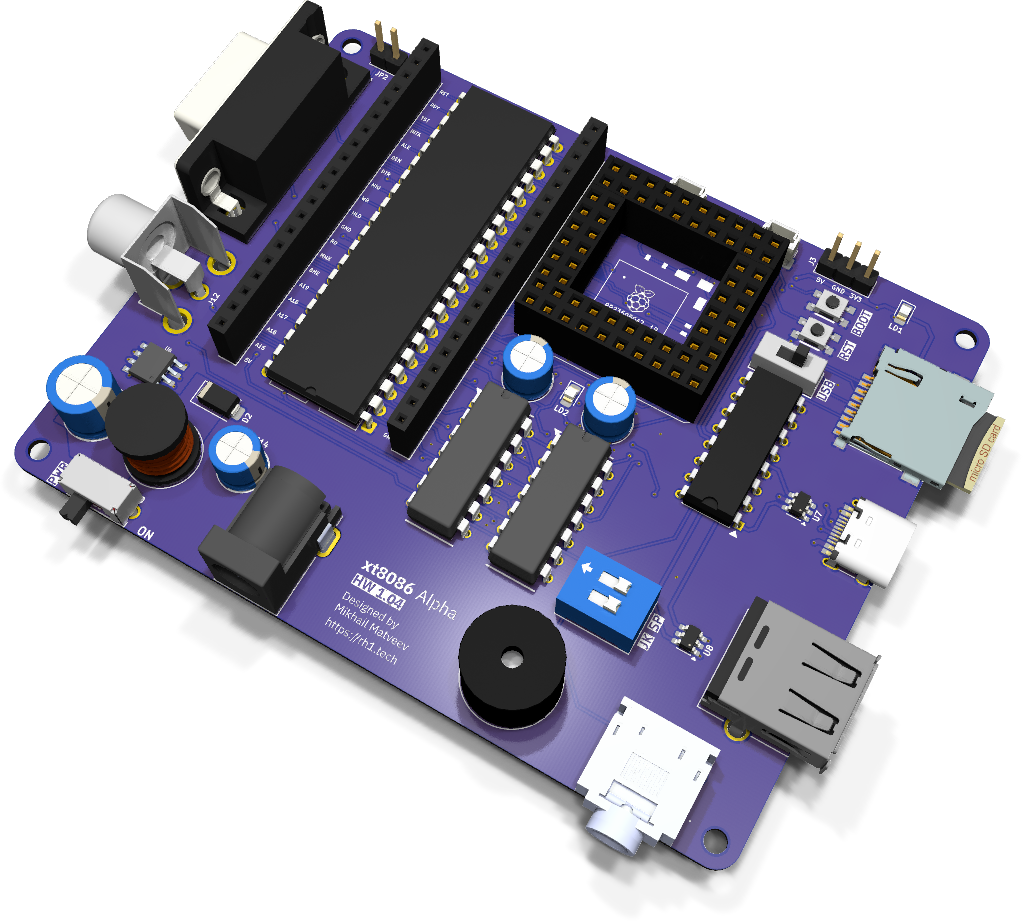 | 99.9 × 78.0 mm | Intel 8086 (minimum mode) | The earlier 8086 design: PGA2350 module, VGA and composite outputs. Superseded by XT8086 Beta, now in frank-lab. |
Two add-on modules ship alongside the boards:
| Module | Render | PCB size | What it is |
|---|---|---|---|
| TurboSound | 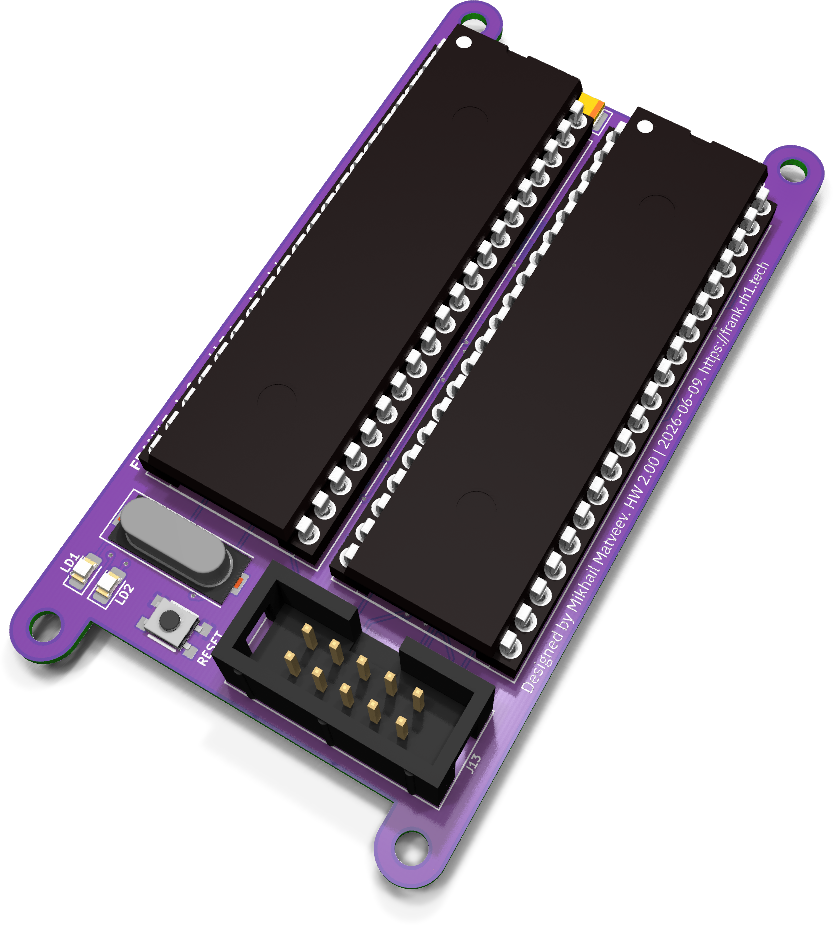 | 42 × 79.5 mm | Dual YM2149 / AY-3-8910 sound expansion (socketed DIP-40). Currently supported only by MiniFRANK via its expansion header. |
| Hecate | 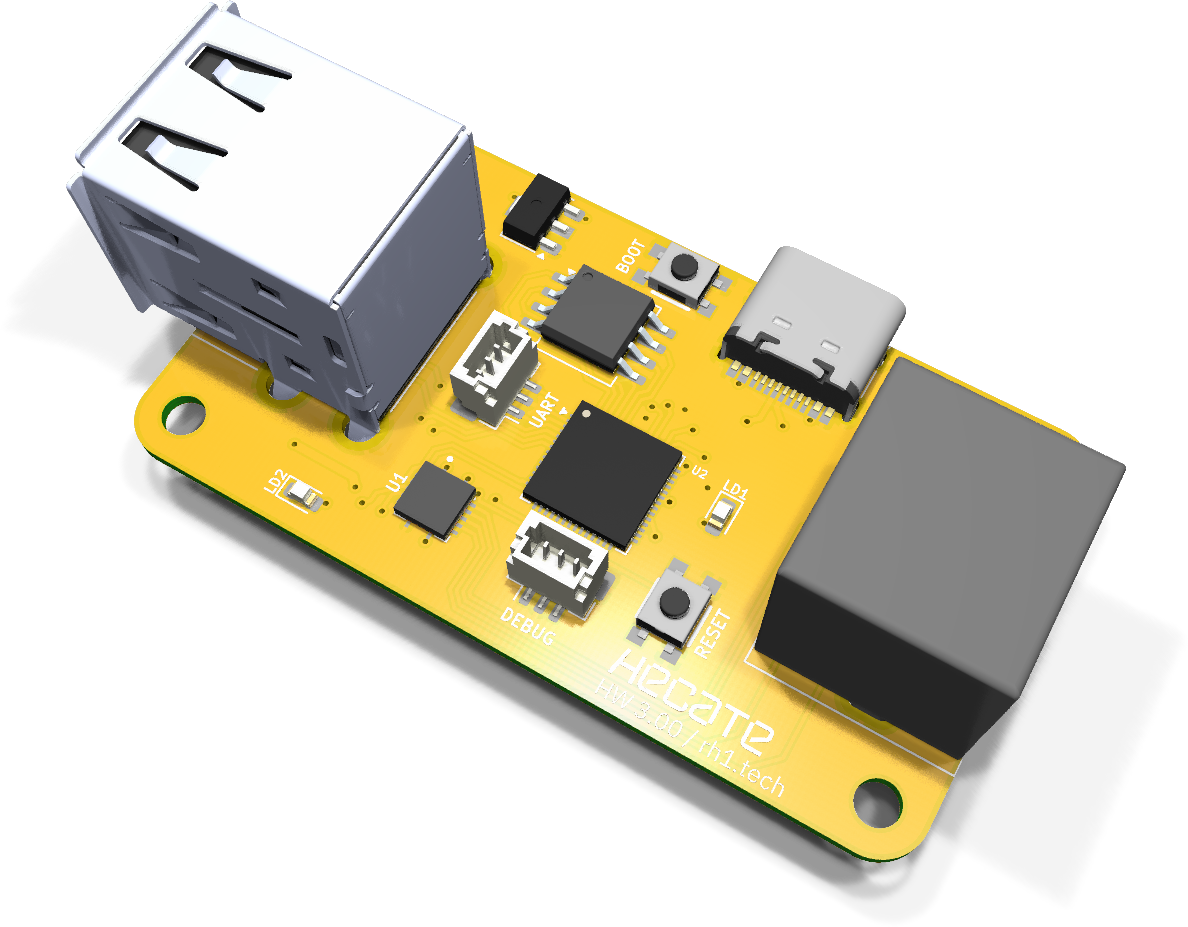 | 53 × 29 mm | Standalone RP2040 USB-to-PS/2 bridge board. Runs the Hecate firmware; presents USB keyboards and mice as PS/2 devices. |
Over thirty emulators and native ports run on FRANK boards.
| Firmware | Platform | Repository | PSRAM required |
|---|---|---|---|
| frank-nes | NES / Famicom (Dendy) | frank-nes | Yes (8 MB) |
| frank-snes | SNES / Super Famicom | frank-snes | Yes (8 MB) |
| frank-genesis | Sega Genesis / Mega Drive | frank-genesis | Yes (8 MB) |
| frank-c64 | Commodore 64 | frank-c64 | Yes (8 MB) |
| frank-apple | Apple IIe | frank-apple | Optional |
| frank-msx | MSX / MSX2 / MSX2+ (fMSX core) | frank-msx | Yes (8 MB) |
| Firmware | Platform | Repository | PSRAM required |
|---|---|---|---|
| frank-386 | IBM PC i386 (DOS, Windows 3.x/95, Linux) | frank-386 | Yes (8 MB) |
| Firmware | Game | Repository | PSRAM required |
|---|---|---|---|
| frank-idtech1 | DOOM, Heretic, Hexen, Strife (all-in-one) | frank-idtech1 | Yes (8 MB) |
| frank-doom | DOOM (standalone) | frank-doom | Yes (8 MB) |
| frank-heretic | Heretic | frank-heretic | Yes (8 MB) |
| frank-wolf3d | Wolfenstein 3D | frank-wolf3d | Yes (8 MB) |
| frank-duke3d | Duke Nukem 3D | frank-duke3d | Yes (8 MB) |
| frank-prince | Prince of Persia | frank-prince | Yes (8 MB) |
| frank-digger | Digger Remastered | frank-digger | No |
| frank-quest | ScummVM (AGI, SCI, SCUMM v1–v7, GOB, KYRA — King's Quest, Monkey Island, Day of the Tentacle, Full Throttle, Gobliiins, Kyrandia and more) | frank-quest | Yes (8 MB) |
| Firmware | Description | Repository | PSRAM required |
|---|---|---|---|
| frank-os | Full desktop OS (Windows 95-style GUI, apps, built-in emulators) | frank-os | Yes (8 MB) |
| frank-kickstart | UF2 firmware launcher with SD card browser | frank-kickstart | Optional |
| frank-manul | Text-mode web browser (HTTP/HTTPS via ESP-01 WiFi) | frank-manul | Yes (8 MB) |
| frank-netcard | AT modem firmware for the ESP-01 WiFi module | frank-netcard | No |
The original Murmulator project provides additional firmware that runs on FRANK boards as well:
ZX Spectrum cores: ZX Spectrum 48K / 128K / +3e (tecnocat, pico-spec, frut-bat, ZX Speccy P, murmulator), ZX Elf (pico-alf).
Other cross-platform emulators: MS-DOS IBM PC XT 8088, BK-0010 / BK-0011M, Radio 86RK, Macintosh, Atari 800, NES / Famicom / Dendy, Sega Master System / Game Gear, NEC PC Engine / TurboGrafx-16, Nintendo GameBoy / GameBoy Color, Watara Supervision, Atari Lynx, Bandai Wonderswan / Wonderswan Color, NeoGeo Pocket Color, Gamate, Game & Watch / Elektronika.
Tools and applications: MurmulatorOS, Picomite MMBasic, VersaTerm, the original Murmulator bootloader.
Most firmware also runs on:
gerbers/ directory).hardware/<board>/docs/<rev>/bom.html)..uf2 file to the drive that appears (or use picotool load).For quick switching between firmware, flash frank-kickstart first. It gives you a graphical launcher that re-flashes from SD without touching BOOTSEL again.
Most modern firmware (frank-os, frank-quest, frank-386, frank-genesis, frank-snes, frank-msx, frank-idtech1, frank-doom and so on) needs 8 MB of PSRAM. Some firmware refuses to boot without it: frank-quest installs a custom dlmalloc backed entirely by external PSRAM (drivers/psram_init.c, drivers/dlmalloc.c), because the runtime (heap-allocated game state, decoded resources, mixer ring buffers, font caches) does not fit in the RP2350's 520 KB of SRAM.
How you get PSRAM depends on the board:
hardware/      Board KiCad projects (frank_next, megafrank, frank_pga, frank,
               oldskool, minifrank, frank_core2u, frank_core2_proto, microfrank,
               zerofrank, nyx), the retro-CPU board xt8086_alpha, plus the turbosound and hecate modules
docs/          Shared component datasheets and assembly notes
software/      Pre-built UF2s. Currently ships Hecate, the USB-to-PS/2 bridge
               firmware for FRANK's on-board RP2040-Zero. Once flashed, a USB
               keyboard or mouse appears on the hardware PS/2 lines.
Source: https://github.com/rh1tech/hecateEach board and module has its own assembly and usage guide:
The hardware/<board>/docs/ directories also contain auto-generated BOMs (bom.html) and assembly drawings (assembly.pdf, schematics.pdf) for each PCB revision.
Console emulators:
PC emulation:
Game engine ports:
OS and utilities:
Mikhail Matveev — software engineer and hardware developer based in Thessaloniki, Greece. Background in software architecture, QA and open-source development. Builds retro computing hardware and writes firmware for fun. More projects at rh1.tech.
© 2026 Mikhail Matveev, xtreme@rh1.tech
GPL v3. See LICENSE.
| Qty | Value | Footprint | References |
|---|---|---|---|
| 18 | 100n | Hecate:C_0603_1608Metric | C1, C2, C3, C4, C5, C10, C11, C12, C13, C14, C15, C16, C19, C22, C24, C26 +2 |
| 6 | 22R | Hecate:R_0603_1608Metric | R6, R7, R8, R9, R12, R13 |
| 4 | 10u | Hecate:C_0603_1608Metric | C20, C21, C23, C25 |
| 4 | 1K | Hecate:R_0603_1608Metric | R3, R4, R5, R14 |
| 4 | MountingHole | Hecate:MountingHole_2.7mm | H1, H2, H3, H4 |
| 2 | 15p | Hecate:C_0603_1608Metric | C17, C18 |
| 2 | 1u | Hecate:C_0603_1608Metric | C7, C9 |
| 2 | 27R | Hecate:R_0603_1608Metric | R1, R2 |
| 2 | 5.1K | Hecate:R_0603_1608Metric | R10, R11 |
| 2 | RP Reset | Hecate:KMR_2 | S1, S2 |
| 1 | 12 MHz | Hecate:Crystal_SMD_3225-4Pin | Y1 |
| 1 | AMS1117-3.3 | Hecate:SOT-89-3 | U5 |
| 1 | Blue | Hecate:LED_0603_1608Metric | LD1 |
| 1 | DEBUG | Hecate:JST_SH_BM03B-SRSS-TB_1x03-1MP_P1.00mm_Vertical | J2 |
| 1 | Green | Hecate:LED_0603_1608Metric | LD2 |
| 1 | MDC-036 | Hecate:MiniDIN_6pin_Female | J3 |
| 1 | RP2040 | Hecate:QFN-56-1EP_7x7mm_P0.4mm_EP4x4mm | U2 |
| 1 | TXS0104ERGYR | Hecate:RGY_S-PVQFN-N14_ | U1 |
| 1 | UART | Hecate:JST_SH_BM03B-SRSS-TB_1x03-1MP_P1.00mm_Vertical | J1 |
| 1 | USB4215-03-A | Hecate:USB_C_Receptacle | J4 |
| 1 | USB_A_Stacked | Hecate:USB_A_Stacked | U4 |
| 1 | W25Q128JVSIQ | Hecate:SOIC-8 | U3 |
It measures 53 × 29 mm and has 2 copper layers, 1 mm thick.
58 parts, built around the RP2040, W25Q128JVSIQ, AMS1117-3.3 and TXS0104ERGYR. The full list of its parts is on this page, with links to each part's symbol and footprint where PCBKit's library has them.
From the rh1tech/frank repository on GitHub, at the commit this page was made from: the board is hardware/hecate/hecate.kicad_pcb and its schematic hardware/frank/amp.kicad_sch. PCBKit opens the board in the browser, with nothing to install.
Its repository publishes it under the GPL-3.0 licence: you may reuse it on that licence's terms (keep the author's notice, and for a copyleft licence share your changes alike).


rh1tech/frank-lab
FRANK Board Laboratory (work-in-progress board prototopyes)


CodeLinaro-mirror/qcomlt_debugboard
96boards specifications compliant Mezzanine used to control the DC Input, USB VBUS, PWR/RST buttons and Debug UART via a single USB2.0 CDC interface.
