
2 layers80 × 35.6 mm

 rbat05/SolarWeatherStation2
Self-sustaining weather monitoring system with dual-node architecture.
Weather station ext is an open-source printed circuit board by rbat05, from the rbat05/SolarWeatherStation repository on GitHub, published under the GPL-3.0 licence. It is a 2-layer board of 128 × 41.5 mm with 16 parts on 37 nets, routed with 86 tracks and 6 vias.
It is built around the BME280, FQP27P06 and HT7333, with the TP4056 among its other parts. Its parts include 9 connectors, 3 resistors, 2 capacitors, 1 IC and 1 diode. It belongs with the home automation and IoT boards of this library.


An end-to-end, off-grid IoT environmental telemetry system featuring custom hardware, low-power RF bridging, and a retro LCD-themed web dashboard.






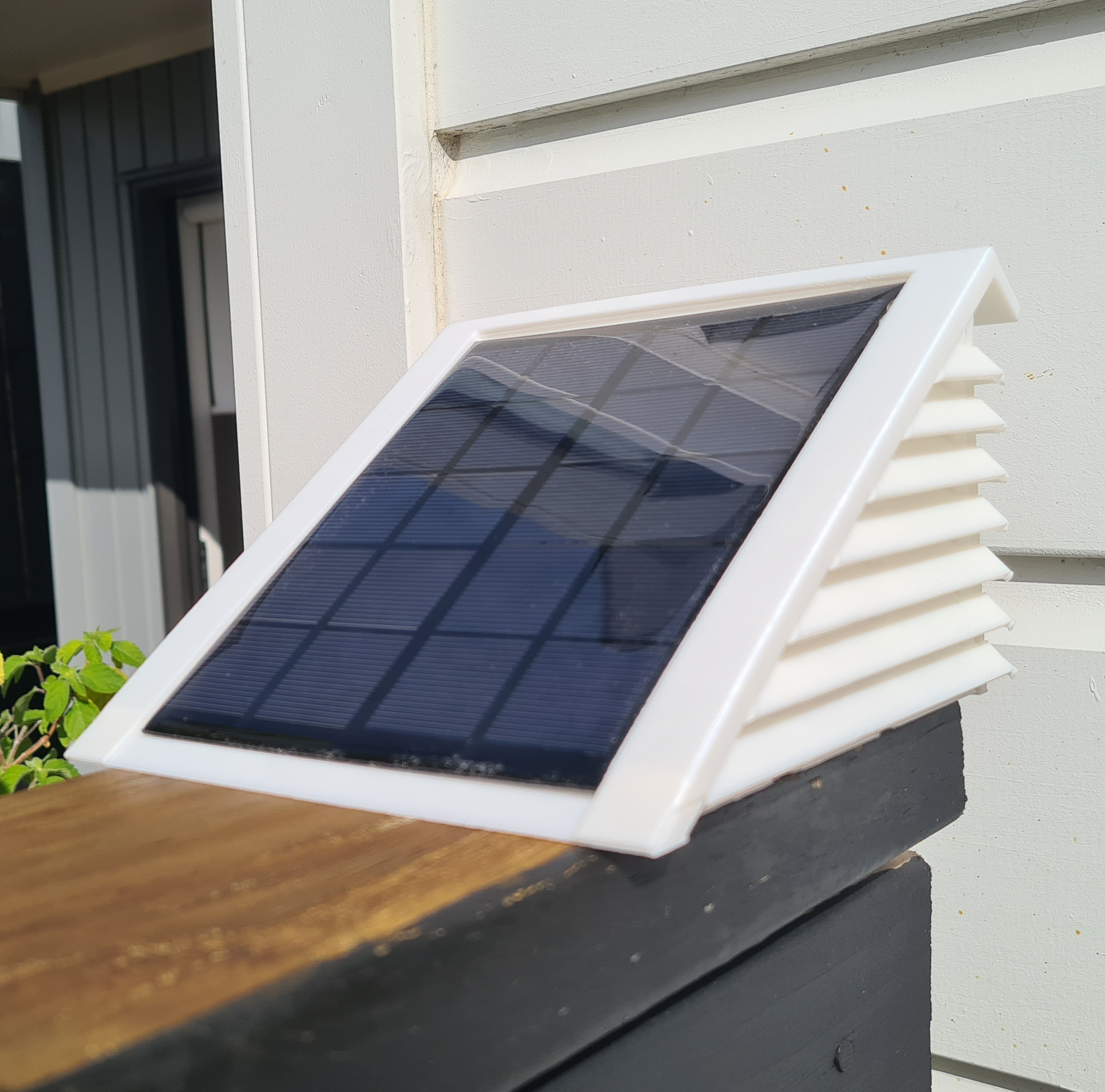
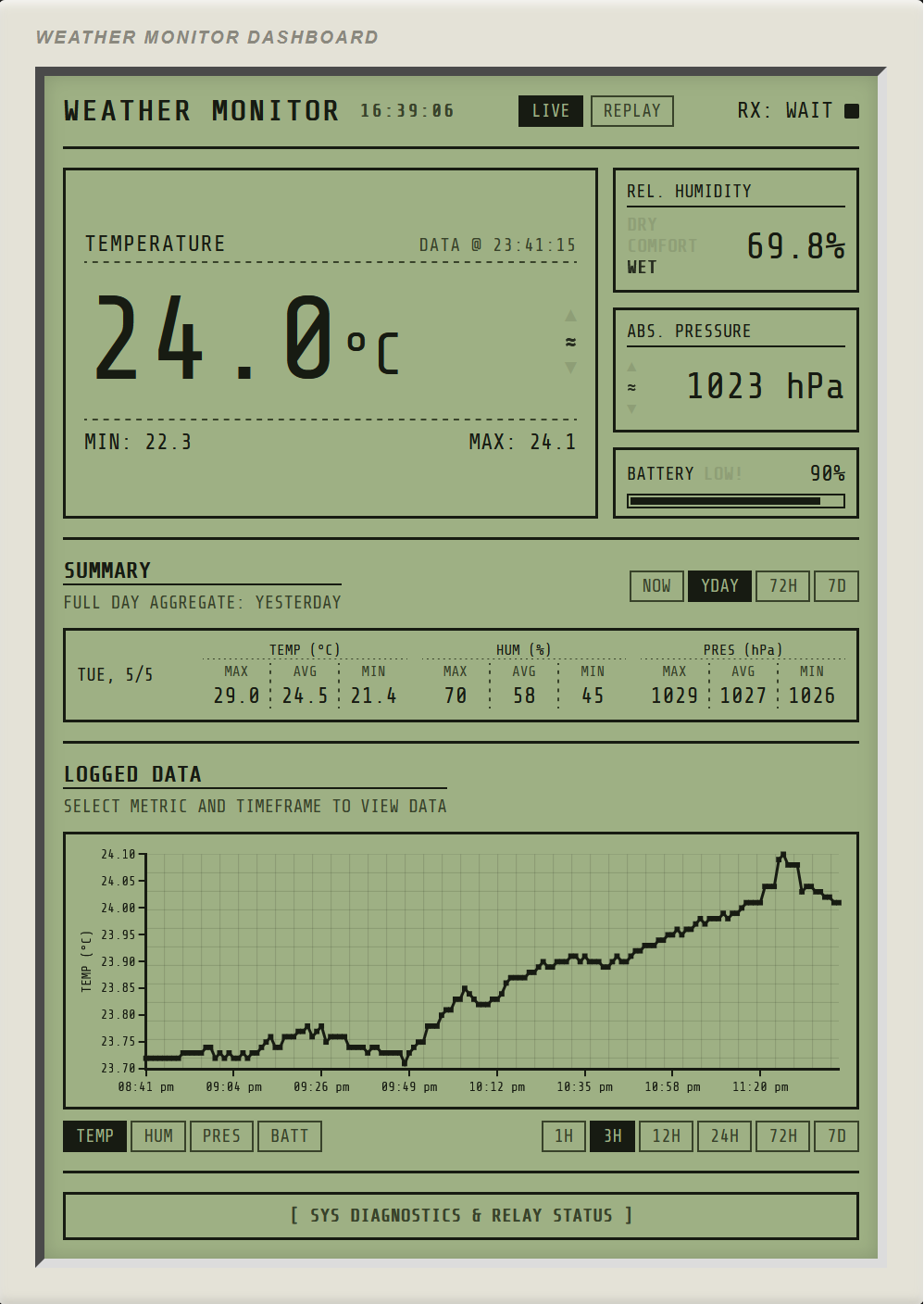
Solar Weather Station Exterior (left) and Dashboard (right)
The Solar Weather Station is a completely custom-engineered, three-tier IoT ecosystem designed to capture, transmit, and visualize highly accurate micro-climate data.
Currently measures temperature, humidity, absolute pressure, and battery voltage at 30 seconds intervals.
Operating entirely off-grid, the remote sensor node utilizes solar power and aggressive deep-sleep optimizations to monitor environmental conditions indefinitely. To bypass the extreme battery drain of standard WiFi, it broadcasts lightweight packets via ESP-NOW to a continuously powered indoor Relay node. This Relay acts as a bridge, forwarding the data into a local Python Flask server where it is logged, archived, and displayed on a visually striking, retro-commercial LCD-style dashboard.
Aggressive power-saving techniques were implemented in the ESP32 C++ firmware. By throttling the clock speed down to 80MHz, actively forcing the WiFi/Bluetooth modems off during boot initialization, and removing parasitic hardware LEDs (like the one on the DS3231 RTC), the remote station achieves incredible efficiency:
This ultra-low consumption allows the station to easily survive extended periods of heavy cloud cover without dropping below critical battery voltages.
Mechanical Design: Custom 3D-printed Stevenson Screen with integrated mounting points for the PCB and solar panel. The solar panel sits at a 35-degree angle to maximize sun exposure (in Auckland, NZ) while the louvers provide airflow to ensure accurate sensor readings.
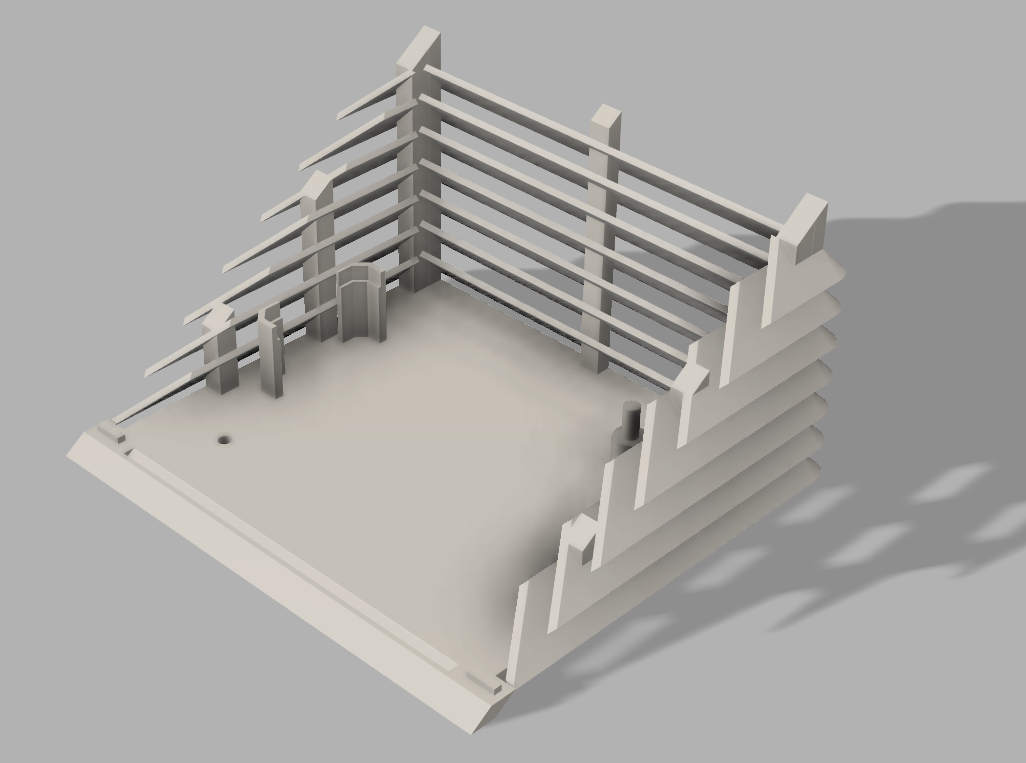
3D-Printed Stevenson Screen Render
Internal Assembly: Custom PCB secured inside the Stevenson Screen.
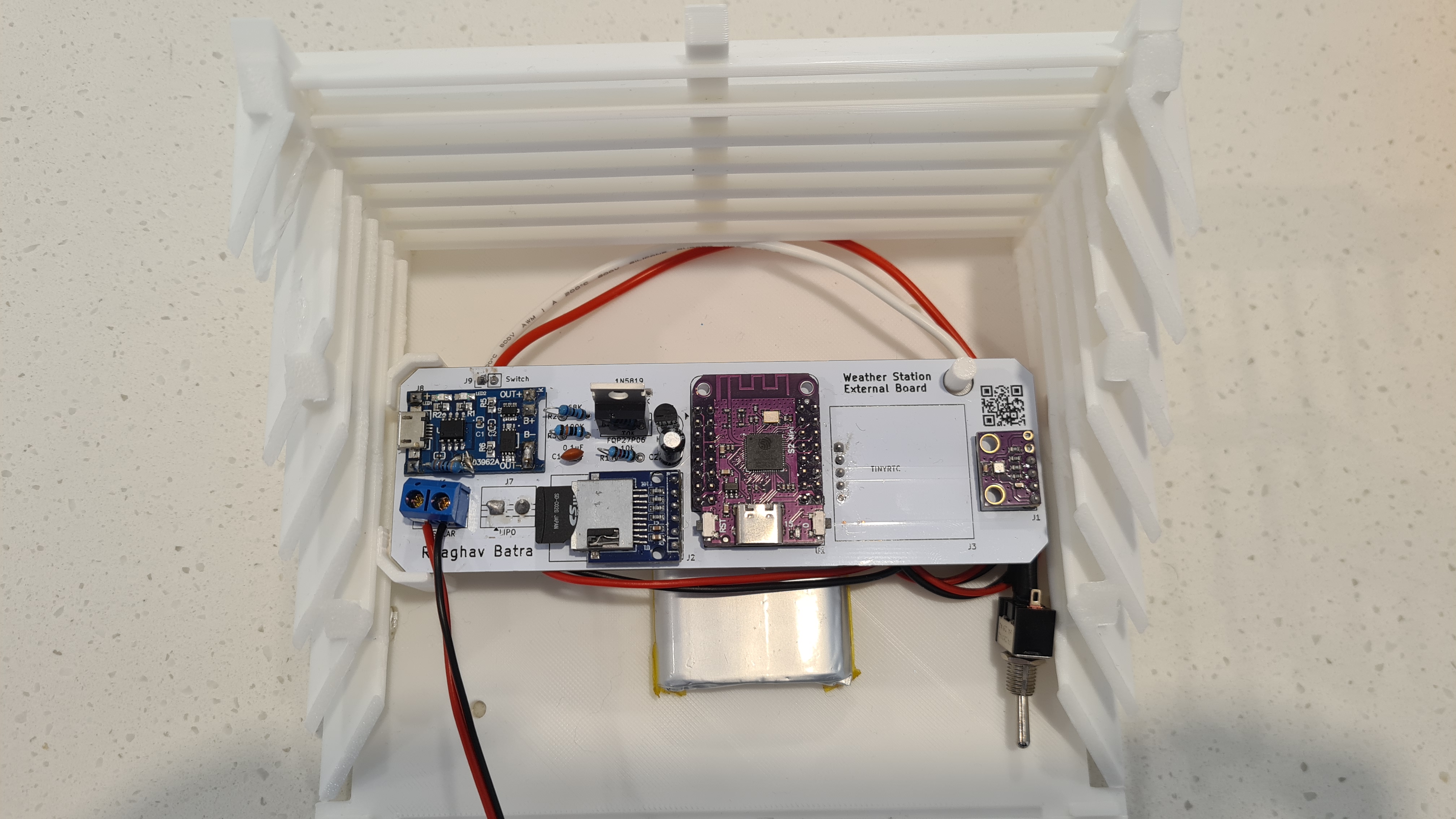
Custom PCB Mounted Inside Enclosure
LCD Dashboard: A retro-inspired web interface displaying real-time and historical weather data.
Dashboard Features:
Live Mode: Continuously streams real-time environmental data directly from the local SQLite database.
Main Dashboard View (Live Mode)
Historical Replay Engine: Dynamically loads archived 7-day CSV files into a sandbox database to replay historical weather events without interrupting live data ingestion. Can set custom timeframes to analyze specific events (e.g., a storm).
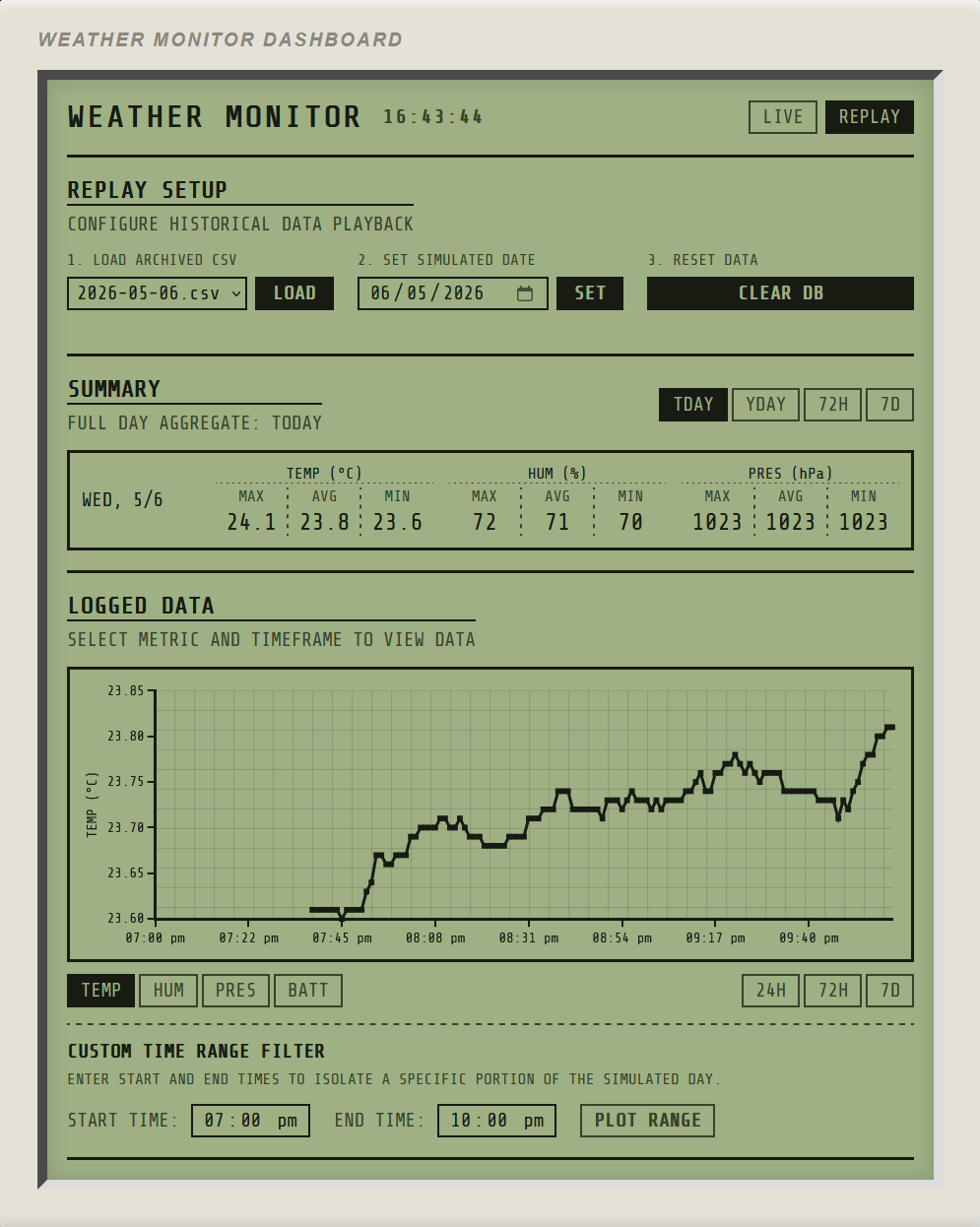
Replaying Historical Sandbox Data
Local vs. Regional Comparison: Automatically polls regional telemetry from the Open-Meteo API to compare your micro-climate directly against metropolitan averages (displayed alongside the "Today" summary).
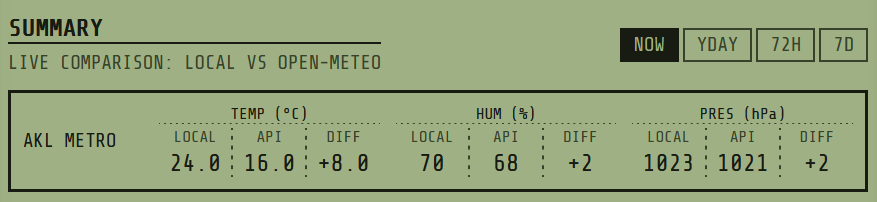
Local Micro-climate vs. Regional Averages
Summary Statistics: Provides actionable insights and rolling statistics (High, Low, Average) across different timeframes:
Interactive Graphing: Powered by Chart.js, the interactive graph can map individual metrics over adjustable time-scales (1 hour, 3 hours, 12 hours, 24 hours, 72 hours, or 7 days):

Interactive 7-Day Telemetry Chart
The system is broken into three distinct operational layers:
/ingest endpoint, commits the data to an SQLite database, handles infinite 7-day auto-archiving to CSV, and serves the UI. For a detailed breakdown, see the Dashboard README.The codebase is heavily modularized across three main directories. Please refer to their individual README.md files for deep dives into their logic.
/code/WeatherStationCode:
C++ (PlatformIO) for the remote ESP32. Handles aggressive power management, hardware watchdog failsafes, I2C/SPI bus management, and RTC memory buffering./code/RelayCode:
C++ (PlatformIO) for the indoor ESP8266. Features a non-blocking millis() architecture, in-memory offline packet buffering, auto-WiFi reconnections, and OTA flashing support./code/DashboardCode:
Python/Flask backend and HTML/JS frontend. Handles the API endpoints, Open-Meteo polling, database querying, and the retro Chart.js interactive graph rendering./pcb)Rather than relying on messy jumper wires and breadboards, the Weather Station relies on a completely custom-designed Printed Circuit Board. This custom PCB integrates the ESP32, charge controllers, and sensor headers into a single, reliable footprint. This minimizes point-of-failure wire disconnects, reduces electrical noise on the I2C/SPI busses, and provides a perfectly dimensioned mounting solution for the 3D-printed case. Designed using KiCAD 10.
/cad)All physical enclosures for the project were custom modeled in CAD to fit the bespoke electronics and withstand the elements.
This project is licensed under the GNU General Public License v3.0 (GPL-3.0).
| Qty | Value | Footprint | References |
|---|---|---|---|
| 1 | 0.1uF | Capacitor_THT:C_Disc_D3.0mm_W1.6mm_P2.50mm | C1 |
| 1 | 100K | Resistor_THT:R_Axial_DIN0204_L3.6mm_D1.6mm_P5.08mm_Vertical | R3 |
| 1 | 10k | Resistor_THT:R_Axial_DIN0204_L3.6mm_D1.6mm_P5.08mm_Vertical | R1 |
| 1 | 10u | Capacitor_THT:C_Disc_D3.0mm_W1.6mm_P2.50mm | C2 |
| 1 | 1N5819 | Diode_THT:D_A-405_P7.62mm_Horizontal | D1 |
| 1 | 68K | Resistor_THT:R_Axial_DIN0204_L3.6mm_D1.6mm_P5.08mm_Vertical | R2 |
| 1 | BME280 | Connector_PinSocket_2.54mm:PinSocket_1x04_P2.54mm_Vertical | J1 |
| 1 | FQP27P06 | Package_TO_SOT_THT:TO-220-3_Vertical | J4 |
| 1 | HT7333 | Package_TO_SOT_THT:TO-92 | J5 |
| 1 | LIPO | TerminalBlock:TerminalBlock_MaiXu_MX126-5.0-02P_1x02_P5.00mm | J7 |
| 1 | SD | Connector_PinSocket_2.54mm:PinSocket_1x06_P2.54mm_Vertical | J2 |
| 1 | SOLAR | TerminalBlock:TerminalBlock_MaiXu_MX126-5.0-02P_1x02_P5.00mm | J6 |
| 1 | Switch | Connector_PinHeader_2.54mm:PinHeader_1x02_P2.54mm_Vertical | J9 |
| 1 | TINYRTC | Connector_PinSocket_2.54mm:PinSocket_1x05_P2.54mm_Vertical | J3 |
| 1 | TP4056 | Connector_PinHeader_2.54mm:PinHeader_1x06_P2.54mm_Vertical | J8 |
| 1 | WeMos_S2_mini | wemoss2:wemoss2 | U1 |


Shya-Bubu/pocket-fm-radio
This repository contains the complete design and documentation for an FM Pocket Radio project, developed as part of the EE2050 Design Principles and Manufacturing Technologies module at the University of Peradeniya…

HiranGeeth/RescueMesh-Disaster-Rescue_Long-Range-Communication-System
RescueMesh uses a Long Range Communication System to send SOS signals to a central database where the rescue data is sent even without any mobile connectivity.


ApoapsisHGV/CanSat2019-electronics
Circuit and PCB design files related to our 2019 CanSat competition


brev-dev/another_esp8266_sensor_board
PCB layout and instructions for a multi-purpose esp8266 sensor device, with optional LORA connectivity.
It measures 128 × 41.5 mm and has 2 copper layers, 1.6 mm thick.
16 parts, built around the BME280, FQP27P06, HT7333 and TP4056. The full list of its parts is on this page, with links to each part's symbol and footprint where PCBKit's library has them.
From the rbat05/SolarWeatherStation repository on GitHub, at the commit this page was made from: the board is pcb/weather_station_ext/weather_station_ext.kicad_pcb and its schematic pcb/weather_station_ext/weather_station_ext.kicad_sch. PCBKit opens the board in the browser, with nothing to install.
Its repository publishes it under the GPL-3.0 licence: you may reuse it on that licence's terms (keep the author's notice, and for a copyleft licence share your changes alike).