

2 layers110 × 220 mm
Fin ltm
HekiNav/finland-live-train-map
Some of the LEDs are missing because they were removed after making the initial layout
423 parts7MIT

 rallekralle11/Epi_C314
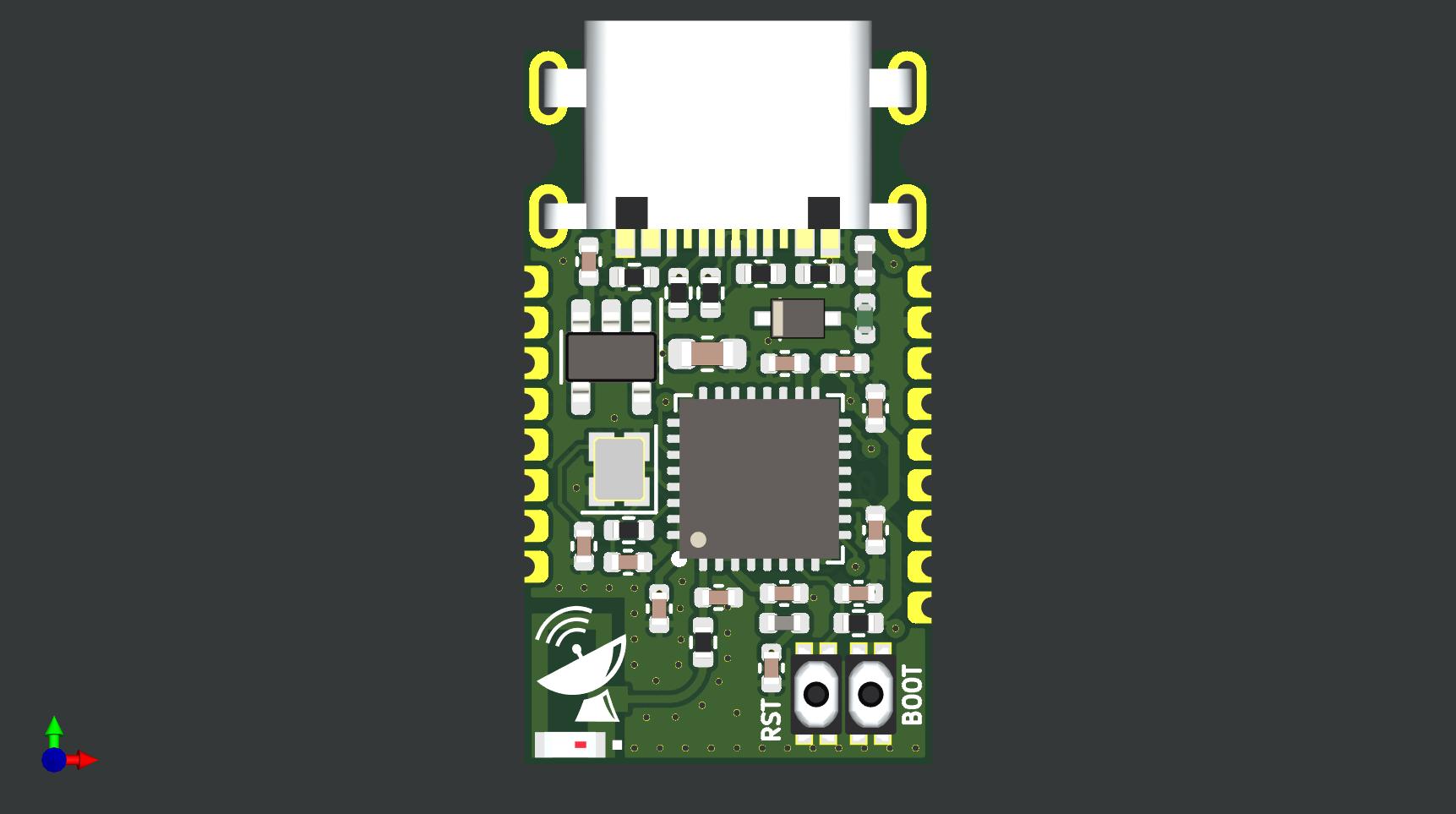
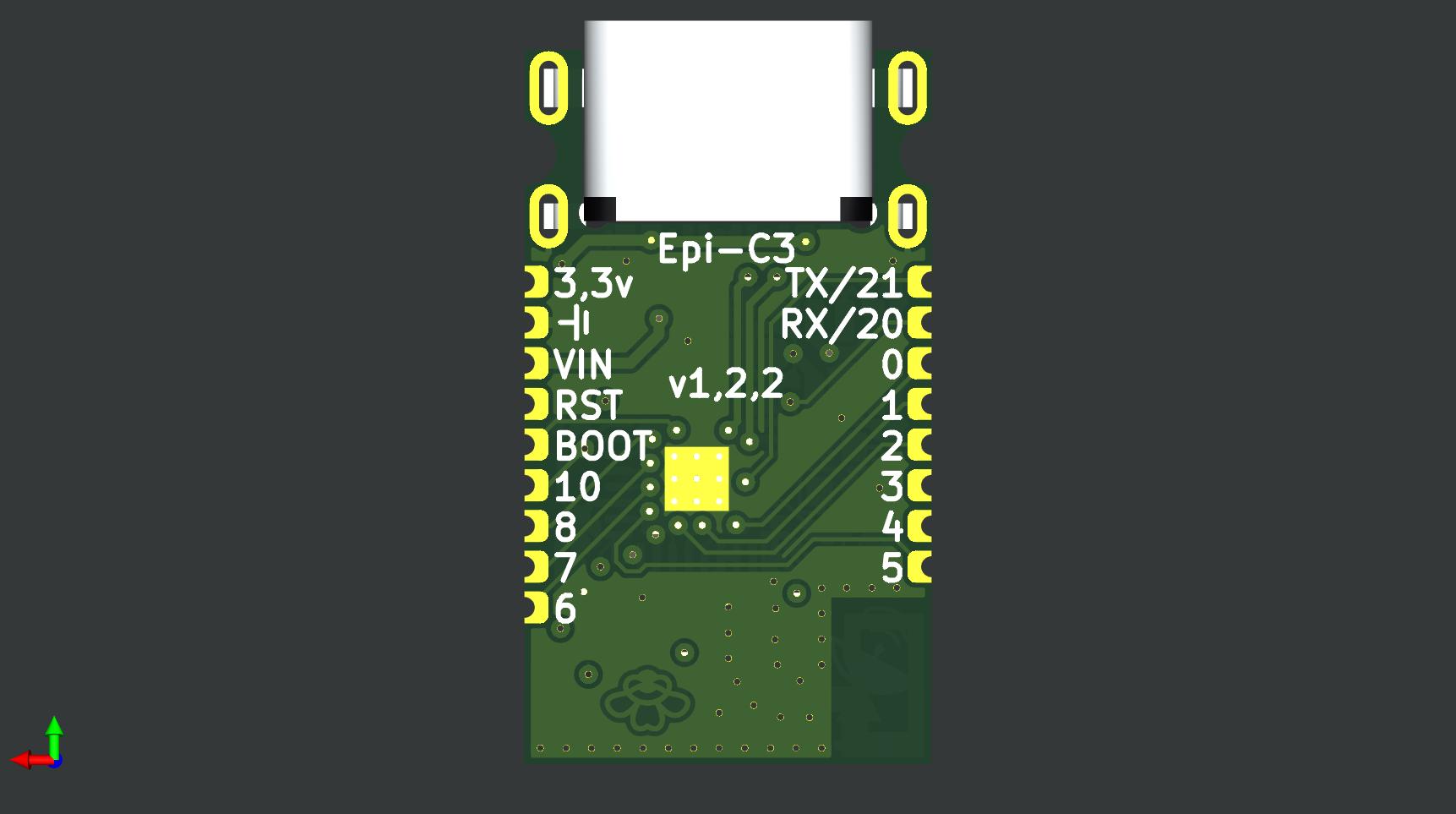
Epi ESP32 (2023 01 16 13 30 41 UTC) is an open-source printed circuit board by rallekralle11, from the rallekralle11/Epi_C3 repository on GitHub, published under the CERN-OHL-P-2.0 licence. It is a 4-layer board of 12.7 × 22.3 mm with 36 parts on 38 nets, routed with 239 tracks and 77 vias.
It is built around the ESP32-C3 and RT9080-TD. Its parts include 13 capacitors, 4 resistors, 3 connectors, 2 ICs and 2 switches. It belongs with the ESP32 and RISC-V boards of this library.
Maybe the smallest ESP32 board with USB-C and onboard antenna.
For sale now!


| Qty | Value | Footprint | References |
|---|---|---|---|
| 5 | 1µF | Capacitor_SMD:C_0402_1005Metric | C8, C9, C11, C12, C13 |
| 4 | 100nF | Capacitor_SMD:C_0402_1005Metric | C1, C2, C5, C7 |
| 3 | TBD | Capacitor_SMD:C_0402_1005Metric | C3, C4, C6 |
| 3 | Varistor | Resistor_SMD:R_0402_1005Metric | RV1, RV2, RV3 |
| 2 | 5,1kΩ | Resistor_SMD:R_0402_1005Metric | R4, R5 |
| 2 | Ferrite | Inductor_SMD:L_0402_1005Metric | FB1, FB2 |
| 2 | NPTH | DIY:NPTH | DRILL1, DRILL2 |
| 2 | SW_MEC_5G | DIY:R-668048 | SW1, SW2 |
| 1 | 10kΩ | Resistor_SMD:R_0402_1005Metric | R6 |
| 1 | 22µF | Capacitor_SMD:C_0603_1608Metric | C10 |
| 1 | 22Ω | Resistor_SMD:R_0402_1005Metric | R2 |
| 1 | 500mA | Fuse:Fuse_0402_1005Metric | F1 |
| 1 | Antenna | DIY:2450AT14A0100001T | AE1 |
| 1 | Conn_01x08 | Connector_PinHeader_1.27mm:PinHeader_1x08_P1.27mm_Vertical | J1 |
| 1 | Conn_01x09 | Connector_PinSocket_1.27mm:PinSocket_1x09_P1.27mm_Vertical | J2 |
| 1 | Crystal | Crystal:Crystal_SMD_2016-4Pin_2.0x1.6mm | Y1 |
| 1 | D | DIY:SOD323_bättre (2022_12_20 17_46_41 UTC) | D1 |
| 1 | ESP32-C3 | Package_DFN_QFN:QFN-32-1EP_5x5mm_P0.5mm_EP3.45x3.45mm | U1 |
| 1 | RT9080 | Package_TO_SOT_SMD:SOT-23-5 | U2 |
| 1 | TBD | Resistor_SMD:R_0402_1005Metric | L1 |
| 1 | USB_C_Receptacle_USB2.0 | DIY:USB-C MC-314C-4P16_V2 (2023_01_13 17_48_46 UTC) | J3 |
HekiNav/finland-live-train-map
Some of the LEDs are missing because they were removed after making the initial layout

rgw3d/CincyStreetcarTracker
I learned that the real-time transit information for the Cincinnati Streetcar was published by Metro here: https://www.go-metro.com/about/developer-data/ in GTFS form.


AarnimM22/HD800-wireless
dual CS43131 + nrf5340 DAC/AMP for turning Sennheiser HD800 into wireless


G-Pereira/greenmobi-bms
A VESC compatible battery management system
It measures 12.7 × 22.3 mm and has 4 copper layers, 1.95 mm thick.
36 parts, built around the ESP32-C3 and RT9080-TD. The full list of its parts is on this page, with links to each part's symbol and footprint where PCBKit's library has them.
From the rallekralle11/Epi_C3 repository on GitHub, at the commit this page was made from: the board is epi_ESP32 (2023_01_16 13_30_41 UTC).kicad_pcb and its schematic U.FL variant/epi_ESP32_UFL.kicad_sch. PCBKit opens the board in the browser, with nothing to install.
Its repository publishes it under the CERN-OHL-P-2.0 licence: you may reuse it on that licence's terms (keep the author's notice, and for a copyleft licence share your changes alike).