
4 layers85 × 56 mm

 rallekralle11/Uno-C3
Intended to be a cheap-as-dirt uno replacement while also being 5V tolerant
ESP uno is an open-source printed circuit board by rallekralle11, from the rallekralle11/Uno-C3 repository on GitHub, published under the CERN-OHL-P-2.0 licence. It is a 2-layer board of 53.8 × 68.8 mm with 58 parts on 51 nets, routed with 400 tracks and 35 vias.
It is built around the ESP32-C3. Its parts include 20 resistors, 11 capacitors, 10 diodes, 6 connectors and 2 ICs. It belongs with the ESP32 and RISC-V boards of this library.
Not intented as a wireless dev board but since it doesn't cost extra i added a crappy monopole antenna anyway. plenty of leftover space for it.
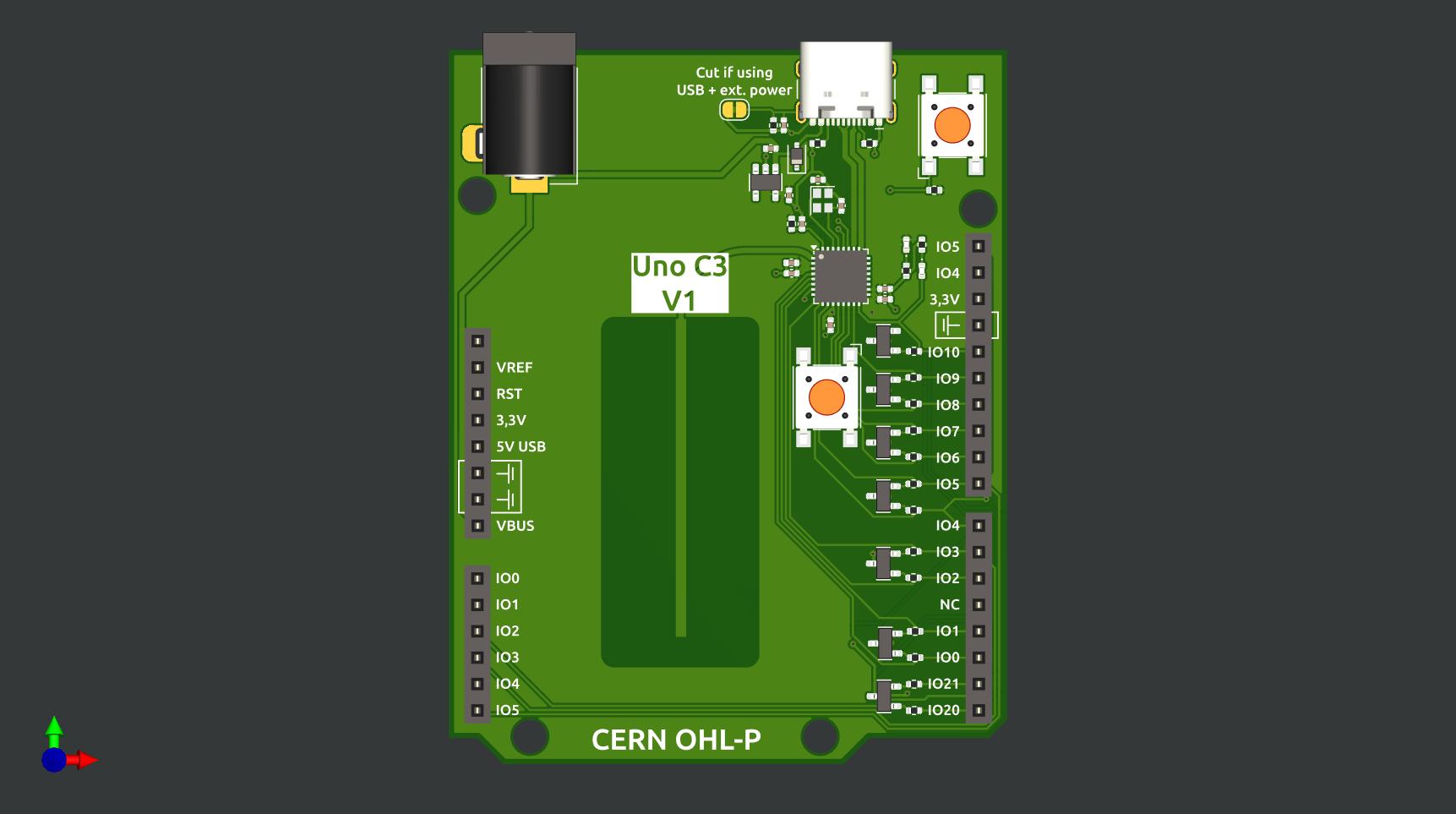
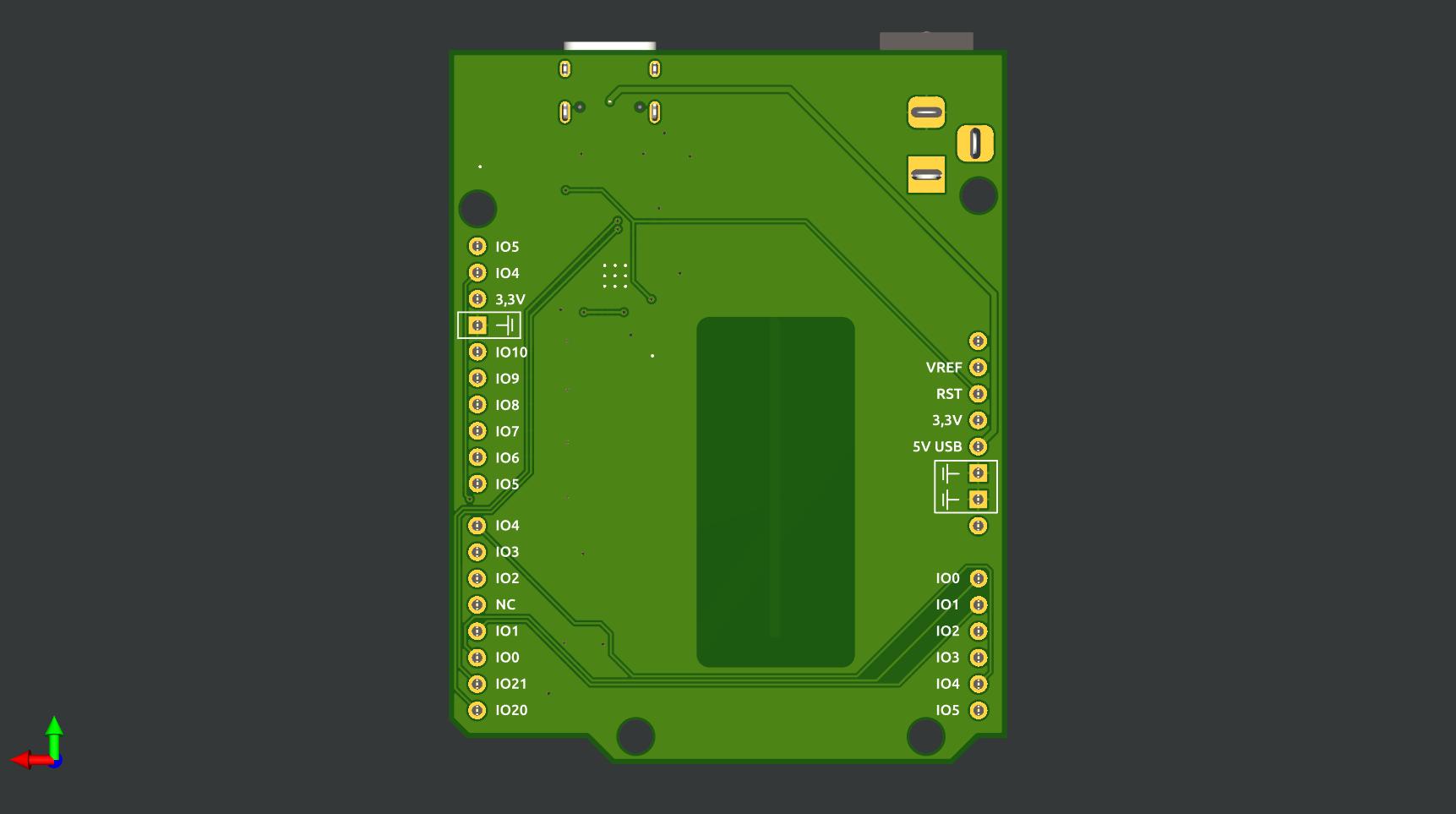
| Qty | Value | Footprint | References |
|---|---|---|---|
| 15 | 220 | Resistor_SMD:R_0402_1005Metric | R6, R7, R8, R9, R10, R11, R12, R13, R14, R15, R17, R18, R19, R22, R23 |
| 7 | D_Zener_Dual_CA | Package_TO_SOT_SMD:SOT-23 | D2, D4, D5, D6, D7, D8, D9 |
| 5 | 5,1k | Resistor_SMD:R_0402_1005Metric | R1, R2, R3, R4, R5 |
| 5 | C | Capacitor_SMD:C_0402_1005Metric | C6, C7, C8, C9, C10 |
| 4 | TBD | Capacitor_SMD:C_0402_1005Metric | C1, C2, C3, C4 |
| 2 | 100nF | Capacitor_SMD:C_0402_1005Metric | C5, C11 |
| 2 | Conn_01x08 | Connector_PinSocket_2.54mm:PinSocket_1x08_P2.54mm_Vertical | J3, J6 |
| 2 | LED_Small | LED_SMD:LED_0402_1005Metric | D1, D11 |
| 2 | SW_MEC_5G | Button_Switch_SMD:SW_SPST_Omron_B3FS-100xP | SW1, SW2 |
| 1 | 40MHz | Crystal:Crystal_SMD_2016-4Pin_2.0x1.6mm | Y1 |
| 1 | Antenna | TestPoint:TestPoint_Loop_D2.50mm_Drill1.0mm | AE1 |
| 1 | Barrel | Connector_BarrelJack:BarrelJack_Horizontal | J2 |
| 1 | Conn_01x06 | Connector_PinSocket_2.54mm:PinSocket_1x06_P2.54mm_Vertical | J5 |
| 1 | Conn_01x10 | Connector_PinSocket_2.54mm:PinSocket_1x10_P2.54mm_Vertical | J4 |
| 1 | D_Small | Diode_SMD:D_SOD-323 | D3 |
| 1 | ESP32-C3 | Package_DFN_QFN:QFN-32-1EP_5x5mm_P0.5mm_EP3.7x3.7mm | U1 |
| 1 | Jumper | Jumper:SolderJumper-2_P1.3mm_Bridged_RoundedPad1.0x1.5mm | JP1 |
| 1 | PAM2305AAB330 | Package_TO_SOT_SMD:TSOT-23-5 | U2 |
| 1 | USB_C_Receptacle_USB2.0_14P | Connector_USB:USB_C_Receptacle_HCTL_HC-TYPE-C-16P-01A | J1 |
The 54 most common of 58 parts.

G-Pereira/greenmobi-bms
A VESC compatible battery management system

OpenDrone-hw/OpenAIO
Open-source AIO for 2-6S toothpick quads: flight controller, 4-in-1 AM32 ESC and ExpressLRS receiver, 25.5x25.5 mm.


It measures 53.8 × 68.8 mm and has 2 copper layers, 1.6 mm thick.
58 parts, built around the ESP32-C3. The full list of its parts is on this page, with links to each part's symbol and footprint where PCBKit's library has them.
From the rallekralle11/Uno-C3 repository on GitHub, at the commit this page was made from: the board is ESP_uno.kicad_pcb and its schematic ESP_uno.kicad_sch. PCBKit opens the board in the browser, with nothing to install.
Its repository publishes it under the CERN-OHL-P-2.0 licence: you may reuse it on that licence's terms (keep the author's notice, and for a copyleft licence share your changes alike).