4 layers222 × 28 mm
 nzevh/barebones23
fully open source laptop based on the RK3588 Soc
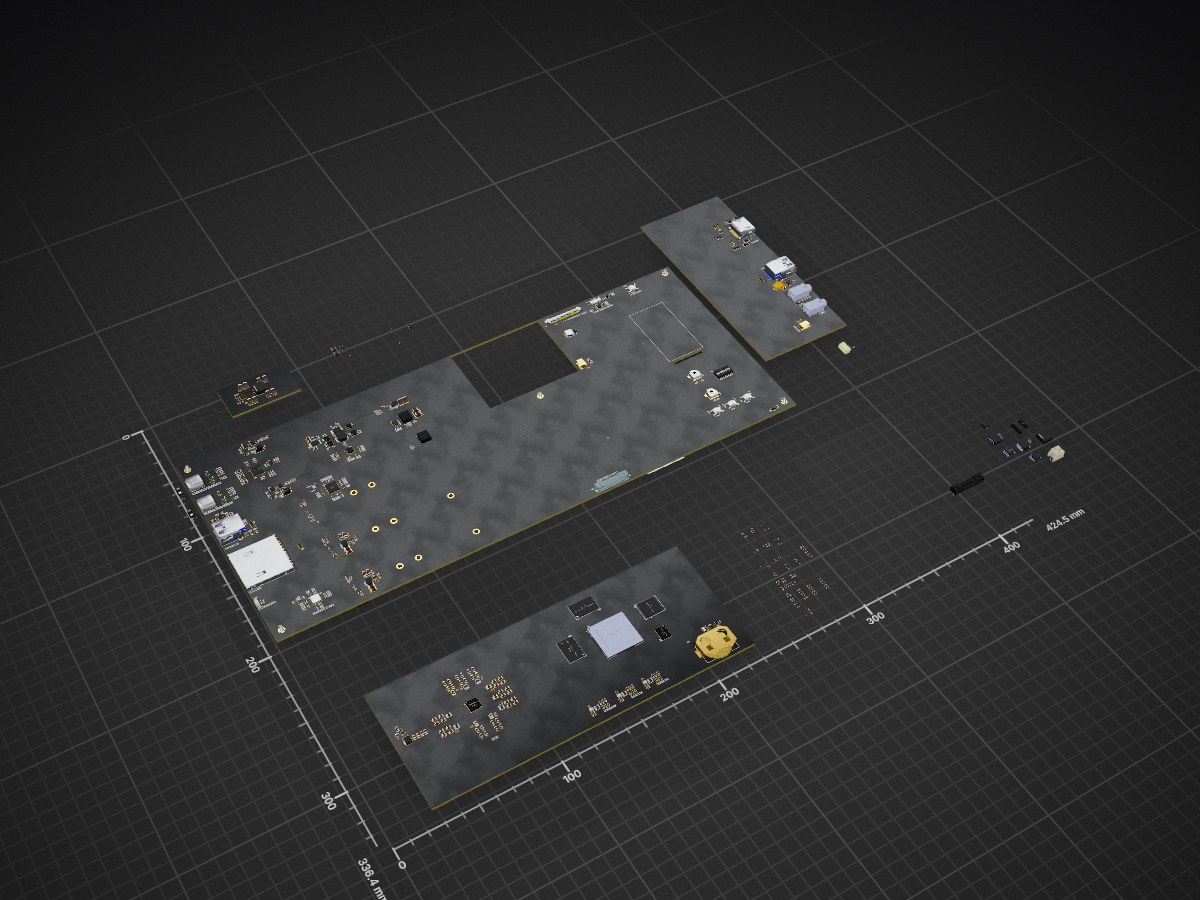
Barebones is an open-source printed circuit board by nzevh, from the nzevh/barebones repository on GitHub, published under the CERN-OHL-S-2.0 licence. It is an 8-layer board of 424.5 × 336.3 mm with 1,033 parts on 1,428 nets, routed with 1,982 tracks and 1,901 vias.
It is built around the 2N7002KW, TPS22919DCK and DFE252010F-R22M=P2, with the DFE201610E-R47M=P2, TL3342F160QG and TPD4E02B04DQAR among its other parts. Its parts include 651 capacitors, 175 resistors, 17 inductors, 15 ICs and 11 transistors. It belongs with the computers and single-board computers boards of this library.


barebones is a work-in-progress open-source laptop motherboard project built around the Rockchip RK3588 platform. It is designed as a high-performance, modular laptop mainboard with dual DDR4 memory slots, hierarchical subsystem schematics, and a full laptop-oriented power, I/O, audio, and control architecture.
Project status: Work in progress. Many generated deliverables such as BOMs, fabrication outputs, and related assembly files do not exist yet.
barebones is intended to be a complete laptop motherboard platform rather than a small breakout or development board. The design is organized into multiple schematic sheets that separate major functional blocks such as power delivery, memory, high-speed I/O, embedded control, audio, and peripheral connectors. This makes the project easier to review, extend, and maintain while keeping the electrical design understandable even as complexity grows.
The project currently centers on a laptop-class architecture with:
Because the design is still under active development, the repository should be treated as an evolving engineering workspace rather than a finished production-ready hardware release.
The exact manufacturing stackup and sign-off values may still evolve as the board is refined. The following items are the core hardware targets currently associated with the project:
The compute section defines the main processing architecture of the laptop motherboard. It is intended to host the RK3588 platform and the supporting high-speed routing required for a modern laptop-class board.
The memory architecture uses LPDDR4x RAM, which is useful for high speeds, low-power environment. The memory-related schematic is separated into its own sheet to keep the signal groupings and placement intent easier to review.
The power section handles battery input, system rails, and the sequencing necessary for a laptop motherboard. A complex platform like this typically requires careful regulation, protection, and startup order management.
This sheet groups the system-management logic and the internal audio path. Keeping embedded control and audio-related circuitry organized separately helps with debugging and future revisions.
The high-speed I/O section covers data interfaces and other external connectivity that must respect signal integrity constraints. This is where ESD protection, connector handling, and differential routing considerations are typically concentrated.
The peripheral connector sheet holds external ports and board-edge interfaces intended for system expansion and user connectivity.
The project currently uses the following folder and file structure:
/ : Main KiCad project directory containing the project files and schematic sheets./barebones.kicad_pro : KiCad project manager file./barebones.kicad_pcb : PCB layout file./barebones.kicad_prl : KiCad project local configuration file./barebones.kicad_symdir/ : Symbol directory used by the project./barebones.pretty/ : Footprint library folder./barebones.3dshapes/ : Custom 3D shape models folder./barebones-backups/ : Backup copies created during design work./barebones.kicad_sch : Top-level schematic sheet./barebones_chip.kicad_sch : Main chip / compute subsystem schematic./barebones_power.kicad_sch : Power delivery subsystem schematic./barebones_io.kicad_sch : Input/output and high-speed connectivity schematic./barebones_mems.kicad_sch : Memory subsystem schematic./barebones_mem.kicad_sch : Additional memory-related schematic sheet./barebones_audio.kicad_sch : Audio subsystem schematic./barebones_GPIO.kicad_sch : GPIO / general-purpose expansion schematic./sym-lib-table : Symbol library table./fp-lib-table : Footprint library table.~barebones.kicad_sch.lck : KiCad lock file.~barebones.kicad_pro.lck : KiCad project lock file.At the moment, many folders commonly found in completed hardware repositories are not present yet. In particular, BOM exports, fabrication outputs, assembly coordinate files, and other generated release artifacts may be missing until the design reaches a later stage.
barebones.kicad_pro project manager file.barebones.kicad_sch sheet.A complete bill of materials is not available yet. Since the project is still in progress, the BOM and related export files may not exist or may be incomplete.
Current repository state:
Once the design stabilizes, this section can be expanded with a complete component table, reference designators, values, footprints, manufacturers, and part numbers.
| Reference | Qty | Subsystem | Value / Part Name | Manufacturer | Package |
|---|---|---|---|---|---|
| U1 | 1 | Compute | RK3588-class SoC | Rockchip | BGA |
| U2 | 1 | Power | PMIC / charger | TBD | TBD |
| U3 | 1 | Control | STM32 EC | STMicroelectronics | TBD |
| J1, J2 | 2 | Memory | DDR4 slots | TBD | Slot |
Barebones is structured to support a laptop-style product architecture with clear separation between high-speed digital routing, power delivery, and user-facing I/O. The use of a top-level schematic plus dedicated subsystem sheets suggests a design flow aimed at:
The dual DDR4 slots are a key architectural choice because they improve configurability and serviceability compared with soldered-only memory designs.
Because the project is still evolving, some files may be placeholders, partial drafts, or absent entirely. That is normal for an active hardware project. Future revisions may introduce:
This hardware and associated project documentation are licensed under the AGPL 3.0.
This repository is provided as-is for development and educational purposes. It is a work in progress, and the design may contain incomplete sections, missing files, and unverified assumptions. Always review the schematics, footprints, net classes, ERC results, and DRC results in KiCad before attempting fabrication or assembly.
High-speed laptop motherboards are complex mixed-signal systems. Electrical, thermal, mechanical, and manufacturing validation should be performed before any production attempt.

| Qty | Value | Footprint | References |
|---|---|---|---|
| 188 | 0.1uF | Capacitor_SMD:C_0201_0603Metric | C10, C11, C12, C15, C101, C102, C109, C110, C124, C125, C126, C127, C128, C132, C133, C134 +172 |
| 67 | 0.1uF | Capacitor_SMD:C_0402_1005Metric | C314, C321, C322, C323, C345, C347, C352, C373, C382, C383, C412, C427, C431, C441, C443, C449 +51 |
| 66 | 10uF | Capacitor_SMD:C_0603_1608Metric | C1, C114, C115, C122, C123, C129, C130, C131, C135, C136, C138, C139, C142, C143, C144, C145 +50 |
| 61 | 22uF | Capacitor_SMD:C_0805_2012Metric | C164, C177, C178, C187, C188, C189, C192, C193, C195, C199, C200, C201, C207, C208, C209, C213 +45 |
| 56 | 1uF | Capacitor_SMD:C_0402_1005Metric | C2, C21, C22, C23, C24, C165, C166, C174, C175, C183, C203, C212, C250, C255, C256, C259 +40 |
| 37 | 10k | Resistor_SMD:R_0201_0603Metric | R176, R177, R180, R181, R186, R189, R192, R193, R196, R217, R219, R221, R224, R237, R243, R244 +21 |
| 30 | 10k | Resistor_SMD:R_0402_1005Metric | R120, R121, R122, R145, R147, R152, R153, R154, R155, R159, R160, R161, R162, R166, R169, R170 +14 |
| 22 | 1uF | Capacitor_SMD:C_0201_0603Metric | C137, C140, C158, C159, C161, C163, C221, C223, C225, C261, C264, C290, C305, C306, C307, C310 +6 |
| 22 | 22uF | Capacitor_SMD:C_0603_1608Metric | C286, C287, C288, C292, C293, C296, C297, C298, C299, C300, C301, C303, C308, C309, C311, C312 +6 |
| 21 | 4.7uF | Capacitor_SMD:C_0402_1005Metric | C148, C155, C186, C194, C376, C377, C378, C379, C380, C387, C403, C470, C541, C544, C614, C656 +5 |
| 20 | 2.2uF | Capacitor_SMD:C_0603_1608Metric | C182, C191, C197, C205, C206, C210, C217, C230, C233, C234, C236, C239, C244, C245, C252, C265 +4 |
| 15 | 100k | Resistor_SMD:R_0402_1005Metric | R37, R52, R58, R64, R143, R165, R168, R174, R179, R183, R214, R215, R242, R245, R246 |
| 14 | 10uF | Capacitor_SMD:C_0805_2012Metric | C179, C202, C275, C276, C324, C337, C468, C503, C577, C578, C608, C691, C692, C725 |
| 12 | 200R | Resistor_SMD:R_0201_0603Metric | R11, R12, R13, R14, R15, R16, R19, R20, R21, R27, R30, R269 |
| 10 | 47uF | Capacitor_SMD:C_1210_3225Metric | C366, C369, C371, C374, C375, C381, C384, C385, C703, C704 |
| 9 | 4.7k | Resistor_SMD:R_0201_0603Metric | R17, R18, R82, R229, R230, R231, R232, R233, R236 |
| 8 | 220nF | Capacitor_SMD:C_0402_1005Metric | C442, C444, C445, C446, C447, C448, C450, C451 |
| 8 | 220nF | Capacitor_SMD:C_0201_0603Metric | C531, C532, C533, C534, C535, C536, C537, C538 |
| 8 | 499R | Resistor_SMD:R_0201_0603Metric | R204, R205, R206, R207, R208, R209, R210, R211 |
| 7 | 0.1uF | Capacitor_SMD:C_0805_2012Metric | C251, C254, C343, C512, C513, C609, C612 |
| 7 | 0.1uF | Capacitor_SMD:C_0603_1608Metric | C411, C504, C518, C588, C607, C685, C690 |
| 7 | 1uF | Capacitor_SMD:C_0603_1608Metric | C211, C229, C263, C278, C279, C619, C620 |
| 7 | 22R | Resistor_SMD:R_0201_0603Metric | R6, R8, R9, R10, R59, R222, R223 |
| 7 | 2N7002KW | barebones:SOT323 | U65, U67, U68, U69, U70, U74, U77 |
| 7 | DFE252010F-R22M=P2 | barebones:IND-SMD_L2.5-W2.0_MHCD252012B-2R2M-A8L | L9, L10, L12, L13, L16, L18, L19 |
| 6 | 10uF | Capacitor_SMD:C_1210_3225Metric | C325, C326, C328, C329, C341, C342 |
| 6 | DFE201610E-R47M=P2 | barebones:INDC2016X100N | L11, L21, L22, L23, L24, L25 |
| 6 | TL3342F160QG | barebones:SW_TL3342F160QG | S1, S2, S3, S4, S5, S6 |
| 6 | TPD4E02B04DQAR | barebones:DIO_TPD4E02B04DQAR | D6, D7, D8, D9, D14, D15 |
| 5 | 100 | Resistor_SMD:R_0402_1005Metric | R32, R33, R49, R50, R60 |
| 5 | MountingHole_Pad | MountingHole:MountingHole_2.2mm_M2_Pad_Via | H1, H2, H3, H4, H5 |
| 5 | TPS62933DRLR | barebones:SOTFL50P160X60-8N | U29, U39, U40, U42, U44 |
| 4 | 100k | Resistor_SMD:R_0201_0603Metric | R22, R23, R141, R187 |
| 4 | 100nF | Capacitor_SMD:C_0402_1005Metric | C432, C433, C436, C440 |
| 4 | 10uF | Capacitor_SMD:C_1206_3216Metric | C604, C617, C679, C688 |
| 4 | 10uF | Capacitor_SMD:C_0402_1005Metric | C552, C568, C699, C700 |
| 4 | 12pF | Capacitor_SMD:C_0402_1005Metric | C463, C464, C595, C596 |
| 4 | 1k | Resistor_SMD:R_0201_0603Metric | R134, R137, R139, R142 |
| 4 | 2.2k | Resistor_SMD:R_0201_0603Metric | R131, R136, R148, R149 |
| 4 | 2.2uF | Capacitor_SMD:C_0402_1005Metric | C75, C243, C272, C372 |
| 4 | 220pF | Capacitor_SMD:C_0402_1005Metric | C561, C562, C565, C566 |
| 4 | 22uF | Capacitor_SMD:C_1210_3225Metric | C348, C349, C676, C678 |
| 4 | 22uF | Capacitor_SMD:C_1206_3216Metric | C680, C681, C684, C687 |
| 4 | 240R | Resistor_SMD:R_0201_0603Metric | R133, R135, R138, R140 |
| 4 | 33nF | Capacitor_SMD:C_0402_1005Metric | C231, C232, C591, C686 |
| 4 | 4.7k | Capacitor_SMD:C_0201_0603Metric | R132, R156, R157, R158 |
| 4 | 4.7uF | Capacitor_SMD:C_0603_1608Metric | C19, C27, C55, C69 |
| 4 | 47k | Resistor_SMD:R_0201_0603Metric | R63, R194, R195, R199 |
| 4 | 8.2k | Resistor_SMD:R_0201_0603Metric | R28, R29, R31, R35 |
| 4 | CSD18543Q3A | Package_SON:VSON-8_3.3x3.3mm_P0.65mm_NexFET | Q11, Q12, Q13, Q14 |
| 4 | CSD25402Q3A | barebones:TRANS_CSD25402Q3A | Q2, Q7, Q8, Q9 |
| 4 | FDSD0420-H-2R2M=P3 | barebones:IND_FDSD0420-H-2R2M=P3 | L1, L2, L4, L6 |
| 3 | 100R | Resistor_SMD:R_0402_1005Metric | R92, R93, R94 |
| 3 | 31.3k | Resistor_SMD:R_0402_1005Metric | R167, R172, R252 |
| 3 | 33nF | Capacitor_SMD:C_0201_0603Metric | C674, C694, C702 |
| 3 | BLM18PG121SZ1D | barebones:BEADC1608X95N | FL1, FL2, FL3 |
| 3 | BSS138 | Package_TO_SOT_SMD:SOT-23 | Q1, Q3, Q5 |
| 3 | C2E-25.000-10-1530-X-R | barebones:XTAL_C2E-25.000-10-1530-X-R | Y3, Y7, Y8 |
| 3 | TPD6E05U06RVZR | barebones:SON50P135X350X55-14N | D10, D11, D19 |
| 3 | TPS22919DCK | Package_TO_SOT_SMD:SOT-363_SC-70-6 | U15, U16, U17 |
| 2 | 1-2199119-5 | barebones:TE_1-2199119-5 | J2, J3 |
| 2 | 1.8k | Resistor_SMD:R_0201_0603Metric | R262, R263 |
| 2 | 100pF | Capacitor_SMD:C_0201_0603Metric | C240, C241 |
| 2 | 100pF | Capacitor_SMD:C_0402_1005Metric | C176, C204 |
| 2 | 10137062-00021LF | barebones:AMPHENOL_10137062-00021LF | J23, J26 |
| 2 | 10R | Resistor_SMD:R_0201_0603Metric | R65, R178 |
| 2 | 10R | Resistor_SMD:R_0402_1005Metric | R73, R74 |
| 2 | 10nF | Capacitor_SMD:C_0402_1005Metric | C235, C266 |
| 2 | 10uF | Capacitor_SMD:C_0201_0603Metric | C396, C466 |
| 2 | 12.5pF | Capacitor_SMD:C_0402_1005Metric | C395, C397 |
| 2 | 120k | Resistor_SMD:R_0201_0603Metric | R24, R25 |
| 2 | 12pF | Capacitor_SMD:C_0201_0603Metric | C602, C623 |
| 2 | 15k | Resistor_SMD:R_0201_0603Metric | R76, R175 |
| 2 | 18pF | Capacitor_SMD:C_0201_0603Metric | C36, C49 |
| 2 | 1M | Resistor_SMD:R_0805_2012Metric | R184, R185 |
| 2 | 200k | Resistor_SMD:R_0402_1005Metric | R41, R44 |
| 2 | 20k | Resistor_SMD:R_0402_1005Metric | R256, R258 |
| 2 | 20pF | Capacitor_SMD:C_0201_0603Metric | C555, C622 |
| 2 | 27k | Resistor_SMD:R_0201_0603Metric | R200, R201 |
| 2 | 4.7uF | Capacitor_SMD:C_0201_0603Metric | C141, C419 |
The 899 most common of 1,033 parts.
It measures 424.5 × 336.3 mm and has 8 copper layers, 1.6 mm thick.
1,033 parts, built around the 2N7002KW, TPS22919DCK, DFE252010F-R22M=P2 and DFE201610E-R47M=P2. The full list of its parts is on this page, with links to each part's symbol and footprint where PCBKit's library has them.
From the nzevh/barebones repository on GitHub, at the commit this page was made from: the board is hardware/motherboard/barebones.kicad_pcb and its schematic hardware/battery/battery-backups/battery-2026-07-03_124623/battery.kicad_sch. PCBKit opens the board in the browser, with nothing to install.
Its repository publishes it under the CERN-OHL-S-2.0 licence: you may reuse it on that licence's terms (keep the author's notice, and for a copyleft licence share your changes alike).


chipsalliance/rocket-pcb
PCB libraries and templates for rocket-chip based FPGA/ASIC designs

wizarddata/Blue-Wizard-Mod
Bluetooth Controller for the Kinesis Advantage line of keyboards using the BlueMicro firmware


peterpolidoro/wingbeat_detector
Measures fly wingbeats using IR light reflected from flapping fly wings.

