
4 layers99 × 53.3 mm
PSLab
fossasia/pslab-hardware
PSLab Hardware Design and Schematics https://pslab.io
199 parts1.7kApache-2.0

 n2048-creative-technology/xiao-led-module-
2 sided addressable LED matrix module for Xiao ESP32-C3
Xiao led module- is an open-source printed circuit board by n2048-creative-technology, from the n2048-creative-technology/xiao-led-module- repository on GitHub. It is a 2-layer board of 44 × 21 mm with 52 parts on 71 nets, routed with 487 tracks and 29 vias.
It is built around the WS2812B. Its parts include 50 diodes, 1 IC and 1 connector. It belongs with the lEDs and displays boards and the ESP32 and RISC-V boards of this library.
A 44 x 21 mm addressable-LED panel built around a Seeed Studio XIAO ESP32-C3, driving 50 WS2812B-compatible RGB LEDs (2020 package) arranged as two 25-LED daisy chains, plus a 4-pin JST-PH connector for external power/data breakout.
| Top side (LED array) | Bottom side (XIAO socket) |
|---|---|
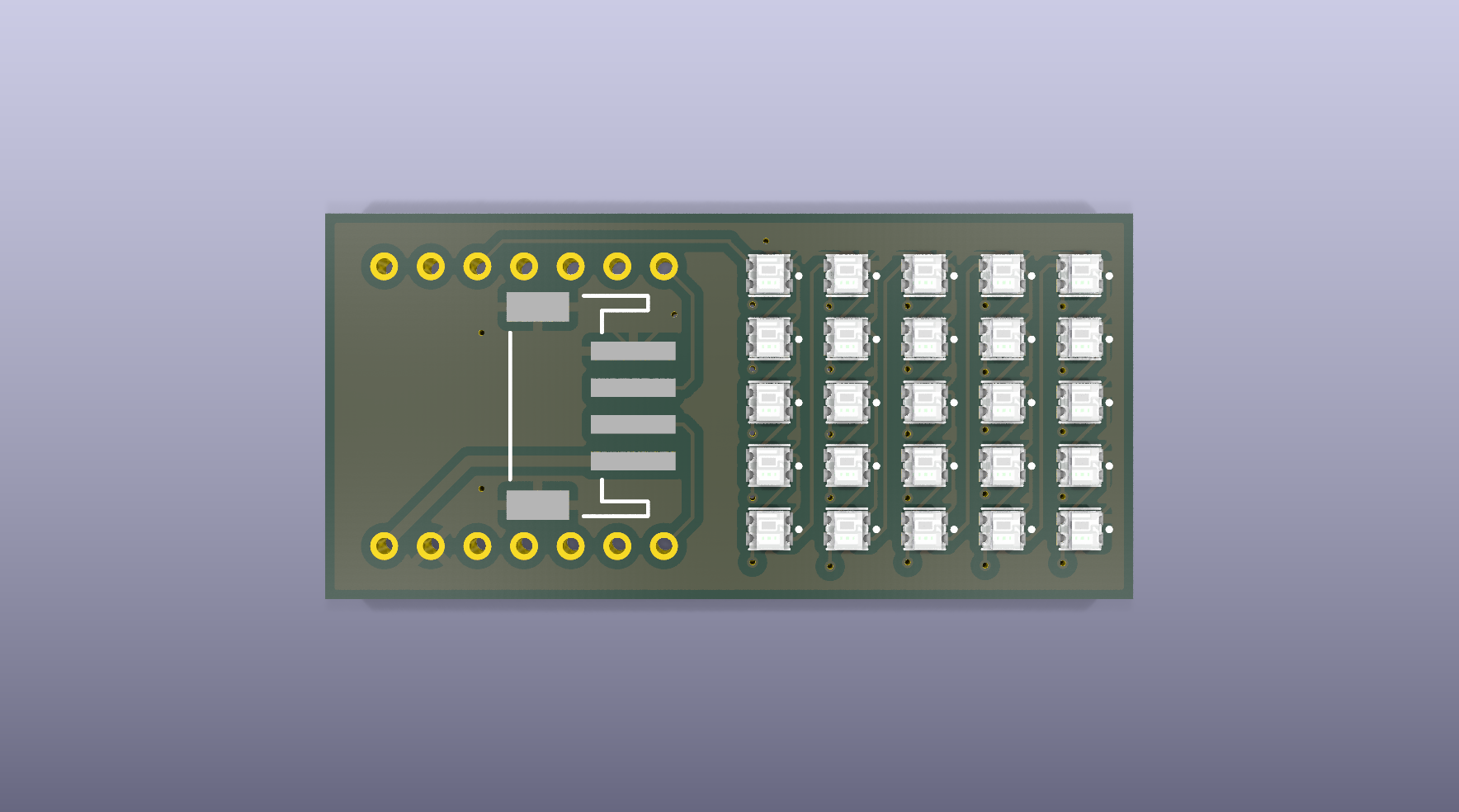 | 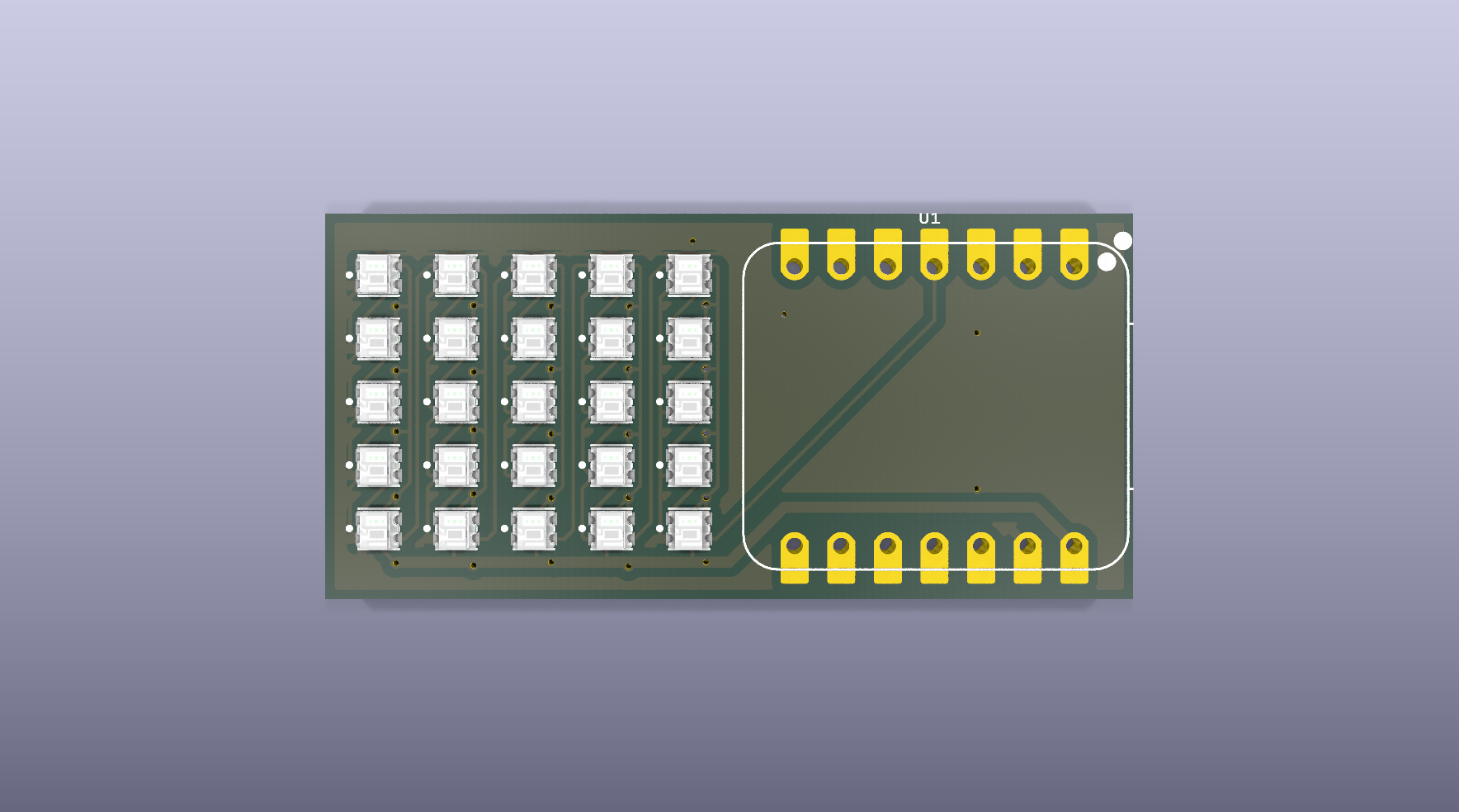 |
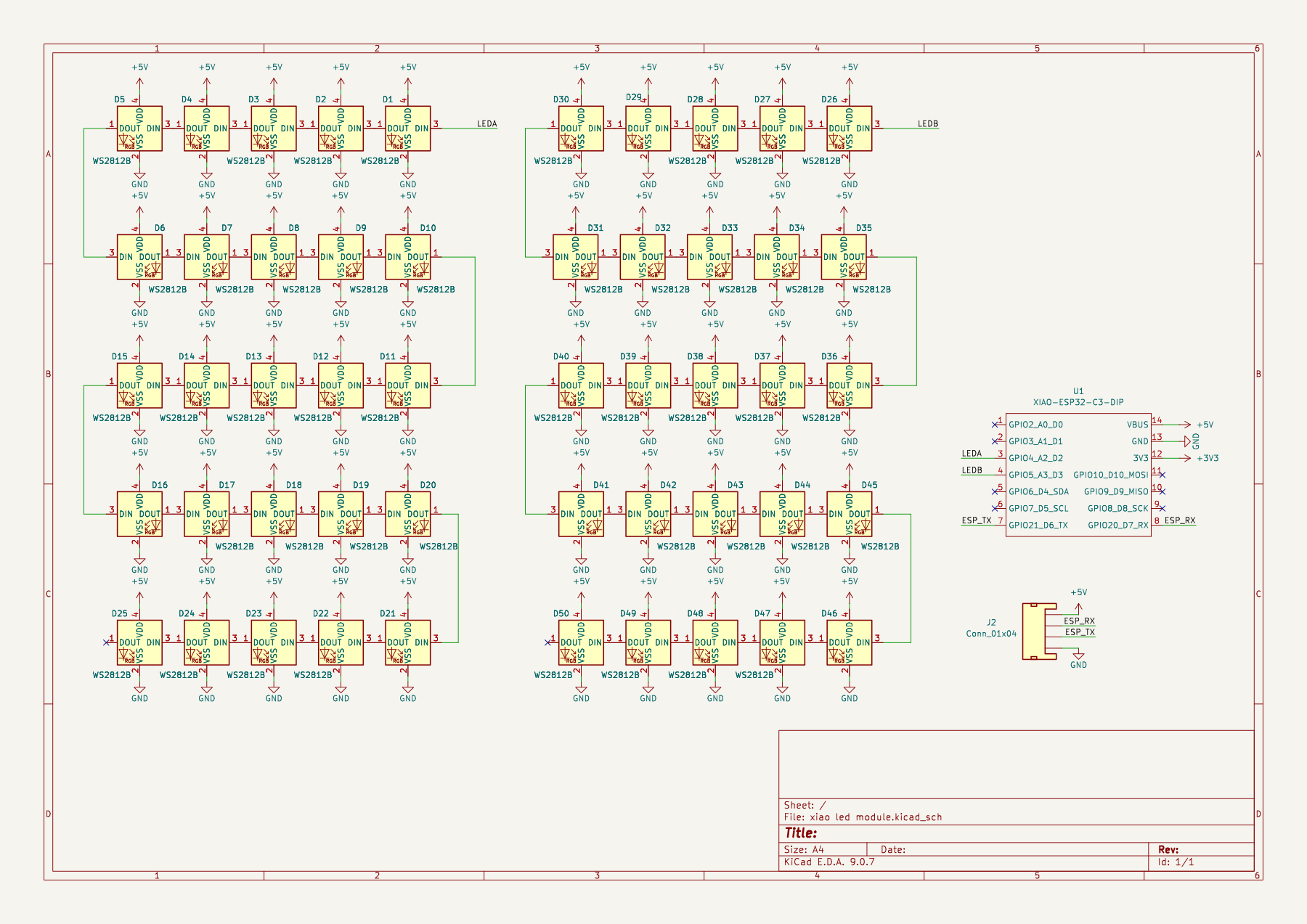
Full-resolution vector version: docs/images/schematic.pdf
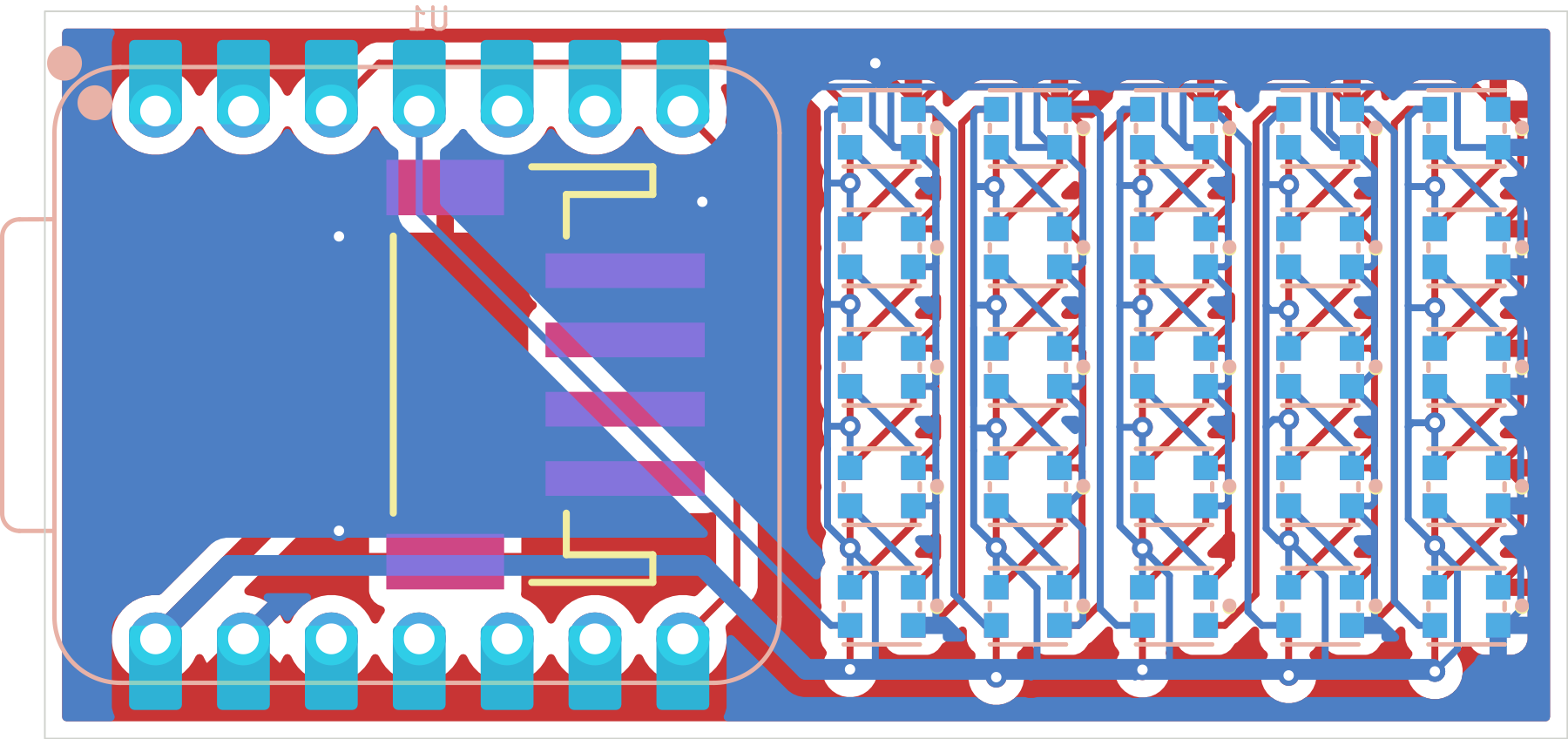
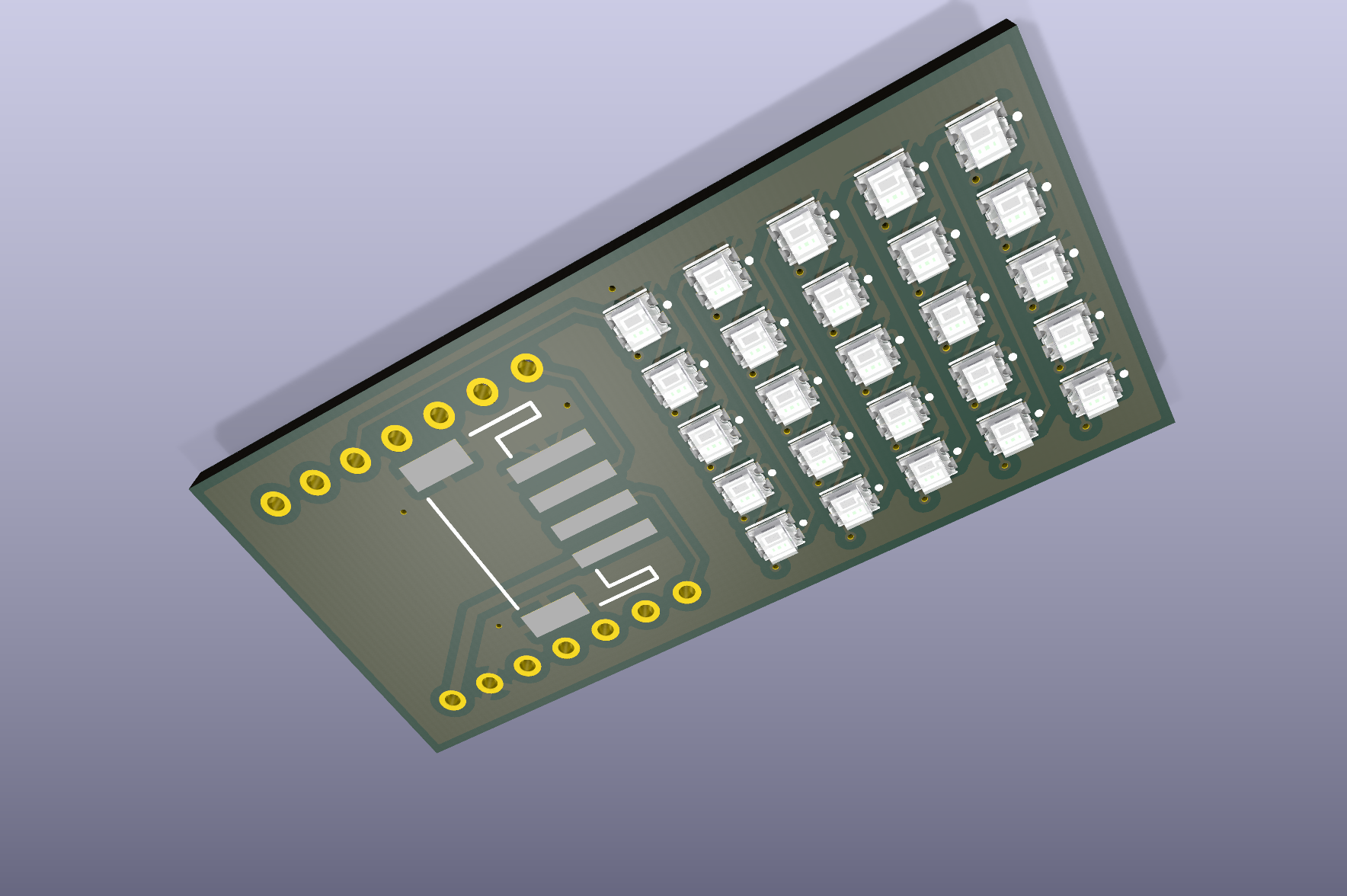
Copper (F.Cu / B.Cu), silkscreen, and solder mask layers, board outline shown.
All parts verified against the live JLCPCB Open Platform API (real-time stock/pricing).
| Ref | Part | LCSC # | Library | Qty |
|---|---|---|---|---|
| D1-D50 | XL-2020RGBC-2812B (WS2812B-compatible RGB LED) | C5349955 | Extended | 50 |
| J2 | WAFER-PH2.0-4PWB (JST-PH-compatible 4-pin SMD connector) | C3029442 | Extended | 1 |
| U1 | Seeed XIAO ESP32-C3 | — | Not JLCPCB-assembled, see below | 1 |
WS2812_2020 footprint.JST_1x04_P2.0mm_Horizontal_SMD footprint.XIAO-ESP32-C3-DIP) is a
socket pattern — 14 pads in 2 rows at 2.54mm pitch, each with
both a through-hole and an SMD land, designed so a plug-in XIAO
module can be inserted rather than reflow-soldered. JLCPCB does not
stock a machine-placeable 2.54mm female pin socket (a known
limitation for tall THT sockets on their SMT assembly line), so U1
is marked DNP (Do Not Populate) in the BOM/CPL. The board still
gets the correct through-holes drilled; hand-solder a standard
1x7, 2.54mm female header pair into the U1 pads after fabrication,
then plug in your XIAO ESP32-C3.production/ contains regenerated, verified fabrication files:
xiao_led_module_gerbers.zip — Gerbers + Excellon drill file
(upload directly to JLCPCB's PCB order)bom.csv — JLCPCB-format BOM (Comment/Designator/Footprint/LCSC
Part #) covering the 51 machine-assembled parts (50 LEDs + J2).
U1 is intentionally excluded — see part substitution notes above.positions.csv — CPL / pick-and-place file, generated with
--exclude-dnp so U1 is correctly omitted from placement while
everything else retains accurate position/rotation/side dataWS2812_2020 footprint carries a real,
present STEP model — renders correctly out of the box.kicad-packages3D repo — a known gap in the official library, not
something fixable from this repo. A through-hole JST-PH variant
(S4B-PH-K, LCSC C157926, 18,711 in stock) does have a working
model, but switching to it means a mechanical footprint change
(SMD → THT); left as SMD per current board design.${AMZPATH}, a third-party model pack (from whoever originally
authored this footprint) that isn't publicly distributed anywhere
findable. Seeed's own official OPL KiCad library ships the
identical footprint with the same broken reference. JLCPCB-side
alternatives (direct XIAO ESP32-C3 module SKUs C19189385 and
C18212168) are both essentially out of stock (0 and 1 units,
respectively) regardless, so U1 was staying DNP either way — the
missing 3D preview here is cosmetic only.kicad-cli pcb drc reports 12 violations (4 starved-thermal errors on
zone-connected pads, plus silkscreen/track warnings) — all confirmed
pre-existing in the original committed board, unrelated to this
sourcing pass (verified via git stash diff-check: identical
violation set before and after the BOM/CPL changes). No new errors
introduced by the part substitutions.
xiao led module.kicad_pro   KiCad project
xiao led module.kicad_sch   Schematic
xiao led module.kicad_pcb   PCB layout
docs/images/                 Renders and diagrams (this README)
production/                   JLCPCB-ready fabrication output:
  xiao_led_module_gerbers.zip    Gerbers + drill (upload as-is)
  bom.csv                        JLCPCB BOM (50 LEDs + J2; U1 excluded, DNP)
  positions.csv                  CPL / pick-and-place file (DNP-excluded)
gerbers/ Individual Gerber/drill layer files| Qty | Value | Footprint | References |
|---|---|---|---|
| 50 | WS2812B | PCM_SparkFun-LED:WS2812_2020 | D1, D2, D10, D11, D12, D13, D14, D15, D16, D17, D18, D19, D20, D21, D22, D23 +34 |
| 1 | Conn_01x04 | PCM_SparkFun-Connector:JST_1x04_P2.0mm_Horizontal_SMD | J2 |
| 1 | XIAO-ESP32-C3-DIP | New_XIAO_Series_Footprints:XIAO-ESP32-C3-DIP | U1 |
fossasia/pslab-hardware
PSLab Hardware Design and Schematics https://pslab.io

FrameworkComputer/ExpansionCards
Reference designs and documentation to create Expansion Cards for the Framework Laptop


PrintersForAnts/Micron
If you want to purchase full kits there are 3 available (Kits are slowly updating to R1 hardware just make sure to double check the included hardware in your kit and if you have any questions reach out in the discord)


It measures 44 × 21 mm and has 2 copper layers, 1.6 mm thick.
52 parts, built around the WS2812B. The full list of its parts is on this page, with links to each part's symbol and footprint where PCBKit's library has them.
From the n2048-creative-technology/xiao-led-module- repository on GitHub, at the commit this page was made from: the board is xiao led module.kicad_pcb and its schematic xiao led module.kicad_sch. PCBKit opens the board in the browser, with nothing to install.
Its repository states no licence, so its author keeps all rights: ask n2048-creative-technology before reusing the design.