
2 layers80 × 60 mm
EnvMonitor
kennySzhucheng/EnvMonitor
🌡️ 智能环境监测站 | STM32F103C8T6 + FreeRTOS + ESP8266 | 温湿度/光照/测距/OLED菜单/ThingSpeak上云 | 从裸机到RTOS到KiCad PCB全流程
27 parts10

 KostelidisDev/PedestrianSense
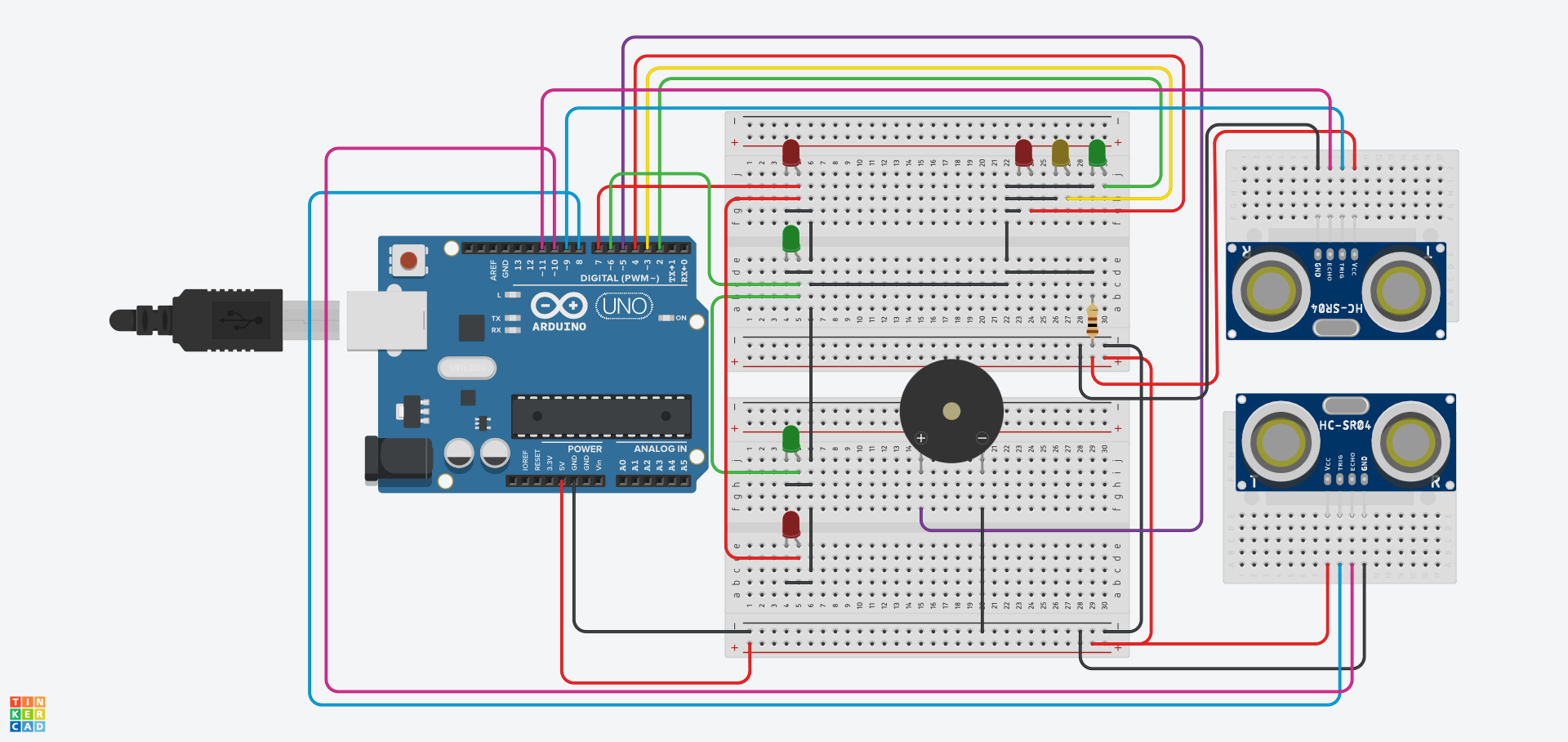
Development of an automatic traffic light with pedestrian detection using Arduino, distance sensors, LEDs and an audible signal, with automatic adjustment transition in case of presence or absence of pedestrians.
PedestrianSense is an open-source printed circuit board by KostelidisDev, from the KostelidisDev/PedestrianSense repository on GitHub, published under the MIT licence. It is a 2-layer board of 170 × 105 mm with 15 parts on 37 nets, routed with 131 tracks and 16 vias.
It is built around the HC-SR04. Its parts include 3 ICs, 1 resistor and 1 switch. It belongs with the sensors and measurement boards and the AVR (ATmega, ATtiny) boards of this library.
Development of an automatic traffic light with pedestrian detection using Arduino, distance sensors, LEDs and an audible signal, with automatic adjustment transition in case of presence or absence of pedestrians.
This work focuses on the development of an automatic signaling system that detects the presence of pedestrians and adjusts the state of the traffic lights accordingly. The system uses the Arduino Uno microcontroller, ultrasonic sensors for pedestrian detection, LEDs for the traffic lights and a buzzer for the audible notification when pedestrians are detected. The goal of the implementation is to reduce unnecessary waiting times, ensuring that drivers do not wait unnecessarily when there are no pedestrians wishing to cross the road and that pedestrians will have priority to cross the road.
** The extra files are written in Greek Language.
This project was conducted as part of the course Ρ101: Embedded Systems in the M.Sc. program in Robotics, offered by the Department of Computer, Informatics and Telecommunications Engineering at the International Hellenic University.
| Qty | Value | Footprint | References |
|---|---|---|---|
| 7 | LED | LED_THT:LED_D2.0mm_W4.8mm_H2.5mm_FlatTop | DP1green1, DP1red1, DP2green1, DP2red1, DVgreen1, DVred1, DVyellow1 |
| 2 | HC-SR04 | HC-SR04:XCVR_HC-SR04 | U2, U3 |
| 1 | 100Ω | Resistor_THT:R_Axial_DIN0204_L3.6mm_D1.6mm_P7.62mm_Horizontal | R1 |
| 1 | Arduino_UNO_R2 | Module:Arduino_UNO_R2 | A1 |
| 1 | Battery Clip 9V | ! Grobotronics:Battery_Clip_9V | BAT1 |
| 1 | Buzzer | Buzzer_Beeper:Buzzer_D14mm_H7mm_P10mm | BZ1 |
| 1 | DC-DC_Converter_Step-Down_5V_1A | Package_TO_SOT_THT:TO-220-3_Vertical | U1 |
| 1 | Slide_Switch_DPDT_ON-ON_0.3A/6VDC | Button_Switch_THT:SW_CK_JS202011CQN_DPDT_Straight | SW1 |
It measures 170 × 105 mm and has 2 copper layers, 1.6 mm thick.
15 parts, built around the HC-SR04. The full list of its parts is on this page, with links to each part's symbol and footprint where PCBKit's library has them.
From the KostelidisDev/PedestrianSense repository on GitHub, at the commit this page was made from: the board is pcb/PedestrianSense.kicad_pcb and its schematic pcb/PedestrianSense.kicad_sch. PCBKit opens the board in the browser, with nothing to install.
Its repository publishes it under the MIT licence: you may reuse it on that licence's terms (keep the author's notice, and for a copyleft licence share your changes alike).
kennySzhucheng/EnvMonitor
🌡️ 智能环境监测站 | STM32F103C8T6 + FreeRTOS + ESP8266 | 温湿度/光照/测距/OLED菜单/ThingSpeak上云 | 从裸机到RTOS到KiCad PCB全流程


NikolaiRadke/Noko_2
The do-it-yourself Arduino-based Noko monster. Version 2 with PCB and 3D printed casing.

billtsol/Maze
This project demonstrates how to use an Arduino board, IR sensors, and a motor driver shield to create a maze-solving robot.

c-lydia/ESP-ROS2
A tiny robot with IMU (MPU5060) and an ultrasonic sensor (HC-SR04), running on micro-ROS, communicating over UDP.

dbrgn/crazyflie2-hcsr04
Ultrasonic sensor (HC-SR04) extension board for the Crazyflie 2.0

YousefAliAicha/aegis-embedded-system
Networked rotating ultrasonic radar system built on the Deneyap Kart 1A (ESP32-S3), with a real-time web dashboard served directly from the board.

YousefAliAicha/sentinel-arduino-firmware
Adaptive traffic-light FSM on the Arduino UNO R3 — pedestrian preemption, LDR-gated night mode with HC-SR04 vehicle detection, and a multiplexed 7-segment countdown. Fully non-blocking.