2 layers141.8 × 86.9 mm

 gkanwar/unchat-keeb1
Design for the UnChat Keyboard
Unchat keeb is an open-source printed circuit board by gkanwar, from the gkanwar/unchat-keeb repository on GitHub. It is a 2-layer board of 274 × 102 mm with 293 parts on 288 nets, routed with 2,870 tracks and 488 vias.
It is built around the 74HC365D, 74HC14 and 74HC174D. Its parts include 128 resistors, 50 capacitors, 44 inductors, 42 switches and 29 ICs. It belongs with the keyboards and input boards and the RP2040 boards of this library.


This repository contains the design materials, firmware, and related docs for two iterations (2023 and 2024) of the "Unchat" keyboard. Highlights of this design include:
Here are some photos.
The Unchat-42 (2023):
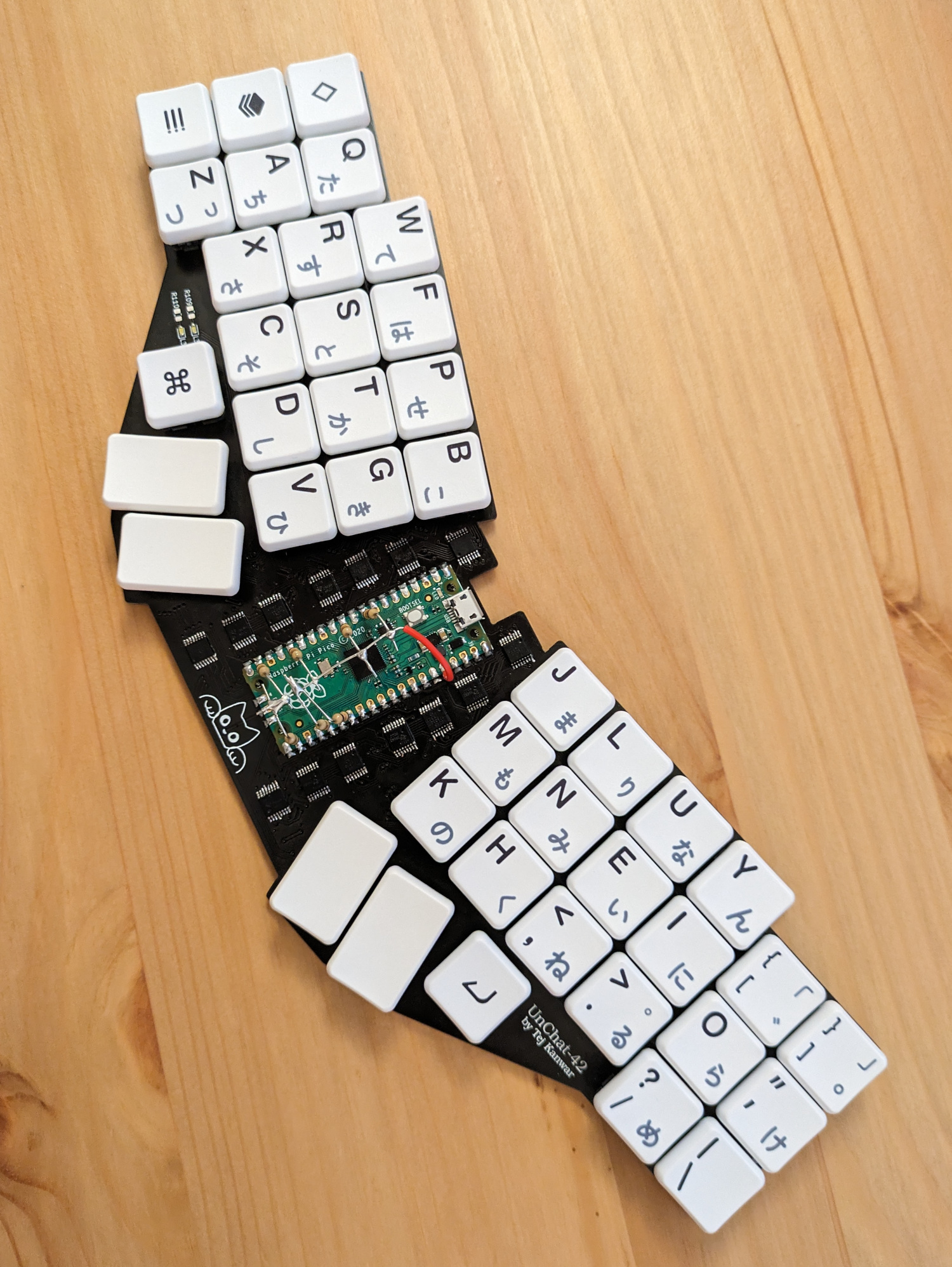
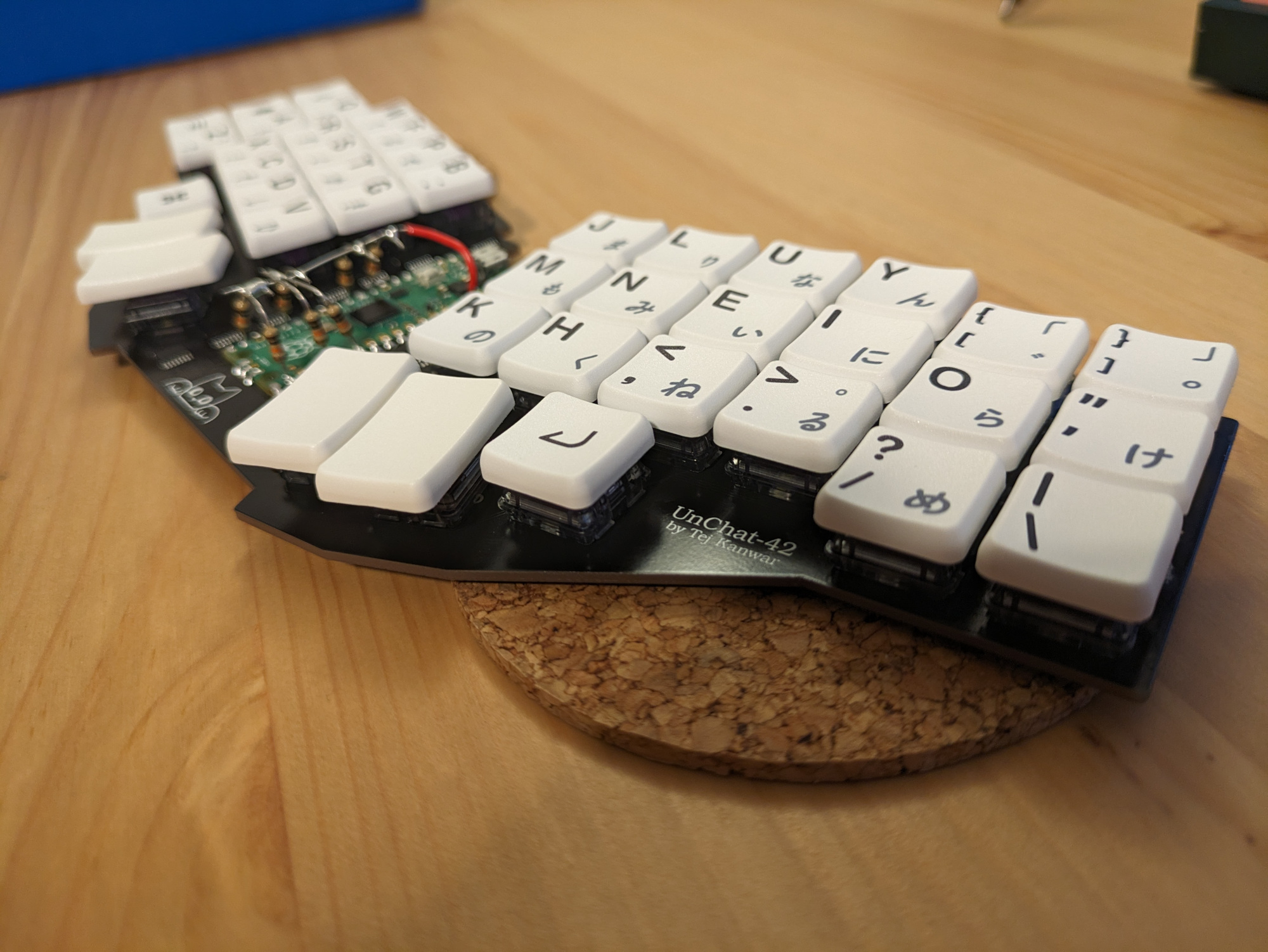
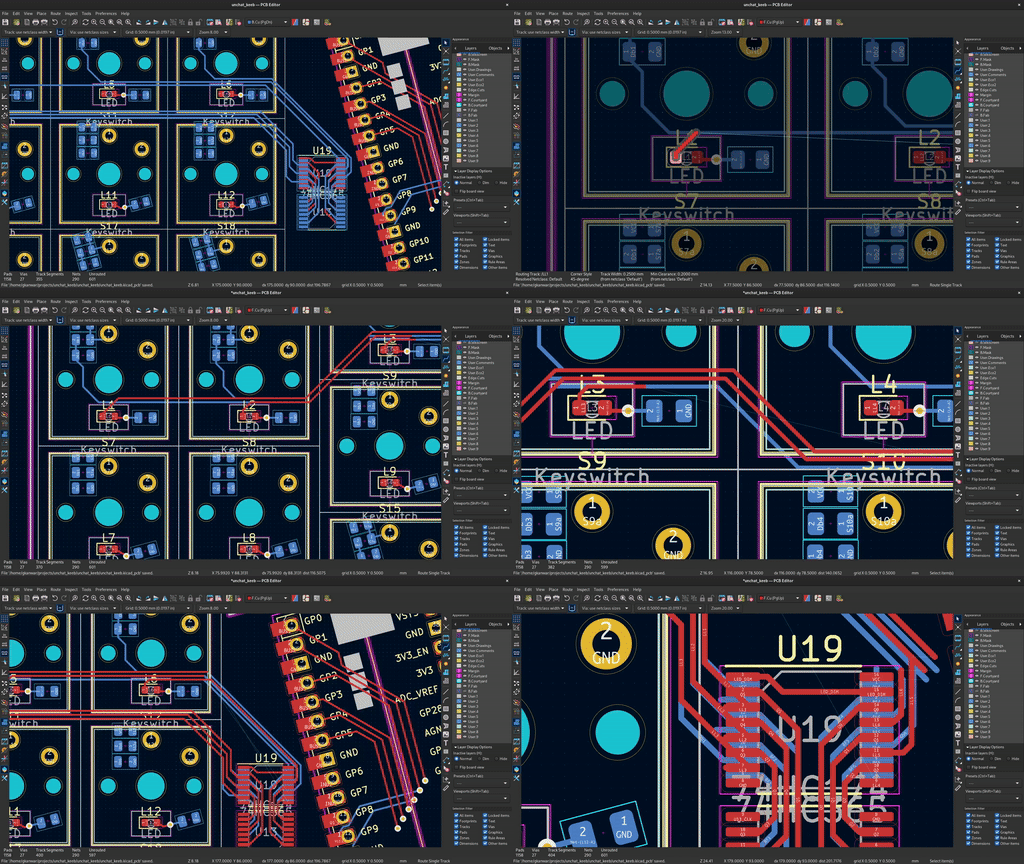
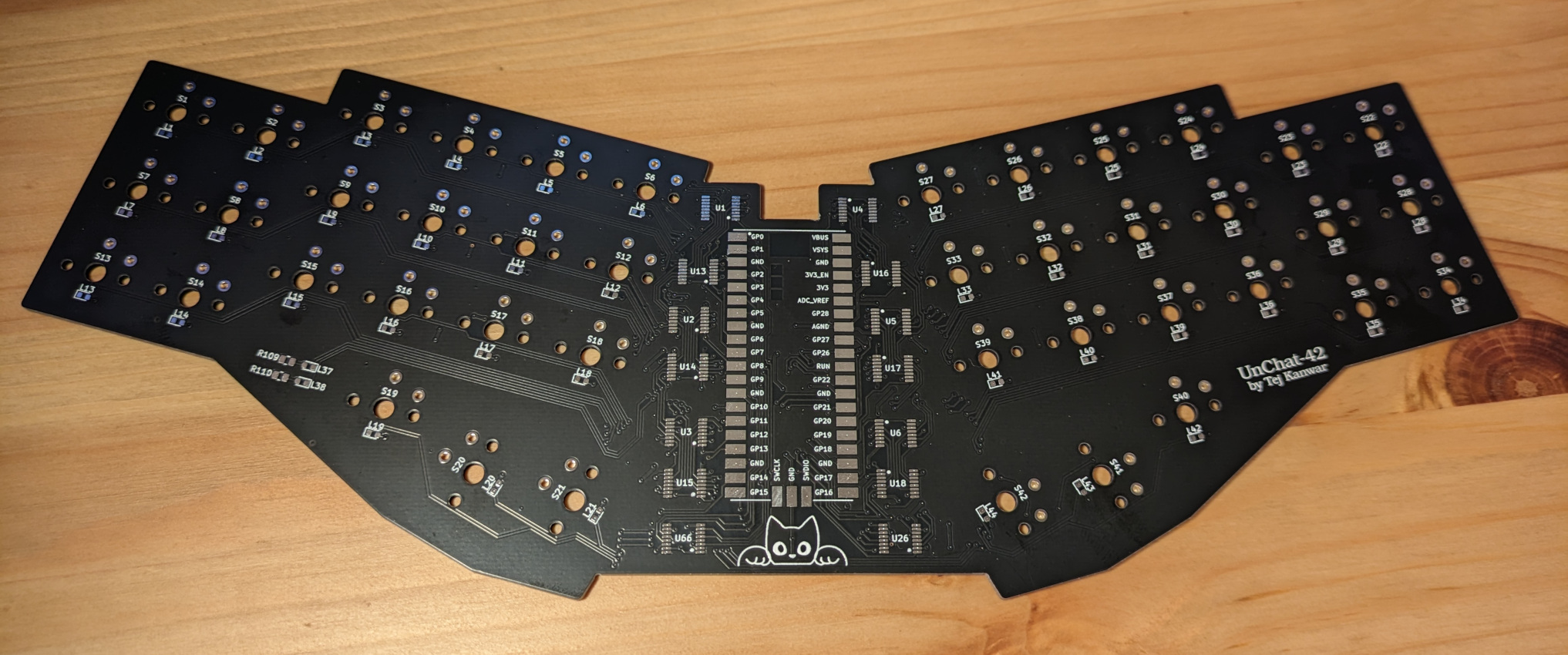
Designing the PCB in Kicad and the results:
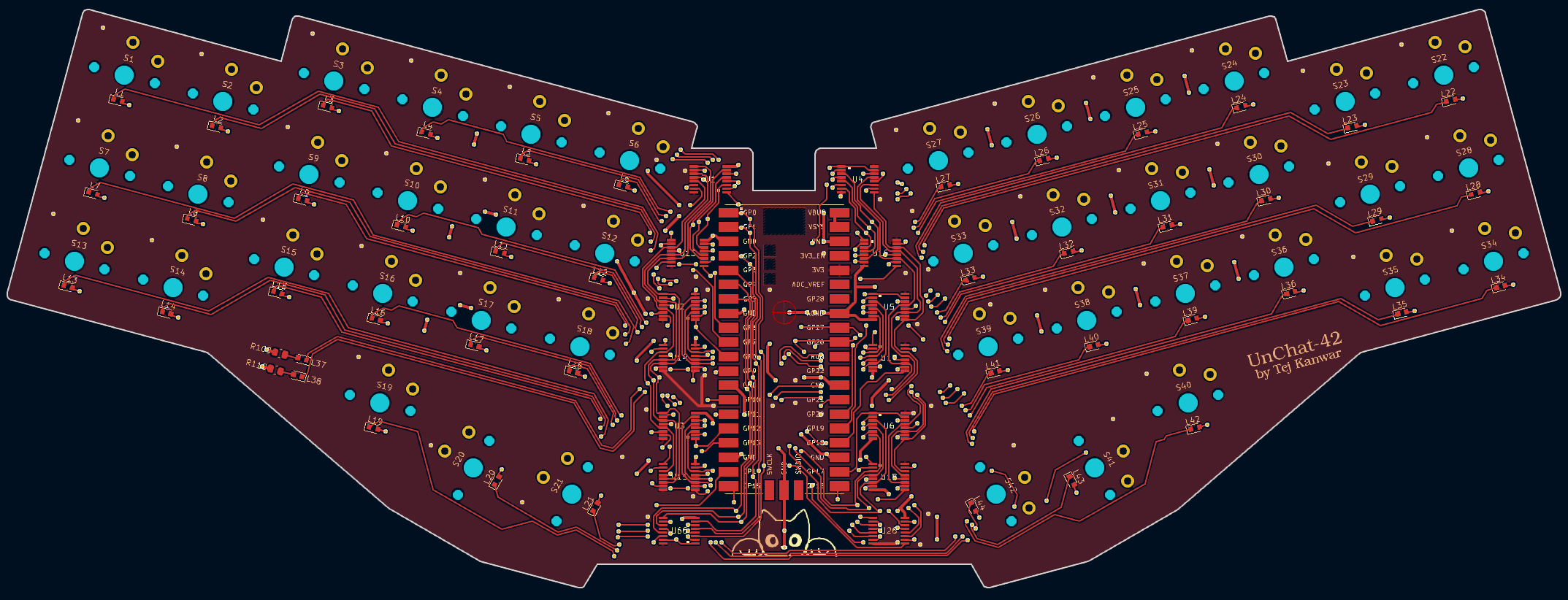
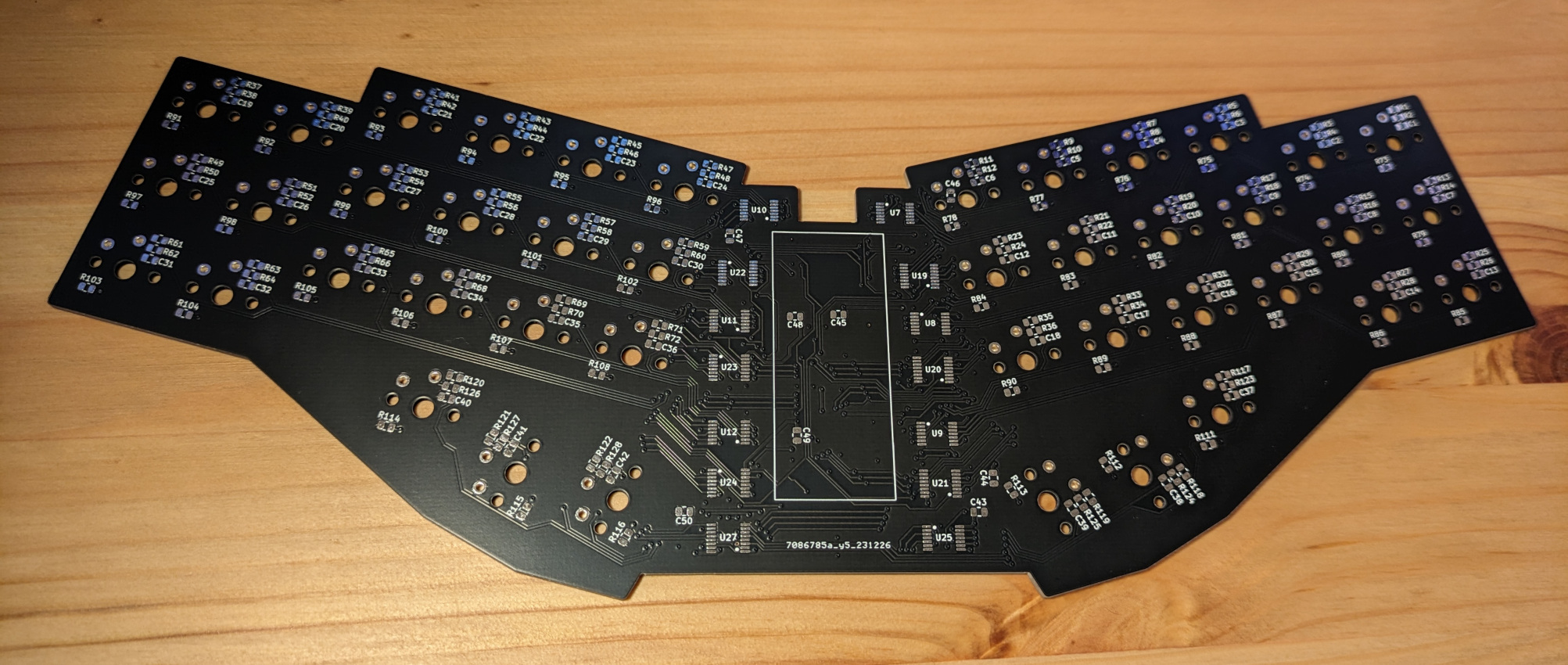
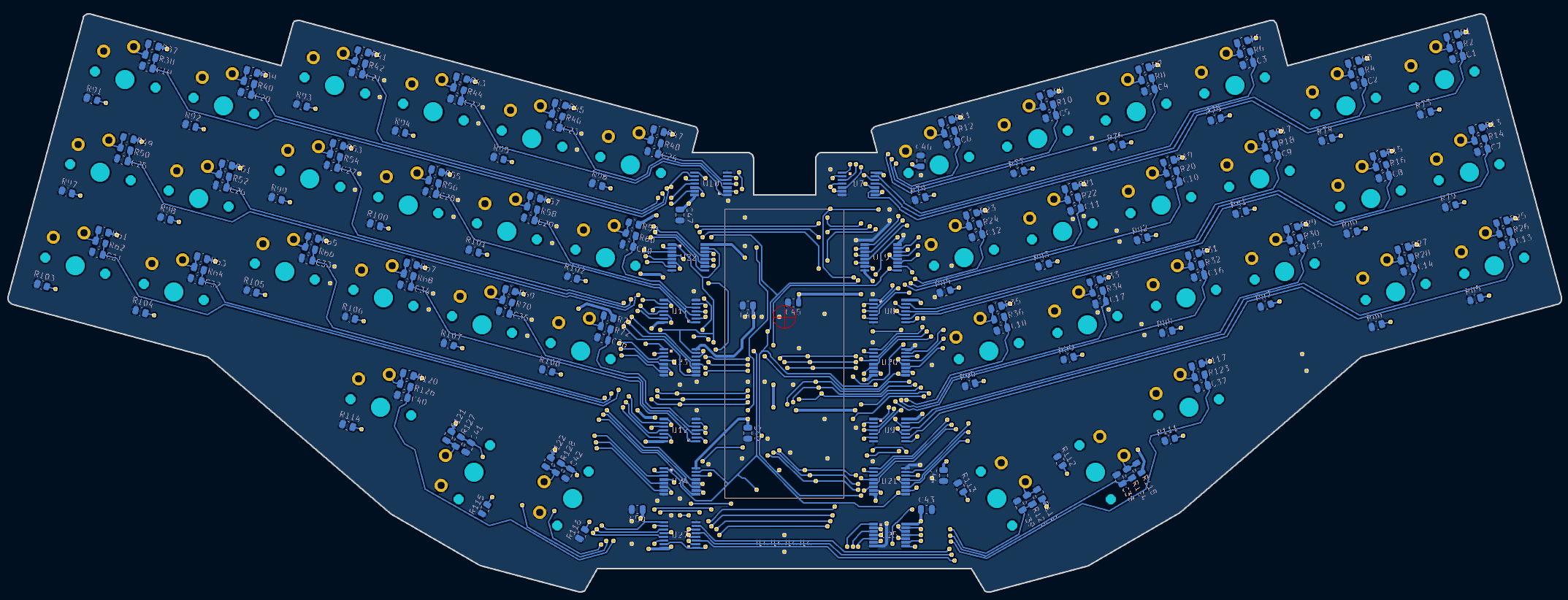
The Unchat-40 (2024) (assembly still WIP):
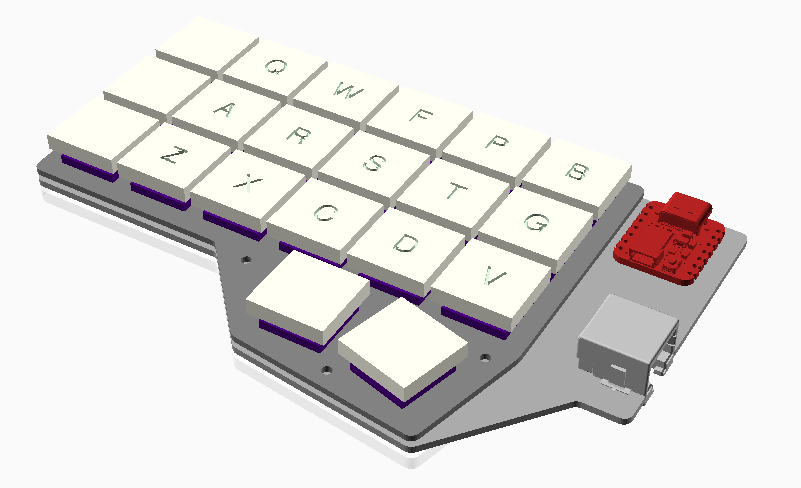
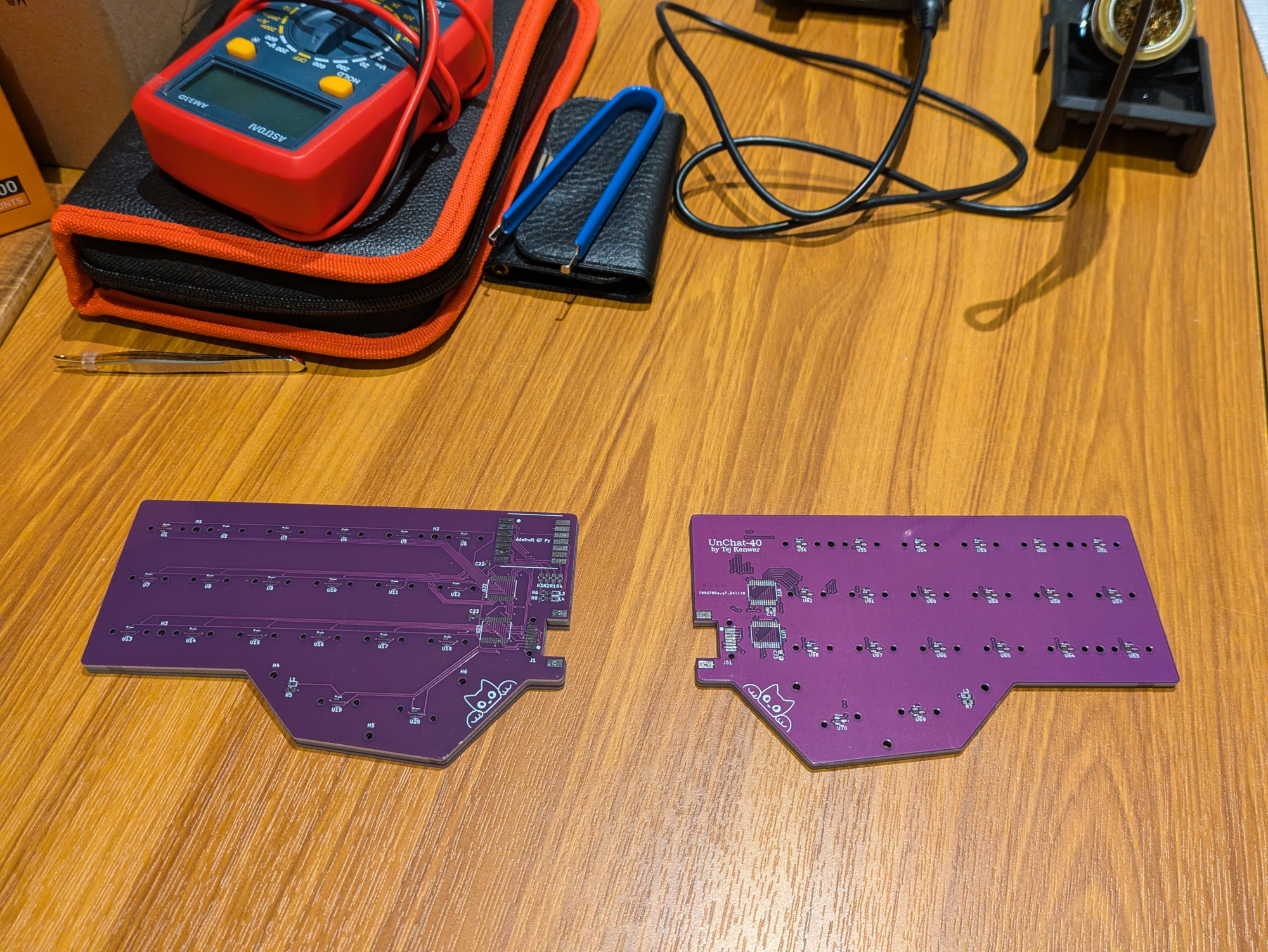
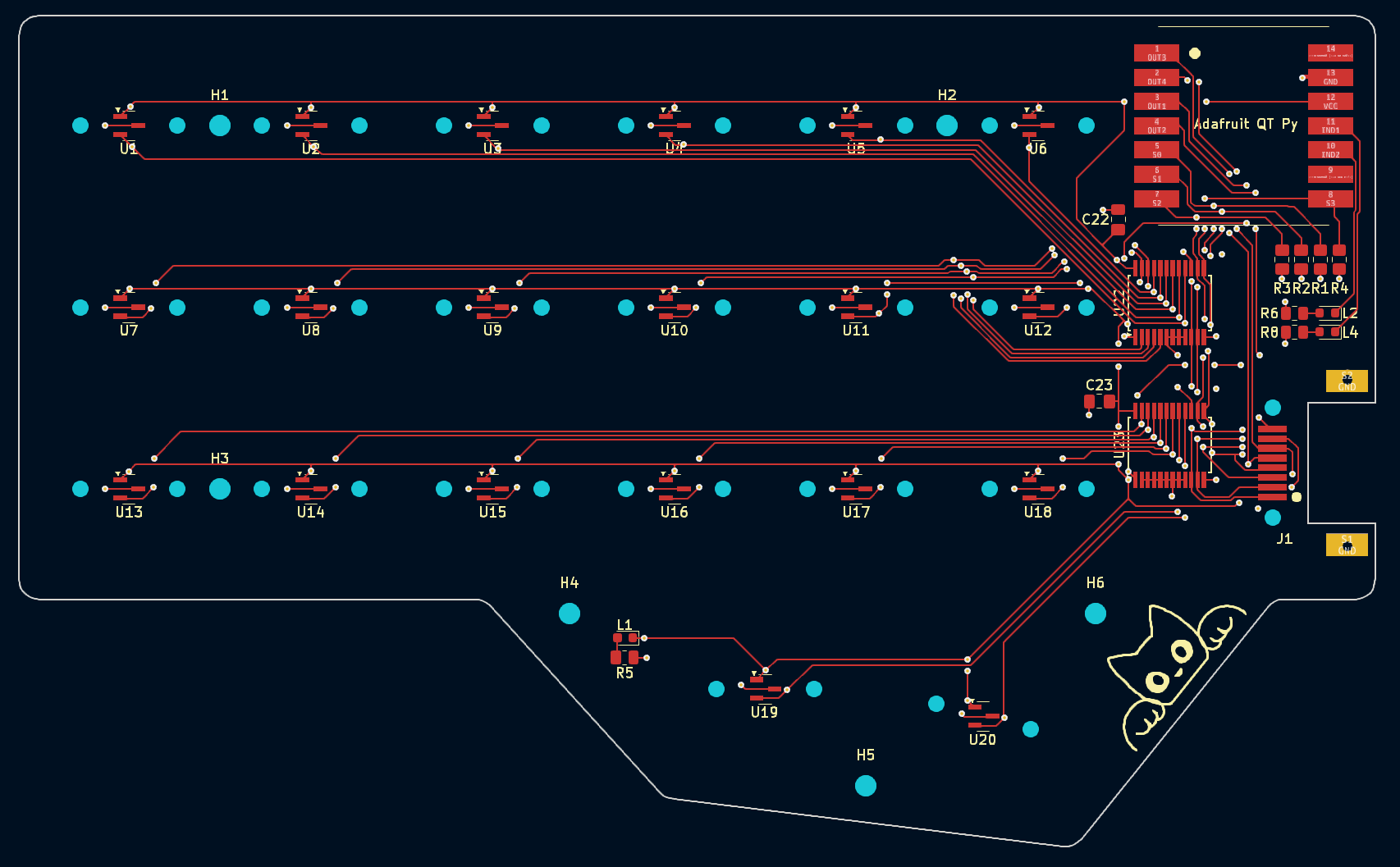
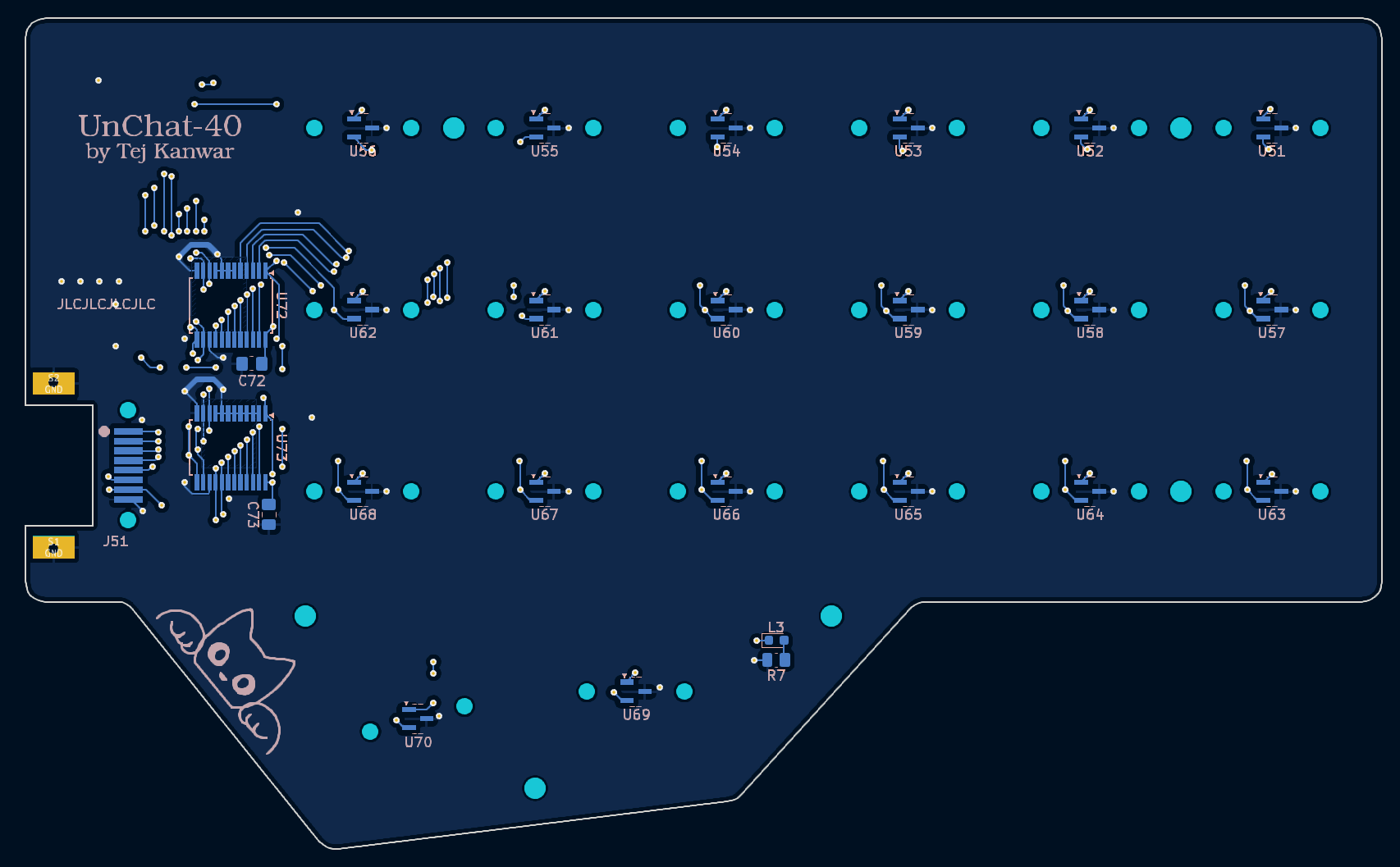
This project was motivated in small part by wanting to solve frustrating key chatter on my main keyboard and in larger part as a way to kill free time during holiday seasons. It was an awesome way to learn several new skills. I recommend this sort of project if any of these interest you as well:
Designs and code in this repository are covered by the CC0 license, allowing anyone to freely copy, modify, or distribute these materials. Attribution not required.
That said, there are some known issues with the original designs. These are documented below, along with my workarounds. In some cases, these issues are corrected in the latest design files, but corrections have not been tested. You may discover other issues that I have not personally encountered. Use at your own risk!
Summary of design features:
The 2023 design was fairly successful at reducing key chatter without software debouncing, but I still experienced occasional chatter (see below). Unfortunately, this was on timescales far above the filtering provided by the hardware debouncing, likely due to corrosion and mechanical deformation in the switches due to my terrible assembly process.
With this new 2024 design, I entirely circumvented using electrical contacts by moving to a Hall Effect magnetic switch design. This is also used in some "gaming-friendly" keyboards because it allows very rapid triggering, but from the perspective of this design the main advantage is that we can apply hysteresis to completely eliminate chatter. The cheap DRV5055 sensor fit the design perfectly. Unfortunately, magnetic switches are still fairly rare and a bit more pricey, but the overall cost was still manageable.
More design info and post-mortem coming soon!
| Qty | Value | Footprint | References |
|---|---|---|---|
| 50 | 0.1uF | Capacitor_SMD:C_0805_2012Metric | C1, C2, C10, C11, C12, C13, C14, C15, C16, C17, C18, C19, C20, C21, C22, C23 +34 |
| 44 | 100 | Resistor_SMD:R_0805_2012Metric | R100, R101, R102, R103, R104, R105, R106, R107, R108, R109, R110, R111, R112, R113, R114, R115 +28 |
| 44 | LED | LED_SMD:LED_0603_1608Metric | L1, L2, L10, L11, L12, L13, L14, L15, L16, L17, L18, L19, L20, L21, L22, L23 +28 |
| 42 | 1k | Resistor_SMD:R_0805_2012Metric | R2, R10, R12, R14, R16, R18, R20, R22, R24, R26, R123, R124, R125, R126, R127, R128 +26 |
| 42 | 68k | Resistor_SMD:R_0805_2012Metric | R1, R11, R13, R15, R17, R19, R21, R23, R25, R27, R117, R118, R119, R120, R121, R122 +26 |
| 38 | Keyswitch | GKanwarLibrary:Choc_V1_LED_1.00u | S1, S2, S10, S11, S12, S13, S14, S15, S16, S17, S18, S19, S22, S23, S24, S25 +22 |
| 14 | 74HC365 | GKanwarLibrary:TSSOP-16_4.4x5mm_P0.65mm | U1, U2, U3, U4, U5, U6, U19, U20, U21, U22, U23, U24, U27, U66 |
| 7 | 74HC14 | GKanwarLibrary:TSSOP-14_4.4x5mm_P0.65mm | U7, U8, U9, U10, U11, U12, U25 |
| 7 | 74HC174 | GKanwarLibrary:TSSOP-16_4.4x5mm_P0.65mm | U13, U14, U15, U16, U17, U18, U26 |
| 4 | Keyswitch | GKanwarLibrary:Choc_V1_LED_1.50u | S20, S21, S41, S42 |
| 1 | Raspberry_Pi_Pico | ScottoKeebs_MCU:Raspberry_Pi_Pico_SMD | U99 |

slonket/segment-keyboard
A through-hole keyboard kit themed after PCB's of the 1980's.

mgalleguilloscespedes-png/proyectro-stm32
en mi afán por el diseño 3d y la electrónica decidí crear mi propia versión de una placa controladora para impresora 3d, basándome en el microcontrolador stm32h723zet6 y la pcb de bigtreetech manta mp8


Coin-OpCollection/Development-Documentation
This repository contains technical information, documentation, and reverse-engineering details for the base platform systems of FPGA implementations released by Coin-Op Collection.


It measures 274 × 102 mm and has 2 copper layers, 1.6 mm thick.
293 parts, built around the 74HC365D, 74HC14 and 74HC174D. The full list of its parts is on this page, with links to each part's symbol and footprint where PCBKit's library has them.
From the gkanwar/unchat-keeb repository on GitHub, at the commit this page was made from: the board is unchat_keeb/unchat_keeb.kicad_pcb and its schematic unchat_keeb/debounce.kicad_sch. PCBKit opens the board in the browser, with nothing to install.
Its repository states no licence, so its author keeps all rights: ask gkanwar before reusing the design.