4 layers75.9 × 105.9 mm
 CIDCO-dev/Poseidon11
Hydrographic surveying platform operating system
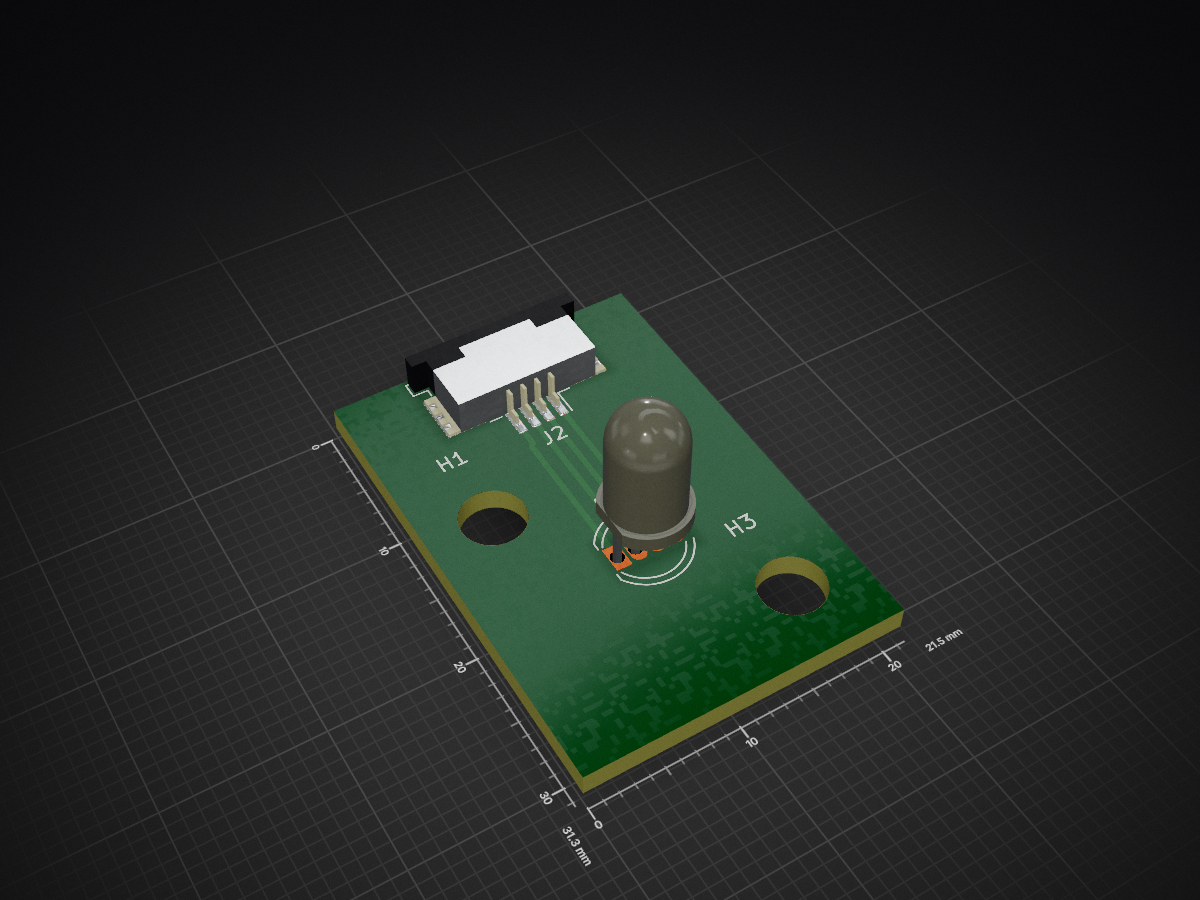
Module led is an open-source printed circuit board by CIDCO-dev, from the CIDCO-dev/Poseidon repository on GitHub, published under the MIT licence. It is a 2-layer board of 21.5 × 31.3 mm with 5 parts on 5 nets, routed with 11 tracks and 0 vias.
Its parts include 1 diode and 1 connector.
Hydrographic surveying platform operating system (ROS Noetic).
/opt: sudo chown $USER:$USER /opt && cd /opt && git clone --recursive <repo>install/rpi4-noetic.sh (RPi4 target).cd /opt/Poseidon/src/workspace && catkin_make -j1 -DCATKIN_BLACKLIST_PACKAGES="mavros;inertial_sense;velodyne;ins_piksi;velodyne_pointcloud;velodyne_driver;velodyne_laserscan;gnss_mosaic_x5;tf"source /opt/ros/noetic/setup.bash then source /opt/Poseidon/src/workspace/devel/setup.bash.roslaunch launch/Simulator/dummy_simulator_virtual-machine.launch, then open the web UI at http://localhost.Full documentation lives in doc/ (Markdown):
doc/README.md: overview, build, run, testsdoc/install.md: installation with dependencies (RPi4, Ubuntu 20.04, ROS Noetic)doc/nodes.md: list of ROS nodesdoc/web.md: list of web UI pagesdoc/web/*.md: per-page details (index, status, diagnostics, data, map, settings, calibration, goal)doc/nodes/*.md: per-node details with inputs/outputs/paramscatkin_make run_tests -j1 -DCATKIN_BLACKLIST_PACKAGES="ins_piksi;libmavconn;echoboat_odometry;mavros_msgs;mavros;mavros_extras;test_mavros;gnss_mosaic_x5;imu_bno055;sonar_imagenex852;inertial_sense;raspberrypi_vitals;imu_null;sonar_dummy;gnss_dummy;lidar_filtering"cd www/webroot/js && npm test --coverageroslaunch launch/Echoboat/rosbag_replay.launch bag_filename:=rosbag.bag./devel/lib/logger/lidarGeoreferencer -h (supports filtering options)| Qty | Value | Footprint | References |
|---|---|---|---|
| 2 | MountingHole | MountingHole:MountingHole_4.3mm_M4 | H1, H3 |
| 1 | Conn_01x04_MountingPin | Connector_FFC-FPC:TE_84952-4_1x04-1MP_P1.0mm_Horizontal | J2 |
| 1 | LED_ABGR | LED_THT:LED_D5.0mm-4_RGB | D1 |
| 1 | LOGO | cidco:logo cidco | logo1 |
It measures 21.5 × 31.3 mm and has 2 copper layers, 1.6 mm thick.
5 parts. The full list of its parts is on this page, with links to each part's symbol and footprint where PCBKit's library has them.
From the CIDCO-dev/Poseidon repository on GitHub, at the commit this page was made from: the board is docs/PCB Design/HB-LED/module led.kicad_pcb and its schematic docs/PCB Design/HB-BP/PwrBypass.kicad_sch. PCBKit opens the board in the browser, with nothing to install.
Its repository publishes it under the MIT licence: you may reuse it on that licence's terms (keep the author's notice, and for a copyleft licence share your changes alike).


joypad-ai/joypad-os
Universal controller firmware for building adapters, dongles, and custom controllers.

OLIMEX/OLINUXINO
OLINUXINO is Open Source / Open Hardware, low cost from EUR 24 Linux Industrial grade Single Board Computer capable to operate -25+85C

jamro/tiny-engineer
A small desktop robot that brings an AI coding assistant to life, physically acting out when it reads files, thinks, writes code, and finishes work.

hackclub/OnBoard
💡 Join 1,000 teenagers and make your first PCB with a $100 grant!


Luos-io/luos_engine
Open-source and real-time orchestrator for cyber-physical-systems, to easily design, test and deploy embedded applications and digital twins.