2 layers308.7 × 241.8 mm
OTTOtact
cester-ino/OTTO-hardware
those specs refer to the tactile buttons version, but a led backlight button version is in the works too.
229 parts49GPL-3.0

 cester-ino/OTTO-hardware49
those specs refer to the tactile buttons version, but a led backlight button version is in the works too.
OTTOdac is an open-source printed circuit board by cester-ino, from the cester-ino/OTTO-hardware repository on GitHub, published under the GPL-3.0 licence. It is a 2-layer board of 38.8 × 66.6 mm with 42 parts on 46 nets, routed with 293 tracks and 18 vias.
It is built around the LM4860M, AMS1117-3.3 and SJ1-42536-SMT-TR. Its parts include 19 capacitors, 8 resistors, 5 connectors, 3 ICs and 1 inductor. It belongs with the audio and music boards of this library.


Hardware prototype for the OTTO Synthesizer by Topisani
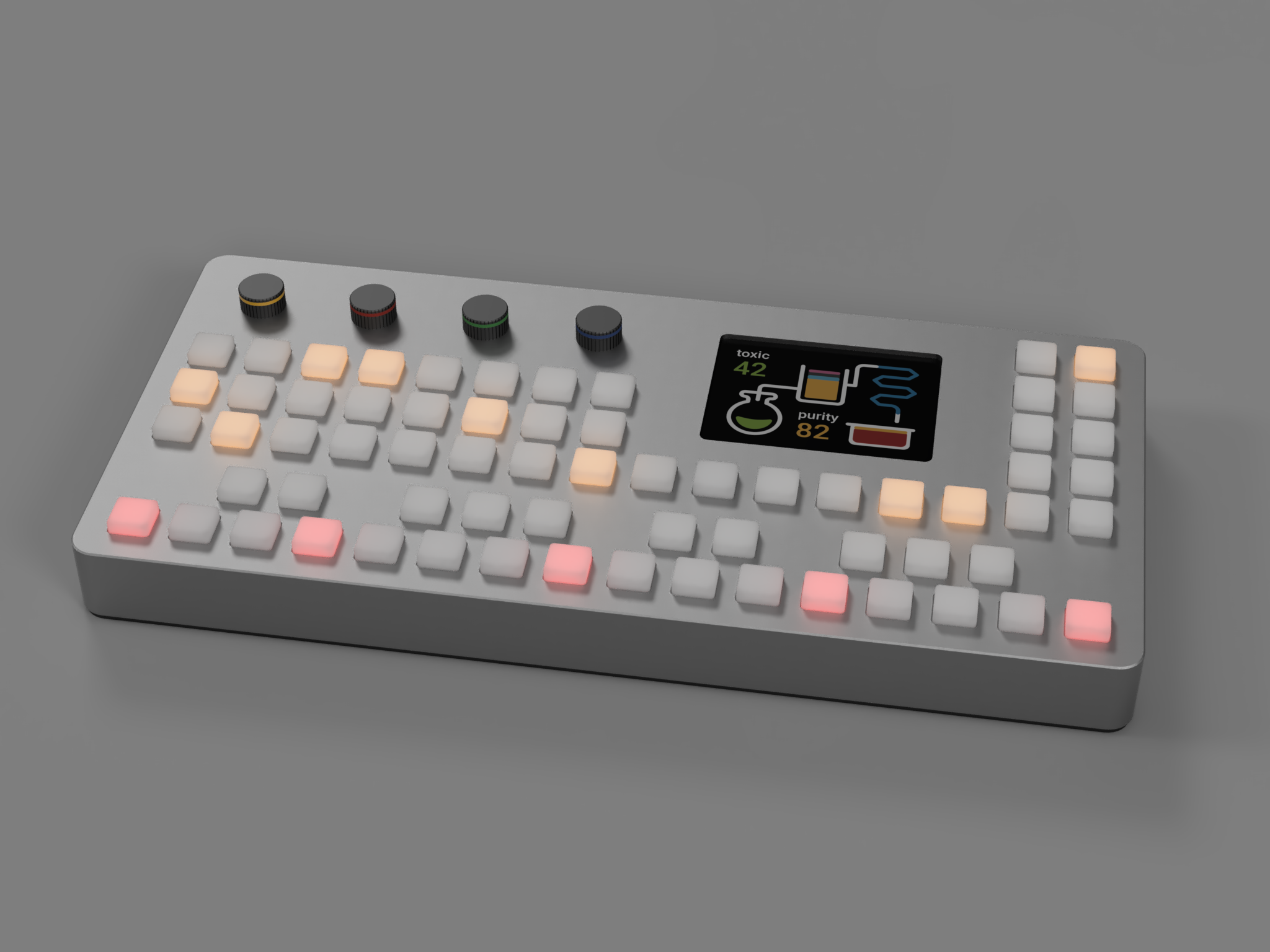 10x10 silicone buttons with led backlight
Main features
those specs refer to the tactile buttons version, but a led backlight button version is in the works too.
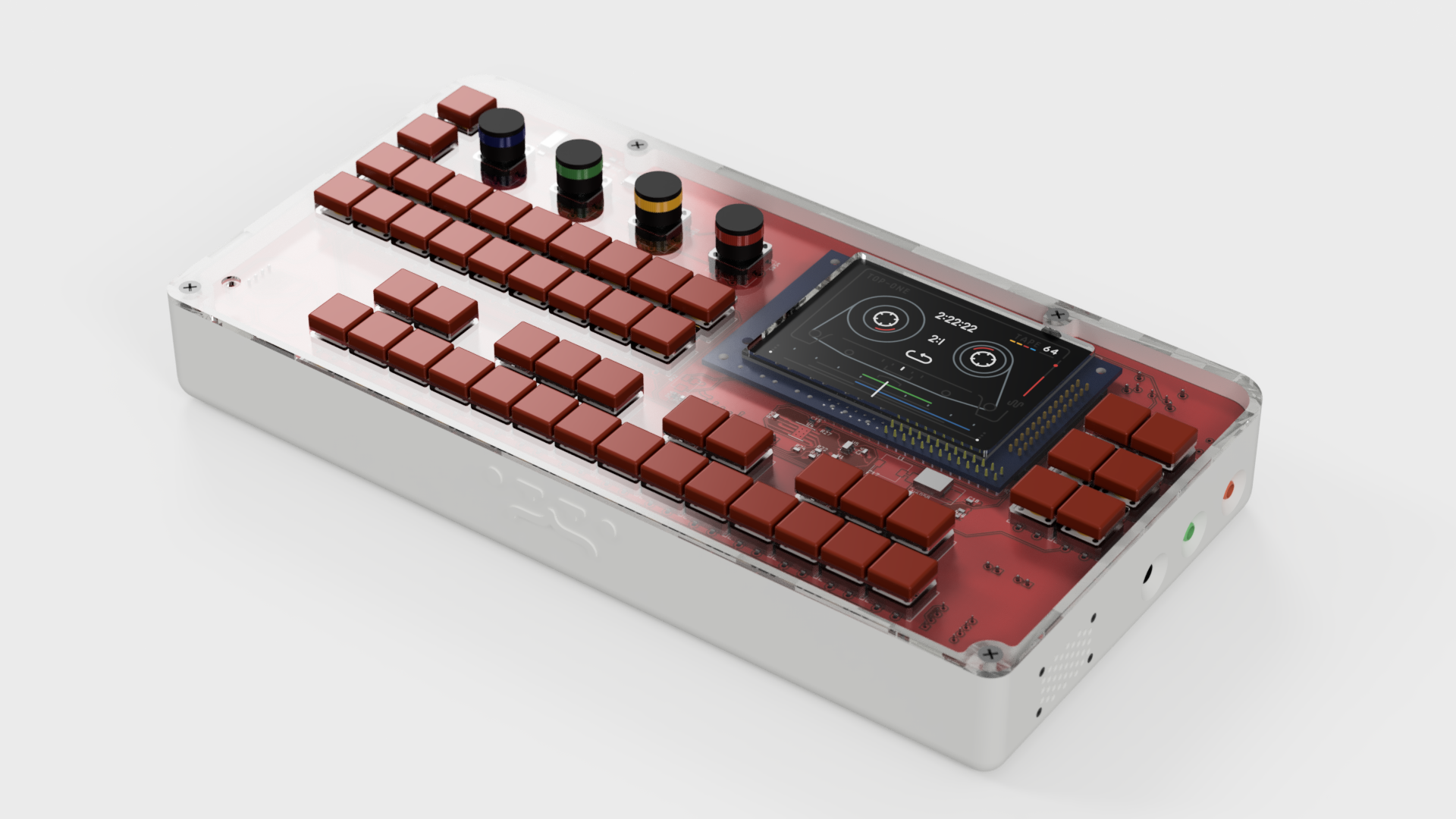 one of the first design iteration
| Qty | Value | Footprint | References |
|---|---|---|---|
| 8 | 2.2uf | Capacitor_SMD:C_0805_2012Metric | C1, C6, C7, C9, C12, C14, C15, C16 |
| 6 | 0.1uf | Capacitor_SMD:C_0805_2012Metric | C2, C3, C4, C5, C8, C10 |
| 3 | 1K | Resistor_SMD:R_0805_2012Metric | R4, R5, R6 |
| 2 | 0.1uf | Capacitor_Tantalum_SMD:CP_EIA-2012-12_Kemet-R | C18, C19 |
| 2 | 100K | Resistor_SMD:R_0805_2012Metric | R7, R8 |
| 2 | 10K | Resistor_SMD:R_0805_2012Metric | R9, R10 |
| 2 | 220uf | Capacitor_SMD:CP_Elec_5x4.5 | C11, C13 |
| 1 | 1uf | Capacitor_Tantalum_SMD:CP_EIA-3216-18_Kemet-A | C17 |
| 1 | 2.2K | Resistor_SMD:R_0805_2012Metric | R3 |
| 1 | 600 | Fuse:Fuse_0805_2012Metric | L1 |
| 1 | AMS1117-3.3 | Package_TO_SOT_SMD:SOT-223-3_TabPin2 | U1 |
| 1 | Audio_IN | Connector_Audio:PJ-237-6A | J2 |
| 1 | Audio_OUT | Connector_Audio:PJ-237-6A | J3 |
| 1 | Conn_01x10 | Connector_PinHeader_2.54mm:PinHeader_1x10_P2.54mm_Vertical | J1 |
| 1 | LM4860 | Package_SO:SOIC-16_3.9x9.9mm_P1.27mm | U3 |
| 1 | Microphone | Connector_PinHeader_2.54mm:PinHeader_1x02_P2.54mm_Vertical | MK1 |
| 1 | SGTL5000 | Sensor_Audio:QFN-32-NXP-SGTL5000 | U2 |
| 1 | SJ1-42536-SMT | Connector_Audio:PJ-393-7A | J4 |
| 1 | Speaker | Connector_JST:JST_XH_B02B-XH-A_1x02_P2.50mm_Vertical | J5 |
| 1 | XO32 | Oscillator:Oscillator_SMD_Abracon_ASV-4Pin_7.0x5.1mm | X1 |
The 38 most common of 42 parts.
cester-ino/OTTO-hardware
those specs refer to the tactile buttons version, but a led backlight button version is in the works too.

cester-ino/OTTO-hardware
those specs refer to the tactile buttons version, but a led backlight button version is in the works too.

cester-ino/OTTO-hardware
those specs refer to the tactile buttons version, but a led backlight button version is in the works too.


pascallanger/DIY-Multiprotocol-TX-Module
Multiprotocol TX Module (or MULTI-Module) is a 2.4GHz transmitter module which controls many different receivers and models.

fossasia/pslab-hardware
PSLab Hardware Design and Schematics https://pslab.io


MaltWhiskey/Mega-Cube
16x16x16 PL9823 Cube with Teensy 4.0 and FlexIO driver


It measures 38.8 × 66.6 mm and has 2 copper layers, 1.6 mm thick.
42 parts, built around the LM4860M, AMS1117-3.3 and SJ1-42536-SMT-TR. The full list of its parts is on this page, with links to each part's symbol and footprint where PCBKit's library has them.
From the cester-ino/OTTO-hardware repository on GitHub, at the commit this page was made from: the board is OTTO-dac/OTTOdac.kicad_pcb. PCBKit opens the board in the browser, with nothing to install.
Its repository publishes it under the GPL-3.0 licence: you may reuse it on that licence's terms (keep the author's notice, and for a copyleft licence share your changes alike).