
2 layers85.6 × 54 mm
PNCATEHO Welcome
aroum/PNCATEHO
РИСАТЕНО (RISATENO) is a 10 key chord keyboard.
60 parts65CERN-OHL-P-2.0

 aroum/PNCATEHO65
РИСАТЕНО (RISATENO) is a 10 key chord keyboard.
PNCATEHO MK DOSE 100x100 is an open-source printed circuit board by aroum, from the aroum/PNCATEHO repository on GitHub, published under the CERN-OHL-P-2.0 licence. It is a 2-layer board of 95 × 97 mm with 86 parts on 54 nets, routed with 1,194 tracks and 192 vias.
It is built around the 1N4148W. Its parts include 46 diodes, 20 switches, 6 resistors, 2 ICs and 2 connectors. It belongs with the keyboards and input boards and the AVR (ATmega, ATtiny) boards of this library.



Firmware | Gerber | About socket
РИСАТЕНО (RISATENO) - created as a rethinking of ARTSEY for the Russian language. 10 keys, two for each finger. The name is made up of letters on the main layer. The letters on the base layer are selected according to the. The original idea was to create a compact keyboard for chord typing, but it can also be used as a macro pad. When using two halves of РИСАТЕНО connected via Bluetooth, you can use the Kladenets layout. But over time, PNCATEHO became something more. It is a synthesizer, a sampler, a MIDI keyboard, and a vast playground for your other experiments.
Eras are a way to classify different versions of a project. The Stone Era reflects original ideas. The Glass Era reflects the community's desires and experiments with new switches. The Light Era illuminates the vision of the creators who use this project as a platform for professional growth and attempt what others were afraid to do.
| Name | Alt Name | Era | Swtiches | Hot-swap | LED | Wireless | MCU |
|---|---|---|---|---|---|---|---|
| V4 | - | Stone | Choc V1 | ❌ | Per-key | Optional | proMicro like |
| V5 | - | Glass | Choc V1/V2 | ✅ | Per-key | Optional | proMicro like |
| MK_Dose | Dozateno | Glass | MK Dose/MX | ✅ | 3 Led indication | Optional | proMicro like |
| Welcome | Nizkoteno | Light | PG1316S | ❌ | Per-key | ❌ | rp2040 |
The standard version of PNCATEHO from the Stone era. Supports per-key backlighting, the option to use a wireless controller with an external power switch and reset button, and an open case. It does not support hot-swapping switches and only supports Choc V1. more about stone
[!WARNING]
In version 0.3 of the board there is a bug with the backlight on the right-hand half.
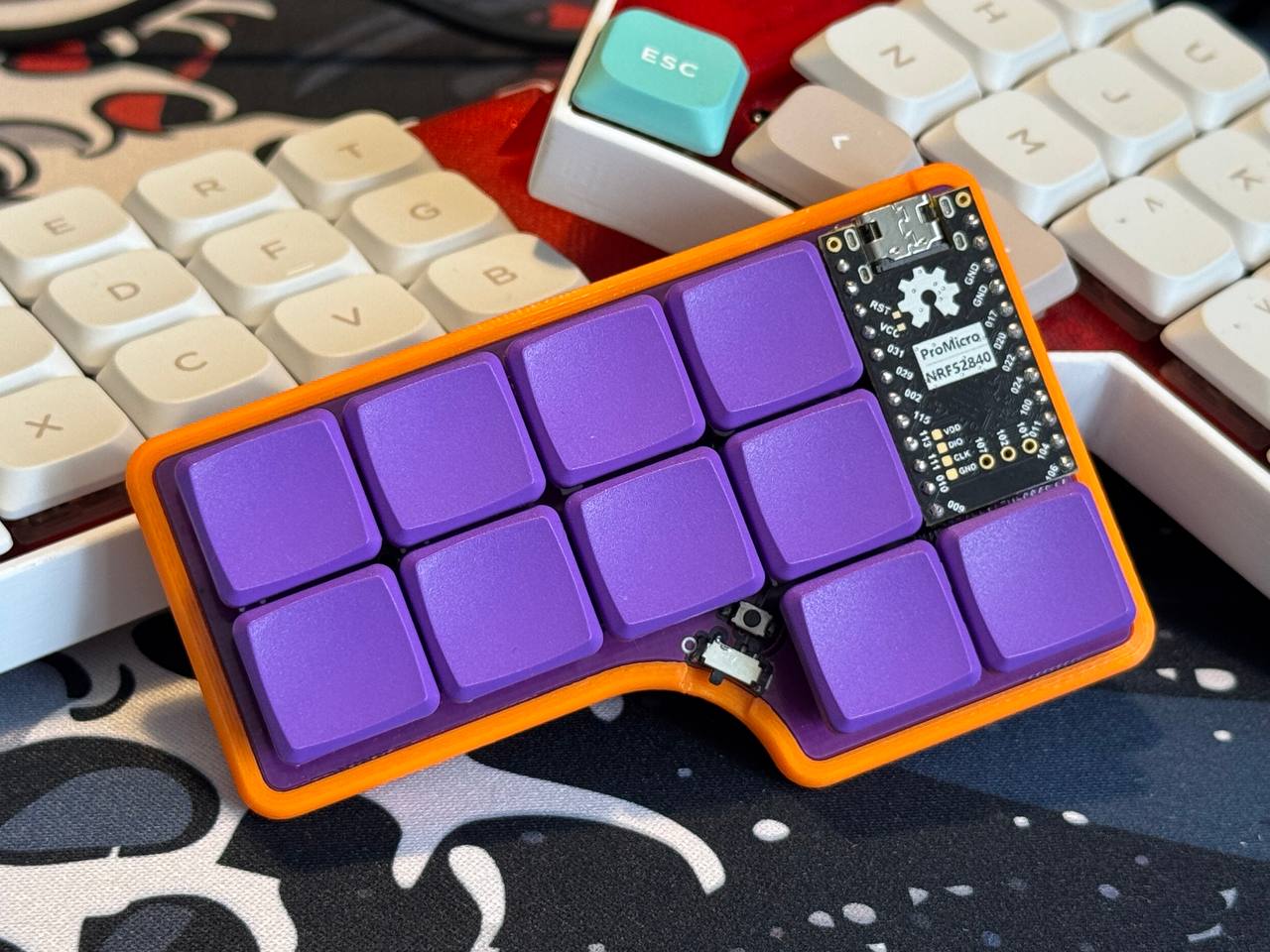
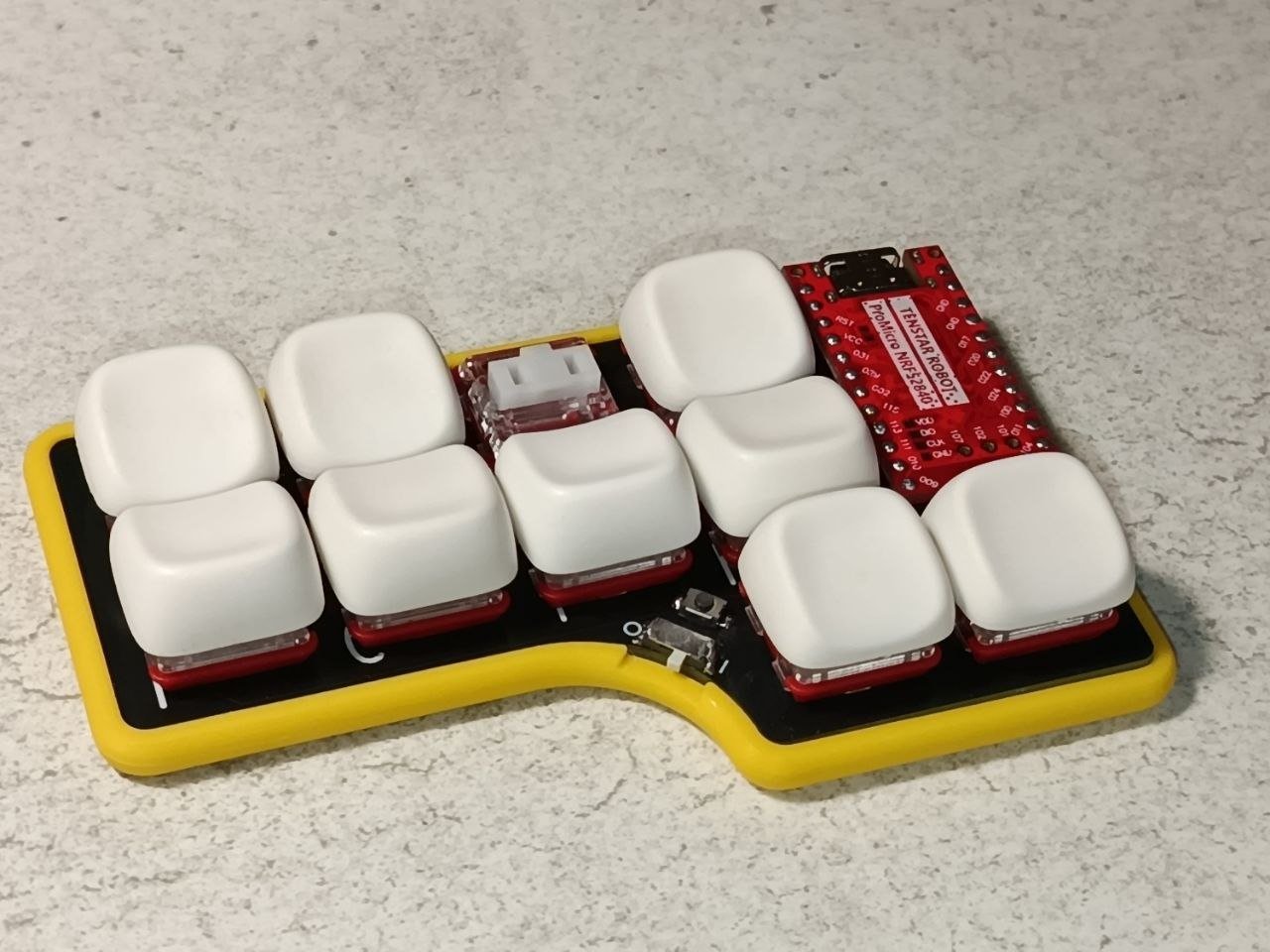
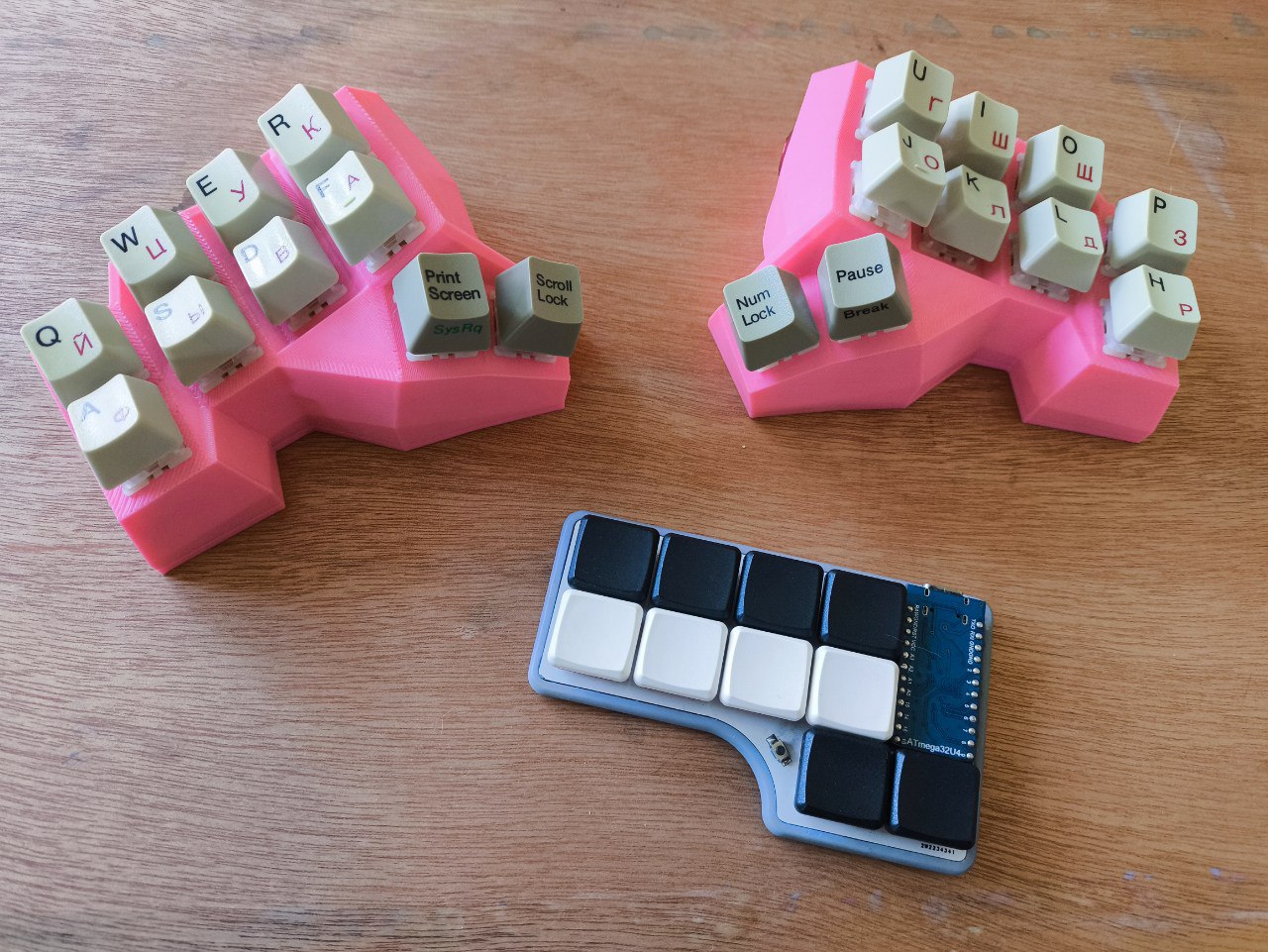
The modern era of PNCATEHO development. It differs from the Stone era in that it supports hot-swappable keys and ChocV1/V2, MK Dose, and MX switches. It also uses closed cases and a new design approach by turtle_bazon. more about Glass
[!TIP] If you want to build a PNCATEHO with MX switches, you can use the PCB from MK Dose.
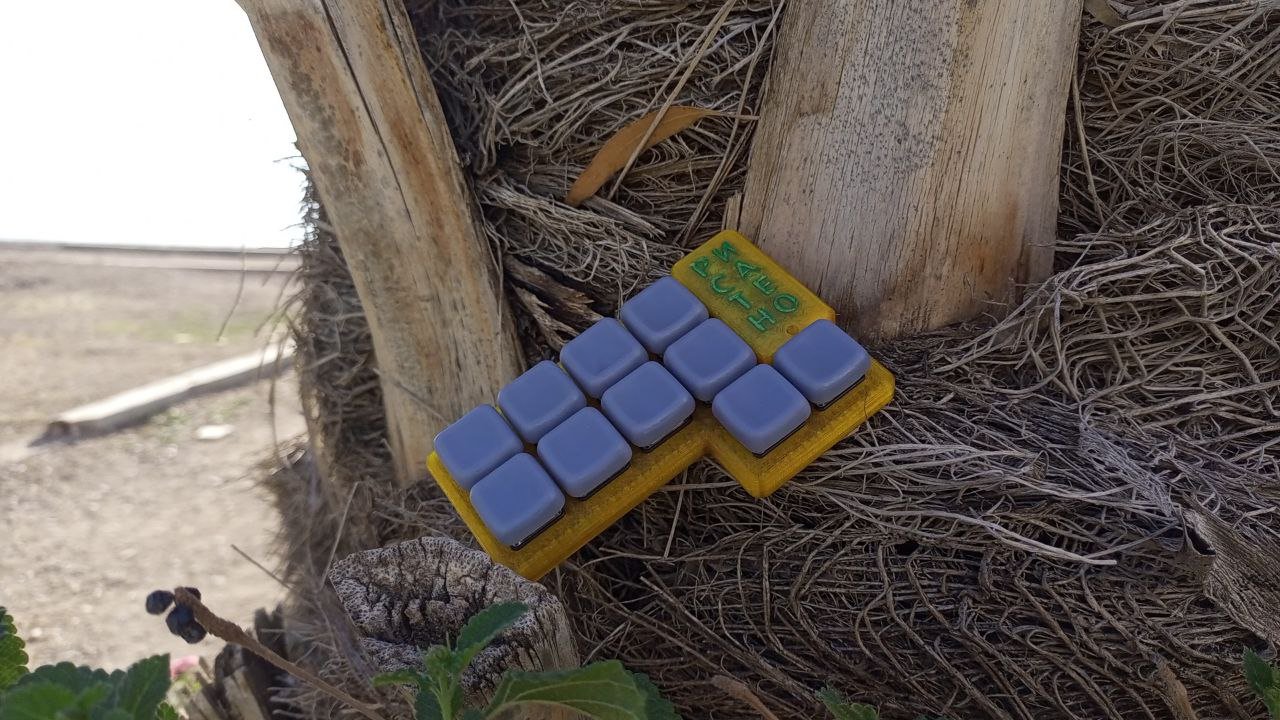
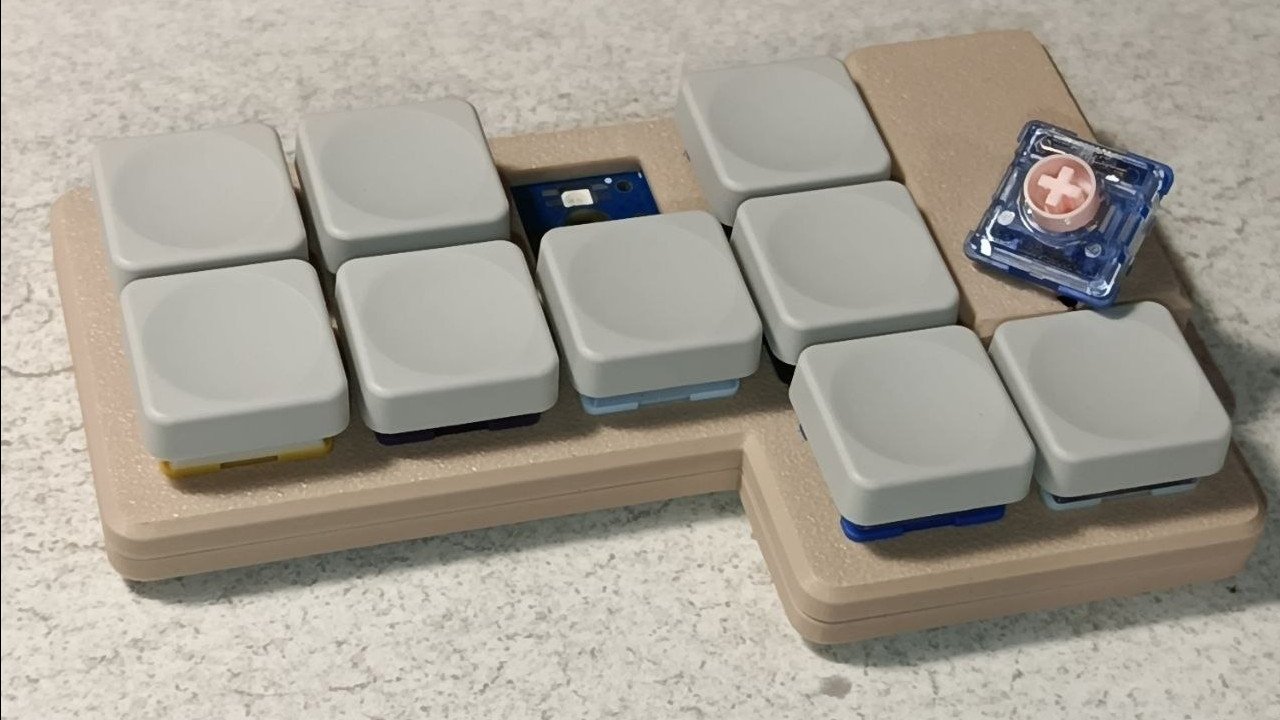
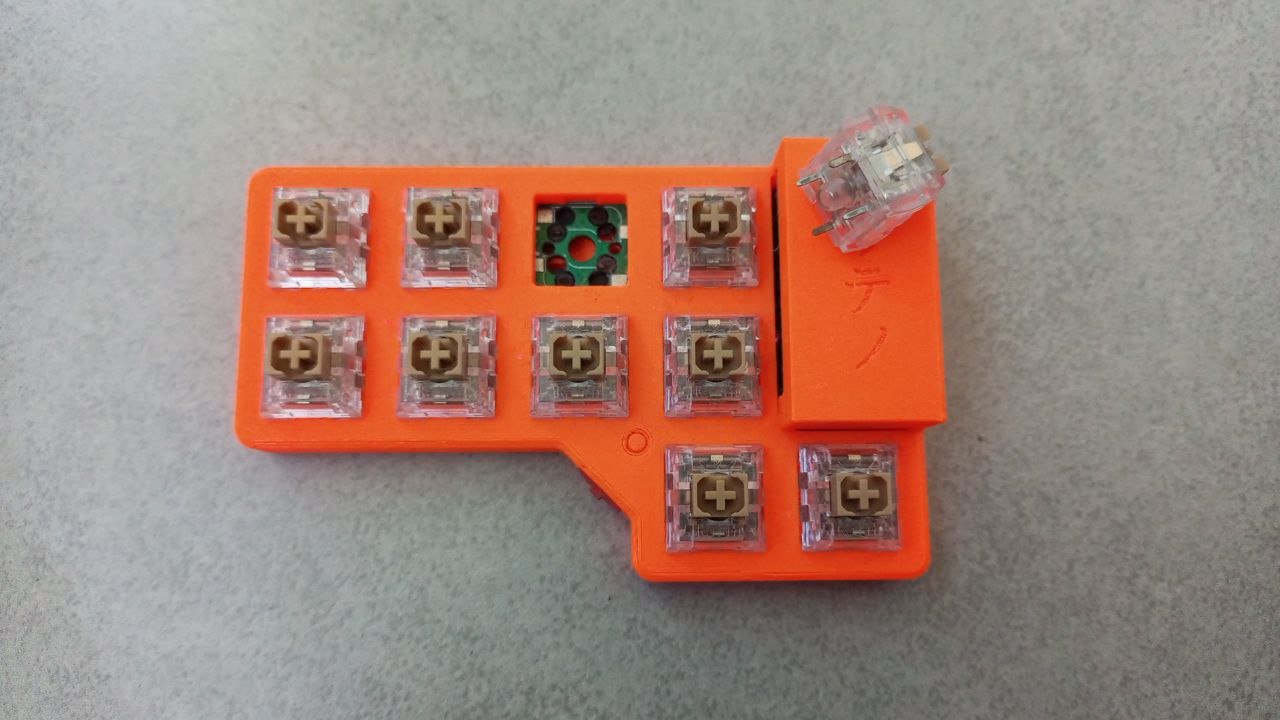
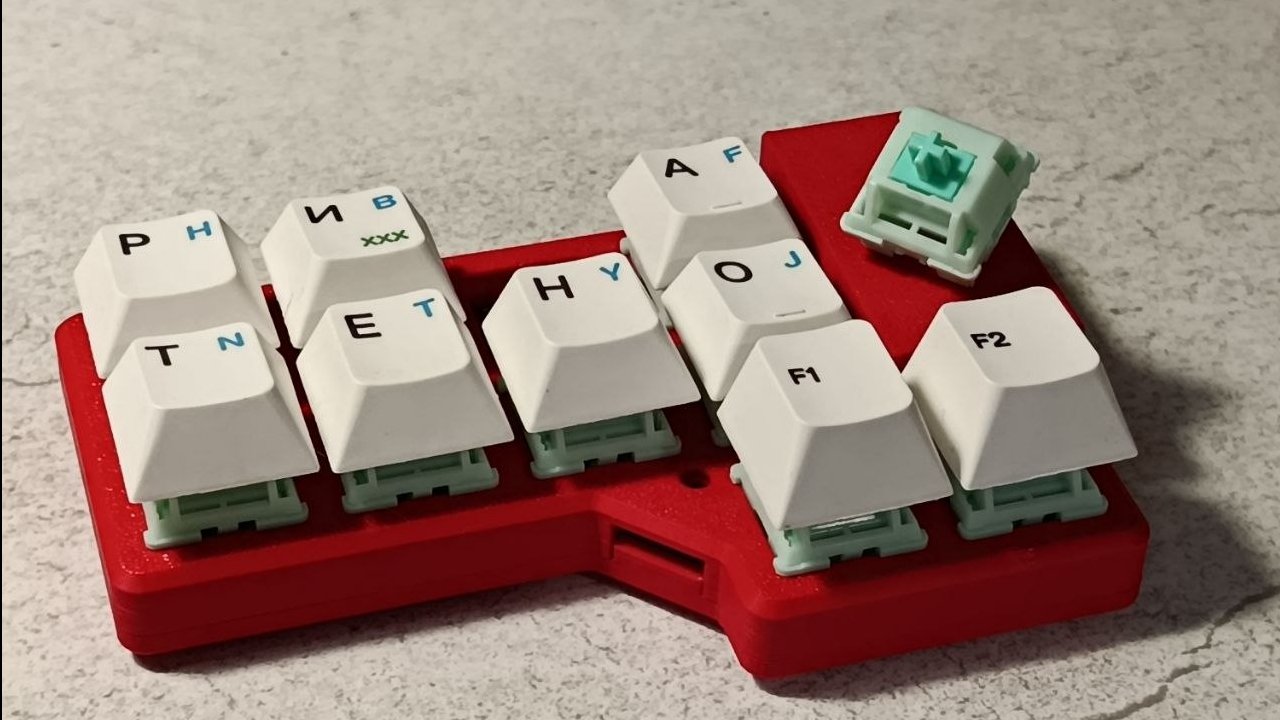
This is an era where the controller is soldered directly onto the PCB, exploring various form factors such as, for example, a PNCATEHO the size of a card. A project can become a flashlight, a development board, or even a portable gaming console. It all depends on the imagination of the community. The main contribution to this era has been made by the authors of the inpudiy community. more about light
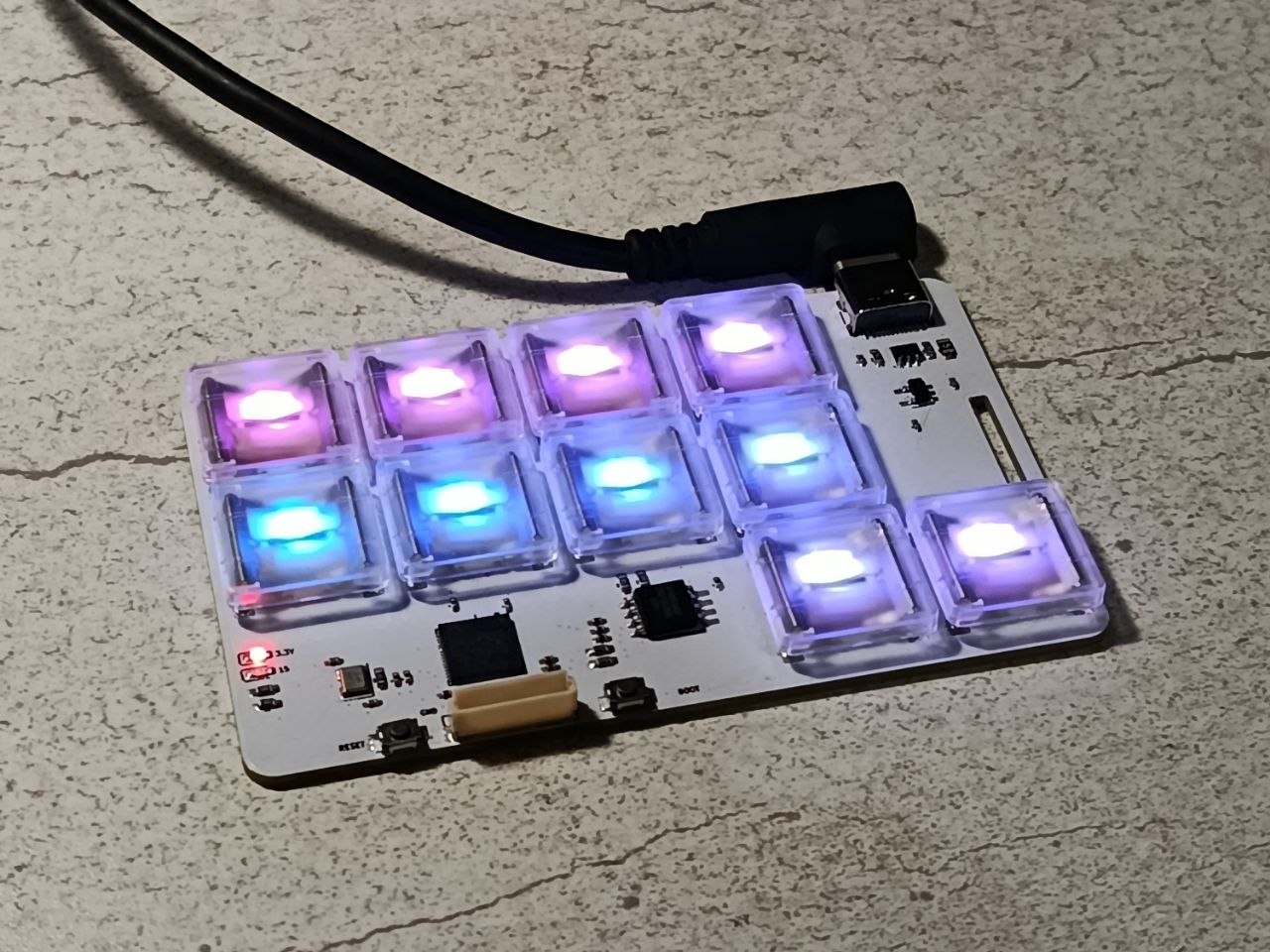
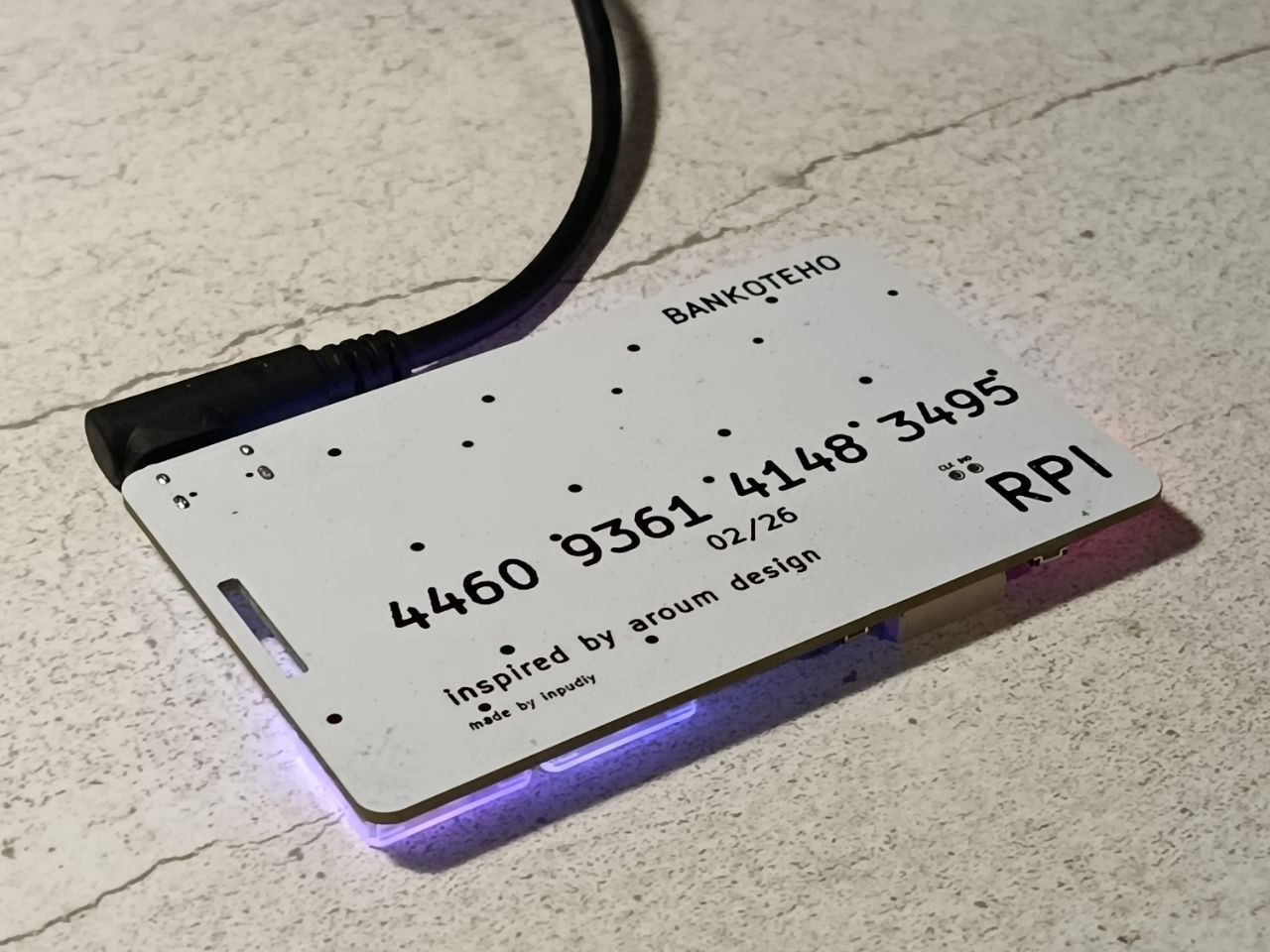
First and foremost, PNCATEHO is a fun project. It shouldn't be treated as an everyday keyboard—it’s more of a novelty, like a fridge magnet. That said, some people actually try to apply PNCATEHO's concepts to their daily-driver keyboards.
In many ways, the project served as a testing ground for experimenting with chording and exploring just how far you can minimize the number of keys. Of course, nothing stops you from using PNCATEHO as a macropad. There are also firmwares available to turn PNCATEHO into a sampler, synthesizer, or MIDI keyboard.
I wanted to design a layout that was simple and intuitive, yet still capable of acting as a near-full replacement for a standard keyboard. Unlike ARTSEY, I don’t use chords that require pressing more than two keys simultaneously. I also designed the layout based on letter frequency rather than just picking pleasant-sounding combinations. On top of that, I added two thumb keys—it felt odd to allocate two keys for every other finger while leaving the thumbs with nothing.
PNCATEHO is a loose transliteration of the Russian word "РИСАТЕНО" (RISATENO) into the Latin alphabet. The layout was designed based on letter frequency (Wikipedia), where the first eight letters are four vowels ('И', 'А', 'Е', 'О') and four consonants ('Р', 'С', 'Т', 'Н'). To create a pronounceable name, they can be grouped into syllables: reading them one way gives RISATENO, and the other way gives NOTESARI (options like "ONETASIR" were discarded as awkward-sounding). The second option felt a bit too "samurai," so I went with the first.
As a nice bonus, if you set aside the Cyrillic letter "И", the name transliterates perfectly into the Latin alphabet, and the letter "N" works great as a visual substitute for "И".
PNCATEHO was never meant to be an everyday keyboard—aesthetics take priority over ergonomics here, and in my opinion, ortholinear layouts look much cleaner. Besides, when you only have two keys per finger, column-staggering doesn't really make much of a difference anyway.
Letter by letter, “dancing” your fingers to form chords. I tried to distribute chords by ease of pressing, so that the most common symbols use the simplest and most comfortable combinations. With some effort, you can learn all the common chords in a couple of days and, although slowly, fully type using just 10 keys with one hand.
It’s quite an unusual experience, especially if you’ve never used chords before. I strongly recommend printing the layout (GitHub) and opening any beginner touch-typing app — even if you already know how to type on a regular keyboard, this will be a completely new and unique experience that you’ll likely never need anywhere else.
No, steno works completely differently (example layout). It requires more keys and a different method. PNCATEHO, on the other hand, is letter-by-letter input based on frequency.
If you’re interested in steno, it’s worth starting with Plover.
| Qty | Value | Footprint | References |
|---|---|---|---|
| 40 | 1N4148W | PNCATEHO:D3_SMD | D1, D1, D10, D10, D11, D11, D12, D12, D13, D13, D14, D14, D15, D15, D16, D16 +24 |
| 20 | ~ | PNCATEHO:MK-DOSE | SW1, SW1, SW2, SW2, SW3, SW3, SW4, SW4, SW5, SW5, SW6, SW6, SW7, SW7, SW10, SW10 +4 |
| 6 | Hole | PNCATEHO:Hole | H1, H1, H2, H2, H3, H3 |
| 6 | LED | PNCATEHO:0603-led_dual | D21, D21, D22, D22, D23, D23 |
| 6 | R | PNCATEHO:0603-resistor_dual | R1, R1, R2, R2, R3, R3 |
| 2 | ProMicro_r | PNCATEHO:ProMicro_duplex_mirrored | U1, U1 |
| 2 | SW_PUSH | PNCATEHO:SW_3x4x2_2legs_duplex | RSW1, RSW1 |
| 2 | TestPoint_2Pole | PNCATEHO:battery_conn_duplex | J1, J1 |
| 2 | ~ | PNCATEHO:bsi10h | PSW1, PSW1 |
aroum/PNCATEHO
РИСАТЕНО (RISATENO) is a 10 key chord keyboard.

aroum/PNCATEHO
РИСАТЕНО (RISATENO) is a 10 key chord keyboard.

aroum/PNCATEHO
РИСАТЕНО (RISATENO) is a 10 key chord keyboard.


fossasia/pslab-hardware
PSLab Hardware Design and Schematics https://pslab.io

pierrechevalier83/ferris
A low profile split keyboard designed to satisfy one single use case elegantly


MickiusMousius/Rolio46Keyboard
A split wireless keyboard based on the Corne and Sofle


sadekbaroudi/bgkeeb
This is a reversible 100mm x 100mm pcb with support for mx or choc switches (no hotswap), per key led, rotary encoders, and exposes the SDA/SCL/GND/VCC lines in the form of the pimoroni trackball pins (meaning you can…

It measures 95 × 97 mm and has 2 copper layers, 1.6 mm thick.
86 parts, built around the 1N4148W. The full list of its parts is on this page, with links to each part's symbol and footprint where PCBKit's library has them.
From the aroum/PNCATEHO repository on GitHub, at the commit this page was made from: the board is glass/pcb/PNCATEHO_MK_DOSE/PNCATEHO_MK_DOSE_100x100.kicad_pcb and its schematic glass/pcb/PNCATEHO_MK_DOSE/PNCATEHO_MK_DOSE.kicad_sch. PCBKit opens the board in the browser, with nothing to install.
Its repository publishes it under the CERN-OHL-P-2.0 licence: you may reuse it on that licence's terms (keep the author's notice, and for a copyleft licence share your changes alike).