2 layers40 × 30 mm
Selftest
LimesKey/parsnip-node
A portable LoRa communicator. Custom 4-layer PCB (ESP32-S3 + E22P-915M30S LoRa + NEO-M9N GNSS), designed in KiCad for 915 MHz.
20 parts6
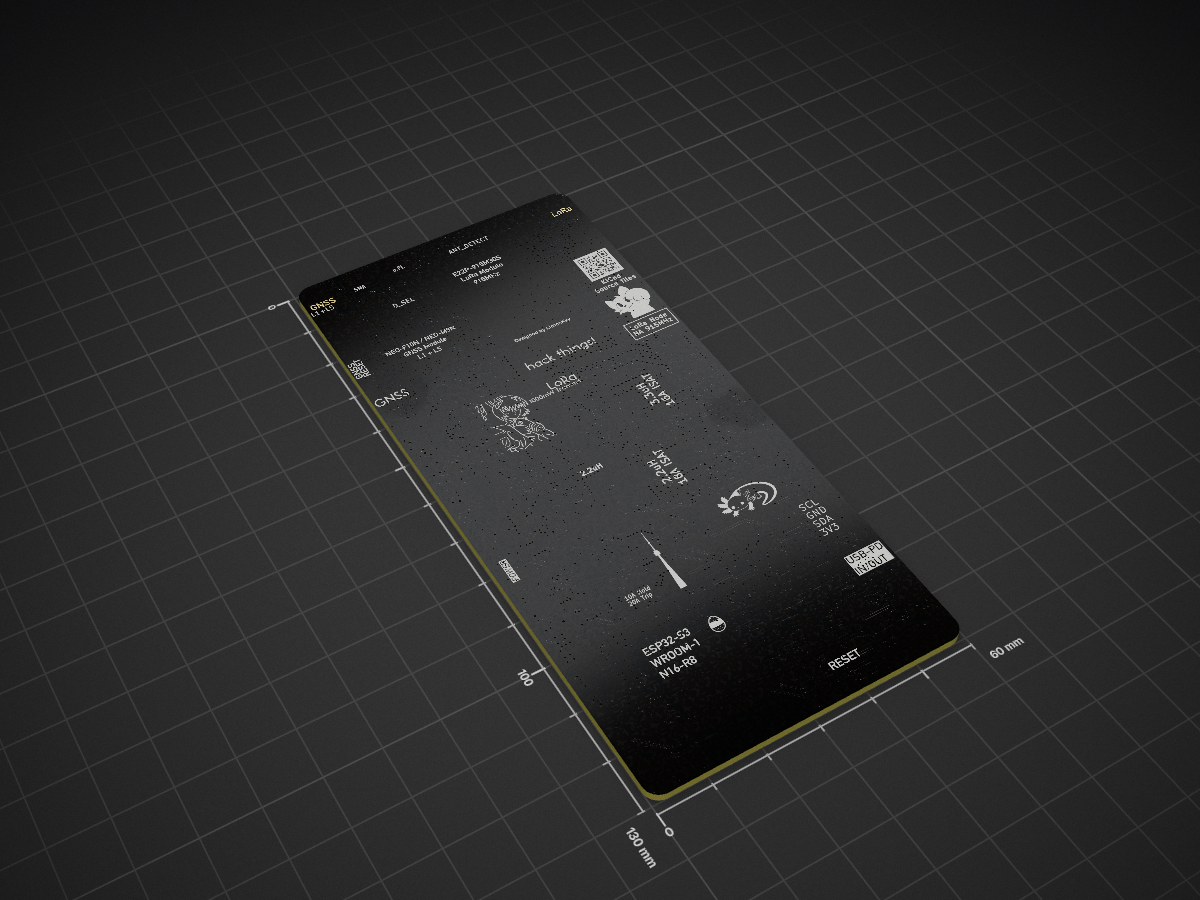
 LimesKey/parsnip-node6
A portable LoRa communicator. Custom 4-layer PCB (ESP32-S3 + E22P-915M30S LoRa + NEO-M9N GNSS), designed in KiCad for 915 MHz.
Parsnip is an open-source printed circuit board by LimesKey, from the LimesKey/parsnip-node repository on GitHub. It is a 4-layer board of 60 × 130 mm with 481 parts on 291 nets, routed with 4,323 tracks and 2,112 vias.
It is built around the 0900LP15B0063001E, LM61460AASQRJRRQ1 and WS2816B, with the HGC1206R7106K500NSPJ, TCC0603X5R106M350CT and TCC0402X7R105K250AT among its other parts. Its parts include 173 capacitors, 109 resistors, 18 diodes, 12 transistors and 6 ICs. It belongs with the radio and wireless boards and the ESP32 boards of this library.


A battery-powered, portable Meshtastic/Meshcore node built around the ESP32-S3, an Ebyte E22P-915M30S LoRa front end, and a u-blox NEO-M9N GNSS receiver. Designed in KiCad, it targets 915 MHz operation in Canada under ISED RSS-247.
The goal is a self-contained LoRa node that pairs one of the longest range, best value LoRa modules, with an accurate GNSS reciever, running off two 21700 cells in series, to connect to other people on the LoRa mesh network community.

GNSS / active antenna |

LoRa front end |

Power rails |

Charger / BMS |

USB-C / PD |

Peripherals |
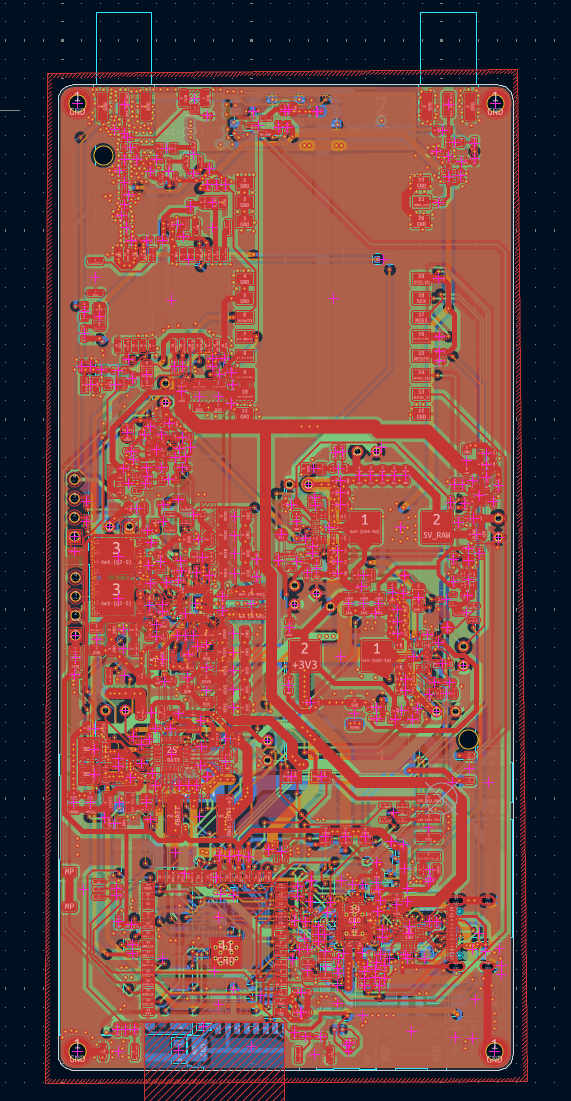
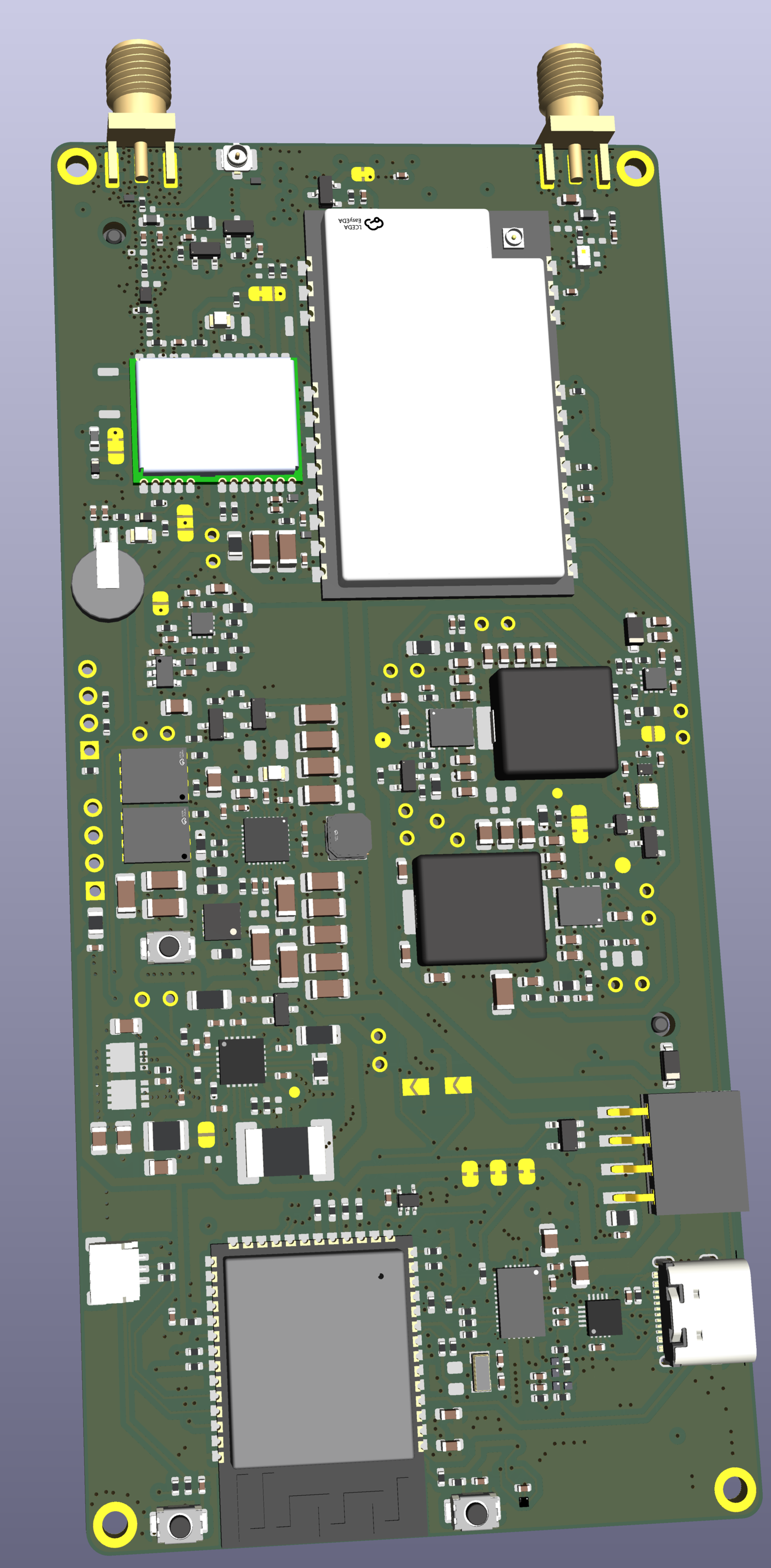
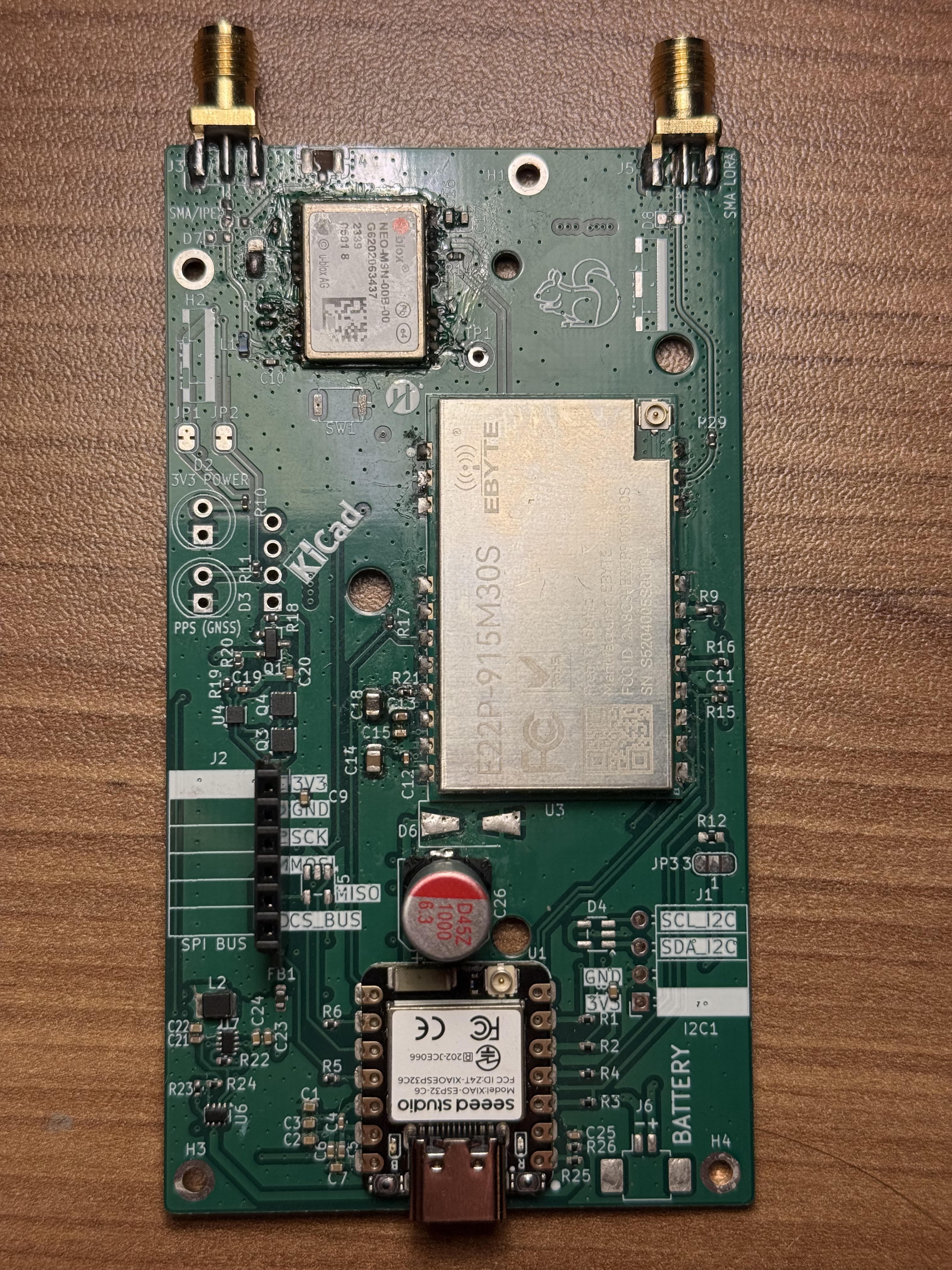
Assembled board |
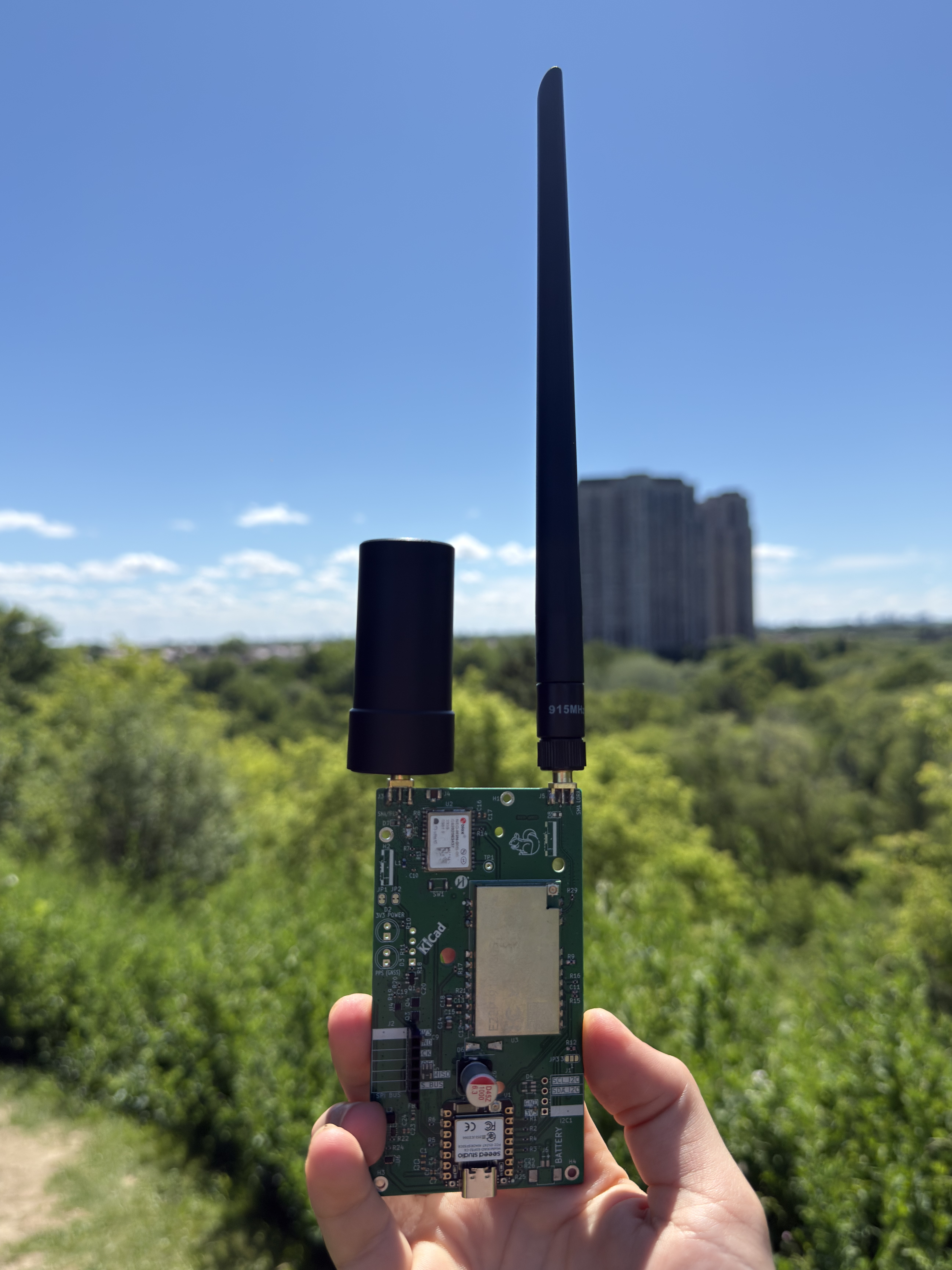
Outdoor testing |
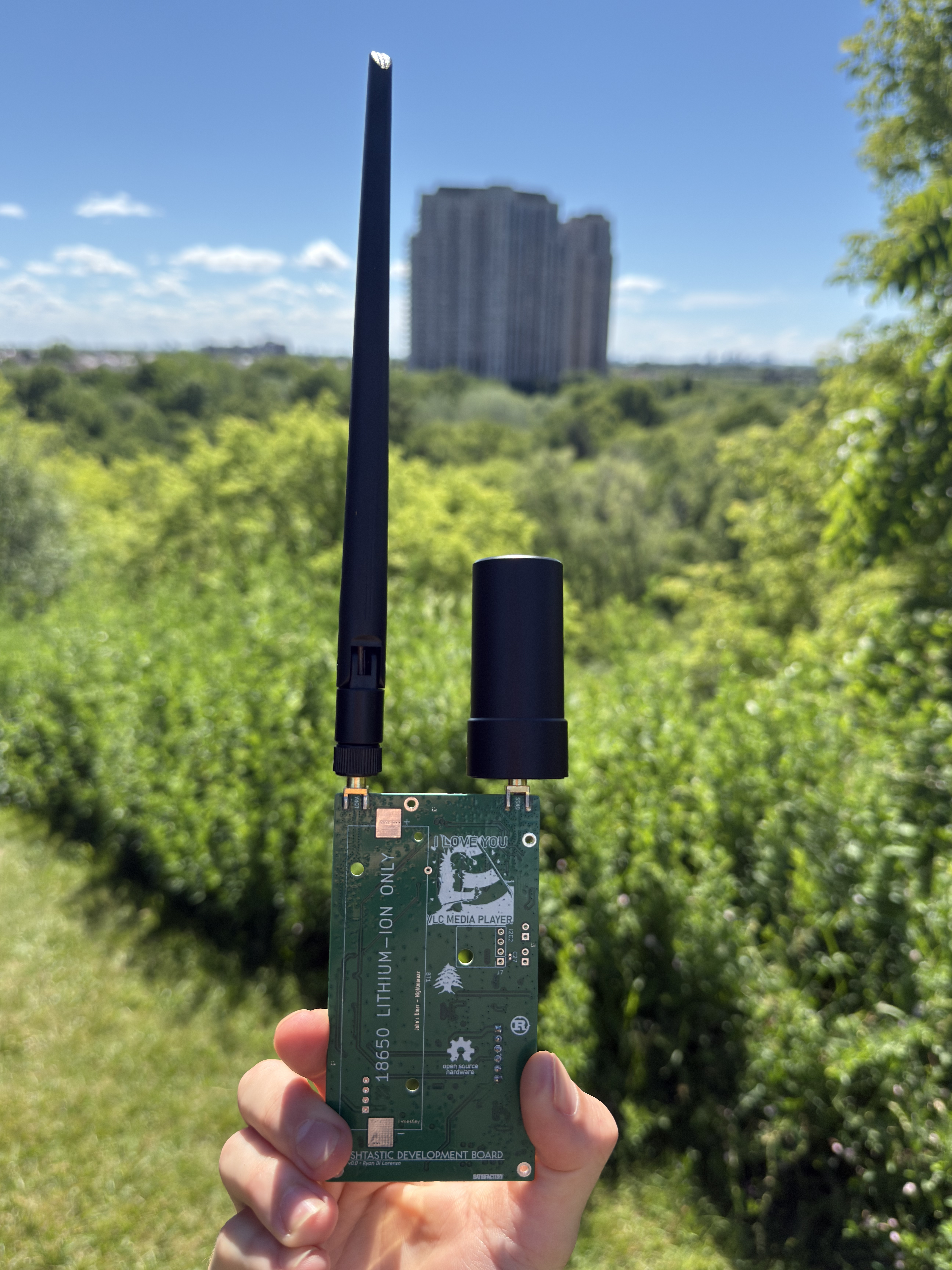
Outdoor testing, back |
| Part | Price |
|---|---|
| JLCPCB PCB w/ Assembly (to-be changed BOM) | $1098.04 CAD (est) |
| 21700 Cells 18650batterystore.com | $40 CAD |
| 3.7" E-Ink AliExpress | 24$ CAD |
JLC04161H-7628 stackup, 2 oz copper outer, 2 oz copper innerHost: ESP32-S3-WROOM-1-N16R8 (U1). GPIO numbers are ESP32-S3 GPIO, not module pins.
| Signal | GPIO |
|---|---|
| NSS | 10 |
| SCK | 12 |
| MOSI | 11 |
| MISO | 13 |
| BUSY | 14 |
| DIO1 | 4 |
| NRST | 40 |
| EN | 41 |
| Signal | GPIO |
|---|---|
| TXD | 1 |
| RXD | 2 |
| TIMEPULSE | 3 |
| EXTINT | 48 |
| SDA | 8 |
| SCL | 9 |
| Function | GPIO |
|---|---|
| I2C SDA | 8 |
| I2C SCL | 9 |
| I2C IRQ | 7 |
| E-Ink BUSY | 5 |
| E-Ink RESET | 6 |
| E-Ink D/C | 18 |
| E-Ink CS | 17 |
| Bus CS | 38 |
| USB D- / D+ | 19 / 20 |
| UART0 TX / RX | 43 / 44 |
| RTC 32 kHz xtal | 15 / 16 |
| BOOT | 0 |
| eFuse PG | 39 / 42 |
| EMI osc gate | 47 |
| Level shifter | 46 |
| Load switch | 21 |
| PSRAM (reserved) | 35 / 36 / 37 |
| VDD_SPI (reserved) | 45 |
Firmware is a Meshtastic fork tracked as the firmware submodule (LimesKey/firmware). Development uses VS Code with the pioarduino extension, which Meshtastic pins for ESP32-C6 / Arduino-ESP32 3.x support. A device variant declares the pin map above and the PA control lines so TX actually keys up. Unfortunately there are some extensive changes to the Meshtastic firmware in order to incorporate a SPI GNSS module, as this is not natively supported by Meshtastic.
git clone --recurse-submodules https://github.com/LimesKey/parsnip-node.git| Qty | Value | Footprint | References |
|---|---|---|---|
| 24 | 10uF | Capacitor_SMD:C_1206_3216Metric | C26, C27, C28, C29, C30, C32, C34, C35, C57, C59, C60, C63, C65, C71, C73, C74 +8 |
| 24 | 10uF | Capacitor_SMD:C_0603_1608Metric | C10, C11, C12, C16, C110, C122, C123, C124, C126, C127, C128, C137, C141, C143, C156, C168 +8 |
| 23 | 1uF | Capacitor_SMD:C_0402_1005Metric | C17, C18, C20, C25, C117, C118, C138, C140, C142, C163, C164, C176, C178, C179, C180, C182 +7 |
| 18 | 100nF | Capacitor_SMD:C_0402_1005Metric | C5, C19, C24, C49, C50, C51, C54, C61, C64, C66, C72, C116, C121, C131, C136, C184 +2 |
| 15 | 0 | Resistor_SMD:R_0402_1005Metric | R5, R6, R12, R13, R14, R15, R18, R19, R32, R33, R34, R69, R73, R93, R134 |
| 15 | 10k | Resistor_SMD:R_0402_1005Metric | R7, R9, R35, R38, R46, R67, R71, R76, R92, R94, R101, R113, R119, R132, R135 |
| 14 | 100k | Resistor_SMD:R_0402_1005Metric | R27, R28, R30, R56, R79, R86, R91, R96, R105, R106, R108, R130, R131, R136 |
| 11 | 2.2uF | Capacitor_SMD:C_0402_1005Metric | C1, C2, C3, C4, C8, C9, C13, C104, C181, C183, C193 |
| 10 | 10uF | Capacitor_SMD:C_0805_2012Metric | C14, C38, C40, C42, C44, C48, C67, C68, C69, C70 |
| 8 | 10nF | Capacitor_SMD:C_0402_1005Metric | C21, C22, C23, C47, C98, C105, C132, C134 |
| 8 | 10uF | Capacitor_SMD:C_0402_1005Metric | C99, C100, C102, C103, C106, C107, C111, C130 |
| 8 | 22uF | Capacitor_SMD:C_0603_1608Metric | C155, C157, C165, C166, C167, C170, C171, C186 |
| 6 | 1k | Resistor_SMD:R_0402_1005Metric | R43, R45, R50, R53, R78, R99 |
| 6 | 33 | Resistor_SMD:R_0402_1005Metric_Pad0.72x0.64mm_HandSolder | R1, R2, R3, R4, R23, R60 |
| 6 | ESDS314DBVR | Package_TO_SOT_SMD:SOT-23-5 | D1, D2, D3, D26, D28, D29 |
| 6 | Fiducial | Fiducial:Fiducial_1mm_Mask2mm | FID1, FID2, FID3, FID4, FID5, FID6 |
| 5 | 100 | Resistor_SMD:R_0402_1005Metric | R44, R48, R59, R63, R103 |
| 5 | 10k | Resistor_SMD:R_0603_1608Metric | TH1, TH2, TH3, TH4, TH5 |
| 5 | 10k | Resistor_SMD:R_0402_1005Metric_Pad0.72x0.64mm_HandSolder | R20, R24, R25, R26, R133 |
| 4 | 0.47uF | Capacitor_SMD:C_0402_1005Metric | C53, C55, C56, C58 |
| 4 | 2.2k | Resistor_SMD:R_0402_1005Metric_Pad0.72x0.64mm_HandSolder | R21, R22, R68, R72 |
| 4 | 2.2nF | Capacitor_SMD:C_0402_1005Metric | C108, C109, C161, C162 |
| 4 | 2.2uF | Capacitor_SMD:C_0603_1608Metric | C125, C129, C135, C145 |
| 4 | 402k | Resistor_SMD:R_0603_1608Metric | R104, R107, R115, R121 |
| 4 | MountingHole_Pad | MountingHole:MountingHole_2.2mm_M2_DIN965_Pad | H1, H2, H3, H4 |
| 3 | 1M | Resistor_SMD:R_0402_1005Metric | R29, R31, R102 |
| 3 | 1nF | Capacitor_SMD:C_0402_1005Metric | C112, C159, C160 |
| 3 | 22 | Resistor_SMD:R_0402_1005Metric | R16, R17, R98 |
| 3 | 22uF | Capacitor_SMD:C_0805_2012Metric | C144, C147, C185 |
| 3 | 47nF | Capacitor_SMD:C_0402_1005Metric | C75, C76, C77 |
| 2 | 0 | Resistor_SMD:R_0402_1005Metric_Pad0.72x0.64mm_HandSolder | R75, R95 |
| 2 | 10 | Resistor_SMD:R_0402_1005Metric | R42, R120 |
| 2 | 100 | Resistor_SMD:R_0402_1005Metric_Pad0.72x0.64mm_HandSolder | R111, R117 |
| 2 | 10nF | Capacitor_SMD:C_0402_1005Metric_Pad0.74x0.62mm_HandSolder | C96, C97 |
| 2 | 150 | Resistor_SMD:R_1206_3216Metric | R39, R40 |
| 2 | 150 | Resistor_SMD:R_0402_1005Metric_Pad0.72x0.64mm_HandSolder | R80, R83 |
| 2 | 1A hold | Fuse:Fuse_0805_2012Metric | F1, F7 |
| 2 | 1N5819WS | Diode_SMD:D_SOD-323 | D4, D27 |
| 2 | 1k | Resistor_SMD:R_0402_1005Metric_Pad0.72x0.64mm_HandSolder | R123, R124 |
| 2 | 1pF | Capacitor_SMD:C_0402_1005Metric_Pad0.74x0.62mm_HandSolder | C113, C114 |
| 2 | 2 | Resistor_SMD:R_0402_1005Metric | R49, R62 |
| 2 | 2.2 | Resistor_SMD:R_0805_2012Metric | R112, R118 |
| 2 | 2.2 | Resistor_SMD:R_0402_1005Metric_Pad0.72x0.64mm_HandSolder | R64, R65 |
| 2 | 2.2k | Resistor_SMD:R_0402_1005Metric | R36, R37 |
| 2 | 2.2uF | Capacitor_SMD:C_0805_2012Metric | C62, C79 |
| 2 | 21700 Li-ion | easyeda2kicad:BAT-SMD_L82.5.5-W25-BH-21700-B1BJ001 | BT1, BT2 |
| 2 | 22 | Resistor_SMD:R_0402_1005Metric_Pad0.72x0.64mm_HandSolder | R10, R11 |
| 2 | 220pF | Capacitor_SMD:C_0402_1005Metric_Pad0.74x0.62mm_HandSolder | C133, C139 |
| 2 | 22uF | Capacitor_SMD:C_1206_3216Metric | C119, C120 |
| 2 | 294 | Resistor_SMD:R_0402_1005Metric | R57, R61 |
| 2 | 2N7002 | Package_TO_SOT_SMD:SOT-23 | Q14, Q15 |
| 2 | 330pF | Capacitor_SMD:C_0402_1005Metric | C33, C36 |
| 2 | 47pF | Capacitor_SMD:C_0402_1005Metric | C95, C115 |
| 2 | 5.1nH | Inductor_SMD:L_0402_1005Metric | L6, L7 |
| 2 | 5.6pF | Capacitor_SMD:C_0402_1005Metric_Pad0.74x0.62mm_HandSolder | C153, C158 |
| 2 | 6.04k | Resistor_SMD:R_0402_1005Metric_Pad0.72x0.64mm_HandSolder | R109, R110 |
| 2 | 7pF | Capacitor_SMD:C_0402_1005Metric | C6, C7 |
| 2 | AON7544 | easyeda2kicad:PQFN-8_L3.1-W3.1-P0.65-LS3.3-BL | Q5, Q6 |
| 2 | CSD15380F3 | Package_DFN_QFN:Texas_PicoStar_DFN-3_0.69x0.60mm | Q2, Q4 |
| 2 | CSD18512Q5B | Package_SON:VSONP-8-1EP_5x6_P1.27mm | Q7, Q8 |
| 2 | CSD23280F3 | Package_DFN_QFN:Texas_PicoStar_DFN-3_0.69x0.60mm | Q1, Q3 |
| 2 | ESD501 | Package_SON:Texas_DPY0002A_0.6x1mm_P0.65mm | D10, D13 |
| 2 | LM61460AASQRJRRQ1 | easyeda2kicad:VQFN-14-HR_L4.0-W3.5-TL_LM61460AASQRJRRQ1 | U13, U14 |
| 2 | NetTie_3 | NetTie:NetTie-3_SMD_Pad0.5mm | NT1, NT2 |
| 2 | PGOOD | TestPoint:TestPoint_Pad_D1.5mm | TP10, TP11 |
| 2 | PZU12B2L | Diode_SMD:D_SOD-882 | D24, D25 |
| 2 | RB531SM-30 | Diode_SMD:D_SOD-523 | D15, D16 |
| 2 | SI2308 | Package_TO_SOT_SMD:SOT-23 | Q9, Q10 |
| 2 | SMA-KE-347-H13.5-1.6 | Connector_Coaxial:SMA_Samtec_SMA-J-P-H-ST-EM1_EdgeMount | J11, J13 |
| 2 | SolderJumper_2_Open | Jumper:SolderJumper-2_P1.3mm_Open_TrianglePad1.0x1.5mm | JP1, JP2 |
| 2 | SolderJumper_3_Bridged12 | Jumper:SolderJumper-3_P1.3mm_Bridged12_RoundedPad1.0x1.5mm_NumberLabels | JP12, JP16 |
| 2 | TPD1E10B06 | Package_SON:Texas_DPY0002A_0.6x1mm_P0.65mm | D17, D19 |
| 2 | TPS22945DCKR | Package_TO_SOT_SMD:SOT-353_SC-70-5 | U6, U23 |
| 2 | TVS2200DRV | Package_SON:WSON-6-1EP_2x2mm_P0.65mm_EP1x1.6mm | D7, U3 |
| 2 | VSYS | TestPoint:TestPoint_2Pads_Pitch2.54mm_Drill0.8mm | TP8, TP9 |
| 2 | WS2816B | easyeda2kicad:LED-SMD_6P-L5.0-W5.0-TL | U18, U20 |
| 1 | 0 | Resistor_SMD:R_0805_2012Metric | R100 |
| 1 | 0900LP15B0063001E | easyeda2kicad:FILTER-SMD_0805-8P-L2.0-W1.2-TL | FL2 |
| 1 | 10 | Resistor_SMD:R_0603_1608Metric_Pad0.98x0.95mm_HandSolder | R74 |
| 1 | 10 | Resistor_SMD:R_0402_1005Metric_Pad0.72x0.64mm_HandSolder | R114 |
The 352 most common of 481 parts.
LimesKey/parsnip-node
A portable LoRa communicator. Custom 4-layer PCB (ESP32-S3 + E22P-915M30S LoRa + NEO-M9N GNSS), designed in KiCad for 915 MHz.

LimesKey/parsnip-node
A portable LoRa communicator. Custom 4-layer PCB (ESP32-S3 + E22P-915M30S LoRa + NEO-M9N GNSS), designed in KiCad for 915 MHz.

CappyT/freedo
Local coordinator for tado V3+ heating devices, with a Home Assistant integration and add-on


thewonderidiot/lachesis
Portable, safe readers for Apollo Guidance Computer core rope memory modules

Andresse2020/NovaDrone-Hardware
Complete electronic system design for a high-performance quadcopter drone, developed entirely from scratch. Includes power distribution, motor control, flight stabilization, sensor integration, and communication…

G-EDM/Gapstorm-Pro
G-EDM Gapstorm Pro - Pulseboard PCB files including BoM, Kicad files, Gerber files and Pick&Place file

aliaksei-lameyka/ENKU-Base-reader
Open enku-mainboard-r0.1.kicadpro with KiCad10.0.7. Matching PCB/root schematic and power.kicadsch, mcuio.kicadsch, epdhv.kicadsch, connectors.kicadsch are canonical.

AnasSarkiz/smart-nema14-motor-controller
STEPPERONLINE 14HM11-0404S controller — unrouted work-in-progress prototype; mechanical and electrical qualification pending

gx1400/kicad_foxhunt_batterytest
Custom amateur radio fox hunt (hidden transmitter) controller, aimed at being a flexible, dynamic platform for a wide range of fox-hunt formats — not just a fixed single-mode beacon.
It measures 60 × 130 mm and has 4 copper layers, 1.6 mm thick.
481 parts, built around the 0900LP15B0063001E, LM61460AASQRJRRQ1, WS2816B and HGC1206R7106K500NSPJ. The full list of its parts is on this page, with links to each part's symbol and footprint where PCBKit's library has them.
From the LimesKey/parsnip-node repository on GitHub, at the commit this page was made from: the board is parsnip.kicad_pcb and its schematic block_diagram.kicad_sch. PCBKit opens the board in the browser, with nothing to install.
Its repository states no licence, so its author keeps all rights: ask LimesKey before reusing the design.