2 layers268 × 110.5 mm
Unicorn
yanghu/unicorne
A one-piece 40% ortho keyboard design inspired by crkbd, Kyria and Ferris.
149 parts63MIT

 yanghu/unicorne63
A one-piece 40% ortho keyboard design inspired by crkbd, Kyria and Ferris.
Unicorn is an open-source printed circuit board by yanghu, from the yanghu/unicorne repository on GitHub, published under the MIT licence. It is a 2-layer board of 268 × 110.5 mm with 157 parts on 113 nets, routed with 1,322 tracks and 171 vias.
It is built around the SRV05-4, JK-MSMD050 and MMBT3904, with the SMF9.0CA and SS14 among its other parts. Its parts include 55 diodes, 47 switches, 16 capacitors, 9 resistors and 6 connectors. It belongs with the keyboards and input boards and the STM32 boards of this library.


This is the keyboard design files for my own use, inspired by crkbd, Kyria and Ferris, as well as Reviung41 and others.
The name means "uni(single-piece)corne".
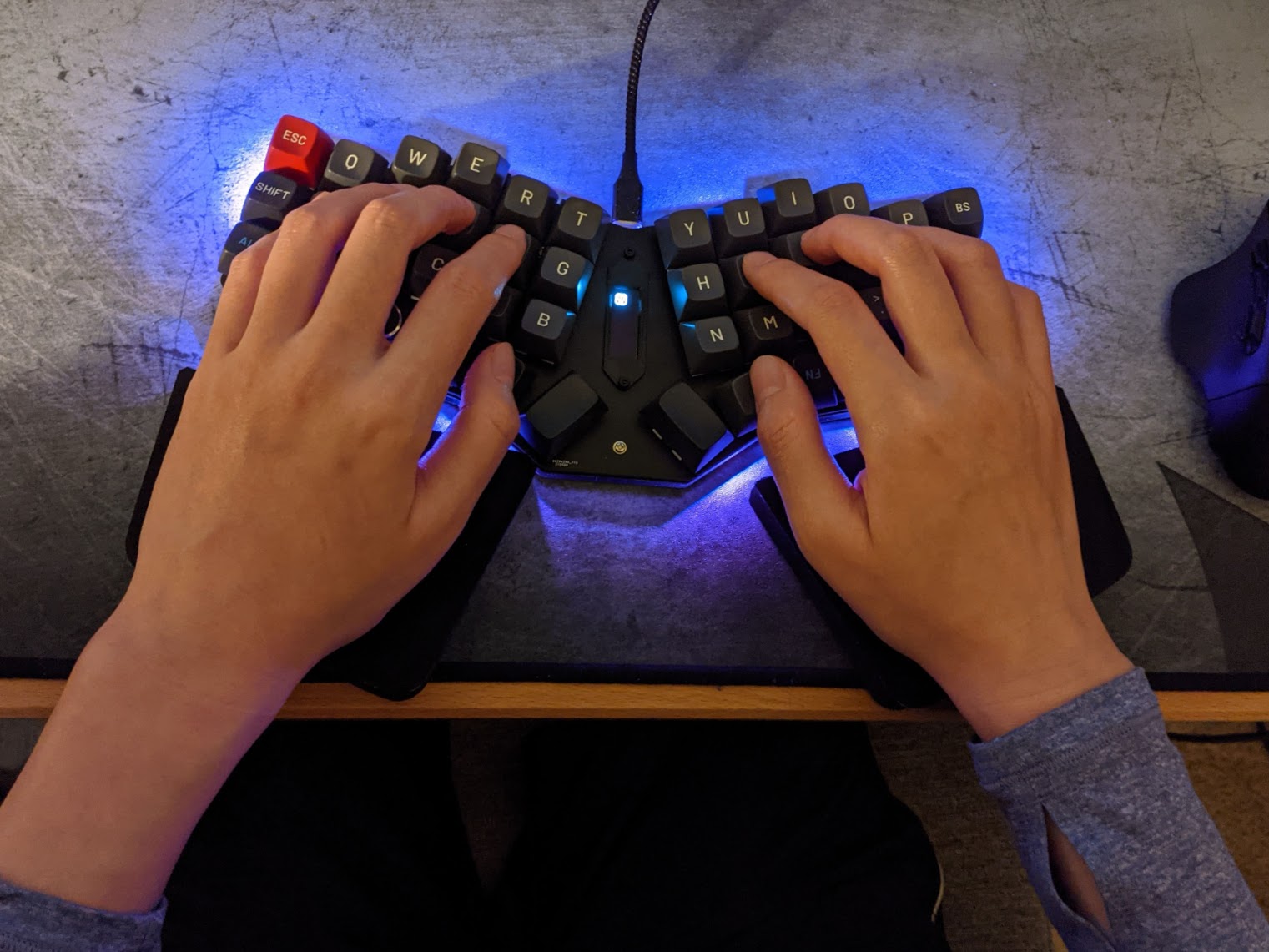
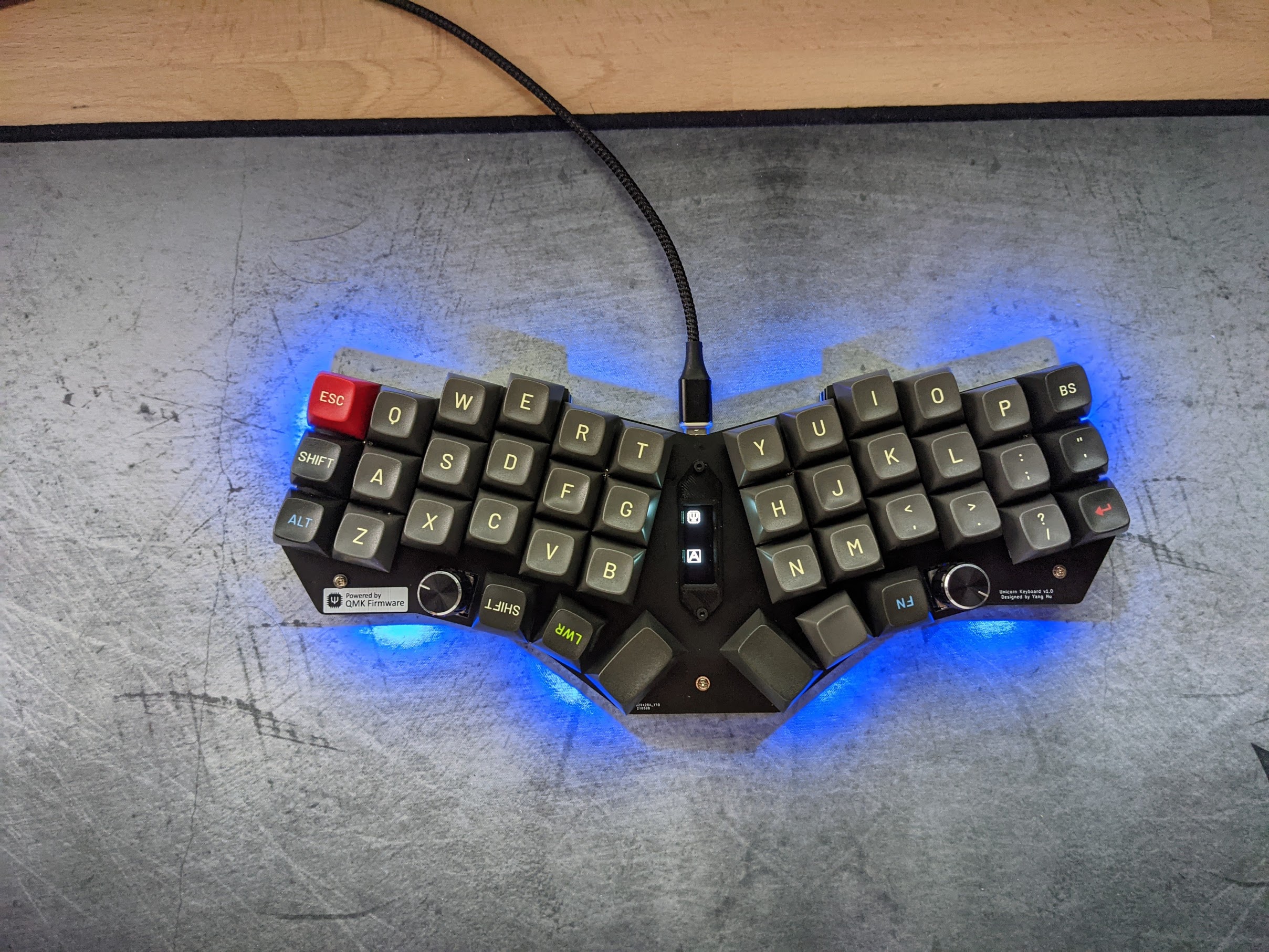
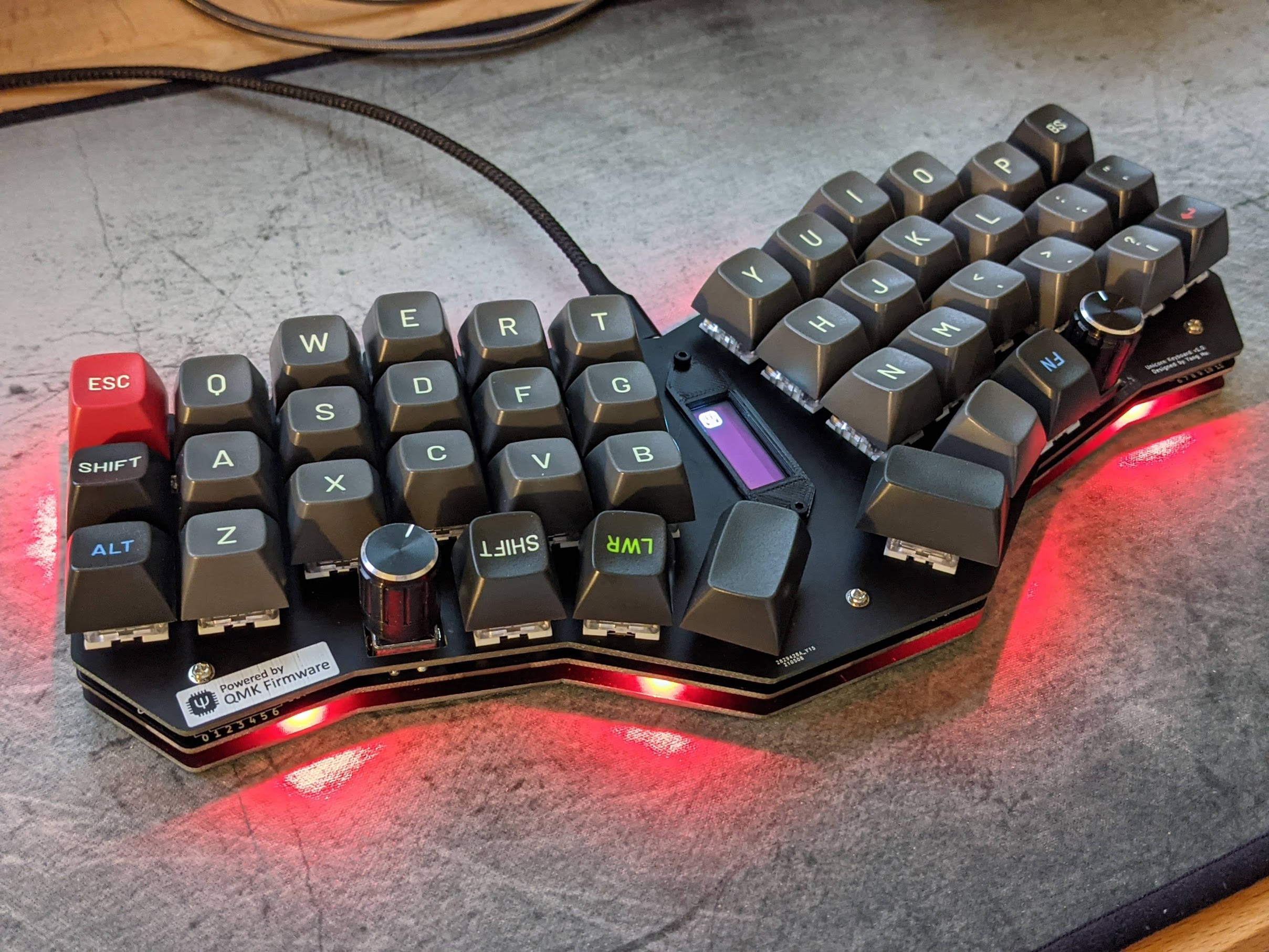

I like the simplicity of Corne, however, the more aggresive column stagger on Kyria suits my hand better. I also removed the use of pro micro boards, and followed Ferris 2.0 with an ARM chip directly on the board.
The initial reason I wanted to design this board is to eliminate the ugly "add-on" board of promicro. Ferris is nice but I needed a 3x6 with full thumb clusters as well: portability is not an issue for me.
I initially thought about building a split keyboard, however, after used crkbd for a while, I missed the simplicity of a one-piece board: it's always symmetric and has smaller footprint.
I do use a Planck, but ortho is not really a good idea on traditional keyboard layout: the hands are so close and it's awkward to keep hands "vertical": the wrist really is painful, especially after used to more ergonomic splits.
Reviung-like keyboards really gave me the inspiration. The angle ensures arms and hands are in line, while you can still use the ortho layout.
Other features are nice and in different designs. I like the buzzer on Planck that tells you when the keyboard is alive. The small OLED really is useful to display status information for a programmable board. The encoder can be pretty versatile.
| Qty | Value | Footprint | References |
|---|---|---|---|
| 44 | D | Diode_SMD:D_SOD-123 | D1, D2, D10, D11, D12, D13, D14, D15, D16, D17, D18, D19, D20, D21, D22, D23 +28 |
| 42 | KEYSW | kbd:CherryMX_Hotswap | K1, K2, K10, K11, K12, K13, K14, K15, K16, K17, K18, K19, K20, K21, K22, K23 +26 |
| 8 | WS2812S | LED_SMD:LED_WS2812_PLCC6_5.0x5.0mm_P1.6mm | D48, D49, D50, D51, D52, D53, D54, D55 |
| 7 | MountingHole | MountingHole:MountingHole_4.5mm | H1, H2, H3, H4, H5, H6, H7 |
| 6 | 0.1uF | Capacitor_SMD:C_0603_1608Metric | C2, C5, C6, C10, C14, C15 |
| 3 | 1uF | Capacitor_SMD:C_0603_1608Metric | C3, C4, C12 |
| 3 | Conn_01x04 | Connector_PinHeader_2.54mm:PinHeader_1x04_P2.54mm_Vertical | J4, J5, J6 |
| 2 | 1.5pF | Capacitor_SMD:C_0603_1608Metric | C9, C16 |
| 2 | 10uF | Capacitor_SMD:C_0603_1608Metric | C1, C13 |
| 2 | 20pF | Capacitor_SMD:C_0603_1608Metric | C7, C8 |
| 2 | 5.1k | Resistor_SMD:R_0603_1608Metric | R7, R8 |
| 2 | Conn_01x06 | Connector_PinHeader_2.54mm:PinHeader_1x06_P2.54mm_Vertical | J1, J3 |
| 2 | GND | TestPoint:TestPoint_THTPad_D1.5mm_Drill0.7mm | TP5, TP6 |
| 2 | KEYSW | kbd:CherryMX_Hotswap_1.5u | K40, K41 |
| 2 | Rotary_Encoder_Switch | Keebio-Parts:RotaryEncoder_EC11 | SW2, SW3 |
| 2 | SolderJumper_2_Open | Jumper:SolderJumper-2_P1.3mm_Open_TrianglePad1.0x1.5mm | JP1, JP2 |
| 1 | 0 | Resistor_SMD:R_0603_1608Metric | R9 |
| 1 | 100 | Resistor_SMD:R_0603_1608Metric | R3 |
| 1 | 10k | Resistor_SMD:R_0603_1608Metric | R6 |
| 1 | 1M | Resistor_SMD:R_0603_1608Metric | R1 |
| 1 | 1N4148 | Diode_SMD:D_SOD-123 | D45 |
| 1 | 2.2k | Resistor_SMD:R_0603_1608Metric | R4 |
| 1 | 25MHz | Crystal:Crystal_SMD_3225-4Pin_3.2x2.5mm | Y1 |
| 1 | 32.768KHz | Crystal:Crystal_SMD_3215-2Pin_3.2x1.5mm | Y2 |
| 1 | 330k | Resistor_SMD:R_0603_1608Metric | R2 |
| 1 | 3V3 | TestPoint:TestPoint_THTPad_D1.5mm_Drill0.7mm | TP3 |
| 1 | 4.7uF | Capacitor_SMD:C_0603_1608Metric | C11 |
| 1 | 47k | Resistor_SMD:R_0603_1608Metric | R5 |
| 1 | 5V | TestPoint:TestPoint_THTPad_D1.5mm_Drill0.7mm | TP4 |
| 1 | BOOT0 | TestPoint:TestPoint_THTPad_D1.5mm_Drill0.7mm | TP1 |
| 1 | Buzzer | hy-keebs:Piezo-KLJ-1625 | BZ1 |
| 1 | JK-MSMD050 | Fuse:Fuse_1812_4532Metric | F1 |
| 1 | MMBT3904 | Package_TO_SOT_SMD:SOT-23 | Q1 |
| 1 | NRST | TestPoint:TestPoint_THTPad_D1.5mm_Drill0.7mm | TP2 |
| 1 | OLED | kbd:OLED_v2 | OL1 |
| 1 | SMF9.0CA | Diode_SMD:D_SOD-123 | D47 |
| 1 | SRV05-4 | Package_TO_SOT_SMD:SOT-23-6 | U4 |
| 1 | SS14 | Diode_SMD:D_SMA | D46 |
| 1 | STM32F411CCUx | Package_DFN_QFN:QFN-48-1EP_7x7mm_P0.5mm_EP5.6x5.6mm | U2 |
| 1 | SW_Push | Button_Switch_SMD:SW_SPST_B3U-1000P | SW1 |
| 1 | USB_C | hy-keebs:USB_C_HRO_TYPE-C-31-M-12 | J2 |
| 1 | XC6206PxxxMR | Package_TO_SOT_SMD:SOT-23 | U1 |

pierrechevalier83/ferris
A low profile split keyboard designed to satisfy one single use case elegantly


AeternusCo/STM32-Reference-Keyboard
This schematic has not been officially tested. It follows best practices and should work, but please confirm your design before placing a large order!

bluepylons/A-Thinkpad-USB-keyboard
This is a project attempting to make a USB keyboard/Trackpoint controller and enclosure for the non-chiclet Thinkpad keyboard (from the 10/20 generation, such as the T410, W520, etc.).

CoffeeBreakKeyboards/kawa
A 32 key 'fixed split' keyboard heavily inspired by the Reviung keyboards by gtips.


usr-ein/TriMixxx
Open source standalone DJ multimedia player, compatible with Rekordbox

It measures 268 × 110.5 mm and has 2 copper layers, 1.6 mm thick.
157 parts, built around the SRV05-4, JK-MSMD050, MMBT3904 and SMF9.0CA. The full list of its parts is on this page, with links to each part's symbol and footprint where PCBKit's library has them.
From the yanghu/unicorne repository on GitHub, at the commit this page was made from: the board is unicorn-mx/unicorn/unicorn.kicad_pcb. PCBKit opens the board in the browser, with nothing to install.
Its repository publishes it under the MIT licence: you may reuse it on that licence's terms (keep the author's notice, and for a copyleft licence share your changes alike).
