
2 layers134.6 × 70.1 mm
Pcb lab
wyu31/TECHIN-514-FinalProject
This GitHub repository is for my TECHIN-514 final project and all my related files will be uploaded and updated to it.
22 parts1

This GitHub repository is for my TECHIN-514 final project and all my related files will be uploaded and updated to it.
Pcb lab is an open-source printed circuit board by wyu31, from the wyu31/TECHIN-514-FinalProject repository on GitHub. It is a 2-layer board of 94 × 73.7 mm with 20 parts on 22 nets, routed with 242 tracks and 17 vias.
It is built around the MCP4921-E/P, PAM8301AAF and XIAO ESP32C3. Its parts include 7 capacitors, 3 ICs, 2 diodes, 1 resistor and 1 connector. It belongs with the ESP32 and RISC-V boards of this library.


This GitHub repository is for my TECHIN-514 final project and all my related files will be uploaded and updated to it.
Project Title
Finger Drumbeat
Explanation
This is an IoT device set to add drum beats using hand gestures, allowing users to engage in existing music.
Generally, I want to achieve:
General Sketch
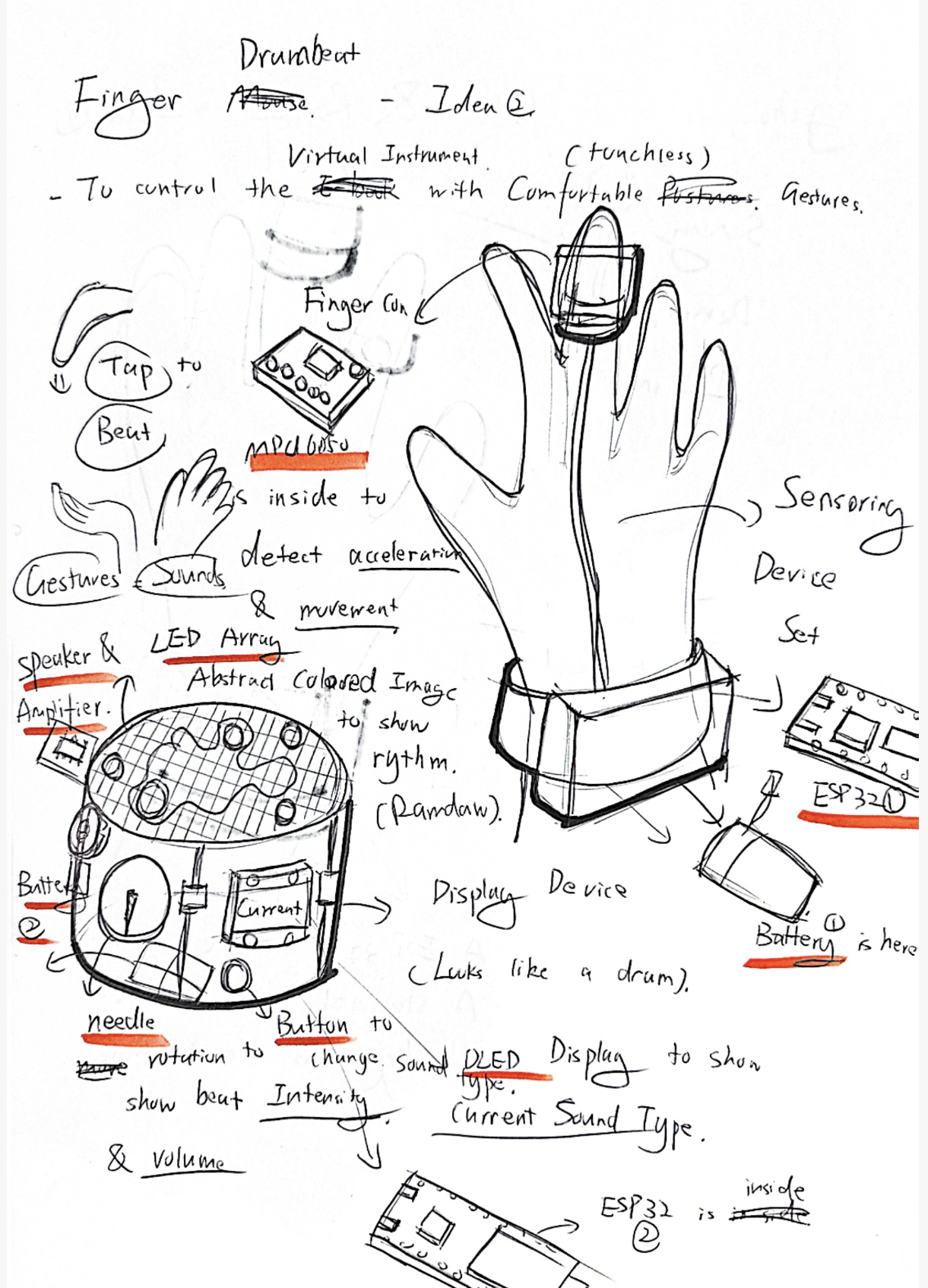
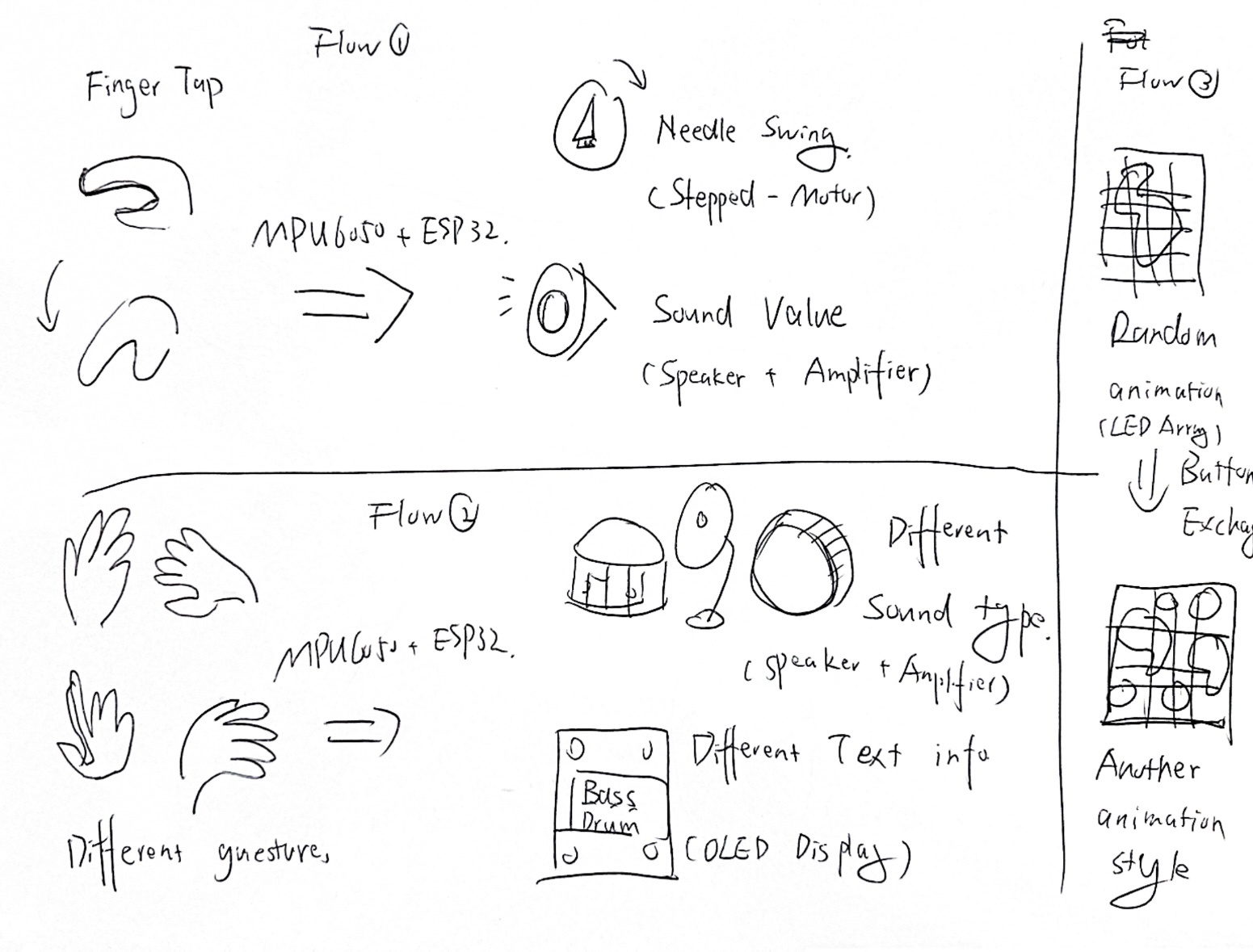
In this part, the enclosure is divided into two parts: fingertip and wrist. The fingertip enclosure contains the MPU6050, and the wrist enclosure contains the ESP32 processor and battery.
MPU6050 and ESP32 will detect and analyze diffeerent fingertip accelerations for different needle swing accelerations and drumbeat volumes.
MPU6050 and ESP32 will also detect and analyze different gestures as different drum components (such as ass Drum, Tom-Tom Drum, Snare drum, Crash Cymbal, Ride Cymbal, Hi-Hat).
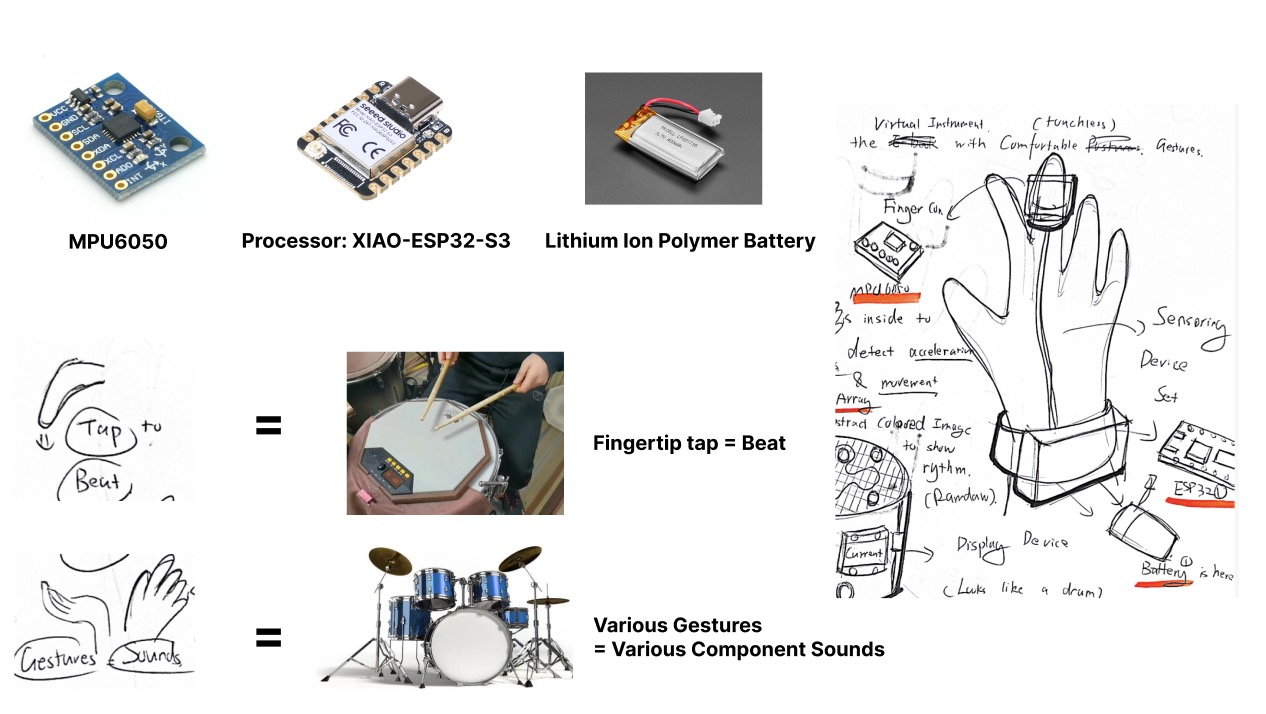
The shaking acceleration of the stepper motor pointer depends on the acceleration of the finger; the intensity of the sound and enhanced sound also depends on the acceleration of the finger.
The LED array will randomly play flowing animations to reflect the linkage of audio and vision; touch the button to switch animations.
The OLED screen will display the names of the components of the drum set selected under the current gesture.
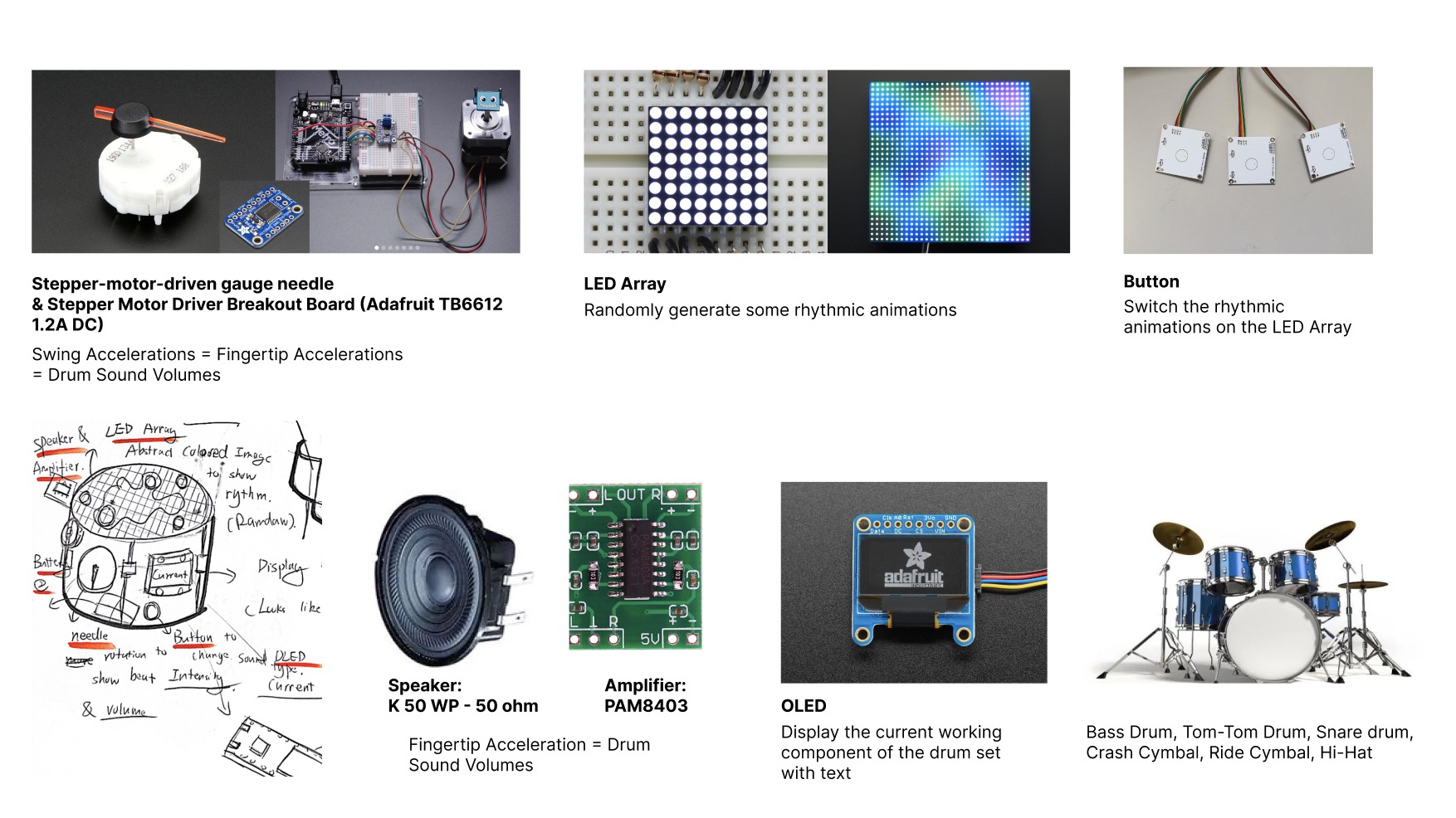
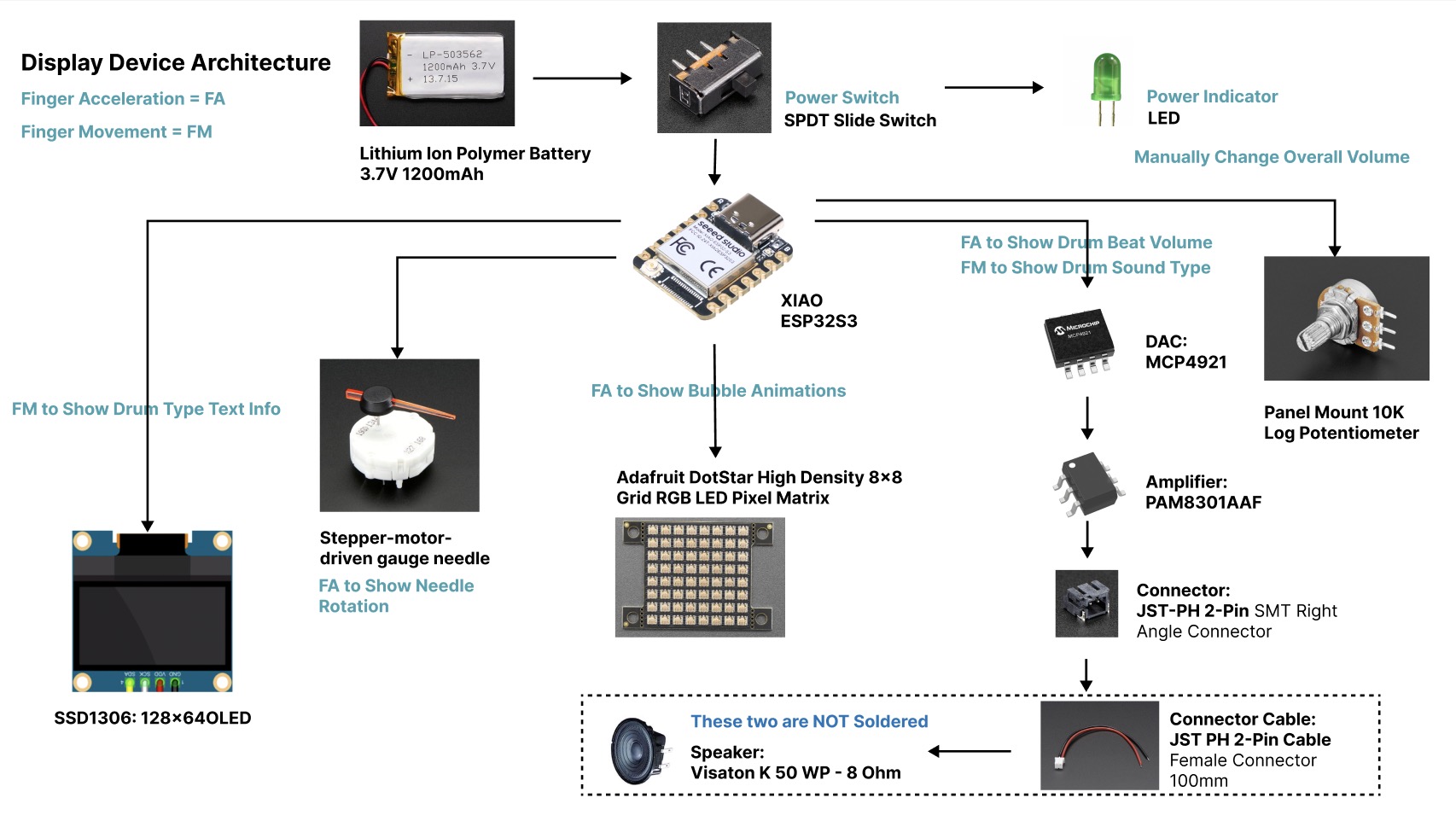
Device Communication Figure
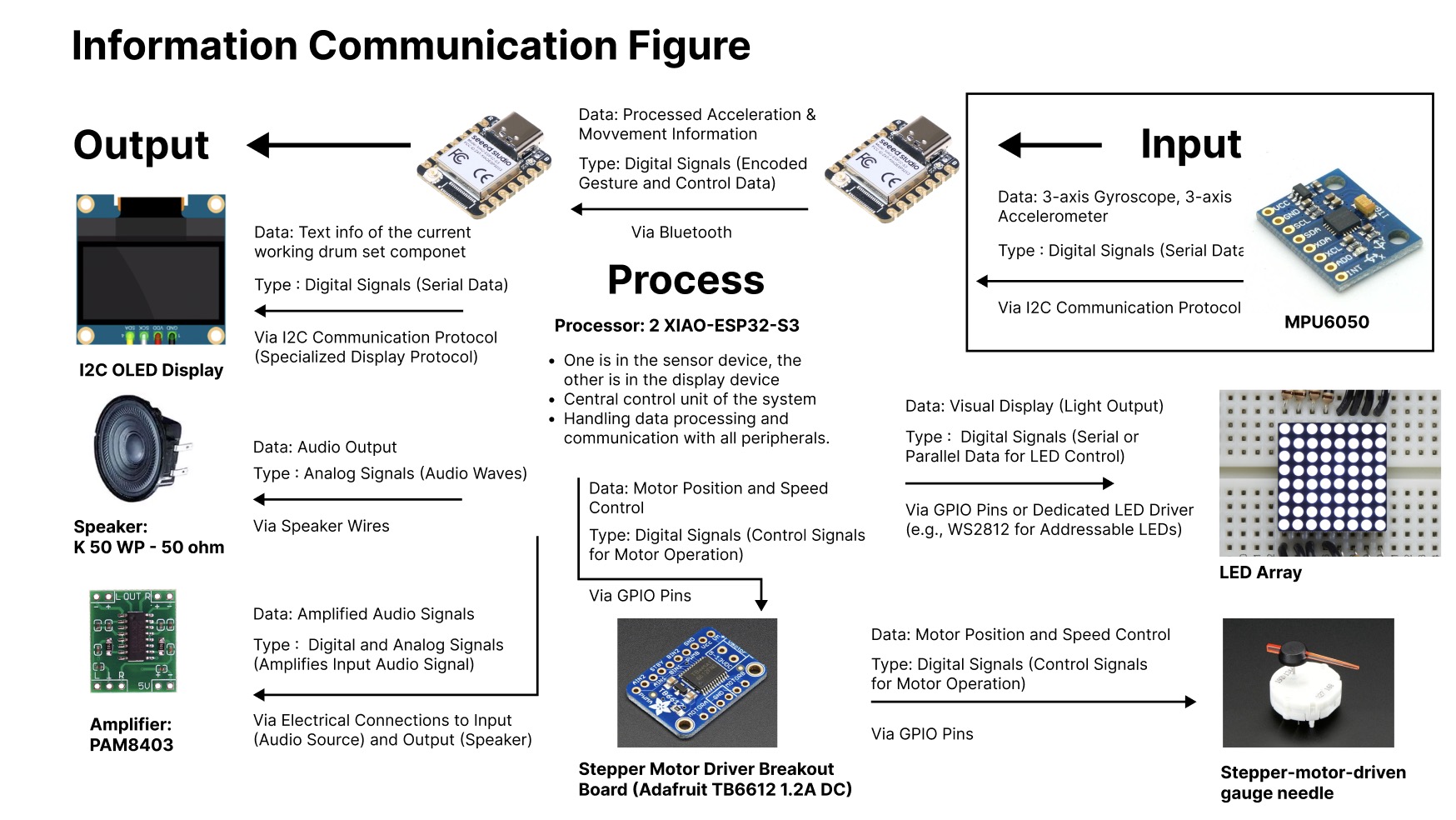
Workflow Diagram
Display Device Arch
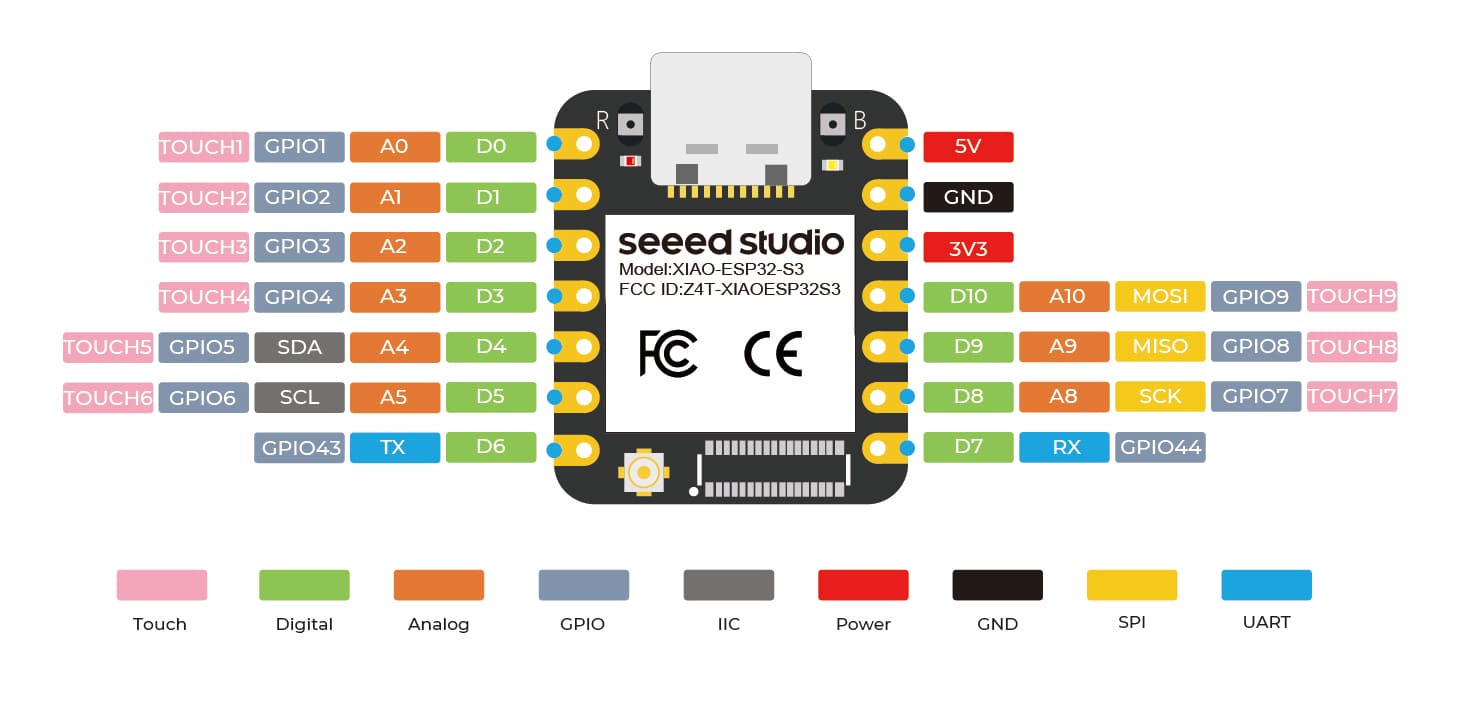
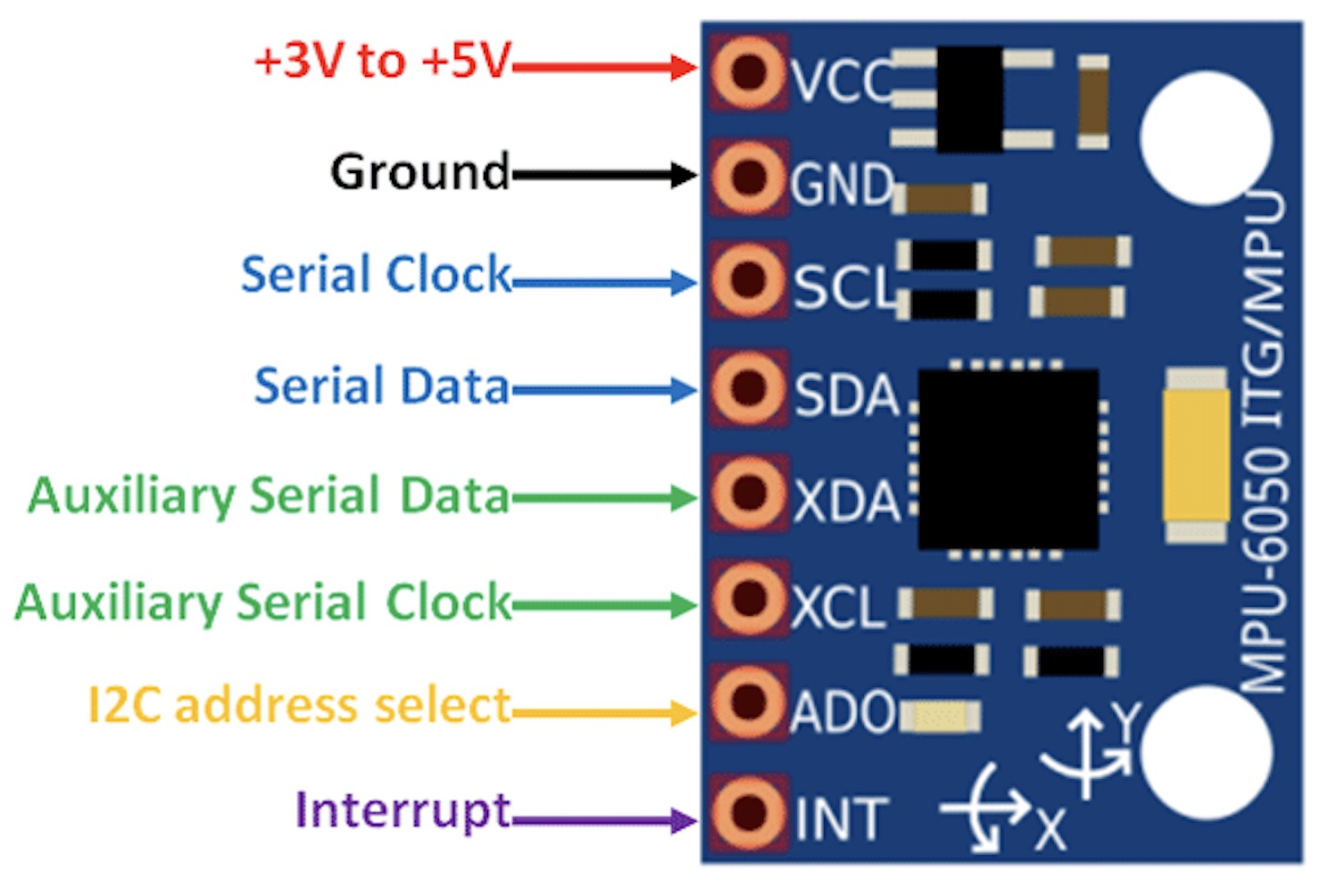
| Qty | Value | Footprint | References |
|---|---|---|---|
| 4 | 100n | Capacitor_SMD:C_0603_1608Metric_Pad1.08x0.95mm_HandSolder | C2, C3, C6, C7 |
| 1 | 10u | Capacitor_Tantalum_SMD:CP_EIA-1608-08_AVX-J_Pad1.25x1.05mm_HandSolder | C5 |
| 1 | 1k | Resistor_SMD:R_0603_1608Metric_Pad0.98x0.95mm_HandSolder | R1 |
| 1 | 1u | Capacitor_SMD:C_0603_1608Metric_Pad1.08x0.95mm_HandSolder | C1 |
| 1 | Battery_Cell | Connector_JST:JST_XA_B02B-XASK-1-A_1x02_P2.50mm_Vertical | BT1 |
| 1 | Conn_01x02_Pin | Connector_JST:JST_NV_B02P-NV_1x02_P5.00mm_Vertical | J1 |
| 1 | LED | LED_SMD:LED_0603_1608Metric_Pad1.05x0.95mm_HandSolder | D2 |
| 1 | LED_Matrix | Connector_PinSocket_2.54mm:PinSocket_1x04_P2.54mm_Horizontal | D1 |
| 1 | MCP4921 | Package_DFN_QFN:DFN-8-1EP_3x2mm_P0.5mm_EP1.3x1.5mm | U3 |
| 1 | PAM8301 | Package_TO_SOT_SMD:SOT-23-6 | U4 |
| 1 | R_Potentiometer | Potentiometer_THT:Potentiometer_Piher_PC-16_Single_Horizontal | RV1 |
| 1 | SSD1306 | Library:128x64OLED | Brd1 |
| 1 | SW_SPDT | Connector_JST:JST_EH_B3B-EH-A_1x03_P2.50mm_Vertical | SW1 |
| 1 | Speaker | Connector_JST:JST_NV_B02P-NV_1x02_P5.00mm_Vertical | LS1 |
| 1 | Stepper_Motor_bipolar | Library:X27_stepper_motor | M1 |
| 1 | Xiao-ESP32 | Library:XIAO_ESP32_SENSE | U1 |
| 1 | locked | Capacitor_THT:CP_Radial_D6.3mm_P2.50mm | C8 |
wyu31/TECHIN-514-FinalProject
This GitHub repository is for my TECHIN-514 final project and all my related files will be uploaded and updated to it.


neubauek/CircuitPythonBadge
Open Source Hardware Circuit Python Badge


biomurph/BioVill_Badge
DEFCON Micro Fluidics Badge Design For Biohacking Village


It measures 94 × 73.7 mm and has 2 copper layers, 1.6 mm thick.
20 parts, built around the MCP4921-E/P, PAM8301AAF and XIAO ESP32C3. The full list of its parts is on this page, with links to each part's symbol and footprint where PCBKit's library has them.
From the wyu31/TECHIN-514-FinalProject repository on GitHub, at the commit this page was made from: the board is pcb_lab_Feb 14/pcb_lab.kicad_pcb and its schematic pcb_lab/pcb_lab.kicad_sch. PCBKit opens the board in the browser, with nothing to install.
Its repository states no licence, so its author keeps all rights: ask wyu31 before reusing the design.