2 layers234.6 × 172.5 mm

 weteor/Kong27
48 key ortholinear keyboard
KongChoc is an open-source printed circuit board by weteor, from the weteor/Kong repository on GitHub, published under the CERN-OHL-P-2.0 licence. It is a 2-layer board of 220.4 × 80 mm with 124 parts on 103 nets, routed with 953 tracks and 279 vias.
It is built around the RP2040, W25Q128JVSIQ and USBLC6-2SC6. Its parts include 48 switches, 46 diodes, 14 capacitors, 8 resistors and 4 ICs. It belongs with the keyboards and input boards and the RP2040 boards of this library.


48 key orthogonal keyboard with offset bottom row
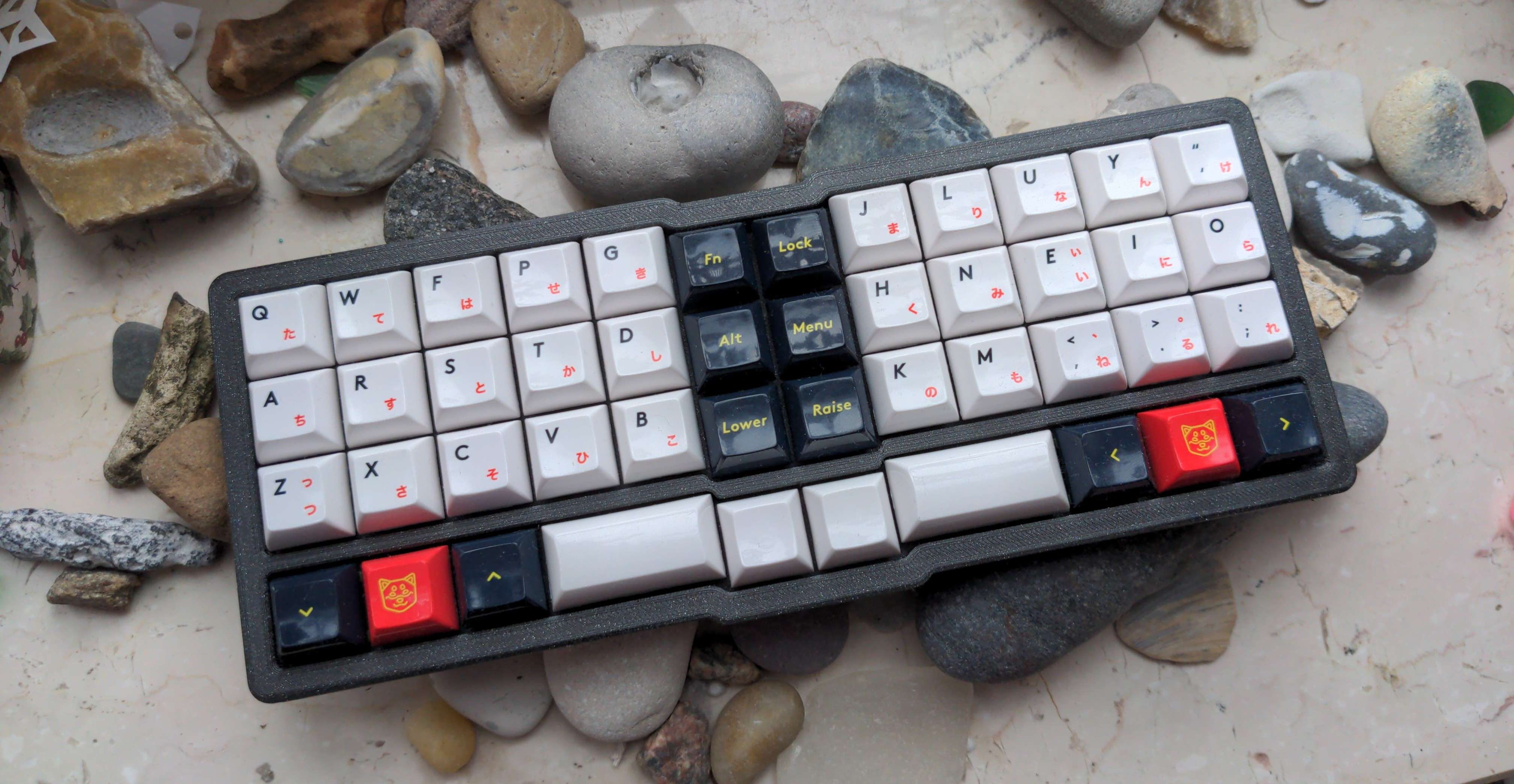
All production files you need to build your own board can be found here: choc / mx.
There are also production files with both pcbs combined to save on the assembly costs: combined
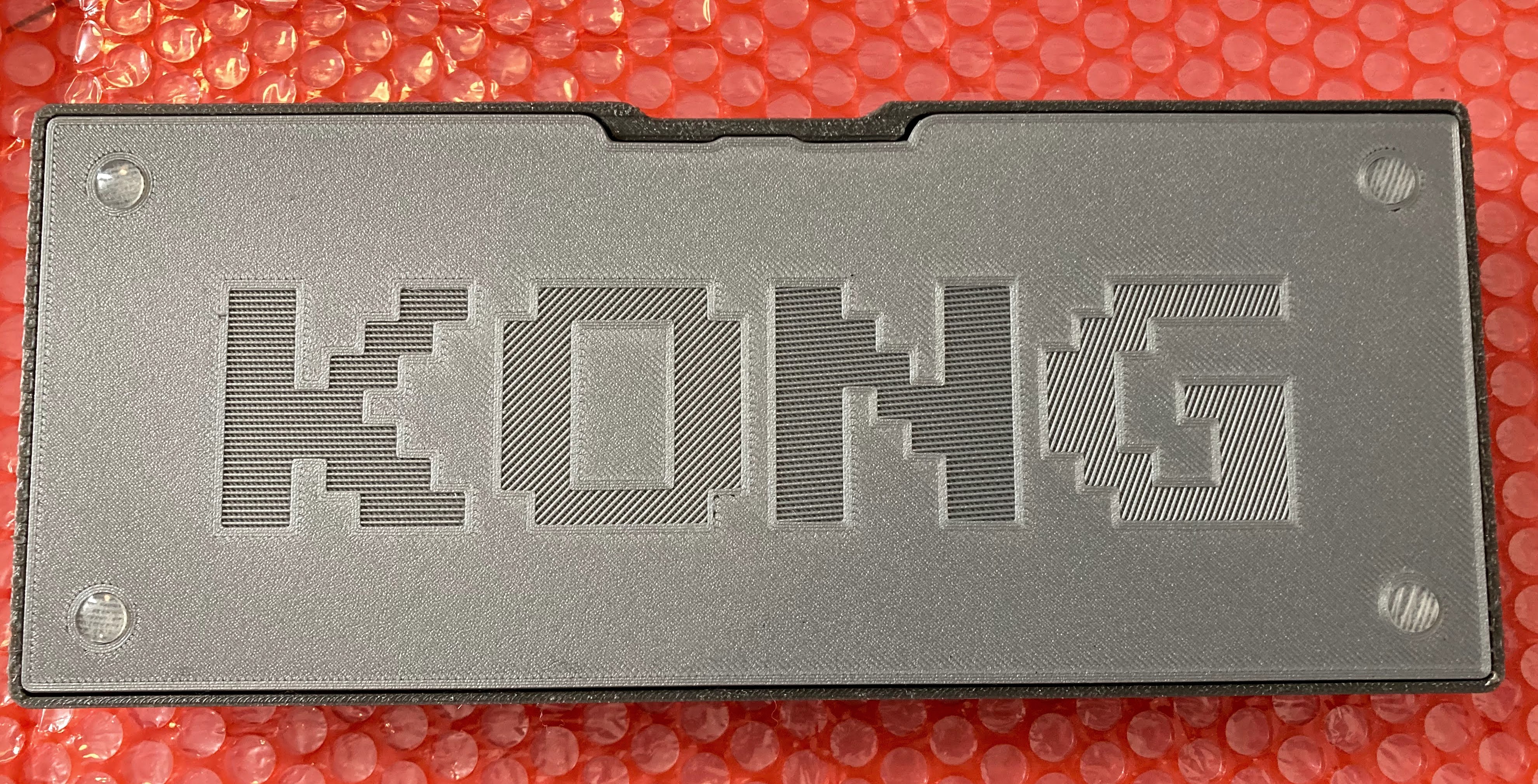
The case is split in two parts connected by cylindrical 3mm diameter magnets. Two length are needed, 1.7mm and 3mm. The 3x3mm Magnets go into the shallow holes, so they poke out of the case. The 3x1.7mm magnets are pressed into the deeper holes. The longer magnet acting as a pin increasing stability and keeping the top part in place.
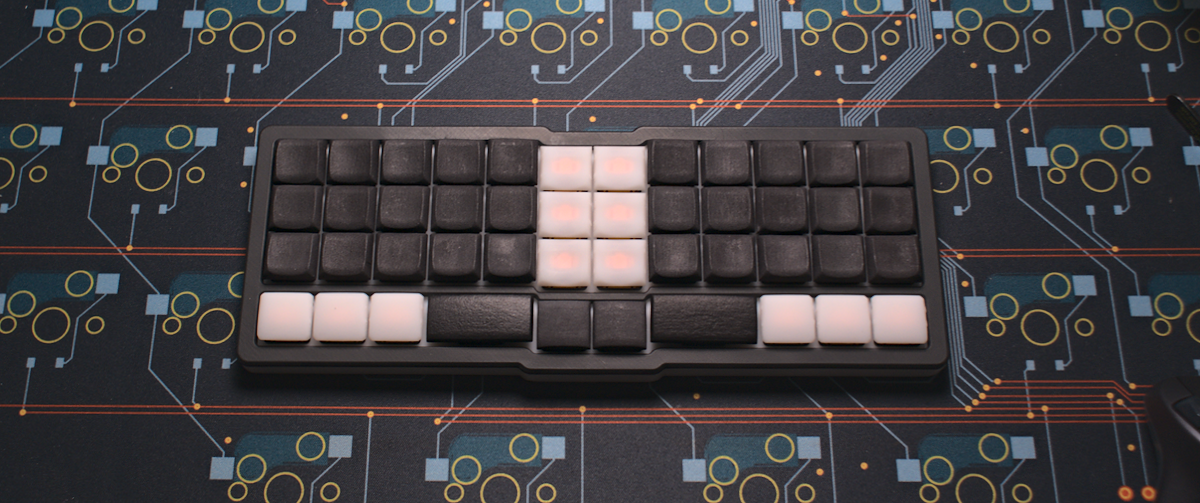
The bottom case is open by design and ends at a bit under the hotswap sockets. It's meant to be used with self adhesive neopren sheets (2-3mm thick), which are cut to be the same size as the pcb and then glued on top of the underside of the pcb.
An alternative gasket mount case with a 4 degree tilt is also available for the MX version. 4mm x 3mm thick strips of foam is used to isolate the plate from PCB. Felt or other soft material similar in thickness can be used. M2 x 6mm flat head screws are used to fasten the case together.
Parts needed beside the assembled pcbs:
firmware configs for qmk and vial can be found in the respective firmware folders: choc / mx.
The first time the pcb is plugged in, the bootloader will provide a drive to upload the firmware file. You may either build the firmware yourself or use the provided vial firmware files here. You can use VIAL (download to program your board after that, without need to build a new firmware.
Everything in this repository is free to use however you might see fit. If you want to support me and my projects, please consider linking back to this repository if you build/change/use anything.
If you would like to send me a tip, you could do it here (Please don't feel like you have to).
| Qty | Value | Footprint | References |
|---|---|---|---|
| 46 | D | weteor:D_SOD-123 | D1, D2, D10, D11, D12, D13, D14, D15, D16, D17, D18, D19, D20, D21, D22, D23 +30 |
| 44 | SW_Push | weteor:ChocV1_V2_Hotswap | SW1, SW2, SW3, SW10, SW11, SW12, SW13, SW14, SW15, SW16, SW17, SW18, SW23, SW24, SW25, SW26 +28 |
| 8 | 100nF | weteor:C_0402_HandSolder | C3, C4, C5, C8, C9, C10, C11, C14 |
| 4 | 1uF | weteor:C_0402_HandSolder | C6, C7, C12, C13 |
| 3 | 1k | weteor:R_0402_HandSolder | R1, R2, R5 |
| 2 | 27R | weteor:R_0402_HandSolder | R3, R4 |
| 2 | 27pF | weteor:C_0402_HandSolder | C1, C2 |
| 2 | 5.1k | weteor:R_0402_HandSolder | R6, R7 |
| 2 | SW_Push | weteor:Micro_Push_Button_3x6x2.5mm | SW20, SW21 |
| 2 | SW_Push | weteor:ChocV1_V2_Hotswap_2u | SW29, SW34 |
| 1 | 10k | weteor:R_0402_HandSolder | R8 |
| 1 | BL_CONN | Connector_PinHeader_2.54mm:PinHeader_1x04_P2.54mm_Vertical | J1 |
| 1 | Conn_01x08 | Connector_PinHeader_2.54mm:PinHeader_1x08_P2.54mm_Vertical | J4 |
| 1 | Crystal_GND24_Small | Crystal:Crystal_SMD_2520-4Pin_2.5x2.0mm | Y1 |
| 1 | RP2040 | RP2040_minimal:RP2040-QFN-56 | U1 |
| 1 | USBLC6-2SC6 | Package_TO_SOT_SMD:SOT-23-6 | U3 |
| 1 | USB_C_Receptacle_USB2.0 | weteor:USB-C-12-Pin-MidMount | J3 |
| 1 | W25Q128JVS | Package_SON:WSON-8-1EP_6x5mm_P1.27mm_EP3.4x4.3mm | U4 |
| 1 | XC6206PxxxMR | Package_TO_SOT_SMD:SOT-23 | U2 |


jpconstantineau/PyKey60
The PyKey60 is a custom programmable mechanical keyboard with a standard ANSI 60% keyboard layout compatible with any cases made for the GH60. The PyKey60 uses mechanical switches (Cherry MX type).


yuz207/agentpad13
agentpad13 — open-source 13-key macropad for agentic work (RP2040, vial-qmk, planar joystick, Raw HID agent-status protocol)

ikajdan/katia
A split keyboard with 6 by 3 column staggered keys and 3 thumb keys, based on the Crkbrd design

lhm0/rotating_display_color
56 LED rotating color display with RP2040 and ESP32 microcontrollers

GRAMCTRL/GRAM-SLIM
Open source low-profile leverless design with an integrated RP2040.
It measures 220.4 × 80 mm and has 2 copper layers, 1 mm thick.
124 parts, built around the RP2040, W25Q128JVSIQ and USBLC6-2SC6. The full list of its parts is on this page, with links to each part's symbol and footprint where PCBKit's library has them.
From the weteor/Kong repository on GitHub, at the commit this page was made from: the board is pcb/choc/kongChoc.kicad_pcb and its schematic pcb/choc/kongChoc.kicad_sch. PCBKit opens the board in the browser, with nothing to install.
Its repository publishes it under the CERN-OHL-P-2.0 licence: you may reuse it on that licence's terms (keep the author's notice, and for a copyleft licence share your changes alike).
