4 layers29 × 69.8 mm

 vonkonow/LeetAI42
Leet AI – Wireless Synthesizer Ensemble with AI-powered composition for endless inspiration
Leetai2 is an open-source printed circuit board by vonkonow, from the vonkonow/LeetAI repository on GitHub, published under the MIT licence. It is a 2-layer board of 81.6 × 57.2 mm with 72 parts on 76 nets, routed with 962 tracks and 78 vias.
It is built around the AS5600-ASOM, WS2812B-2020 and BAT54C. Its parts include 27 diodes, 21 switches, 4 capacitors, 4 resistors and 2 ICs. It belongs with the audio and music boards and the ESP32 boards of this library.


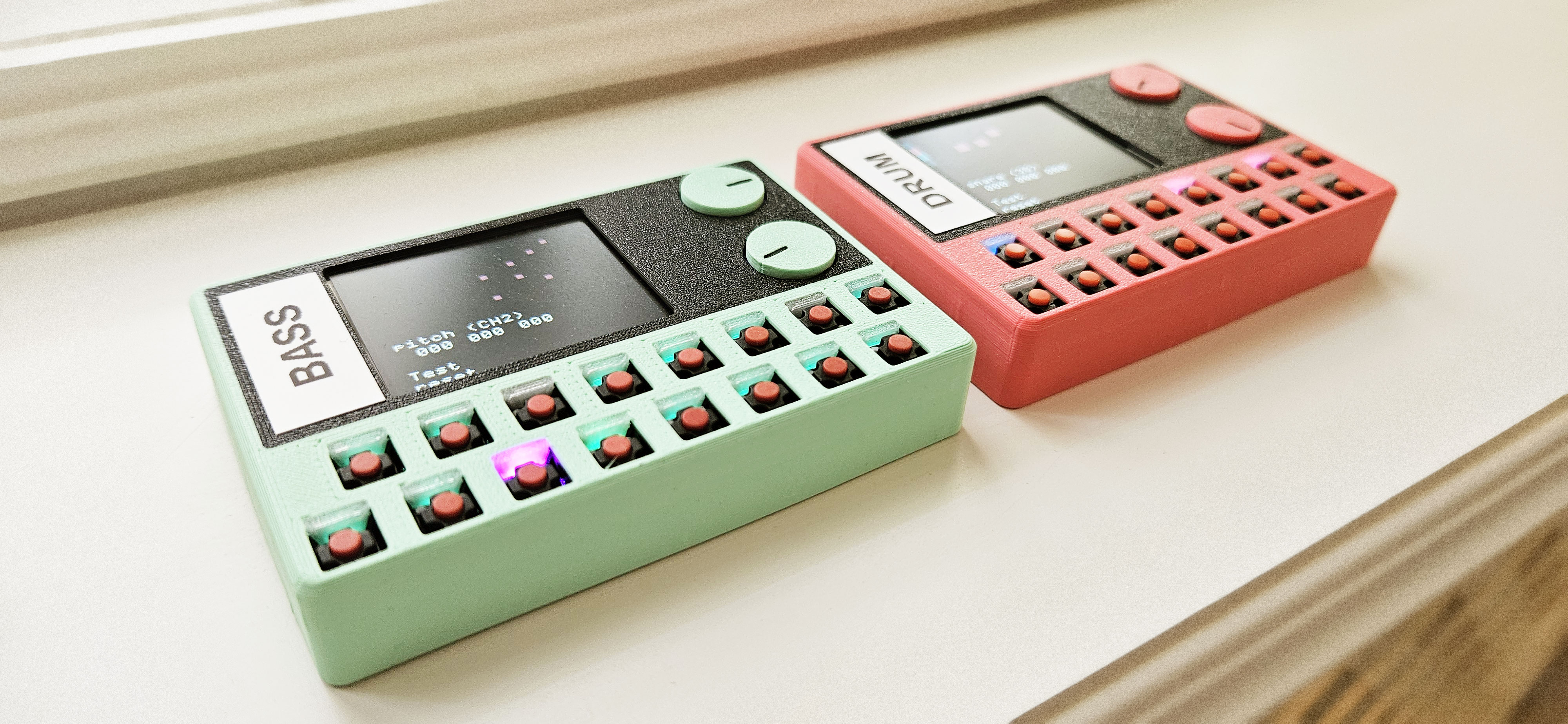
Leet AI is a playful, pocket-sized synthesizer concept that explores what happens when many simple instruments work together—like a miniature electronic orchestra. Unlike traditional synths that try to do everything, Leet AI embraces a modular philosophy: multiple open-source, affordable units, each with a specific voice, combining to create something greater than the sum of their parts.
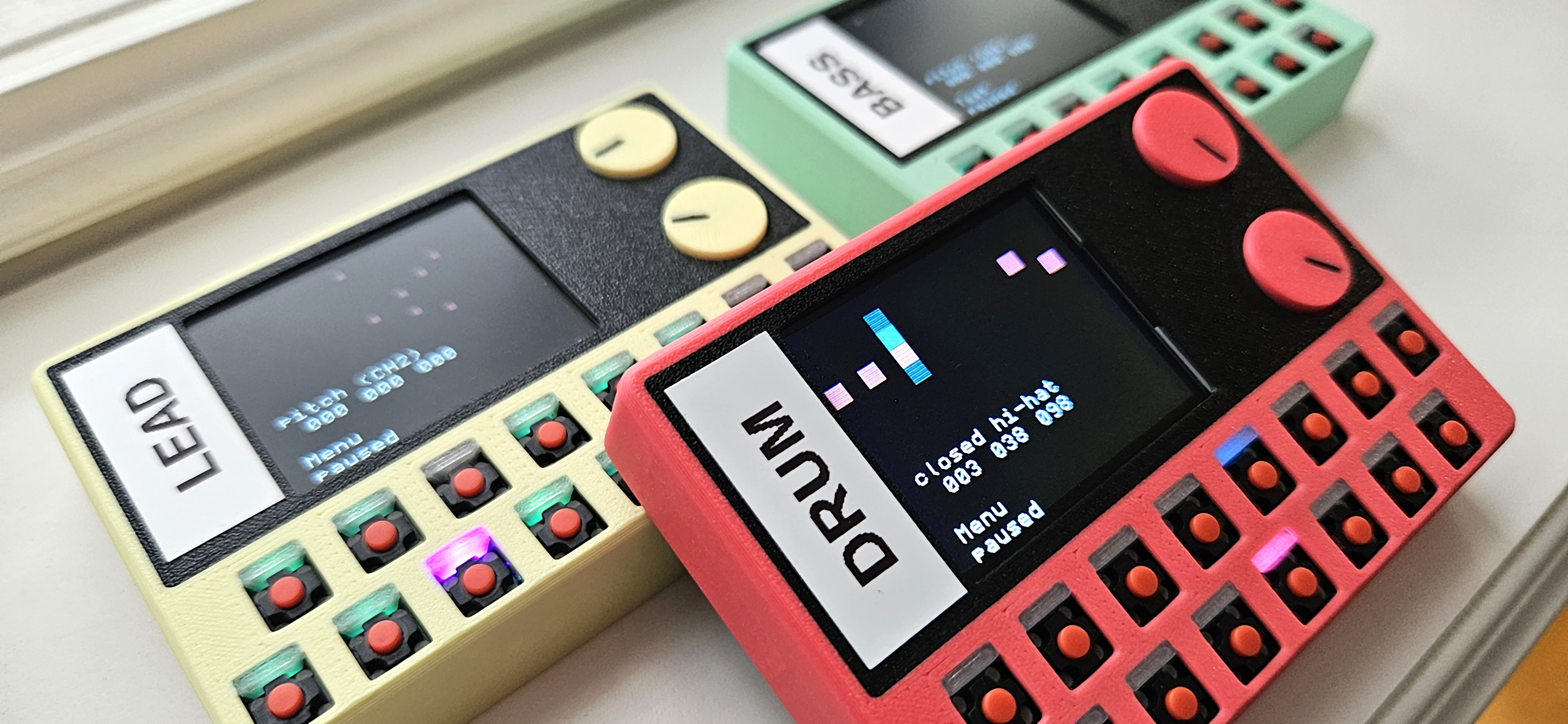
Synthesizers can be intimidating. Menus, shift-buttons, and buried features can kill creative flow. Leet AI is an attempt to bring back the fun—tiny instruments you can pick up, jam with, and let the AI surprise you with new melodic ideas. Whether you're a tinkerer, a musician, or just curious about AI and music, this project is for you.
🎵 AI-powered inspiration
Generate unique melodies, drum patterns, and variations using a diffusion-based AI model.
🔧 Hackable and open-source
Built with CircuitPython on an ESP32-S2—plug it in, and you're editing the firmware like a USB stick.
🎛️ Minimalist design with deep control
Dual rotary encoders with tilt navigation, RGB-backlit keys, and a full-color display keep you focused and in control.
📶 Wireless orchestration
A low-latency protocol keeps multiple units in sync.
🔋 Fully portable
Runs on a rechargeable 1000mAh LiPo battery. Jam anywhere.
Medium. You'll need SMD soldering skills, a 3D printer, and some patience and curiosity.
Leet AI combines the best aspects of three earlier open hardware projects: leet, leet modular, and chip champ. Prototypes have evolved through countless iterations—from hand-wired mock-ups to a 12-key prototype and finally to the 16-key design that bridges sequencer and keyboard layouts.
This is still a conceptual prototype. While it’s fully functional for the demo, many features are hardcoded. Here’s what’s next on the roadmap:
Total cost per unit: ~$24
Got ideas? Want to help improve the synth engine, optimize graphics, or design new enclosures? All contributions—code, hardware, or creative—are welcome!
/
├── firmware/       → CircuitPython source code
├── hardware/       → KiCad files, schematics, and PCB layout
├── enclosure/      → 3D models (Rhino & STL)
├── ai-server/      → getMusic setup, scripts and generation tools
├── docs/           → Build guide, BOM, and reference images
└── README.md → Project overviewHuge thanks to the creators and maintainers of open-source tools that made this project possible.
Special gratitude to Adafruit for developing CircuitPython, which made firmware development approachable, flexible, and fun—even for hardware newcomers.
Thanks also to the team behind synthio, whose powerful audio capabilities laid the groundwork for expressive, real-time sound generation on microcontrollers.
And to Microsoft Research for getMusic, and to all the explorers at the intersection of music, AI, and creative technology—your curiosity and generosity continue to inspire.
Leet AI is still early, but the concept is alive. With your feedback, forks, and experiments, this can grow into a truly modular, generative instrument playground.
| Qty | Value | Footprint | References |
|---|---|---|---|
| 16 | SW_Omron_B3FS | lib:switch_mouse_kailh_6x6 | SW1, SW2, SW3, SW4, SW5, SW6, SW7, SW8, SW9, SW10, SW11, SW12, SW13, SW14, SW15, SW16 |
| 16 | WS2812B-2020 | lib:LED_WS2812B-2020_PLCC4_2.0x2.0mm | D1, D2, D3, D4, D5, D6, D7, D8, D9, D10, D11, D12, D13, D14, D15, D16 |
| 11 | BAT54C | lib:TSOT-23 | D17, D18, D19, D20, D21, D22, D23, D24, D25, D26, D27 |
| 8 | MountingHole | lib:MountingHole_2mm | H1, H2, H3, H4, H5, H6, H7, H8 |
| 4 | 4.7k | Resistor_SMD:R_0603_1608Metric_Pad0.98x0.95mm_HandSolder | R1, R2, R3, R4 |
| 4 | SW_Omron_B3FS | lib:SW_Push_SPST_NO_Alps_SKRK | SW17, SW18, SW19, SW20 |
| 3 | Conn_01x01_Female | TestPoint:TestPoint_THTPad_2.5x2.5mm_Drill1.2mm | BAT+, GND1, VCC1 |
| 2 | 100nF | Capacitor_SMD:C_0603_1608Metric_Pad1.08x0.95mm_HandSolder | C2, C4 |
| 2 | 1uF | Capacitor_SMD:C_0603_1608Metric_Pad1.08x0.95mm_HandSolder | C1, C3 |
| 2 | AS5600 | Package_SO:SOIC-8_3.9x4.9mm_P1.27mm | U2, U3 |
| 1 | SW_Wuerth_450301014042 | lib:SW_Slide-03_Wuerth-WS-SLTV_10x2.5x6.4_P2.54mm | SW22 |
| 1 | TFT ST7735 160x128 | lib:TFT ST7735 160x128 | M2 |
| 1 | WeMos_S2_mini | lib:wemos_s2_mini | M1 |
| 1 | ~ | lib:I2S DAC 5102 | M3 |

Gusus169/FORGE-V1.0
This project uses: - KiCad - Blender for 3D renders - Based on the Hack Club dev board tutorial

pacman314159/OISP-Drone-Research
mermaid stateDiagram-v2 [] --> POWERON POWERON --> BOOTINIT: Power Applied / Reset BOOTINIT --> SENSORCALIBRATION: Hardware Self-Test Pass BOOTINIT --> SYSTEMERROR: Self-Test Fail SENSORCALIBRATION --> DISARMED…

Circuit-Digest/Wireless-Stepper-Motor-Controller
The Wireless Stepper Driver is a compact and efficient motion control system designed to control stepper motors over Wi-Fi.

dhairyashah1/BLDC-Encoder-PCB
This repository contains KiCAD Design Files for Encoder PCB made using AS5600 hall sensor based Encoder Chip for SRA-VJTI's BLDC Actuator and Quadraped Testing.


AnasSarkiz/smart-nema14-motor-controller
STEPPERONLINE 14HM11-0404S controller — unrouted work-in-progress prototype; mechanical and electrical qualification pending

It measures 81.6 × 57.2 mm and has 2 copper layers, 1.6 mm thick.
72 parts, built around the AS5600-ASOM, WS2812B-2020 and BAT54C. The full list of its parts is on this page, with links to each part's symbol and footprint where PCBKit's library has them.
From the vonkonow/LeetAI repository on GitHub, at the commit this page was made from: the board is hardware/leetai2.kicad_pcb and its schematic hardware/leetai2.kicad_sch. PCBKit opens the board in the browser, with nothing to install.
Its repository publishes it under the MIT licence: you may reuse it on that licence's terms (keep the author's notice, and for a copyleft licence share your changes alike).