
4 layers16.9 × 119.4 mm

 utkarshminblr/PexTypo
A dream keeb of mine as student
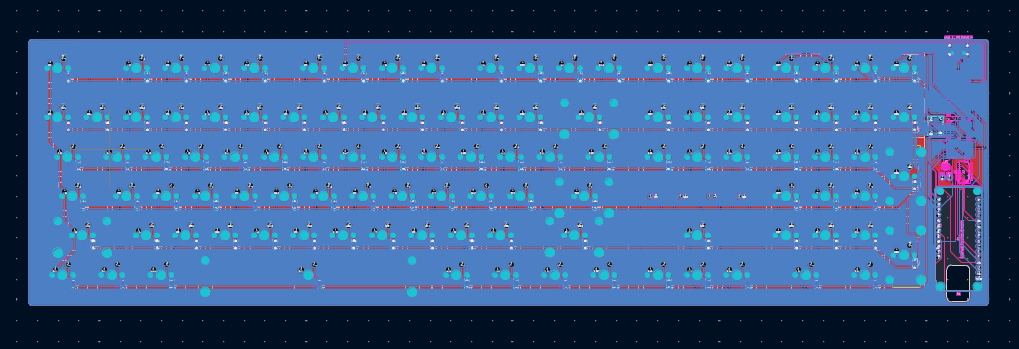
PexTypo is an open-source printed circuit board by utkarshminblr, from the utkarshminblr/PexTypo repository on GitHub. It is a 2-layer board of 464.4 × 129.1 mm with 247 parts on 188 nets, routed with 1,114 tracks and 53 vias.
It is built around the USBLC6-2SC6. Its parts include 116 switches, 112 diodes, 8 resistors, 3 capacitors and 3 ICs. It belongs with the keyboards and input boards of this library.
Pextypo is my full-size mechanical keyboard project using an Adafruit Feather nRF52840 Express.
so this started with wanting a keyboard with all the keys still there.. function row numpad the navigation stuff everything. then i added a little screen and wireless plans and suddenly there was a whole pcb and a case to figure out lol. the electronics are in KiCad and the enclosure is in Fusion 360, with a KMK firmware file for the keyboard side
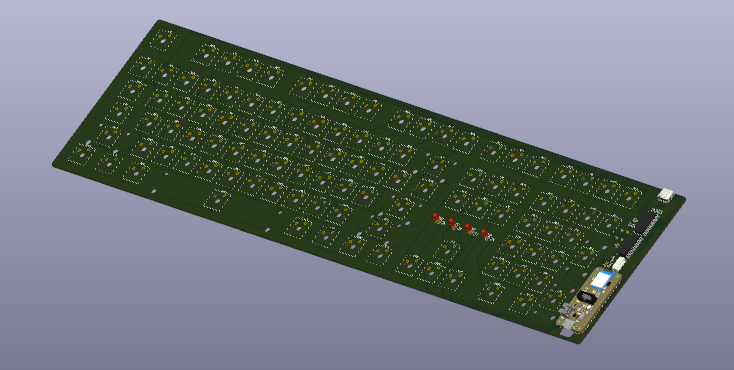
i wanted to try making the actual keyboard instead of only picking switches and putting them in something already made. keeping the full layout was part of it because i didnt really want to lose the numpad just to make the board smaller
main goals :
the screen is probably my favourite extra bit.. theres code for a pink blossom scene with falling petals so it has a little more personality than a plain status readout. getting the keyboard itself working still comes first obviously
the saved project has the schematic, routed PCB, case files, screenshots and a firmware implementation. assembly and testing on the actual hardware are still the next step, so the screenshots here show the design rather than a finished working keyboard
whats in this repo :
CAD/ - the assembly export and printable case piecesFirmware/ - keyboard source codeFusion File/ - editable Fusion designImg/ - schematic, PCB and case screenshotsPCB/ - KiCad project filesPDFs/ - exported schematic and board-layer documentsproduction/ - fabrication outputs and component placement dataBOM img/ - component sourcing screenshotsbom.csv - shopping list with quantities, prices and suppliers| Project | Pextypo |
| Layout | Full-size mechanical keyboard with numpad |
| Controller | Adafruit Feather nRF52840 Express |
| Connectivity target | USB and Bluetooth LE |
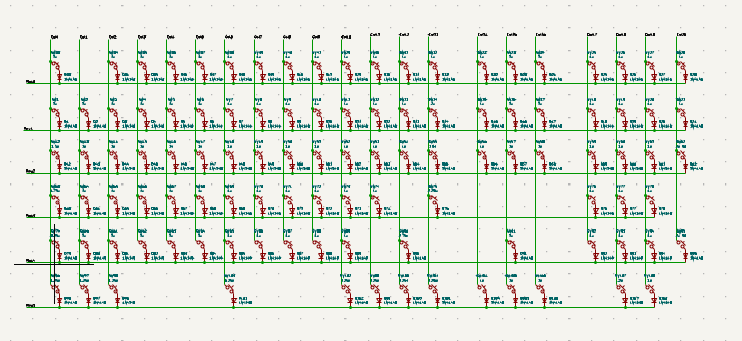
| Matrix | 6 rows x 21 columns in the firmware |
| GPIO expansion | Two MCP23017 devices addressed at 0x20 and 0x21 |
| Switch diodes | 1N4148W in SOD-123 packages |
| Display | Waveshare 1.9-inch SPI IPS LCD, 170 x 320 |
| Indicators | Caps Lock, Num Lock and battery status outputs |
| Battery | 3.7 V 500 mAh LiPo listed in the BOM |
| Switches | Akko V3 Creamy Blue Pro tactile switches |
| Keycaps | XVX Plum Blossom Cherry-profile set listed in the BOM |
| Stabilizers | DUROCK V3 Smokey 80% kit listed in the BOM |
| CAD | Fusion 360, STEP assembly and STL parts |
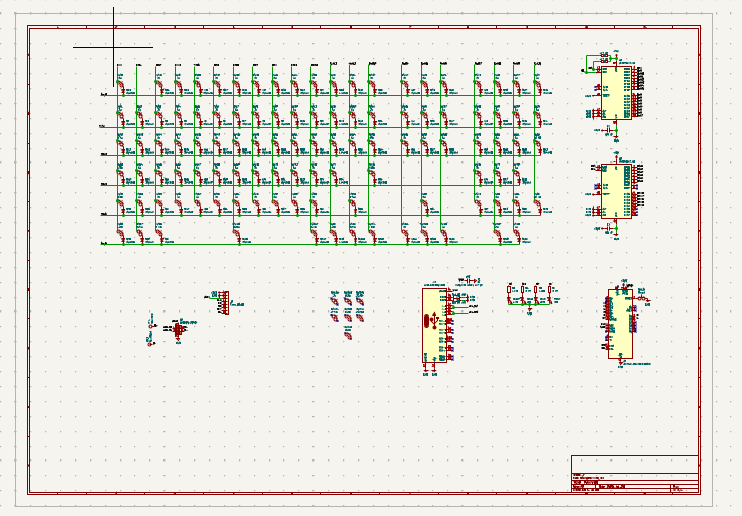
the two expanders handle the matrix lines so the Feather still has connections available for the display and indicators. the BOM has spare quantities for some parts, so its not a count of exactly whats soldered onto one board
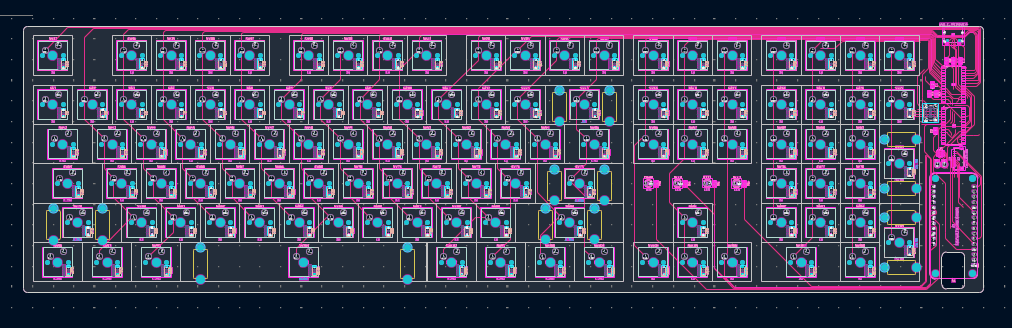
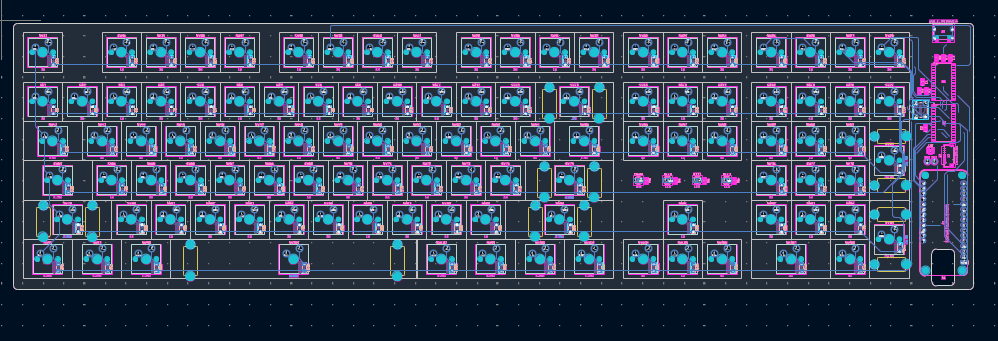
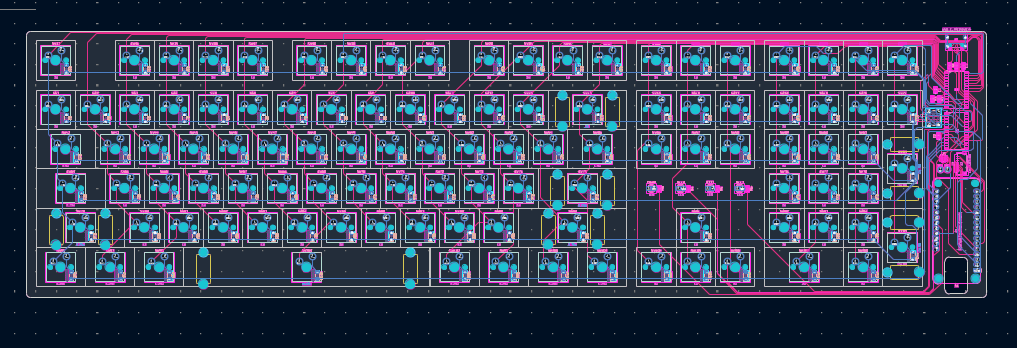
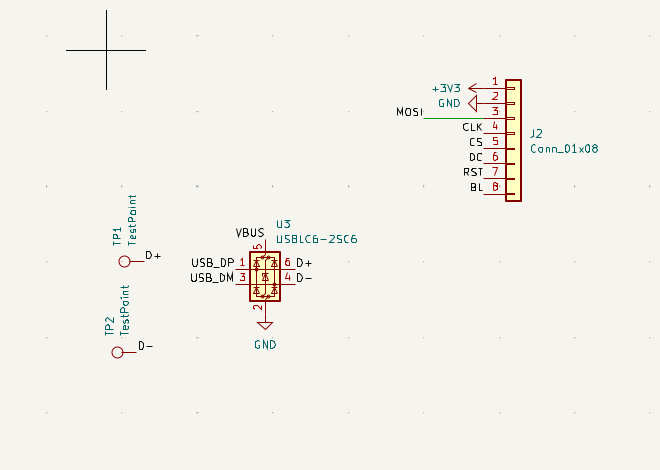
the schematic is split into the matrix and the smaller support sections.. much easier to follow than trying to put every single connection in one tangled block
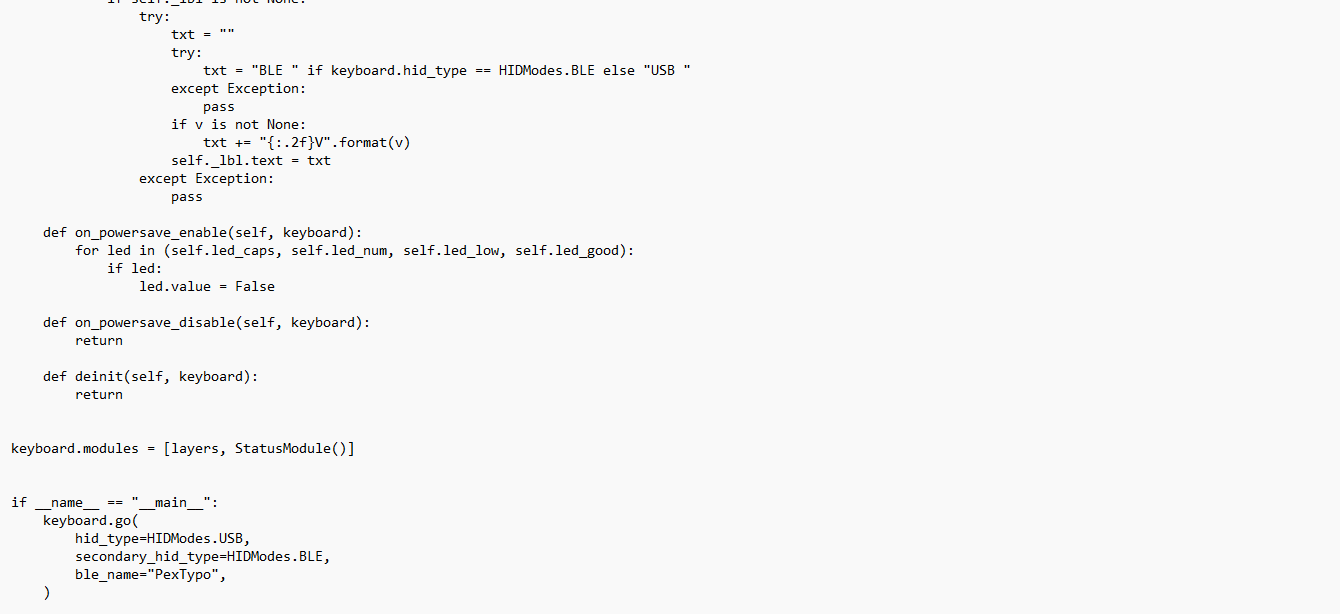
the actual code is in Firmware/code.py. this is a source screenshot, so it doesnt mean the full keyboard has passed a hardware test yet
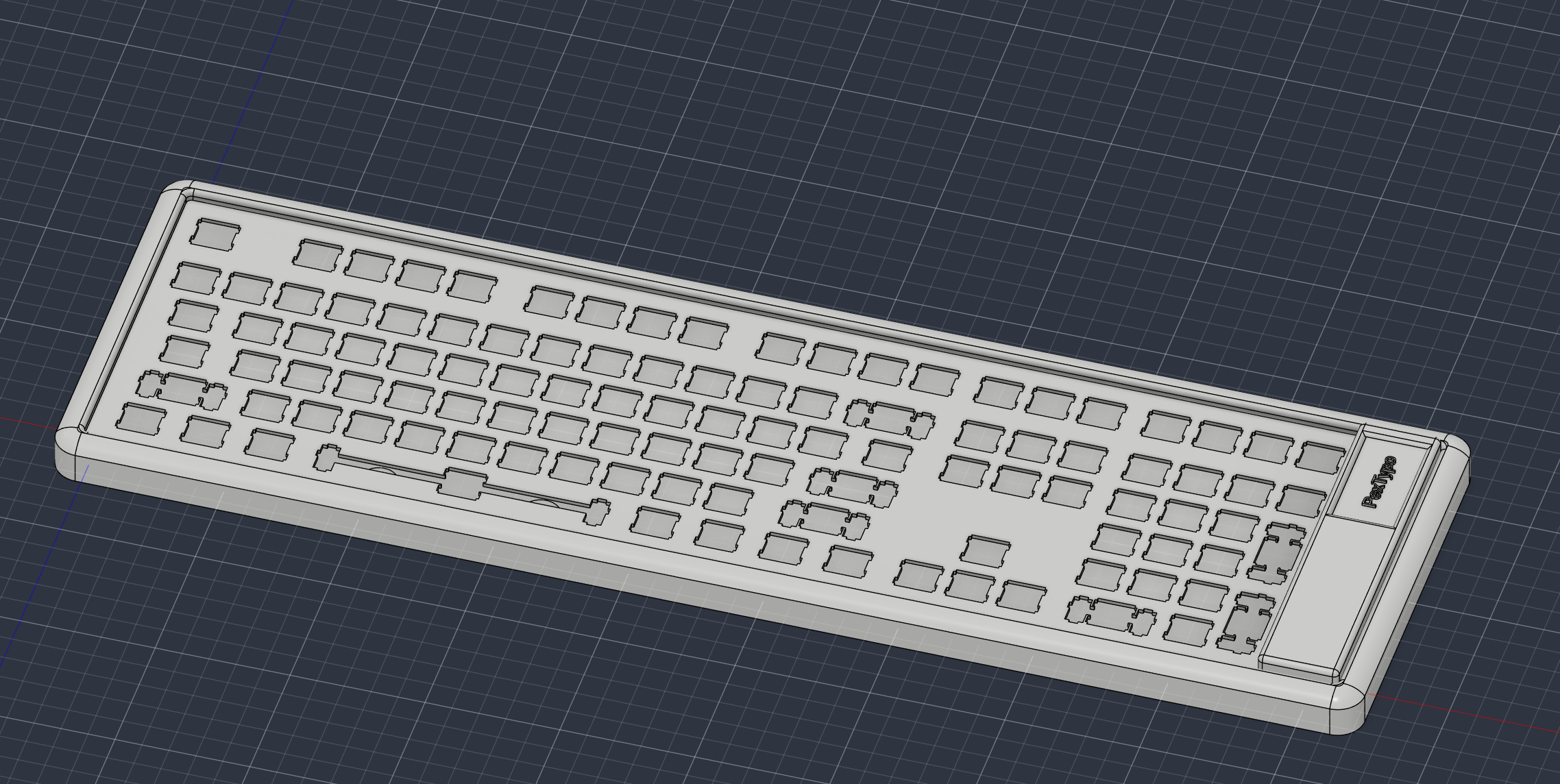
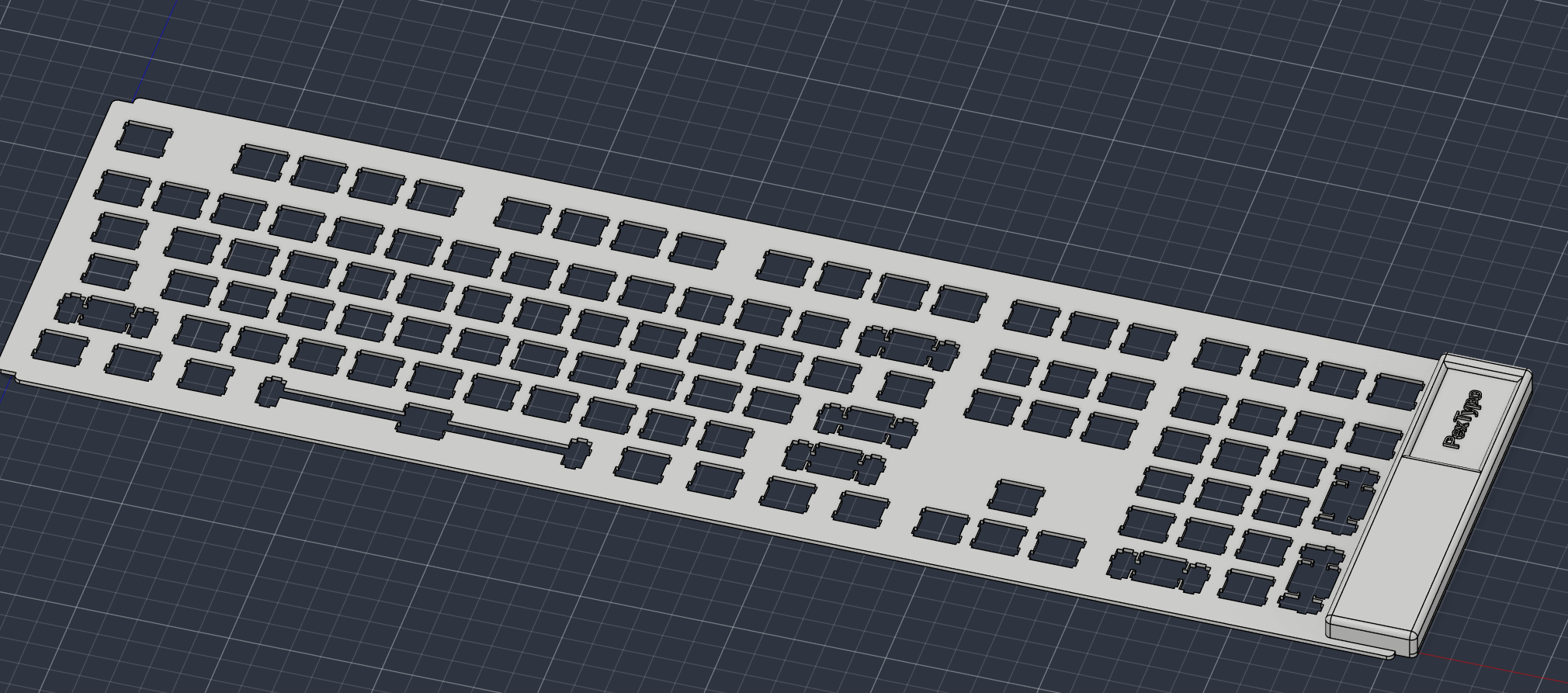
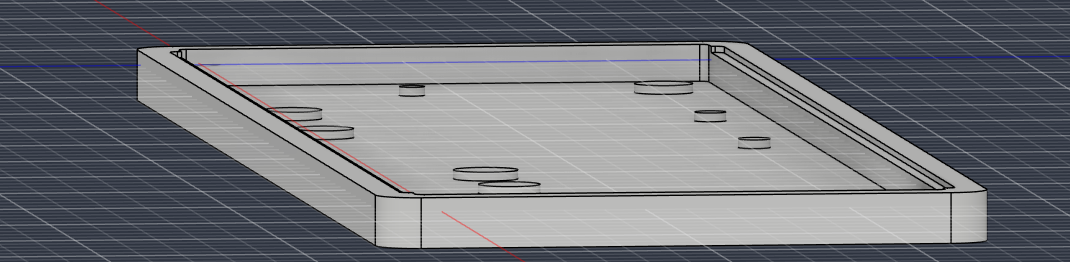
PCB/PexTypo.kicad_pro - KiCad projectPCB/PexTypo.kicad_sch - schematicPCB/PexTypo.kicad_pcb - PCB layoutCAD/Full/Pextypo.step - complete exported modelCAD/Printable/ - bottom, plate and top plate STLsFusion File/Pextypo.f3d - editable enclosure modelFirmware/code.py - KMK keyboard codeproduction/ - manufacturing archive, positions, netlist and generated BOMPDFs/ - schematic and layer exportsImg/ - project picturesBOM img/ - sourcing picturesbom.csv - purchasing BOMthe BOM inside production/ is the generated board parts list. the one at the repo root is the shopping list with the switches, keycaps and other build parts too
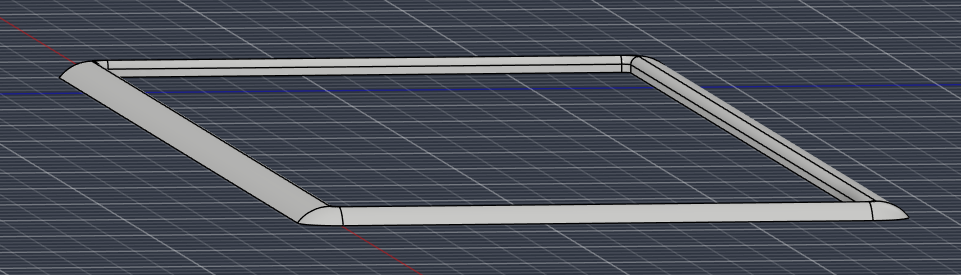
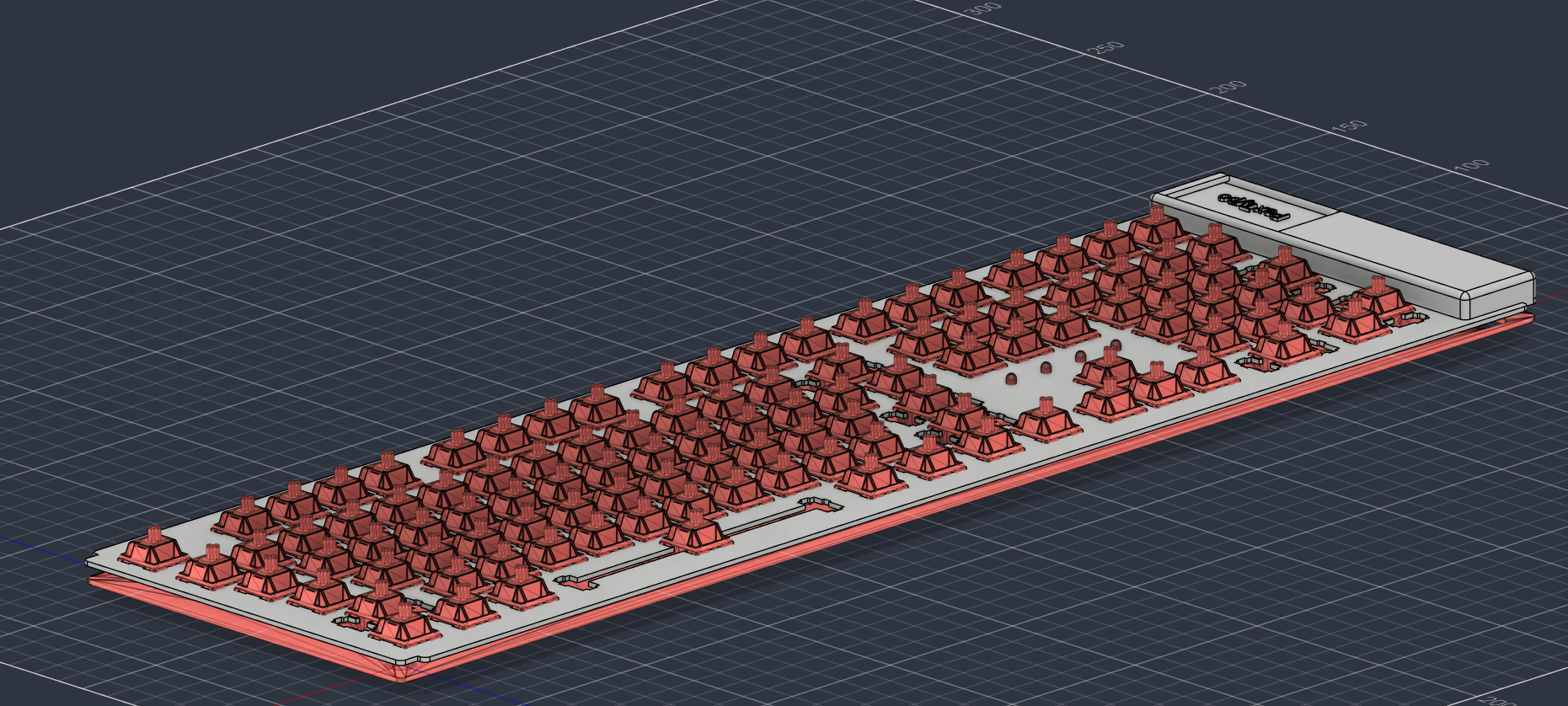
the enclosure has a bottom shell, a switch plate and a top plate. the editable model is in Fusion File/ and the print exports are in CAD/Printable/
there is also a STEP assembly in CAD/Full/ for looking at how it all fits together. check the port opening, mounting positions and room around the screen before printing.. a part looking good in the assembly doesnt automatically mean a printed screw fit will be perfect
Firmware/code.py uses KMK and the Adafruit MCP23017 library. it defines the 6 x 21 matrix, the base keymap, a second layer and USB/BLE startup with the Bluetooth name PexTypo
theres also code for the ST7789 display, blossom animation, battery voltage reading and indicator outputs. those are implemented in the source but still need checking on the actual board with the matching CircuitPython version and libraries
before flashing anything, compare the pins in the file with the schematic and install the required KMK and Adafruit dependencies. there isnt a hardware test result here to say every feature is already sorted
the parts and supplier links are in bom.csv, and the sourcing screenshots are in BOM img/
the saved BOM includes the PCB and printed case along with the electronics and keyboard parts. prices are recorded in USD and are a sourcing snapshot.. shipping, taxes and supplier pack sizes can change what the order actually costs
some of the main bits :
| Part | Purpose |
|---|---|
| Adafruit Feather nRF52840 Express | Run the keyboard and handle USB/BLE |
| MCP23017 | Provide the extra matrix connections |
| 1N4148W | Isolate switches in the matrix |
| Waveshare 1.9-inch IPS LCD | Show the display scene and status information |
| 3 mm LEDs | Lock and battery indicators |
| 500 mAh LiPo | Rechargeable power |
| Akko V3 Creamy Blue Pro | Mechanical switches |
| XVX Plum Blossom set | Keycaps |
| DUROCK V3 kit | Support the larger keys |
| Qty | Value | Footprint | References |
|---|---|---|---|
| 108 | 1N4148 | Diode_SMD:D_SOD-123 | D1, D10, D11, D12, D13, D14, D15, D100, D101, D102, D103, D104, D105, D106, D107, D108 +92 |
| 90 | 1u | PCM_Switch_Keyboard_Cherry_MX:SW_Cherry_MX_PCB_1.00u | SW1, SW2, SW10, SW11, SW12, SW13, SW15, SW16, SW17, SW18, SW19, SW20, SW104, SW105, SW106, SW108 +74 |
| 7 | 1.25u | PCM_Switch_Keyboard_Cherry_MX:SW_Cherry_MX_PCB_1.25u | SW96, SW97, SW98, SW99, SW100, SW101, SW102 |
| 4 | 1 kΩ | Resistor_SMD:R_0805_2012Metric | R3, R4, R5, R6 |
| 4 | LED | LED_THT:LED_D3.0mm | D109, D110, D111, D112 |
| 2 | 1.5u | PCM_Switch_Keyboard_Cherry_MX:SW_Cherry_MX_PCB_1.50u | SW42, SW55 |
| 2 | 100 nF | Capacitor_SMD:C_0805_2012Metric | C1, C2 |
| 2 | 2.25u | PCM_marbastlib-mx:STAB_MX_2.25u | SW109, SW113 |
| 2 | 2.25u | PCM_Switch_Keyboard_Cherry_MX:SW_Cherry_MX_PCB_2.25u | SW75, SW79 |
| 2 | 2u | PCM_Switch_Keyboard_Cherry_MX:SW_Cherry_MX_PCB_2.00u | SW14, SW107 |
| 2 | 2u 90 | PCM_marbastlib-mx:STAB_MX_2u | SW114, SW115 |
| 2 | 2u 90 | PCM_Switch_Keyboard_Cherry_MX:SW_Cherry_MX_PCB_2.00u_90deg | SW62, SW95 |
| 2 | 4.7 kΩ | Resistor_SMD:R_0805_2012Metric | R1, R2 |
| 2 | 5.1 kΩ ±5% | Resistor_SMD:R_0805_2012Metric | R7, R8 |
| 2 | MCP23017_SO | Package_SO:SOIC-28W_7.5x17.9mm_P1.27mm | U1, U2 |
| 2 | TestPoint | TestPoint:TestPoint_THTPad_D2.0mm_Drill1.0mm | TP1, TP2 |
| 1 | 1.75u | PCM_Switch_Keyboard_Cherry_MX:SW_Cherry_MX_PCB_1.75u | SW63 |
| 1 | 2.75u | PCM_marbastlib-mx:STAB_MX_2.75u | SW111 |
| 1 | 2.75u | PCM_Switch_Keyboard_Cherry_MX:SW_Cherry_MX_PCB_2.75u | SW90 |
| 1 | 2u | PCM_marbastlib-mx:STAB_MX_2u | SW112 |
| 1 | 6.25u | PCM_Switch_Keyboard_Cherry_MX:SW_Cherry_MX_Plate_6.25u | SW103 |
| 1 | 6.25u | PCM_marbastlib-mx:STAB_MX_6.25u | SW110 |
| 1 | Adafruit_Feather_Generic | Module:Adafruit_Feather_WithMountingHoles | A1 |
| 1 | Conn_01x08 | Connector_JST:JST_SH_SM08B-SRSS-TB_1x08-1MP_P1.00mm_Horizontal | J2 |
| 1 | Reset | Button_Switch_THT:SW_PUSH_6mm | SW116 |
| 1 | USBLC6-2SC6 | Package_TO_SOT_SMD:SOT-23-6 | U3 |
| 1 | USB_C_Receptacle | Connector_USB:USB_C_Receptacle_HRO_TYPE-C-31-M-12 | J1 |
| 1 | X5R/X7R ≥10 V 4.7 µF | Capacitor_SMD:C_0805_2012Metric | C3 |


TalismanDesign/PocketMage_PDA
An E-Ink PDA device using the ESP32 S3.


shorepine/tulipcc
The Tulip Creative Computer and AMYboard - portable Python synthesizers


LeoDJ/FW-EC-DongleHiderPlus
Framework Expansion Card that includes a USB hub to hide a bare dongle inside and still have a USB-A port externally
It measures 464.4 × 129.1 mm and has 2 copper layers, 1.6 mm thick.
247 parts, built around the USBLC6-2SC6. The full list of its parts is on this page, with links to each part's symbol and footprint where PCBKit's library has them.
From the utkarshminblr/PexTypo repository on GitHub, at the commit this page was made from: the board is PCB/PexTypo.kicad_pcb and its schematic PCB/PexTypo.kicad_sch. PCBKit opens the board in the browser, with nothing to install.
Its repository states no licence, so its author keeps all rights: ask utkarshminblr before reusing the design.