4 layers42 × 42 mm

 udu3324/stepper-synth
An electronic instrument that uses stepper motors to make music
Stepper synth is an open-source printed circuit board by udu3324, from the udu3324/stepper-synth repository on GitHub, published under the GPL-3.0 licence. It is a 2-layer board of 266.7 × 81 mm with 224 parts on 183 nets, routed with 1,559 tracks and 264 vias.
It is built around the TMC2209-LA, CD74HC4067M and TPS2115APW, with the WS2812B, SS14 and USB4105-GF-A among its other parts. Its parts include 83 capacitors, 49 ICs, 27 resistors, 9 diodes and 8 connectors. It belongs with the robots and motor control and audio and music boards and the ESP32 boards of this library.


An electronic instrument that uses stepper motors to make music. Powered by the esp32 ecosystem, it is a synthesizer with 3 octaves with velocity support using hall effect sensors. It is inspired by the musician/engineer Love Hultén.
There's so many electronic instruments that make sounds purely through cables and rely on other devices to output to them. Instead, what if I used the power of stepper motors to make sound and create a standalone device? I notice how harmonic these motors could be while 3d printing, they sometimes have a noticable pattern and variable pitch that can be utilized.
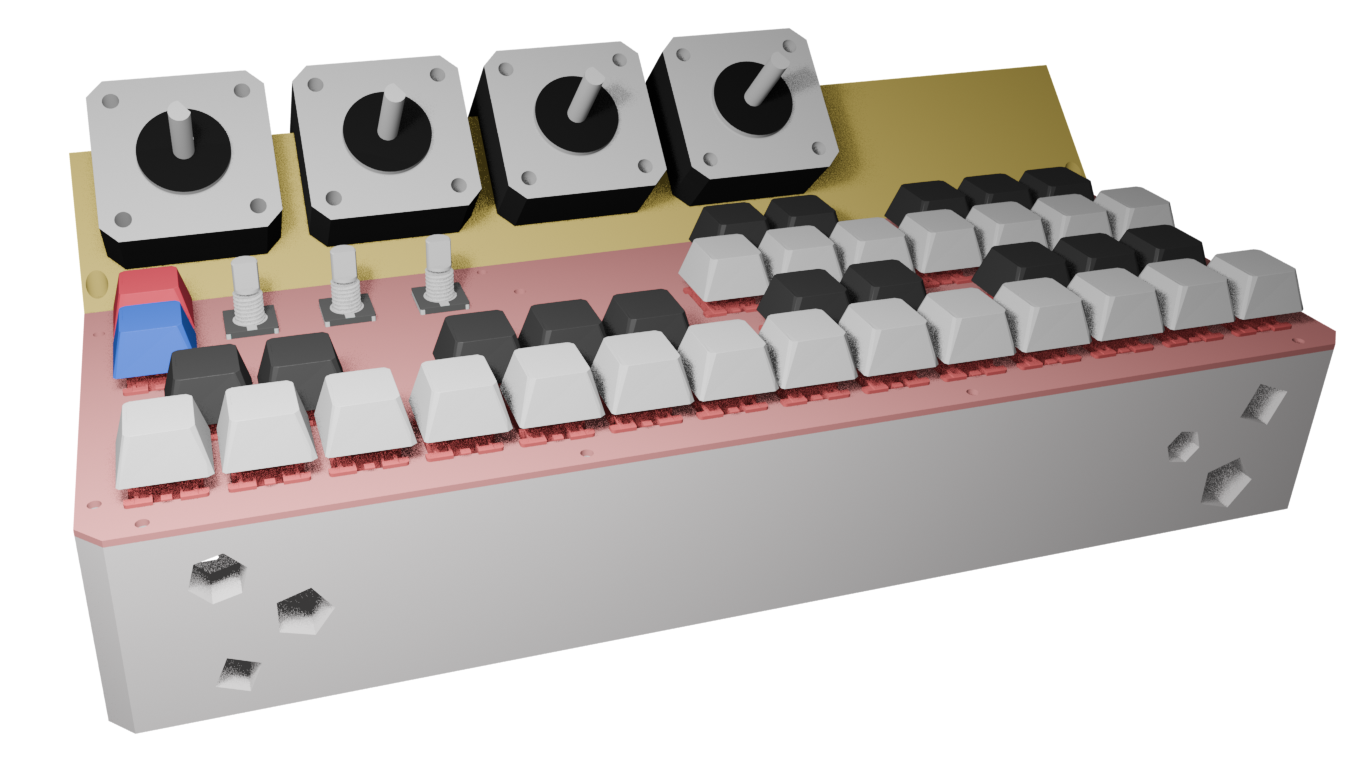
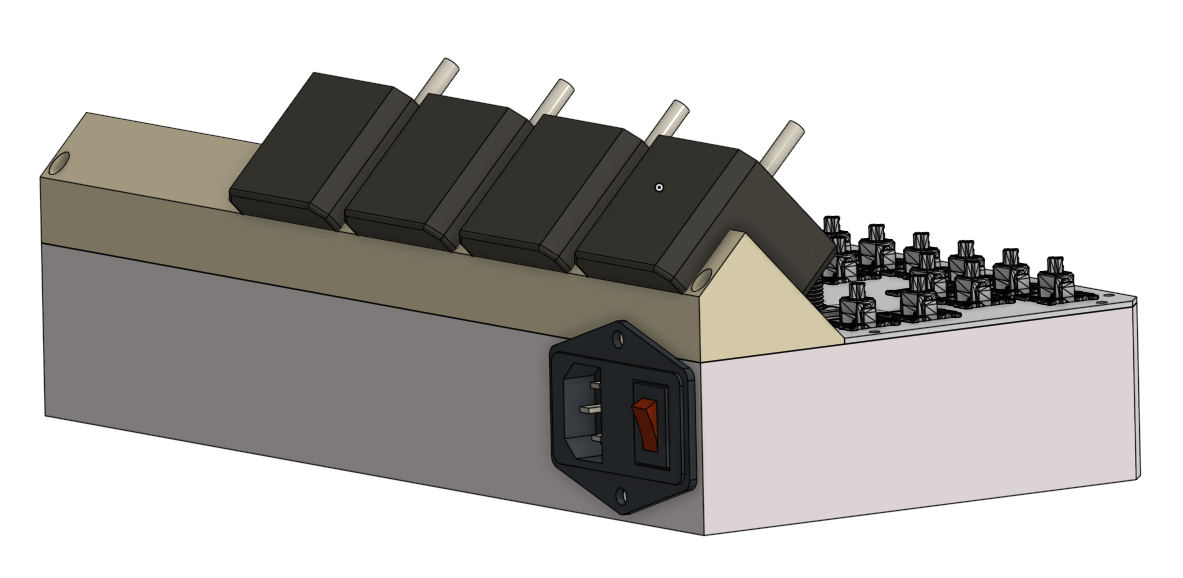
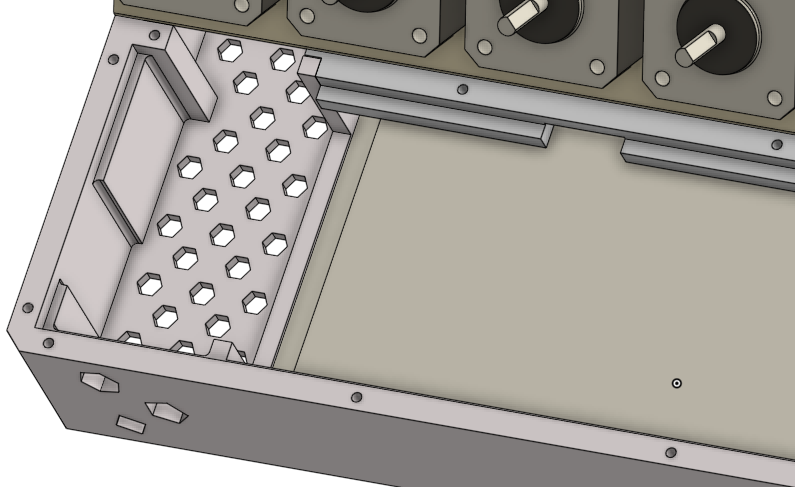
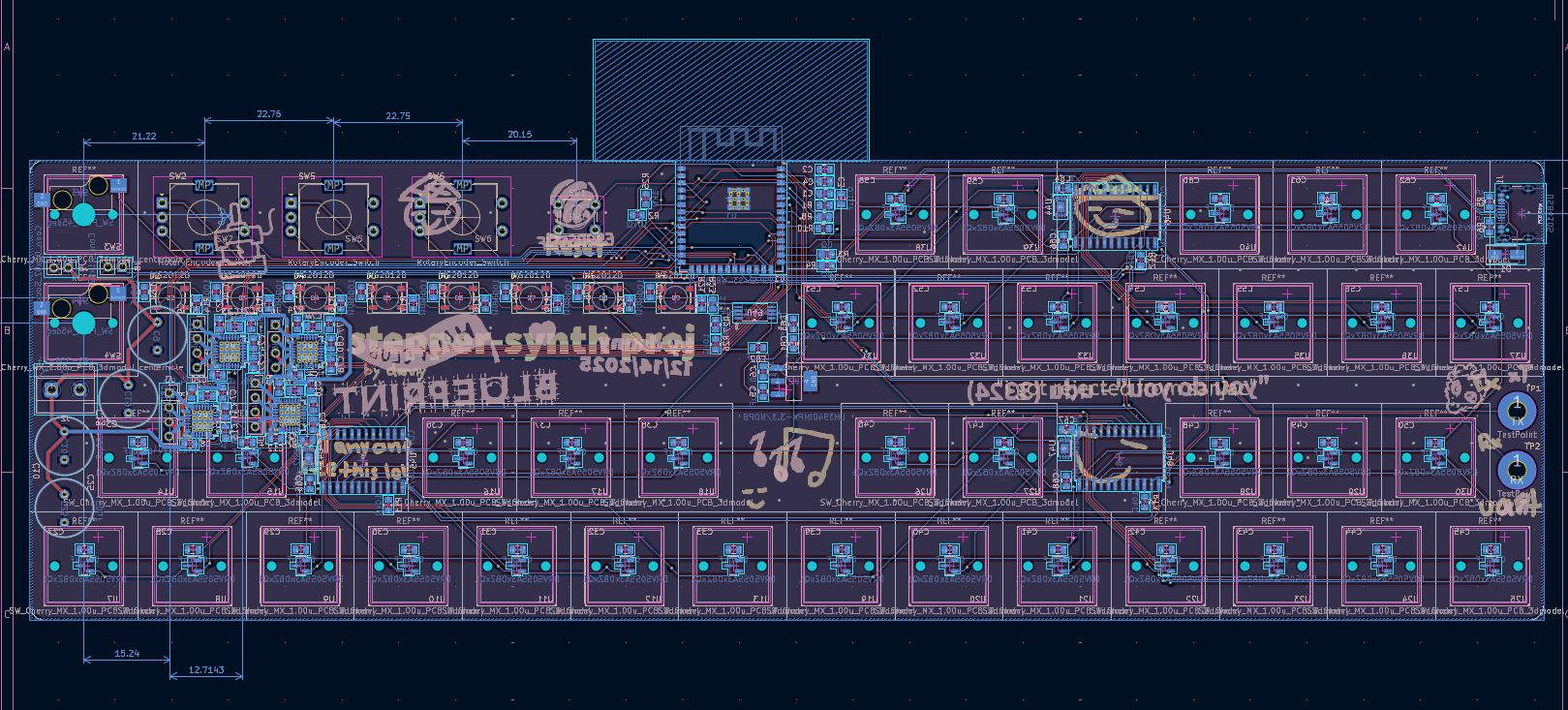
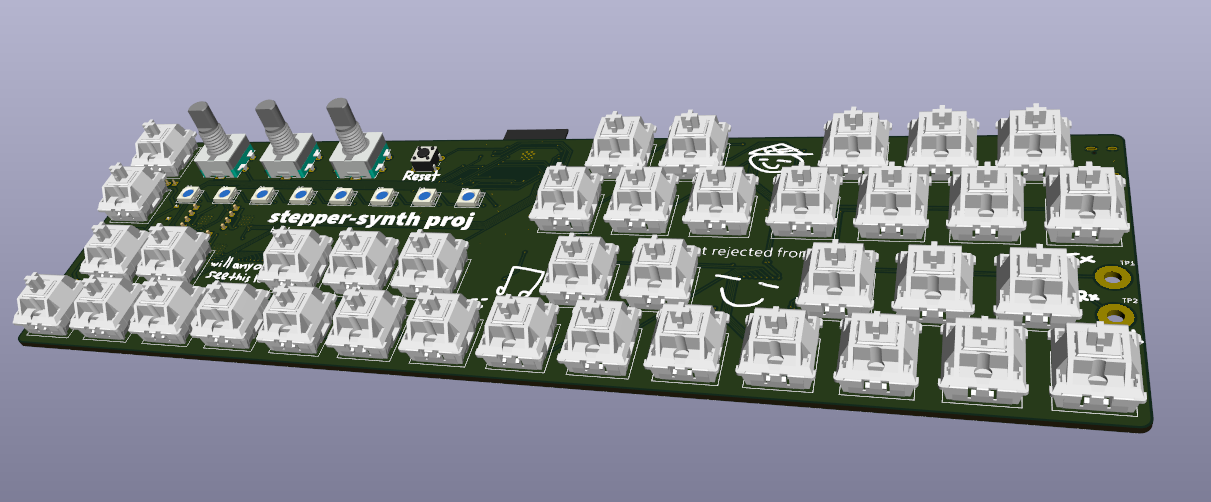
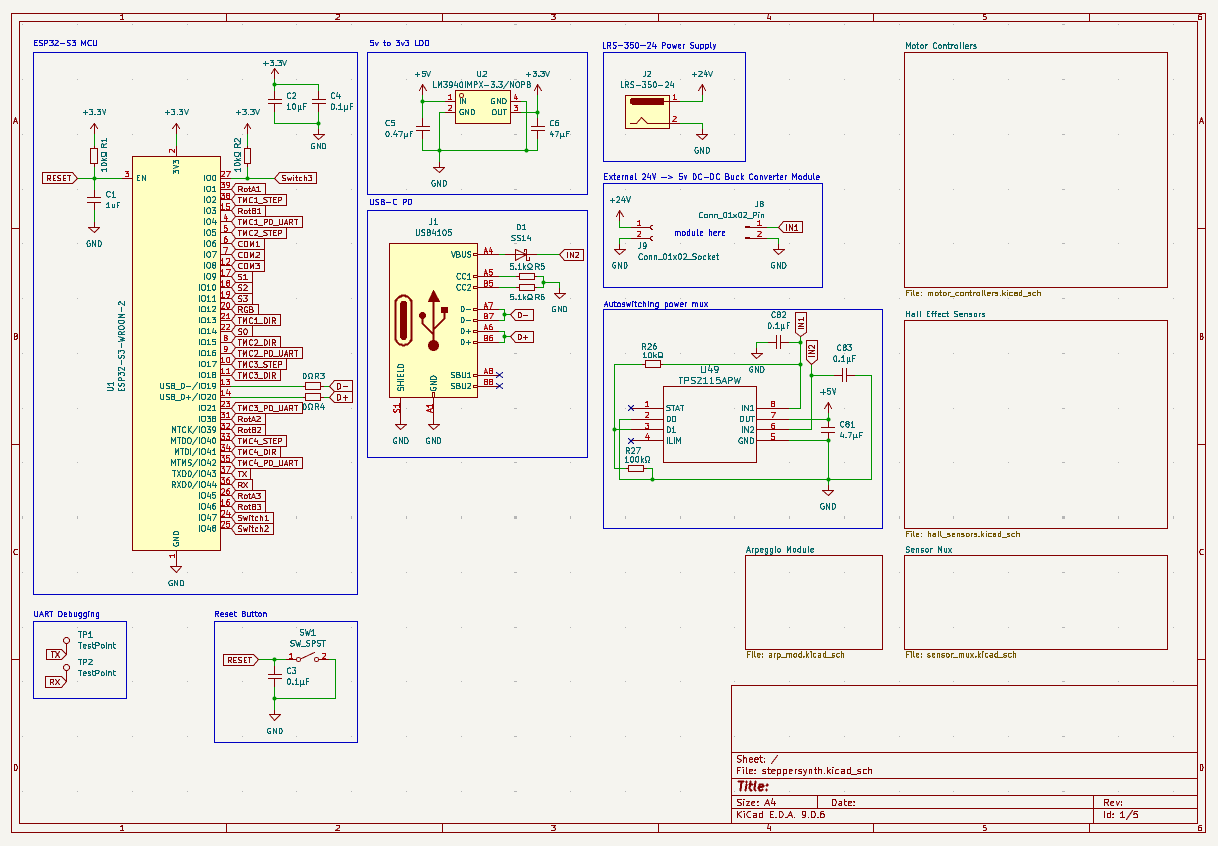
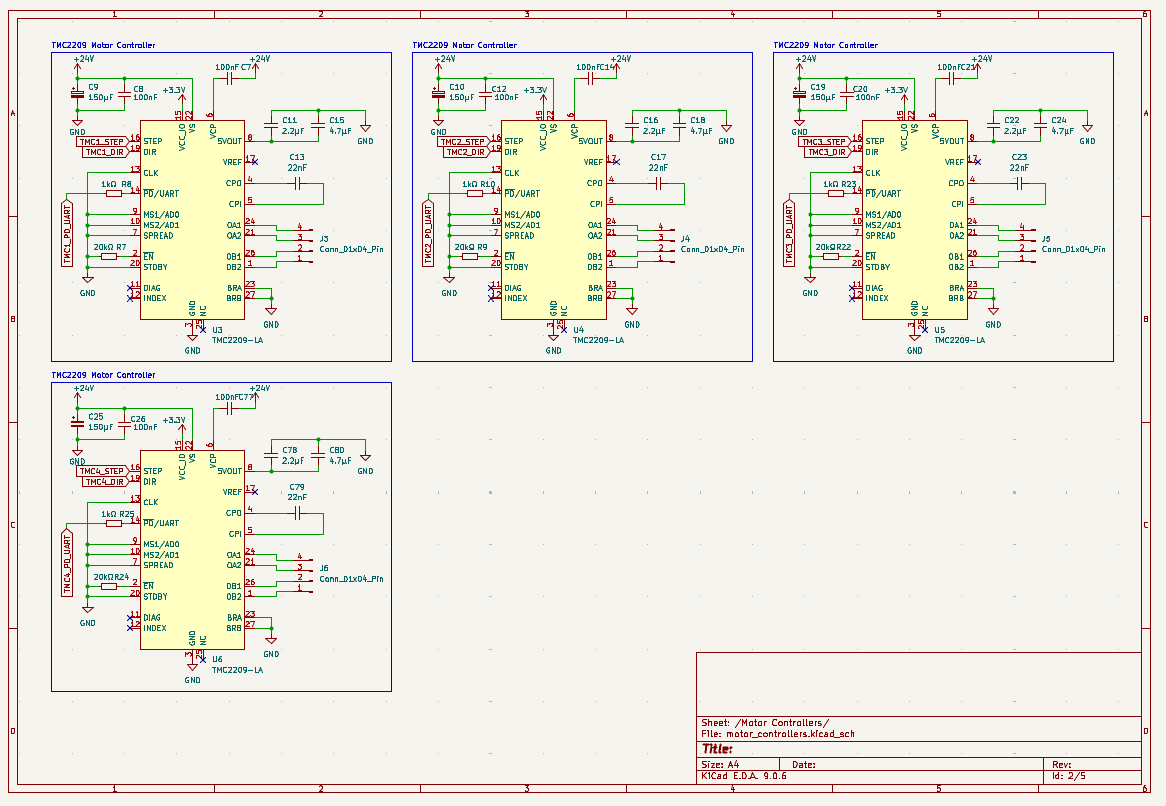
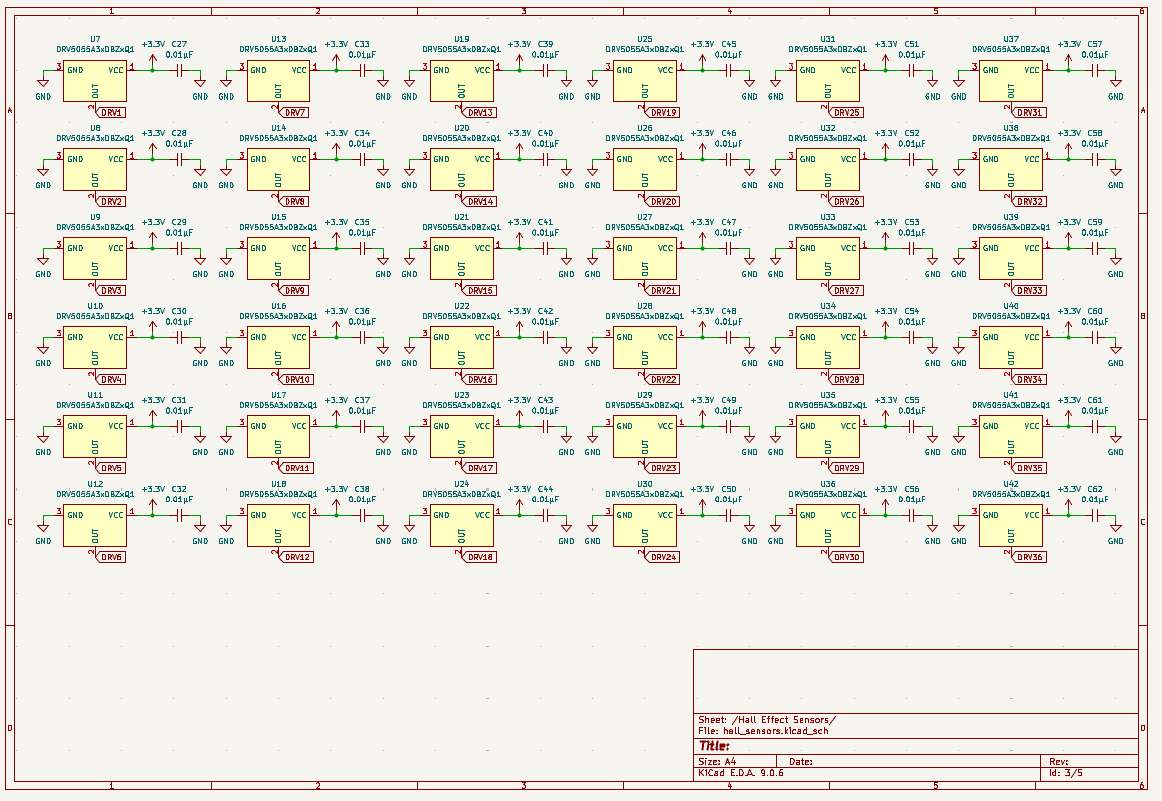
Sadly I was aiming for tier 2 budget but didn't realize how much tariffs and shipping would push me out of it 😭
Interactive Link: google sheets
| Qty | Value | Footprint | References |
|---|---|---|---|
| 36 | 0.01µF | Capacitor_SMD:C_0805_2012Metric | C27, C28, C29, C30, C31, C32, C33, C34, C35, C36, C37, C38, C39, C40, C41, C42 +20 |
| 36 | DRV5055A3xDBZxQ1 | Package_TO_SOT_SMD:SOT-23 | U10, U11, U12, U13, U14, U15, U16, U17, U18, U19, U20, U21, U22, U23, U24, U25 +20 |
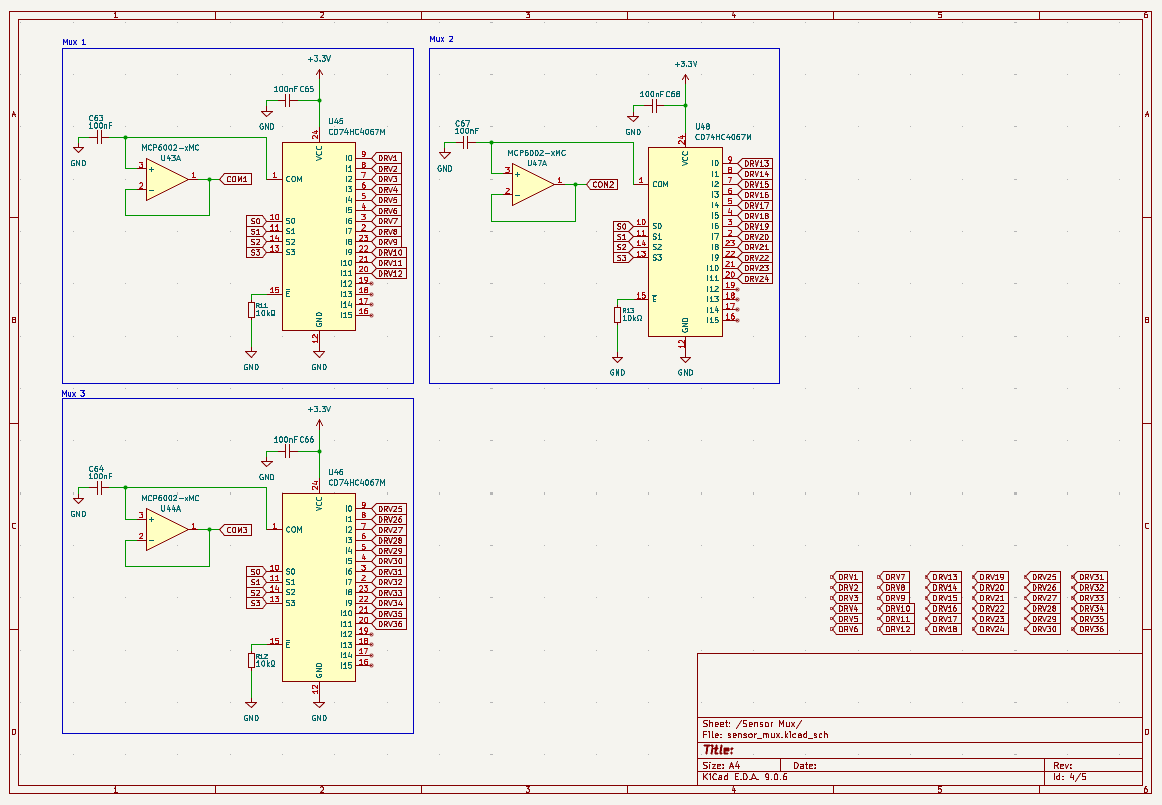
| 22 | 100nF | Capacitor_SMD:C_0805_2012Metric | C7, C12, C14, C20, C21, C26, C63, C64, C65, C66, C67, C68, C69, C70, C71, C72 +6 |
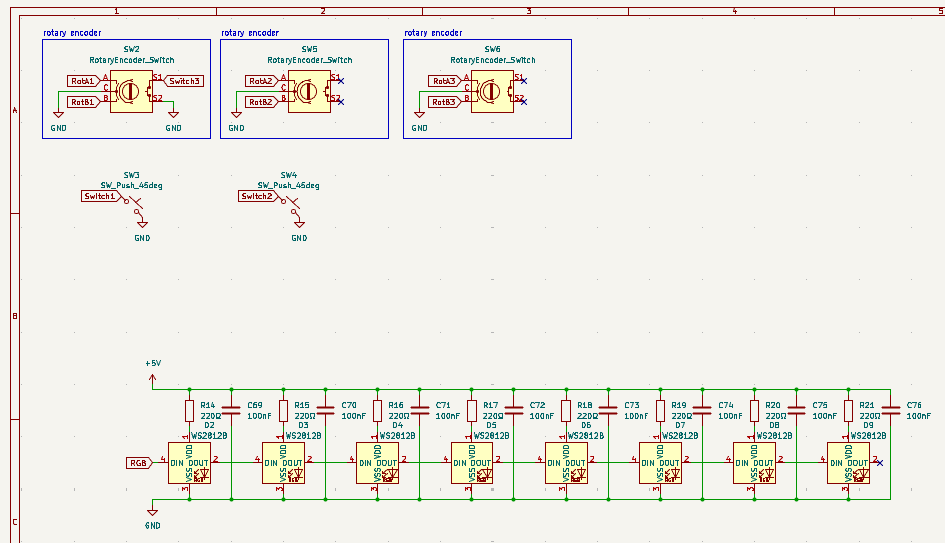
| 8 | 220Ω | Resistor_SMD:R_0805_2012Metric | R14, R15, R16, R17, R18, R19, R20, R21 |
| 8 | WS2812B | LED_SMD:LED_WS2812B_PLCC4_5.0x5.0mm_P3.2mm | D2, D3, D4, D5, D6, D7, D8, D9 |
| 6 | 10kΩ | Resistor_SMD:R_0805_2012Metric | R1, R2, R11, R12, R13, R26 |
| 4 | 0.1μF | Capacitor_SMD:C_0805_2012Metric | C3, C4, C82, C83 |
| 4 | 150µF | Capacitor_THT:C_Radial_D10.0mm_H12.5mm_P5.00mm | C9, C10, C19, C25 |
| 4 | 1kΩ | Resistor_SMD:R_0805_2012Metric | R8, R10, R23, R25 |
| 4 | 2.2µF | Capacitor_SMD:C_0805_2012Metric | C11, C16, C22, C78 |
| 4 | 20kΩ | Resistor_SMD:R_0805_2012Metric | R7, R9, R22, R24 |
| 4 | 22nF | Capacitor_SMD:C_0805_2012Metric | C13, C17, C23, C79 |
| 4 | 4.7µF | Capacitor_SMD:C_0805_2012Metric | C15, C18, C24, C80 |
| 4 | Conn_01x04_Pin | Connector_PinHeader_2.54mm:PinHeader_1x04_P2.54mm_Vertical | J3, J4, J5, J6 |
| 4 | TMC2209-LA | Package_DFN_QFN:VQFN-28-1EP_5x5mm_P0.5mm_EP3.7x3.7mm_ThermalVias | U3, U4, U5, U6 |
| 3 | CD74HC4067M | Package_SO:SOIC-24W_7.5x15.4mm_P1.27mm | U45, U46, U48 |
| 3 | MCP6002-xMC | Package_DFN_QFN:DFN-8-1EP_3x2mm_P0.5mm_EP1.75x1.45mm | U43, U44, U47 |
| 3 | RotaryEncoder_Switch | Rotary_Encoder:RotaryEncoder_Alps_EC11E-Switch_Vertical_H20mm | SW2, SW5, SW6 |
| 2 | 0Ω | Resistor_SMD:R_0805_2012Metric | R3, R4 |
| 2 | 5.1kΩ | Resistor_SMD:R_0805_2012Metric | R5, R6 |
| 2 | SW_Push_45deg | EasyEDA:TH_L10.9-W5.9-CPG151101S11 | SW3, SW4 |
| 2 | TestPoint | MountingHole:MountingHole_3.2mm_M3_Pad | TP1, TP2 |
| 1 | 0.47μF | Capacitor_SMD:C_0805_2012Metric | C5 |
| 1 | 100kΩ | Resistor_SMD:R_0805_2012Metric | R27 |
| 1 | 10μF | Capacitor_SMD:C_0805_2012Metric | C2 |
| 1 | 1uF | Capacitor_SMD:C_0805_2012Metric | C1 |
| 1 | 4.7μF | Capacitor_SMD:C_0805_2012Metric | C81 |
| 1 | 47μF | Capacitor_SMD:C_0805_2012Metric | C6 |
| 1 | Conn_01x02_Pin | Connector_PinSocket_2.54mm:PinSocket_1x02_P2.54mm_Vertical | J8 |
| 1 | Conn_01x02_Socket | Connector_PinSocket_2.54mm:PinSocket_1x02_P2.54mm_Vertical | J9 |
| 1 | ESP32-S3-WROOM-2 | RF_Module:ESP32-S3-WROOM-2 | U1 |
| 1 | LM3940IMPX-3.3/NOPB | EasyEDA:SOT-223-4_L6.5-W3.5-P2.30-LS7.0-BR | U2 |
| 1 | LOGO | 1_udu_lib:stepper_drawing_f | G*** |
| 1 | LOGO | 1_udu_lib:stepper_drawing_b | G*** |
| 1 | LRS-350-24 | TerminalBlock_MetzConnect:TerminalBlock_MetzConnect_Type055_RT01502HDWU_1x02_P5.00mm_Horizontal | J2 |
| 1 | SS14 | Diode_SMD:D_SMA | D1 |
| 1 | SW_SPST | Button_Switch_THT:SW_PUSH_6mm | SW1 |
| 1 | TPS2115APW | 2_udu_lib:PW8 | U49 |
| 1 | USB4105 | Connector_USB:USB_C_Receptacle_GCT_USB4105-xx-A_16P_TopMnt_Horizontal | J1 |
The 186 most common of 224 parts.
It measures 266.7 × 81 mm and has 2 copper layers, 1.6 mm thick.
224 parts, built around the TMC2209-LA, CD74HC4067M, TPS2115APW and WS2812B. The full list of its parts is on this page, with links to each part's symbol and footprint where PCBKit's library has them.
From the udu3324/stepper-synth repository on GitHub, at the commit this page was made from: the board is pcb/steppersynth/steppersynth.kicad_pcb and its schematic pcb/steppersynth/arp_mod.kicad_sch. PCBKit opens the board in the browser, with nothing to install.
Its repository publishes it under the GPL-3.0 licence: you may reuse it on that licence's terms (keep the author's notice, and for a copyleft licence share your changes alike).

Thijs-Buisman/sensorsysteem-cartesius
Automatisch passantentelsysteem voor wijk Cartesius (Utrecht). Lasersensor + fotodiode op Arduino Nano met SD-logging en RTC. Ontwikkeld voor QUEST-project 'Gezond leven in Cartesius' – Hogeschool Utrecht 2026.


AMOVFC/PanTilt
Three projects live in this folder. They share NewLibrary.kicadsym, TMC2209.pretty and the same philosophy: nothing on the board needs precision placement, every active part is a module in a socket.

sbbxiii/The-Armadillo
The Armadillo: Custom Arduino-compatible ATmega328P stepper motor controller PCB with Trinamic TMC2209 silent driver and single-wire UART
