4 layers36.8 × 78.6 mm

 tschicki/PS2-Portable207
A custom designed PS2 Portable
PS2 79004 Rev 0 4 is an open-source printed circuit board by tschicki, from the tschicki/PS2-Portable repository on GitHub, published under the MIT licence. It is a 6-layer board of 121 × 83 mm with 770 parts on 1,201 nets, routed with 6,487 tracks and 2,481 vias.
It is built around the 74LVC1G07, TPS629210DRL and 74LVC1G08Z, with the APX811-31UG, TLV75518PDRV and TXS0102DQER among its other parts. Its parts include 314 capacitors, 135 resistors, 20 ICs, 8 diodes and 7 transistors.


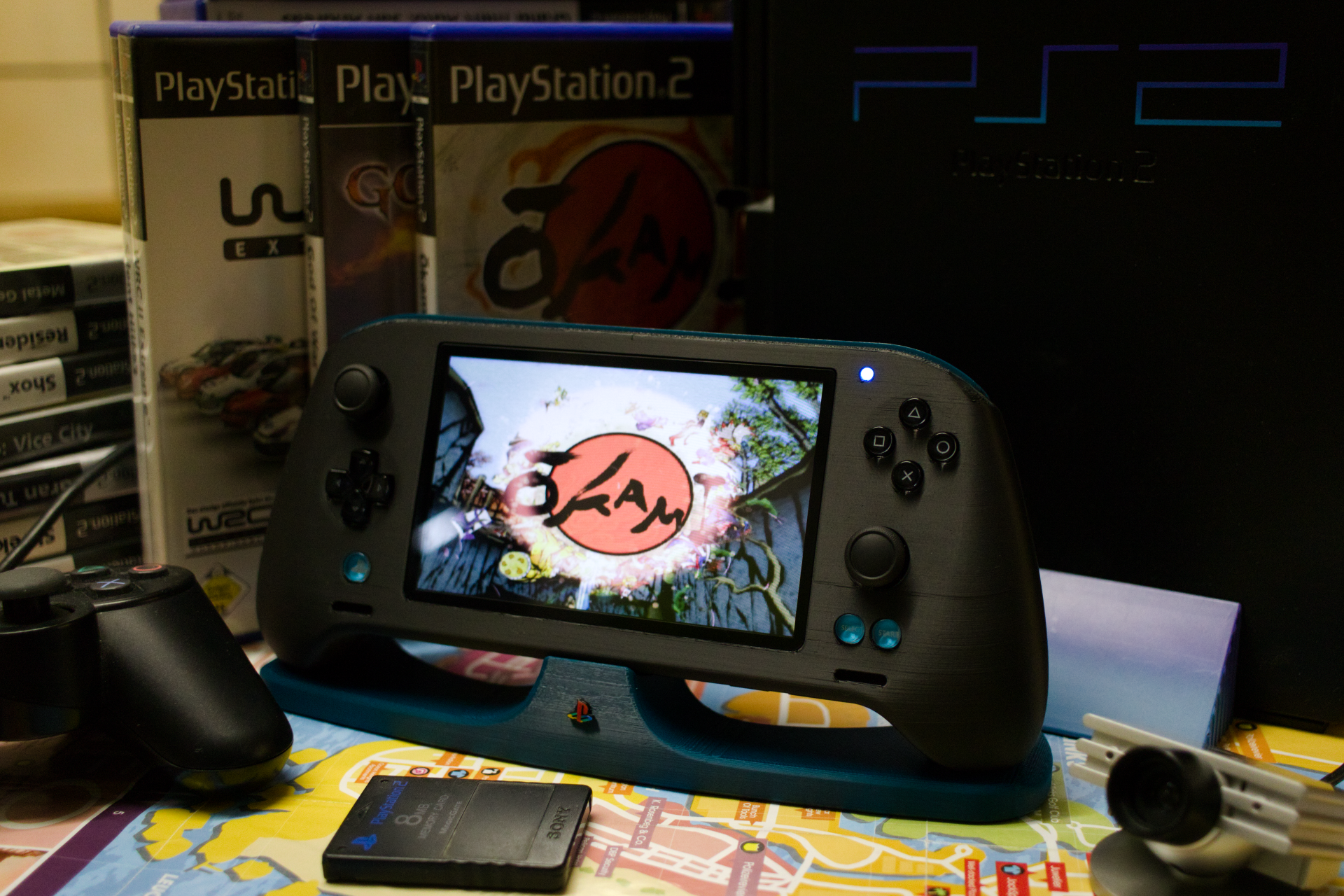
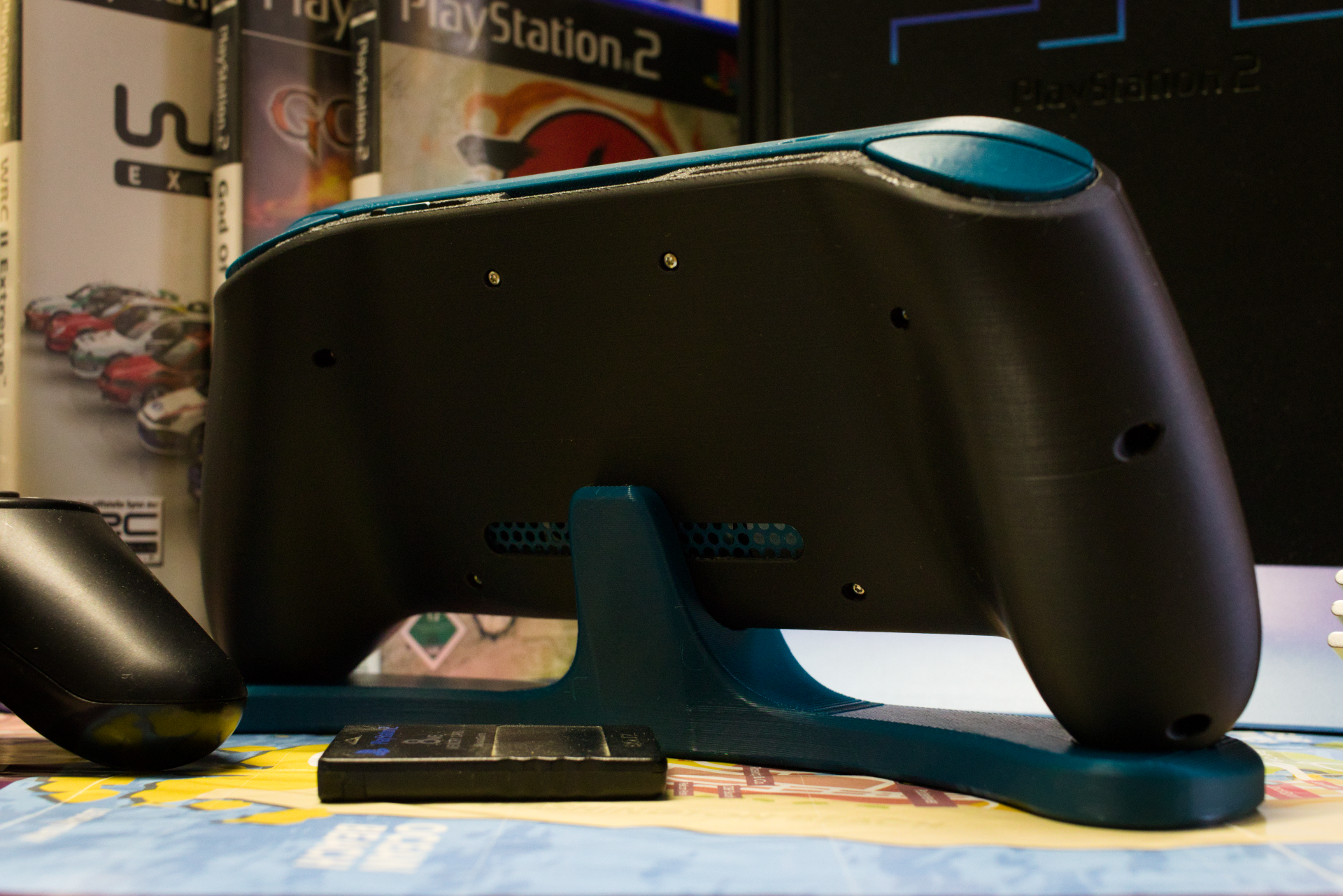
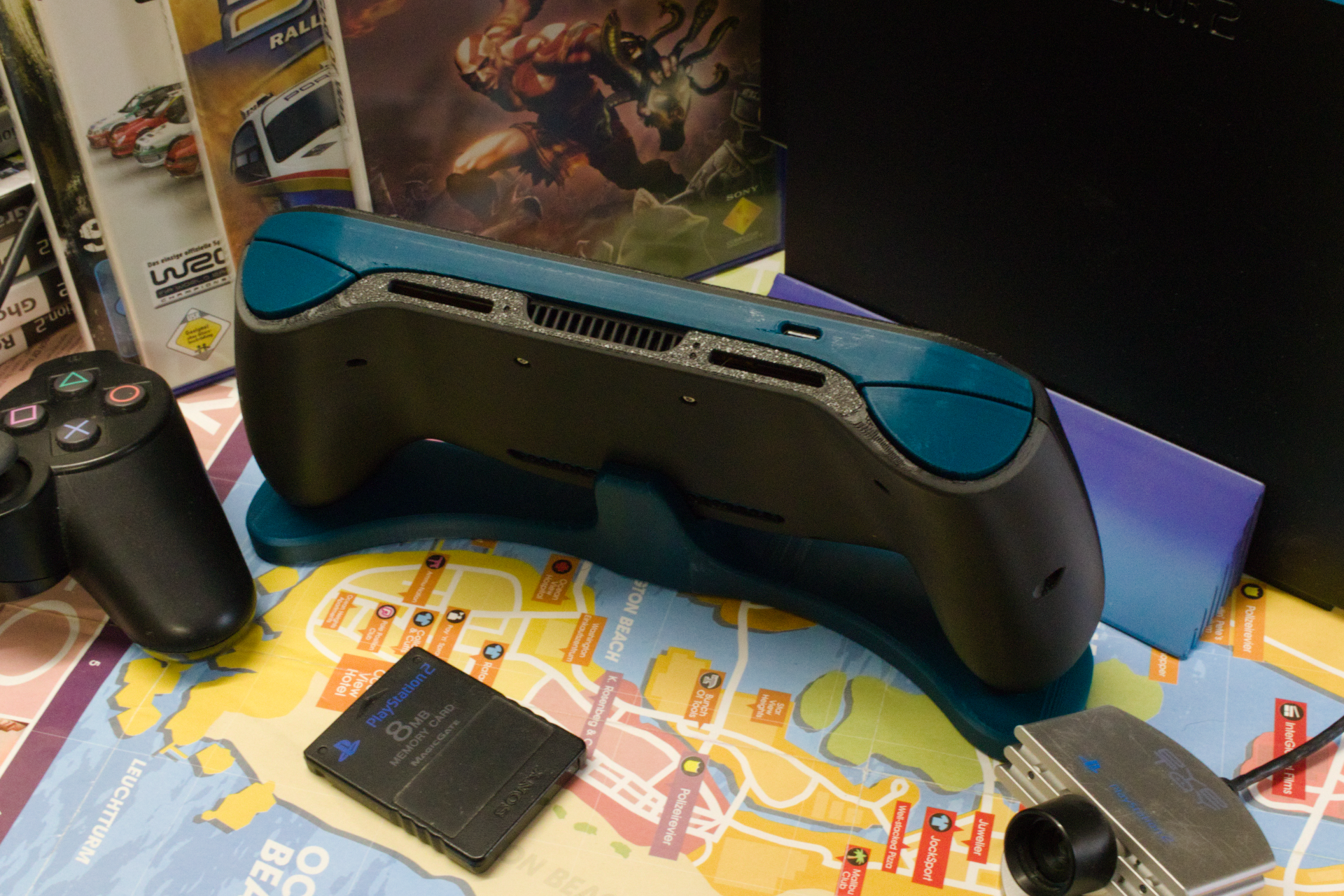
Just like the title says, this is a PlayStation 2 portable designed from scratch. This portable contains presumably world's first custom reverse engineered PS2 mainboard not made by Sony. It is only reusing 6 ICs of an original PS2, salvaged from SCPH-7900x or SCPH-9000x mainboards.
Most PS2 games can be played natively via OPL or NHDDL and the portable also features support for PS1 games via DKWDRV. Its two custom memory card slots are compatible with miniaturized PS2 Memory Cards, SD-Cards (MX4SIO) and a miniaturized SD2PSX.
Development of this project was started in 2022.
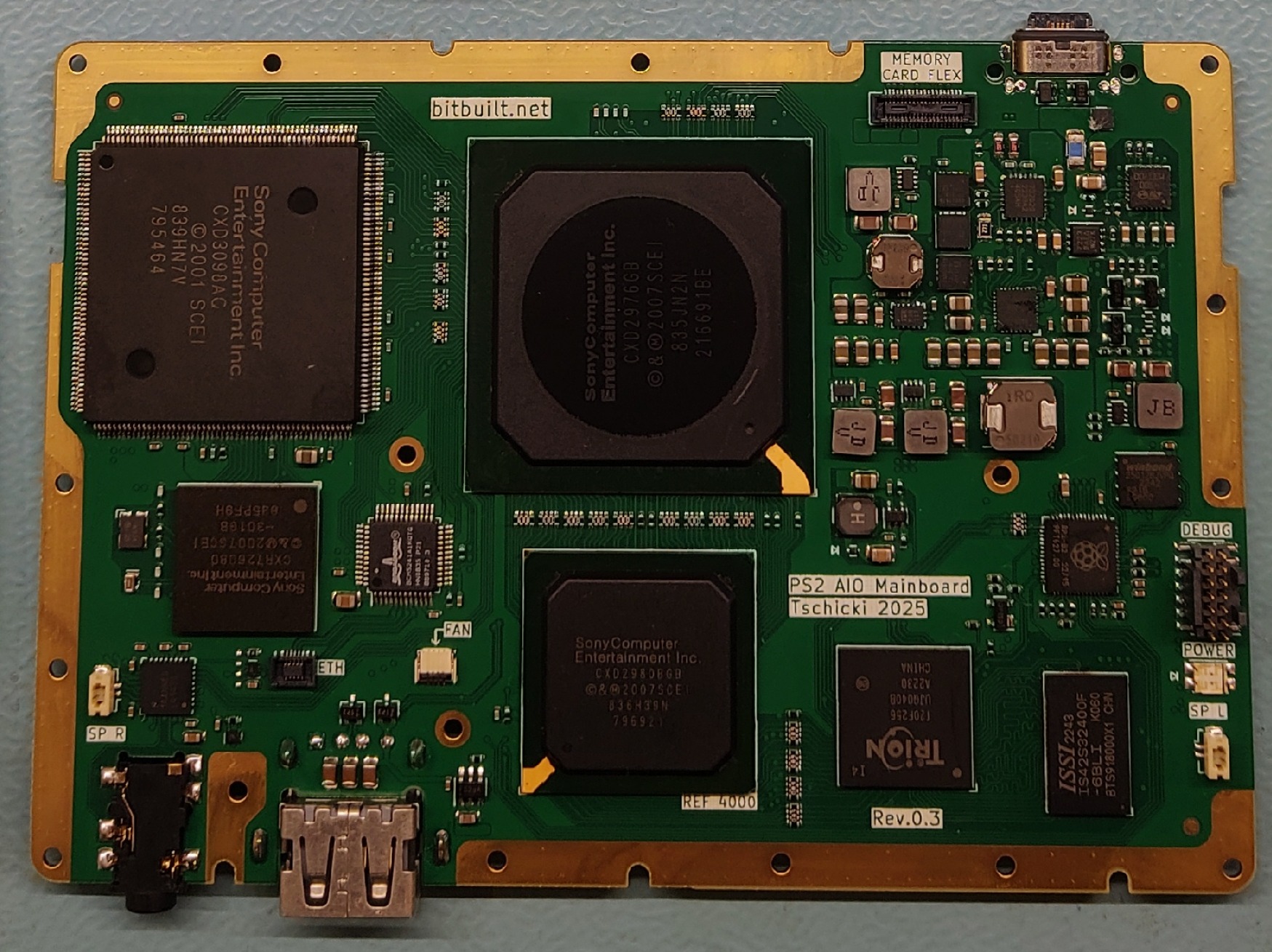
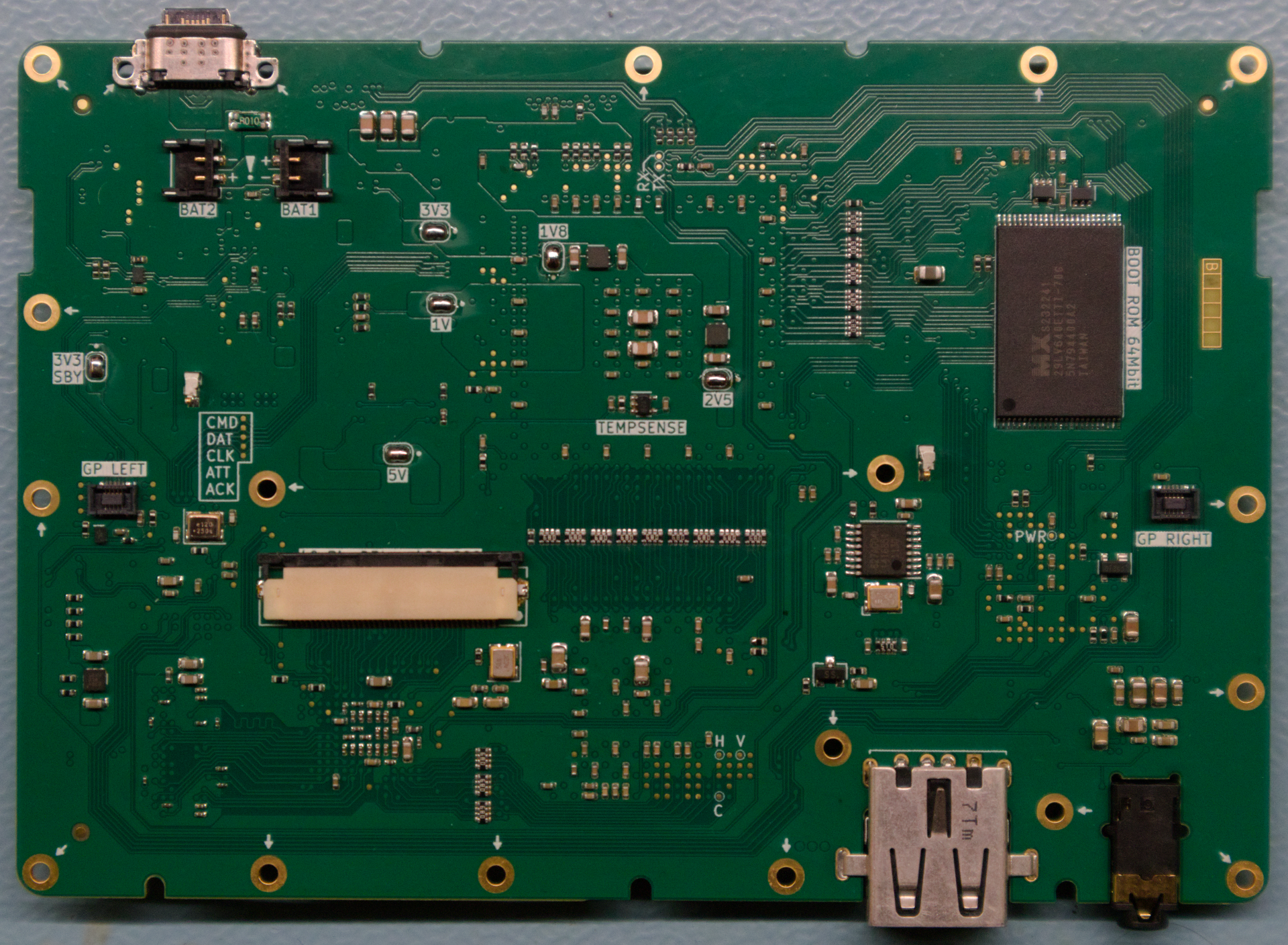
The mainboard was designed from scratch and is based on the SCPH-7900x and SCPH-9000x PS2 revisions. It also includes modern features, like USB-C PD charging and battery management, fully digital video output, I2S speaker and headphone amplifier and a customized boot ROM to boot directly into homebrew.
Battery Management:
Power Management:
Video Output:
Audio:
System Management:
Custom PS2 Boot ROM
Additional Features:
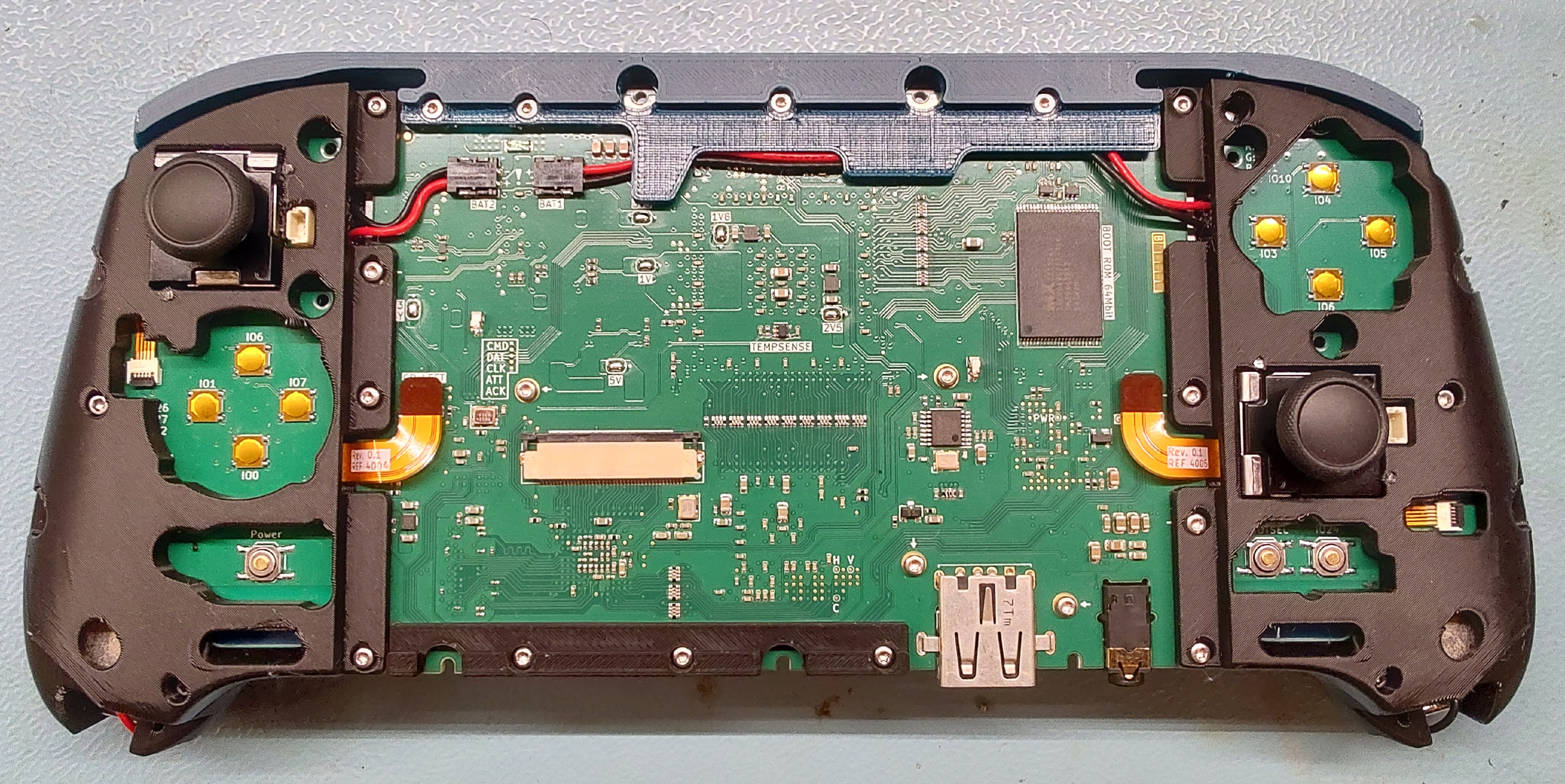
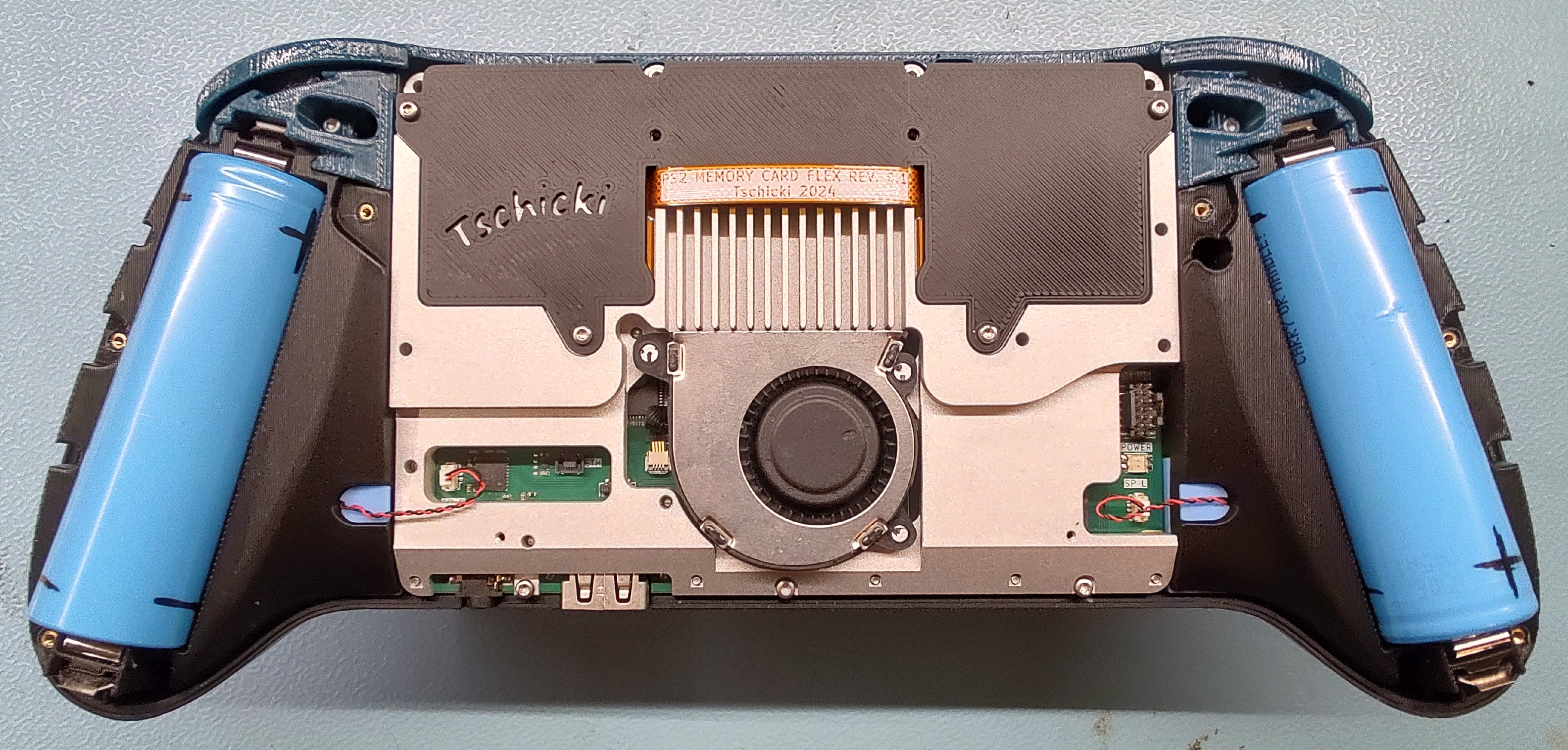
The whole mechanical assembly was designed from scratch for FDM printing. The design goal was to make it as ergonomic as possible, while keeping the overall appearance simple and minimalistic. The assembly is split into an outer shell and an inner assembly called 'skeleton' in an attempt to make assembly & disassembly easier and to allow easy shell replacements. Another priority for me was to use threaded inserts for all screws and to have easily replaceable non-soldered batteries.
Gamepads
Cooling:
Interfaces:
Video and Audio
To further enhance the user experience, some more or less optional accessories were designed.
I would highly recommend not to build one, even if you know what you are getting yourself into. If you're still not convinced to stop here, you can find the project documentation in the documentation folder. It's best to read all the docs before you decide to continue.
You will need a lot of equipment and comprehensive electronics, soldering, troubleshooting and preferably also programming skills to have a chance of getting the custom PS2 mainboard to boot.
There is a worklog of the whole project on BitBuilt, you might find some additional information there.
All custom PCBs, their Gerbers and their BOM can be found in the respective project under the Electronics folder. All PCBs come from JLCPCB.
All custom designed mechanical parts can be found under Solidworks. If you would like to edit them, they were all designed using SolidWorks Maker. Otherwise, the STEP and STL exports can be found under Output.
The housing parts were designed to be FDM printed, the CNC heatsink can be ordered from JLCCNC.
The source files of the left & right gamepad firmware can be found here.
The SysCon firmware can be found here.
The Trion T20 gateware can be found here.
In order to obtain the required firmware, you need to compile it yourself. See the documentation for that.
The bill of materials for the mechanical assembly can be found here. The electrical BOM for each PCBA is in the Electronics folder.
Check the documentation folder. I tried to structure the sequence of documents so that it can guide you along for your build.
Thanks to the BitBuilt community for reading and commenting the worklog, it really helped to keep the motivation up! And special thanks to:
This is a hobby project, so the end result will never be flawless. The design has seen hundreds of hours of playtesting, where following anomalies were discovered:
All firmware, gateware and hardware in this repository is licensed under the MIT License.
| Qty | Value | Footprint | References |
|---|---|---|---|
| 165 | Solder_Point | PS2:Solder_Point_127 | TP1101, TP1301, TP1302, TP1303, TP1304, TP1305, TP1306, TP1307, TP1308, TP1309, TP1310, TP1311, TP1312, TP1313, TP1314, TP1315 +149 |
| 151 | 100n | PS2:C_0402_1005Metric | C1301, C1401, C1403, C1404, C1405, C1406, C1407, C1408, C1409, C1503, C1504, C1507, C1601, C1602, C1701, C1702 +135 |
| 40 | 68R | PS2:R_Array_Convex_4x0402 | RN1301, RN1302, RN1303, RN1304, RN1305, RN1306, RN1307, RN1308, RN1309, RN2001, RN2301, RN2302, RN2303, RN2304, RN2305, RN2306 +24 |
| 32 | 100n | PS2:C_0201_0603Metric | C2603, C2604, C2605, C2606, C2607, C2609, C2610, C2611, C2612, C2613, C2614, C2615, C2616, C2617, C2619, C2620 +16 |
| 29 | 1k | PS2:R_0402_1005Metric | R202, R205, R1304, R1305, R1307, R1504, R1505, R1507, R1508, R1510, R2001, R2307, R2401, R2402, R2403, R2404 +13 |
| 28 | 10k | PS2:R_0402_1005Metric | R1201, R1202, R1501, R1502, R1503, R1514, R1601, R2102, R2501, R2701, R2702, R2703, R2704, R2705, R2706, R2707 +12 |
| 18 | 10u | PS2:C_0805_2012Metric | C301, C302, C303, C304, C305, C307, C316, C319, C320, C321, C322, C323, C1801, C1812, C2103, C2501 +2 |
| 18 | 22u | PS2:C_0805_2012Metric | C504, C505, C507, C508, C521, C522, C523, C524, C533, C536, C537, C2211, C2214, C3001, C3002, C3003 +2 |
| 17 | Solder_Point | PS2:mounting_hole_1.6mm | TP3001, TP3002, TP3003, TP3004, TP3005, TP3006, TP3007, TP3008, TP3009, TP3010, TP3011, TP3012, TP3013, TP3014, TP3015, TP3016 +1 |
| 16 | 1u | PS2:C_0603_1608Metric | C203, C204, C205, C206, C605, C616, C806, C809, C2107, C2114, C2115, C2118, C2119, C2202, C2205, C2208 |
| 16 | 4u7 | PS2:C_0603_1608Metric | C308, C503, C506, C509, C528, C529, C530, C531, C534, C535, C538, C2601, C2608, C2801, C2814, C3004 |
| 16 | 68R | PS2:R_0402_1005Metric | R304, R305, R314, R315, R1301, R1302, R1303, R1306, R1509, R2301, R2302, R2303, R2304, R2305, R2306, R2308 |
| 11 | 100k | PS2:R_0402_1005Metric | R203, R206, R207, R211, R309, R401, R404, R507, R607, R610, R2101 |
| 11 | 2k2 | PS2:R_0402_1005Metric | R208, R209, R301, R601, R608, R609, R611, R612, R613, R2103, R2104 |
| 9 | 10n | PS2:C_0402_1005Metric | C326, C327, C525, C807, C902, C903, C904, C915, C940 |
| 9 | 1n | PS2:C_0402_1005Metric | C313, C803, C808, C811, C1303, C2212, C2228, C2301, C2503 |
| 9 | 2u2 | PS2:C_0805_2012Metric | C201, C202, C1402, C2002, C2003, C2105, C2106, C2112, C2504 |
| 8 | 100p | PS2:C_0402_1005Metric | C941, C2401, C2402, C2403, C2404, C2405, C2406, C2407 |
| 7 | 220n | PS2:C_0402_1005Metric | C514, C2602, C2618, C2625, C2626, C2627, C2628 |
| 6 | 15k | PS2:R_0402_1005Metric | R204, R509, R2407, R2410, R2413, R2414 |
| 6 | 15p | PS2:C_0402_1005Metric | C603, C604, C1501, C1502, C1505, C1506 |
| 6 | 22R | PS2:R_0402_1005Metric | R602, R603, R801, R802, R1506, R2901 |
| 6 | 470n | PS2:C_0603_1608Metric | C312, C315, C317, C324, C2901, C2902 |
| 6 | Fiducial | PS2:Fiducial_1mm_Mask2mm | FID3001, FID3002, FID3003, FID3004, FID3005, FID3006 |
| 6 | Jumper_2_Bridged | Jumper:SolderJumper-2_P1.3mm_Open_RoundedPad1.0x1.5mm | JP501, JP502, JP503, JP504, JP505, JP506 |
| 4 | 2u2 | PS2:L_Coilcraft_XGL4020 | L501, L502, L503, L504 |
| 4 | 42k2 | PS2:R_0402_1005Metric | R502, R503, R504, R505 |
| 4 | D_Schottky | PS2:SOD-923_0P6X0P85_ONS | D203, D401, D402, D2501 |
| 4 | ESDA25W | Package_TO_SOT_SMD:SOT-323_SC-70 | D201, D202, D3001, D3002 |
| 4 | TPS629210 | PS2:SOT-583 | U502, U503, U504, U505 |
| 3 | 12k | PS2:R_0402_1005Metric | R302, R303, R2902 |
| 3 | 33R @ 100MHz | PS2:R_0402_1005Metric | FB2601, FB2801, FB2901 |
| 3 | 45k3 | PS2:R_0402_1005Metric | R510, R1512, R1515 |
| 3 | 560R | PS2:R_0402_1005Metric | R201, R1701, R1702 |
| 3 | 5p | PS2:C_0402_1005Metric | C802, C804, C1302 |
| 3 | CSD17575Q3 | PS2:CSD17308Q3 | Q301, Q302, Q303 |
| 3 | DMN67D8L | PS2:SOT-23 | Q401, Q402, Q601 |
| 2 | 100R | PS2:R_0402_1005Metric | R210, R306 |
| 2 | 1K5 | PS2:R_0402_1005Metric | R1513, R2002 |
| 2 | 47n | PS2:C_0402_1005Metric | C310, C311 |
| 2 | 47u | PS2:C_0805_2012Metric | C526, C527 |
| 2 | 68R | PS2:R_0603_1608Metric | R317, R318 |
| 2 | 74LVC1G07 | PS2:Texas_USON-6_1x1.45mm_P0.5mm_SMD | U601, U2102 |
| 2 | 74LVC1G08 | PS2:SOT-353_SC-70-5 | U1701, U1702 |
| 2 | APX811-31UG | PS2:SOT-143 | U1501, U2701 |
| 2 | NetTie_2 | NetTie:NetTie-2_SMD_Pad0.5mm | NT301, NT302 |
| 2 | Solder_Point | PS2:TE_1551576-5 | TP3018, TP3019 |
| 2 | TLV75518PDRV | PS2:WSON-6-1EP_2x2mm_P0.65mm_EP1x1.6mm | U508, U509 |
| 2 | TXS0102DQE | PS2:X2SON-8_1.4x1mm_P0.35mm | U203, U2101 |
| 1 | 0R01 | PS2:R_1206_3216Metric | R312 |
| 1 | 10R | PS2:R_0402_1005Metric | R316 |
| 1 | 12MHz | Crystal:Crystal_SMD_3225-4Pin_3.2x2.5mm | Y601 |
| 1 | 16,934MHz | PS2:Crystal_SMD_3225-4Pin_3.2x2.5mm | Y1502 |
| 1 | 18.432MHz | PS2:Crystal_SMD_3225-4Pin_3.2x2.5mm | Y801 |
| 1 | 1K2 | PS2:R_0402_1005Metric | R2003 |
| 1 | 1M | PS2:R_0402_1005Metric | R1511 |
| 1 | 1u | PS2:SPM5030T-1R0M | L505 |
| 1 | 1uH | PS2:L_TDK_SPM6530 | L301 |
| 1 | 22n | PS2:C_0402_1005Metric | C515 |
| 1 | 2328702-4 | PS2:TE_2328702-4 | J3007 |
| 1 | 270R | PS2:R_0805_2012Metric | R310 |
| 1 | 270p | PS2:C_0402_1005Metric | C520 |
| 1 | 30k | PS2:R_0402_1005Metric | R307 |
| 1 | 32.768kHz | PS2:Crystal_SMD_MicroCrystal_CM9V-T1A-2Pin_1.6x1.0mm | Y1501 |
| 1 | 4u7 | PS2:IND_TAIYO_NRS4012_TAY | L2501 |
| 1 | 51R | PS2:R_Array_Convex_4x0402 | RN2002 |
| 1 | 5R6 | PS2:R_0402_1005Metric | R2502 |
| 1 | 5k23 | PS2:R_0402_1005Metric | R308 |
| 1 | 627G04LF | PS2:TSSOP-16_4.4x5mm_P0.65mm | U801 |
| 1 | 6k8 | PS2:R_0402_1005Metric | R506 |
| 1 | AP22653A | PS2:SOT-23-6 | U506 |
| 1 | ASE-50MHz | PS2:Oscillator_SMD_Abracon_ASE-4Pin_3.2x2.5mm | X2901 |
| 1 | BAT1 | PS2:MOLEX_2082940020_2pin | J301 |
| 1 | BAT2 | PS2:MOLEX_2082940020_2pin | J302 |
| 1 | BCM5241 | PS2:LQFP-48_7x7mm_P0.5mm | U2001 |
| 1 | BQ25792B | PS2:BQ25792RQMR | U301 |
| 1 | BSS84AK | PS2:SOT-23 | Q403 |
| 1 | CX90MW6-16P | PS2:CX90_632x232_HIR | P201 |
| 1 | CXD2976GB | PS2:PS2_CXD2976GB_35.0x35.0mm_P1.0mm | U901 |
| 1 | CXD2980 | PS2:PS2_CXD2980CGB_23.0x23.0mm_P1.0mm | U2201 |
The 742 most common of 770 parts.


derlucae98/spr23e-bmu
Battery Management Unit for the Scuderia Mensa SPR23e/SPR24e electric race car

GeniePod/genie-hardware
GeniePod Home V1 hardware: MVP testing build, wiring, BOM, and planned interface-board/enclosure docs.


KSullivan20221/SimHub-BMW-E46-Cluster-Module
This repo contains all of the circuitry, code, and resources used to create a shield board for an Arduino Mega that could be used to communicate with a BWM E46 instrument cluster from a PC.


Top-Cat/ZigbeeBlinds
Custom firmware and PCB design to replace the RF board inside Somfy 1003293 motor assemblies with a Zigbee-compatible controller.
It measures 121 × 83 mm and has 6 copper layers, 1.19 mm thick.
770 parts, built around the 74LVC1G07, TPS629210DRL, 74LVC1G08Z and APX811-31UG. The full list of its parts is on this page, with links to each part's symbol and footprint where PCBKit's library has them.
From the tschicki/PS2-Portable repository on GitHub, at the commit this page was made from: the board is Electronics/PS2_79004_Rev_0_4/PS2_79004_Rev_0_4.kicad_pcb and its schematic Electronics/PS2_79004_Rev_0_4/Battery_Management.kicad_sch. PCBKit opens the board in the browser, with nothing to install.
Its repository publishes it under the MIT licence: you may reuse it on that licence's terms (keep the author's notice, and for a copyleft licence share your changes alike).