
2 layers17.3 × 21.5 mm

 sensorable/g935-electronics13
Electronics for Sensorable Open Source Camera
G935f psu is an open-source printed circuit board by sensorable, from the sensorable/g935-electronics repository on GitHub. It is a 2-layer board of 37 × 49.7 mm with 52 parts on 24 nets, routed with 396 tracks and 37 vias.
It is built around the TPS54339DDA. Its parts include 20 capacitors, 13 connectors, 9 resistors, 3 transistors and 3 inductors. It belongs with the power boards of this library.
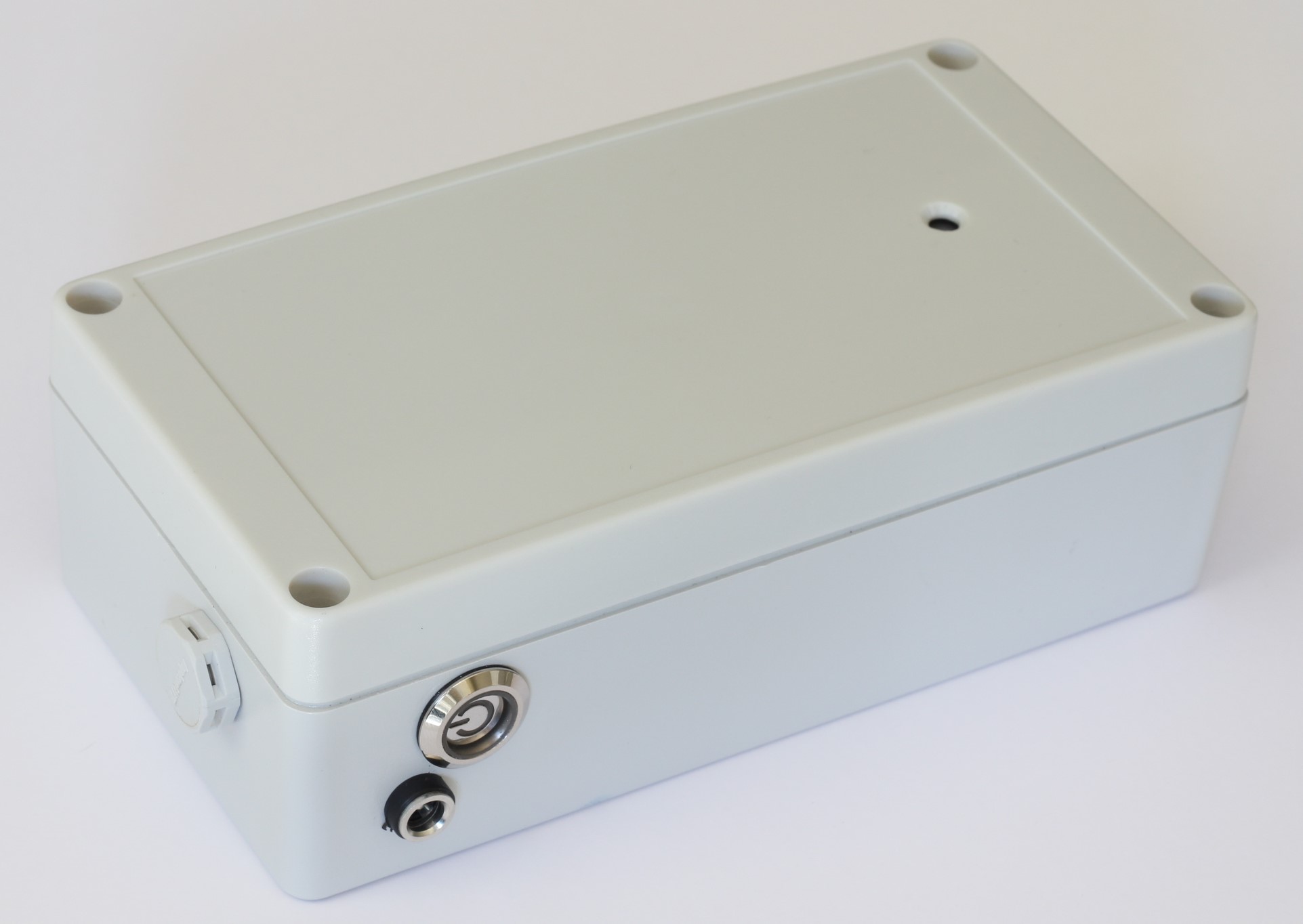
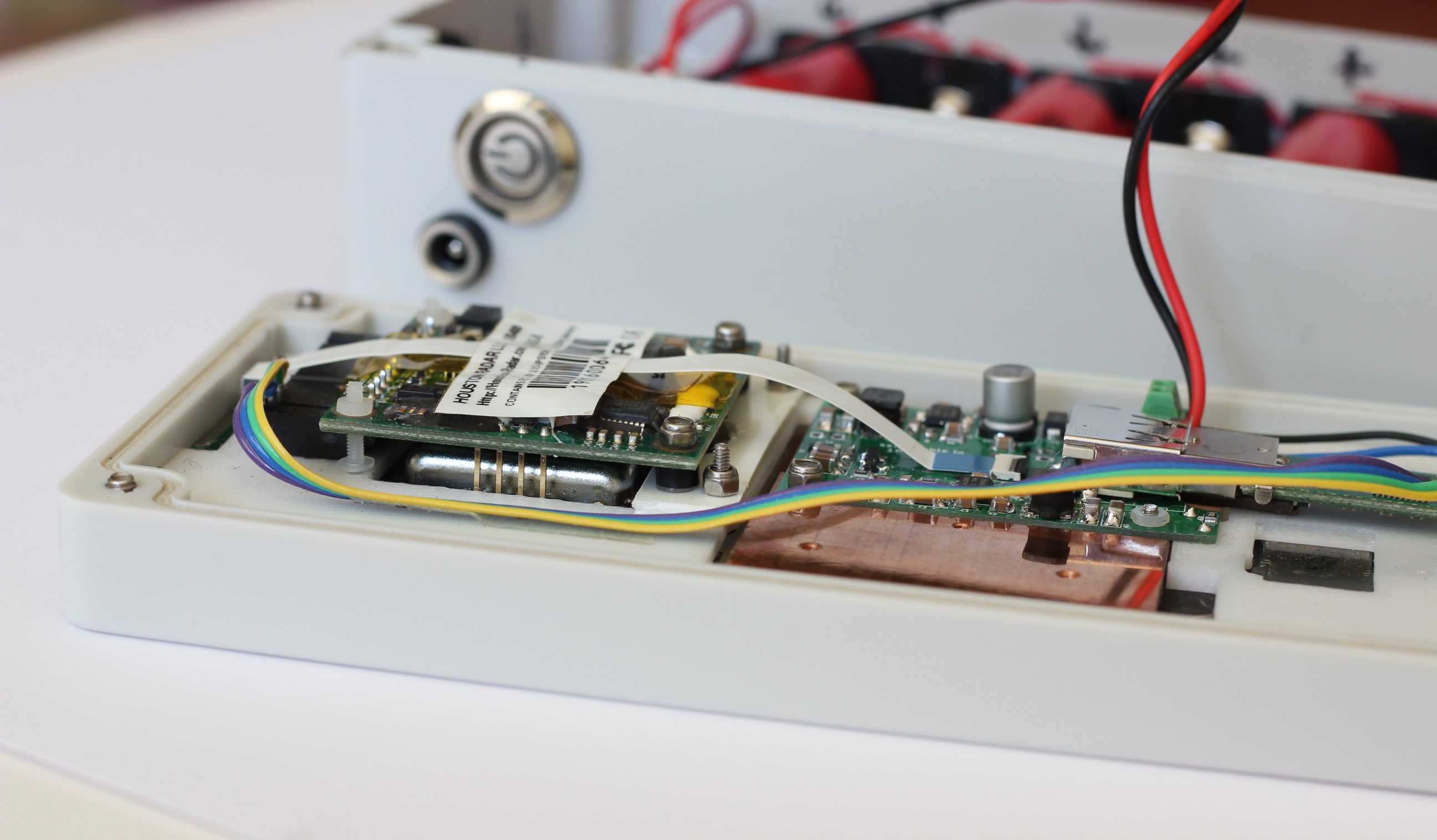
Sensorable camera is a low power edge computer for smart applications with limited power and bandwidth. It is based on Samsung G935F smartphone board with auxiliary chassis and electronics.
Applications:
The camera can be assembled, programmed, tested and deployed by a sufficiently skilled technician.
See BOM-combined.csv for the full list of parts.
The sealed enclosure may include an optional battery pack. See https://github.com/sensorable/batt-pack for more info.
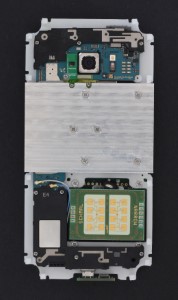
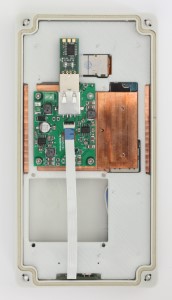
The chassis has mounting options for a few auxiliary components. They can also be connected externally via USB or RS232.
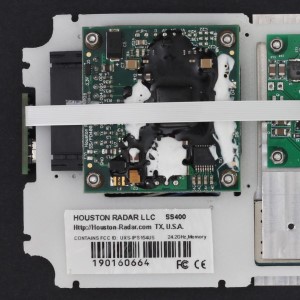
This is only a high level overview to give you an idea what's involved. We recommend getting in touch with us to help you with your production run.
Check the combined BOM for the full list of components and recommended suppkiers. We tried to minimise the number of suppliers and use only the reputable ones:
The final assembly is expected to be done in-house or by a trusted local embedded systems specialist as it involves testing, loading the software and configuring the devices.
See other repositories for the mechanical (chassis) and software (ROM, tools, apps, etc).
| Qty | Value | Footprint | References |
|---|---|---|---|
| 11 | .47uF | Footprints:0805_Medium_Pads | C3, C4, C5, C7, C8, C12, C13, C14, C16, C17, C20 |
| 8 | 10uF | Footprints:1206_Big-Pads | C1, C2, C6, C9, C10, C11, C15, C18 |
| 4 | PAD | Footprints:NPTH_2mm | P2, P3, P6, P7 |
| 3 | 3.3uH 4.2A 35m | Footprints:IND_2_5x5mm | L1, L2, L3 |
| 2 | 100k | Footprints:0805_Medium_Pads | R6, R9 |
| 2 | 1k | Footprints:0805_Medium_Pads | R2, R4 |
| 2 | 22.6k | Footprints:0805_Medium_Pads | R5, R10 |
| 2 | Conn_Basic_2_pin | Footprints:CONN_2pin_just_holes_2.54mmPITCH_1mmBigSquareHOLES | P13, P14 |
| 2 | N_MOS_SOT23 | Footprints:SOT-23 | Q2, Q3 |
| 2 | PAD | Footprints:NPTH_1.5mm | P10, P11 |
| 2 | PAD | Interfacez:CONN_1_SPRING_TH_1.83x.6mm | P4, P5 |
| 2 | TPS54339 | Footprints:SOIC-8-1EP_3.9x4.9mm_Pitch1.27mm | U1, U2 |
| 1 | 100uF | Footprints:CAP_SMD_CAN_6.6x6.6mm | C19 |
| 1 | 18k | Footprints:0805_Medium_Pads | R8 |
| 1 | 1M | Footprints:0805_Medium_Pads | R1 |
| 1 | Conn_Basic_10_pin | Footprints:CONN_5034801000_MOLEX_FFC_10pin | P1 |
| 1 | Conn_Basic_2_pin | Footprints:TERM_BLK_2_SIDE_2.54MM | P8 |
| 1 | Conn_Basic_5_pin_0 | Footprints:CONN_RCPT_USB2_TYPEA_RA_TE | P9 |
| 1 | DNU | Footprints:0805_Medium_Pads | R3 |
| 1 | PTC FUSE | Footprints:1812 | F1 |
| 1 | P_MOS_SOT23 | Footprints:SOT-23 | Q1 |
| 1 | Uni Zener 23V@17A | Footprints:SMA | D1 |

sensorable/g935-electronics
Electronics for Sensorable Open Source Camera


conorpp/u2f-zero
U2F USB token optimized for physical security, affordability, and style

sudomesh/disaster-radio
A (paused) work-in-progress long-range, low-bandwidth wireless disaster recovery mesh network powered by the sun.

Neumi/open_echo
Open Source echo sounder / depth sounder / SONAR for bathymetry and research. Arduino based and compatible.

karawin/Ka-Radio
A wifi webradio with only low cost boards ESP8266 and VS1053 by Jp Cocatrix


StuckAtPrototype/AirCube
Works standalone out of the box. Pairs with Home Assistant in minutes. Other platforms are supported through community-contributed extensions.

Ardumower/ardumower
Develop an open source robotic lawn mower (HW+SW reference platform)

loxodes/vna
Under development open hardware microwave vector network analyzer
It measures 37 × 49.7 mm and has 2 copper layers, 1.6 mm thick.
52 parts, built around the TPS54339DDA. The full list of its parts is on this page, with links to each part's symbol and footprint where PCBKit's library has them.
From the sensorable/g935-electronics repository on GitHub, at the commit this page was made from: the board is psu/g935f-psu.kicad_pcb. PCBKit opens the board in the browser, with nothing to install.
Its repository states no licence, so its author keeps all rights: ask sensorable before reusing the design.