2 layers286 × 128 mm

 saoto28/pineapple60306
first ergonomic keyboard with Trackpoint
Namecard is an open-source printed circuit board by saoto28, from the saoto28/pineapple60 repository on GitHub, published under the GPL-2.0 licence. It is a 2-layer board of 91 × 55 mm with 388 parts on 51 nets, routed with 148 tracks and 1 via.
It belongs with the AVR (ATmega, ATtiny) boards of this library.
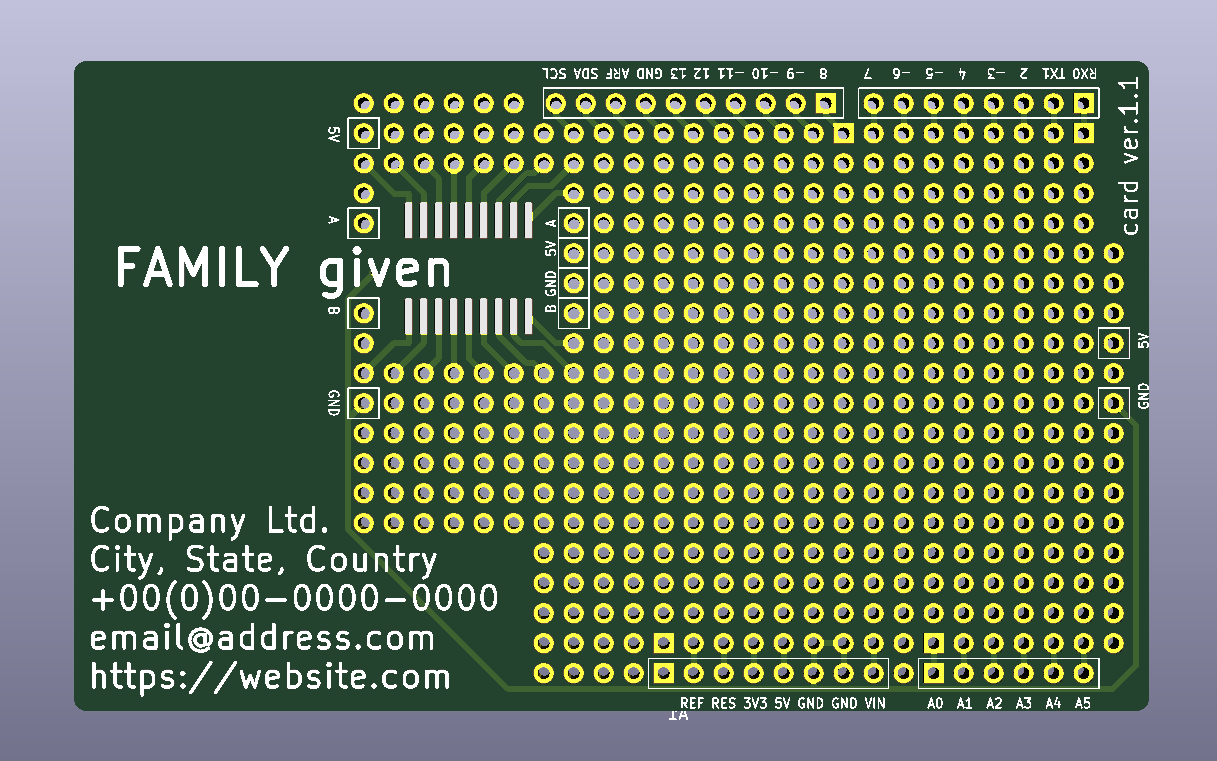
| Qty | Value | Footprint | References |
|---|---|---|---|
| 18 | Conn_01x01 | Arduino:SolderWirePad_1x01_Drill1.0mm_1.7_no-mark | J11, J12, J13, J14, J15, J16, J17, J18, J19, J21, J22, J23, J24, J25, J26, J27 +2 |
| 10 | Conn_01x01 | Arduino:SolderWirePad_1x01_Drill1.0mm_1.7 | J5, J6, J7, J8, J9, J10, J30, J31, J32, J33 |
| 2 | Conn_01x08 | Connector_PinHeader_2.54mm:PinHeader_1x08_P2.54mm_Vertical | J1, J4 |
| 1 | Arduino_UNO_R3_mod | Arduino:Arduino_UNO_R3_mod | A1 |
| 1 | Conn_01x06 | Connector_PinHeader_2.54mm:PinHeader_1x06_P2.54mm_Vertical | J3 |
| 1 | Conn_01x10 | Connector_PinHeader_2.54mm:PinHeader_1x10_P2.54mm_Vertical | J2 |
| 1 | Conn_02x09_Counter_Clockwise | Arduino:SOP-18_7x12.5mm_P1.27mm_mod | J20 |
The 34 most common of 388 parts.


bartkepl/RDE_board
Resistance DEcade with SCPI, UART, USB, RS485 and ETHERNET in 3U eurocard format


SolderedElectronics/Load-cell-amplifier-HX711-board-qwiic-hardware-design
Hardware design, BOM, gerbers and 3D files for Load-cell-amplifier-HX711-board-qwiic designed by Soldered Electronics.


AcheronProject/Tsuki
60% keyboard PCB featuring a wide array of layouts powered by STM32F072

richardhosking/QRPTransceiver
SSB HF transceiver using Phasing techniques and SM components KICAD files for receiver board initially

Hy-5/VesselV3
Custom "Vessel" Keyboard - PCB + 3D Case Model + Firmware + Keycaps vector
It measures 91 × 55 mm and has 2 copper layers, 1.6 mm thick.
388 parts. The full list of its parts is on this page, with links to each part's symbol and footprint where PCBKit's library has them.
From the saoto28/pineapple60 repository on GitHub, at the commit this page was made from: the board is KiCad/namecard1.1/namecard.kicad_pcb. PCBKit opens the board in the browser, with nothing to install.
Its repository publishes it under the GPL-2.0 licence: you may reuse it on that licence's terms (keep the author's notice, and for a copyleft licence share your changes alike).