4 layers100 × 86.6 mm

 rowr111/triangel2
ART! led lighting project made out of triangles
Input is an open-source printed circuit board by rowr111, from the rowr111/triangel repository on GitHub, published under the MIT licence. It is a 4-layer board of 80 × 60 mm with 18 parts on 19 nets, routed with 154 tracks and 40 vias.
It is built around the EVP-ASAC1A, CL-SB-13A-02T and IRM-H638T/TR2, with the TYPE-C-31-M-12 among its other parts. Its parts include 6 switches, 4 capacitors, 1 resistor and 1 IC.


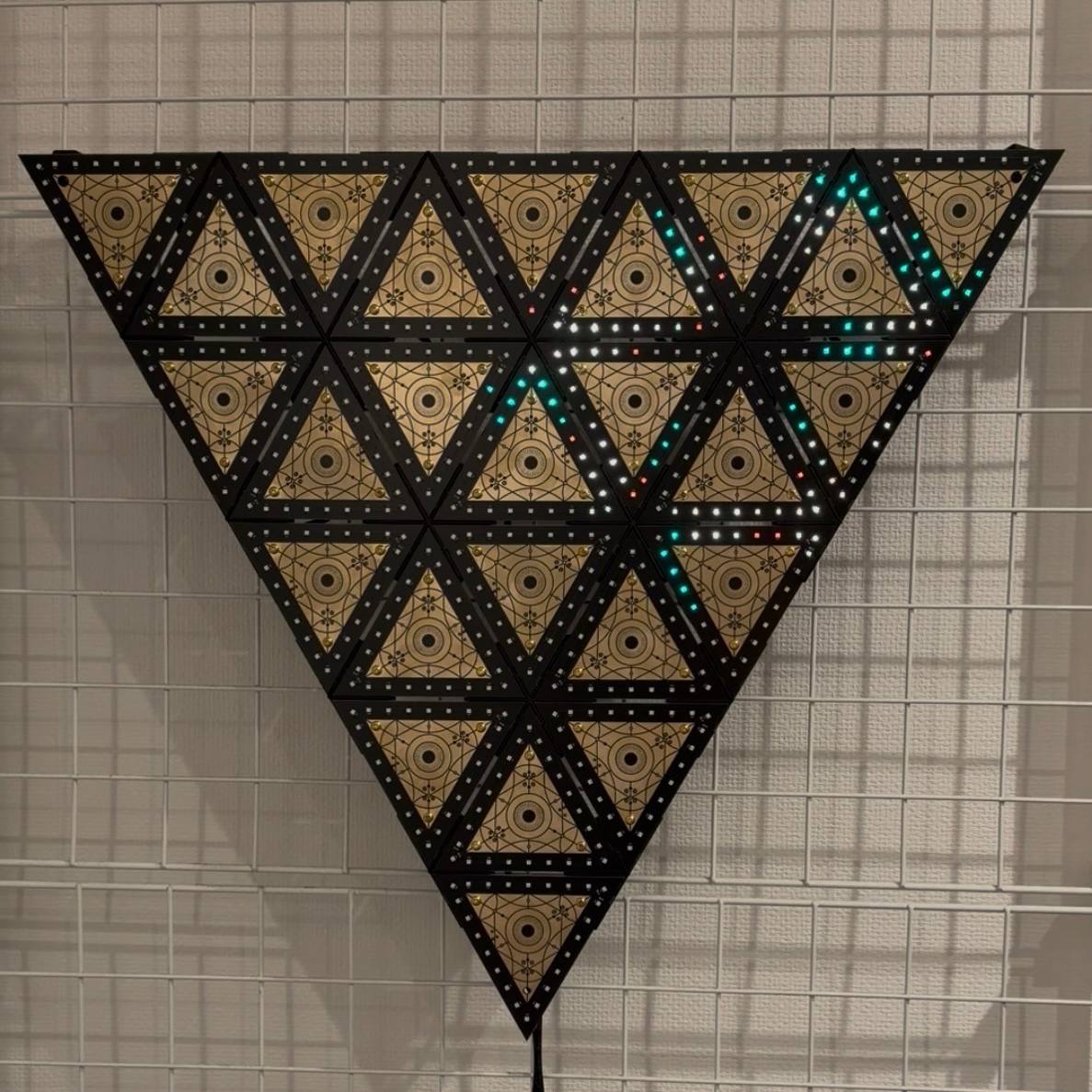
ART!!! Made of 25 triangle tiles and 600 LEDs, for a wall or the corner of a room, with pleasing ambient patterns and exciting audio-reactive patterns specially tuned to follow music.
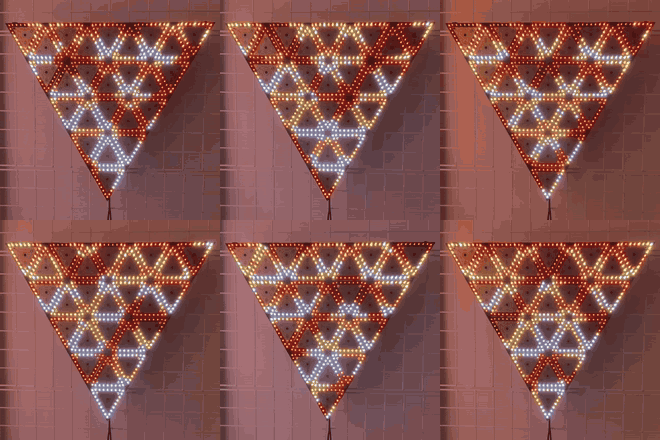 Flame | 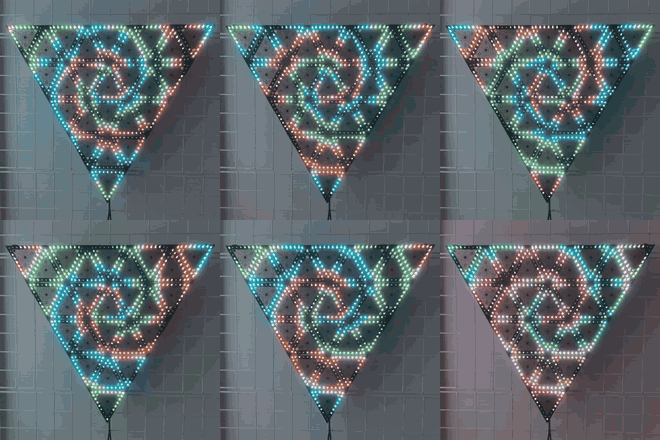 Uzumaki | 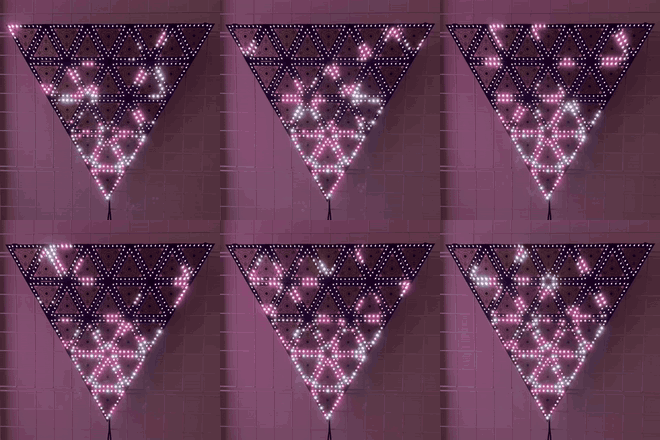 Fubuki | 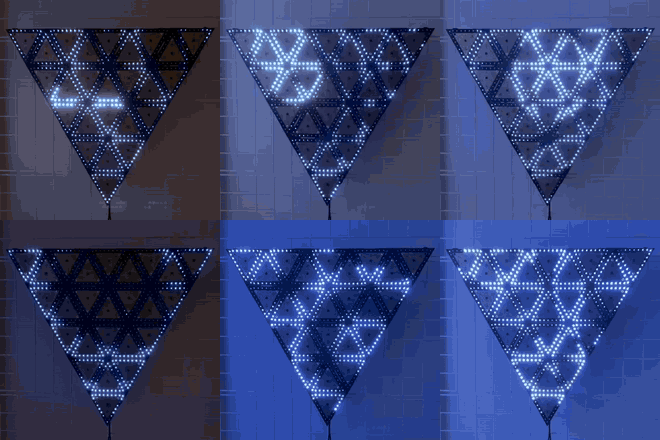 Raindrop (sound) | 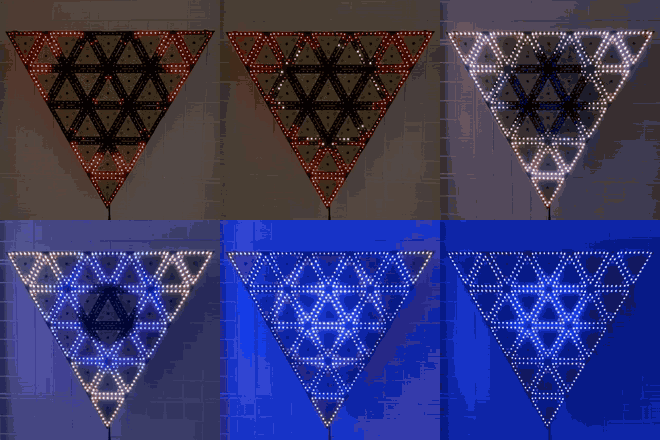 Spectrum (sound) |
You don't need a Triangel to write patterns for it: one dabao board and a browser will do. Start here.
Each triangle tile has a stylized eye design in the middle.. After I decided to cover it in eyes, I was inspired by biblical angel descriptions to name it... triangle + angel = Triangel!
| Folder | Contents |
|---|---|
firmware/eye/ | The eye's firmware: LED output, patterns, controls |
firmware/ear/ | The ear's firmware: microphone, frequency bands, the link to the eye |
firmware/shared/ | Code both use: the format of what the ear sends, and the sound tuning |
triangel-previewer/ | Shows the eye's LED output in a browser |
hardware/ | The circuit boards (KiCad) and the brackets |
graphics/ | Artwork and the sticker sheets |
MIT. See LICENSE.
| Qty | Value | Footprint | References |
|---|---|---|---|
| 5 | EVP-ASAC1A | easyeda2kicad:SW-SMD_PANASONIC_EVPASXXX | SW1, SW2, SW3, SW4, SW5 |
| 4 | MountingHole | MountingHole:MountingHole_3.2mm_M3_Pad | H1, H2, H3, H4 |
| 2 | 100nF | Capacitor_SMD:C_0402_1005Metric | C1, C4 |
| 2 | 4.7µF | Capacitor_SMD:C_0603_1608Metric | C2, C3 |
| 1 | 100Ω | Resistor_SMD:R_0603_1608Metric | R1 |
| 1 | CL-SB-13A-02T | easyeda2kicad:SW-SMD_CL-SB-13A-0X | SW6 |
| 1 | IRM-H638T/TR2 | easyeda2kicad:SENSOR-SMD_IRM-H638T-TR2-TL | CGQ1 |
| 1 | MCP23008T-E/SS | easyeda2kicad:SSOP-20_L7.2-W5.3-P0.65-LS7.8-TL | U1 |
| 1 | TYPE-C-31-M-12 | easyeda2kicad:USB-C_SMD-TYPE-C-31-M-12_1 | USBC1 |
It measures 80 × 60 mm and has 4 copper layers, 1.6 mm thick.
18 parts, built around the EVP-ASAC1A, CL-SB-13A-02T, IRM-H638T/TR2 and TYPE-C-31-M-12. The full list of its parts is on this page, with links to each part's symbol and footprint where PCBKit's library has them.
From the rowr111/triangel repository on GitHub, at the commit this page was made from: the board is hardware/input/input.kicad_pcb and its schematic hardware/controller/components.kicad_sch. PCBKit opens the board in the browser, with nothing to install.
Its repository publishes it under the MIT licence: you may reuse it on that licence's terms (keep the author's notice, and for a copyleft licence share your changes alike).


atomic14/esp32-tv-hardware
This is Work In Progress - I'm still working on this.

HeyPCB/whisker
Drop-in controller for Petoi's Nybble robot cat running the stock OpenCat firmware: ATmega328P, PCA9685, MPU-6050, USB-C, 3 A buck, protected battery input. 4-layer KiCad 10 board plus printed cradle.

john0312/hitcon-pcb-badge
execute fw/merge.py to merge STM32CubeIDE generated main.c with user code in main.cc into main.cc.

OklahomaOpenSourceHardware/OKC-OSH-2024-Badge
2024 badge for Oklahoma PCB Tech Conferences

ArcaneNibble/jlc-katzen
cat ear blinky toy (JLCPCB turn-key assembly process capabilities test)


Boardoza/Boardoza_IrDA_Transceiver_Infrared_Wireless_Communication_Breakout_Board
Compact infrared transceiver breakout board for short-range asynchronous wireless serial communication.