
2 layers254.1 × 87.2 mm

42 keys ergonomic keyboard
42 is an open-source printed circuit board by nglgzz, from the nglgzz/42 repository on GitHub, published under the MIT licence. It is a 2-layer board of 303 × 104.5 mm with 85 parts on 71 nets, routed with 854 tracks and 24 vias.
Its parts include 42 diodes, 42 switches and 1 IC. It belongs with the keyboards and input boards and the AVR (ATmega, ATtiny) boards of this library.
A mechanical keyboard with 42 keys.
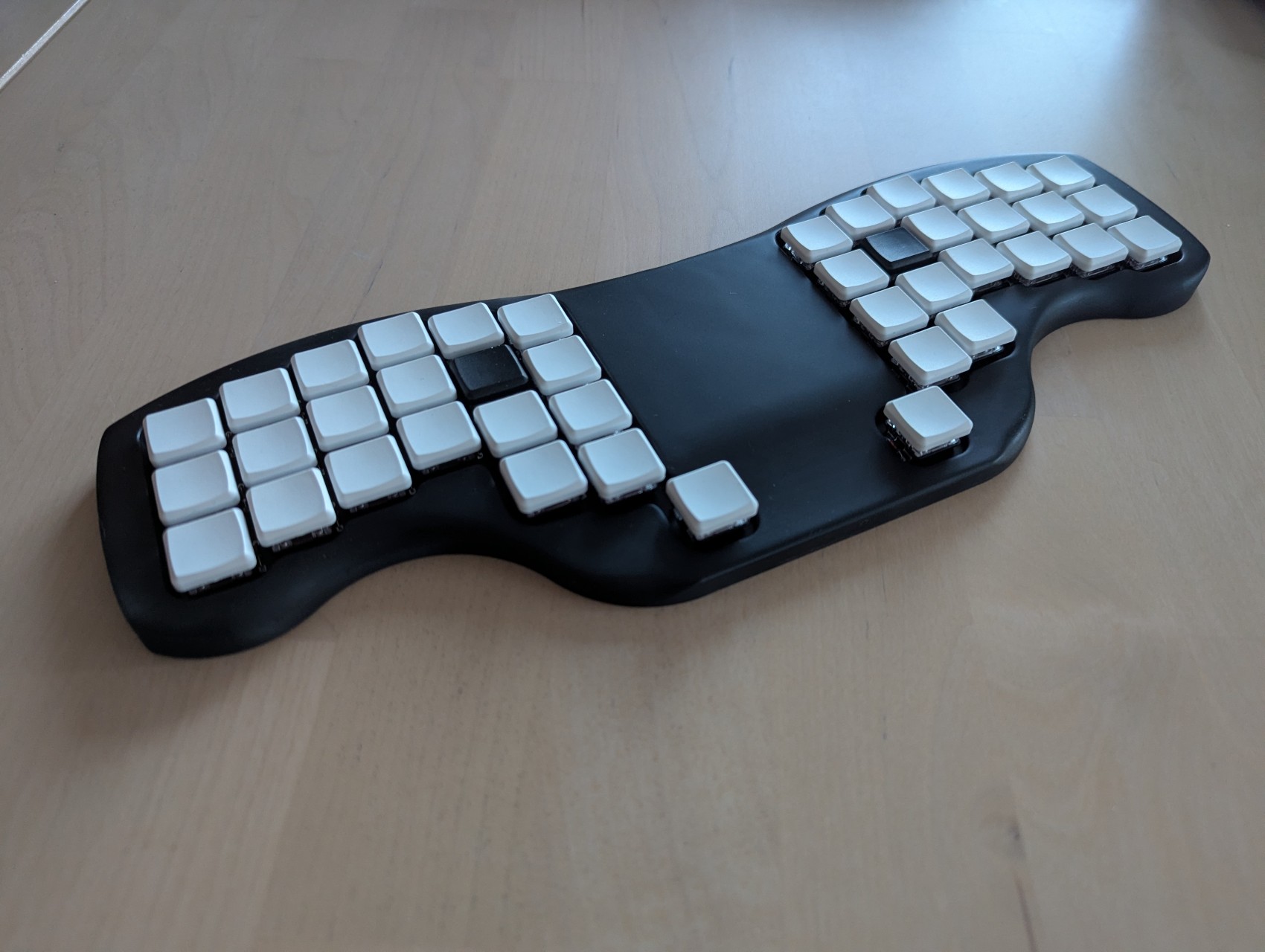
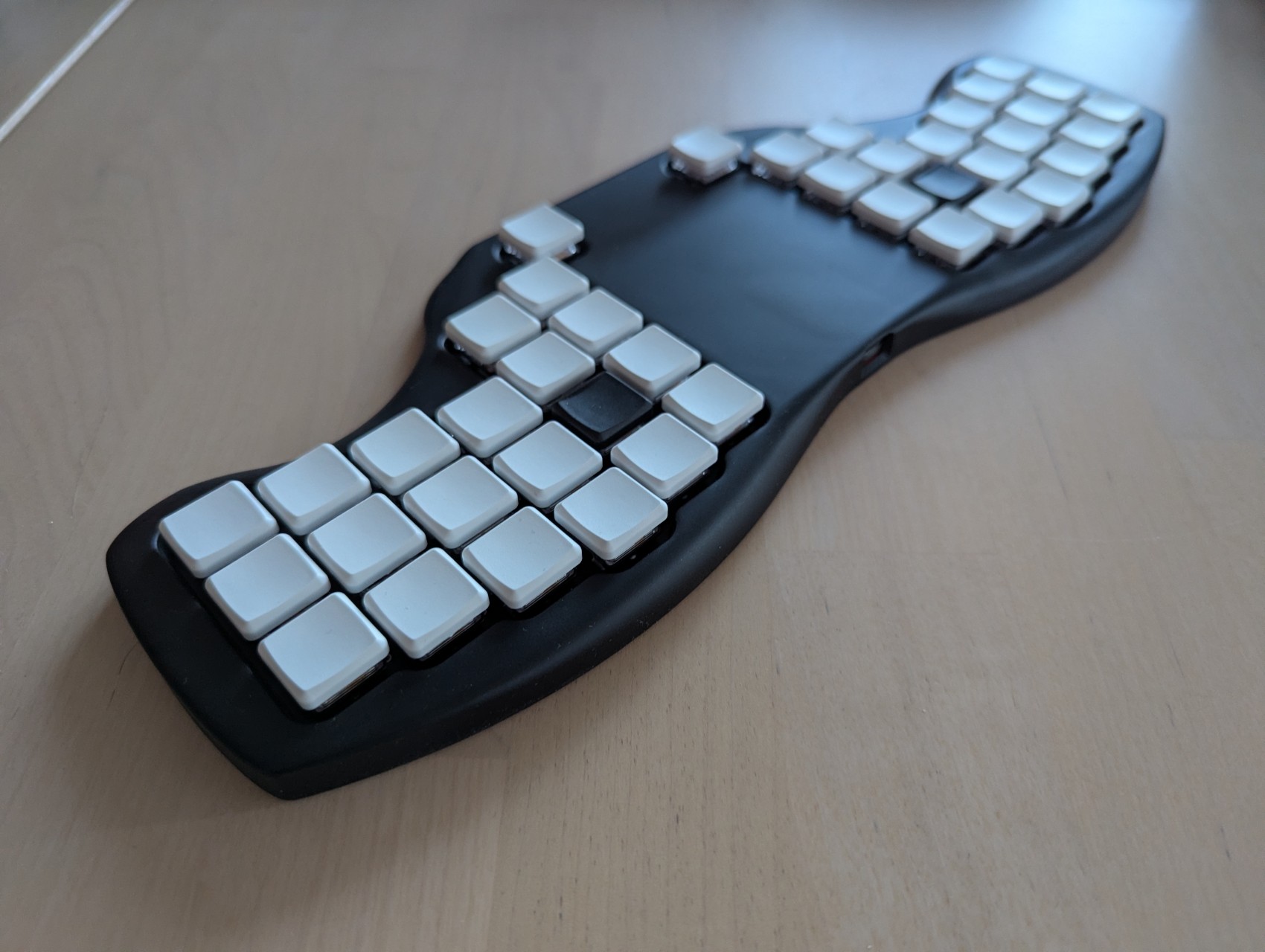
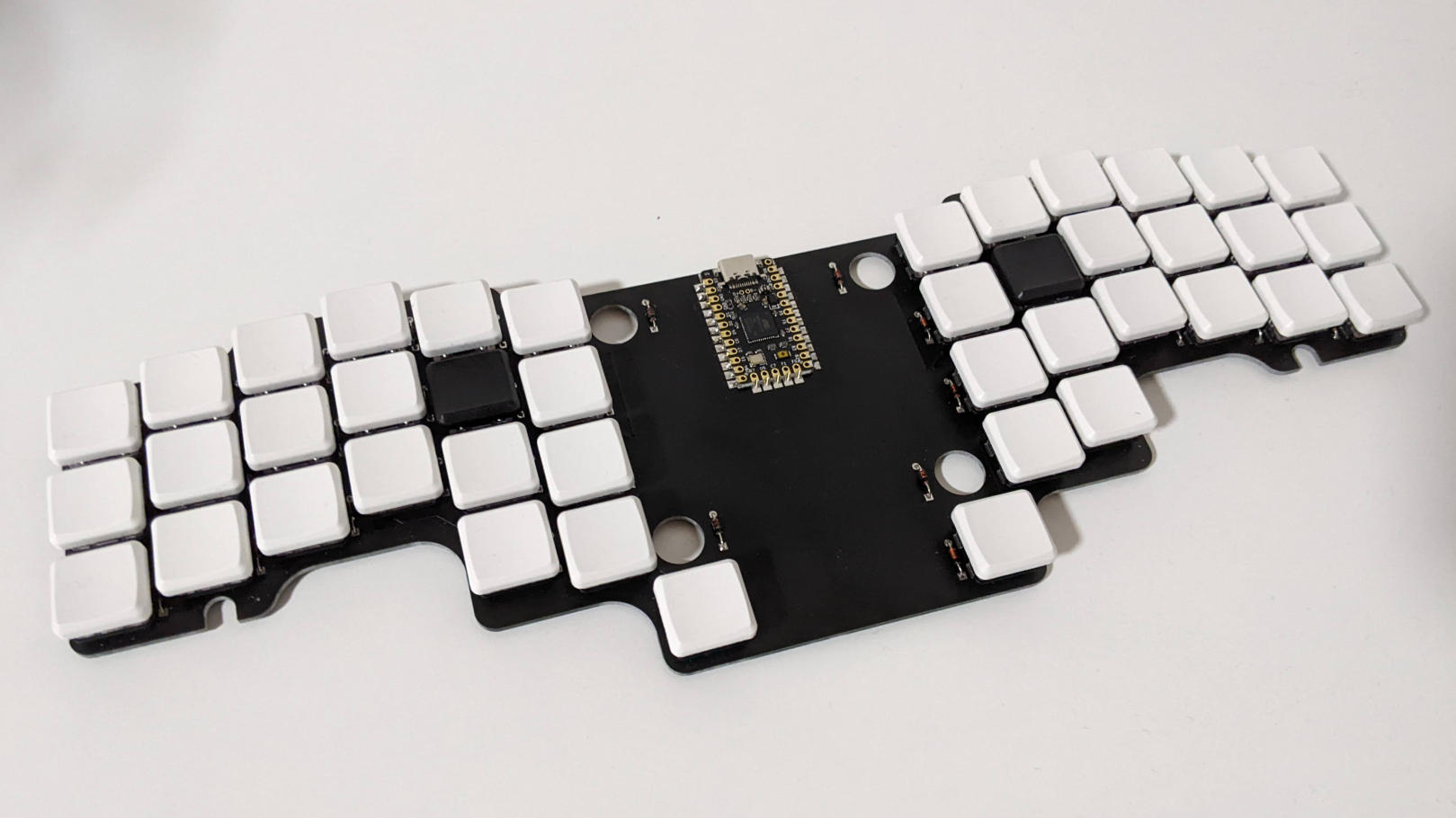
Build – Build log, bill of materials, tips on where to source parts, assembling tips, learning resources I used while designing this keyboard.
Case – Fusion 360 project and STL files for 3D printing the enclosure.
Firmware – QMK configuration. There is a Makefile to build and load the firmware.
PCB – Kicad project and Gerber files for manufacturing the circuit board.
In January 2018 I wanted a keyboard with a specific set of features. The simplest options to get that keyboard were to wait for a group-buy or build my own. Waiting time and costs for both options seemed similar, so I went with the option where I would learn the most.
Needs and knowledge changed over time, so I made different iterations to add new features and account for the lessons learned from previous builds.
If you have some feedback or questions, feel free to create an issue. Your input is more than welcome!


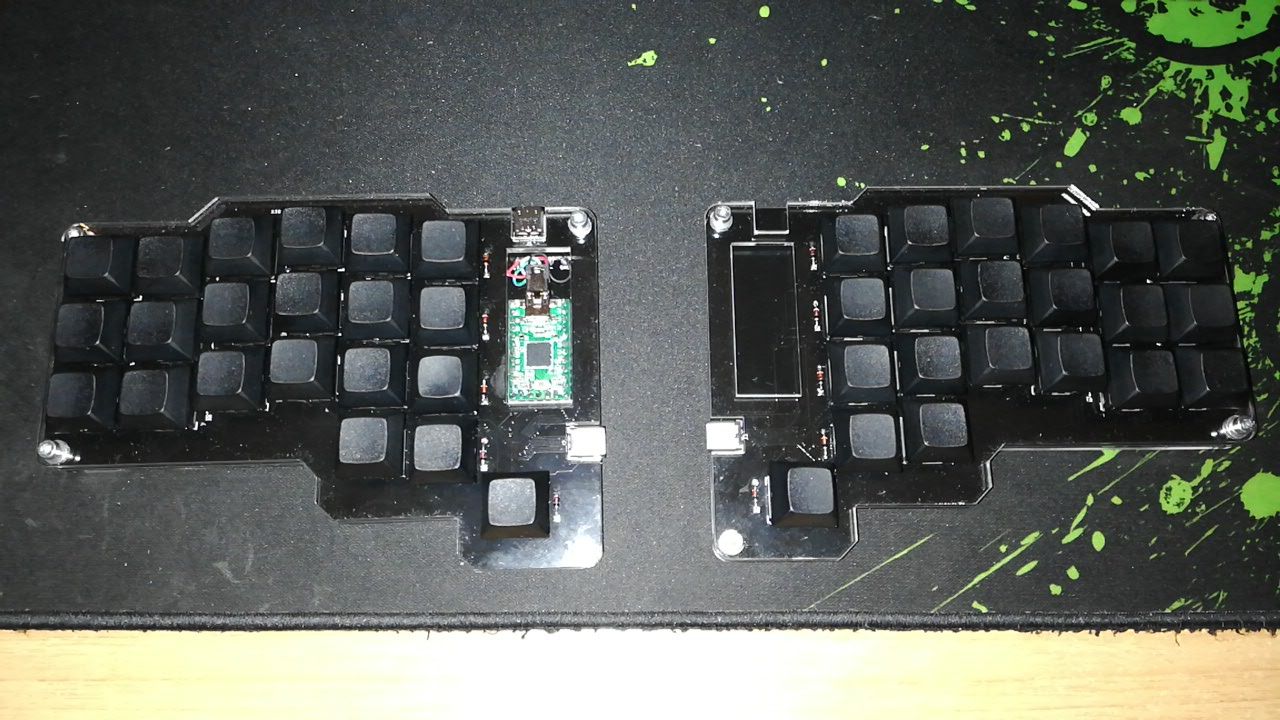
| Qty | Value | Footprint | References |
|---|---|---|---|
| 42 | D | Keyboard_Parts:D_SOD123_axial | D0, D0A1, D0B1, D1, D1A1, D1B1, D10, D11, D12, D13, D14, D15, D16, D17, D18, D19 +26 |
| 42 | KEYSW | Keebio-Parts:MX-Alps-Choc-1U-NoLED | K0, K0A1, K0B1, K1, K1A1, K1B1, K10, K11, K12, K13, K14, K15, K16, K17, K18, K19 +26 |
| 1 | Elite-C | Keebio-Parts:Elite-C-castellated-29pin-holes | U1 |
It measures 303 × 104.5 mm and has 2 copper layers, 1.6 mm thick.
85 parts. The full list of its parts is on this page, with links to each part's symbol and footprint where PCBKit's library has them.
From the nglgzz/42 repository on GitHub, at the commit this page was made from: the board is pcb/kicad/pcb.kicad_pcb. PCBKit opens the board in the browser, with nothing to install.
Its repository publishes it under the MIT licence: you may reuse it on that licence's terms (keep the author's notice, and for a copyleft licence share your changes alike).


marksard/Keyboards
This repository is warehouse of my keyboard architecture.
numato/samplecode
This repository contains sample code for different Numato Lab products

BerkeleyHCI/PolymorphicBlocks
A Python-based hardware description language for PCBs for higher-level (block-diagram / system-architecture level) PCB design through libraries of directly reusable subcircuit generators.

jimmerricks/humla
The Humla is a 36-key low profile keyboard based on the Reviung by gtips and the Rev-lp by cyril279. It is for choc switches (with 18x17mm spacing) and has basic support for bluetooth pro micro alternatives such as the…
