2 layers100 × 100 mm
 brickbots/framedeck1.1k
A Framework mainboard based Cyberdeck
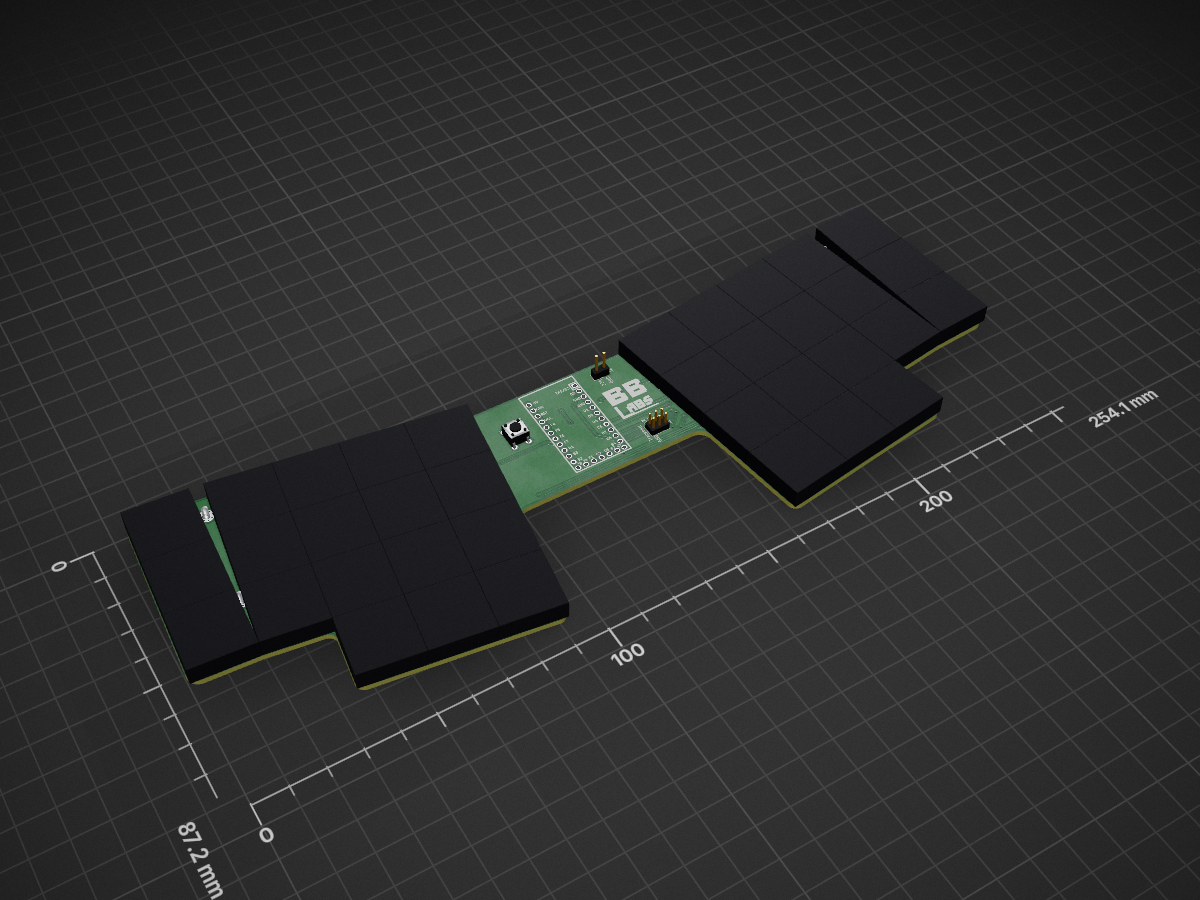
Framedeck kb is an open-source printed circuit board by brickbots, from the brickbots/framedeck repository on GitHub, published under the MIT licence. It is a 2-layer board of 254.1 × 87.2 mm with 85 parts on 73 nets, routed with 436 tracks and 24 vias.
Its parts include 37 switches, 36 diodes, 2 connectors and 1 IC. It belongs with the computers and single-board computers boards and the AVR (ATmega, ATtiny) boards of this library.
A Cyberdeck built with the framework mainboard.
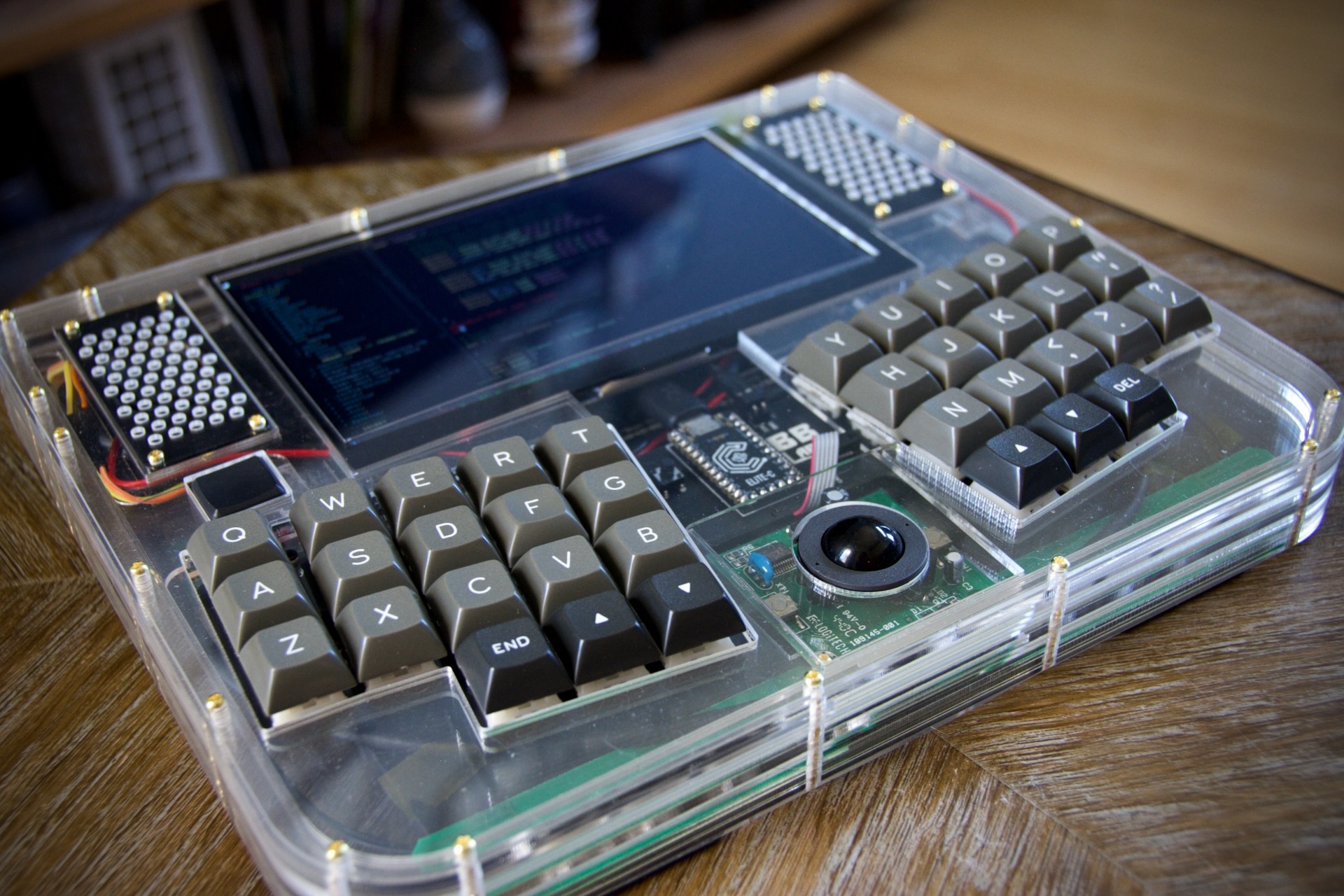
Framework has created a really slick, fully user servicable, laptop and have recently started selling the mainboard as a SBC for general use. To better support folks who may want to integrate it into their projects, they are also releasing technical documentation including pinouts, cad models and other resources.
As they were preparing this documentation release, they emailed me to see if I'd be interested in a collaboration of sorts. They would provide one of their laptops and some additional modules for me to build something unique with the only condition being that I released the designs for public use. So here we are!
The mainboard is a great little unit, being a full Intel based system on a single board with great storage and memory expansion, decent on-board graphics and full power management. Since it was designed to fit into the laptop first and foremost, some of the connectors are fairly specialized, but with the pinouts available there are a lot of opportunities for expansion. The board also has four standard USB-C ports which provide many possibilities without even trying any of the other on-board connectors.
That's all to say that when they reached out and explained their plans and offered to let me play with one, I jumped at the chance and this is what I came up with after some experimentation.
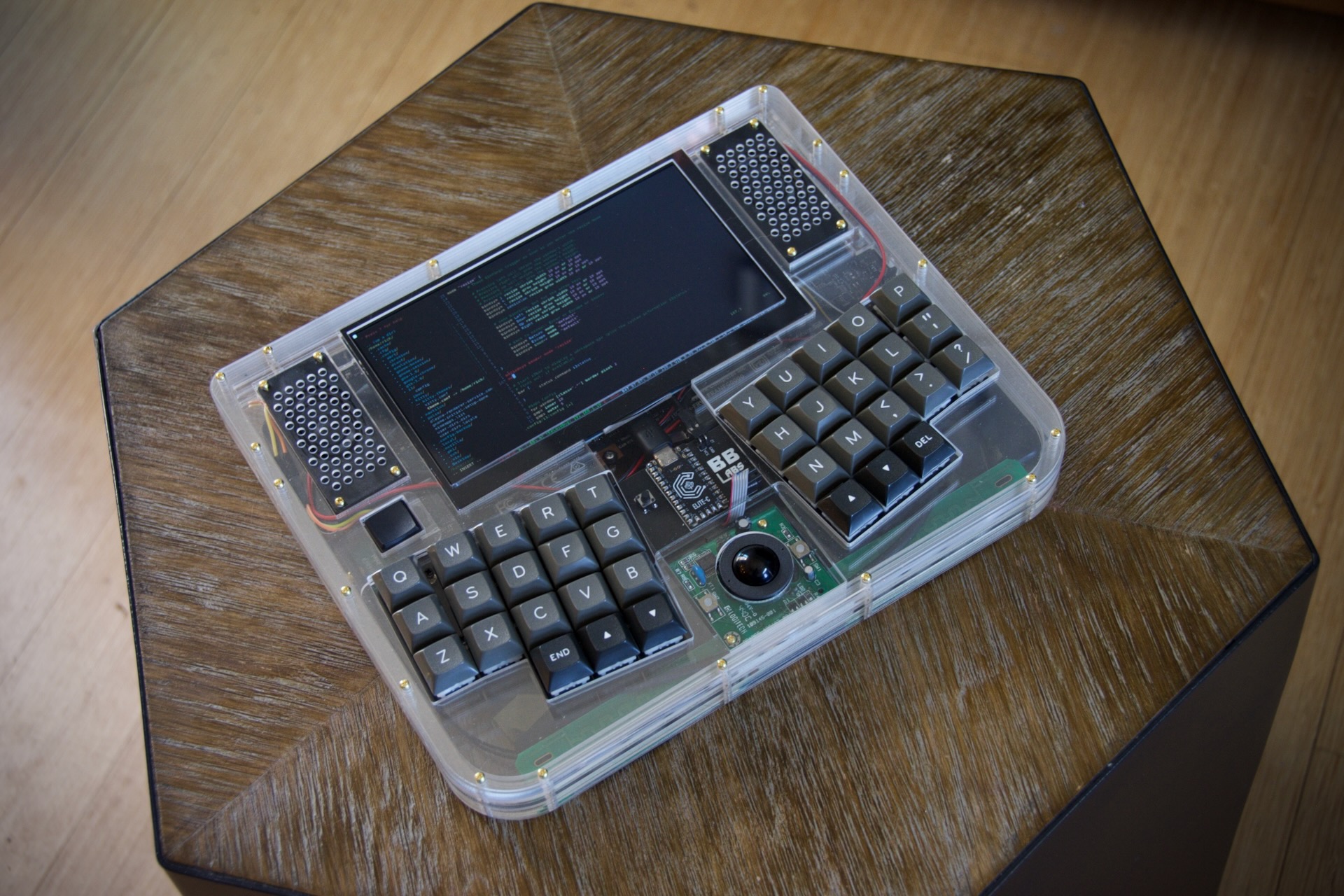
It's my take on the slab style computers that were somewhat popular before the world settled on clamshell designs for portable computers. I really wanted a TRS-80 model 100 when I was young so this sort of design was a big influence.
To complete the unit I added battery from the framework laptop, custom mechanical keyboard, wifi card, ssd storage, 16gb of memory, 7" IPS display and some speakers in the hopes of making a fairly useful computer. I ended up using the mainboard with their battery rather than roll my own power solution as it has solid capacity and is already desinged to work with the onboard power management. For other uses the mainboard can be powered via USB-C, so a solid powerbank would provide plenty of runtime or it can run off any USB-C power brick for stationary use.
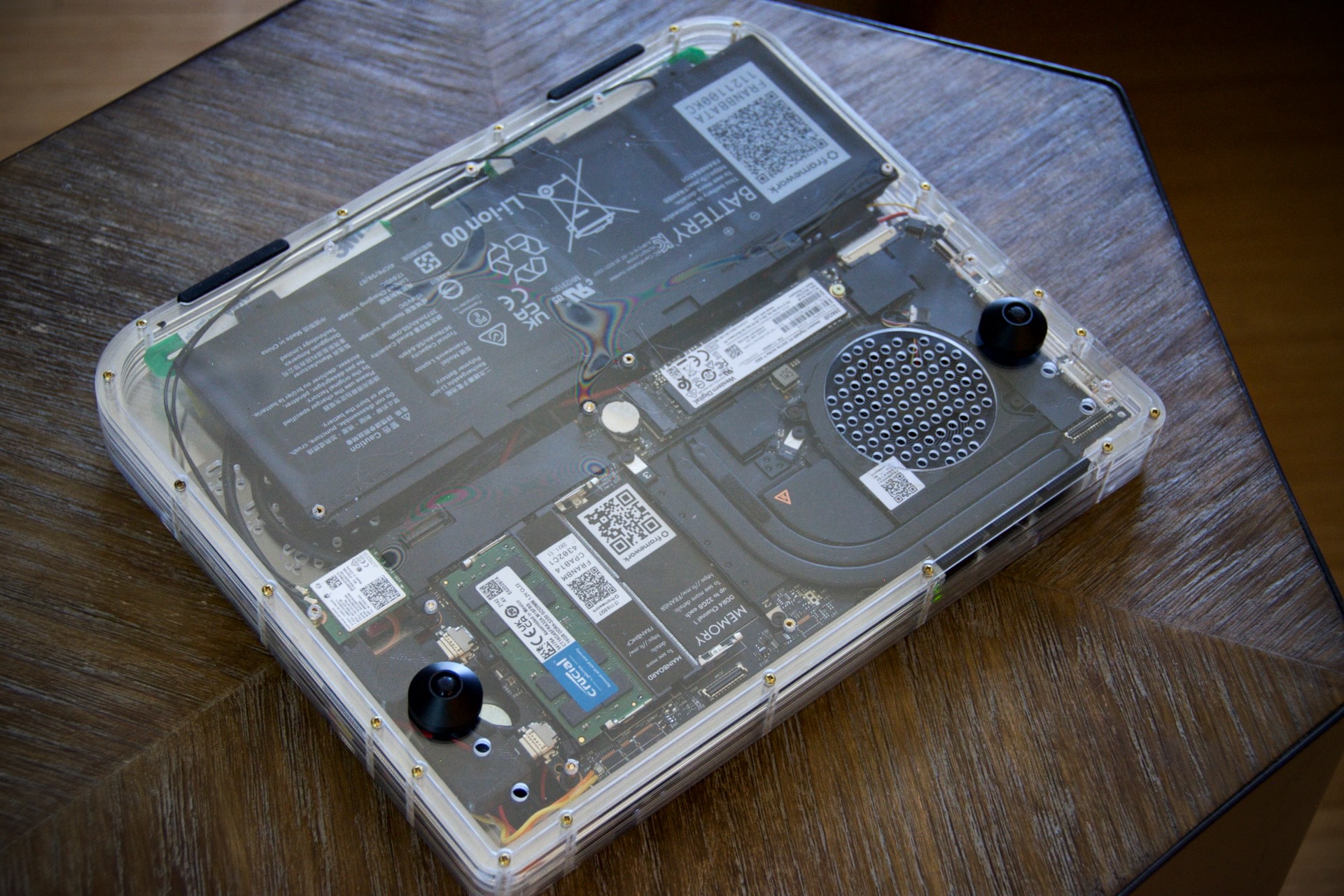
For the case, I wanted something interesting that showed off the mainboard, custom keyboard PCB and just looked unusual... so clear acrylic and brass won the day! I thought about 3d printing, and I could have done it in several sections, but building the unit up with layers of laser-cut acrylic offered some interesting challenges and opportunities.
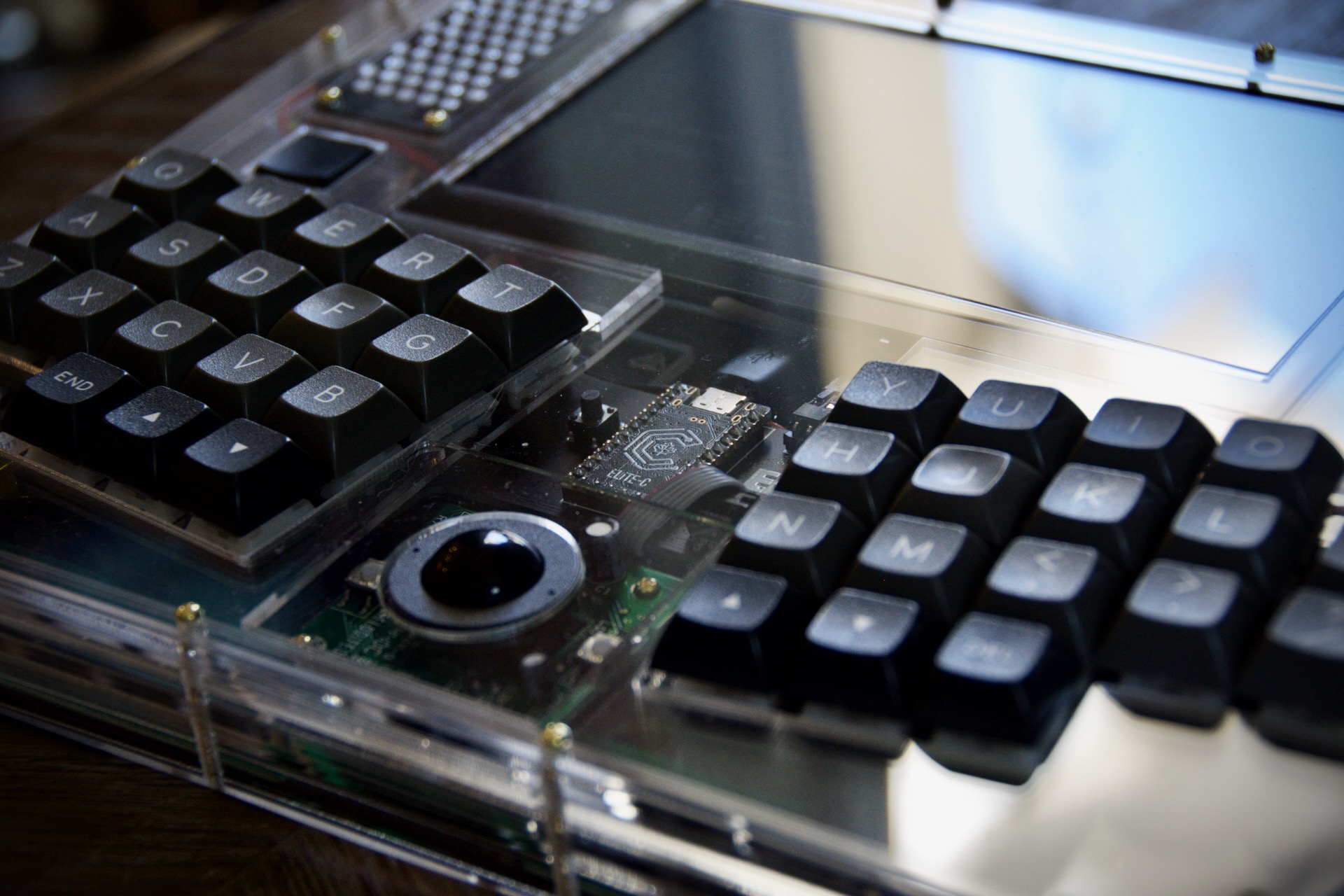
Consider this repo a sort of 'guided tour' to give some inspiration and show what might be done with the
framework mainboard. I'll highlight some things that I think are interesting, or that were tricky, but
it's not meant to be a comprehensive guide so all the normal caveats apply if you
want to dive in and build something based off this material. I'm including all of
my design files for reference, but there are lots of details of the build I probably won't cover.
If you want to build one, or something similar, feel free to reach out and I'd be happy to answer
and questions or provide advice.
Copyright (c) 2022 Richard Sutherland. All rights reserved.
All files are licensed under MIT license or CC BY-SA 4.0, see the LICENSE for more information.

| Qty | Value | Footprint | References |
|---|---|---|---|
| 36 | D | Horizon:D_SOD-123 | D1, D2, D10, D11, D12, D13, D14, D15, D16, D17, D18, D19, D20, D21, D22, D23 +20 |
| 36 | SW_Push | Horizon:SW_MX_plate | SW1, SW2, SW10, SW11, SW12, SW13, SW14, SW15, SW16, SW17, SW18, SW19, SW20, SW21, SW22, SW23 +20 |
| 8 | Hole_Pad | Horizon:Mount_M2 | H1, H2, H3, H5, H6, H7, H9, H10 |
| 1 | LCD_Power | Connector_PinHeader_2.54mm:PinHeader_1x02_P2.54mm_Vertical | J2 |
| 1 | LOGO | rsu_graphics:bblabs_logo_sml | G*** |
| 1 | Pro-Micro | keebio:Elite-C | U1 |
| 1 | Reset Switch | Horizon:SW_Push_6mm | SW37 |
| 1 | Trackball | Connector_PinHeader_2.00mm:PinHeader_2x03_P2.00mm_Vertical | J1 |
It measures 254.1 × 87.2 mm and has 2 copper layers, 1.6 mm thick.
85 parts. The full list of its parts is on this page, with links to each part's symbol and footprint where PCBKit's library has them.
From the brickbots/framedeck repository on GitHub, at the commit this page was made from: the board is kicad/framedeck_kb/framedeck_kb.kicad_pcb. PCBKit opens the board in the browser, with nothing to install.
Its repository publishes it under the MIT licence: you may reuse it on that licence's terms (keep the author's notice, and for a copyleft licence share your changes alike).


marksard/Keyboards
This repository is warehouse of my keyboard architecture.
numato/samplecode
This repository contains sample code for different Numato Lab products

BerkeleyHCI/PolymorphicBlocks
A Python-based hardware description language for PCBs for higher-level (block-diagram / system-architecture level) PCB design through libraries of directly reusable subcircuit generators.

jimmerricks/humla
The Humla is a 36-key low profile keyboard based on the Reviung by gtips and the Rev-lp by cyril279. It is for choc switches (with 18x17mm spacing) and has basic support for bluetooth pro micro alternatives such as the…

