2 layers40.9 × 85 mm
Studio mic
Spirit532/studio_mic
A simple, easy to build preamplifier for any true condenser capsule, to make a condenser microphone
63 parts150MIT

 mikeysklar/frisson
Frisson: a palm-sized RP2350 FLAC player with an e-ink screen, a NeoKey 1x4 and an ANO wheel, on a milled PCB in a 3D printed stand
Frisson is an open-source printed circuit board by mikeysklar, from the mikeysklar/frisson repository on GitHub, published under the MIT-0 licence. It is a 2-layer board of 76.1 × 61 mm with 27 parts on 52 nets, routed with 132 tracks and 0 vias.
It is built around the M2.5. Its parts include 6 connectors, 4 resistors and 1 switch. It belongs with the lEDs and displays boards and the RP2350 boards of this library.
A desktop audio player with a quad-colour e-ink screen, four keys and a thumb wheel. It will let you pick a letter to jump straight to an artist, album or song, so you never scroll through a long list.
It plays FLAC files. 16-bit/44.1 kHz works now; the goal is up to 24-bit/96 kHz, higher quality than a CD. Some people get frisson, a chill or goose bumps on the neck, from music they love, and that slightly better fidelity can make it easier to feel.
Site: https://mikeysklar.github.io/frisson/
Docs: Hardware · Design · Printing
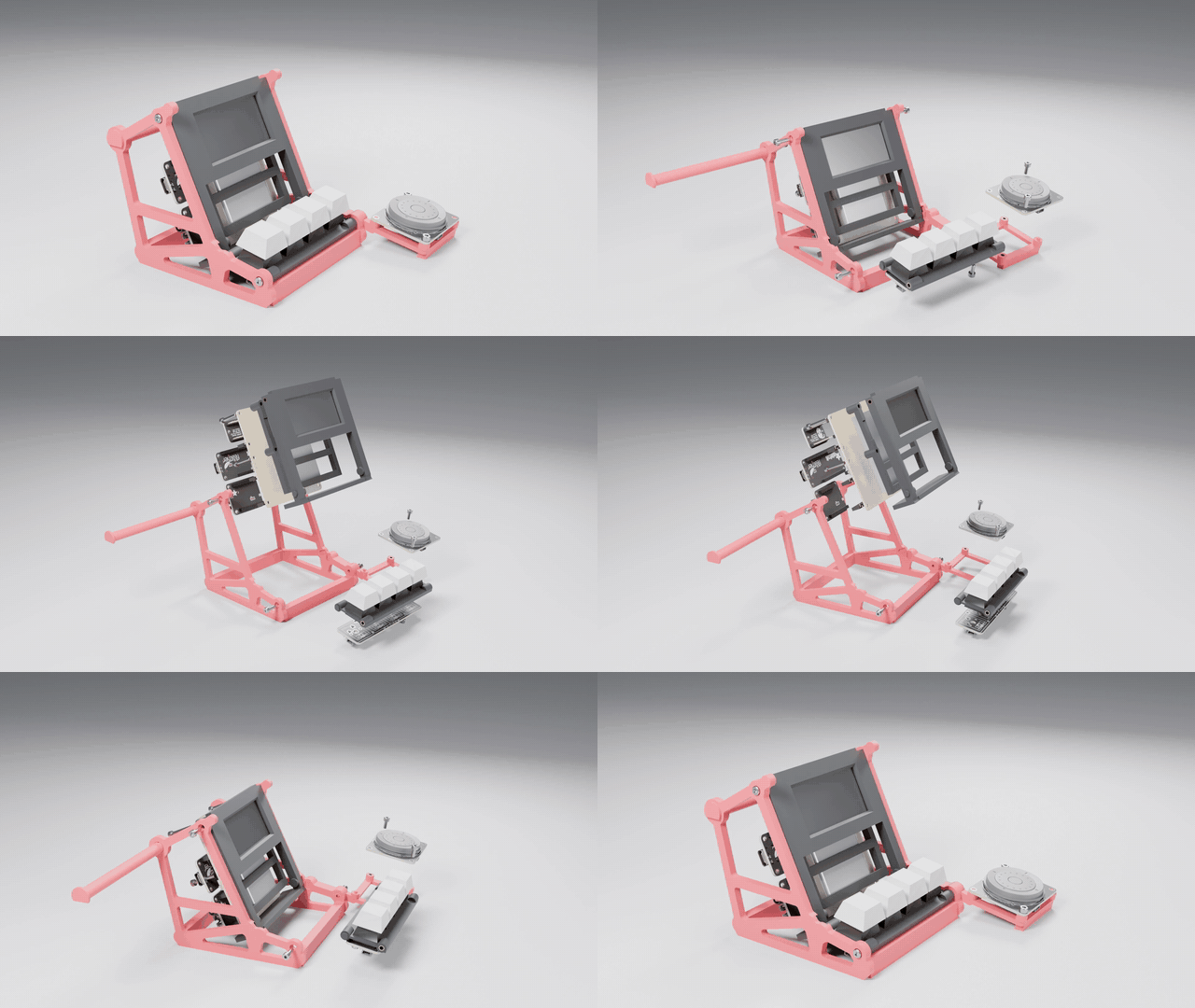
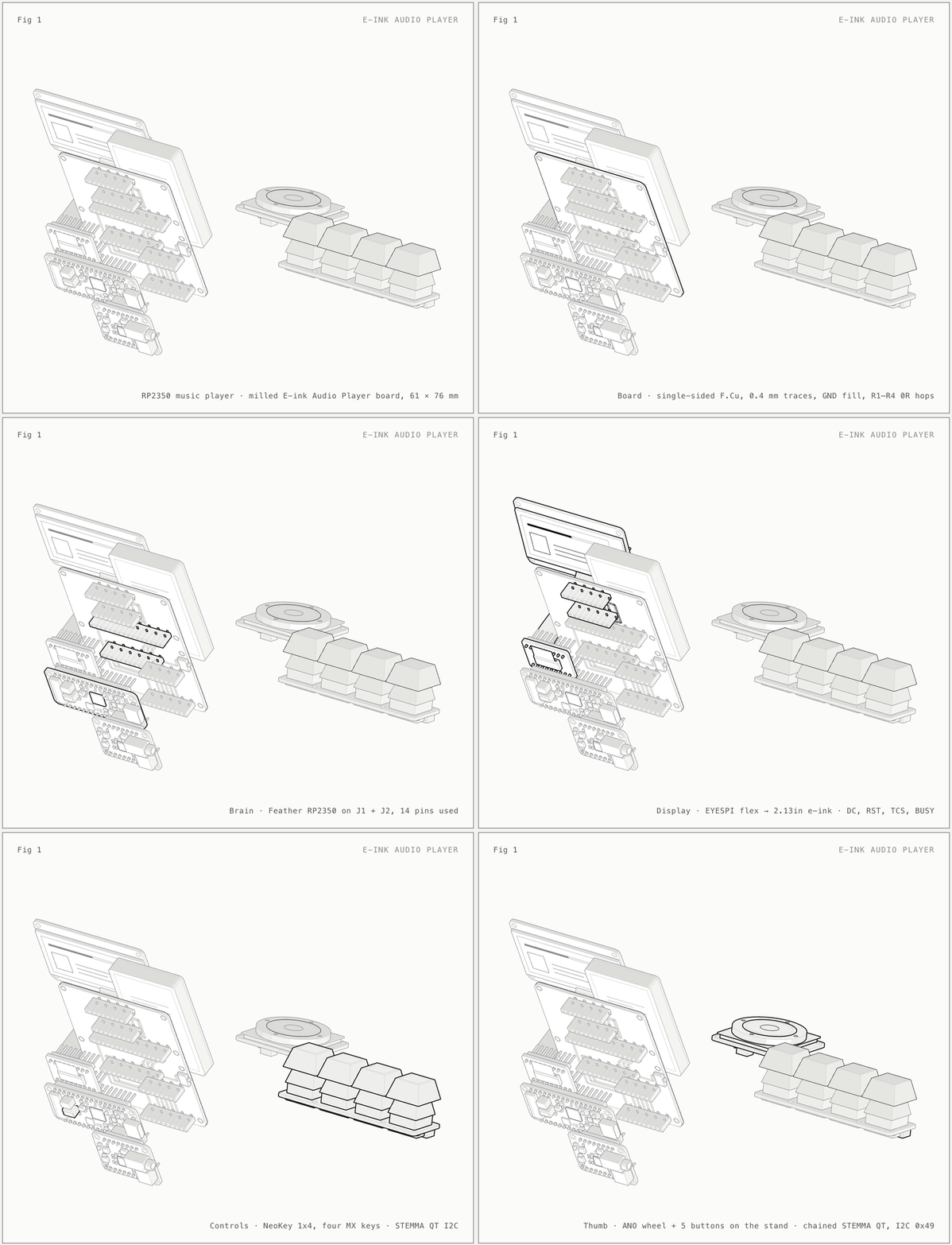
Parts are labelled in the interactive anatomy page.
The four boards plug into one single-sided milled PCB. It has top copper only, 0.4 mm traces, a GND fill with 0.1 mm clearance, and 0805 0R jumpers where traces cross. There are no vias. Two large pads, TP1 and TP2, take a hand-soldered wire from Feather D5 to the TLV320's MCLK.
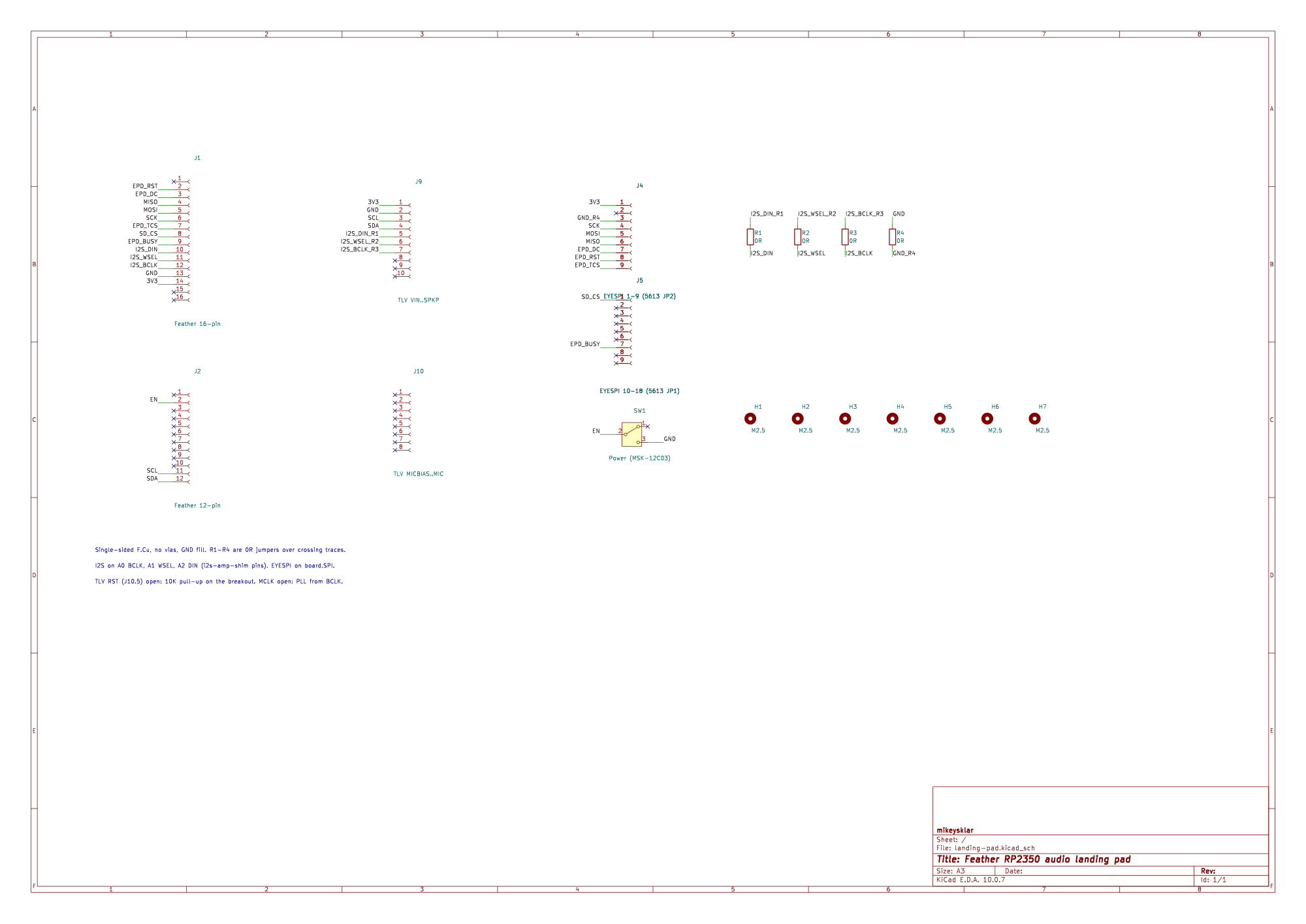
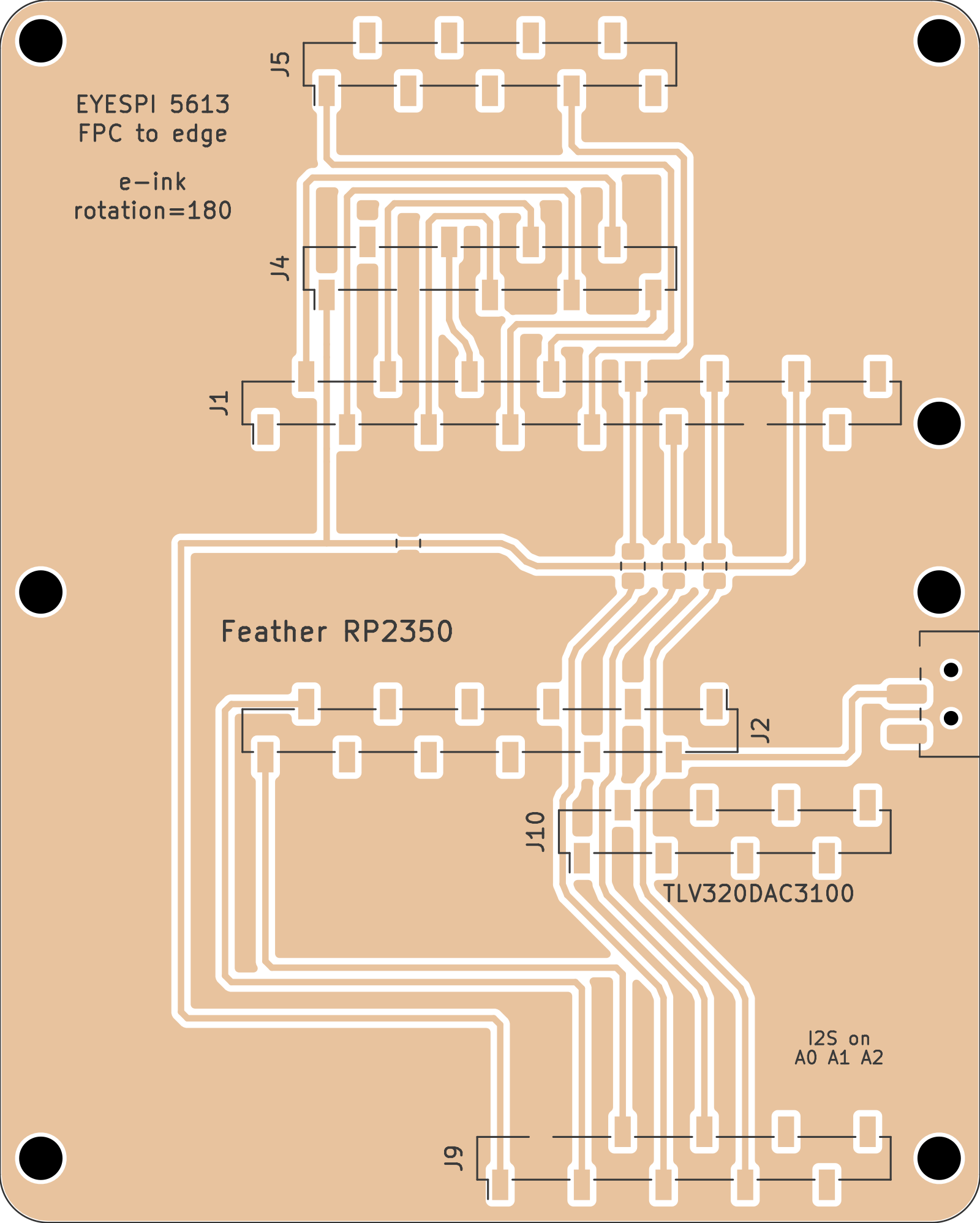
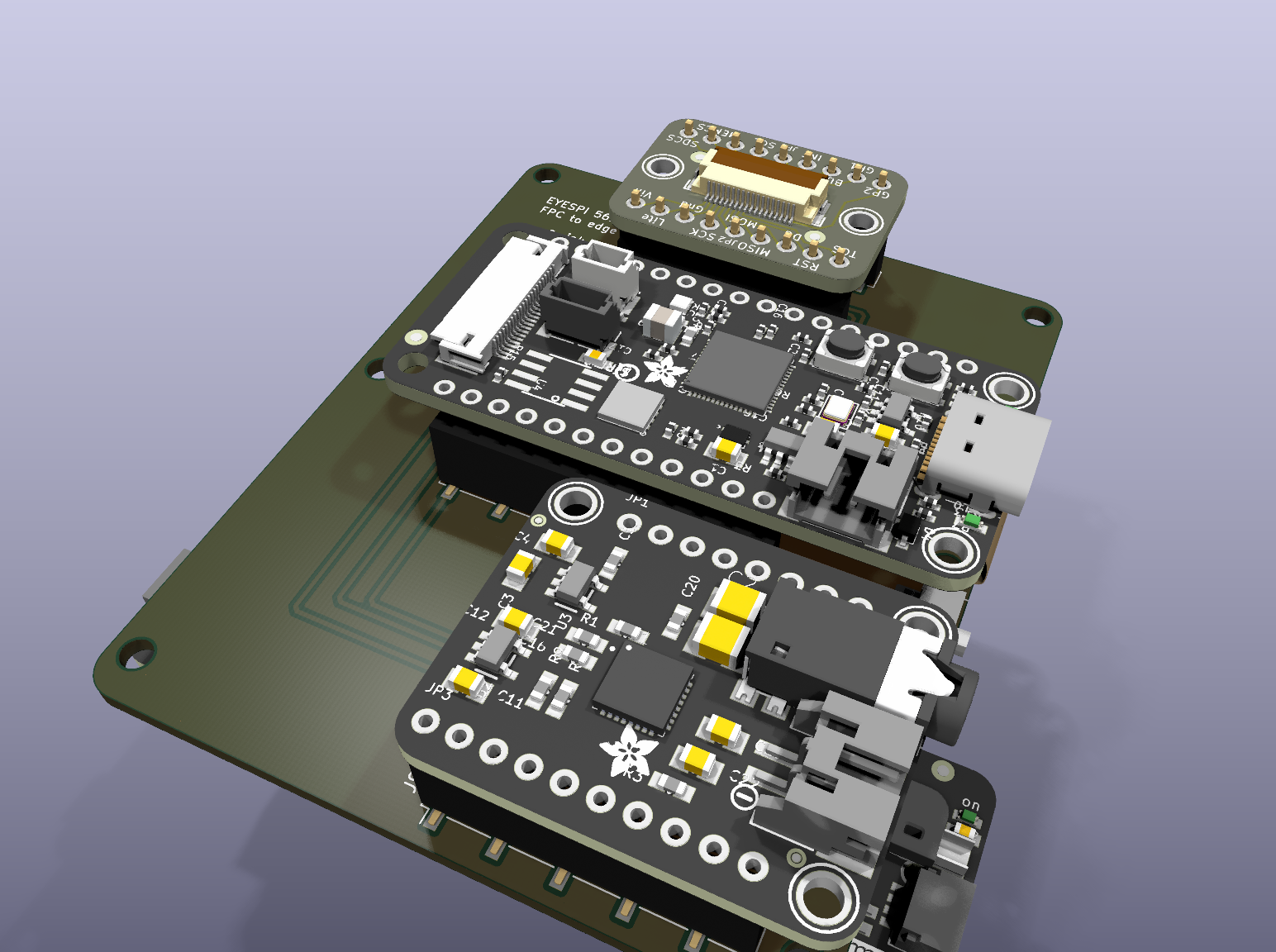
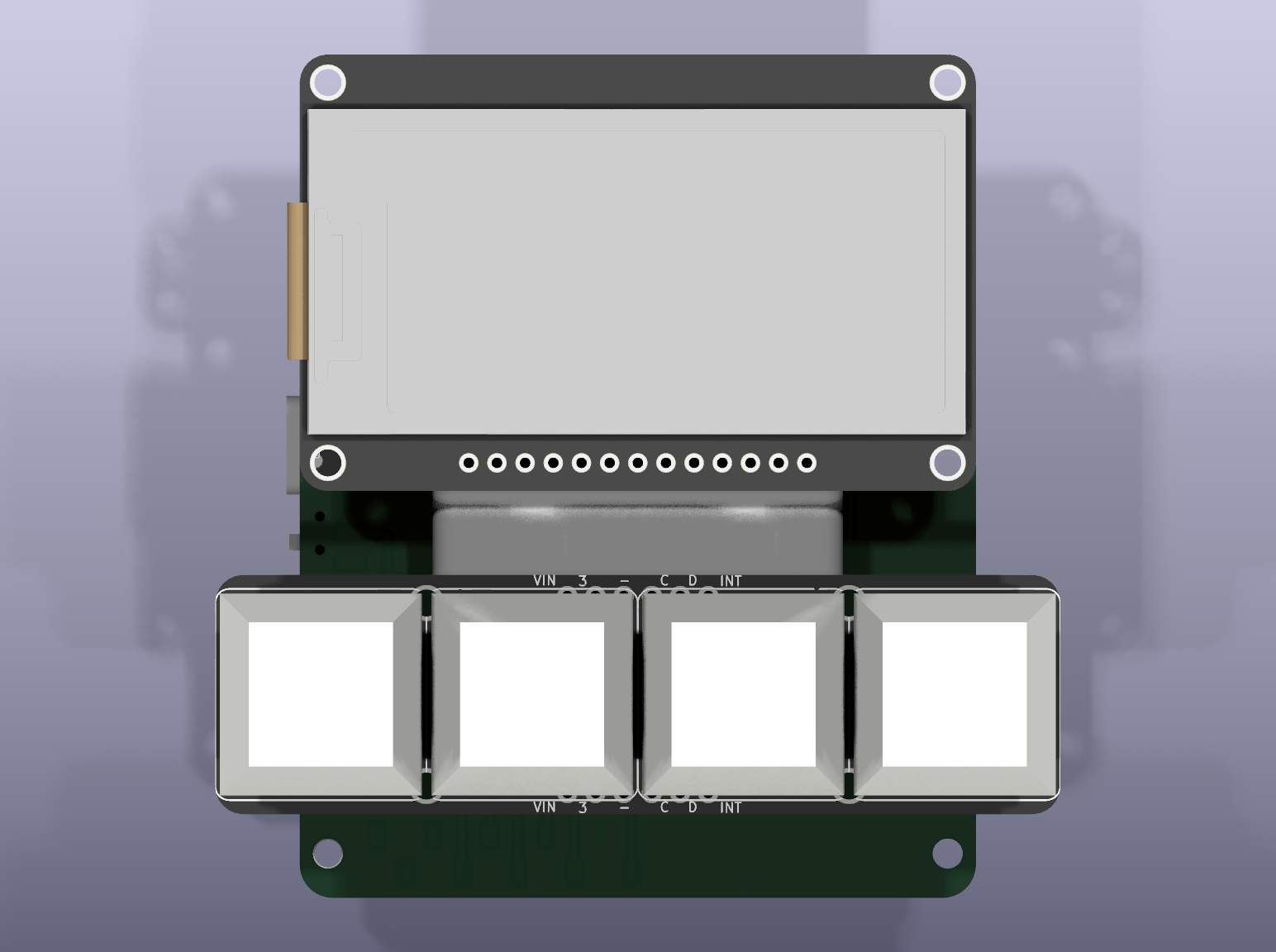
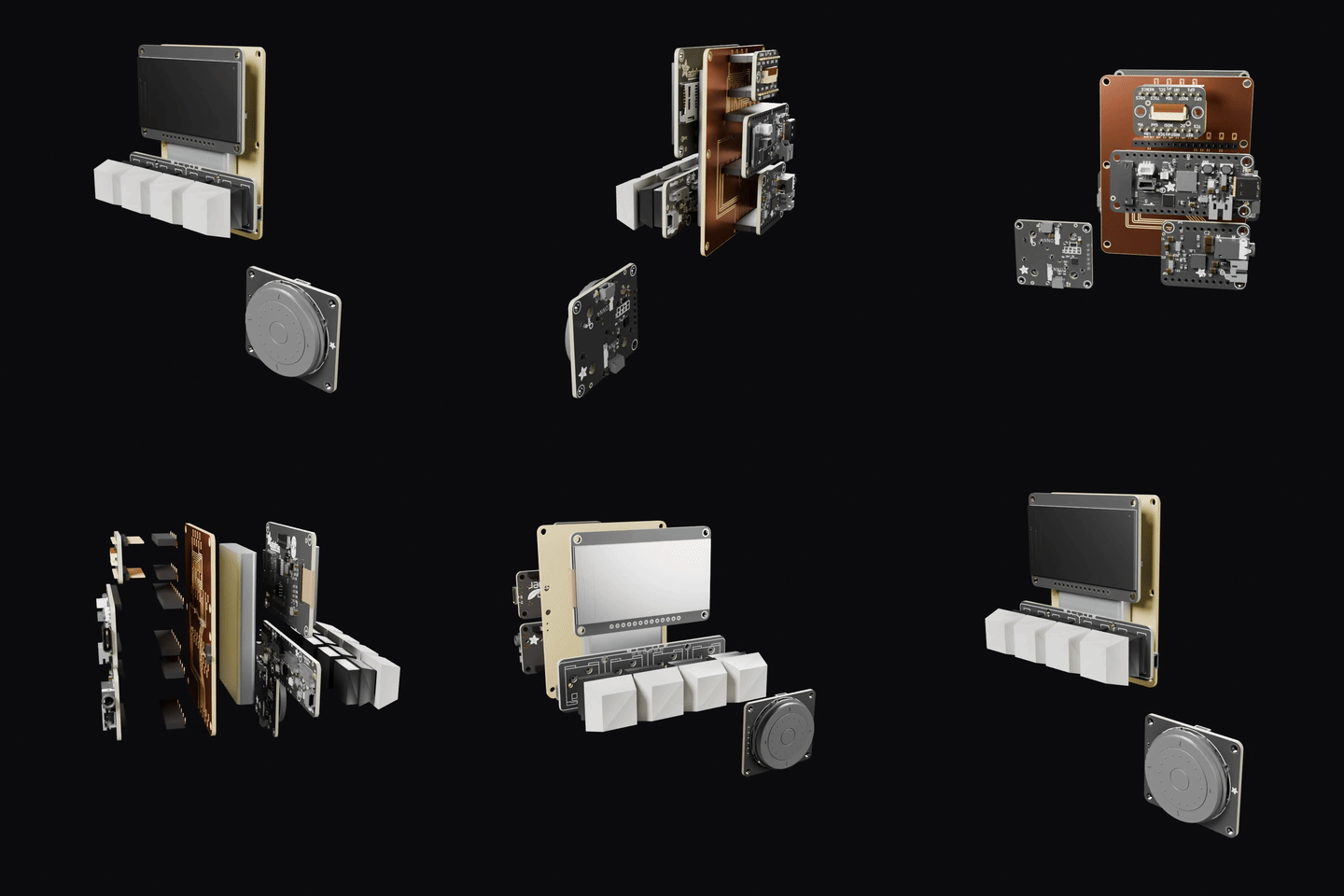
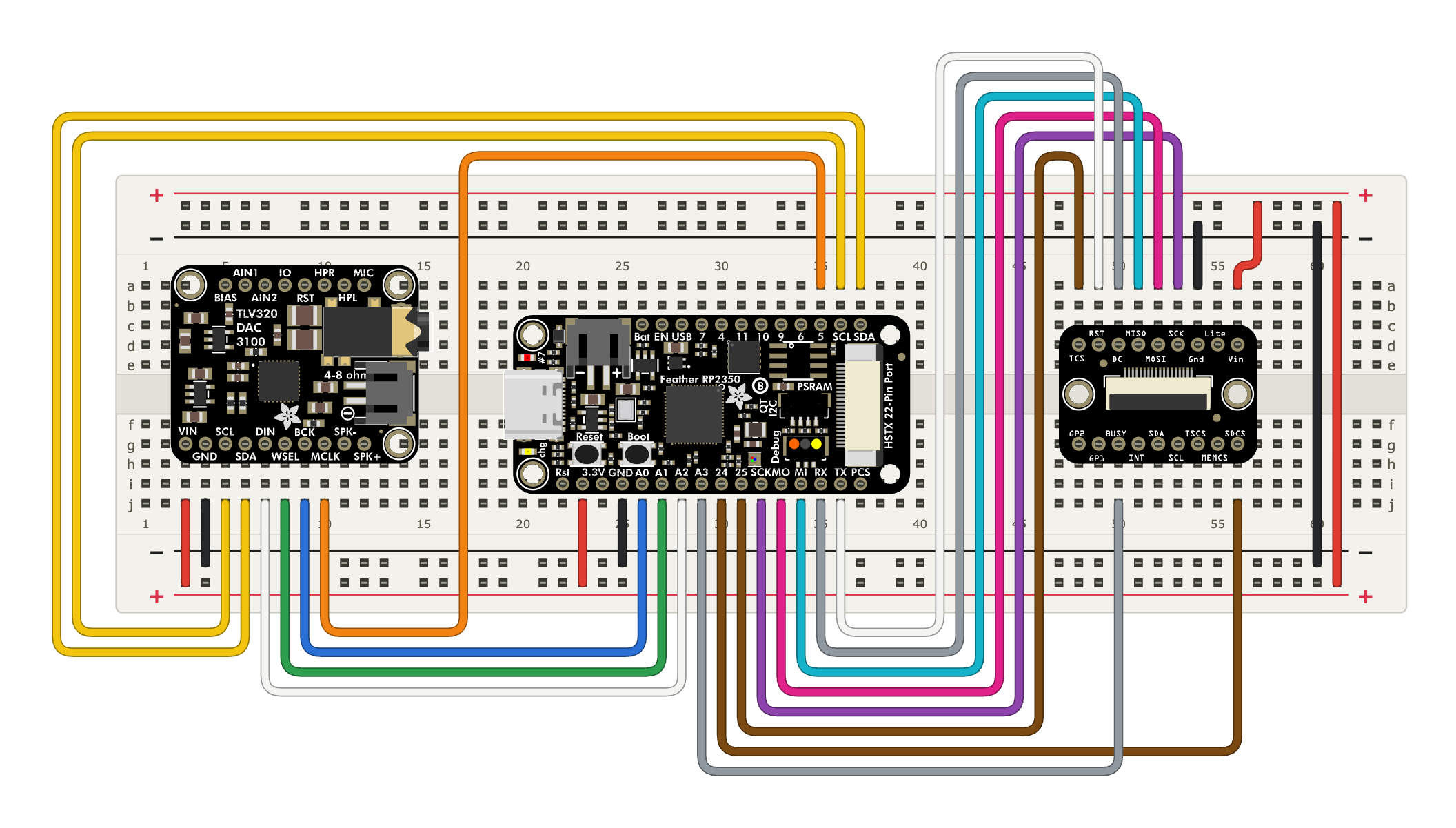
kicad/ has the KiCad project and the 3D models it uses. The ANO is in it too, as a reference part off the board, where the stand puts it.kicad/3d/adafruit-hq/ rebuilds the board models: Adafruit's CAD parts on Adafruit's own boards, with mask, silkscreen and pads.kicad/fab/ has the Gerber and drill files for milling or a board house.kicad/scripts/ has the scripts that generate the board and check the layout plan.Without the landing pad, the same circuit on a breadboard takes 22 jumper wires:
firmware/ is a CircuitPython FLAC player with e-ink menus, up to 24-bit / 96 kHz. Browse with the ANO wheel, and play, pause, skip and scan with the NeoKeys. See firmware/README.md for the jumper, pins, libraries and controls.
A minimal "mini arcade" skeleton. The screen tilts back 65 degrees. The keys sit on their own deck in front, at 10 degrees. It is five printed parts held by 12 M2.5 screws into brass heat inserts, so it comes apart and goes back together easily. The red chassis is both cheeks, the feet and the ANO mount in one piece. The ANO sits past the end of the keys, closer to you, for the thumb.
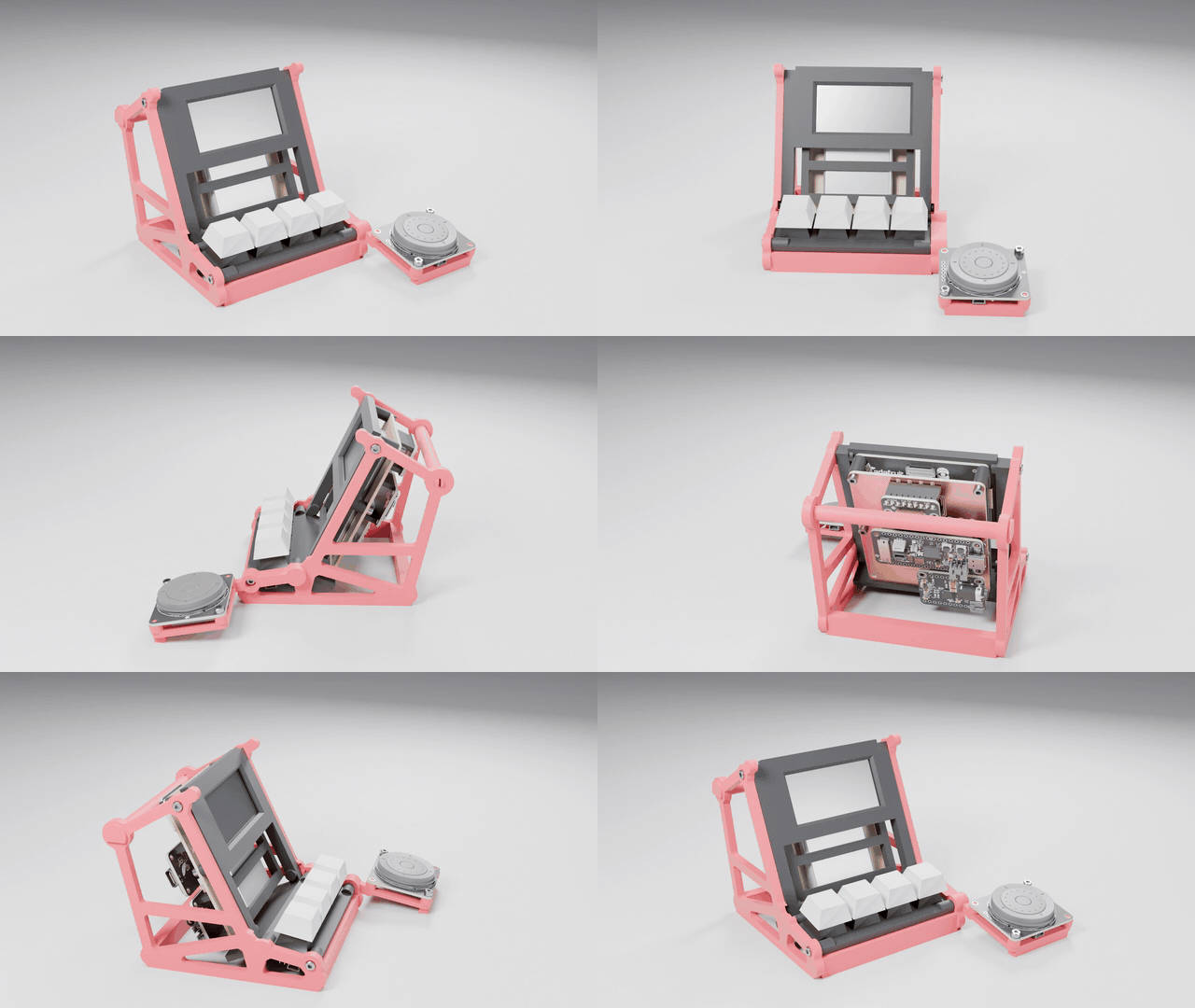
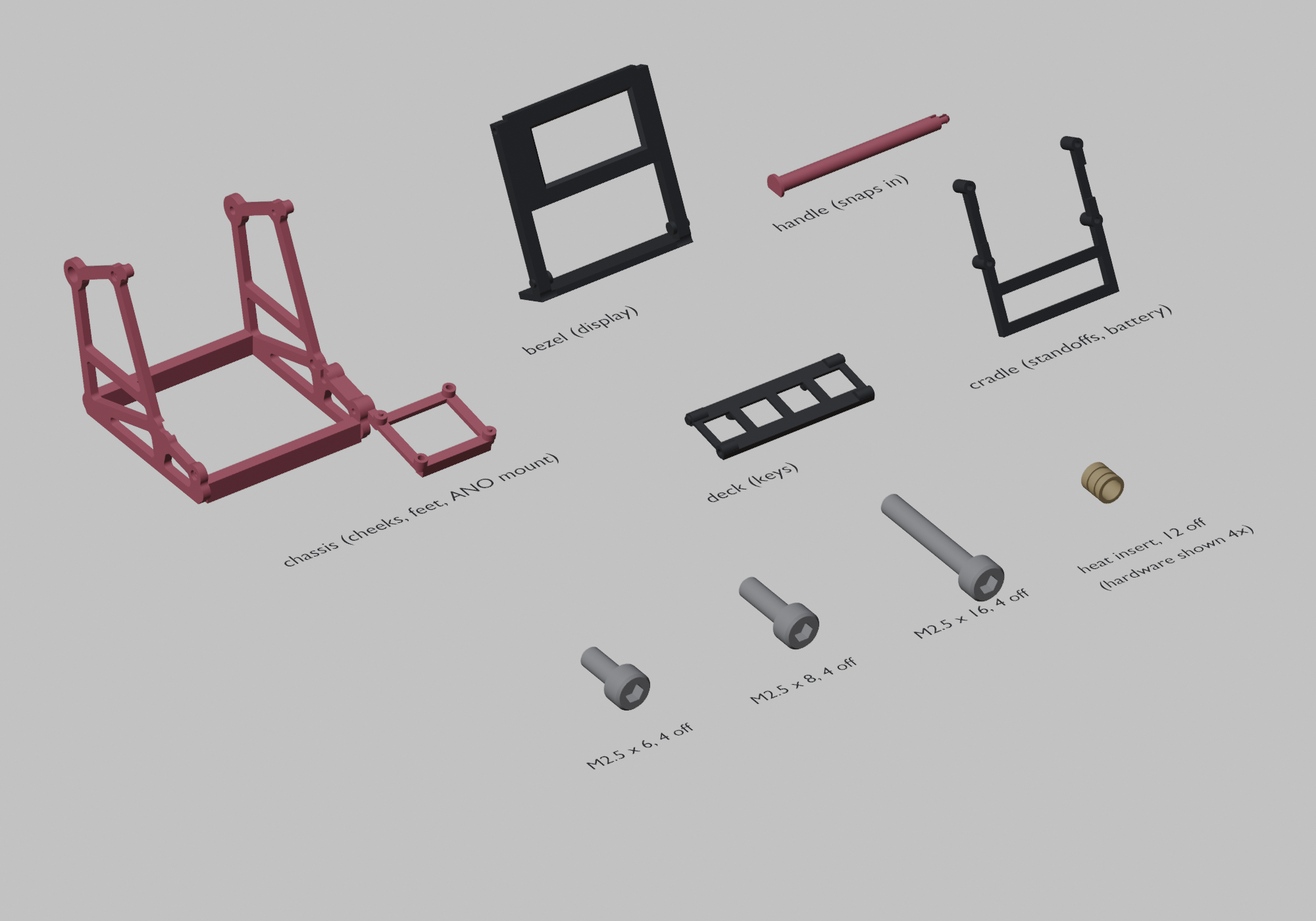
enclosure/ has the FreeCAD scripts, STEP and STL files, and frisson.FCStd.freecadcmd enclosure/assemble_arcade.py.| Part | Adafruit PID |
|---|---|
| Feather RP2350 | 6000 |
| TLV320DAC3100 I2S DAC | 6309 |
| 2.13 inch quad-colour e-ink display | 6366 |
| EYESPI breakout | 5613 |
| NeoKey 1x4 | 4980 |
| LiPo 2000 mAh | 2011 |
| ANO rotary encoder, I2C | 6310 |
Full parts list, pin map and screws: docs/HARDWARE.md.
blender/ has the scene scripts for the turntable and explode renders. It follows the Metal GPU Cycles recipe.anatomy/ has the sources for the anatomy figure. Rebuilding it needs the Anatomy kit.README.md
LICENSE
.gitignore
docs/ Pages site, renders, anatomy page and docs
kicad/ KiCad project, 3D models, fab files and generator scripts
enclosure/ FreeCAD sources, STEP and STL files
blender/ render scripts and scenes
anatomy/ anatomy build sourcesMIT-0 (MIT No Attribution). See LICENSE.
| Qty | Value | Footprint | References |
|---|---|---|---|
| 7 | M2.5 | MountingHole:MountingHole_2.7mm | H1, H2, H3, H4, H5, H6, H7 |
| 4 | 0R | Resistor_SMD:R_0805_2012Metric | R1, R2, R3, R4 |
| 2 | JUMPER | frisson:JumperPad_3.8x2.0mm | TP1, TP2 |
| 1 | 2.13in quad-colour e-ink (Adafruit 6366) | DS1 | |
| 1 | ANO rotary encoder (6310), stand-mounted, reference | ANO1 | |
| 1 | EYESPI 1-9 (5613 JP2) | Connector_PinSocket_2.54mm:PinSocket_1x09_P2.54mm_Vertical_SMD_Pin1Left | J4 |
| 1 | EYESPI 10-18 (5613 JP1) | Connector_PinSocket_2.54mm:PinSocket_1x09_P2.54mm_Vertical_SMD_Pin1Left | J5 |
| 1 | EYESPI breakout (5613) | A7 | |
| 1 | Feather 12-pin | Connector_PinSocket_2.54mm:PinSocket_1x12_P2.54mm_Vertical_SMD_Pin1Left | J2 |
| 1 | Feather 16-pin | Connector_PinSocket_2.54mm:PinSocket_1x16_P2.54mm_Vertical_SMD_Pin1Left | J1 |
| 1 | Feather RP2350 (6000) | A1 | |
| 1 | LiPo 2000 mAh (Adafruit 2011) | BT1 | |
| 1 | NeoKey 1x4 QT (4980), case-mounted | A5 | |
| 1 | Power (MSK-12C03) | frisson:SW_SPDT_MSK-12C03 | SW1 |
| 1 | TLV MICBIAS..MIC | Connector_PinSocket_2.54mm:PinSocket_1x08_P2.54mm_Vertical_SMD_Pin1Left | J10 |
| 1 | TLV VIN..SPKP | Connector_PinSocket_2.54mm:PinSocket_1x10_P2.54mm_Vertical_SMD_Pin1Left | J9 |
| 1 | TLV320DAC3100 breakout (6309) | A3 |
It measures 76.1 × 61 mm and has 2 copper layers, 1.6 mm thick.
27 parts, built around the M2.5. The full list of its parts is on this page, with links to each part's symbol and footprint where PCBKit's library has them.
From the mikeysklar/frisson repository on GitHub, at the commit this page was made from: the board is kicad/frisson.kicad_pcb and its schematic kicad/frisson.kicad_sch. PCBKit opens the board in the browser, with nothing to install.
Its repository publishes it under the MIT-0 licence: you may reuse it on that licence's terms (keep the author's notice, and for a copyleft licence share your changes alike).
Spirit532/studio_mic
A simple, easy to build preamplifier for any true condenser capsule, to make a condenser microphone


gmcn42/clumsyMIDI
A THT-only Raspberry Pi expansion board containing a MIDI interface, DAC, and OLED display

DvidMakesThings/HW_PDNode-600-Pro
The PDNode-600 is a professional-grade, 600W USB Power Delivery Unit designed specifically for compact 10-inch rack systems, targeting embedded developers, homelab enthusiasts, test benches, and smart infrastructure.


Zebra-Rodeo/marelleo
Une boîte qui raconte une histoire quand on pose une figurine dessus. Boîtier, carte, micrologiciel et doc pour la refaire.

dsanchezseco/punk75
Ortholinear keyboard with 75 keys and all components through hole