
2 layers45.7 × 31.8 mm
LEDx16 board
tardate/LittleArduinoProjects
a collection of "Little Electronic & Arduino Projects", most involving electronics or an Arduino in one way or another!
36 parts803MIT

 jons63/alarm_clock
Alarm clock with mp3 support
Test pcb is an open-source printed circuit board by jons63, from the jons63/alarm_clock repository on GitHub. It is a 2-layer board of 86 × 73.5 mm with 7 parts on 45 nets, routed with 88 tracks and 0 vias.
It is built around the 74HC595. Its parts include 4 resistors and 1 IC. It belongs with the lEDs and displays boards of this library.
This project spawned when my sister was looking to switch out her phone for an alarm clock. She said that she easily wakes up in the morning so the normal alarm sounds are to harsh and she would instead like to have nature sound like the ones usually available in wake up light alarm clocks. I did a modest effort in trying to find what she wanted but when I finally found an alarm clock that had nature sounds and no light the sound was horrible. And now im here after thinking "how hard can it be to make an alarm clock that sounds decent?".
Any seven segment display with four digits should work for an alarm clock. I went with the largest available one.
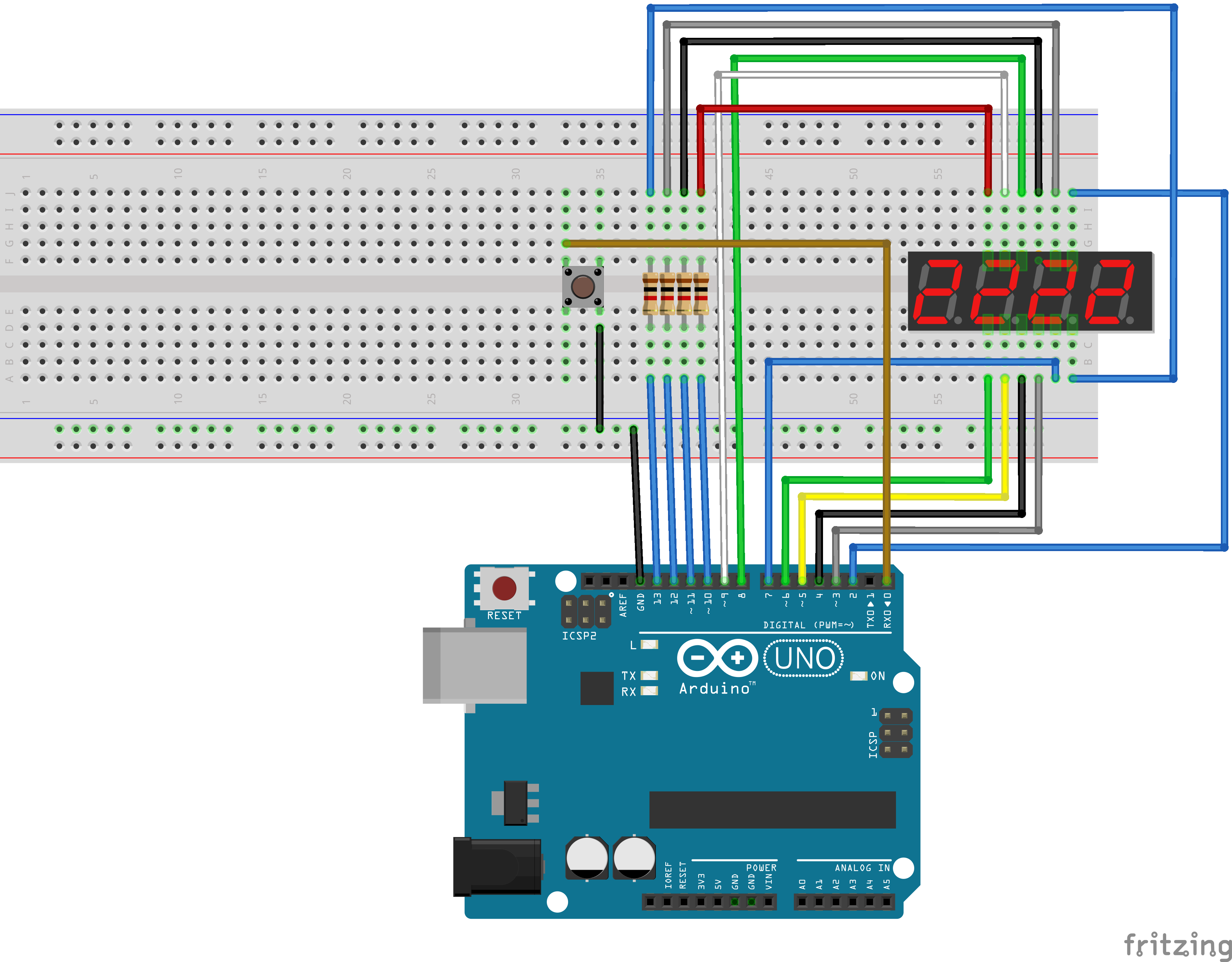
Below is the wiring for the display + one button for incrementing the value shown.
A seven segment display require a lot of pins to operate, twelve for a display with four digits. To get around this I use a shift register to only use seven pins on the arduino instead of twelve.
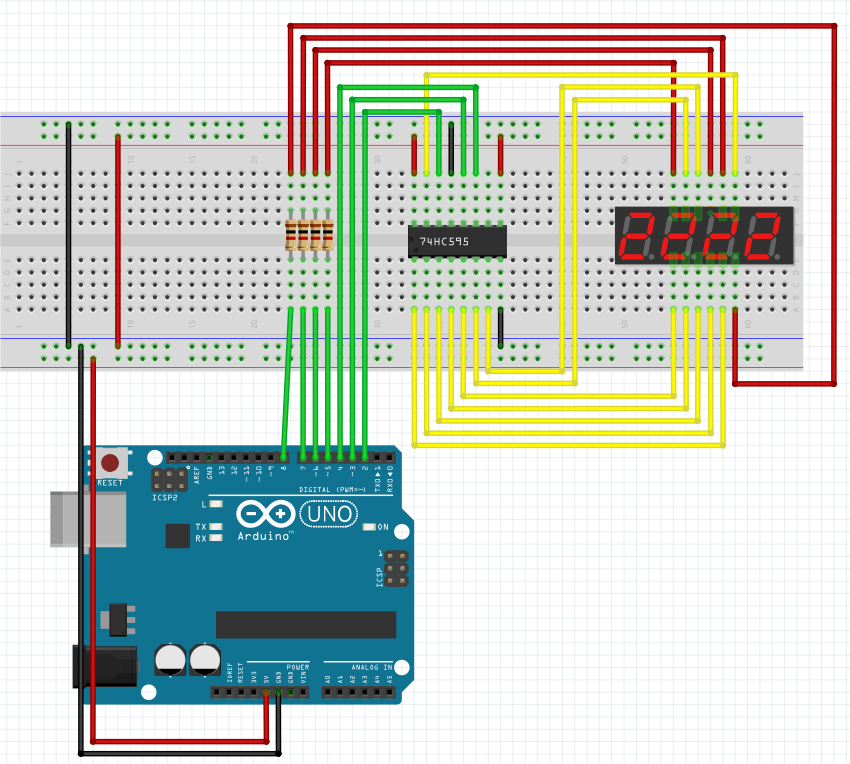 But even when using a shift register the amount of digital pins on one Arduino Uno is not enough when adding the MP3 player and buttons. Also, when adding logic to handle button presses and the alarm functionality the update frequence of the display gets low enough for it to be visibly flickering. To combat this I will add another Arduino Uno that will only refresh the display and the second arduino will handle the logic. They will use i2c communication to change what time should be displayed and other functoin that might be needed.
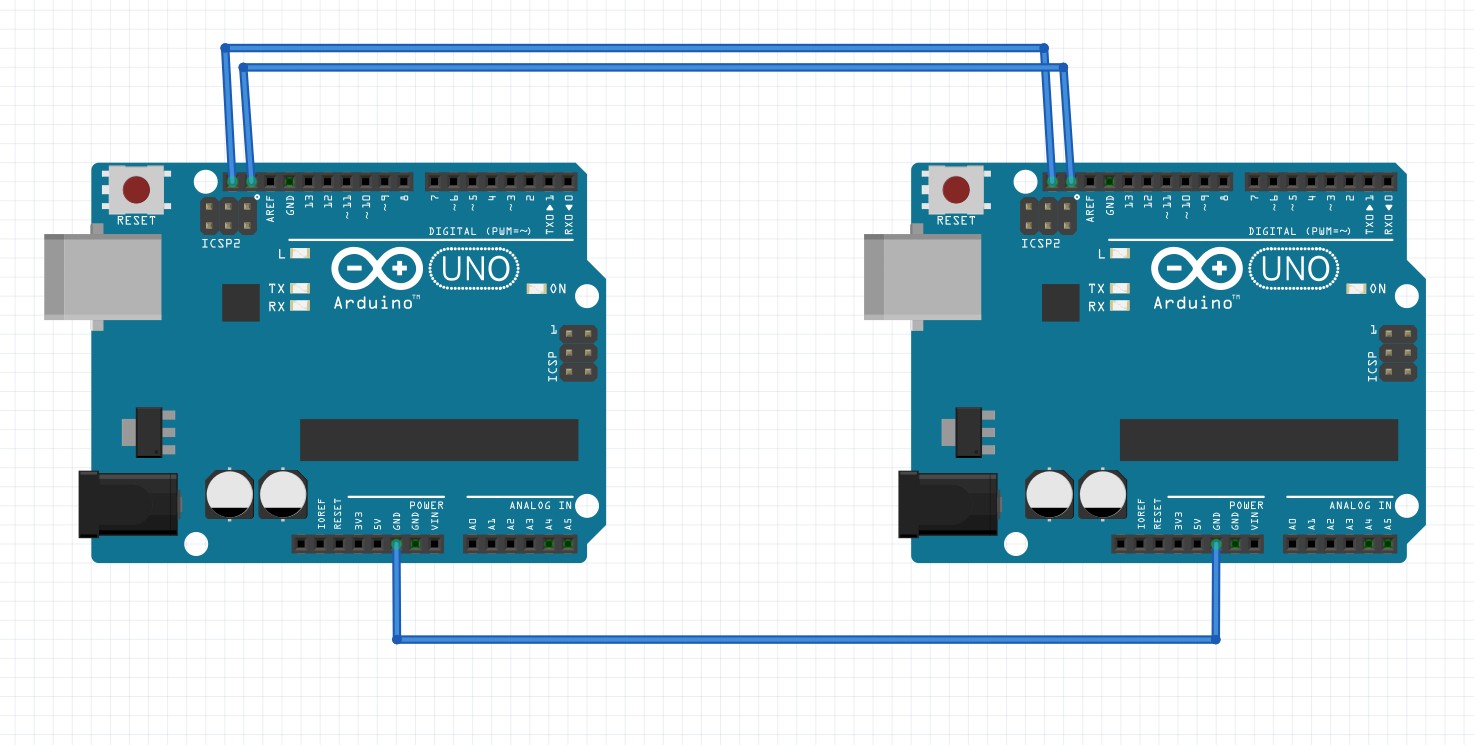
i2c is an easy communication interface with good Arduino support from the Wire library. I copied a simple example of i2c communication between two Arduinos to test it out.
| Qty | Value | Footprint | References |
|---|---|---|---|
| 4 | R | Resistor_THT:R_Axial_DIN0207_L6.3mm_D2.5mm_P10.16mm_Horizontal | R1, R2, R3, R4 |
| 1 | 74HC595 | Package_DIP:DIP-16_W7.62mm_Socket | U1 |
| 1 | ATA8401ARBJ | Local_Library:ATA8401ARBJ | https://www.electrokit.com/upload/product/41013/41013527/1LEDREDCC.pdf1 |
| 1 | ~ | Local_Library:Arduino UNO R3 Outline | UNO1 |
It measures 86 × 73.5 mm and has 2 copper layers, 1.6 mm thick.
7 parts, built around the 74HC595. The full list of its parts is on this page, with links to each part's symbol and footprint where PCBKit's library has them.
From the jons63/alarm_clock repository on GitHub, at the commit this page was made from: the board is test_pcb/test_pcb.kicad_pcb and its schematic test_pcb/test_pcb.kicad_sch. PCBKit opens the board in the browser, with nothing to install.
Its repository states no licence, so its author keeps all rights: ask jons63 before reusing the design.
tardate/LittleArduinoProjects
a collection of "Little Electronic & Arduino Projects", most involving electronics or an Arduino in one way or another!

ChrisChrisLoLo/beyblock20
The magnetic, modular, 20-key macropad that can join together to form an ortholinear board

slu4coder/Minimal-64x4-Home-Computer
My DIY TTL home computer with VGA and PS/2 and 4x the processing power of a Commodore C64 or Apple II.

electroniceel/protoboard
Advanced protoboard layout with 1.27mm pitch for smd parts

TobleMiner/DC-UPS
A small DC UPS, designed to keep small appliances like consumer network equipment running during power outages


