2 layers391 × 131.1 mm

 hw-tinkerers/TR-6011
kicad files of custom 60% keyboard inspired by bakeneko with ble support
Keyboard 60% is an open-source printed circuit board by hw-tinkerers, from the hw-tinkerers/TR-60 repository on GitHub, published under the MIT licence. It is a 2-layer board of 284.7 × 94.2 mm with 203 parts on 155 nets, routed with 1,284 tracks and 178 vias.
It is built around the BQ24074RGTR, TPD4E05U06DQAR and 1N4148W. Its parts include 65 diodes, 22 capacitors, 17 resistors, 6 inductors and 5 switches. It belongs with the keyboards and input boards and the nRF52 and nRF5x boards of this library.


TR-60 is a 60% custom mechanical keyboard PCB that is inspired by the bakeneko PCB but adds a couple of improvements to it.
TR-60 stands for typewriter-60.
The repository contains the KICAD files of the keyboard PCB design with an nRF chip and this PCB is one of the first PCB to be built around the nRF52840 bare chip and not around any module.
Front View (Rendering)
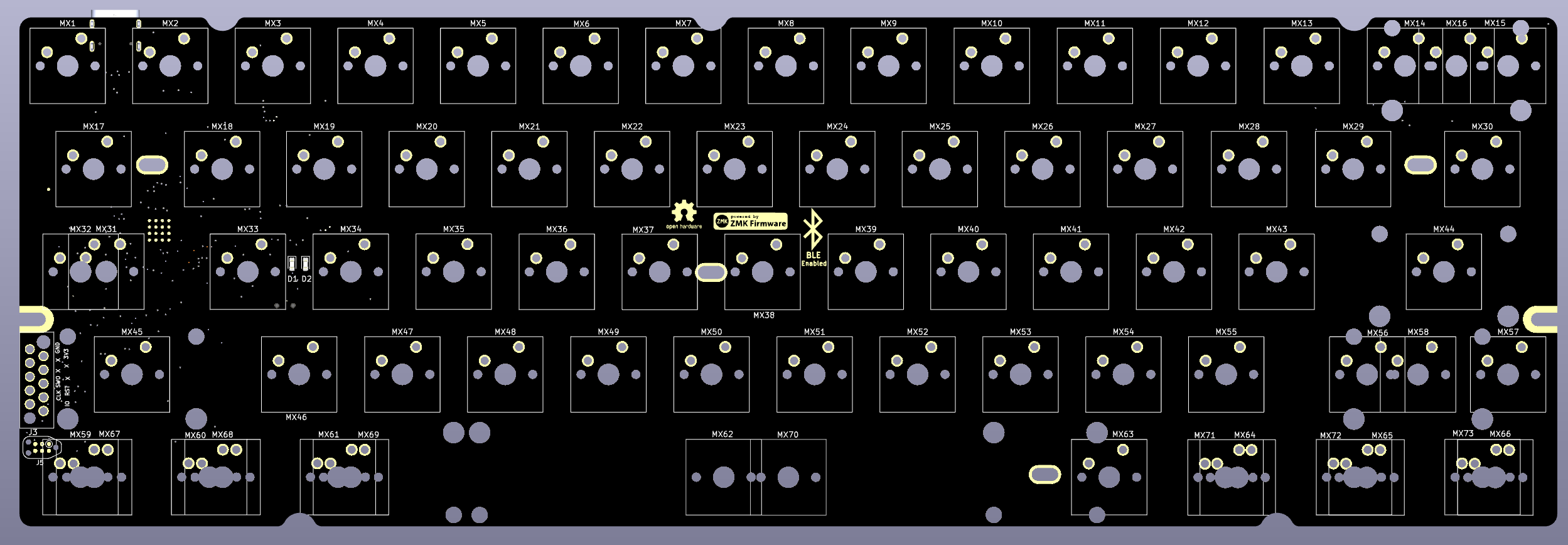
Back View (Rendering)
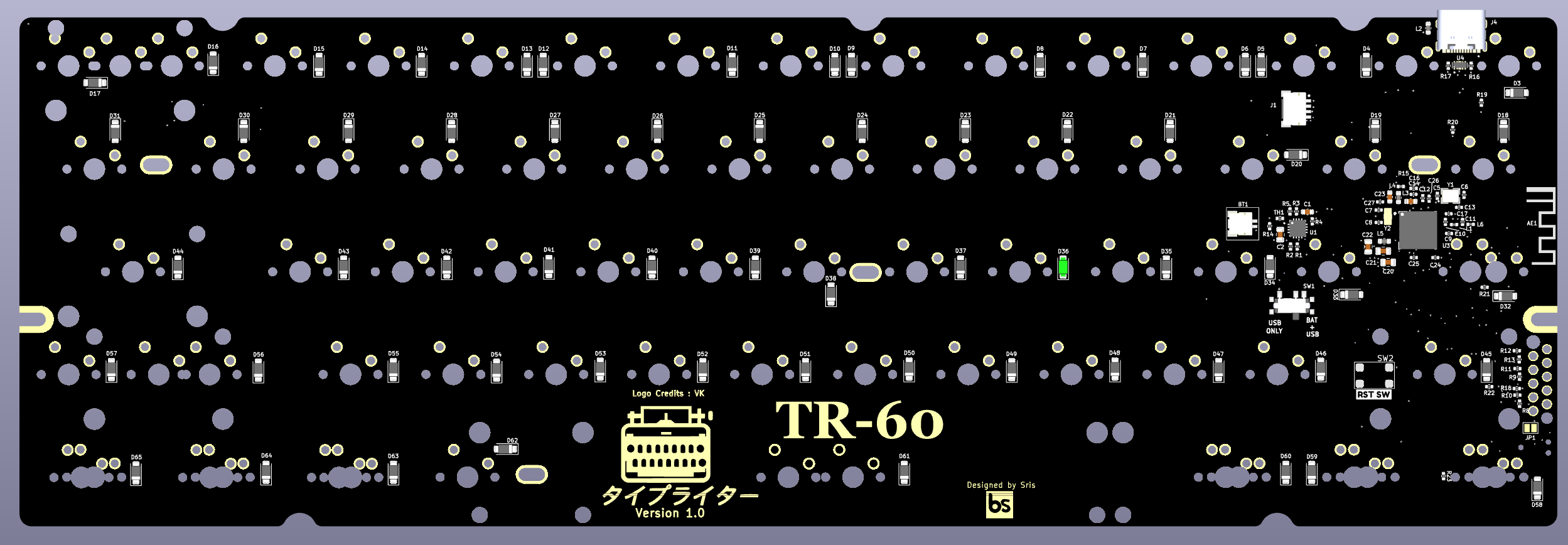
Front View of PCB.
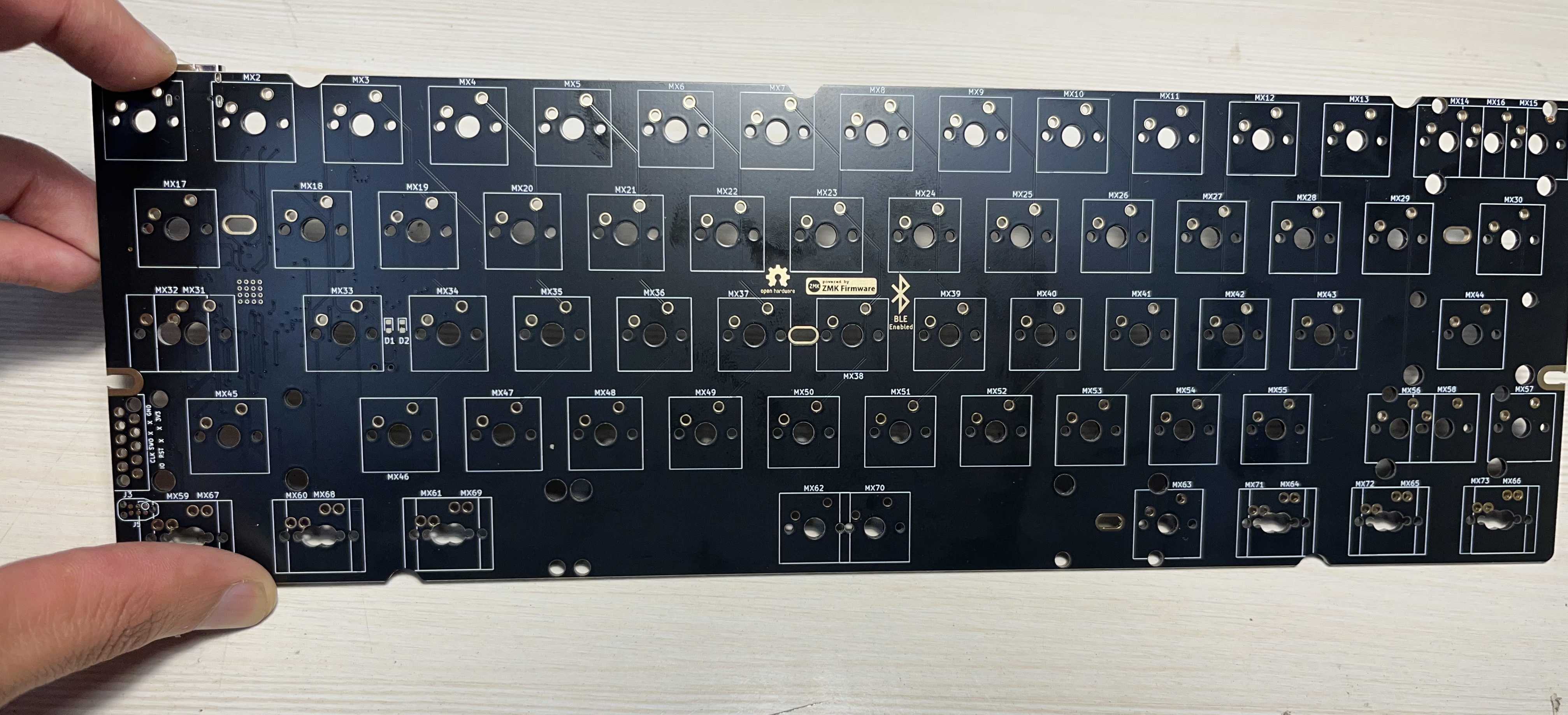
Back View of PCB.
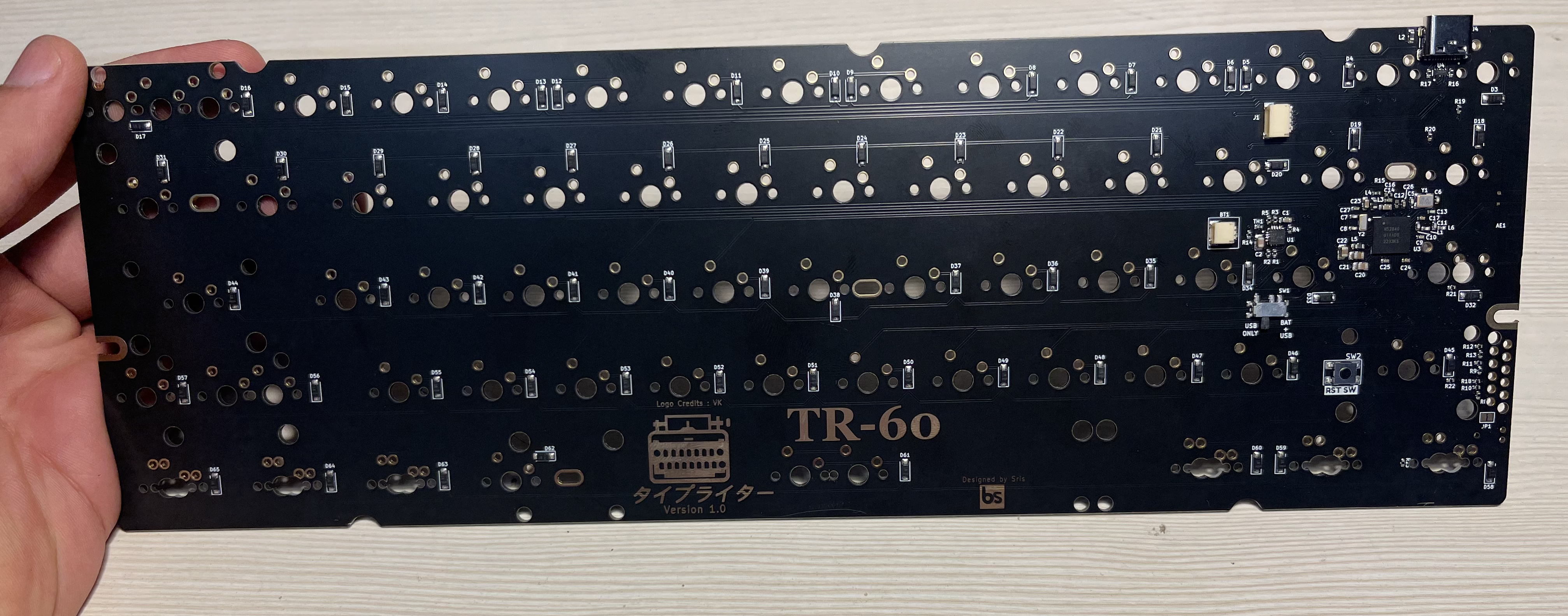
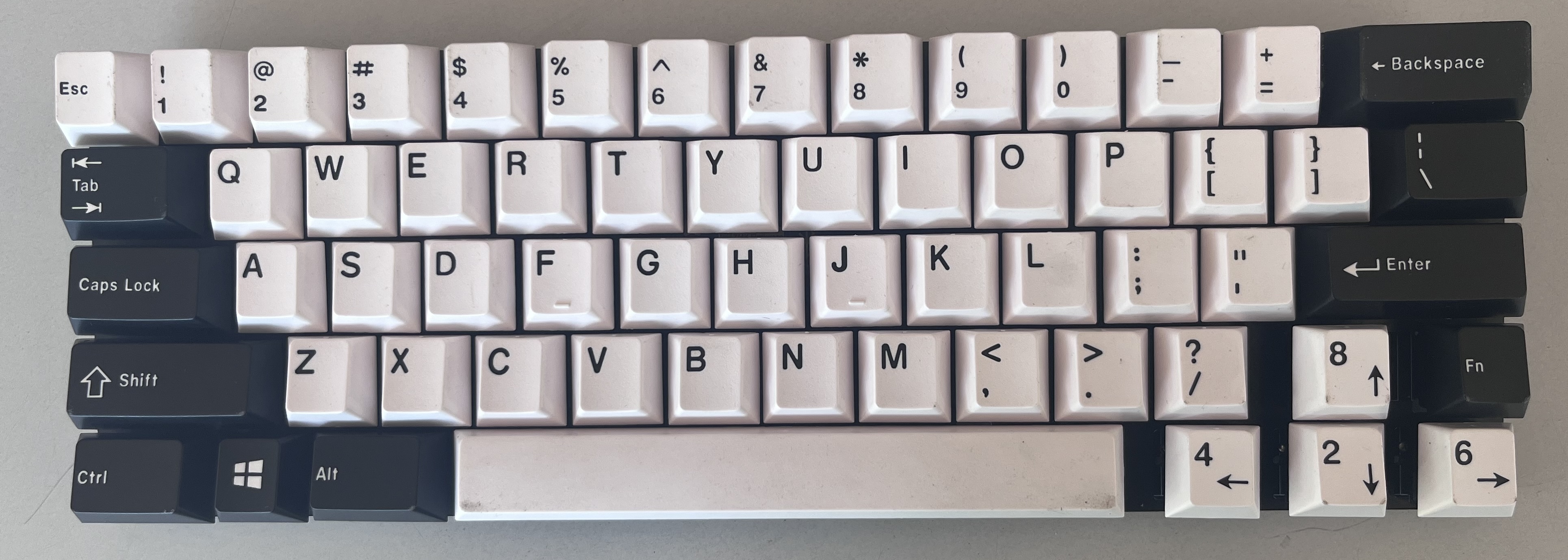
Front View fully assembled with keycaps.
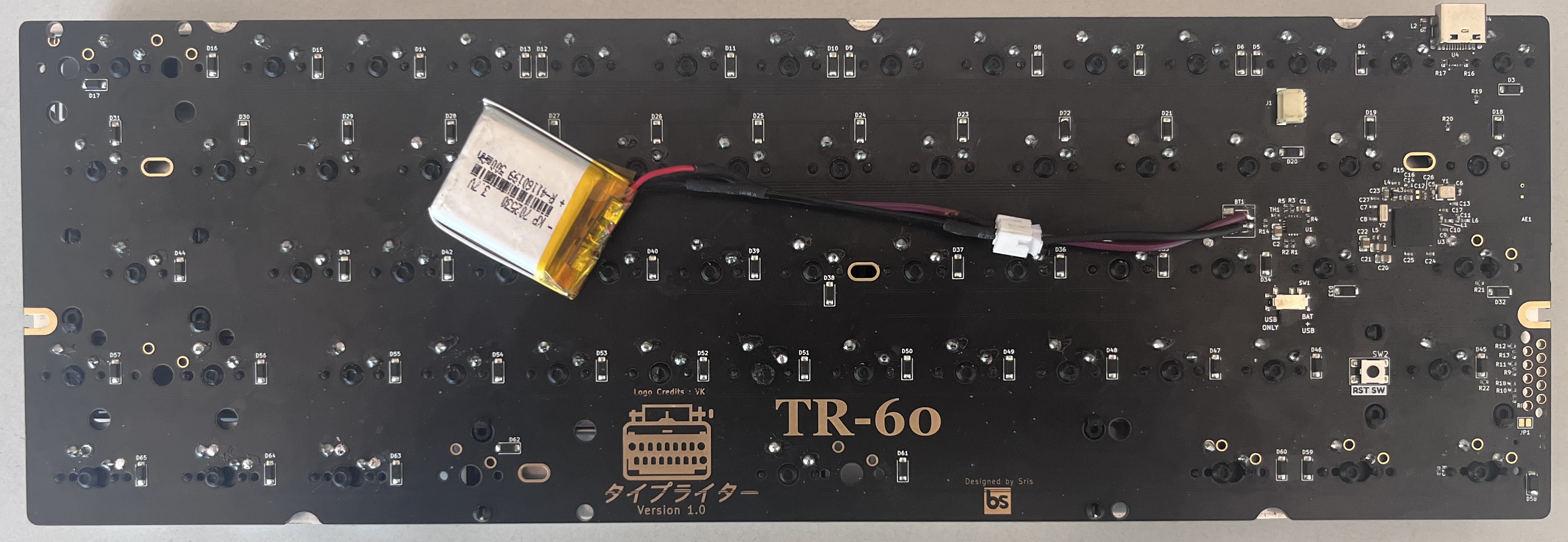
Back View fully assembled with battery.
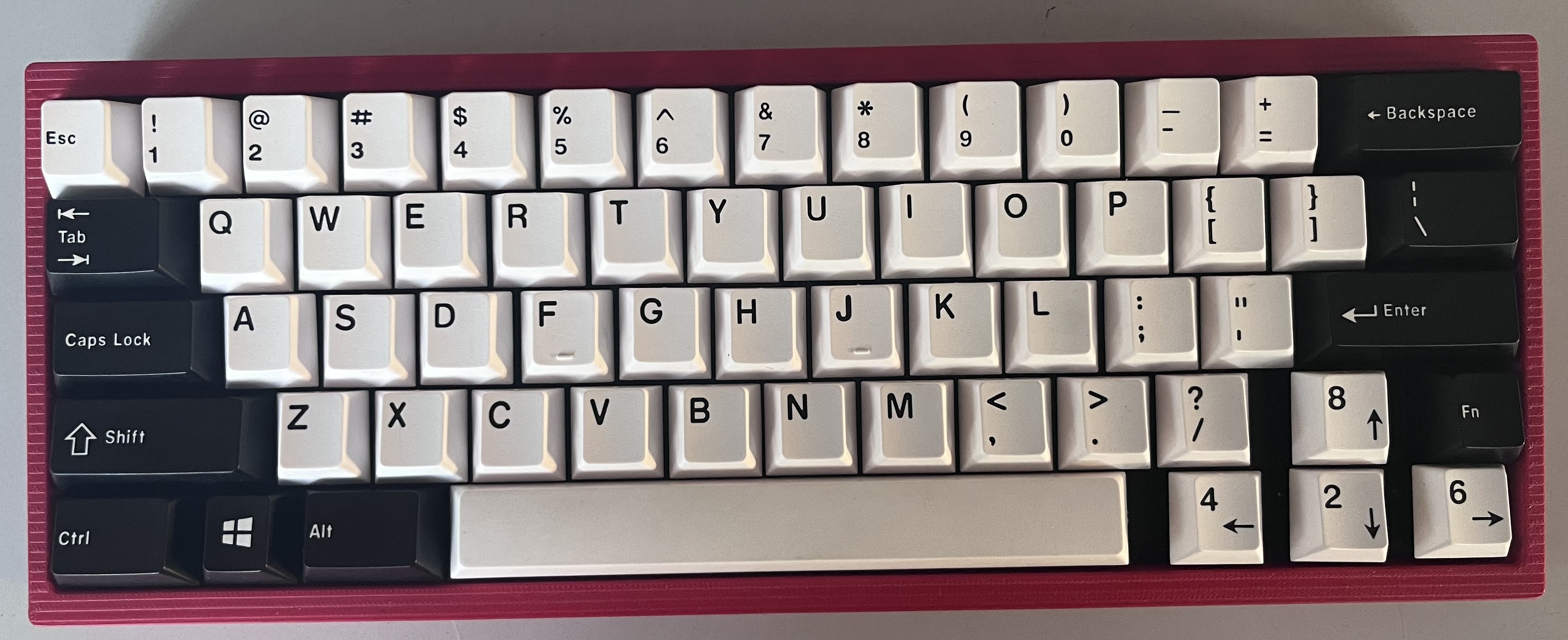
Fully assembled with Bakeneko case.
The PCB is designed in such a way that is compatible with both nRF52840 and nRF52833 MCUs as they have the same pinouts and the NC pins on nRF53833 are being used in nRF52840 making it compatible with both MCUs to mitigate supply shortage problems.
The PCB has a board antenna for BLE and an onboard charger chip BQ24075 (also compatible with BQ24073 and BQ24074) with a JST (1mm) connector for lipo battery (But the 1mm JST connector is non-conventional and will be changed to a more mainstream connector with 2.54mm pitch with which most lipo batteries are shipped). A lipo battery of 200-1000mAh can be used with the PCB. (Note: Tested only with 300mAH battery, but up to 1000mAH should not be a problem. But do it at your own risk)
The PCB has a SWD 10-pin debug connector compatible with tag-connect 10-pin debug connector for flashing firmware. The board also supports an Adafruit-UF2 bootloader to upload firmware through the USB type-C connector (If a PCB is bought from us). You can find how to build and flash the UF2 bootloader to the board in an upcoming tutorial. (still under making)
You can also order your PCB from JLC PCB with the Gerber and BOM files provided in the repository in the production folder. The video guide on how to order from JLC will be up soon.
The board supports ZMK firmware for USB and BLE connectivity. The hardware definition for the nRF52 chip is written and the guide to customize the keymap to customize the keys for the keyboard can be found below.
The firmware can be built directly on GitHub using GitHub actions and also a local toolchain can be set up on your computer to build firmware. Both the links can be found below.
| Qty | Value | Footprint | References |
|---|---|---|---|
| 63 | 1N4148W | keyboard:D_SOD-123 | D10, D11, D12, D13, D14, D15, D16, D17, D18, D19, D20, D21, D22, D23, D24, D25 +47 |
| 51 | 1u | keyboard:SW_Cherry_MX_1.00u_PCB | MX1, MX2, MX10, MX11, MX12, MX13, MX14, MX15, MX18, MX19, MX20, MX21, MX22, MX23, MX24, MX25 +35 |
| 8 | 1.25u | keyboard:SW_Cherry_MX_1.25u_PCB | MX32, MX59, MX60, MX61, MX63, MX64, MX65, MX66 |
| 7 | 10k | keyboard:R_0402_1005Metric | R8, R9, R13, R14, R15, R18, TH1 |
| 6 | 1.5u | keyboard:SW_Cherry_MX_1.50u_PCB | MX17, MX30, MX67, MX69, MX71, MX73 |
| 6 | 100nF | keyboard:C_0402_1005Metric | C16, C17, C24, C25, C26, C27 |
| 4 | 4u7F | keyboard:C_0805_2012Metric | C2, C20, C21, C22 |
| 4 | 8pF | keyboard:C_0402_1005Metric | C5, C6, C7, C8 |
| 3 | 1k2 | keyboard:R_0402_1005Metric | R1, R2, R4 |
| 3 | 1uF | keyboard:C_0603_1608Metric | C1, C14, C23 |
| 3 | 22E | keyboard:R_0402_1005Metric | R10, R11, R12 |
| 3 | 5k1 | keyboard:R_0402_1005Metric | R5, R16, R17 |
| 2 | 1.75u | keyboard:SW_Cherry_MX_1.75u_PCB | MX31, MX56 |
| 2 | 10uH | keyboard:L_0603_1608Metric | L3, L5 |
| 2 | 2.25u | keyboard:SW_Cherry_MX_2.25u_PCB | MX44, MX45 |
| 2 | LED | keyboard:LED_0603_1608Metric | D1, D2 |
| 1 | 1.2pF | keyboard:C_0402_1005Metric | C11 |
| 1 | 100pF | keyboard:C_0402_1005Metric | C13 |
| 1 | 15nH | keyboard:L_0402_1005Metric | L4 |
| 1 | 1pF | keyboard:C_0402_1005Metric | C10 |
| 1 | 2.2nH | keyboard:L_0402_1005Metric | L6 |
| 1 | 2.75u | keyboard:SW_Cherry_MX_2.75u_PCB | MX58 |
| 1 | 2u | keyboard:SW_Cherry_MX_2.00u_PCB | MX16 |
| 1 | 32.768kHz | keyboard:SMD-2_crystal | Y2 |
| 1 | 32MHz | keyboard:SMD-4_crystal | Y1 |
| 1 | 4.7nH | keyboard:L_0402_1005Metric | L1 |
| 1 | 6.25u | keyboard:SW_Cherry_MX_6.25u_PCB | MX62 |
| 1 | 60R@100MHz | keyboard:L_0603_1608Metric | L2 |
| 1 | 7u | keyboard:SW_Cherry_MX_7.00u_PCB | MX70 |
| 1 | 820pF | keyboard:C_0402_1005Metric | C9 |
| 1 | 8k2 | keyboard:R_0402_1005Metric | R3 |
| 1 | Antenna_Shield | keyboard:BLE_ANTENNA | AE1 |
| 1 | BQ24074RGTR | keyboard:QFN-16 | U1 |
| 1 | DNP | keyboard:C_0402_1005Metric | C12 |
| 1 | JST-4-pin | keyboard:JST-4-pin | J1 |
| 1 | LOGO | keyboard:creator_logo | G*** |
| 1 | LOGO | keyboard:logo-soldermask | G*** |
| 1 | LOGO | keyboard:keyboard-name-silkscreen | G*** |
| 1 | Lipo cell | keyboard:JST-2-pin | BT1 |
| 1 | Open Hardware | keyboard:OSHW-Logo | S1 |
| 1 | Prog_conn | keyboard:DB_CONN | J3 |
| 1 | Reset Switch | keyboard:RST_SW | SW2 |
| 1 | SolderJumper | keyboard:SolderBridge | JP1 |
| 1 | TPD4E05U06DQAR | keyboard:USON-10 | U4 |
| 1 | TYPE-C-31-M12_13 | keyboard:tyye_c_connector | J4 |
| 1 | Tag connect TC2030-CTX | keyboard:TC2030-IDC-NL | J5 |
| 1 | nRF52840-QIAA-R/nRF52833-QIAA-R | keyboard:aqfn73 | U3 |
| 1 | ~ | keyboard:ZMK_logo | S4 |
| 1 | ~ | keyboard:BLE-symbol | S3 |
| 1 | ~ | keyboard:Keybaord_outline_edgecuts | S2 |


Binita126/ExitIQ
ExitIQ: ESP32-S3 Edge-AI Emergency Evacuation Guidance Terminal (Vishwakarma Awards 2026 Stage 2)


oyeniyihakeem08-blip/child-wearable-notification-bracelet
Wi-Fi wristband that tells children what’s expected of them, with a caregiver dashboard and offline alerts. ESP32-S3 · MQTT · KiCad.
It measures 284.7 × 94.2 mm and has 2 copper layers, 1.61 mm thick.
203 parts, built around the BQ24074RGTR, TPD4E05U06DQAR and 1N4148W. The full list of its parts is on this page, with links to each part's symbol and footprint where PCBKit's library has them.
From the hw-tinkerers/TR-60 repository on GitHub, at the commit this page was made from: the board is Keyboard_60%.kicad_pcb and its schematic Keyboard_60%.kicad_sch. PCBKit opens the board in the browser, with nothing to install.
Its repository publishes it under the MIT licence: you may reuse it on that licence's terms (keep the author's notice, and for a copyleft licence share your changes alike).