2 layers150 × 100 mm

 DagaVedant/SmartBin
a sorting head that drops into a normal trash can and puts recyclables in the right side by itself
Smartbin hat is an open-source printed circuit board by DagaVedant, from the DagaVedant/SmartBin repository on GitHub. It is a 2-layer board of 65 × 45 mm with 34 parts on 26 nets, routed with 585 tracks and 99 vias.
It is built around the HX711, MCP3208-BI/P and M2.5, with the AO3400A and BC847 among its other parts. Its parts include 10 resistors, 8 capacitors, 8 connectors, 2 ICs and 2 transistors.


a sorting head that drops into a normal trash can and puts recyclables in the right side by itself.
demo video: https://www.youtube.com/shorts/8E3T3RMJy3o
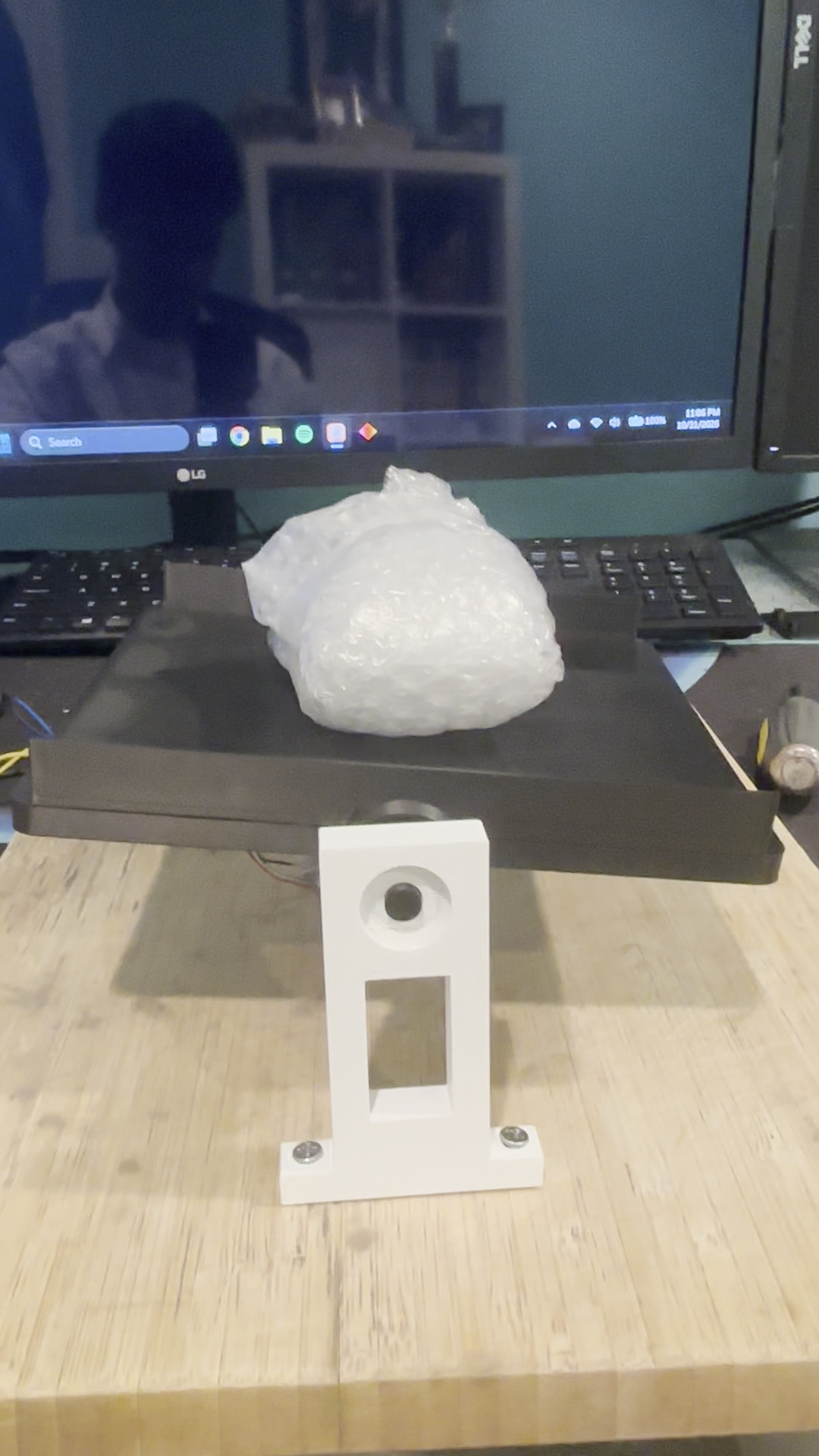
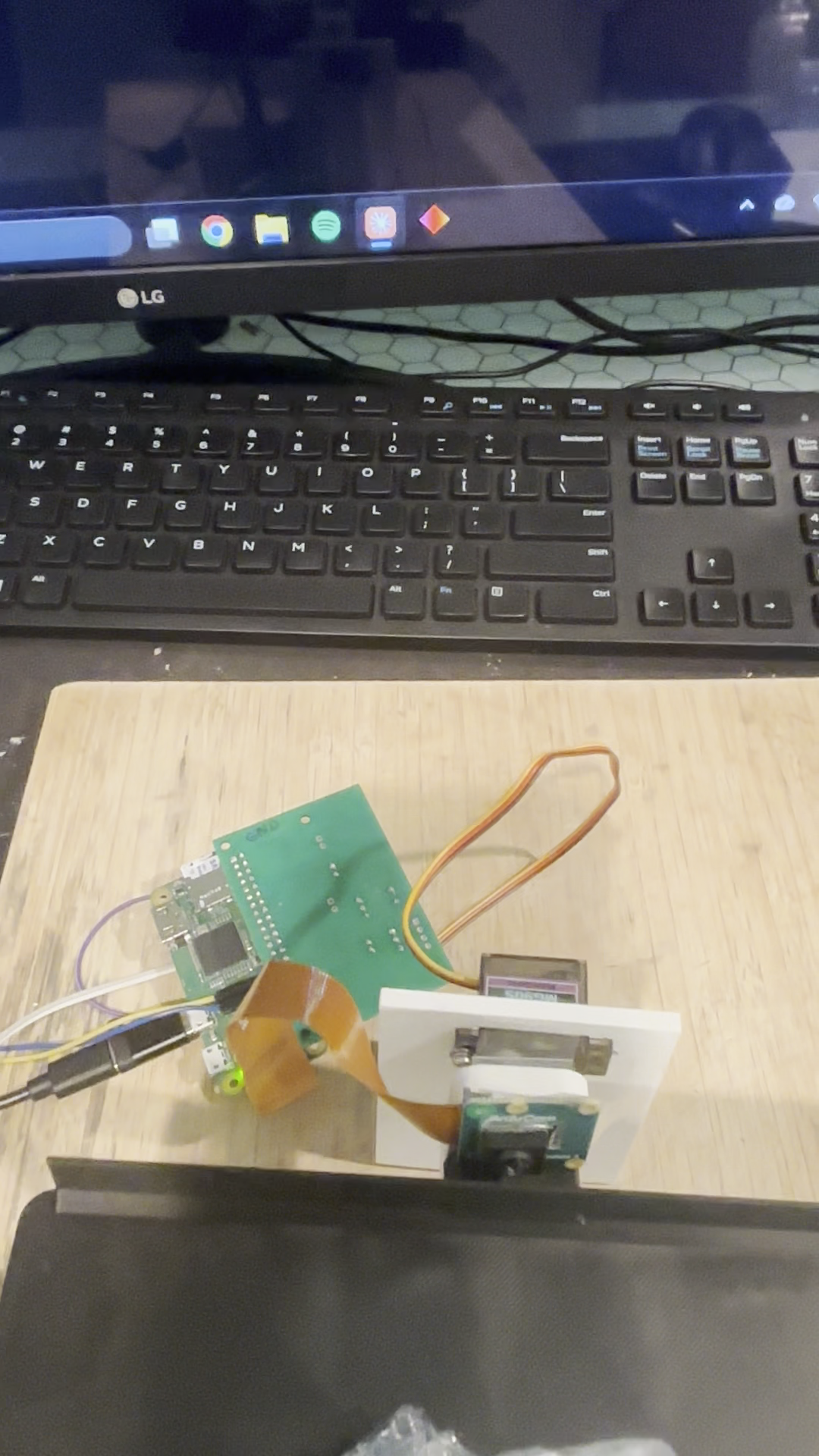
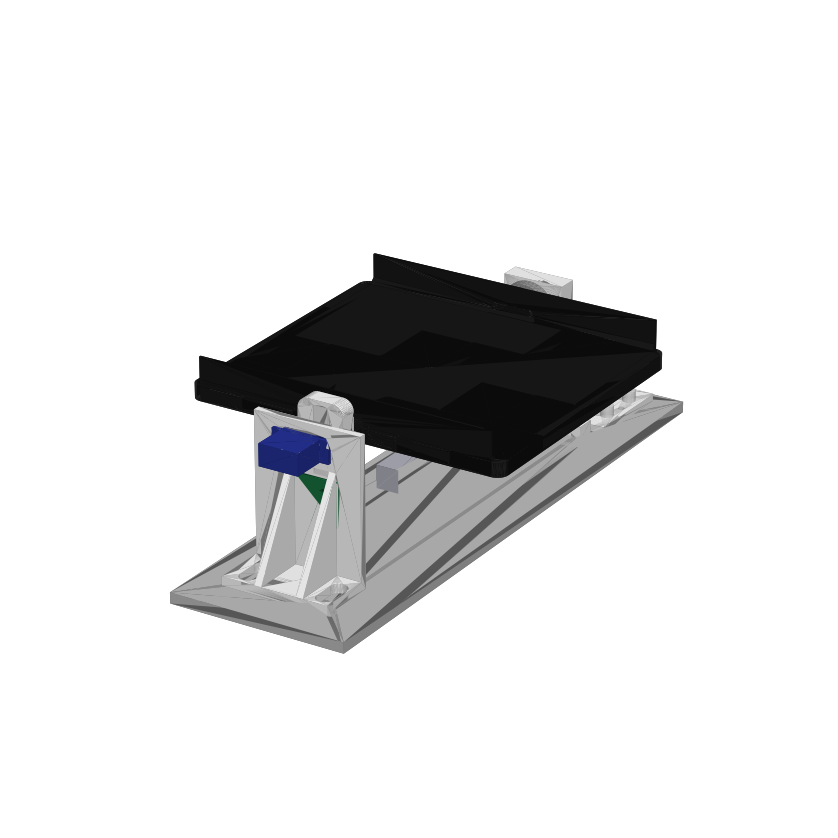
you drop something on the pan. the load cell feels the weight change, the camera photographs the item, and a small neural net running on a pi zero w decides what it is. a servo tilts the pan and the item slides into the recycling side or the trash side. if the net is not sure, it goes to trash.
item lands on the pan
   -> load cell reading rises above the threshold and settles
   -> camera captures a frame
   -> numpy cnn returns one of 7 classes plus a confidence
   -> the weight nudges the result (a 600 g "paper" is unlikely)
   -> jurisdiction file maps the class to recycle or trash
   -> below the confidence threshold it goes to trash
   -> "no_object" means a false trigger, so the pan stays level
   -> servo tilts, item slides, pan returns level, scale re-zeroes
-> event written to sqlite, served as json by a small api| class | bin |
|---|---|
| rigid_plastic, metal, glass, cardboard_paper | recycle |
| soft_plastic_foam, ewaste_hazard, no_object | trash |
the mapping lives in firmware/config/jurisdiction.yaml, so a different county's rules are a config change.
| part | notes |
|---|---|
| raspberry pi zero w | armv6, 512 mb, no accelerator |
| camera module 3 | imx708, autofocus |
| mg90s servo | gpio12, hardware pwm |
| hx711 + 5 kg bar load cell | data gpio5, clock gpio6 |
| custom hat pcb | in PCB/ |
the full parts list with prices is BOM.csv.
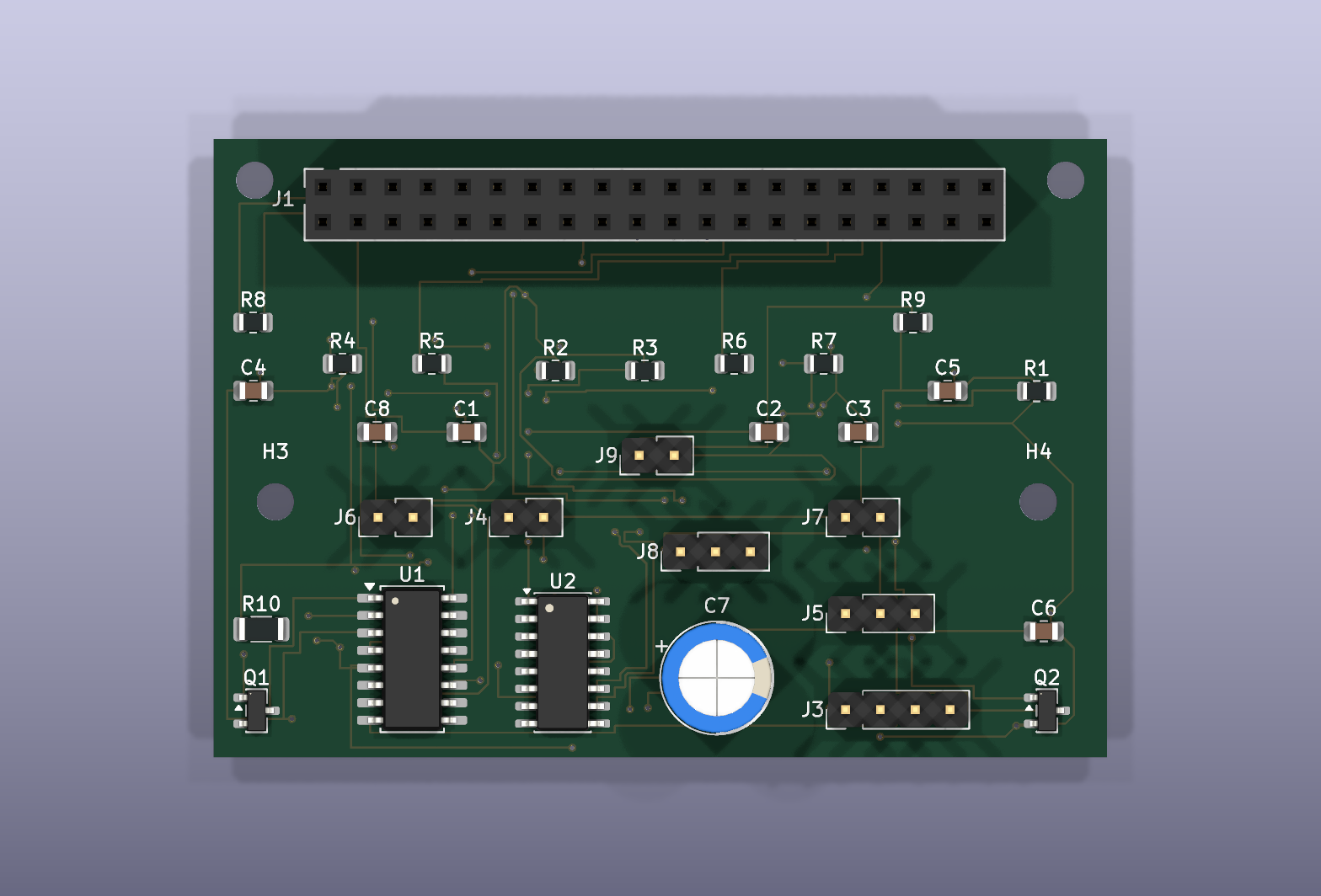
65 x 45 mm, 2 layers, pi zero hat footprint. fully routed, ground plane poured, drc clean.
| block | parts |
|---|---|
| load cell front end | hx711, pass transistor, feedback divider, 4 caps |
| battery sense | mcp3208 12-bit spi adc, divider, filter |
| servo rail | isolated supply, 470 uf bulk, star ground through one 0r link |
| led ring and break-beam | footprints are on the board but not used in the current build |
source files are in PCB/: .kicad_pro, .kicad_sch, .kicad_pcb, schematic.pdf, and gerbers.zip.
the pi zero w has no tflite or onnx wheels, so the classifier runs in plain numpy from a single .npz file (firmware/smartbin/nn.py and firmware/smartbin/graphnet.py). accuracy matters more than speed here, so the model is the mobilenetv3large at 224 px with batch norm folded into the convolutions and the weights stored as fp16. the numpy version gives the same answers as keras, within 0.011 in probability.
to make it faster, i removed the hidden channels with the smallest weights and then trained the smaller network against the full model (ml/prune.py). the model on the bin removes 60 percent of them and runs at 160 px, which cuts the compute from 214m to 69m multiply-adds. a gentler version that removes 50 percent and keeps 224 px is also in the repo.
python ml/cache.py --manifest <manifest.csv> --root <dataset root>   decode crops once at 224 px
python ml/export_teacher.py --teacher <teacher.weights.h5>           write firmware/models/smartbin-teacher.npz
python ml/prune.py --ratio 0.6 --size 160 --epochs 20 --out firmware/models/smartbin-fast.npz
python ml/distill.py --teacher <teacher.weights.h5>                  optional, train the small student instead
results on the held-out splits (accuracy):
| split | full mobilenetv3large | pruned, 224 px | pruned, 160 px (on the bin) | small student |
|---|---|---|---|---|
| val | 92.2% | 85.9% | 85.1% | 71.3% |
| test, same sources | 91.5% | 84.0% | 81.2% | 69.4% |
| external test, new sources | 65.4% | 62.8% | 63.0% | 51.9% |
the model on the bin is 3.0 mb and takes about 17 ms per image in numpy on a laptop. i have not timed it on the zero w yet, and i expect roughly 2 to 3 seconds per image there. all of the models are in firmware/models/ and can be selected in firmware/config/device.yaml.
install the python packages from apt, because a zero w has no wheels for them:
sudo apt install git python3-venv python3-numpy python3-pil python3-yaml python3-lgpio \
  python3-picamera2 python3-fastapi python3-uvicorn python3-pydantic python3-pydantic-core
git clone https://github.com/DagaVedant/SmartBin.git ~/SmartBin
python3 -m venv --system-site-packages ~/SmartBin/.venv
the servo uses the pi's hardware pwm, so add this to /boot/firmware/config.txt and reboot:
dtoverlay=pwm,pin=12,func=4then calibrate, once each. the servo needs root because /sys/class/pwm is root-only.
cd ~/SmartBin/firmware
sudo ~/SmartBin/.venv/bin/python -m smartbin.calibrate servo
~/SmartBin/.venv/bin/python -m smartbin.calibrate scale --grams 47
the scale step asks you to empty the pan, then place a known mass (47 g here) on it, and stores the result in firmware/config/scale_cal.json.
run it:
sudo ~/SmartBin/.venv/bin/python -m smartbinor install it as a service:
sudo cp ~/SmartBin/firmware/smartbin.service /etc/systemd/system/
sudo systemctl enable --now smartbin| Qty | Value | Footprint | References |
|---|---|---|---|
| 6 | 100nF | Capacitor_SMD:C_0805_2012Metric | C1, C2, C3, C5, C6, C8 |
| 4 | M2.5 | MountingHole:MountingHole_2.7mm_M2.5 | H1, H2, H3, H4 |
| 2 | 100k | Resistor_SMD:R_0805_2012Metric | R3, R7 |
| 1 | 0R | Resistor_SMD:R_1206_3216Metric | R10 |
| 1 | 100R | Resistor_SMD:R_0805_2012Metric | R6 |
| 1 | 10k | Resistor_SMD:R_0805_2012Metric | R8 |
| 1 | 10uF | Capacitor_SMD:C_0805_2012Metric | C4 |
| 1 | 11k | Resistor_SMD:R_0805_2012Metric | R2 |
| 1 | 12k | Resistor_SMD:R_0805_2012Metric | R1 |
| 1 | 150R | Resistor_SMD:R_0805_2012Metric | R9 |
| 1 | 220R | Resistor_SMD:R_0805_2012Metric | R5 |
| 1 | 22k | Resistor_SMD:R_0805_2012Metric | R4 |
| 1 | 470uF | Capacitor_THT:CP_Radial_D8.0mm_P3.50mm | C7 |
| 1 | AO3400A | Package_TO_SOT_SMD:SOT-23 | Q2 |
| 1 | BC847 | Package_TO_SOT_SMD:SOT-23 | Q1 |
| 1 | Battery sense | Connector_PinHeader_2.54mm:PinHeader_1x02_P2.54mm_Vertical | J6 |
| 1 | Beam RX | Connector_PinHeader_2.54mm:PinHeader_1x03_P2.54mm_Vertical | J8 |
| 1 | Beam TX | Connector_PinHeader_2.54mm:PinHeader_1x02_P2.54mm_Vertical | J9 |
| 1 | HX711 | Package_SO:SOP-16_4.4x10.4mm_P1.27mm | U1 |
| 1 | LED ring | Connector_PinHeader_2.54mm:PinHeader_1x02_P2.54mm_Vertical | J7 |
| 1 | Load cell | Connector_PinHeader_2.54mm:PinHeader_1x04_P2.54mm_Vertical | J3 |
| 1 | MCP3208 | Package_SO:SOIC-16_3.9x9.9mm_P1.27mm | U2 |
| 1 | Pi GPIO | Connector_PinSocket_2.54mm:PinSocket_2x20_P2.54mm_Vertical | J1 |
| 1 | Servo | Connector_PinHeader_2.54mm:PinHeader_1x03_P2.54mm_Vertical | J5 |
| 1 | Servo supply | Connector_PinHeader_2.54mm:PinHeader_1x02_P2.54mm_Vertical | J4 |
It measures 65 × 45 mm and has 2 copper layers, 1.6 mm thick.
34 parts, built around the HX711, MCP3208-BI/P, M2.5 and AO3400A. The full list of its parts is on this page, with links to each part's symbol and footprint where PCBKit's library has them.
From the DagaVedant/SmartBin repository on GitHub, at the commit this page was made from: the board is PCB/smartbin-hat.kicad_pcb and its schematic PCB/smartbin-hat.kicad_sch. PCBKit opens the board in the browser, with nothing to install.
Its repository states no licence, so its author keeps all rights: ask DagaVedant before reusing the design.

Churrosoft/kibot_test
export KICAD63DMODELDIR="/usr/share/kicad/3dmodels/" export KICAD6FOOTPRINTDIR="/usr/share/kicad/footprints/" export KICAD6SYMBOLDIR="/usr/share/kicad/symbols/" export KICAD6TEMPLATEDIR="/usr/share/kicad/template/"

rice-eclipse/kARCA_v2
Schematics and Board files for the Titan II/Proxima Hybrid Engine Control System


makerspacelt/wifi-voltmeter
Dev NOTE: before commit, run ./kibot.sh to regenerate documentation, bom, gerbers and other assets.

EhlOps/mini-dyno
The mini dyno (dynamometer) is a tool created to measure the torque and power output of an engine or motor. The mechanical portion of the dyno functions as a water brake.

houseofbigseals/grip_strength_meter_pcb
schematic and pcb for custom esp32 grip strength meter project

JackToaster/pressure-sensor-interface
8x pressure sensor and 8x solenoid valve USB interface