

2 layers41.3 × 109.1 mm

Hardware-based music assistant focused devices
TAS5825M is an open-source printed circuit board by TemuWolverine, from the TemuWolverine/WateryTart.Hardware repository on GitHub, published under the MIT licence. It is a 2-layer board of 43.2 × 30.1 mm with 37 parts on 36 nets, routed with 159 tracks and 25 vias.
It is built around the TPS62177DQC. Its parts include 20 capacitors, 3 resistors, 2 ICs, 2 connectors and 1 inductor.
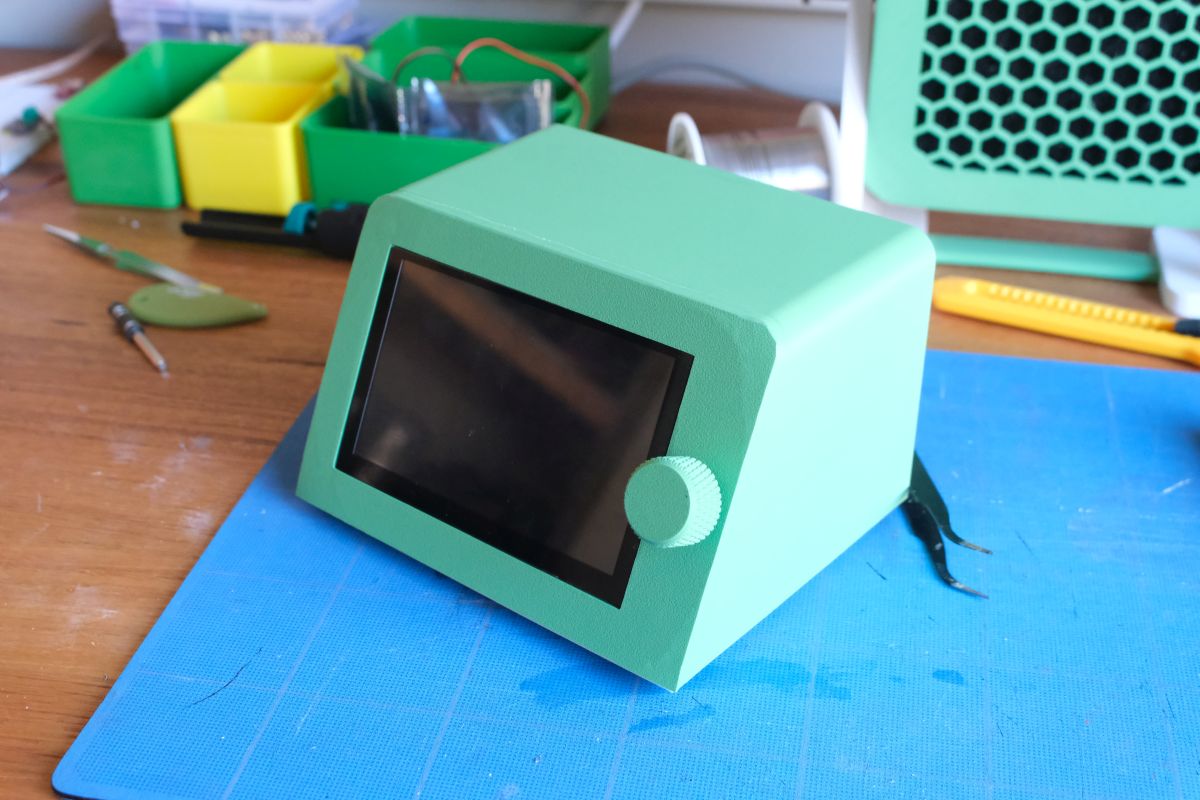
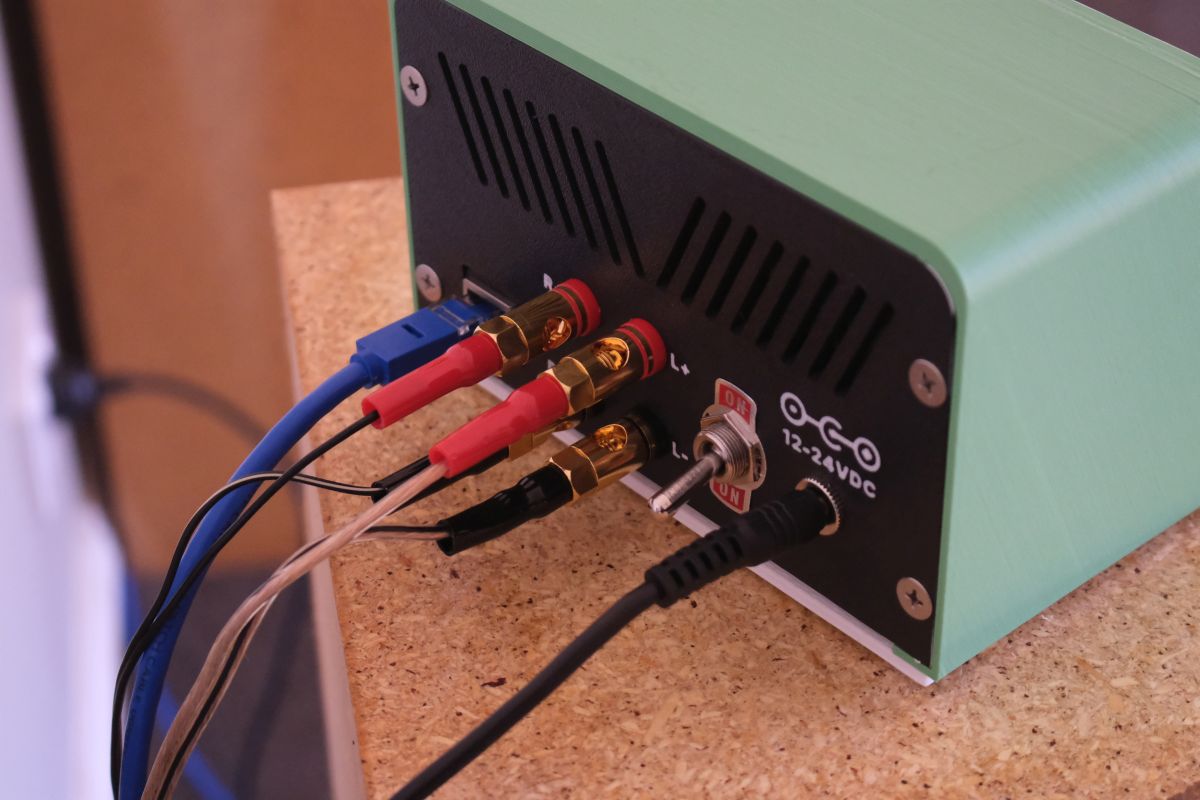 Raspberry Pi, a touchscreen, Hifiberry, to make a standalone amplifier/streamer that can power 30+30w speakers.
Includes
ESP32/ESPHome based remote control to handle a household of Music Assistant devices.
Includes
| Qty | Value | Footprint | References |
|---|---|---|---|
| 6 | 1n | RENDER:C0603 | C12, C13, C14, C15, C16, C17 |
| 5 | 1u | RENDER:C0805 | C5, C6, C7, C21, C22 |
| 4 | 120R | RENDER:C1206 | FB1, FB2, FB3, FB4 |
| 4 | 220n | RENDER:C0603 | C8, C9, C10, C11 |
| 4 | MountingHole_Pad | MountingHole:MountingHole_2.5mm_Pad | H1, H2, H3, H4 |
| 3 | 100n | RENDER:C0603 | C2, C3, C4 |
| 2 | 10K | RENDER:R0603 | R2, R4 |
| 2 | PWR | Connector_PinHeader_2.54mm:PinHeader_1x11_P2.54mm_Vertical | J1, J2 |
| 1 | 0R | RENDER:R0603 | R7 |
| 1 | 10u | RENDER:TYS4012100M | L1 |
| 1 | 22u | RENDER:C1210 | C23 |
| 1 | 470u | RENDER:Cap_Rad_D10_P5 | C1 |
| 1 | G*** | kibuzzard-69B532CA | kibuzzard-69B532CA |
| 1 | TAS5825M | RENDER:TAS5825M | U1 |
| 1 | TPS62177 | RENDER:WSON10EP | U4 |


linlun/HW-ESP8266_Roomba
Kicad schematics of a generic ESP8266 board with interfaces for OLED-display, rotary encoder, Roomba and DC/DC


It measures 43.2 × 30.1 mm and has 2 copper layers, 1.6 mm thick.
37 parts, built around the TPS62177DQC. The full list of its parts is on this page, with links to each part's symbol and footprint where PCBKit's library has them.
From the TemuWolverine/WateryTart.Hardware repository on GitHub, at the commit this page was made from: the board is WateryTart.Amp/PCB/TAS5825M.kicad_pcb and its schematic WateryTart.Amp/PCB/TAS5825M.kicad_sch. PCBKit opens the board in the browser, with nothing to install.
Its repository publishes it under the MIT licence: you may reuse it on that licence's terms (keep the author's notice, and for a copyleft licence share your changes alike).