2 layers77 × 97.8 mm
Fracture Connector
SharKingStudios/Fracture
An infinitely expandable, velocity sensing split midi keyboard.
85 parts10MIT

 SharKingStudios/Fracture10
An infinitely expandable, velocity sensing split midi keyboard.
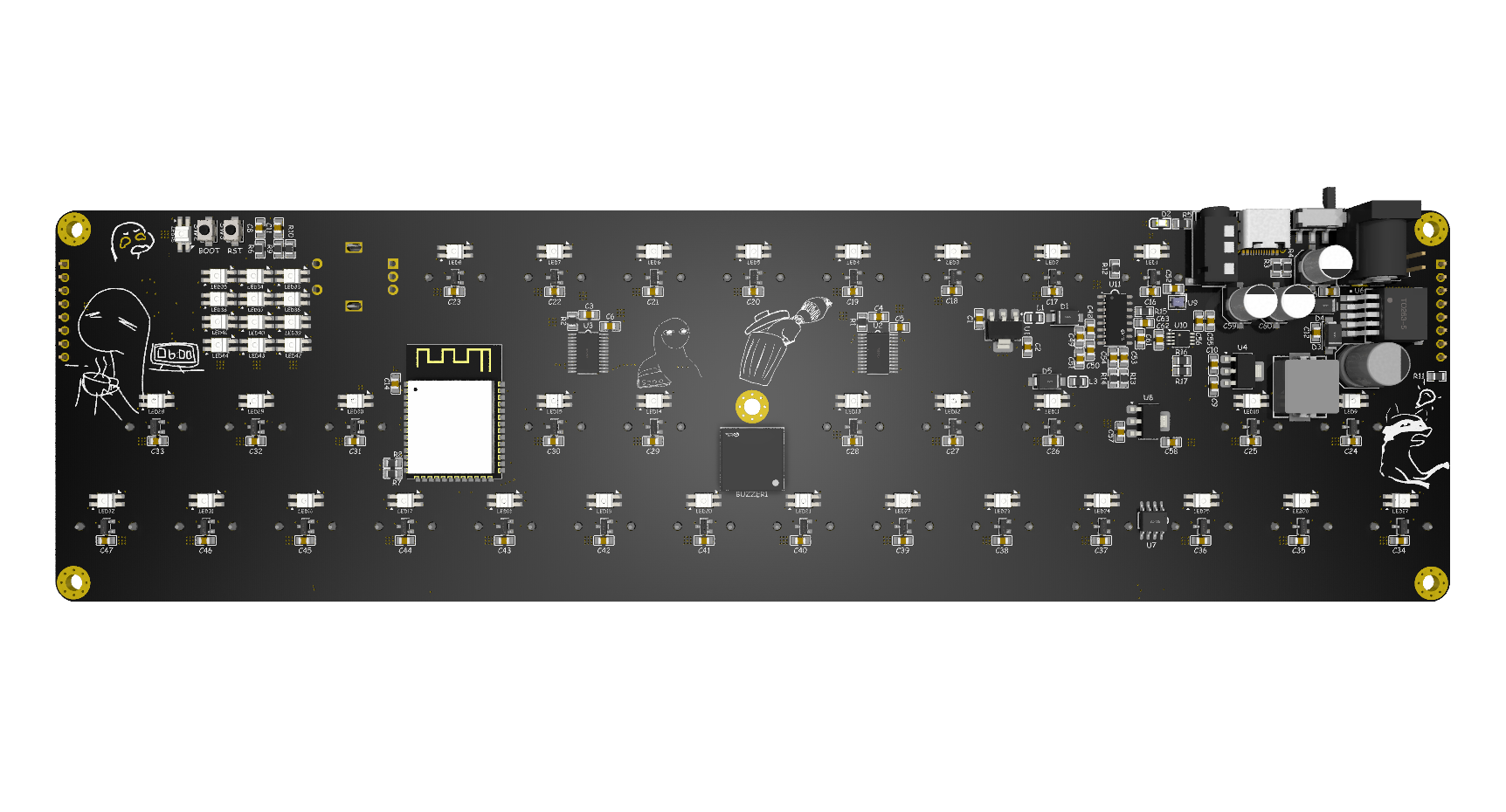
Fracture is an open-source printed circuit board by SharKingStudios, from the SharKingStudios/Fracture repository on GitHub, published under the MIT licence. It is a 4-layer board of 267 × 75 mm with 208 parts on 161 nets, routed with 1,884 tracks and 812 vias.
It is built around the ESP32-S3-WROOM-1-N4, SP3485EN-L/TR and ES9023P, with the LM4810MM, GH39FKSW and AMS1117-3.3 among its other parts. Its parts include 63 capacitors, 50 diodes, 36 switches, 17 resistors and 11 ICs. It belongs with the audio and music and keyboards and input boards and the ESP32 boards of this library.


Visuals because everyone loves eye candy.
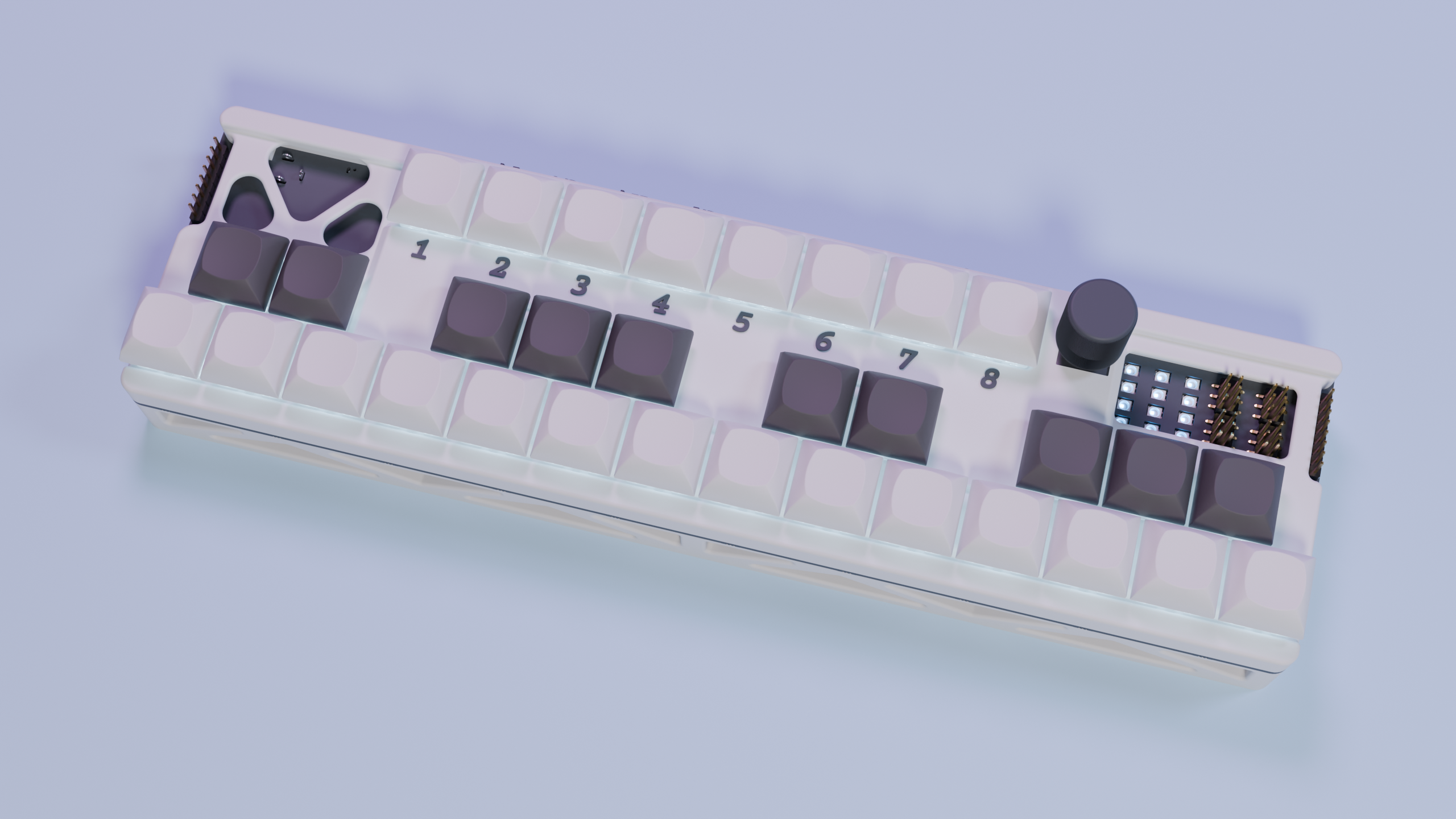
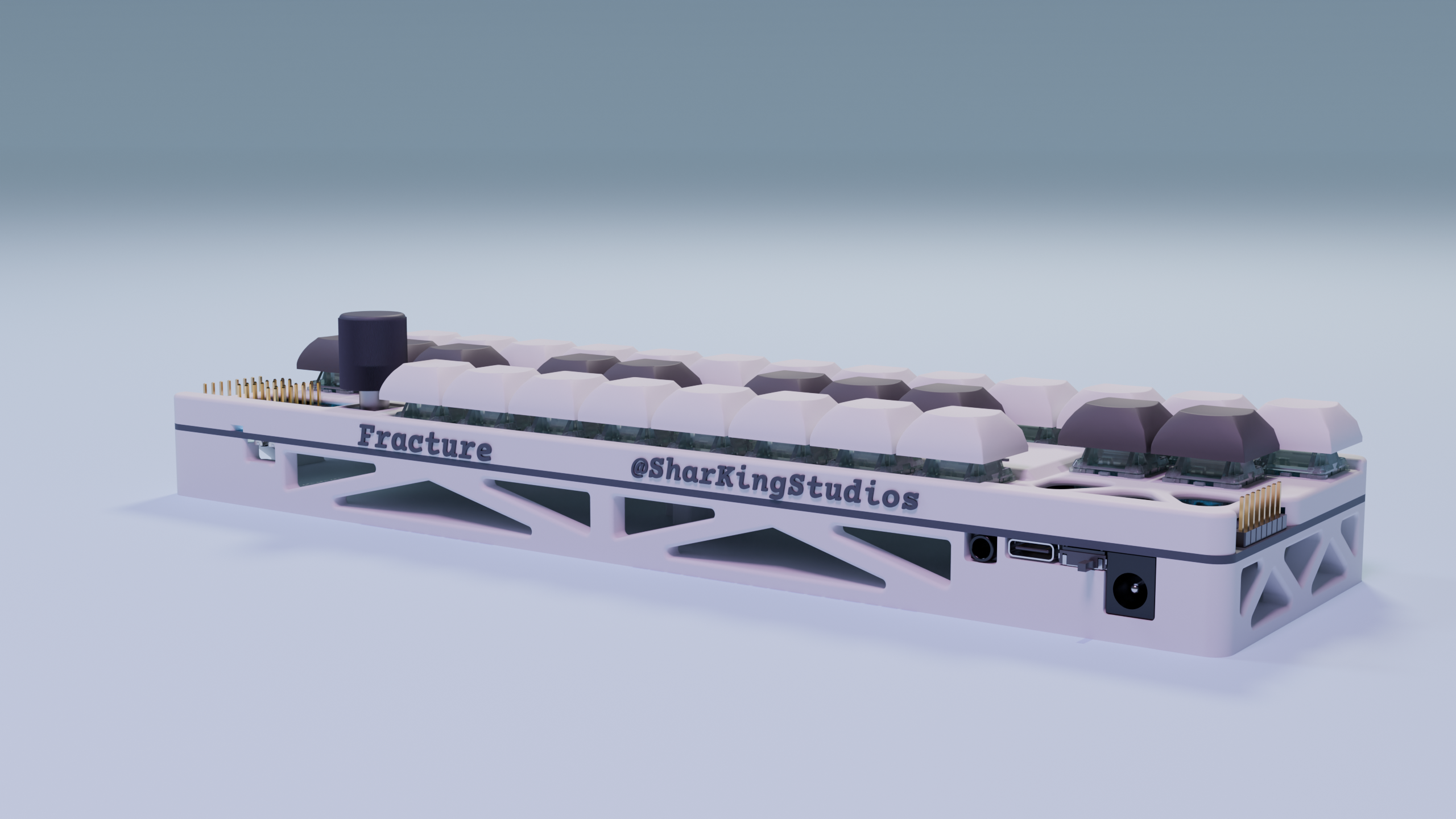
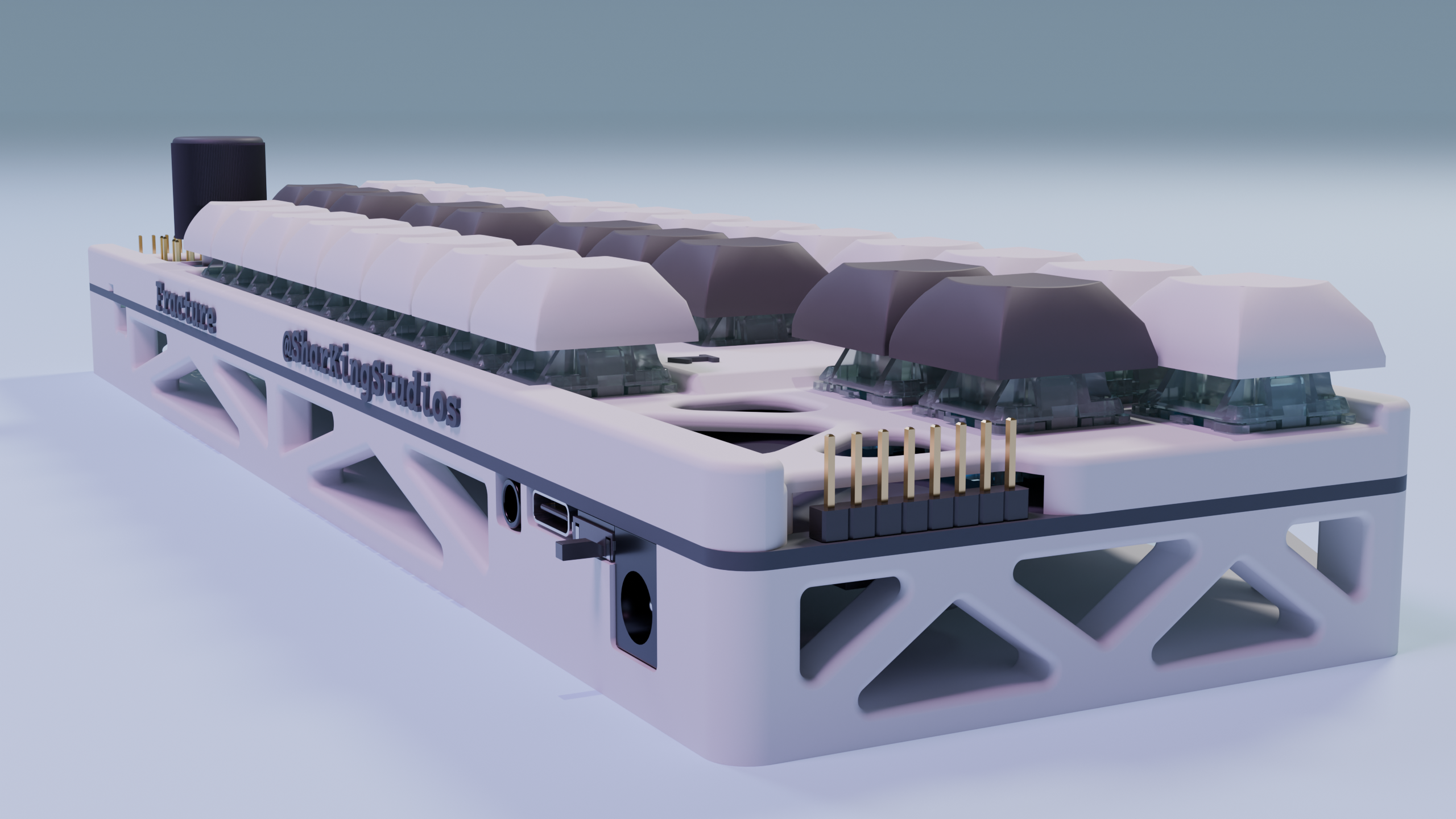
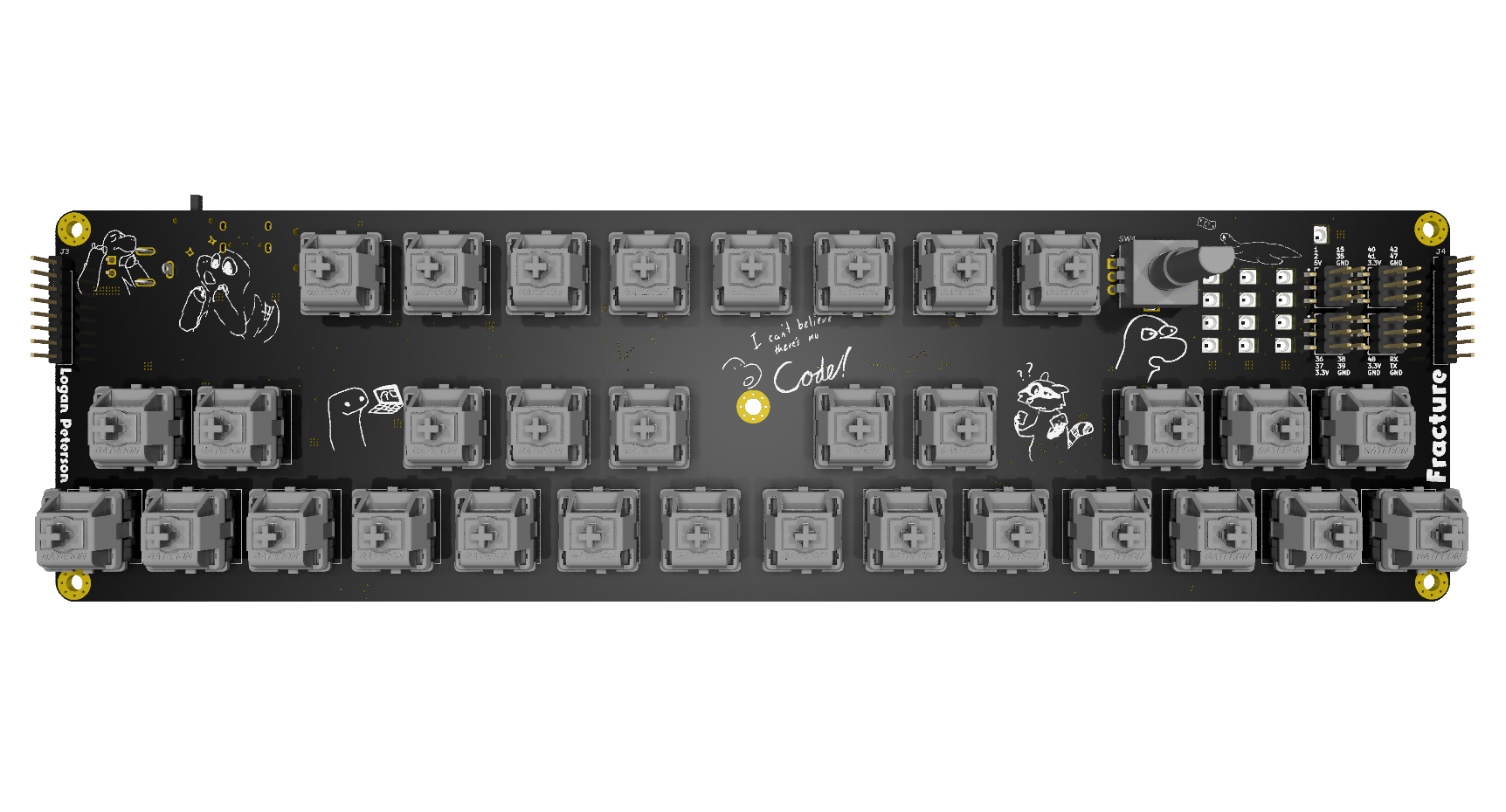
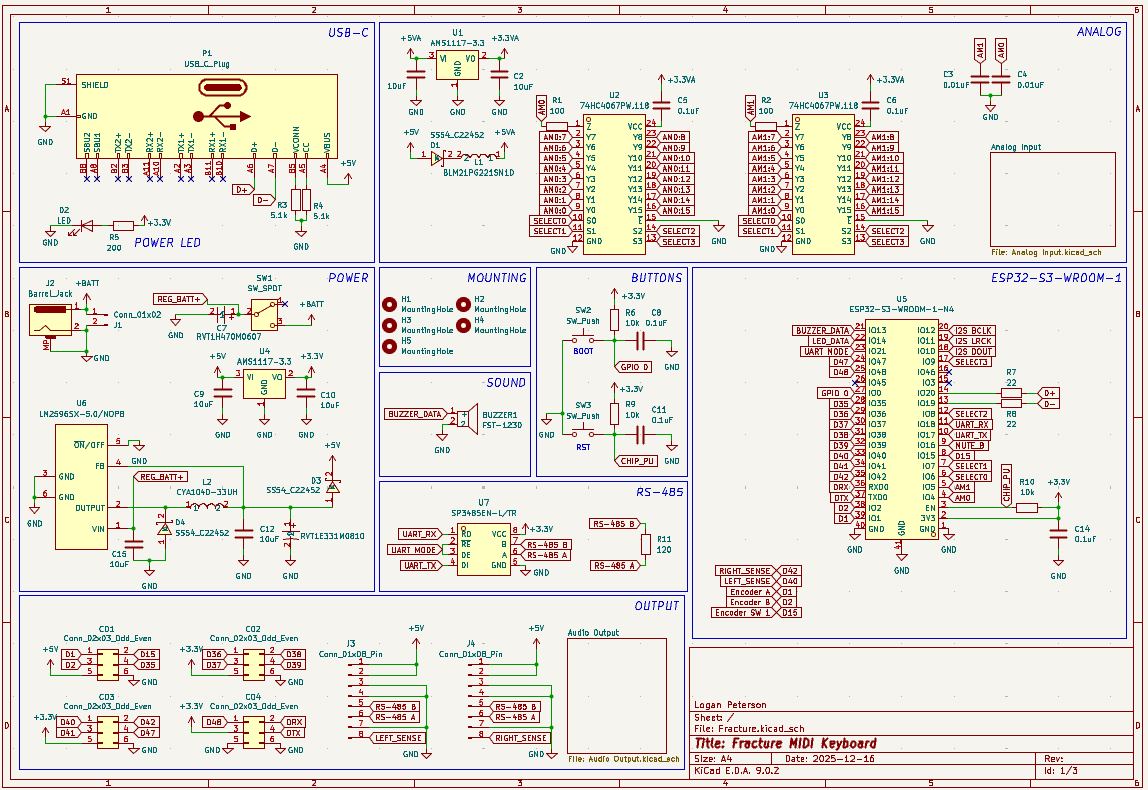
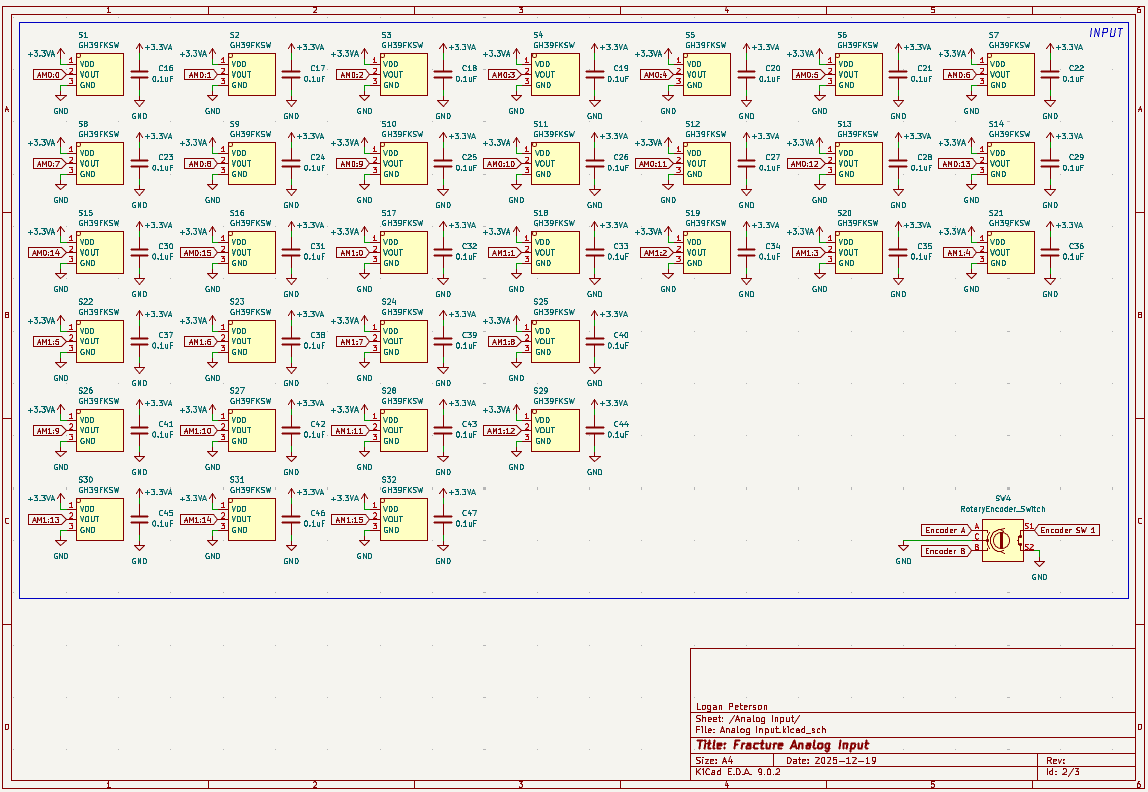
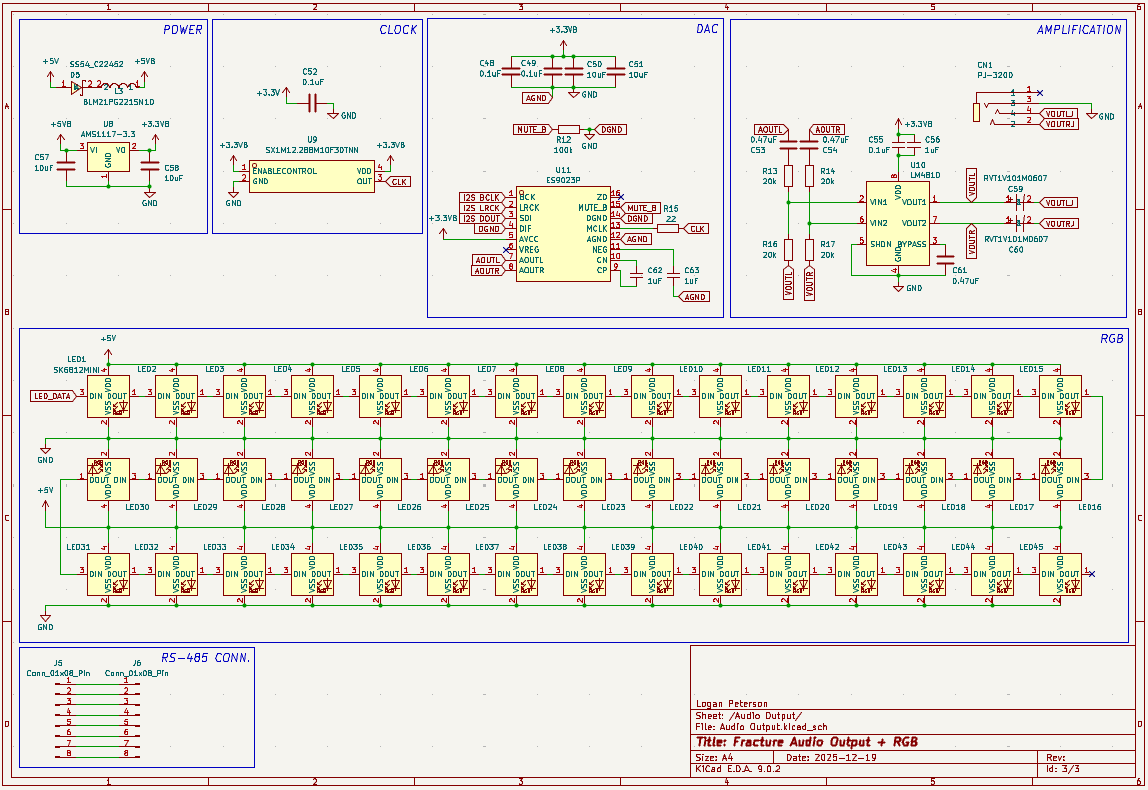
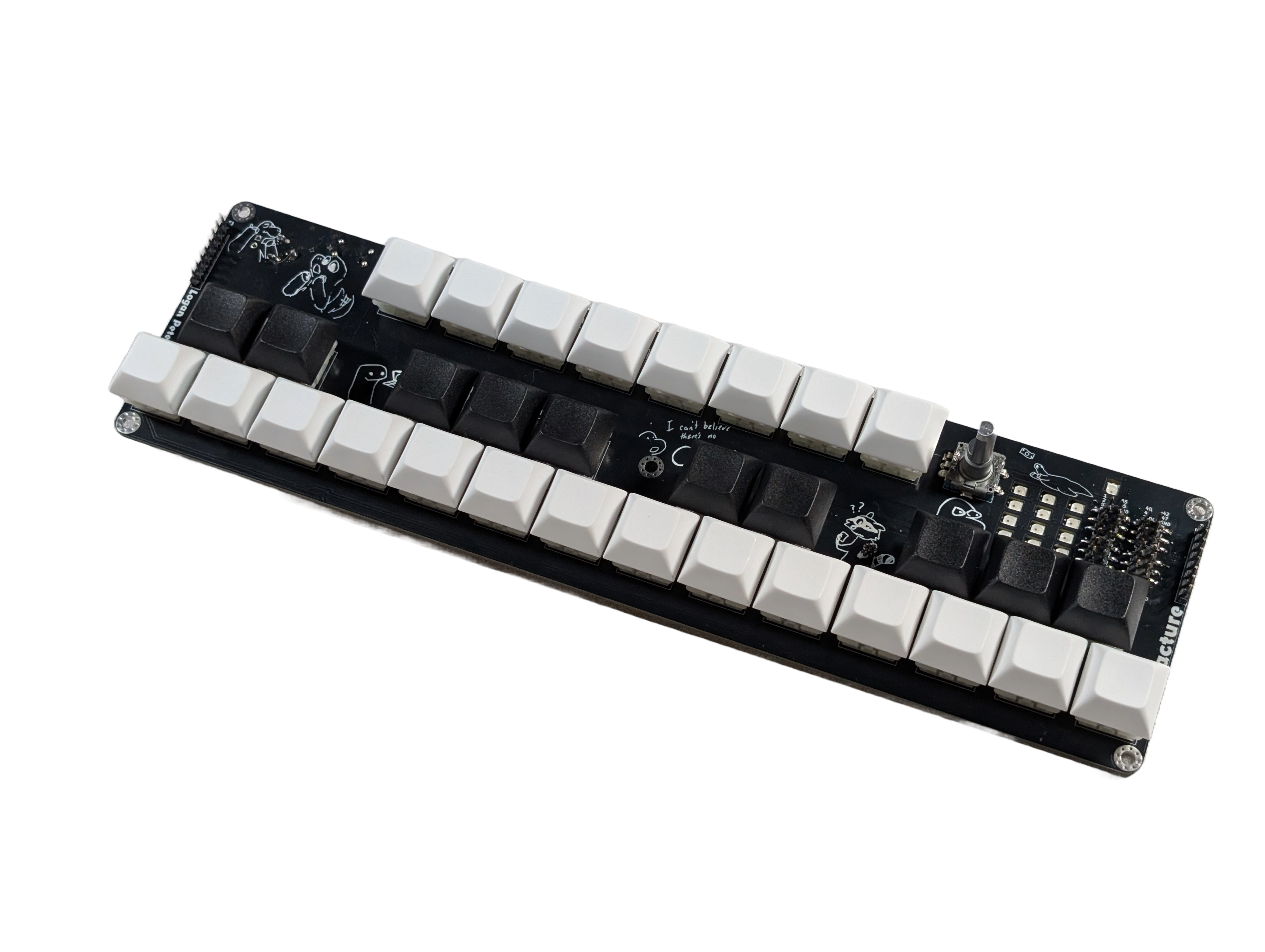
It's an infinitely expandable MIDI keyboard system built around an ESP32-S3, designed so each board is a fully-featured synth module. When you connect a bunch together, they behave like one giant, continuous instrument. Each board gives you 2 octaves of hall-effect keys (24 main keys), plus 8 “function” keys for extra tricks. It also has onboard I2S audio output, a buzzer synth per board, and 45 addressable RGB LEDs for underglow + status. Boards talk to each other over RS-485 chaining so note events get shared, and it also does USB MIDI, meaning any board plugged into your computer speaks for the whole keyboard.
One board is fun.
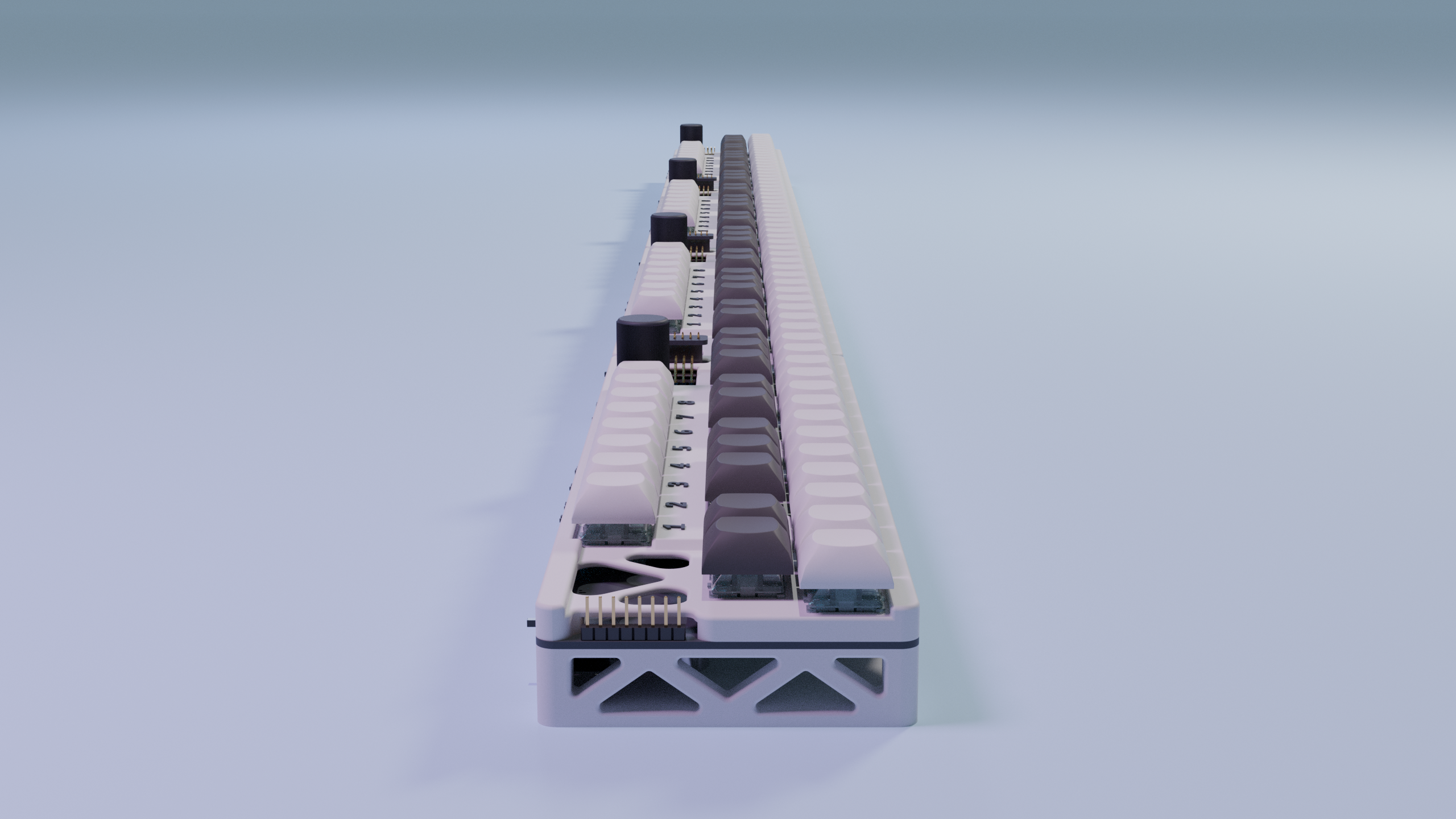
Four boards gives you a full velocity sensing piano.
Each board is its own little 2-octave chunk: 24 main keys and 8 extra keys for function/mode stuff. The boards discover each other physically using an RS-485 bus (SP3485) and left/right neighbor sense pins, so you can keep chaining them together.
No mushy rubber domes here. Keys are read using dual 74HC4067 analog multiplexers, and velocity is computed using the time between “start of motion” and “fully pressed”.
It’s all done in firmware - no external velocity hardware, just some math and a lot of analog readings.
Each board is a tiny synth. It uses an ES9023P I2S DAC driven at 44.1 kHz, stereo, and supports up to 8 simultaneous voices.
You don’t need a computer to hear anything, the keyboard can sing on its own.
Because one audio path wasn’t enough. Each board also has a timer-driven buzzer synth that runs at a 20 kHz sample rate. It’s used for a startup jingle, any feedback sounds, and mild harassment of anyone nearby.
Each board has 45 WS2812 LEDs and they’re not just there to look pretty (but they do). Every note triggers a “splash in the pond” ripple, and the ripple spreads based on MIDI note distances, not physical LED position. Since note events are shared over RS-485, the ripple effect works across all boards.
Basically: the keyboard tells you how it feels in RGB.
Any board plugged into USB exposes MIDI for all boards. So you can plug in literally any board in the chain, open your DAW / synth, and play the entire keyboard from that one cable.
Because knobs are scientifically proven to make things better.
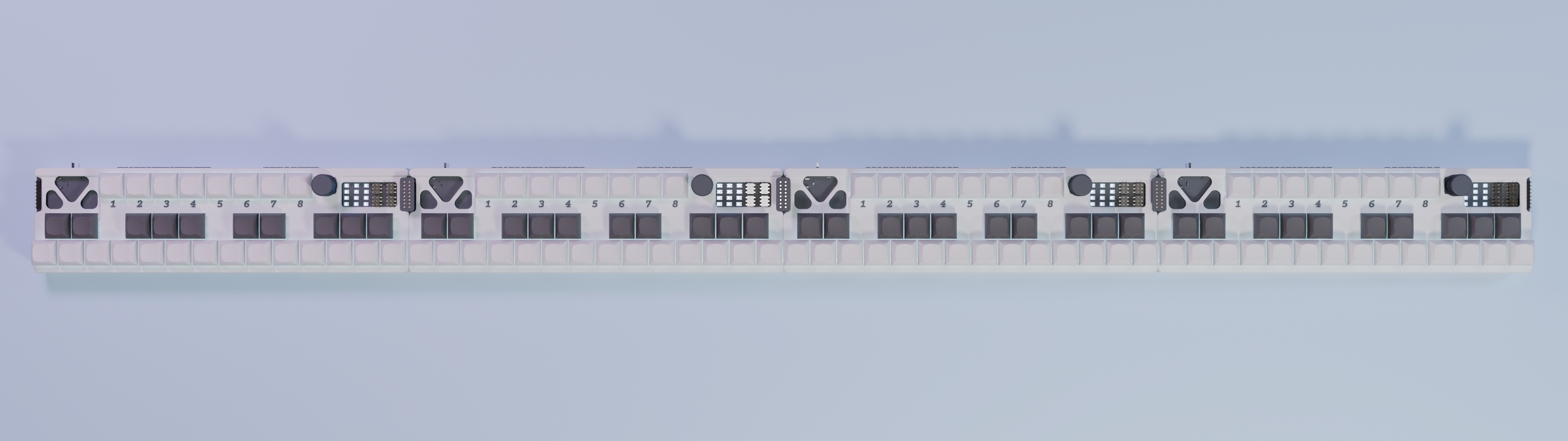
All the silicon, magnetics, and glowsticks live here.
The CAD is open source here.
Because regular MIDI controllers are boring. Off-the-shelf keyboards don’t re-map themselves and you usually cant chain them together.
Fracture exists to be modular, mildly smart, and just slightly over-engineered.
I honestly thought this would be an easier project, but feature creep got the best of me...
After you have your board, follow this guide for flashing settings and flash Fracture_Keyboard.ino onto your board.
Ideas, improvements, and constructive roasting welcome.
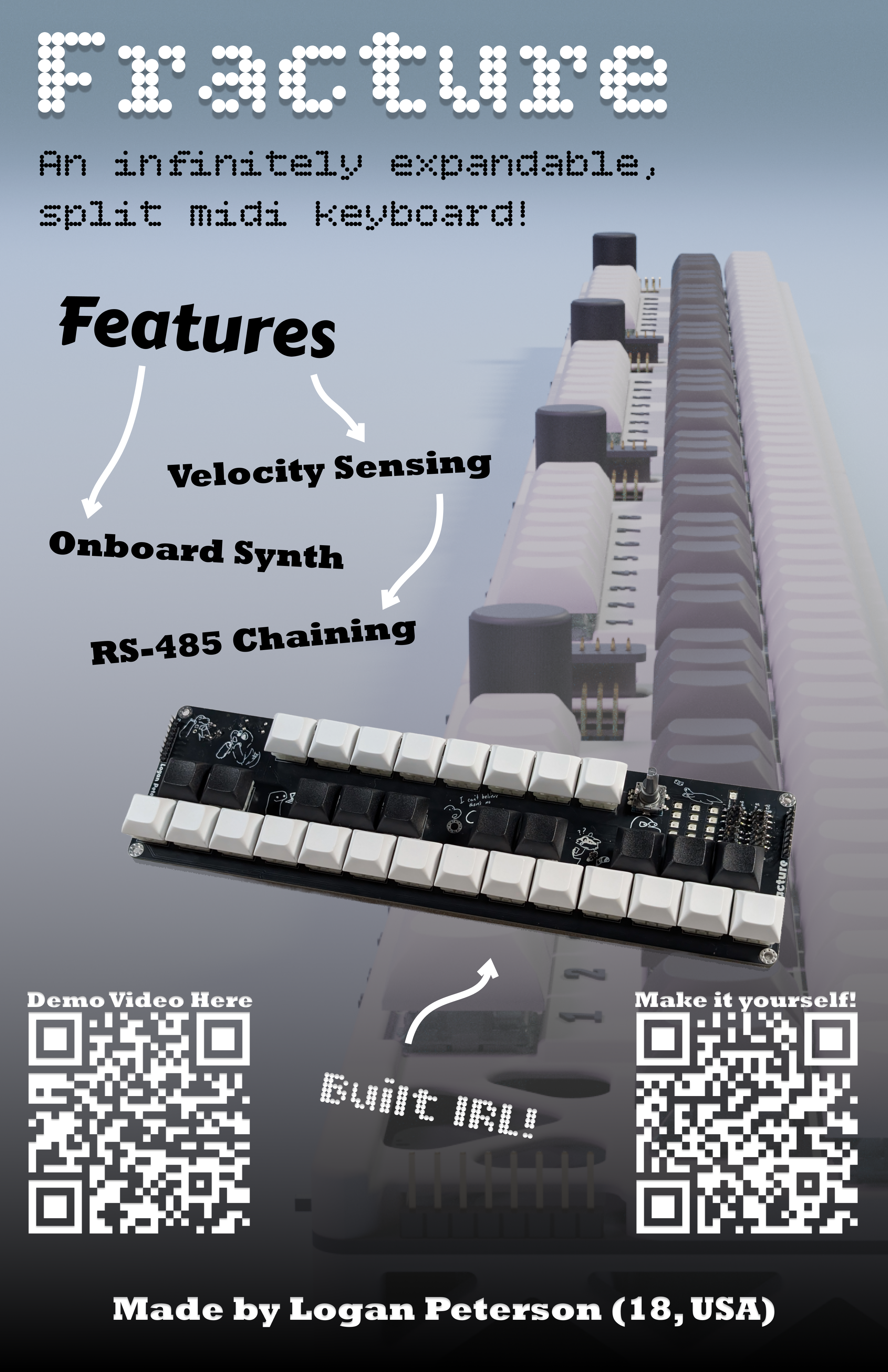
This project is open-source and powered by vibes and a sprinkle of C++.
If you:
That’s on you.
Be careful, be smart, and enjoy building a keyboard that expands with your musical ability.
| Qty | Value | Footprint | References |
|---|---|---|---|
| 45 | SK6812MINI | imported_components:SK6812-MINI-E | LED1, LED2, LED10, LED11, LED12, LED13, LED14, LED15, LED16, LED17, LED18, LED19, LED20, LED21, LED22, LED23 +29 |
| 41 | 0.1uF | imported_components:C0805 | C11, C14, C16, C17, C18, C19, C20, C21, C22, C23, C24, C25, C26, C27, C28, C29 +25 |
| 32 | GH39FKSW | imported_components:SOT-23-3_L2.9-W1.3-P1.90-LS2.4-BR | S1, S2, S10, S11, S12, S13, S14, S15, S16, S17, S18, S19, S20, S21, S22, S23 +16 |
| 12 | LOGO | LOGO | G***, G***, G***, G***, G***, G***, G***, G***, G***, G***, G***, G*** |
| 10 | 10uF | imported_components:C0805 | C1, C2, C9, C10, C12, C15, C50, C51, C57, C58 |
| 5 | MountingHole | MountingHole:MountingHole_3.2mm_M3_Pad_Via | H1, H2, H3, H4, H5 |
| 4 | 20k | imported_components:R0805 | R13, R14, R16, R17 |
| 4 | Conn_02x03_Odd_Even | imported_components:HDR-SMD_6P-P2.54-V | CO1, CO2, CO3, CO4 |
| 4 | SS54_C22452 | imported_components:SMA_L4.4-W2.8-LS5.4-R-RD | D1, D3, D4, D5 |
| 3 | 0.47uF | imported_components:C0805 | C53, C54, C61 |
| 3 | 10k | imported_components:R0805 | R6, R9, R10 |
| 3 | 1uF | imported_components:C0805 | C56, C62, C63 |
| 3 | 22 | imported_components:R0805 | R7, R8, R15 |
| 3 | AMS1117-3.3 | Package_TO_SOT_SMD:SOT-223-3_TabPin2 | U1, U4, U8 |
| 2 | 0.01uF | imported_components:C0805 | C3, C4 |
| 2 | 100 | imported_components:R0805 | R1, R2 |
| 2 | 5.1k | imported_components:R0805 | R3, R4 |
| 2 | 74HC4067PW,118 | imported_components:TSSOP-24_L7.8-W4.4-P0.65-LS6.4-BL | U2, U3 |
| 2 | BLM21PG221SN1D | imported_components:L0805 | L1, L3 |
| 2 | Conn_01x08_Pin | Connector_PinHeader_2.54mm:PinHeader_1x08_P2.54mm_Vertical | J3, J4 |
| 2 | RVT1V101M0607 | imported_components:CAP-SMD_BD6.3-L6.6-W6.6-LS7.6-FD | C59, C60 |
| 2 | SW_Push | imported_components:SW-SMD_L3.9-W3.0-P4.45 | SW2, SW3 |
| 1 | 100k | imported_components:R0805 | R12 |
| 1 | 120 | imported_components:R0805 | R11 |
| 1 | 200 | imported_components:R0805 | R5 |
| 1 | Barrel_Jack | imported_components:DC-IN-TH_DC-005-A200 | J2 |
| 1 | CYA1040-33UH | imported_components:IND-SMD_L11.6-W10.1 | L2 |
| 1 | Conn_01x02 | Connector_PinHeader_2.54mm:PinHeader_1x02_P2.54mm_Vertical | J1 |
| 1 | ES9023P | imported_components:SOP-16_L9.9-W3.9-P1.27-LS6.1-BL | U11 |
| 1 | ESP32-S3-WROOM-1-N4 | imported_components:WIFIM-SMD_ESP32-S3-WROOM-1-N8 | U5 |
| 1 | FST-1230 | imported_components:BUZ-SMD_L12.0-W12.0_FUET-1230 | BUZZER1 |
| 1 | LED | imported_components:LED0805-RD | D2 |
| 1 | LM2596SX-5.0/NOPB | imported_components:TO-263-5_L10.2-W8.9-P1.70-TL | U6 |
| 1 | LM4810 | Package_SO:TSSOP-8_3x3mm_P0.65mm | U10 |
| 1 | PJ-320D | imported_components:AUDIO-SMD_PJ-320D | CN1 |
| 1 | RVT1E331M0810 | imported_components:CAP-SMD_BD8.0-L8.3-W8.3-LS9.3-FD-1 | C13 |
| 1 | RVT1H470M0607 | imported_components:CAP-SMD_BD6.3-L6.6-W6.6-LS7.6-FD | C7 |
| 1 | RotaryEncoder_Switch | Rotary_Encoder:RotaryEncoder_Alps_EC11E-Switch_Vertical_H20mm | SW4 |
| 1 | SP3485EN-L/TR | imported_components:SOIC-8_L5.0-W4.0-P1.27-LS6.0-BL | U7 |
| 1 | SW_SPDT | imported_components:SW-SMD_MST-12D18G4-SPDT-SLIDE-SWITCH | SW1 |
| 1 | SX1M12.288M10F30TNN | imported_components:OSC-SMD_4P-L2.0-W1.6-BL | U9 |
| 1 | USB_C_Plug | imported_components:USB-C_SMD-TYPE-C-31-M-12 | P1 |
SharKingStudios/Fracture
An infinitely expandable, velocity sensing split midi keyboard.


amuzdgp3-prog/im-01-pulse-device
Отдельный модуль к системе обслуживания аппаратов 2.apixspb.ru. Устройство слушает импульсные выходы монетоприёмника и купюроприёмника, копит показания в FRAM и дважды в сутки передаёт их на сервер по LTE Cat.1.


MycroftAI/hardware-mycroft-mark-II
Mycroft's Mark II Rpi mechanical, electrical and industrial designs

It measures 267 × 75 mm and has 4 copper layers, 1.6 mm thick.
208 parts, built around the ESP32-S3-WROOM-1-N4, SP3485EN-L/TR, ES9023P and LM4810MM. The full list of its parts is on this page, with links to each part's symbol and footprint where PCBKit's library has them.
From the SharKingStudios/Fracture repository on GitHub, at the commit this page was made from: the board is PCB/Fracture.kicad_pcb and its schematic PCB/Analog Input.kicad_sch. PCBKit opens the board in the browser, with nothing to install.
Its repository publishes it under the MIT licence: you may reuse it on that licence's terms (keep the author's notice, and for a copyleft licence share your changes alike).