2 layers61.2 × 67.9 mm

 PotatoPerchance/Near365
Just a fun gift idea.
Near365 is an open-source printed circuit board by PotatoPerchance, from the PotatoPerchance/Near365 repository on GitHub. It is a 2-layer board of 110.1 × 130.8 mm with 37 parts on 59 nets, routed with 735 tracks and 119 vias.
It is built around the ESP32-S3-WROOM-1-N8 and AMS1117-3.3. Its parts include 9 capacitors, 9 resistors, 7 ICs, 5 switches and 4 diodes. It belongs with the ESP32 boards of this library.


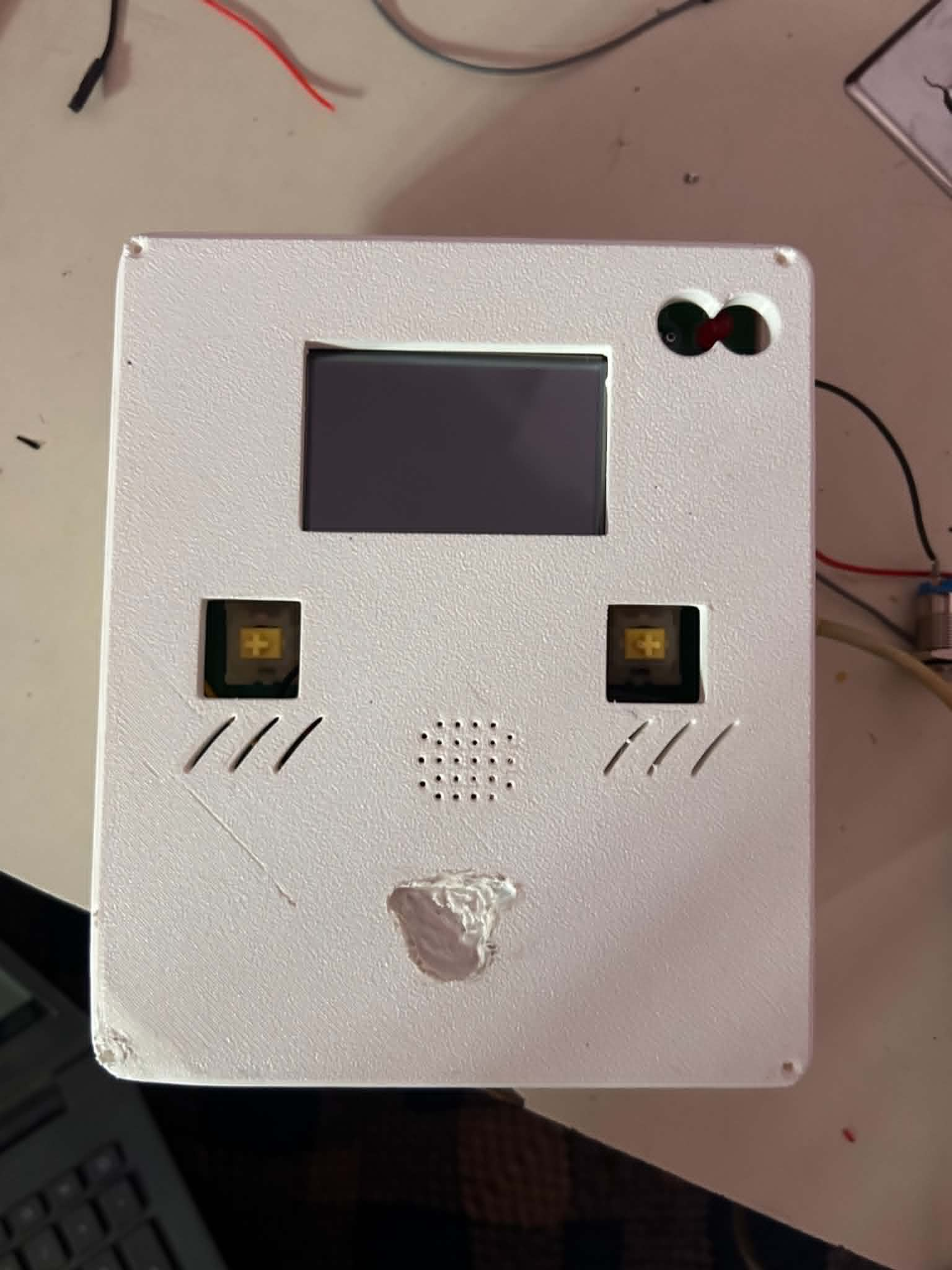
Music Player v1 is a interactive media device (media form: music, voice recording, text, gifs and video possibly) powered by an ESP32-S3.I designed it as a personalized gift,to play unique music, affirmations, every single day onpre-programmed schedule. v2 will have an APi endpoint to post voice recordings over the internet and other cool features. The device is a complete package for audio related projects and can be modified into other creative ideas like - (voice journal keeper, online music streaming and many more!)
The system integrates an ESP32-S3 with I2S audio, SPI SD card communication, and I2C/SPI display interfacing.
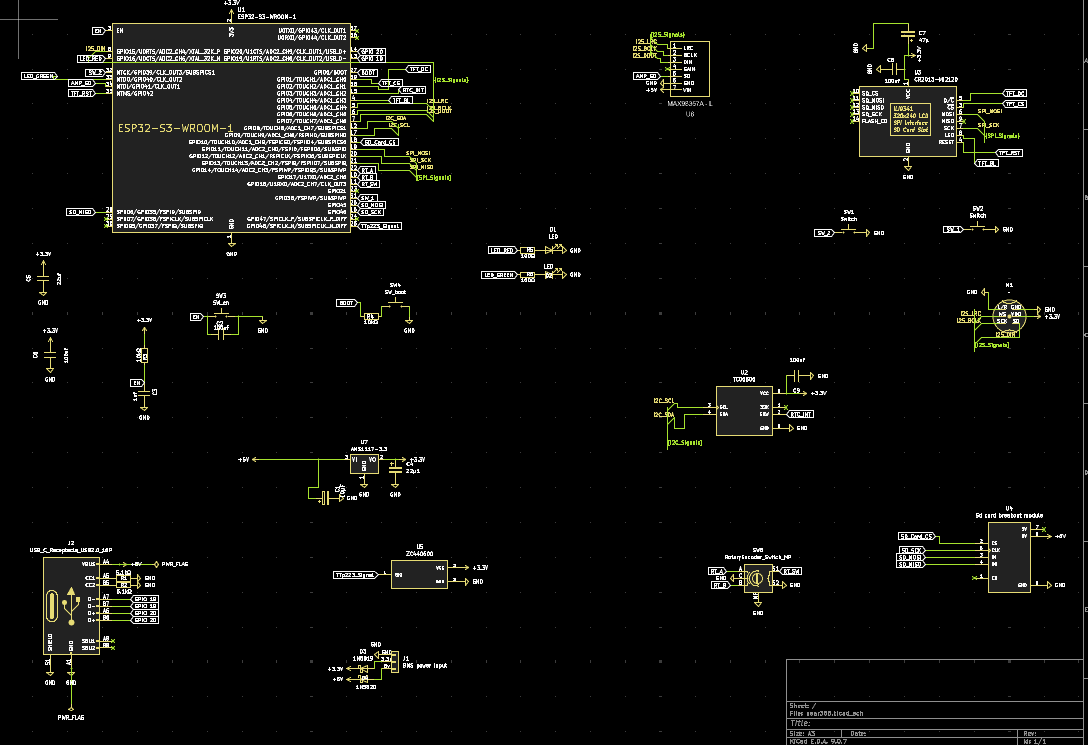
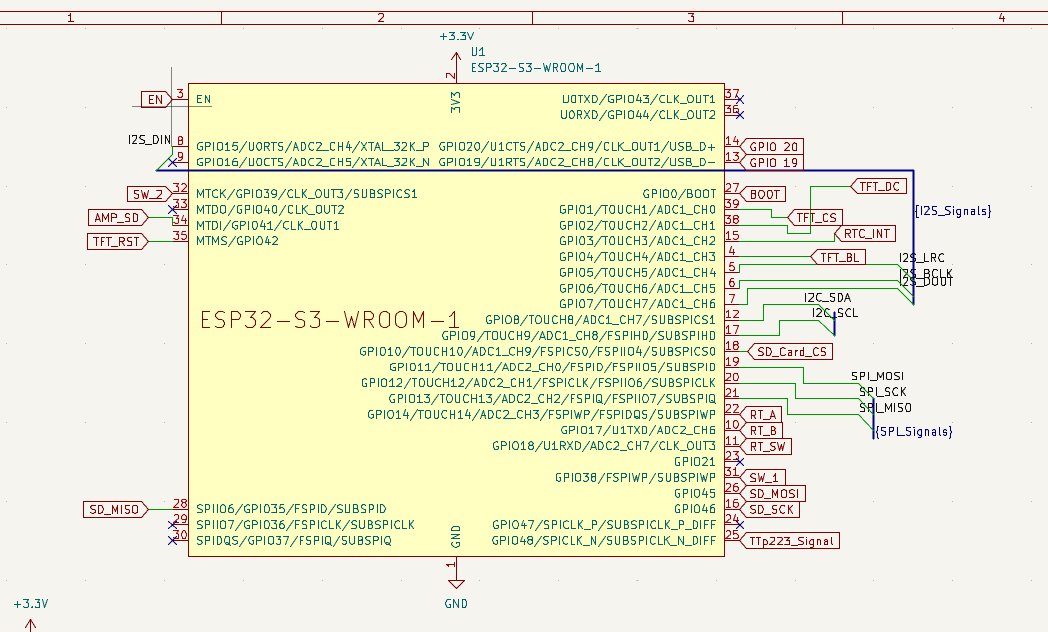
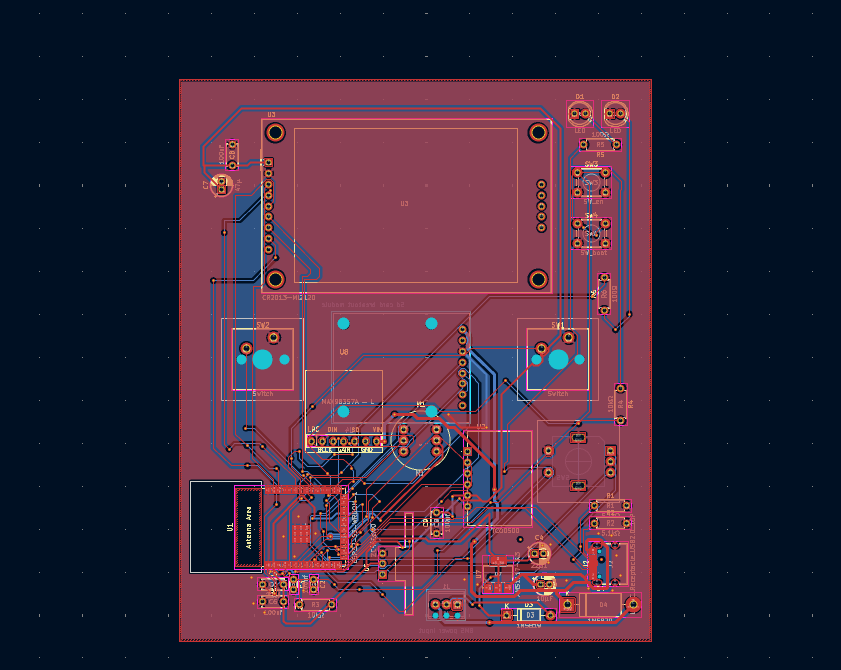
A custom 2-layer PCB design from kicad.
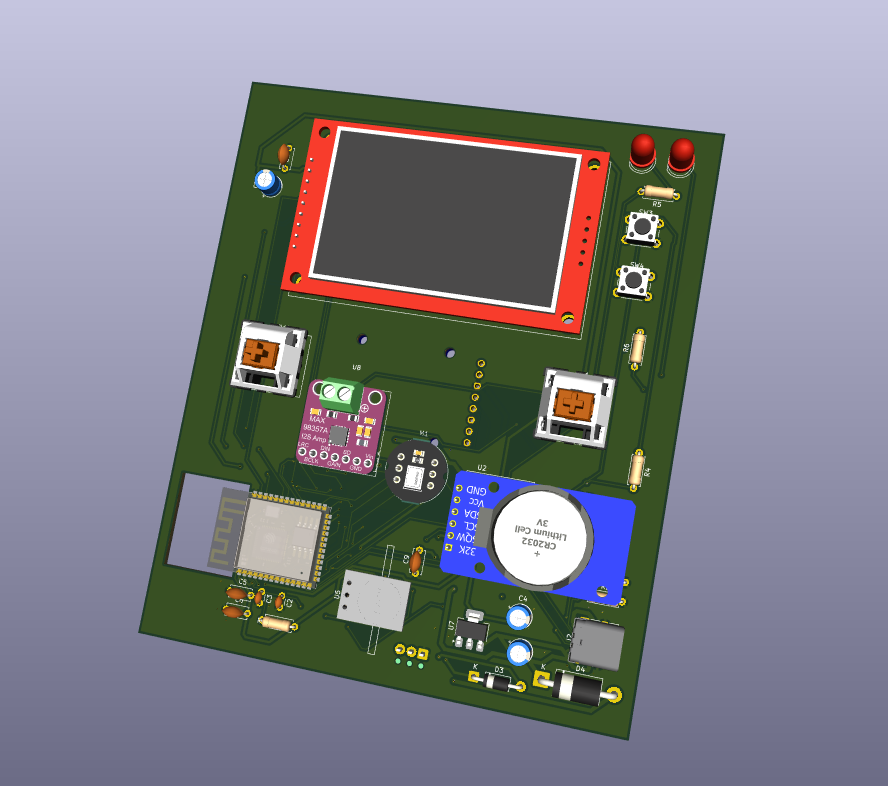
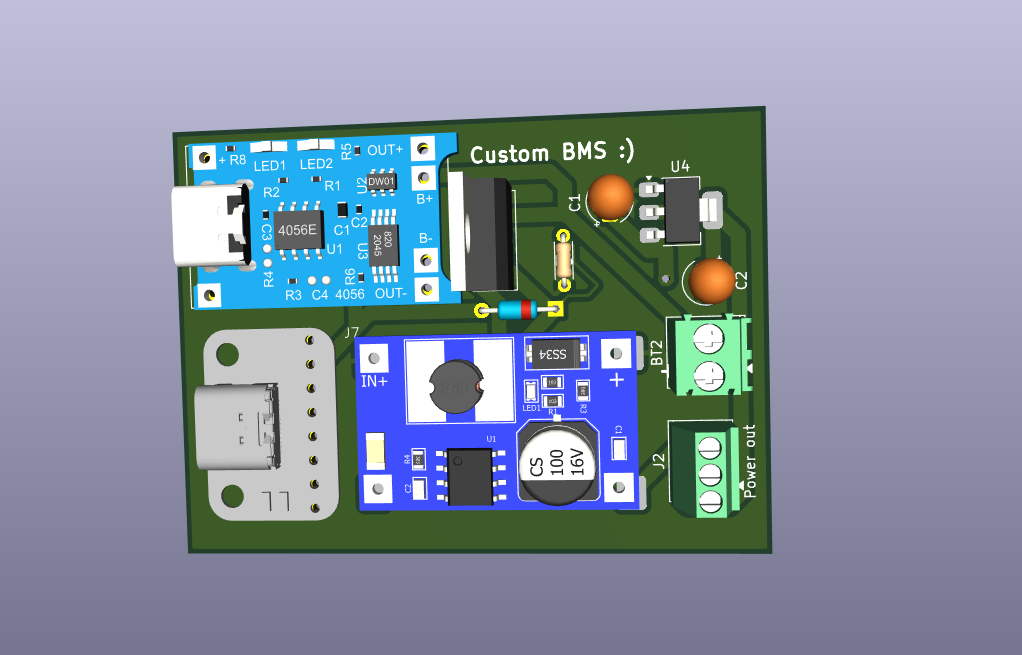
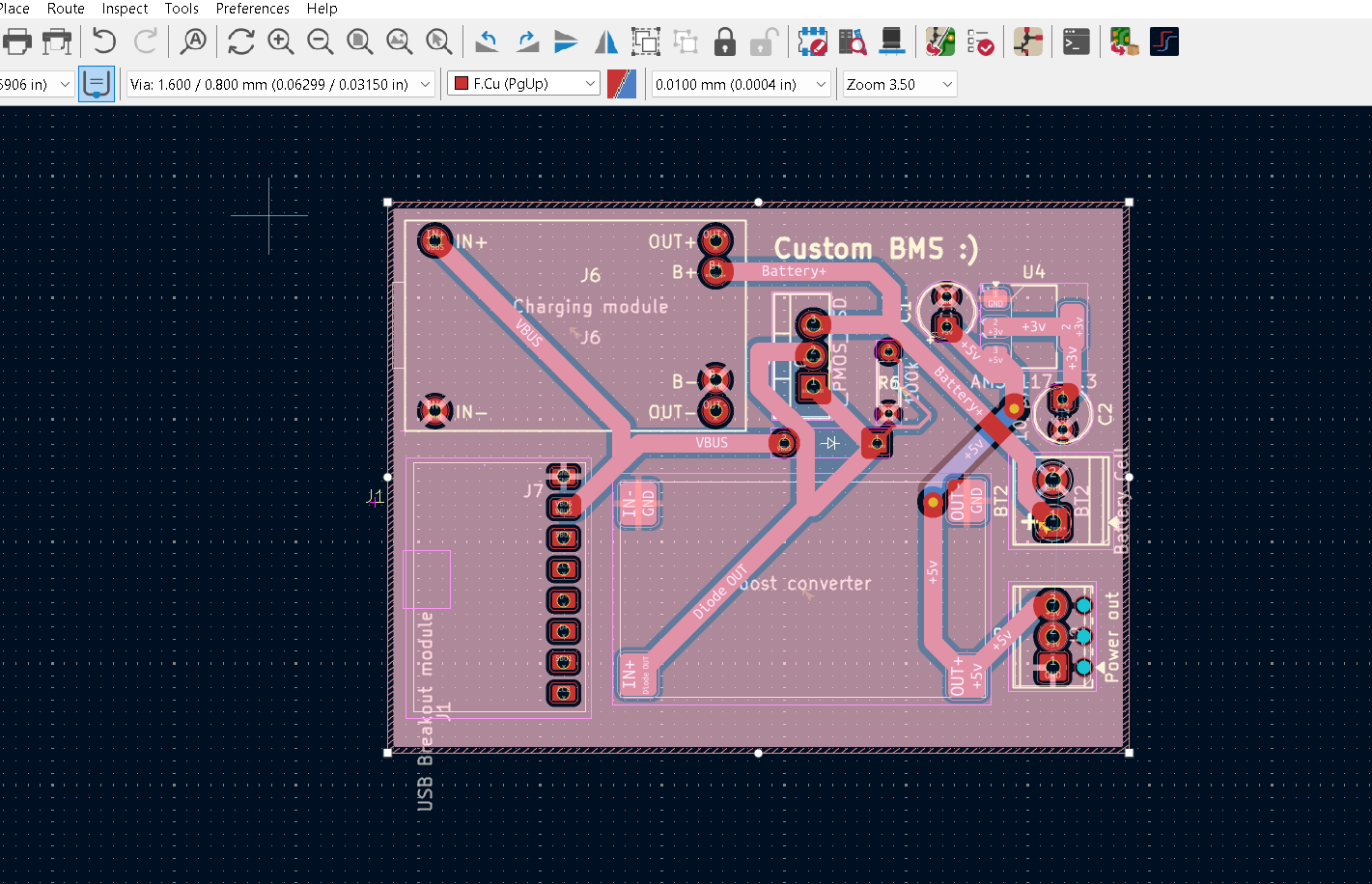
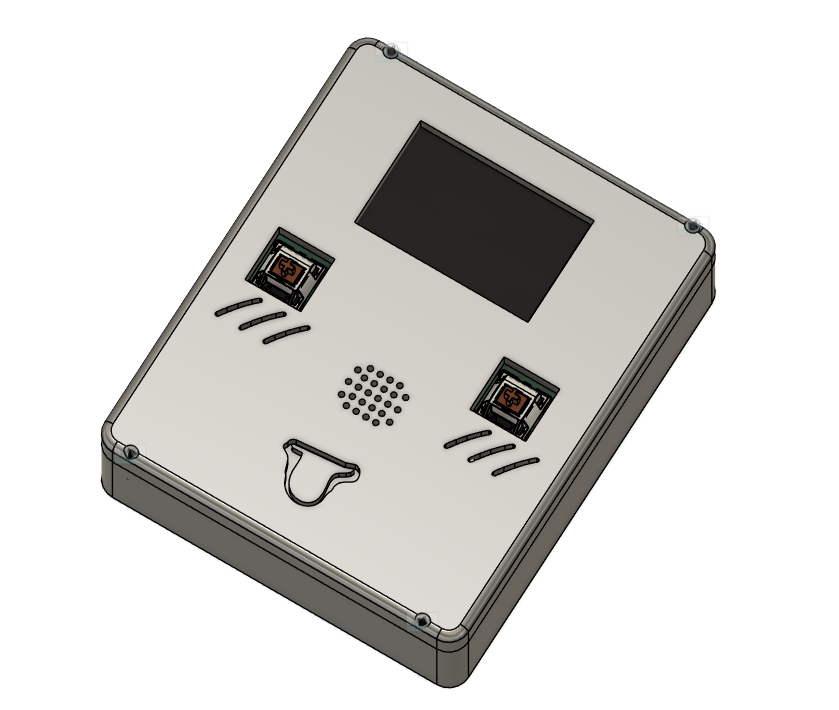
A custom 3d model case from fusion 360
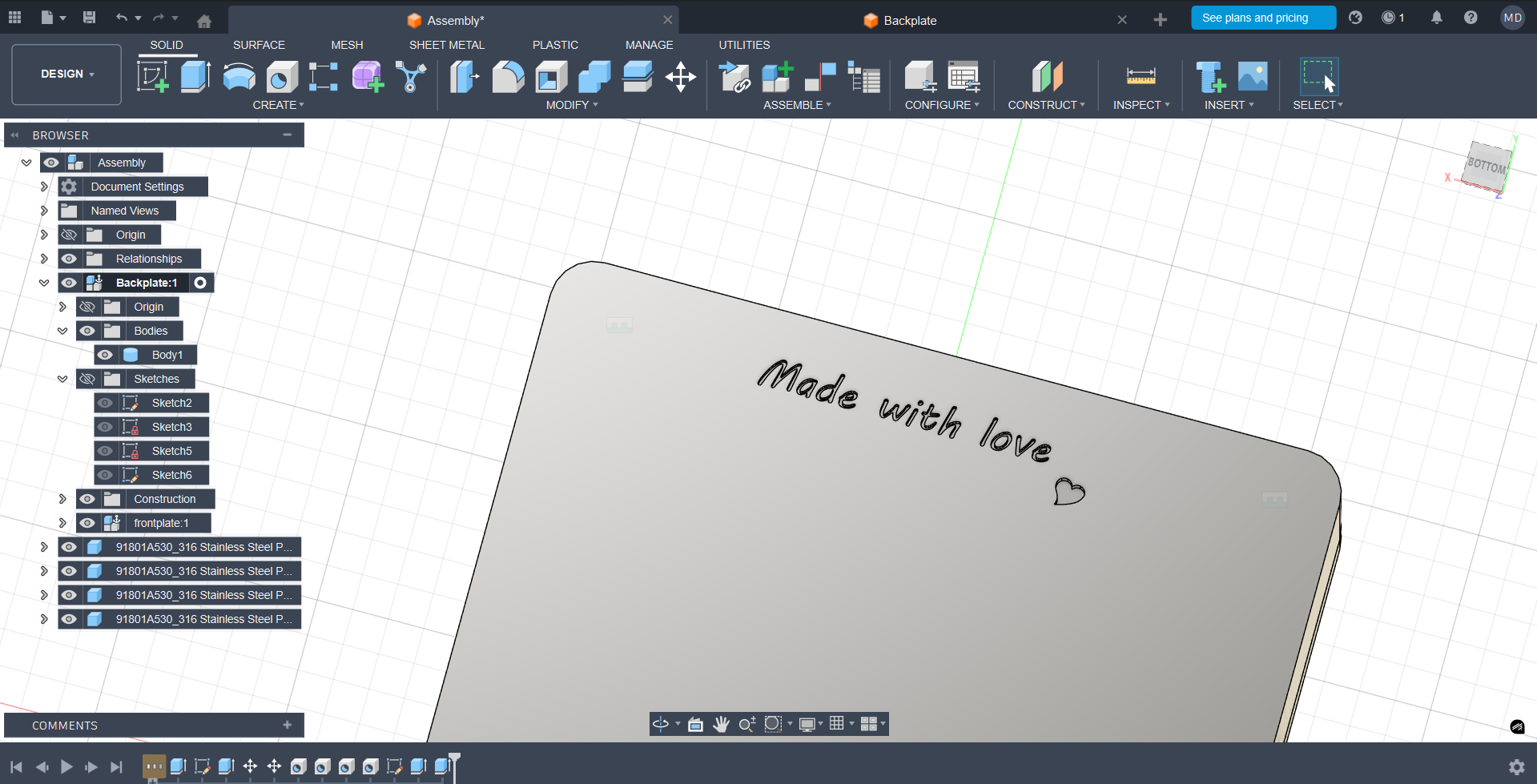
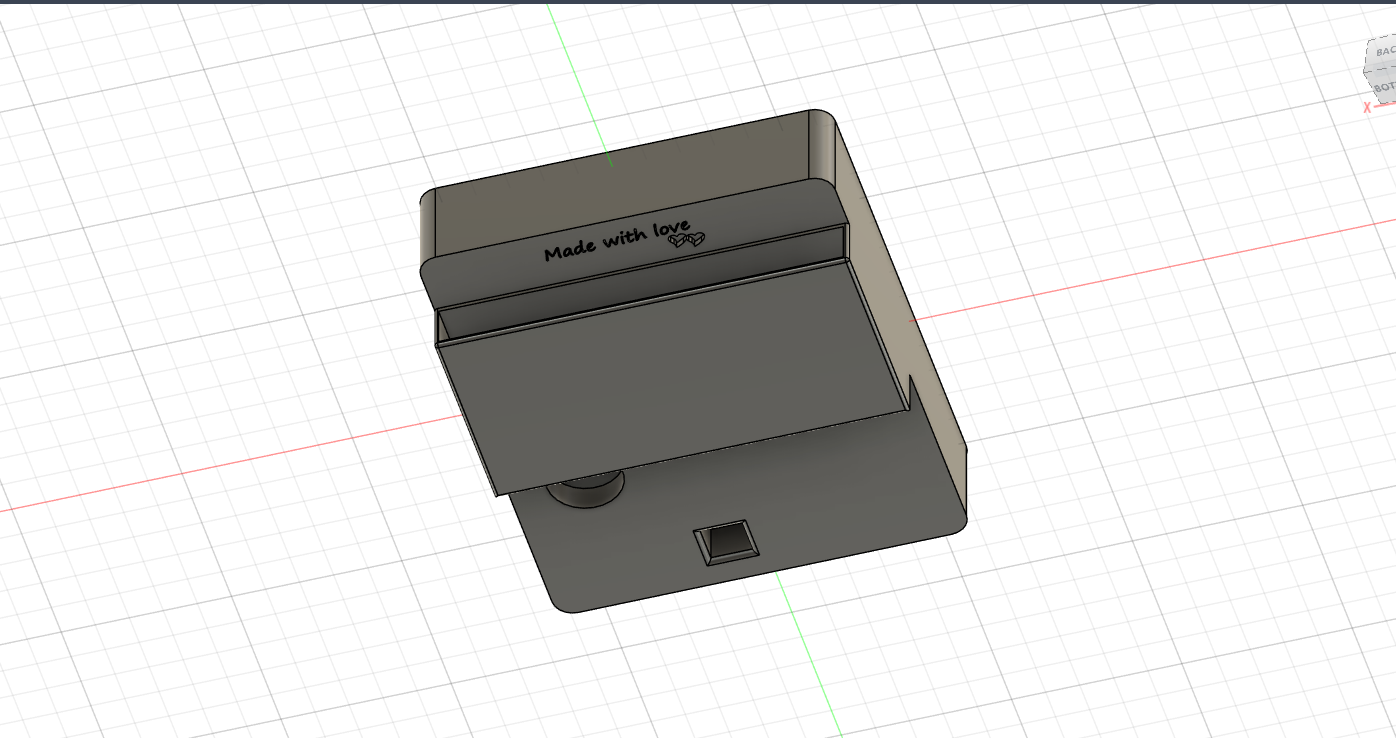
| Component | Description | Quantity |
|---|---|---|
| Microcontroller | ESP32-S3 (WROOM-1-N16R8) | 1 |
| Display | 2.4" TFT LCD (ILI9341 Driver) | 1 |
| Audio DAC/Amp | MAX98357A I2S Class D Amplifier | 1 |
| Speaker | 3W 4-Ohm Internal Speaker | 1 |
| Rotary Encoder | EC11 Encoder with Push-Button Switch | 1 |
| Touch Sensor | TTP223 Capacitive Touch Module (Soft Power) | 1 |
| SD card module | Adafruit Micro SD Card Breakout Board | 1 |
| Microphone | INMP441 I2S Digital Omnidirectional Mic | 1 |
| RTC Module | DS3231 High-Precision I2C RTC | 1 |
| Storage Card | 16GB Micro SD Card | 1 |
| BMS Board | Custom made battery management system | 1 |
[!NOTE] This is just a summary of the BOM. The complete BOM can be found in
/BOM details/project.csv
firmware/pages: Contains the class logic for each UI state (Daily, Music, Record, History).main.py: The primary async loop and state machine handler.setup.py: Hardware initialization and pin mapping.master.json: The central database for the daily gift schedule./3d Model: Contains fusion and 3d printing files for the case./firmware: Contains the codeKicad: Kicad files (both power and main board)
* Power_kicad: Custom made bms system kicad project
* main_kicad: main pcb kicad project/images: For images of README.md/BOM details: For BOM from Kicad and my cost compiled for the enitre project
*project.csv: For cost compiled BOMGerber Files: For JLCPCB or any other manufacturer
* production_main: Gerber for the main pcb
* production_power: Gerber for the BMS pcbI built it becasue I really wanted to get into making a custom esp32 chip board and happened to stumble upon a music player gift idea. And from there I spiralled into making the best version of my idea. It plays a different song and displays unique affiramtions from a predefined library to bringten up someones day. OFC my handcrafted playlist library is the biggest treasure :). You can build your own too! For yourself or for someone else. Good Luck >> After you complete it, share it with me from the info at https://manishd.is-a.dev/ .
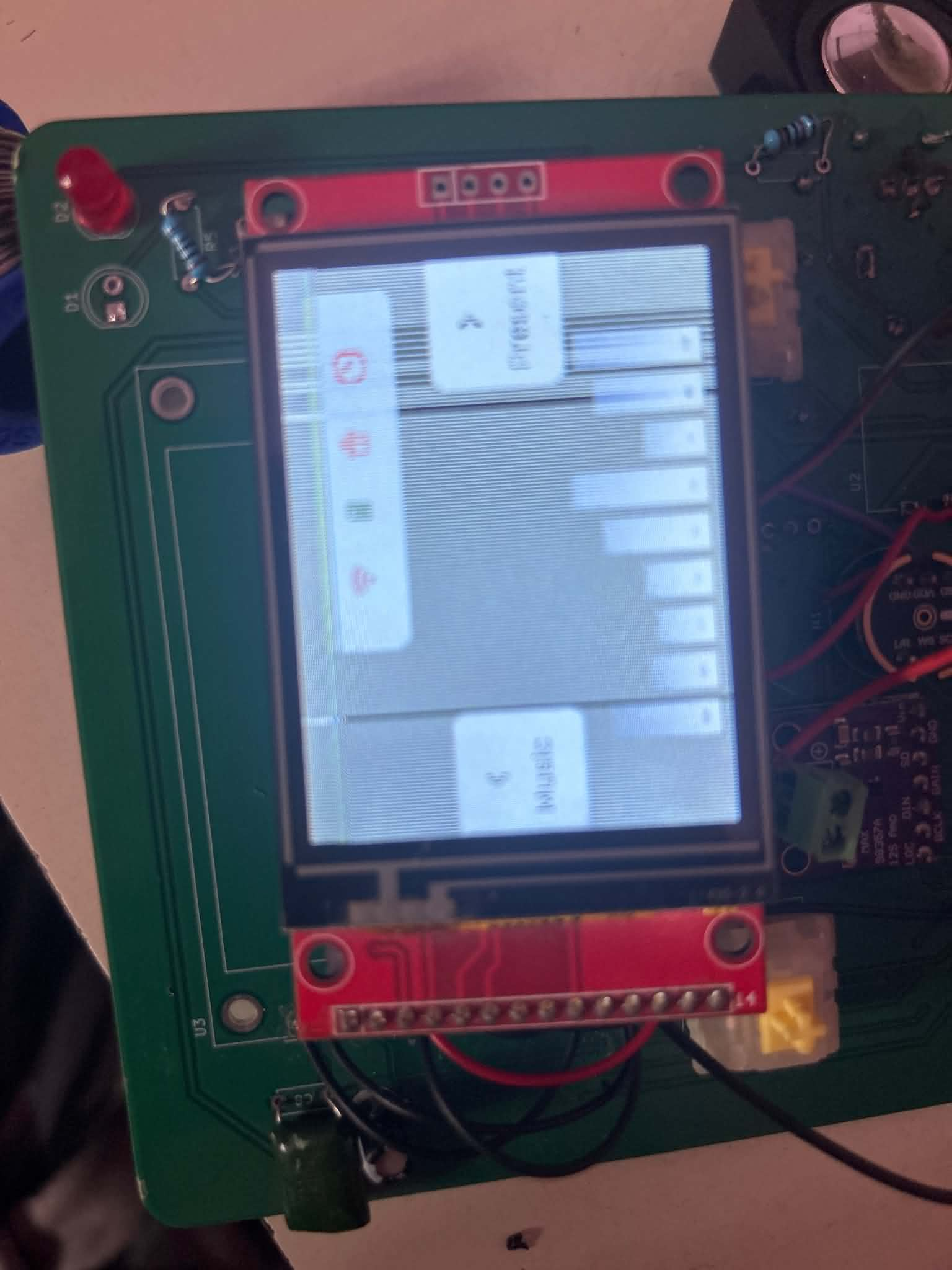
It works though so its fine guess.
💡 Note: This video was recorded during early testing. Some UI components shown in the gallery below are not visible in the clip. use the static images for final UI reference.
|
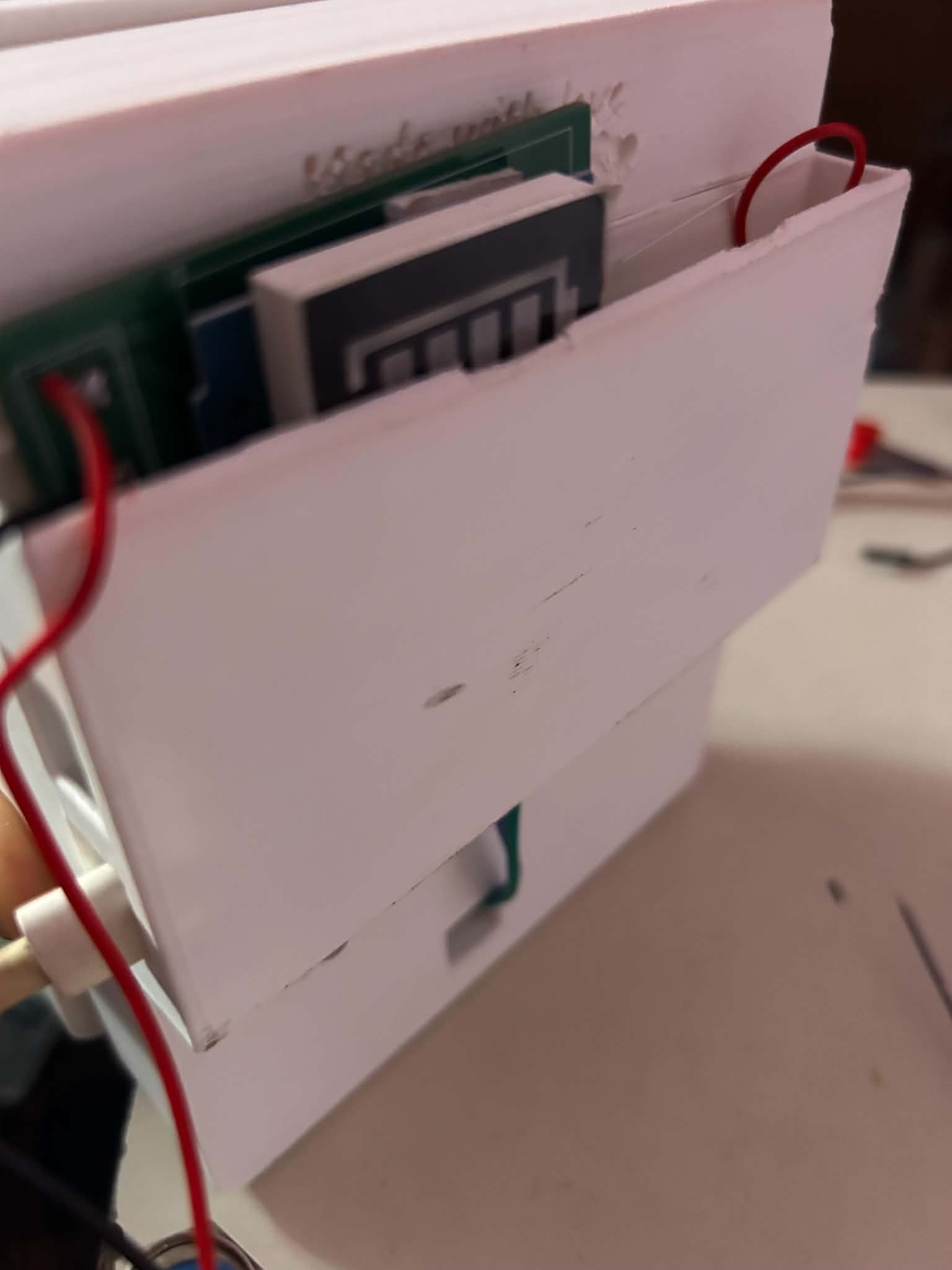
Enclosure Assembly |
Wacky Cute Tongue Profile 😛 |
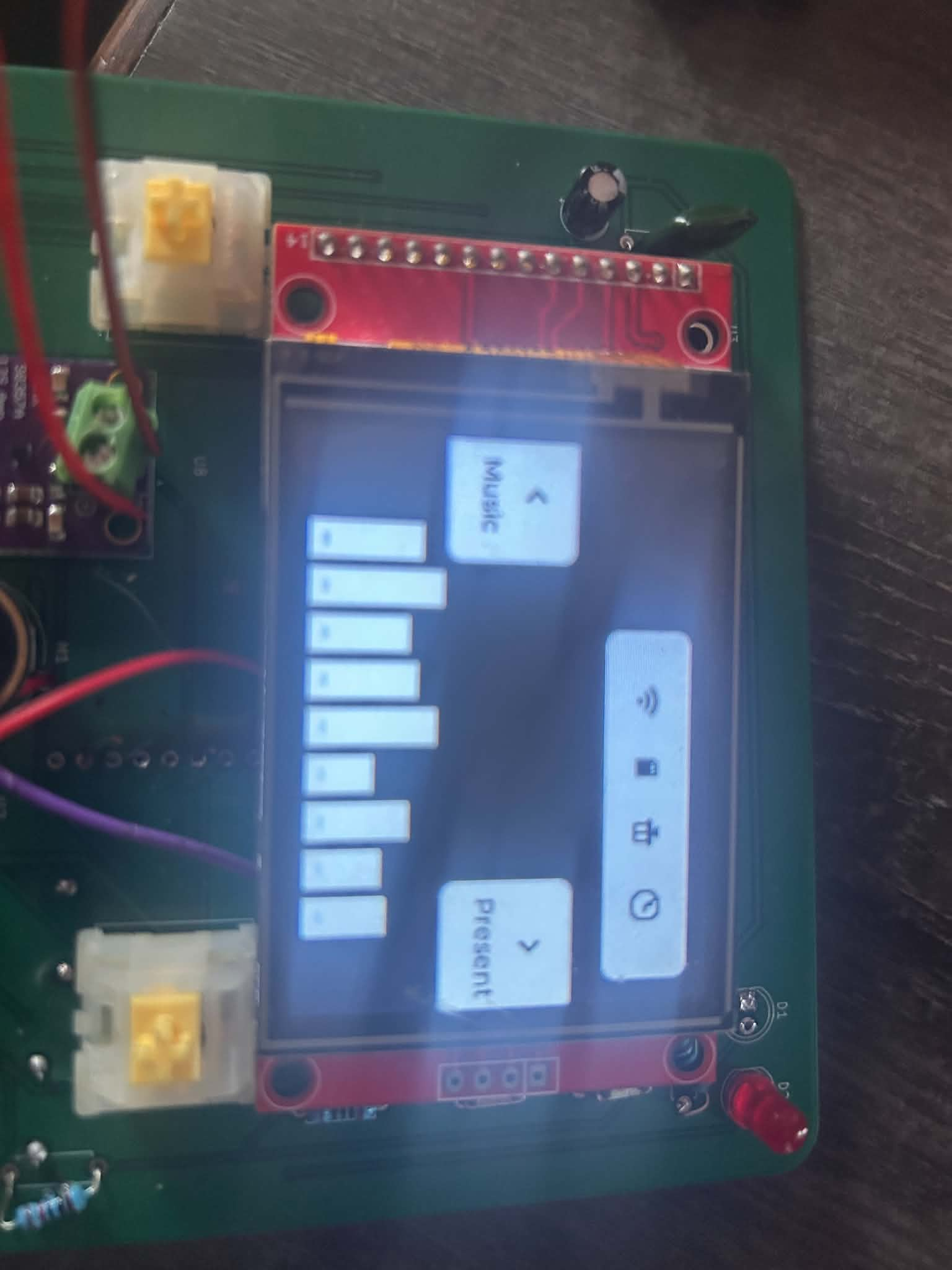
Home |
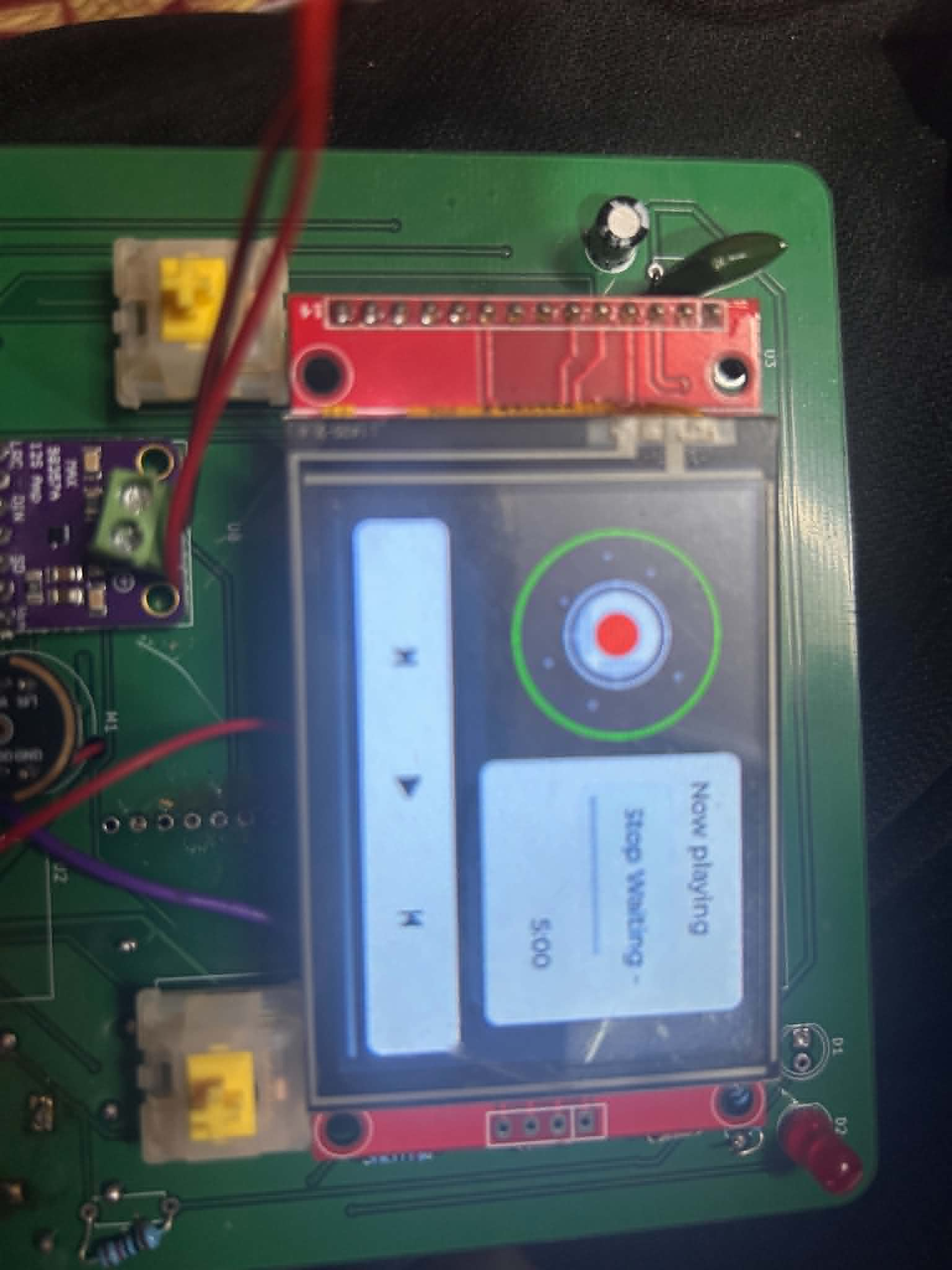
Music Screen |
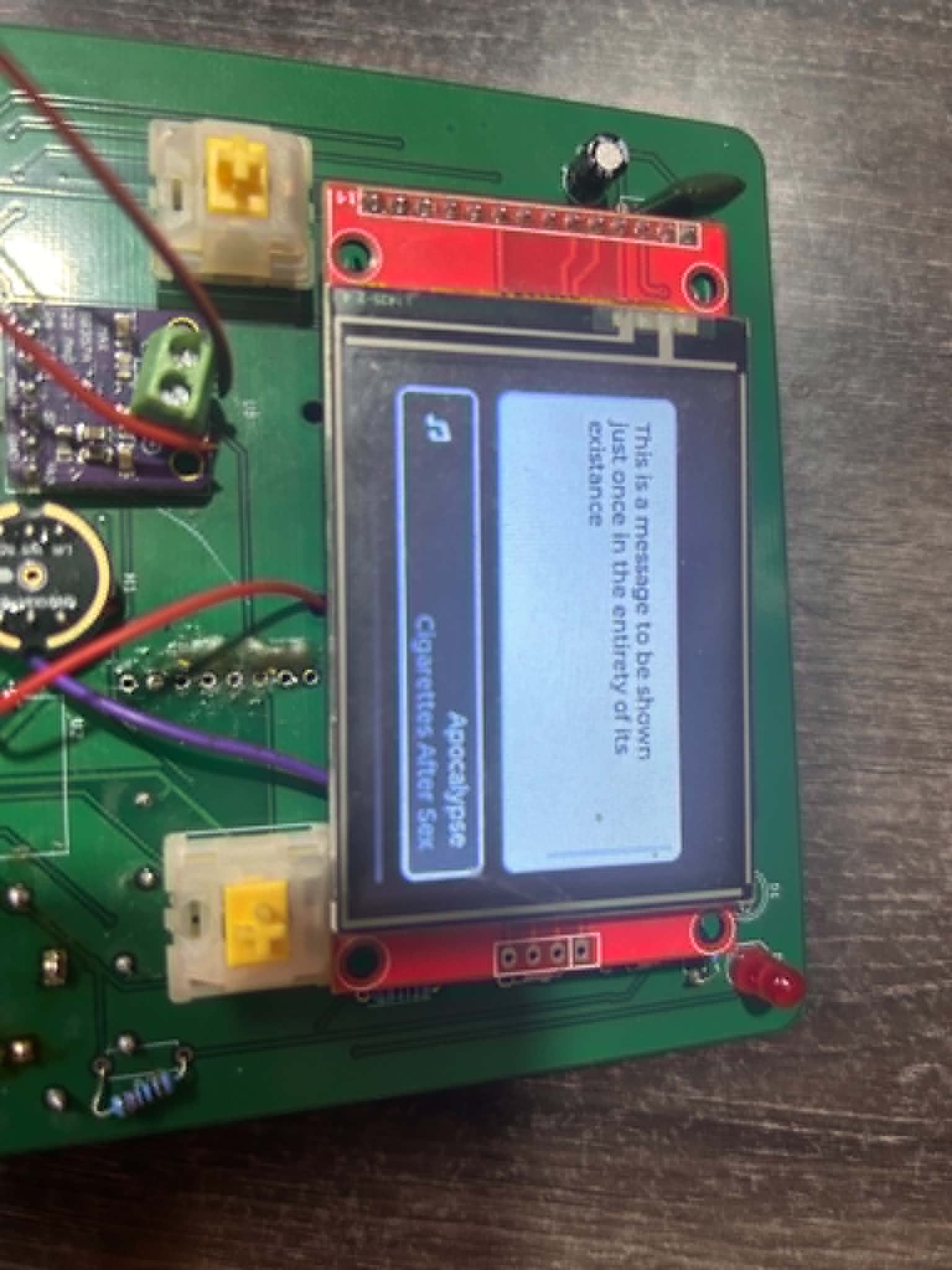
Gift screen |
I used AI heavily for the coding part. Around 40%-50%. Majority of the project is hardware based so AI use for the whole project is less than 25%. The things I used AI for -
And a lot of debugging stuff.
Created with love❤️.
| Qty | Value | Footprint | References |
|---|---|---|---|
| 5 | 10kΩ | Resistor_THT:R_Axial_DIN0207_L6.3mm_D2.5mm_P7.62mm_Horizontal | R3, R4, R7, R8, R9 |
| 3 | 100nf | Capacitor_THT:C_Disc_D5.0mm_W2.5mm_P5.00mm | C6, C8, C9 |
| 2 | 100Ω | Resistor_THT:R_Axial_DIN0207_L6.3mm_D2.5mm_P7.62mm_Horizontal | R5, R6 |
| 2 | 5.1kΩ | Resistor_THT:R_Axial_DIN0207_L6.3mm_D2.5mm_P7.62mm_Horizontal | R1, R2 |
| 2 | LED | LED_THT:LED_D5.0mm | D1, D2 |
| 2 | Switch | ScottoKeebs_MX:MX_PCB_1.00u | SW1, SW2 |
| 1 | 100nf | Capacitor_THT:C_Disc_D3.0mm_W1.6mm_P2.50mm | C2 |
| 1 | 10μF | Capacitor_THT:CP_Radial_D5.0mm_P2.00mm | C1 |
| 1 | 1N5819 | Diode_THT:D_DO-41_SOD81_P10.16mm_Horizontal | D3 |
| 1 | 1N5820 | Diode_THT:D_DO-201AD_P15.24mm_Horizontal | D4 |
| 1 | 1uf | Capacitor_THT:C_Disc_D3.0mm_W1.6mm_P2.50mm | C3 |
| 1 | 22uf | Capacitor_THT:C_Disc_D5.0mm_W2.5mm_P5.00mm | C5 |
| 1 | 22μ1 | Capacitor_THT:CP_Radial_D5.0mm_P2.00mm | C4 |
| 1 | 47μ | Capacitor_THT:CP_Radial_D5.0mm_P2.00mm | C7 |
| 1 | AMS1117-3.3 | Package_TO_SOT_SMD:SOT-223-3_TabPin2 | U7 |
| 1 | BMS power input | TerminalBlock_Phoenix:TerminalBlock_Phoenix_MPT-0,5-3-2.54_1x03_P2.54mm_Horizontal | J1 |
| 1 | CR2013-MI2120 | Display:CR2013-MI2120 | U3 |
| 1 | ESP32-S3-WROOM-1 | PCM_Espressif:ESP32-S3-WROOM-1 | U1 |
| 1 | MAX98357A - L | MAX98357A_custom:MAX98357A_Adafruit_Breakout | U8 |
| 1 | RotaryEncoder_Switch_MP | ScottoKeebs_Scotto:Encoder_EC11_MX | SW5 |
| 1 | SW_boot | Button_Switch_THT:SW_PUSH_6mm | SW4 |
| 1 | SW_en | Button_Switch_THT:SW_PUSH_6mm | SW3 |
| 1 | Sd card breakout module | Adafruit Sd breakout:MODULE_254 | U4 |
| 1 | TC00500 | Real_TimeClk:MODULE_TC00500 | U2 |
| 1 | USB_C_Receptacle_USB2.0_16P | Connector_USB:USB_C_Receptacle_HRO_TYPE-C-31-M-12 | J2 |
| 1 | ZC440600 | TTP223:MODULE_ZC440600 | U5 |
| 1 | ~ | INMP441_Microphone:INMP441_module | M1 |


DevMubarak1/PidginTranslator
Handheld translator for Nigerian languages. No internet needed for common phrases, YarnGPT for everything else.


Tomas-Kuchta-FPV/Open-ESPilot
An open-source project to develop a custom ESP32-based flight controller designed primarily for use with ArduPilot. Focused on affordability, flexibility, and ease of integration with various robotic and UAV platforms.

RoboticsBrno/Robutek
Robůtek je robotická platforma založená na čipu ESP32-S3. Je velice rozšitiřelný, ale ze základu umí jezdit, kreslit fixou, jezdit po čáře, pohybovat se bludištěm. Programování je přes Jaculus.

romioRN/Dash6.8-hardware
wifi name "service", password 12345678, connect to 192.167.4.1

It measures 110.1 × 130.8 mm and has 2 copper layers, 1.6 mm thick.
37 parts, built around the ESP32-S3-WROOM-1-N8 and AMS1117-3.3. The full list of its parts is on this page, with links to each part's symbol and footprint where PCBKit's library has them.
From the PotatoPerchance/Near365 repository on GitHub, at the commit this page was made from: the board is Kicad/main_kicad/near365.kicad_pcb and its schematic Kicad/Power/power.kicad_sch. PCBKit opens the board in the browser, with nothing to install.
Its repository states no licence, so its author keeps all rights: ask PotatoPerchance before reusing the design.