
2 layers18 × 22.5 mm

 Miceuz/paper-wifi28
Low power E-paper display devboard with WiFi and BLE connectivity. Open source hardware.
Sensor epaper is an open-source printed circuit board by Miceuz, from the Miceuz/paper-wifi repository on GitHub. It is a 4-layer board of 34 × 79.2 mm with 92 parts on 60 nets, routed with 643 tracks and 306 vias.
It is built around the ESP32-C3FN4, SHT40-AD1B-R2 and TPS61023DRL, with the AMS1117-3.3, MBR0530 and NX2301P among its other parts. Its parts include 39 capacitors, 20 resistors, 5 diodes, 4 ICs and 4 connectors. It belongs with the lEDs and displays and radio and wireless boards and the ESP32 and RISC-V boards of this library.


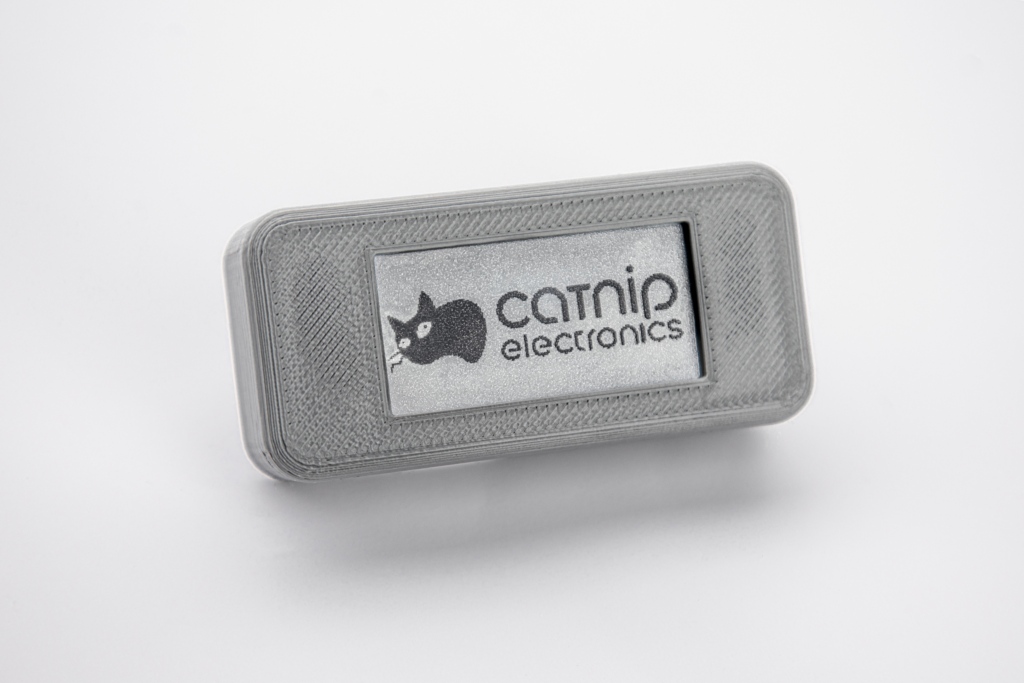

Wifi-enabled e-paper display for I2C sensors. Arduino compatible software on Platformio. 3D printable case.
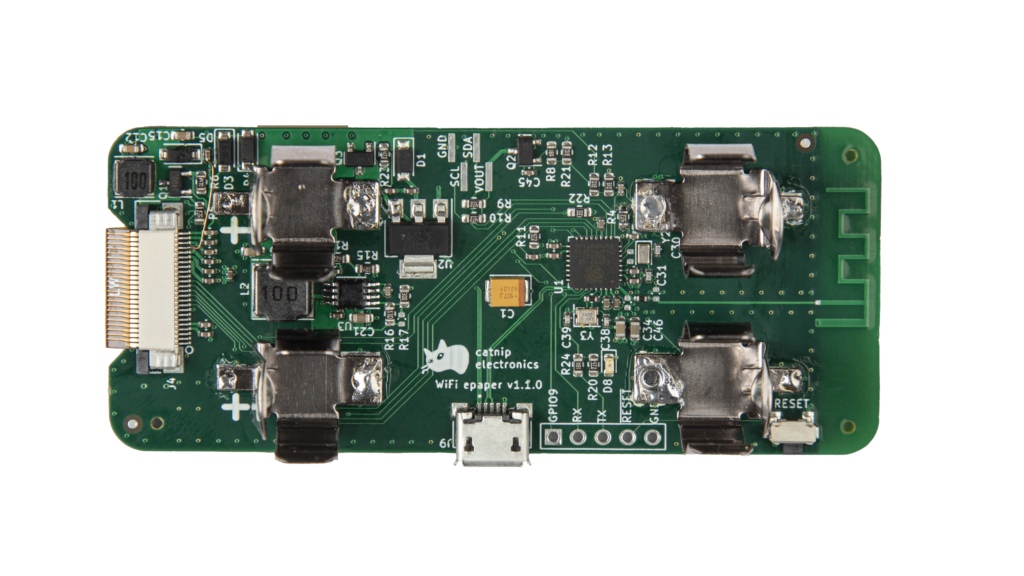
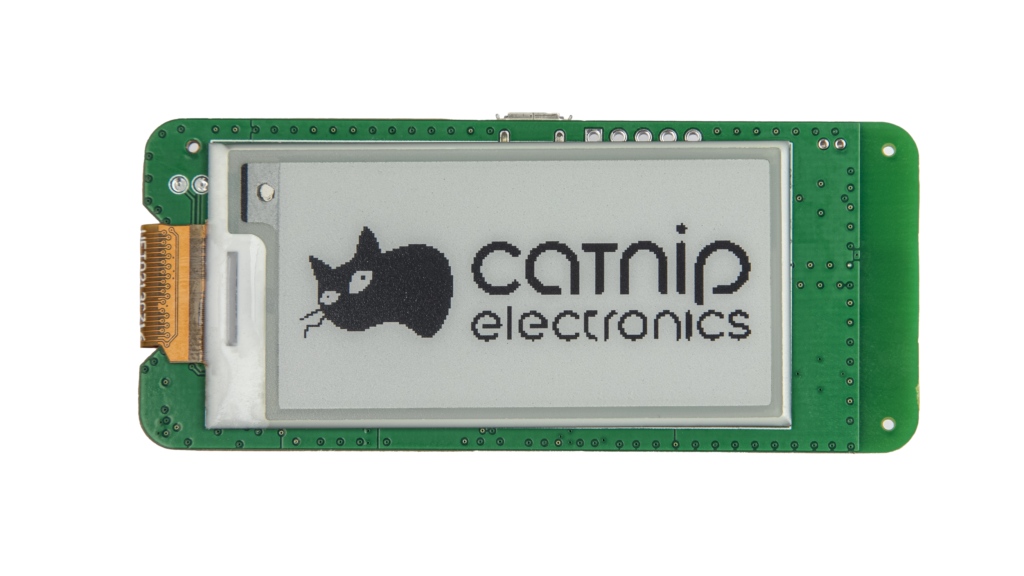
Firmware build and upload process is managed by Platformio. Most probably you will encounter the board in deep sleep in which it is not visible via USB. Jump GPIO9 to GND and reset the board to put it into bootloader mode. Run pio run -t upload to compile and upload firmware. Remove jumper and reset the board to run. If deep sleep is not used, board can be programmed without GPIO9 jumper.
CERN Open Hardware Licence Version 2 - Strongly Reciprocal
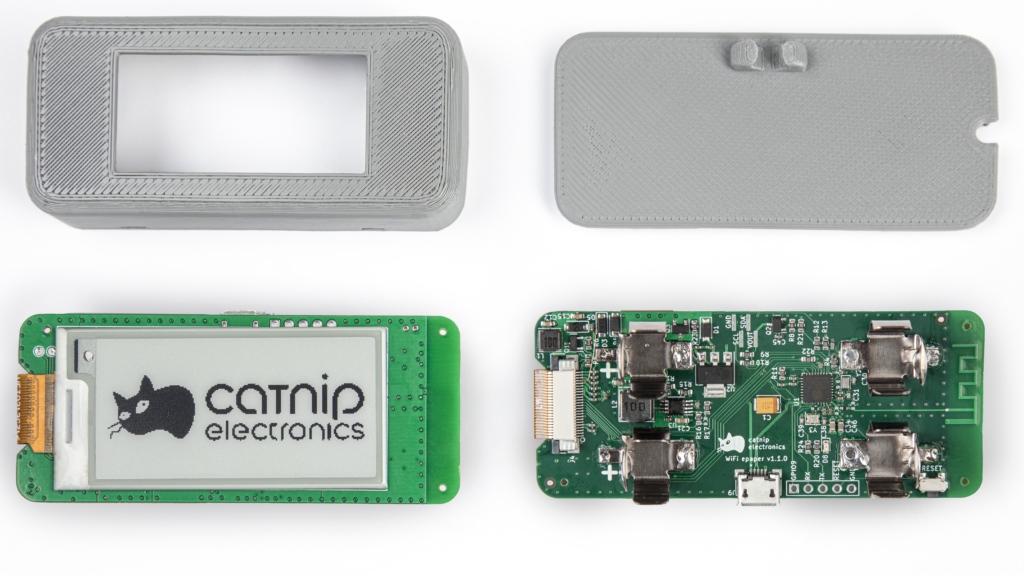

| Qty | Value | Footprint | References |
|---|---|---|---|
| 25 | 1u | Capacitor_SMD:C_0402_1005Metric | C10, C11, C13, C14, C16, C17, C18, C22, C23, C24, C26, C28, C29, C32, C33, C35 +9 |
| 7 | 4.7k | Resistor_SMD:R_0603_1608Metric | R4, R5, R9, R10, R11, R20, R23 |
| 5 | 22u | Capacitor_SMD:C_0603_1608Metric | C21, C25, C27, C34, C46 |
| 4 | 1M | Resistor_SMD:R_0603_1608Metric | R12, R13, R21, R22 |
| 3 | 0 | Resistor_SMD:R_0402_1005Metric | R14, R19, R25 |
| 3 | MBR0530 | Diode_SMD:D_SOD-123 | D3, D4, D5 |
| 3 | ToolingHole | miceuz-lib:JLC_ToolingHole | H6, H6, H6 |
| 2 | 12p | Capacitor_SMD:C_0402_1005Metric | C38, C39 |
| 2 | 150 | Resistor_SMD:R_0603_1608Metric | R8, R24 |
| 2 | 18p | Capacitor_SMD:C_0402_1005Metric | C30, C31 |
| 2 | 4u7 | Capacitor_SMD:C_0603_1608Metric | C12, C15 |
| 2 | ? | Capacitor_SMD:C_0402_1005Metric | C36, C37 |
| 2 | Battery_Cell | miceuz-lib:AA_KEYCO_53_SMD | BT1, BT2 |
| 2 | Fiducial | Fiducial:Fiducial_1mm_Mask2mm | FID1, FID2 |
| 2 | NX2301P | Package_TO_SOT_SMD:SOT-23 | Q2, Q3 |
| 2 | TestPoint | TestPoint:TestPoint_Pad_D1.5mm | TP6, TP7 |
| 1 | 0 | Inductor_SMD:L_0402_1005Metric | L3 |
| 1 | 100u | Capacitor_Tantalum_SMD:CP_EIA-3528-15_AVX-H | C1 |
| 1 | 200k | Resistor_SMD:R_0603_1608Metric | R17 |
| 1 | 2CZ4007 | Diode_SMD:D_SOD-123 | D1 |
| 1 | 2R2 | Resistor_SMD:R_0603_1608Metric | R6 |
| 1 | 2u2 3A | Inductor_SMD:L_Taiyo-Yuden_NR-40xx | L2 |
| 1 | 32kHz | Crystal:Crystal_SMD_2012-2Pin_2.0x1.2mm | Y2 |
| 1 | 40MHz 10ppm | Crystal:Crystal_SMD_2016-4Pin_2.0x1.6mm | Y3 |
| 1 | 47u 0.5A | Inductor_SMD:L_Taiyo-Yuden_NR-40xx | L1 |
| 1 | 931k | Resistor_SMD:R_0603_1608Metric | R16 |
| 1 | ? | Resistor_SMD:R_0402_1005Metric | R3 |
| 1 | AMS1117-3.3 | Package_TO_SOT_SMD:SOT-223-3_TabPin2 | U2 |
| 1 | Conn_01x06 | Connector_PinHeader_2.54mm:PinHeader_1x07_P2.54mm_Vertical | J2 |
| 1 | Display | miceuz-lib:SFV24R-4STE1HLF | J4 |
| 1 | ESP32-C3FN4 | Package_DFN_QFN:QFN-32-1EP_5x5mm_P0.5mm_EP3.7x3.7mm_ThermalVias | U1 |
| 1 | LED | LED_SMD:LED_0603_1608Metric | D8 |
| 1 | LOGO | miceuz-lib:catnip | G*** |
| 1 | PCB Antenna | miceuz-lib:Texas_SWRA117D_2.4GHz_Left | AE1 |
| 1 | Q_NMOS_GSD | Package_TO_SOT_SMD:SOT-23 | Q1 |
| 1 | SHT40-AD1B-R2 | miceuz-lib:Sensirion_SHT40-AD1B-R2 | U4 |
| 1 | SW_Push | miceuz-lib:SHOUHAN_TS24CA | SW1 |
| 1 | TPS61023 | Package_TO_SOT_SMD:SOT-363_SC-70-6 | U5 |
| 1 | USB micro | miceuz-lib:XKB_U254-051T-4BH83-F1S | J9 |
| 1 | i2c | Connector_PinHeader_1.27mm:PinHeader_1x04_P1.27mm_Vertical_SMD_Pin1Right | J1 |

bombarie/jaha-koo-eel
A robotic remote controlled eel. A prop for the play Haribo Kimchi.


zeankundev/boards
A collection and an archive of KiCad projects I made. Contains projects from 2023 - 2024.

solderable/storm-tracker-hardware
Open-source-ready Storm Tracker hardware design, documentation, BOM, and manufacturing package

xmyoot/cellular-epaper-esp32s3-sim7600
Low-Power Cellular ePaper Device with ESP32-S3 and SIM7600 LTE Cat-1


It measures 34 × 79.2 mm and has 4 copper layers, 1.6 mm thick.
92 parts, built around the ESP32-C3FN4, SHT40-AD1B-R2, TPS61023DRL and AMS1117-3.3. The full list of its parts is on this page, with links to each part's symbol and footprint where PCBKit's library has them.
From the Miceuz/paper-wifi repository on GitHub, at the commit this page was made from: the board is electronics/sensor-epaper/sensor-epaper.kicad_pcb and its schematic electronics/sensor-epaper/i2c-interface.kicad_sch. PCBKit opens the board in the browser, with nothing to install.
Its repository states no licence, so its author keeps all rights: ask Miceuz before reusing the design.