
2 layers850.2 × 267.4 mm

 Geo-Ron/esphome-PelletStove
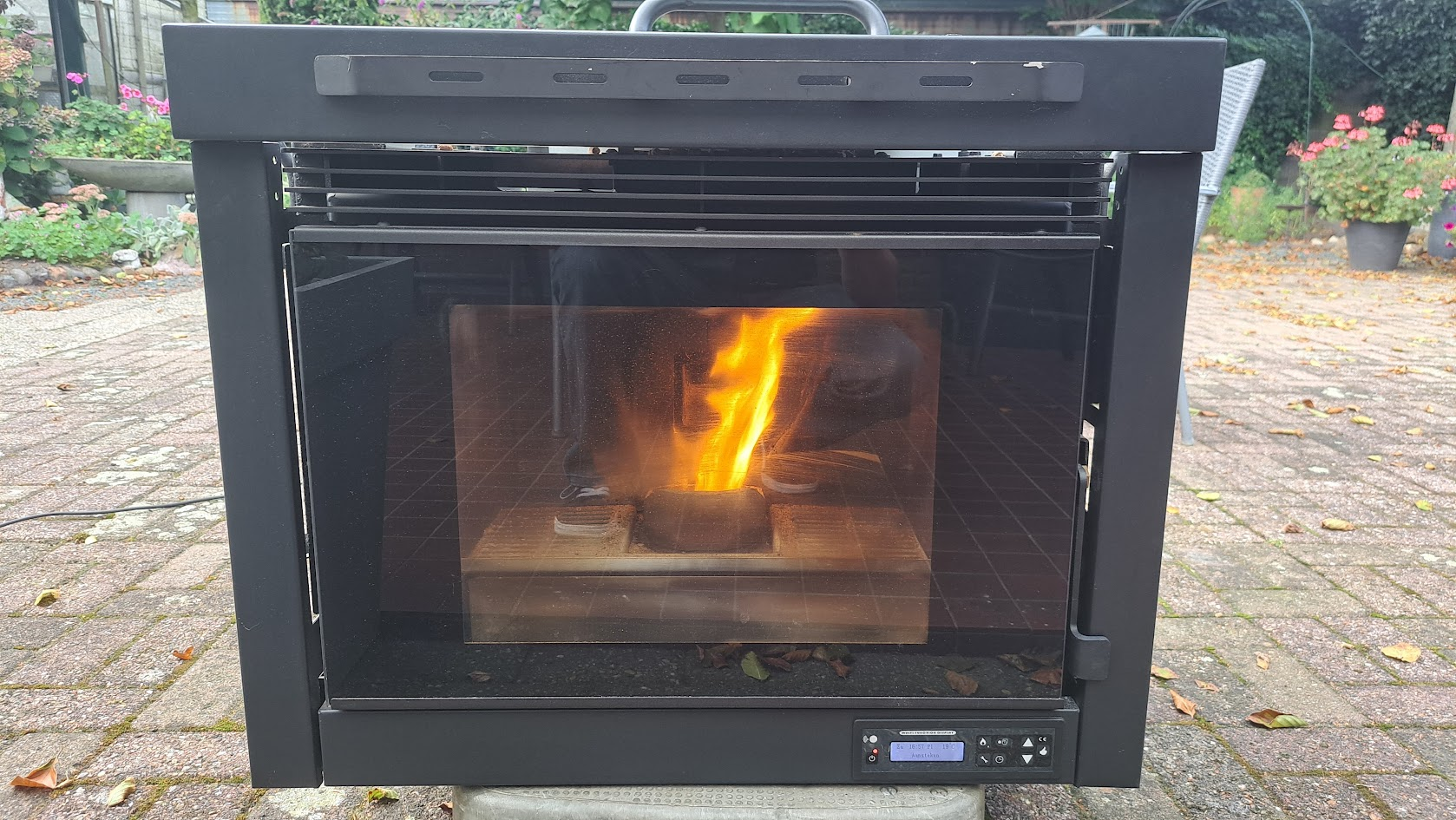
This repository is dedicated to documenting the maintenance, parts, communication and controls of the pellet stove my mother bought recently (september 2024).
Esphome pelletkachel is an open-source printed circuit board by Geo-Ron, from the Geo-Ron/esphome-PelletStove repository on GitHub. It is a 2-layer board of 40.3 × 79.8 mm with 12 parts on 57 nets.
It is built around the ESP32-DEVKITC-32UE. Its parts include 2 ICs, 1 resistor and 1 connector. It belongs with the home automation and IoT boards and the ESP32 boards of this library.
This repository is dedicated to documenting the maintenance, parts, communication and controls of the pellet stove my mother bought recently (september 2024).
I am going to be a parasite and feed on the work of someone else: https://github.com/jazzmonger/wood-pellet-stove-with-TYWE1S-Tuya-chip. Read his discussions section, they are AWESOME! Many, many, many thanks in advanced.
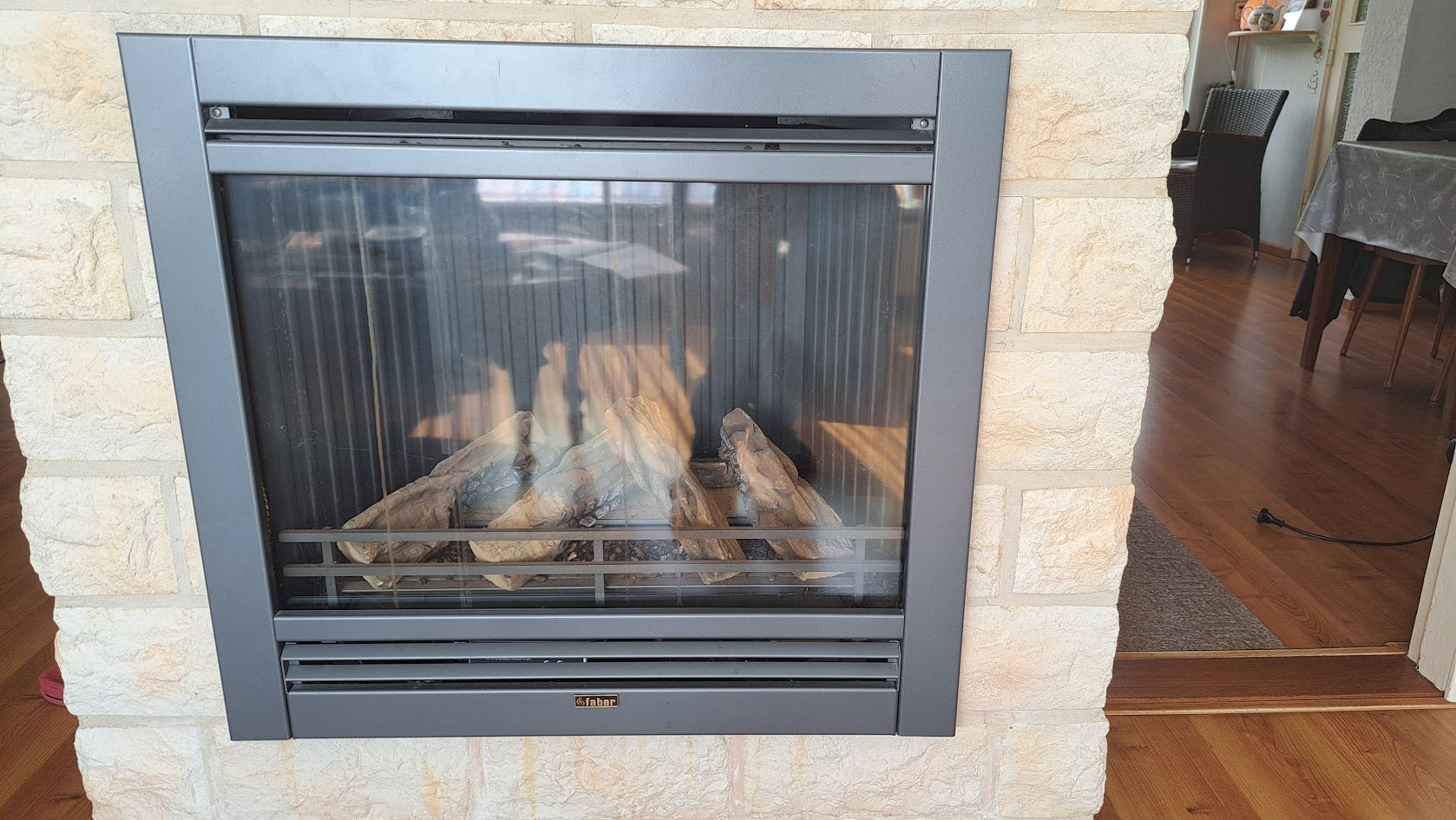
My mother (80+) and father (70+) were really happy with their gas stove.
They enjoyed the warmth and liked turning the heat up to more then 22°C, as most elderly people do.
I remember I always had a hard time staying awake in these temperatures in winter times.
But then the war in Ukrain broke loose and gas prices went up in the Netherlands. My parents were shocked by the news reports about the high gas prices and decided to stop turning on the gas fireplace to lower their monthly costs.
In basis that was a really good decision, if it were not for the fact that their 1960's house was not that nicely isolated.
Their next decision was to stop heating around 18h and heat only the living room with an electric heater up to 19°C. My mother also bought a cordless electric heating cushion for her back.
It was kind of okay for them, with some amount of complaining by my mother. She wore several layers of clothing and still was not comfortable.
I then decided to look for an alternative for their unused gas fireplace, but was limited by the fact that they absolutely did not want to invest thousands of Euros in a new fireplace. As they stated: they were too old for such an investment.
So the search was for a used pellet stove, that would fit the hole in the wall.
It took me more then a year to find one with an acceptable price. My father passed away during my search, so he was not going to benefit from it anymore.
Then I found one, the price was okay. The seller did not know of a manufacturer or model number. The gamble was on me to risk the money of someone else.
The seller was nice and told us he had a good history with this stove. The reason for him to sell it was that it was getting too hot in his home. In my opinion that was not going to be an issue at my mothers place.
The device was demo-ed and we took it home.
When Google-ing the model name, this led us to the site http://histove.com. The manufacturing company (I assume) is HAINING HEYING HEATING TECHNOLOGY CO., LTD.
At this moment sold at Alibaba.com
Model: HY-IN9A
Capacity: 9KW
Description: 2019 newly designed European style insert wood pellet stove
| Product parameters(HY-IN9A) | |
|---|---|
| Heat Area | 100㎡ |
| Dimension(W*H*D) | 807*635*621mm |
| Air input pipe | 50mm |
| Air outlet pipe | 80mm |
| Auto-burning Time | 13h-27h |
| Consumption for pellet | 0.8-1.8kg/h |
| Efficiency | 90% |
| Hopper Capacity | 23kg |
| Electronic comsuotion | 100-400W/h |
| Rating voltage | 230v |
Specifications:
As one can read, the information provided is mostly correct. So that is a starting point.
So I tried to image search the stove I bought and there were several options:
I am by no means a pellet stove expert. Let me get this out first.
What I am is a technical person. Problem solving is my job and I really like making things simple.
So I used my ash-vacuum-cleaner and take a deeper look into it.
The stove was almost clean, with some sealings ruptured.
Then I asked the company Justfire for a maintenance quote, and their response was this:
No way that I am going to pay €750,- for a first maintenance and inspection. They did not ask me for any serial number, model number, date of manufacturing or anything else.
I investigated other sellers for just the sealing-replacements than Justfire, but was unable to find all the seals that I needed. So I paid €80,- for two sealings at Justfire. These I can replace myself easily.
Half an hours of vacuuming, brushing and replacing the seals and we are in business for now.
I will list all the parts I buy and/or replace in parts-list.md.
I found out the stove should have a remote. This would be nice so my mother would not need to bend over to control the stove.
I was unable to find a replacement remote for a price less then €80,-. That is too much as far as I am concerned. No guarantees that the remote would work anyway.
Justfire also sells a WiFi module for the ginormous amount of €160,-. But for an extra €160,- they are willing to configure it for me 😄.
When I found the Github repository of Jazzmonger I was overwhelmed with his work and enthousiasm. Wow!
I already have an HomeAssistant instance at my mothers house, to monitor gas usage and room temperatures. It would really be a nice addition to connect the stove to it.
What I would really like to accomplish is:
But most, if not all, of the heavy lifting has been done by Jazzmonger already.
What I need to do is:
| Qty | Value | Footprint | References |
|---|---|---|---|
| 1 | 1-wire | Connector_PinHeader_2.54mm:PinHeader_1x03_P2.54mm_Vertical | J6 |
| 1 | 1k | Resistor_THT:R_Axial_DIN0204_L3.6mm_D1.6mm_P5.08mm_Horizontal | R1 |
| 1 | 757 | Ron-Custom-Components:TT-4chLLC-SKU000275 | U2 |
| 1 | Display (J1) | Connector_JST:JST_XH_S4B-XH-A_1x04_P2.50mm_Horizontal | JB5 |
| 1 | ESP32-DEVKITC-32U | ESP32-DEVKITC-32U:MODULE_ESP32-DEVKITC-32U | U1 |
| 1 | J5 Even | Connector_PinHeader_2.54mm:PinHeader_1x08_P2.54mm_Vertical | JB1 |
| 1 | J5 Odd | Connector_PinHeader_2.54mm:PinHeader_1x08_P2.54mm_Vertical | JB2 |
| 1 | Mainboard (DPC) | Connector_JST:JST_XH_S4B-XH-A_1x04_P2.50mm_Horizontal | JB4 |
| 1 | RX switcher | Jumper:SolderJumper-3_P1.3mm_Bridged12_RoundedPad1.0x1.5mm | JP2 |
| 1 | TX switcher | Jumper:SolderJumper-3_P1.3mm_Bridged12_RoundedPad1.0x1.5mm | JP3 |
| 1 | Thumbs | TerminalBlock:TerminalBlock_Xinya_XY308-2.54-2P_1x02_P2.54mm_Horizontal | JB3 |
| 1 | To TOF | Connector_JST:JST_XH_S4B-XH-A_1x04_P2.50mm_Horizontal | JB6 |

nichtrami/led_tube
A LED Tube that works wireless and runs on a ESP32 with Arduino Framework

Romemu1810-tech/bluetooth_jammer_experimento
Proyecto personal y experimental para el aprendizaje de electrónica, RF y comunicaciones Bluetooth, desarrollado con fines educativos y de investigación.

14chanwa/MiAM_robotics_ESP32
MiAM robotics repository for ESP32 based PAMIs and boards

adli-syauqi/general-purpose-mobile-robot-pcb
KiCad hardware design for a custom ESP32 general-purpose mobile robot controller. This board was made to drive 4-wheel omni and mecanum transporter robots.

arsya-stary/project-TARS
ini adalah project individual saya dan team saya untuk membuat robot TARS yang berada di dalam film INTERSTELLAR


It measures 40.3 × 79.8 mm and has 2 copper layers, 1.6 mm thick.
12 parts, built around the ESP32-DEVKITC-32UE. The full list of its parts is on this page, with links to each part's symbol and footprint where PCBKit's library has them.
From the Geo-Ron/esphome-PelletStove repository on GitHub, at the commit this page was made from: the board is kicad/esphome-pelletkachel/esphome-pelletkachel.kicad_pcb and its schematic kicad/esphome-pelletkachel/esphome-pelletkachel.kicad_sch. PCBKit opens the board in the browser, with nothing to install.
Its repository states no licence, so its author keeps all rights: ask Geo-Ron before reusing the design.