





6 layers36 × 36 mm
Stm32h743-px4
DataFlux-Robot/fluxpcb
全自动AI电路设计流水线: 需求→选型→原理图→PCB→验收仿真→固件,六环节门禁闭环 | Six-stage automated circuit design pipeline with machine-checkable verification gates
22 parts1Apache-2.0

 DataFlux-Robot/fluxpcb1
全自动AI电路设计流水线: 需求→选型→原理图→PCB→验收仿真→固件,六环节门禁闭环 | Six-stage automated circuit design pipeline with machine-checkable verification gates
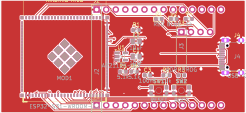
H743-fc is an open-source printed circuit board by DataFlux-Robot, from the DataFlux-Robot/fluxpcb repository on GitHub, published under the Apache-2.0 licence. It is a 6-layer board of 50 × 50 mm with 33 parts on 74 nets, routed with 2,286 tracks and 230 vias.
It is built around the SN65HVD230D, BMP388 and IST8310, with the AP2112K-3.3 and BMI088 among its other parts. Its parts include 17 connectors, 9 ICs, 2 crystals, 1 resistor and 1 diode. It belongs with the STM32 boards of this library.


$ flux run projects/stm32n6-px4

  requirements ─▶ spec.yaml ......... ✓ 6 requirements, all mapped
  selection    ─▶ bom.csv ........... ✓ 17 lines, LCSC-verified
  schematic    ─▶ .kicad_sch ........ ✓ kicad-cli ERC: 0 violations
  pcb          ─▶ .kicad_pcb ........ ✓ auto-place + auto-route, DRC: 0
  simulation   ─▶ ngspice MC ×200+3 .. ✓ drop 2.79% ≤ 5% · ripple OK
  firmware     ─▶ ESP-IDF ........... ✓ host-C regression executed

  🟢 23/23 gates green — RELEASED
  fab → Gerber + drill + pick&place + STEP   (52×30 mm, 2-layer)
FluxPCB turns a sentence into a manufacturable PCB and its firmware — and it refuses to call anything "done" until 16 machine-checkable gates agree. No gate, no glory.
📌 状态同步(2026-11-03):上方 RELEASED 徽章为各演示项目的历史快照(2026-10-21 批次,见 DELIVERY_STATUS 的撤销与未完成项——含 drc_zero 未绿等待办)。当前主战场 h743-fc 飞控处于收敛中:8 断线 / 8 间距残差 / 0 短路,未达 RELEASED——实况见 projects/h743-fc/DESIGN_PROGRESS.md,里程碑与工件哈希见 projects/h743-fc/MILESTONES.md。发布判定已按复审修复:必需阶段全集+证据哈希+导出校验三者齐备才计 RELEASED(局部运行不再冒充发布)。
LLMs write beautiful netlists — and occasionally invent pin numbers. FluxPCB's rule: the LLM generates; deterministic solvers and real EDA tools decide. A failed gate emits structured feedback, the pipeline regenerates, retries are bounded. "Complete" is a physical verdict, not a vibe.
%%{init: {'theme': 'neutral'}}%%
flowchart LR
    A["🗣️ Natural<br/>language"] --> B["📋 spec.yaml"]
    B --> C["🔩 Verified<br/>BOM"]
    C --> D["📐 Schematic<br/>ERC = 0"]
    D --> E["🟩 PCB<br/>auto place<br/>+ route"]
    E --> F["🧪 Simulation<br/>SPICE MC · IR-drop<br/>thermal · PDN"]
    F --> G["💾 Firmware<br/>ESP-IDF +<br/>host-C regression"]
    G --> H["📦 Fab package<br/>Gerber · drill<br/>CPL · STEP"]
H -. "gate red → structured<br/>feedback → regenerate" .-> BEvery artifact is SHA256-stamped. Every verdict links to evidence on disk. A missing tool means BLOCKED — never a fake pass.
| Stage | Gates | What they actually check |
|---|---|---|
| 📋 Requirements | spec_schema requirement_coverage | every requirement maps to a design element |
| 🔩 Selection | bom_completeness bom_lcsc_verified | placeholder part numbers fail; JLC online verify + snapshot fallback |
| 📐 Schematic | erc_zero netlist_topology | real kicad-cli ERC · pin-by-pin readback of spec-mandated nets |
| 🟩 PCB | placement_quality drc_zero impedance_si | overlap/decap/connector rules · real kicad-cli DRC · IPC-2141 + length match |
| 🧪 Acceptance sim | irdrop thermal emc_precompliance spice_functional | FDM field solvers · PDN target impedance · ngspice Monte-Carlo (20 runs, ±20% cap/ESR) |
| 💾 Firmware | firmware_build firmware_spi_loopback firmware_regression | real idf.py build when present · the same fw_logic.c compiled & executed on host |
Every requirement FR-xxx → the elements covering it → the gates that judged it. Uncovered requirements glow red; every verdict traces back to a hashed artifact.
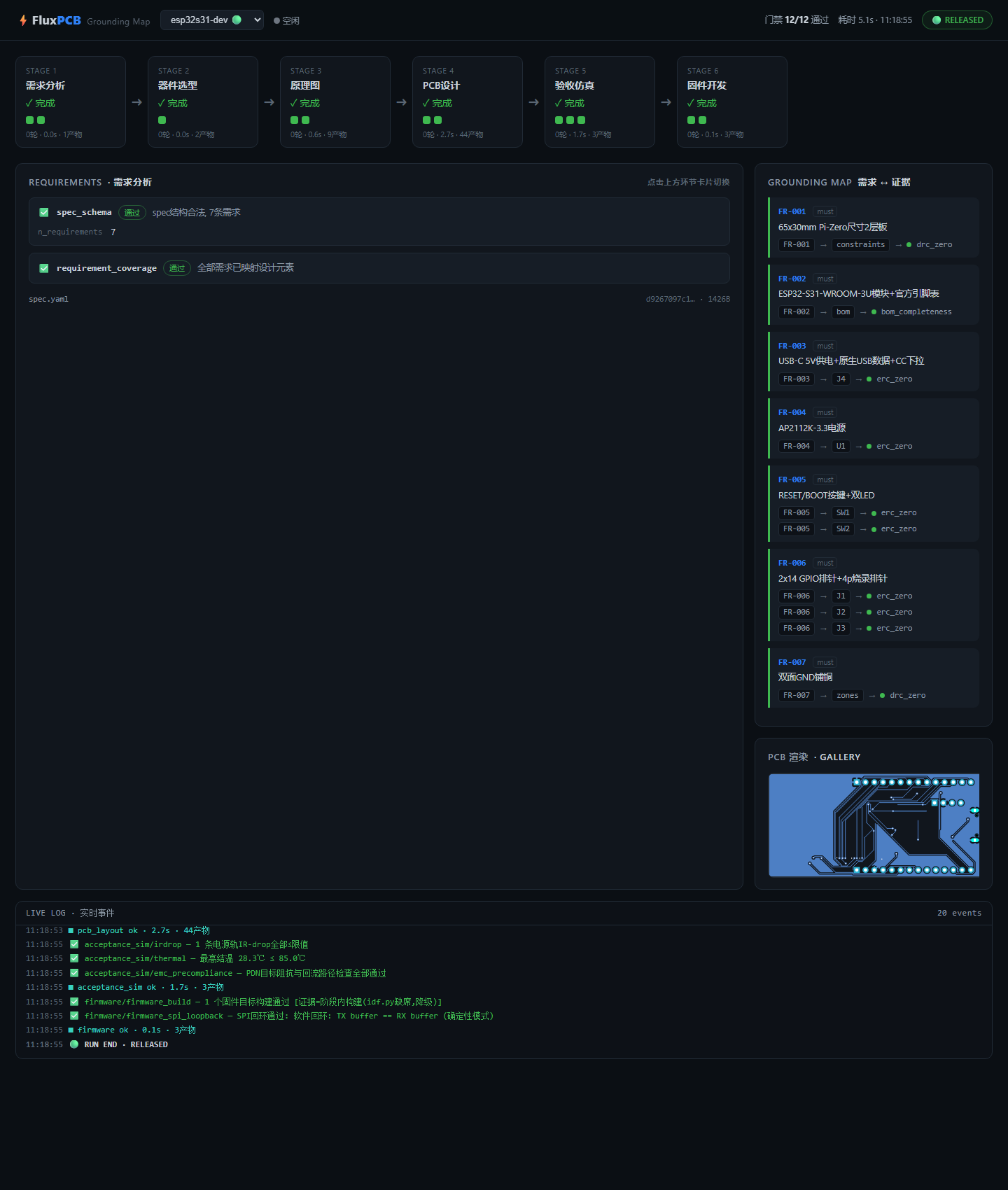
flux dashboard projects # → http://127.0.0.1:8765 · zero-dependency · offline
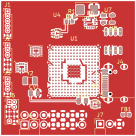 stm32h743-px4 · H743 PX4 flight controller 36×36 mm · 6-layer · TFBGA240 from ST XML 23/23 🟢 RELEASED⬇ fab package · the prompt |
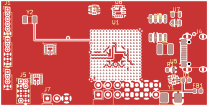 stm32n6-px4 · PX4 flight controller 55×28 mm · 6-layer · TFBGA264 from ST XML 23/23 🟢 RELEASED⬇ fab package · the prompt |
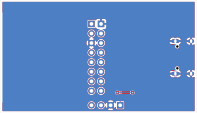 esp32s31-mini · fully autonomous 52×30 mm · 2-layer · auto place + route 16/16 🟢 RELEASED⬇ fab package · the prompt |
 esp32s31-dev · Pi-Zero-size flagship 65×30 mm · 99 pins from the official Espressif datasheet 23/23 🟢 ERC=0 · DRC=0⬇ KiCad project · the prompt |
The repo ships the /fluxpcb skill (.claude/commands/fluxpcb.md):
/fluxpcb ESP32-S31 mini dev board, USB-C power, 2×8 header, 1 button, 1 LEDOne sentence → project scaffold → six stages → bounded gate repair (≤5 rounds) → fab package → evidence-linked report. Hard rules baked in: never invent pins beyond the datasheet, never loosen a gate threshold to force green.
Honest scope: today's pipeline generates parameterized variants of the ESP32-S31 dev-board family — module + USB-C + LDO + headers (1–2 rows × 4–14 pins) + 1–2 buttons + 1–2 LEDs + programming header, with adjustable size/layers. Outside that family, the skill says so instead of pretending.
Only Python ≥ 3.10 is required. Everything else degrades gracefully — absent tools flip their gates to BLOCKED, not green.
pip install -e .

flux run      projects/esp32s31-mini   # full pipeline → RELEASED
flux report   projects/esp32s31-mini   # audit report, evidence-linked
flux gate     projects/esp32s31-dev --only impedance_si,irdrop
flux verify   projects/esp32s31-mini   # re-check gates, no regeneration
flux dashboard projects # Grounding Map UI| Optional tool | Unlocks |
|---|---|
KiCad 10+ (kicad-cli) | real ERC / DRC verdicts, Gerber/drill/CPL/STEP export |
| Freerouting | batch auto-routing (DSN/SES) |
| ngspice (KiCad-bundled DLL) | LDO transient Monte-Carlo |
| openEMS + gerber2ems | EM-field / S-parameter sign-off (adapter ready, wiring in progress) |
| ESP-IDF / hpm-sdk | on-target firmware compile gate |
| LCSC / JLC API | live part & price verification (snapshot fallback) |
Pure-Python physics core, always on: IPC-2141 impedance (<5% vs textbook), FDM IR-drop & thermal, PDN target impedance.
unconnected=ignore), never silently closed.If FluxPCB saved you a board respin — leave a ⭐. It funds the next gate.
Report a bug · Roadmap · Apache-2.0 © FluxPCB contributors
| Qty | Value | Footprint | References |
|---|---|---|---|
| 2 | 2.2uF | Capacitor_SMD:C_0805_2012Metric | CV1, CV2 |
| 2 | BMP388 | flux:BMP388 | U4, U5 |
| 2 | SN65HVD230 | Package_SO:SOIC-8_3.9x4.9mm_P1.27mm | U8, U9 |
| 1 | 1k | Resistor_SMD:R_0603_1608Metric | R1 |
| 1 | 24MHz | Crystal:Crystal_SMD_5032-2Pin_5.0x3.2mm | Y1 |
| 1 | 32.768k | Crystal:Crystal_SMD_3215-2Pin_3.2x1.5mm | Y2 |
| 1 | 600R@100M | Resistor_SMD:R_0603_1608Metric | FB1 |
| 1 | ADC | Connector_PinHeader_1.27mm:PinHeader_1x04_P1.27mm_Vertical | J14 |
| 1 | AP2112K-3.3 | Package_TO_SOT_Smd:SOT-23-5 | U7 |
| 1 | BLUE | LED_SMD:LED_0603_1608Metric | D1 |
| 1 | BMI088 | flux:BMI088 | U2 |
| 1 | CAN12 | Connector_PinHeader_1.27mm:PinHeader_1x04_P1.27mm_Vertical | J12 |
| 1 | CAN13 | Connector_PinHeader_1.27mm:PinHeader_1x04_P1.27mm_Vertical | J13 |
| 1 | DEBUG | Connector_PinHeader_2.54mm:PinHeader_1x03_P2.54mm_Vertical | J16 |
| 1 | GND | Connector_PinHeader_1.27mm:PinHeader_1x05_P1.27mm_Vertical | J15 |
| 1 | GPS | Connector_PinHeader_1.27mm:PinHeader_1x06_P1.27mm_Vertical | J1 |
| 1 | IST8310 | flux:IST8310 | U6 |
| 1 | LGA14_2P5X3X0P91_IVS | flux:ICM-42688-P | U3 |
| 1 | PWM | flux:HDR_3x08_P2.54 | J11 |
| 1 | STM32H743XIHx | flux:h743_bga | U1 |
| 1 | SWD | Connector_PinHeader_1.27mm:PinHeader_2x05_P1.27mm_Vertical | J9 |
| 1 | TELEM1 | Connector_PinHeader_1.27mm:PinHeader_1x06_P1.27mm_Vertical | J2 |
| 1 | TELEM2 | Connector_PinHeader_1.27mm:PinHeader_1x06_P1.27mm_Vertical | J3 |
| 1 | UART_4 | Connector_PinHeader_1.27mm:PinHeader_1x04_P1.27mm_Vertical | J4 |
| 1 | UART_5 | Connector_PinHeader_1.27mm:PinHeader_1x04_P1.27mm_Vertical | J5 |
| 1 | UART_6 | Connector_PinHeader_1.27mm:PinHeader_1x04_P1.27mm_Vertical | J6 |
| 1 | UART_7 | Connector_PinHeader_1.27mm:PinHeader_1x04_P1.27mm_Vertical | J7 |
| 1 | UART_8 | Connector_PinHeader_1.27mm:PinHeader_1x04_P1.27mm_Vertical | J8 |
| 1 | USB-C | Connector_USB:USB_C_Receptacle_HRO_TYPE-C-31-M-12 | J10 |
| 1 | microSD | flux:microSD_HC_Molex_47219-2001 | J17 |
DataFlux-Robot/fluxpcb
全自动AI电路设计流水线: 需求→选型→原理图→PCB→验收仿真→固件,六环节门禁闭环 | Six-stage automated circuit design pipeline with machine-checkable verification gates

DataFlux-Robot/fluxpcb
全自动AI电路设计流水线: 需求→选型→原理图→PCB→验收仿真→固件,六环节门禁闭环 | Six-stage automated circuit design pipeline with machine-checkable verification gates

DataFlux-Robot/fluxpcb
全自动AI电路设计流水线: 需求→选型→原理图→PCB→验收仿真→固件,六环节门禁闭环 | Six-stage automated circuit design pipeline with machine-checkable verification gates

DataFlux-Robot/fluxpcb
全自动AI电路设计流水线: 需求→选型→原理图→PCB→验收仿真→固件,六环节门禁闭环 | Six-stage automated circuit design pipeline with machine-checkable verification gates

will-da-pro/Drone-Flight-Controller
Custom drone flight controller using STM32H743


desanv01/Flight-Controller-V2
STM32H743 controller: regulated power, signal-only ESC, neutral ArduPilot firmware, manufacturing data and engineering history.

ntnu-arl/embedded_rio-pcb
This is the PCB for the master thesis "Embedded Radar-Inertial Odometry". It is a carrier board built around a Teensy 4.0 that holds all the sensors and plugs into a Pixhawk flight controller.

It measures 50 × 50 mm and has 6 copper layers, 1.6 mm thick.
33 parts, built around the SN65HVD230D, BMP388, IST8310 and AP2112K-3.3. The full list of its parts is on this page, with links to each part's symbol and footprint where PCBKit's library has them.
From the DataFlux-Robot/fluxpcb repository on GitHub, at the commit this page was made from: the board is projects/h743-fc/snapshots/M1_fc_l13/h743-fc.kicad_pcb and its schematic projects/esp32s31-dev/schematic/board/esp32s31-dev.kicad_sch. PCBKit opens the board in the browser, with nothing to install.
Its repository publishes it under the Apache-2.0 licence: you may reuse it on that licence's terms (keep the author's notice, and for a copyleft licence share your changes alike).