
2 layers148 × 84.5 mm
Panel daisy
ohmtech-rdi/eurorack-blocks
Software to Hardware Prototyping for Eurorack using C++, Max/Gen~ or Faust
259 parts410

 CarlosGS/OpenBinaural72
Low-cost 3D-printable binaural microphone
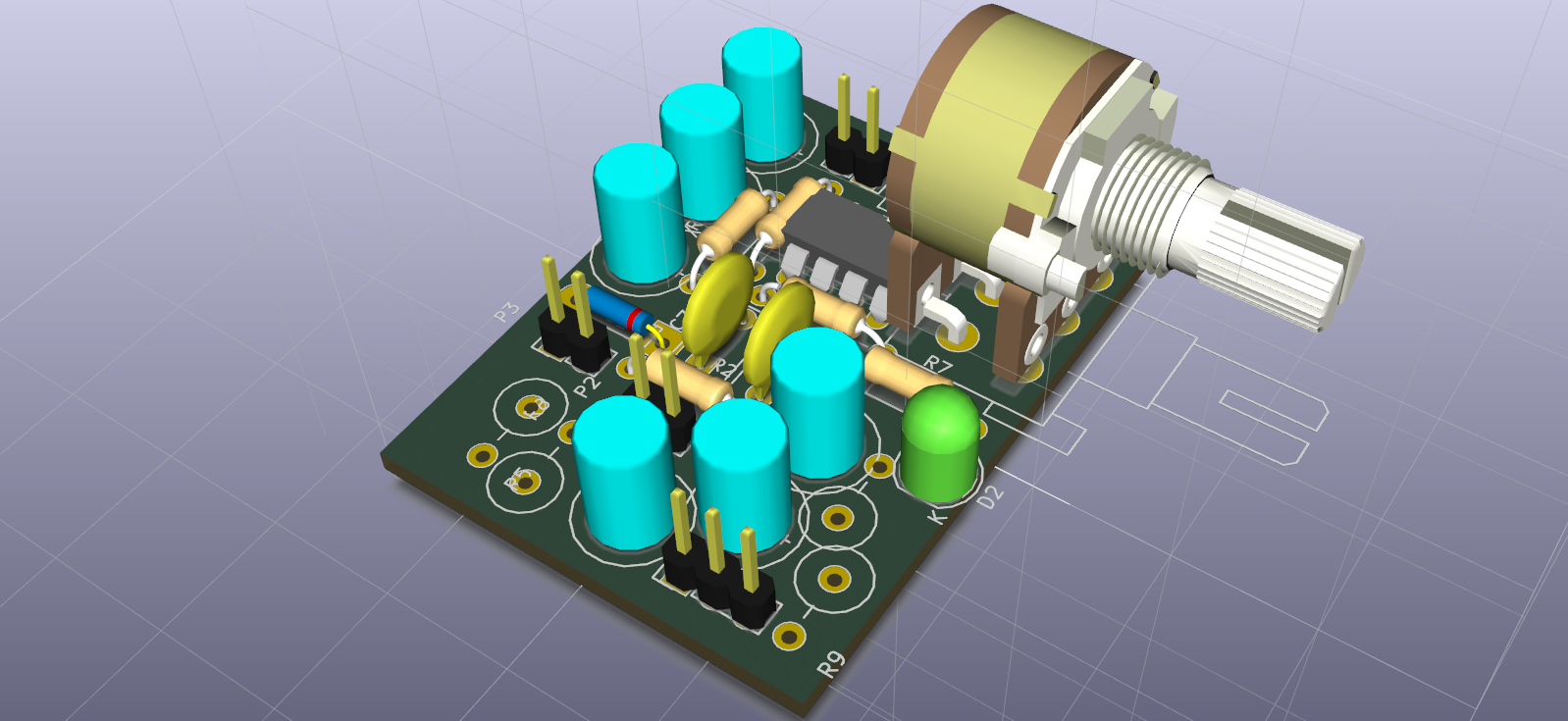
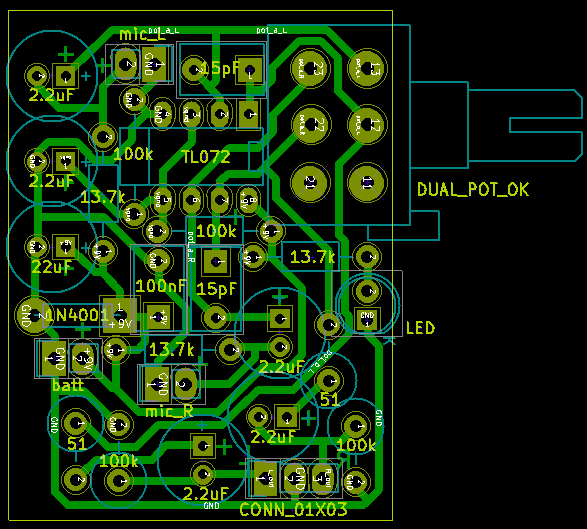
Stereo mic amplifier is an open-source printed circuit board by CarlosGS, from the CarlosGS/OpenBinaural repository on GitHub. It is a 2-layer board of 45.3 × 34.2 mm with 26 parts on 14 nets, routed with 183 tracks and 0 vias.
It is built around the TL072. Its parts include 9 capacitors, 9 resistors, 4 connectors, 2 diodes and 1 IC. It belongs with the audio and music boards of this library.
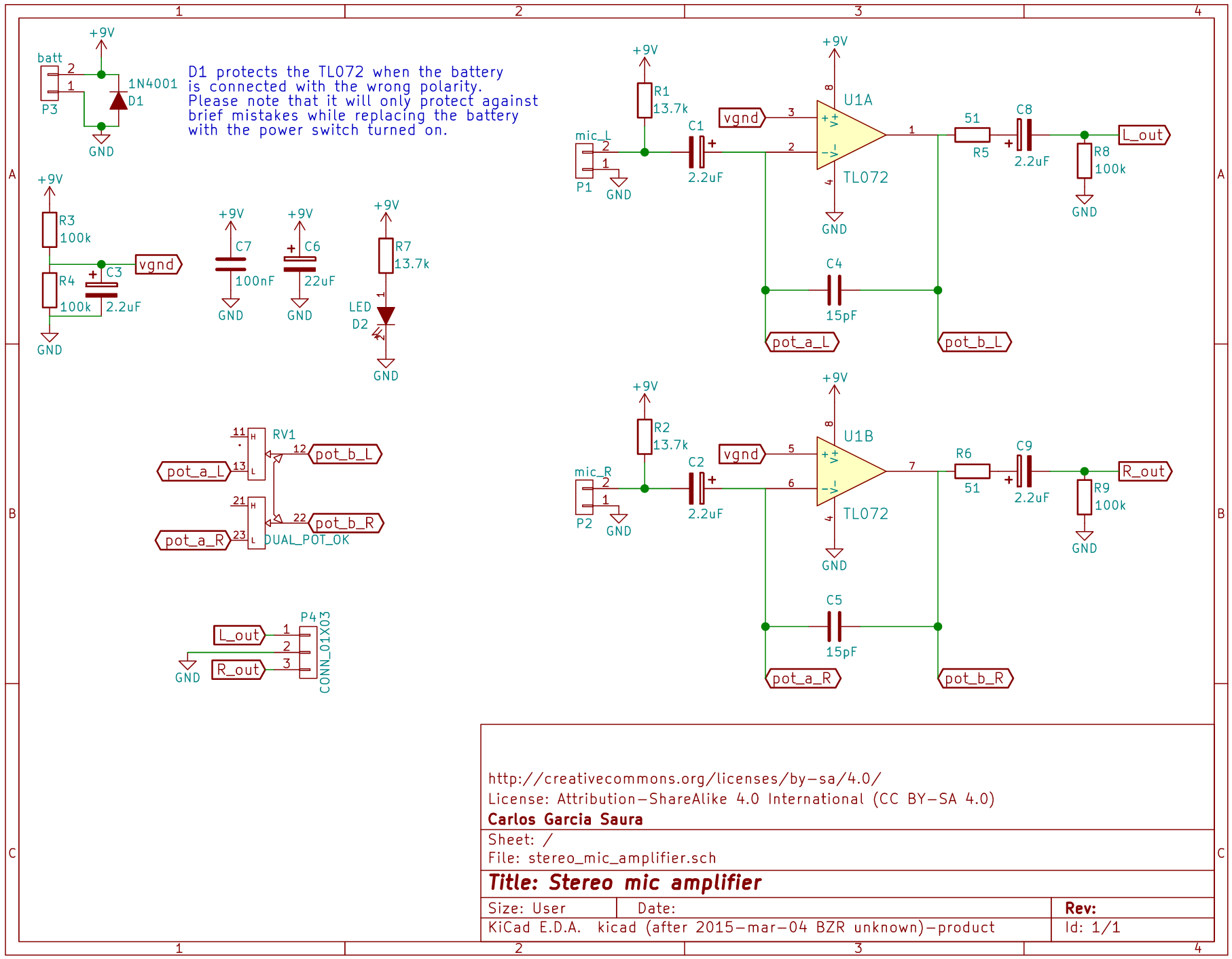
Stereo microphone amplifier circuit with gain control.
The circuit has been tested with the POM-5238P-R microphone capsules:
http://www.puiaudio.com/product-detail.aspx?categoryId=4&partnumber=POM-5238P-R
CNC manufacture files (gerbers, FlatCAM project & gcodes) are available in the Gerber folder.
Click here for the full assembly instructions
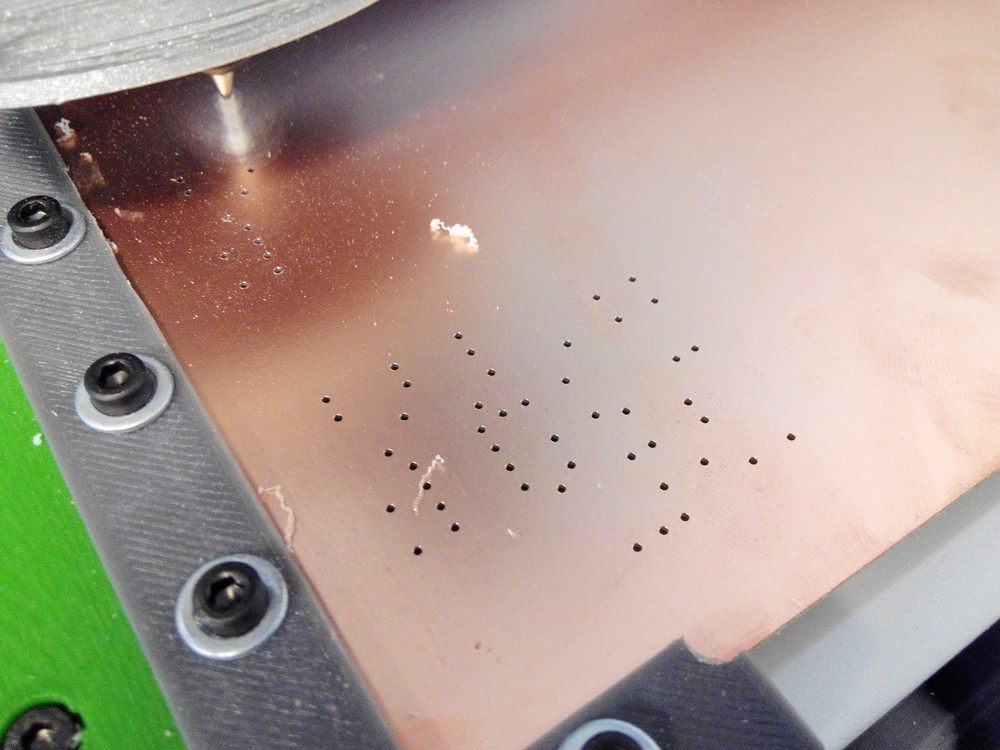
Aprox milling time for 0.8mm drill: 4 minutes
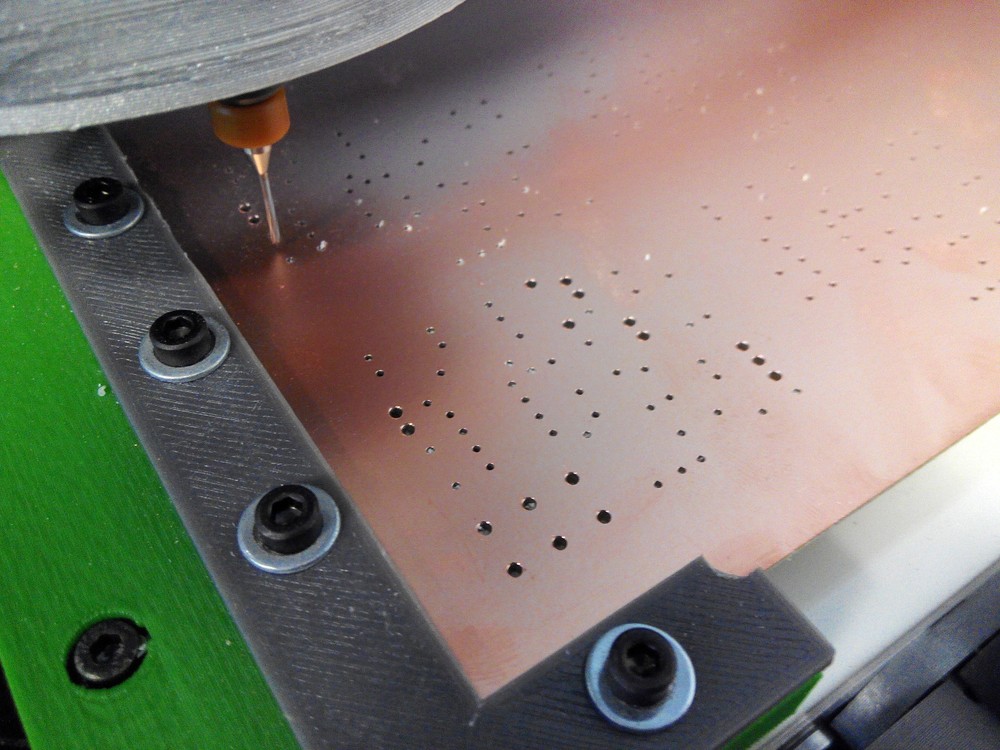
Aprox milling time for 1.2mm drill: 2 minutes
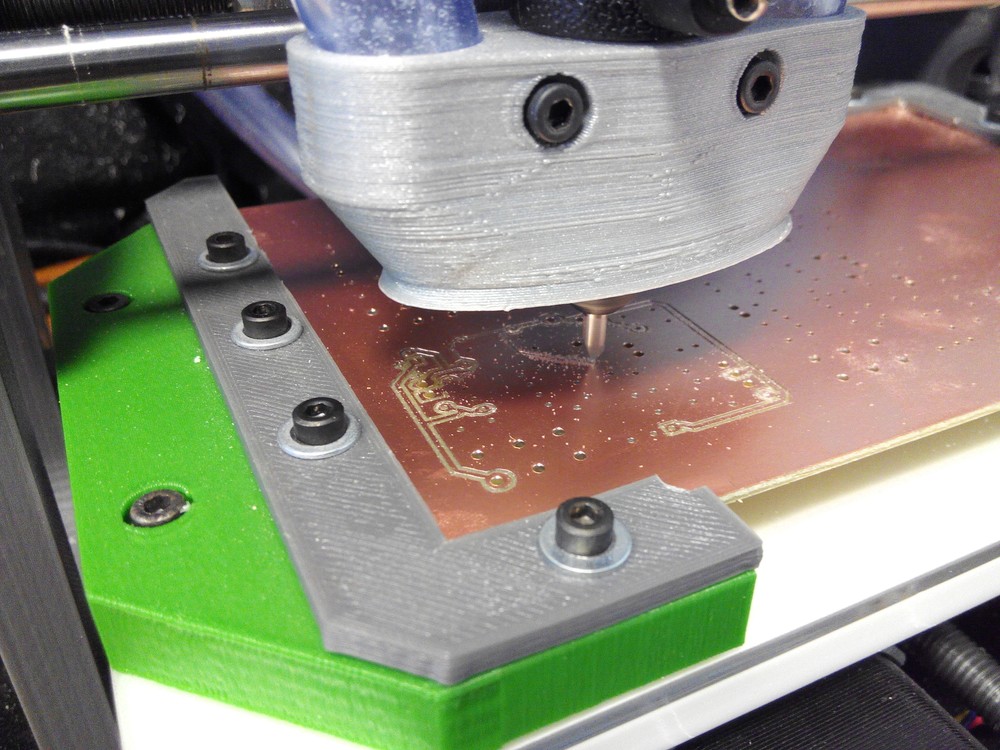
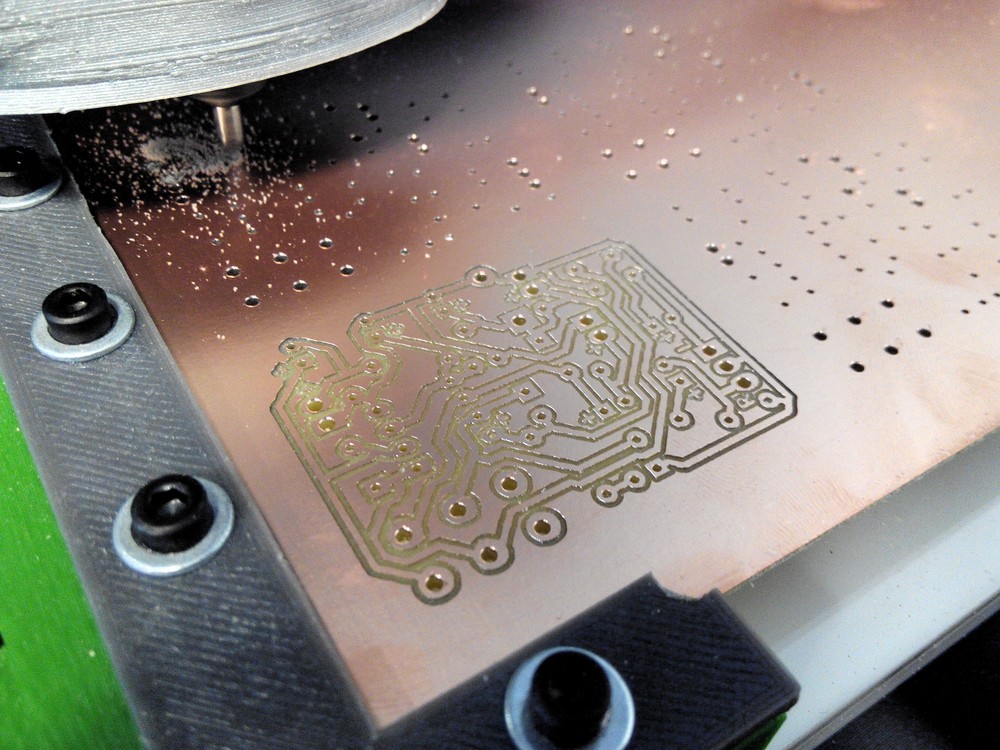
Aprox milling time for 0.3mm copper etching: 20 minutes
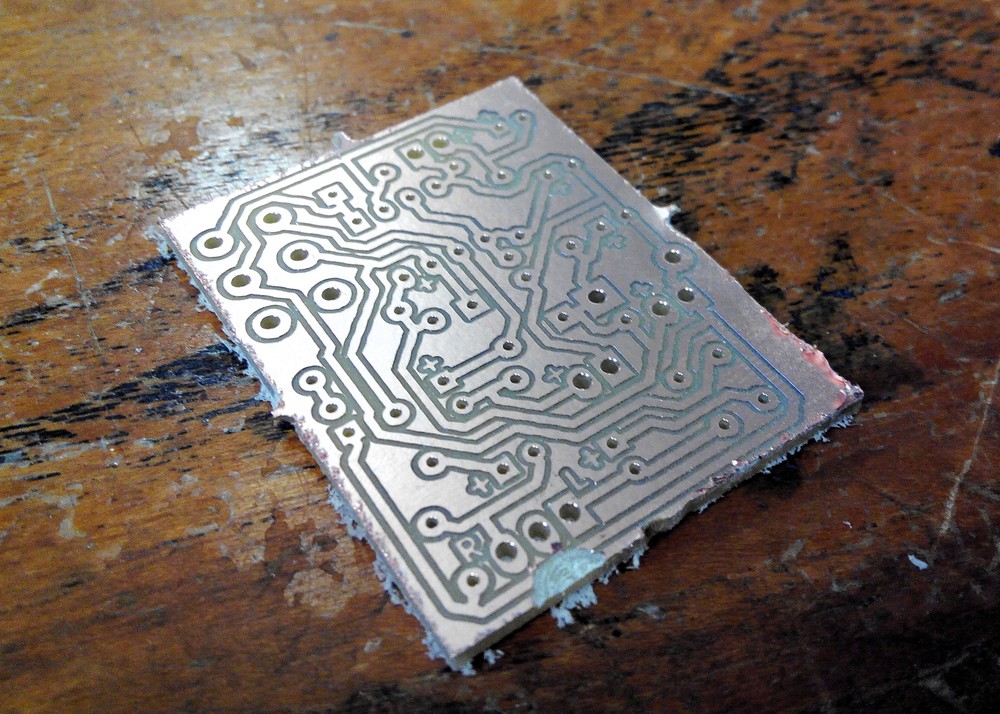
Aprox milling time for 2mm edges routing: 3 minutes
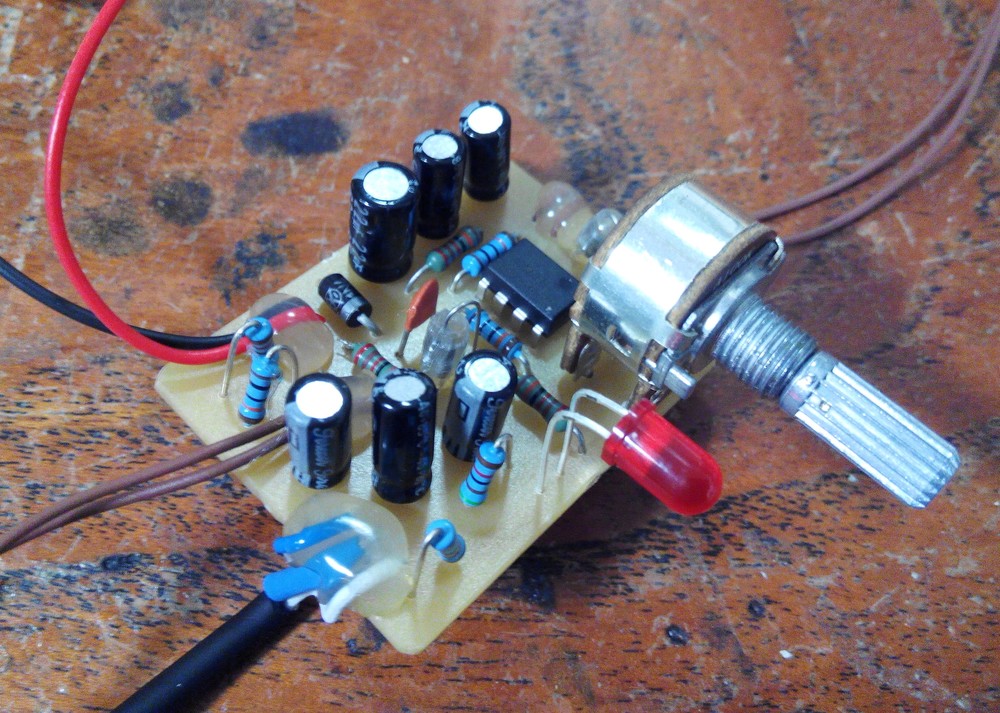
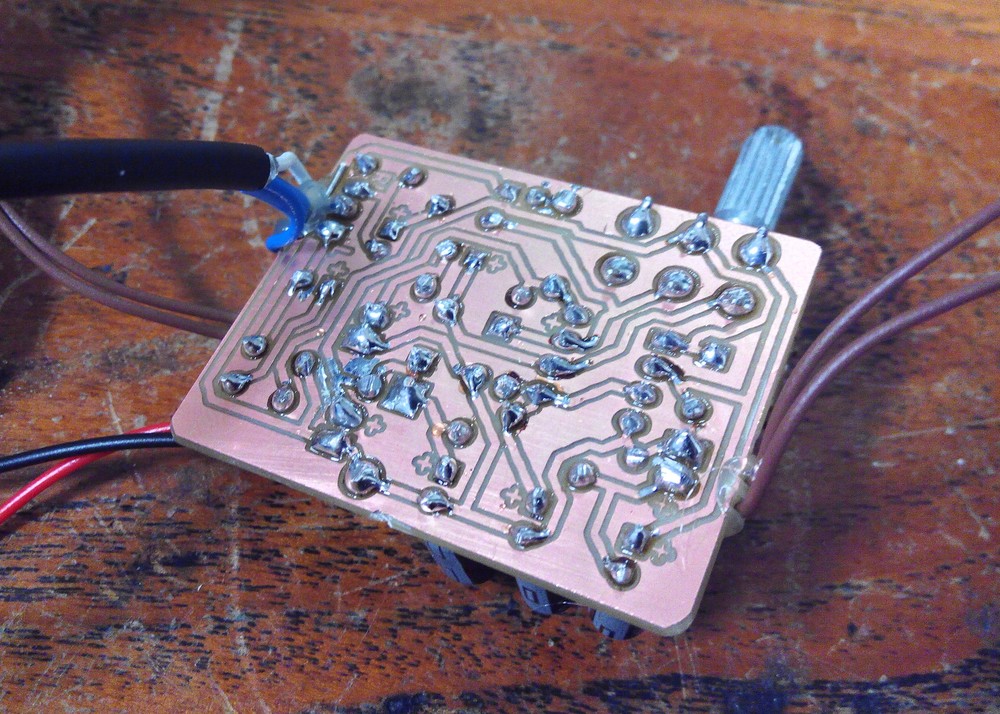
This circuit is a derivation from the following -very useful- Texas Instruments guide:
Single-Supply, Electret Microphone Preamplifier Reference Design by John Caldwell
Gain control is achieved by replacing R2 (75k) with a 100k dual potentiometer.
Author: Carlos Garcia Saura (http://www.carlosgs.es)
License: CC-BY-SA (http://creativecommons.org/licenses/by-sa/4.0/)
| Qty | Value | Footprint | References |
|---|---|---|---|
| 5 | 2.2uF | Discret:C1V8 | C1, C2, C3, C8, C9 |
| 3 | 13.7k | Resistors_ThroughHole:Resistor_Horizontal_RM10mm | R1, R2, R7 |
| 2 | 100k | Resistors_ThroughHole:Resistor_Vertical_RM5mm | R8, R9 |
| 2 | 100k | Resistors_ThroughHole:Resistor_Horizontal_RM10mm | R3, R4 |
| 2 | 15pF | Capacitors_ThroughHole:C_Disc_D7.5_P5 | C4, C5 |
| 2 | 51 | Resistors_ThroughHole:Resistor_Vertical_RM5mm | R5, R6 |
| 1 | 100nF | Capacitors_ThroughHole:C_Disc_D7.5_P5 | C7 |
| 1 | 1N4001 | Discret:D3 | D1 |
| 1 | 22uF | Discret:C1V8 | C6 |
| 1 | CONN_01X03 | Pin_Headers:Pin_Header_Straight_1x03 | P4 |
| 1 | DUAL_POT_OK | Potentiometers:Potentiometer_Alps-RK163-double_15mm | RV1 |
| 1 | LED | LEDs:LED-5MM | D2 |
| 1 | TL072 | Sockets_DIP:DIP-8__300_ELL | U1 |
| 1 | batt | Pin_Headers:Pin_Header_Straight_1x02 | P3 |
| 1 | mic_L | Pin_Headers:Pin_Header_Straight_1x02 | P1 |
| 1 | mic_R | Pin_Headers:Pin_Header_Straight_1x02 | P2 |
ohmtech-rdi/eurorack-blocks
Software to Hardware Prototyping for Eurorack using C++, Max/Gen~ or Faust

ctag-fh-kiel/ctag-tbd
CTAG TBD >>to be determined<< an extendible open source Eurorack sound module

plinkysynth/plinky_public
a public release of the plinky sw and hw


matthewcieplak/super-sixteen
Code and schematics for the Super Sixteen Eurorack sequencer

mzuelch/CATs-Eurosynth
Analog Synth Eurorack Modules

StoneRose35/cortexguitarfx
guitar effects processor implemented on various arm cortex platforms
It measures 45.3 × 34.2 mm and has 2 copper layers, 1.6 mm thick.
26 parts, built around the TL072. The full list of its parts is on this page, with links to each part's symbol and footprint where PCBKit's library has them.
From the CarlosGS/OpenBinaural repository on GitHub, at the commit this page was made from: the board is Electronics/stereo_mic_amplifier.kicad_pcb. PCBKit opens the board in the browser, with nothing to install.
Its repository states no licence, so its author keeps all rights: ask CarlosGS before reusing the design.