

4 layers40 × 60 mm
Control board v2.0
0x23/nmWave-Interferometer
An Open Source Interferometer for Accurate Distance Measurements
106 parts151MIT
 0x23/BallJointEmbossingMachine9
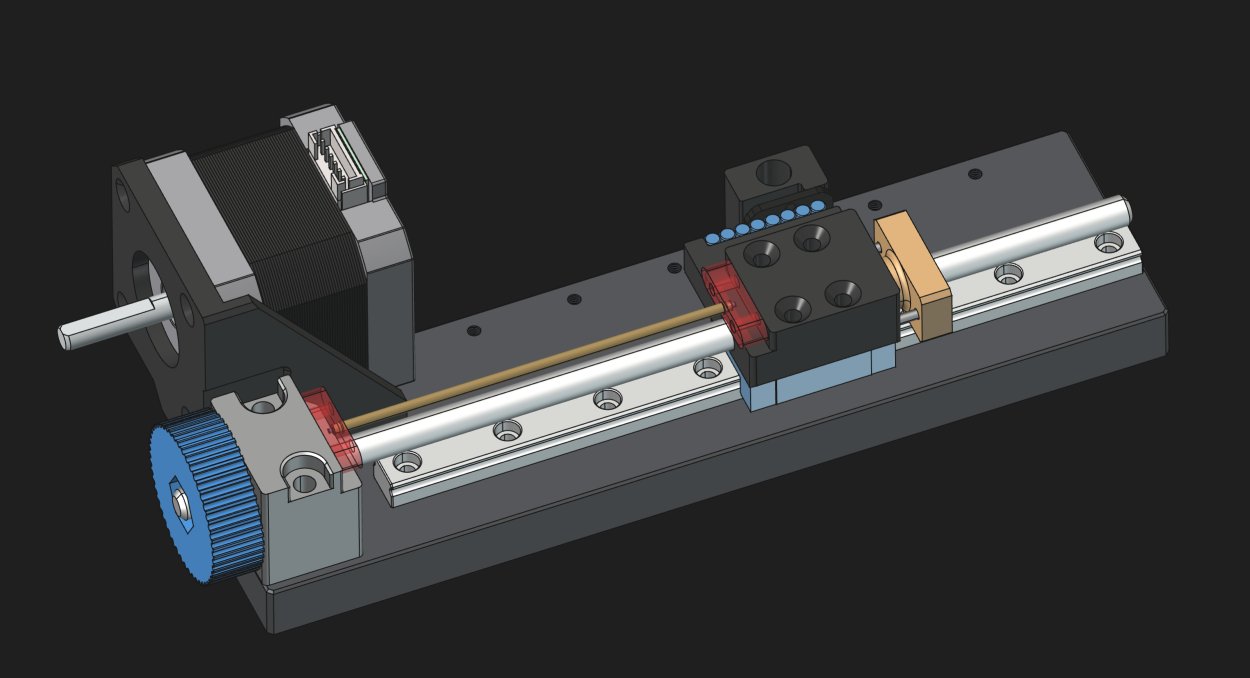
A motorized linear embossing machine designed to precisely press ball joints. It was designed to automate the production of balljoint linkages for the Open-Micro-Manipulator.
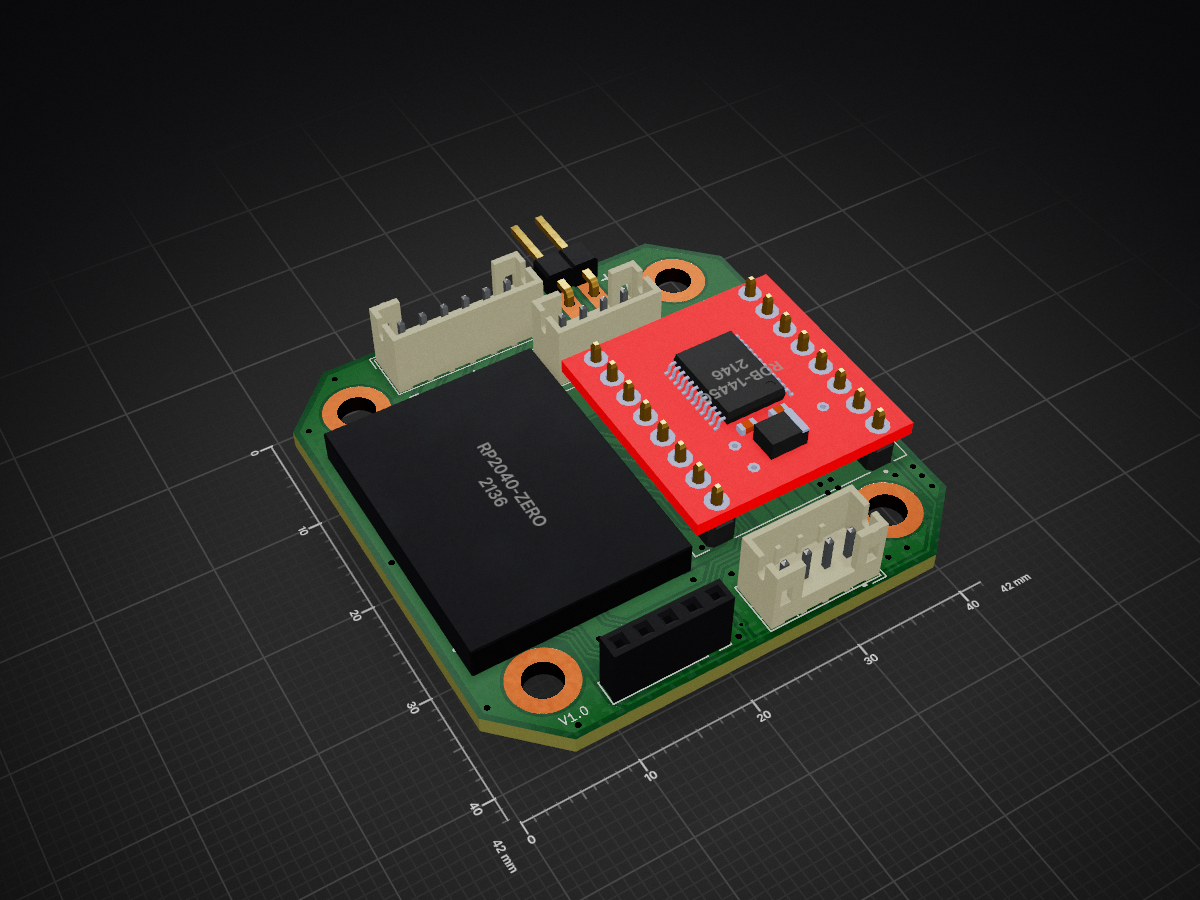
ControllerBoardSingle v1 is an open-source printed circuit board by 0x23, from the 0x23/BallJointEmbossingMachine repository on GitHub, published under the MIT licence. It is a 2-layer board of 42 × 42 mm with 20 parts on 32 nets, routed with 156 tracks and 69 vias.
It is built around the ROB-14450, RP2040-ZERO and PMEG4010CEJ. Its parts include 5 capacitors, 5 connectors, 2 resistors, 2 ICs and 1 diode. It belongs with the RP2040 boards of this library.
Work in Progress — This project is not in a finished, well-documented, or ready-to-replicate state. It is shared as a starting point for anyone who wants to build upon it. Expect incomplete documentation, rough edges, and parts that may require adaptation.
A motorized linear embossing machine designed to precisely press ball joints. It was designed to automate the production of balljoint linkages for the Open-Micro-Manipulator. It uses a NEMA 17 stepper motor driving a leadscrew on an MGN9 linear rail, with closed-loop position feedback from an MT6835 magnetic encoder. The tool head position is controlled in real time by firmware running on an RP2040 microcontroller.
WARNING: The electronics must be powered by no more than 5 V. Supplying a higher voltage will risk damaging the USB port on your Computer.
The custom controller board (electronics/ControllerBoardSingle_v1/) is designed around the RP2040-ZERO / RP2350-ZERO and the TB6612 dual motor driver. Open the project with KiCad 10 or later. There is alwas a physical button to start the embossing process - please look at the firmware for finding the correct pin.
The firmware is built with PlatformIO.
Build & upload:
cd firmware
pio run --target upload
Linux note: udev rules must be installed before the upload will work:
sudo curl -fsSL https://raw.githubusercontent.com/platformio/platformio-core/develop/platformio/assets/system/99-platformio-udev.rules \
  -o /etc/udev/rules.d/99-platformio-udev.rules
sudo service udev restart
# replug the device, then run pio run --target uploadMIT — see LICENSE for the full text.
| Qty | Value | Footprint | References |
|---|---|---|---|
| 5 | 10uF 6V | Capacitor_SMD:C_0805_2012Metric_Pad1.18x1.45mm_HandSolder | C1, C2, C3, C4, C5 |
| 4 | MountingHole_Pad | MountingHole:MountingHole_3.2mm_M3_ISO7380_Pad | H1, H2, H3, H4 |
| 2 | 4K7 | Resistor_SMD:R_0603_1608Metric_Pad0.98x0.95mm_HandSolder | R1, R2 |
| 2 | Motor | Connector_JST:JST_PH_B4B-PH-K_1x04_P2.00mm_Vertical | J2, J3 |
| 1 | Conn_01x05_Pin | Connector_PinSocket_2.00mm:PinSocket_1x05_P2.00mm_Vertical | J5 |
| 1 | Conn_01x06_Pin | Connector_JST:JST_PH_B6B-PH-K_1x06_P2.00mm_Vertical | J4 |
| 1 | PMEG4010CEJ | Diode_SMD:D_SOD-123F | D1 |
| 1 | Power 5V | Connector_PinHeader_2.54mm:PinHeader_1x02_P2.54mm_Horizontal | J1 |
| 1 | ROB-14450 | ROB-14450:MODULE_ROB-14450 | U2 |
| 1 | RP2040-ZERO | RP2040-ZERO:MODULE_RP2040-ZERO | U1 |
The 19 most common of 20 parts.
0x23/nmWave-Interferometer
An Open Source Interferometer for Accurate Distance Measurements


DoImant/TP4056-Power-Path-PCB
TP4056 Power Sharing PCB. Charge battery despite connected load.


dyu134/ESP-HI-PLUS
The Robot sub-module is a high-performance actuator and sensing expansion board for the ESP-HI-PLUS, designed to transform the device into a mobile or interactive robotic platform.
It measures 42 × 42 mm and has 2 copper layers, 1.6 mm thick.
20 parts, built around the ROB-14450, RP2040-ZERO and PMEG4010CEJ. The full list of its parts is on this page, with links to each part's symbol and footprint where PCBKit's library has them.
From the 0x23/BallJointEmbossingMachine repository on GitHub, at the commit this page was made from: the board is electronics/ControllerBoardSingle_v1/ControllerBoardSingle_v1.kicad_pcb and its schematic electronics/ControllerBoardSingle_v1/ControllerBoardSingle_v1.kicad_sch. PCBKit opens the board in the browser, with nothing to install.
Its repository publishes it under the MIT licence: you may reuse it on that licence's terms (keep the author's notice, and for a copyleft licence share your changes alike).